• Enter your email address to subscribe to this blog and receive notifications of new posts by email.

    Join 241 other subscribers
  • Noshing on

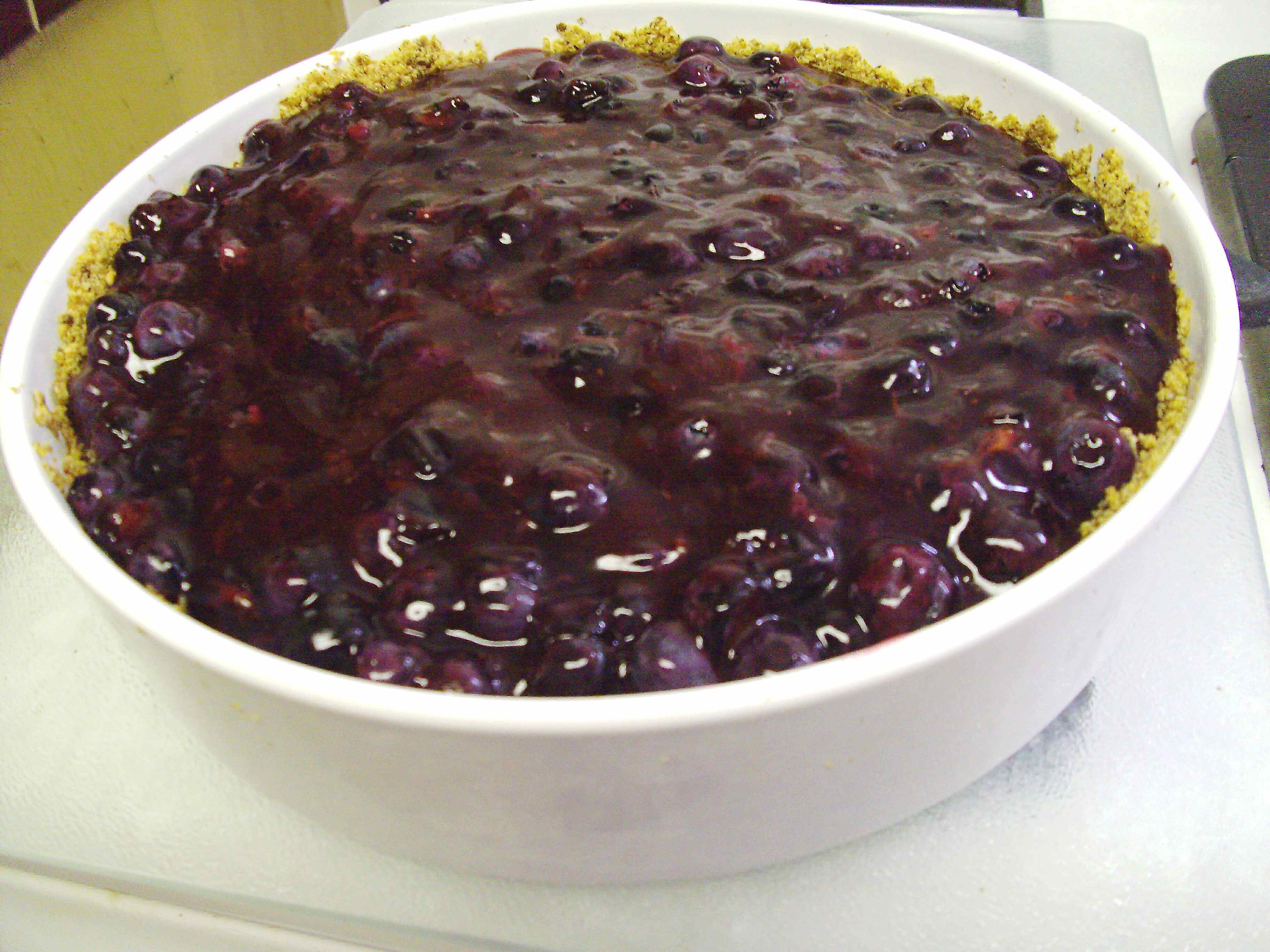
    raw blueberry pie with microwaveable filling and graham cracker crust

    This mostly-raw blueberry pie is a snap to make and very versatile--the filling microwaves in a few minutes, and you don't even have to bake the zippy gingered graham cracker crust--perfect for a hot Fourth of July and all summer long.

  • Recent Posts

  • Contents

  • Archives

  • Now Reading

  • See also my Book Reviews

  • Copyright 2008-2024Slow Food Fast. All writing and images on this blog unless otherwise attributed or set in quotes are the sole property of Slow Food Fast. Please contact DebbieN via the comments form for permissions before reprinting or reproducing any of the material on this blog.

  • ADS AND AFFILIATE LINKS

  • I may post affiliate links to books and movies that I personally review and recommend. Currently I favor Alibris and Vroman's, our terrific and venerable (now past the century mark!) independent bookstore in Pasadena. Or go to your local library--and make sure to support them with actual donations, not just overdue fines (ahem!), because your state probably has cut their budget and hours. Again.

  • In keeping with the disclaimer below, I DO NOT endorse, profit from, or recommend any medications, health treatments, commercial diet plans, supplements or any other such products.

  • DISCLAIMER

  • SlowFoodFast sometimes addresses general public health topics related to nutrition, heart disease, blood pressure, and diabetes. Because this is a blog with a personal point of view, my health and food politics entries often include my opinions on the trends I see, and I try to be as blatant as possible about that. None of these articles should be construed as specific medical advice for an individual case. I do try to keep to findings from well-vetted research sources and large, well-controlled studies, and I try not to sensationalize the science (though if they actually come up with a real cure for Type I diabetes in the next couple of years, I'm gonna be dancing in the streets with a hat that would put Carmen Miranda to shame. Consider yourself warned).

Ag School: the New Farming vs. Big Agro

The LA Times reports today that the chairman of the Harris Ranch Beef Co. has successfully pressured Cal Poly-San Luis Obispo, one of California’s few universities with a strong agriculture program, into converting what was to be an upcoming lecture by Michael Pollan into a panel discussion with a meat science expert and a representative from a large organic grower. How? By threatening to withdraw a $150K pledge for an on-campus meat-packing plant. The chairman’s threat letter to Cal Poly’s president also apparently criticized a professor who called Harris Ranch “unsustainable”.

Harris Ranch itself is more than usually well known to Californians. It’s a huge holding area for thousands upon thousands of cattle as they’re fattened for market. It’s an hour or so south of San Jose, a feedlot acres long, set right along the east side of the I-5, California’s main interior north-south highway between LA and San Francisco.  You can smell it coming a couple of miles before you get there, even with the windows and vents shut and the air conditioning on. And the cattle–herds and herds of them, closely packed. Quite a sight. All kinds, with very little room to wander around, and there’s no grazing to wander to. Elsewhere, on side highways through the hills, you see small herds, calves, occasionally lone cows or bulls meandering along the slopes, picking their way between boulders and foraging for grasses. Once they’re trucked to Harris Ranch, that’s over. It’s Cow City.

The manure piles, as you might imagine, are vast, and provide a valuable sideline business because the rest of the highway, all up the San Joaquin valley, is lined with cotton, orchards, and a variety of other crops, and the land itself is flat, dry, and chalky.

But does that make Harris Ranch Beef Co. sustainable? Probably not. Does  Harris Ranch’s size make it evil or exploitative? Also probably not, or not automatically.  It just makes it big. Really big–and maybe too big to run without depleting or damaging the local environment. Unless, of course, you have a good resource for researching better ways to farm.

But threatening to withdraw a big-ticket donation just because Michael Pollan gives a talk at the university might not be the best way to convince the world of Harris Ranch Beef Co.’s intentions toward the public or of its ethical business practices. More importantly, it might not be the best way to present the beef industry to students at the Ag school.

It is probably too much to ask a big business like Harris Ranch Beef Co. to act intelligently rather than in panic when it comes to criticism over its sustainability. But I wonder what would have happened if the chairman had looked at the university’s sustainability research as an opportunity rather than a threat.

Ironically, big agribusinesses like Harris Ranch probably need the kind of fresh thinking and research on sustainable practices that Cal Poly-SLO and other agriculture schools are starting to produce. The next 20 years are going to see a lot of changes in food production because a lot of resources are either already being depleted or getting more expensive faster than anyone could have predicted 10 years ago. Even the next 5 years are up for grabs. These changes are already hard to miss.

All the big agro and food processing businesses that decry Pollan’s food journalism today are going to be changing something about how they do business. They’ll have to, whether or not he (and other credible researchers) gets to talk freely about the problems of the status quo at the Ag schools they support. The question is whether the Ag schools will have thought about the problems he raises and be prepared with some solutions when agribusiness finally realizes it needs a new approach.

The Case Against Bologna

(Beside the fact that I’ve never actually liked it, not even as a kid. Too flabby and bland.)

It would be so nice if once in a while, just occasionally–every other Thursday would probably be enough–the processed food industry judged nutritional value the way the CDC or NIH public health guidelines do. (The USDA and its Food Pyramid scheme, all versions, are too compromised toward the food industry for me to include.)

Take a small health column in today’s Washington PostJennifer LaRue Huget comments on Oscar Meyer’s claim that a classic peanut butter and jelly sandwich has nothing on a classic bologna sandwich for health. Their contention is that the bologna sandwich is healthier because it has only 4 grams of sugar, and somewhat less total fat than a sandwich’s worth of peanut butter, about 2 tablespoons.

Huget proceeds to tear that argument down with a simple look at the nutrition label stats for both and a smidgen of common sense–why would bologna have sugar in it anyway? The bologna has less total fat but somewhat more saturated fat and cholesterol, and it has only 3 grams of protein for peanut butter’s 8. And what about the salt–800 mg for a sandwich with a single slice of bologna, compared with a PBJ at 490 mg–which is still high by my standards, but I guess it’s salted peanut butter, and quite a bit of the salt is probably in the bread itself (incidentally, did Oscar Meyer include bread in its sodium count for the bologna sandwich? did it use the same kind of bread in the PBJ comparison? Hmmm….)

Well anyway, Huget doesn’t need to work too hard to make her case. Still, there are issues she doesn’t even scratch. Obviously Oscar Meyer is trying to play up its few nutritional points and hide its glaring weaknesses–most of the processed food players have been doing this aggressively for years now. We’re mostly inured to it, and frankly we expect bologna to be high-salt and kind of fatty. No big surprises there.

So let’s get back to the main strangeness of this comparison and ask the key questions: How could peanut butter possibly have more protein than bologna? Isn’t bologna meat? What’s going on?

I headed for the USDA Nutrient Database to find out. As much as I distrust the USDA’s dietary advice and its Food Pyramid, the nutrient database is pretty vast and pretty consistent, and its holdings aren’t branded.

The protein in bologna and most other processed sandwich meats–not just Oscar Meyer brand but others as well–is considerably lower than in the same amount of plain unprocessed cooked meat. We’re talking 3 grams of protein in a 28-gram (1-oz) slice.

Oscar Meyer’s bologna is made in descending order of “mechanically separated” chicken and pork bits and then a variety of corn derivatives, both syrup and starch, plus gelatin and other fillers.

Normally you look at the top two ingredients and think “Meat! That’s the main ingredient! It’s chock-full of protein!” Actual chicken and pork–the solid meat, not the skin or fat of the chicken, and not bacon–contain about 25 grams of protein per 100 grams of meat, according to the USDA nutrient database, or about 7 grams of protein per 28 grams of meat. Not 3 grams per 28. By the time you get to bologna, you’ve got less than half the protein of actual meat.

You have two possibilities here for how that happens:

1. The company’s definition of “chicken” and “pork” includes a hefty proportion of skin and solid fat most people trim away and throw out rather than eat when they buy actual chicken or pork. Fat doesn’t have protein in it but it does weigh something. Should it be allowed to qualify as “meat”?

2. The percentages of the chicken and pork bits in the bologna are just enough higher than those of each of the filler ingredients to qualify as leading ingredients on the label, but the actual proportion of chicken-plus-pork to the total filler is something under half.

So bologna leaves a lot to be desired even compared to an old standard like PBJ, especially today when you can get peanuts-only peanut butter without fillers, and fruit-only fruit spreads without added sugars or corn syrup. And you can look on the nutrition label to find out what’s in it and what it’s worth nutritionally.

But what disturbs me, even more than the clear and present need for Huget’s column to point out Oscar Meyer’s casual sophistry in this over-informed day and age, are some of the comments her column generated. The Washington Post has a pretty liberal comment policy on just about every opinion article.

I expected some type of Food Police accusations to crop up. I’m not sure they didn’t, eventually, but when I read the piece this morning, what struck me was just how many of the commenters waxed nostalgic about how much they loved bologna. How, even with all its and Oscar Meyer’s obvious flaws, they still craved bologna when they saw the word in print. Even when they’d actually read the whole article. Brought them right back to the good old days of the elementary school cafeteria. Worse, it brought them a specific craving for bologna with mayonnaise on white bread. That plus Velveeta to cap things off.  I ask you, is there any hope?

Smart Choices Checkmarks–Corrupt Before They Ever Hit the Cereal Box?

William Neumann of the New York Times takes a hard look at “Smart Choices”, the new food industry-sponsored common nutrition labeling program, which makes its debut in supermarket packaged food aisles. The coveted green checkmark comes with a hefty license fee–toward the $100,000 mark per item–for food companies that want to qualify, but apparently qualifying is a little easier than you might expect. The new program, headed by a nutritionist with impressive enough credentials,  has awarded healthy choice status to heavily sugared cereals like Froot Loops because, as she explains, they’re a better breakfast choice than, say, doughnuts. For sure.

How could any reputable nutritionist blurt something like that out to a New York Times reporter? Does she really use doughnuts as a benchmark for comparison when the question is “what should I feed my kid for breakfast?”

More to the point, how could items like Froot Loops end up qualifying as a smart choice? Apparently, the FDA is wondering the same thing.

Take a look at the Smart Choices program nutrition criteria. Under the program, a given processed food product qualifies as a “smart choice” if:

1. Its nutrition stats fall within consensus-defined limits for carbs, added sugars, fats, cholesterol, and sodium. But the criteria are not particularly consistent about whether these nutrition stats count for a single serving or a meal, or perhaps multiple servings throughout the day, and the upper limits shift between categories of foods. And some of the criteria have been muted, dropped, or subordinated according to the preferences of food industry members over the protests of the nutrition scientists.

2. It contains at least one positive nutrient from an industry-accepted list of vitamins, minerals, fiber, and protein. The positive nutrient can be an additive, and it can be added to an otherwise nutritionally useless food product.

3. Alternatively to the positive nutrient criterion, the product can contain or represent some aspect of the category “food groups to encourage”: fruits, vegetables, whole grains and low fat or non-fat milk. How much of any of these ingredients must be present, what their original source is, and whether the final food product retains any reasonable or comparable amount of the nutrition found in an unprocessed fruit, vegetable, grain, or dairy item which it claims to include are all a bit vague. Processed cheese is technically considered dairy, for example, even though it may contain mostly vegetable oils, starches, and emulsifiers, not milk.

Not all food categories seem to require both nutrient-of-concern limits and positive characteristics.

Finally, the instructions to companies wishing to qualify a given food product state: “Qualifying your products for the Smart Choices Program is quick and simple. Product review is typically completed in 24 – 48 hours.”

Pretty much says it all. And doesn’t really support the “science-based, consistent, reliable” claims the program presents to consumers and the media.

For further mirth and bemusement, check out Marion Nestle’s account of her discussions with Neumann and with the Kellogg’s VP for global nutrition on her blog.