
• Enter your email address to subscribe to this blog and receive notifications of new posts by email.

    Join 241 other subscribers
  • Noshing on

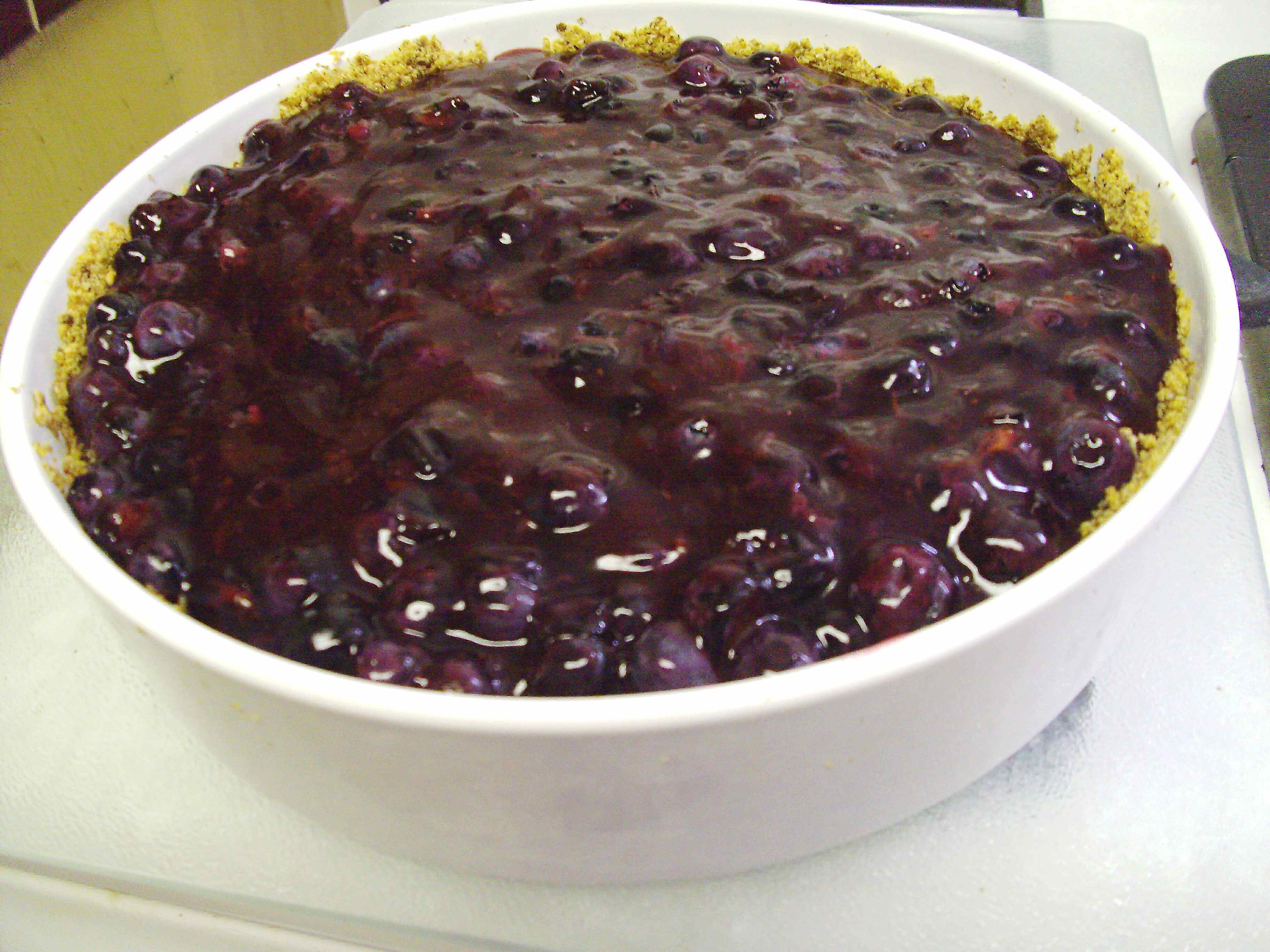
    raw blueberry pie with microwaveable filling and graham cracker crust

    This mostly-raw blueberry pie is a snap to make and very versatile--the filling microwaves in a few minutes, and you don't even have to bake the zippy gingered graham cracker crust--perfect for a hot Fourth of July and all summer long.

  • Recent Posts

  • Contents

  • Archives

  • Now Reading

  • See also my Book Reviews

  • Copyright 2008-2024Slow Food Fast. All writing and images on this blog unless otherwise attributed or set in quotes are the sole property of Slow Food Fast. Please contact DebbieN via the comments form for permissions before reprinting or reproducing any of the material on this blog.

  • ADS AND AFFILIATE LINKS

  • I may post affiliate links to books and movies that I personally review and recommend. Currently I favor Alibris and Vroman's, our terrific and venerable (now past the century mark!) independent bookstore in Pasadena. Or go to your local library--and make sure to support them with actual donations, not just overdue fines (ahem!), because your state probably has cut their budget and hours. Again.

  • In keeping with the disclaimer below, I DO NOT endorse, profit from, or recommend any medications, health treatments, commercial diet plans, supplements or any other such products.

  • DISCLAIMER

  • SlowFoodFast sometimes addresses general public health topics related to nutrition, heart disease, blood pressure, and diabetes. Because this is a blog with a personal point of view, my health and food politics entries often include my opinions on the trends I see, and I try to be as blatant as possible about that. None of these articles should be construed as specific medical advice for an individual case. I do try to keep to findings from well-vetted research sources and large, well-controlled studies, and I try not to sensationalize the science (though if they actually come up with a real cure for Type I diabetes in the next couple of years, I'm gonna be dancing in the streets with a hat that would put Carmen Miranda to shame. Consider yourself warned).

What do you make on New Year’s Morning?

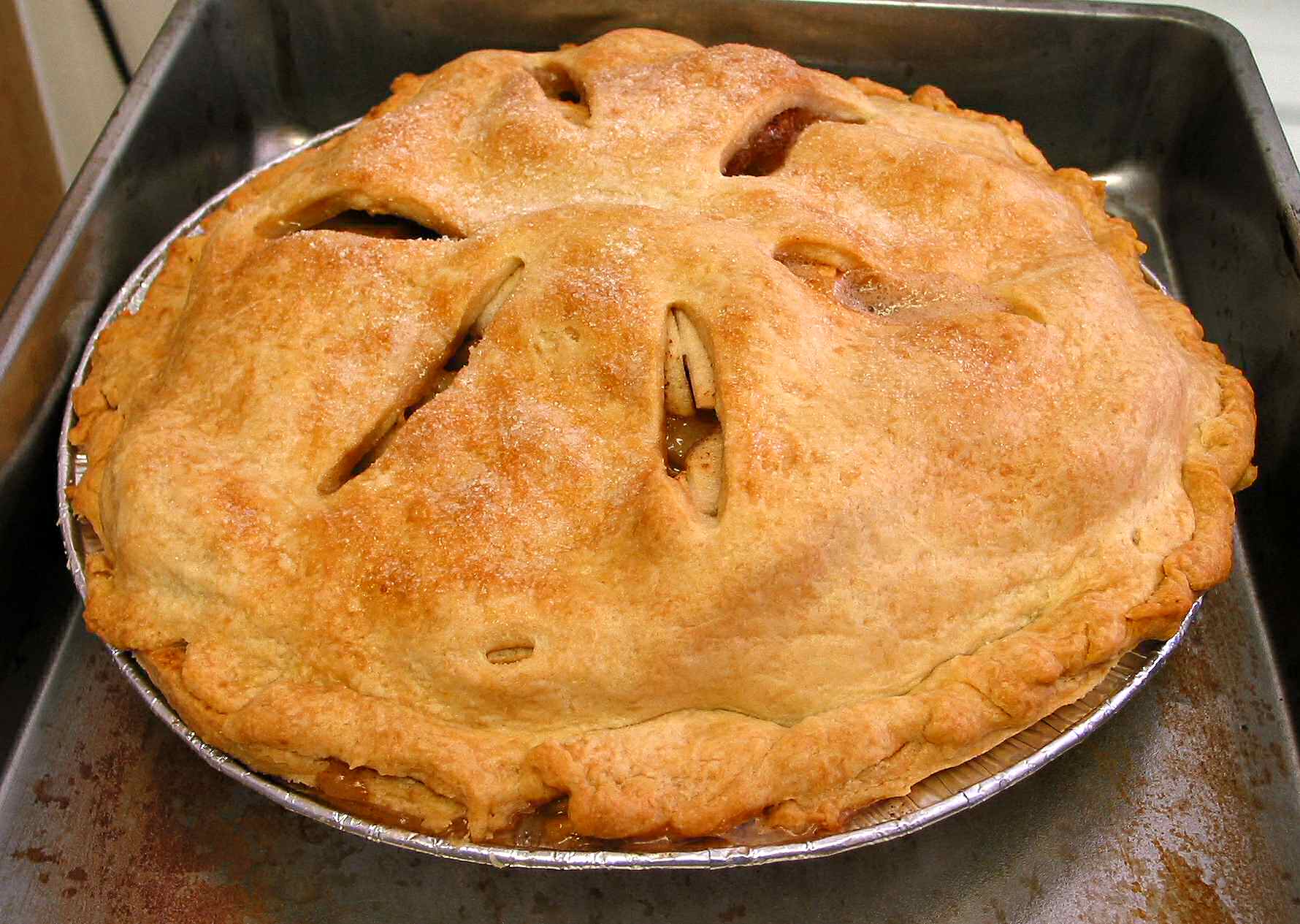
Apple pie for New Year's Day

If you’re me–as I was, this morning, and will be until I can find someone better and clearly cooler to be–you make pie to take for a brunch at the house where a childhood friend is visiting. We had a great visit at her mother-in-law’s and my daughter got to meet my friend’s kids and trade rolled eyes while us uncool parents hung out and swapped tales of child-raising woe and pride–all the usual things.

But this morning–there’s no denying it–was a little rough. I got up about two hours later than I’d hoped to, after worrying much of last night about what kind of fool was I to offer to bring apple pie for 15 when I’d never made an actual apple pie before, just pumpkin pie and various apple cobblers–which probably wouldn’t add up to the same thing. And my friend and her husband are the “accomplished cook” sort of couple that makes such a gambit even riskier. Sort of like going to that 30th class reunion, only crossed with a cook-off. I’m not southern enough to enjoy the prospect very gracefully.

So at 9 a.m. I was up, cranky, and snarling (effectively, as it turns out) at my nearest and dearest that if they wanted breakfast they were on their own; I had pie to figure out and only about 2 hours or so to do it in before we had to leave, and maybe I could be convinced to brew coffee after the pies were in the oven, but until then they were cordially invited to seek out the Starbucks and leave me to my fate. Which was about a pound of flour, 3 1/2 sticks of butter, 3/4 cup of sugar, some cinnamon and cloves and 11 huge Granny Smith apples.

I think I made more dough than I’ve ever made before in one recipe–double crust for two pies. Only other double-crust pie I’ve ever made was the medieval tart for my daughter’s class a month or so ago (and I was panicked enough that she had to remind me that it had worked out fine, so what was the big deal?).

When you scale up like that, will your recipe still work? will it be too tough or uneven? too dry? too stretchy? will it roll out right? –too much worrying for one morning before benefit of caffeine, I’ll tell you that.

I had actually checked out about 5 different baking books to compare notes on dough and apples and how much sugar for how many apples–and on and on. You will say–correctly–that I probably shouldn’t have bothered. Apple pie has got to be one of the big basics, and despite the fact that every one of the books had about the same ratios, none of them were exactly alike, and they all looked fine.

I don’t usually get like this, and if it had been an apple crisp, I certainly wouldn’t have worried about any recipes at all. But pie. Pie is a standard, and apple pie even more of a standard. Everyone knows what it’s supposed to look and taste like. It’s the only food Americans really get French about.

There’s nothing to do about that, except to take the chance and pick your friends wisely, so they’ll be thrilled you brought a homemade pie or two. Which is what I did. And it turned out much better than I had any right to expect. So if you’ve never tried it, and you actually like apple pie–this is not bad. Not bad at all.

The only other hidden wisdom in this post is how to schlep your pies, still hot, across Los Angeles at noon on New Year’s Day. Think Priority Mail ™–the Continue reading

Pyrex and Anchor Hocking now both unsafe for cooking

I’m not sure how I happened upon Consumer Reports’ disturbing feature from January on exploding glassware cooking accidents in both Pyrex and Anchor Hocking tempered glassware. Since a lot of my microwave directions call for Pyrex bowls, I thought I’d better post about it asap.

Here’s the link explicitly:

http://www.consumerreports.org/cro/magazine-archive/2011/january/home-garden/glass-cookware/glass-cookware/index.htm

Because I’ve used my current Pyrex bowls and bakeware for more than 10 years, I’ve been looking recently to replace and/or add to my collection. But every time I’ve looked for it in the past year or so, I’ve hesitated–the stuff on sale is a blueish color. Or it’s a little thinner than I remember. Or it doesn’t feel or even sound right when I pick it up. And the cardboard overwrap has a lot of new warnings about when and how you can or can’t use it that are different than the old classic Pyrex. It’s confusing–can I use it the way I’m used to or not?

So even though the casseroles and pie plates are bright and shiny and new and usually on sale at my local supermarket and the Target, I’ve passed them up, thinking, “I’ll do it next time.”

According to the Consumer Reports piece, it’s a damn good thing I did. Read the article. Now. Please. Before you put any of this generation of Pyrex in an oven or microwave. Before you give a set to some newlywed as a kitchen gift.

And don’t buy this stuff. If you did, don’t use it for any kind of heating up, conventional oven or microwave (I know, so what good is it if you can’t heat stuff up in it? Wasn’t that the whole point?)

Apparently both companies are claiming that the explosions–which have caused burns and lacerations when the victims took a hot casserole out of the oven or microwave and set it down–are the result of misuse, or perhaps the glassware had gotten dinged or scratched and therefore the flaws had weakened it, and that it was a rare phenomenon. The article authors estimated a fairly high number of incidents in the past few years based on hospitalization records and other outside evidence.

Consumer Reports debunked the companies’ blame-the-victims ploy by testing both brands of glass cookware at various temperatures and setting the pans down on a variety of typical kitchen surfaces.

The results were not pretty–Pyrex had a slight temperature range advantage over Anchor Hocking, but a fairly high percentage of both broke or exploded if they weren’t used exactly within the laundry list of restrictions on the cardboard overwrap that came with the new bakeware.

Altogether, conducting the tests and videorecording them took more guts than I would have without lexan armor and a full face shield.

But, as I’ve said, I’ve been using my mixing bowls and pie plates for years without problems. What’s going on?

The article authors did track down a probable explanation for all this breakage in what’s supposed to be very durable glassware. Both brands have recently switched to a cheaper formulation for their glass. Pyrex–note, no longer made by Corning–at least used to be borosilicate glass but now uses soda lime glass, as does Anchor Hocking’s tempered glass. Borosilicate is the standard for laboratory grade glassware; it’s stronger and somewhat more expensive to produce–probably the mineral shortages of the past few years have made it more so.

Technically, you can temper soda lime glass, but even when tempered it’s not as strong as the old classic tempered borosilicate. It also seems to be less uniform–and the little unevennesses in the material create local instabilities that can cause cracks and even explosions when subjected to rapid or uneven heating and cooling. It only takes a split second in some cases.

Borosilicate is almost certainly what my old Pyrex standbys are made of, and I’m standing by them. I just wish I could have bought more at the time, or that someone else made them now. I wish Pyrex’s current manufacturers in particular had not ruined their product by changing glass to reduce costs, and that their managers weren’t scrambling to deny it.

For now, I’d say please DON’T use the newer Pyrex or tempered glass bakeware items for microwaving. They’re just not the same anymore. Use microwave-safe ceramic instead.

Going retro for real croissants

I’m not really a follow-the-recipe-in-the-cookbook kind of person. But I love looking through cookbooks that have interesting techniques. Learning to cook means, for me, being willing to eat your mistakes or half-good attempts and try again with tweaks. It also means playing with your food until it works for you.

So croissants are one of those things I try out again every once in a while, because the dough is really not as much trouble to put together as it sounds. Most of the time is just letting the dough rest in the fridge.

Mostly I keep trying because I’d really like it to work well eventually, as opposed to half-right. It’s something about the baking that’s always giving me trouble–the outside will be hard and the inside will be steamed and still doughy. Or else the things will puff up  enormously but will be more like a popover with absolutely no layering inside because the butter layers melted away into the dough during the long rise. Or if I roll them and bake them right away straight out of the fridge they won’t rise at all in the oven and they’ll be tough. Or they’ll be gummy. Or flat tasting. Or even a little bitter.

None of this would be so bad if it were just my own fault for noodling around with a classic. But the last few times I’ve tried to follow Dorie Greenspan’s instructions from Baking with Julia more dutifully than usual, and it just hasn’t worked out right at all. Worse, in fact, than some of my offhand attempts a couple of years ago when I changed nearly everything there was to change, starting with cutting the fat in half and ending with an almond-flour attempt that actually didn’t come out so far off. Except, of course, for the gummy insides.

Julia Child, "The French Chef" DVD from PBSBut last week I stumbled across the elusive two-part The French Chef series of DVDs from…not PBS, which is probably still out of stock, but…my local library. The disks (2 and 3 disks, respectively) are a bit scratched up and tend to halt at awkward moments unless you fast-forward or skip or rewind or whatever tricks I could come up with.

But there was a croissant episode from the late 1960s in black-and-white, just as I remembered the show from when I was 4 or 5 years old. So I watched it, wondering how dated it was, whether the old recipe was anything like the one she lent her cachet to in the mid-1990s with all her guest expert bakers, and what the results would be like. At the time of this early show, she’d been home in the States less than 10 years, had just delivered Mastering the Art of French Cooking a few years before, and was still extremely rigorous about everything. Or was she?

For the croissant show, she discusses different flours, the toughening effect they might have on the dough and how to counteract it with a bit of salad oil or by mixing 2 parts pastry flour to 1 part all-purpose. But then she includes a frozen commercial bread and pizza dough as a possible alternative to making your own yeast dough. Not the tenderest choice, she says, but for someone who doesn’t yet feel at ease making their own, it’s an encouragement to try making croissants at all, and it works all right. She’s astoundingly practical in these early shows even though some aspects of her cooking aren’t (exaggeratedly rich sauces for sole, for example). And I remember that back in those days, you couldn’t get real croissants in American bakeries. If you wanted them, you had to make them at home.

Dorie Greenspan’s modern, supposedly streamlined, layering process calls for cutting the butter into cubes and mixing them into the dough before rolling out, doing six “turns” with three rests in the fridge, cutting, stretching and rolling the croissant triangles in an elaborate way with some extra scrap dough in the middle for shaping, rising them for 2 1/2 – 3 hours, gilding with egg wash and baking at 350 F for about 20 minutes.

Julia’s 1960s version is somewhat different–more aggressive, and probably much closer to classic boulangerie technique. It’s also simpler. She makes a very simple milk-based yeast dough in a bowl with her hand and kneads it a couple of minutes, picking it up and slapping hard on the work surface, all while talking flour grades (you could talk Yankees versus Red Sox if you want–she probably could have too, come to think of it).

She takes a stick of butter and bashes it into a softened flat mess with a big solid rolling pin, then scrapes it up and flattens it into a square and rechills it. She lets the dough rise until double on a heating pad, then chills the dough. Then she takes the butter and the dough out of the fridge, wraps the square of butter in the larger piece of dough and then rolls and folds and turns and chills for a full 2 hours each time, but only for a total of 4 turns–2 sets of 2–before rolling and cutting out the croissants.

She doesn’t put an extra lump of dough in the middle when she rolls the croissants. She doesn’t stretch them a lot. And she does let them rise in a relatively cool room, but only for an hour or hour and a half until just Continue reading

Rising Expectations for Rosh Hashanah

Just a quick word to say L’Shanah Tova U’metuka! May you have a good and sweet New Year!

Here’s what my daughter and I baked the afternoon before the start of Rosh Hashanah. You can find the basic recipe here.

Crown challah for Rosh Hashanah

Crown challah for Rosh Hashanah

It’s the first time I’ve baked bread since my daughter became diabetic in February, but by now, six months along, we both feel like we have the approximate carb counts down well enough. I tend not to make my challah very sweet anyway, but this year I also left out the raisins, which are about a gram of carb each, to make things a little easier until we were sure we knew how to figure portions. It still came out pretty and tasted good.

Without raisins, we figure, a baked piece of challah is like most other bread, about 50% carb by weight in grams, and it seems to work. Using a simple ratio like this is a lot easier (when we’re home and have a scale handy, anyway) than worrying about exactly how many cups or grams of flour I put in the dough and calculating exact portion carbs–something I still tend to do for desserts and treat foods like berry scones since they’re so variable. Or as our endocrinologist said, “Everyone guesses wrong for birthday cake.” Next time, we’ll try it with raisins and see how it goes.

Challah birds

One thing we like to do with the extra dough–I make sure there is some–is to let my daughter make challah birds. Usually we shape these by making a small 6-inch rope of spare challah dough and tying it into an overhand knot. You can press a raisin into one of the ends for an eye, and the other end becomes the tail, which you can leave alone, stretch out a bit, or score with a knife tip for “feathers”. This year, my daughter went free-form so the rolls came out looking more like bollilos, but she liked them, which is the important thing.

Mine: A lot of people make spiral challahs for Rosh Hashanah with a single thick rope curled around in a turban shape. Tunisians and some other North African and Mizrahi Jews shape the top end into a hand shape. I like to braid my round challahs into a crown, though I admit they’re not always the most even at the joined end. They still seem to even out as they rise to the occasion.

Braided crown challah rising in the oven for Rosh Hashanah

Braided crown challah rising in the oven for Rosh Hashanah

Challah dough is so easy to put together (2 minutes by food processor, plus cleaning, or 5-7 minutes by hand and letting it rise right in the mixing bowl) that if you get the dough ready in the morning and have a couple of hours in the afternoon free for braiding (10-15 minutes unless you’re having too much fun), the second rise (40ish) and baking (another 40ish), it’s a lot of fun and less expensive than store-bought, and more individual too.

B’te’avon! (bon appétit!)

Unappreciated apricots, oversweetened fruit

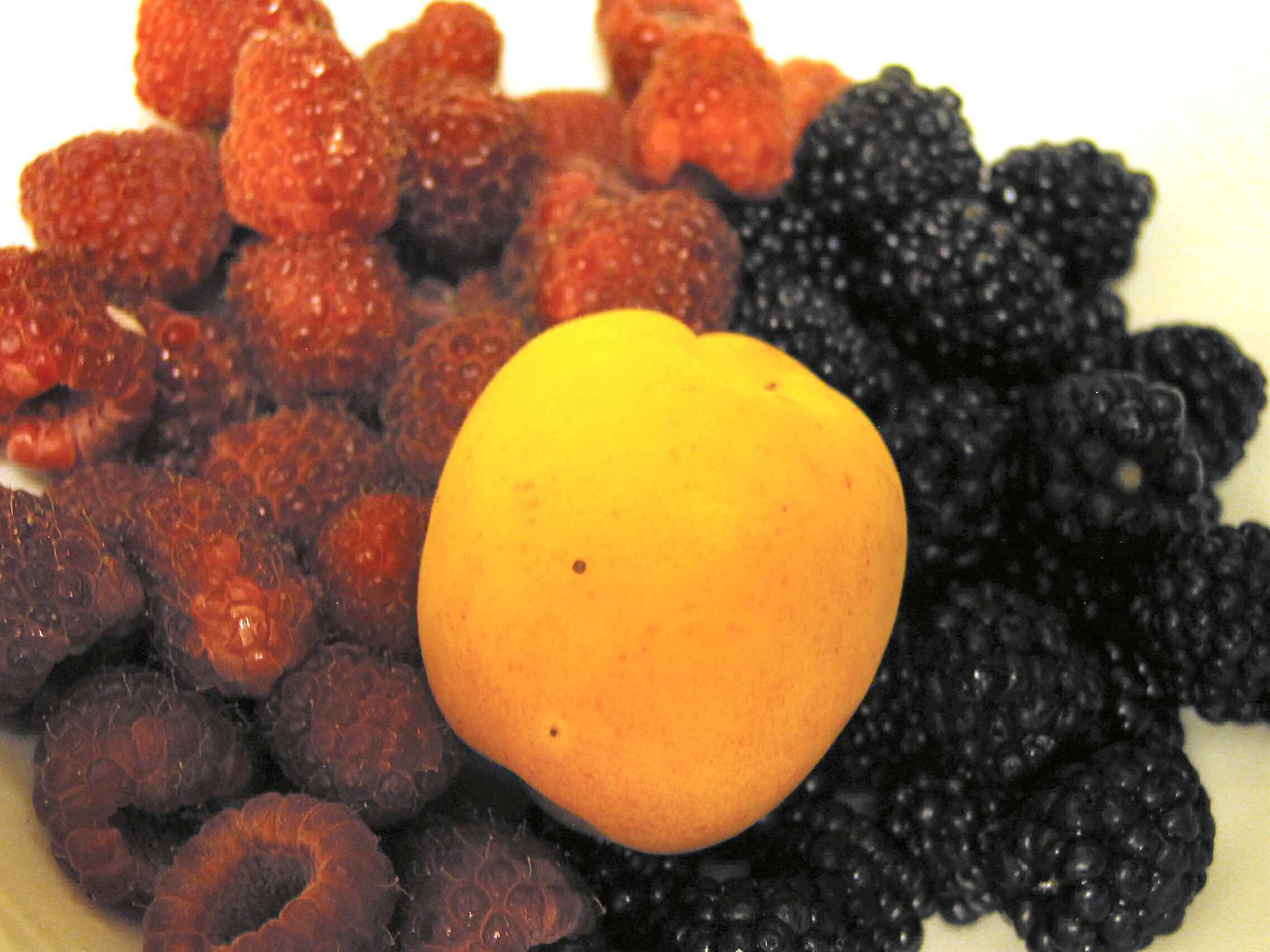
summer fruitsIt’s late May, and a food writer’s fancy turns to the first crops of summer fruit to hit the farmers’ markets. That’s strawberries and apricots in Los Angeles, and maybe some cherries too. We hunger all year for the fragile, flavorful stone fruits and berries to come back; even frozen bags of berries lack a great deal when compared with fresh blackberries at the height of their season.

As for apricots, the last two weeks have been nearly astonishing. My local Armenian greengrocers have been getting in beautiful ones with firm, juicy flesh and an astonishing tang, much better than the mushy bland ones I remember from a childhood summer spent up in British Columbia’s orchard country (their cherries were pretty good though…) And although these apricots are fairly reasonable for Los Angeles at under $2/lb., the price still makes them worth eating carefully, which for me means eating them out of hand and no other way. No recipes, no distractions, no competition–I’m hoarding mine.

Which is why I wonder at the food magazines and newspaper dining sections this week–several have baked apricots on the menu, and all seem to douse said apricots with cups (sometimes plural) of sugar and butter. And it’s true that baking or microwaving can rescue really bland stone fruit. But it doesn’t require tons of sugar or butter, just heat to intensify the flavor.

For really good summer fruits in season, do you really want to drown out their native freshness and tang with a ton of generic sweetening? Do you really want to cook them at all? Because heating will intensify the base flavors at the expense of the fragile, perfumed complexity that you’ve waited for all year. Otherwise, you’d be just as happy with canned peaches, even in the summertime.

I feel at least as strongly about blackberries and raspberries. When I was a student in Virginia I used to go down to the woods–or the train tracks–in the summer and pick salad bowls full of berries from the brambles. I wasn’t alone, either–dedicated bikers and even a few runners could be seen hauling lidded bowls around with them. I picked up my share of scratches, but it always seemed worth it.

Out here, the cultivated blackberries and raspberries are bigger, the flavors deeper and sweeter because California gets so much sun. When we can get them at a good price, which this week they were, there’s nothing like eating them fresh one by one. You can be happy eating just a few at a time and concentrating on the flavor. Sugar would throw the experience–it would be like adding sugar to your glass at a wine tasting.

And on the other hand, fruit pies not made from a can are their own kind of once-a-year experience. So can you combine the freshness of raw summer fruit with the pleasure of good baking? Continue reading

Microwave Cheesecakes

Microwave cheesecakeThis week we celebrated Shavuot, the feast of first fruits and giving of the Torah at Mt. Sinai. Shavuot has only two solid traditions I can remember from childhood: studying all night (three ultra-dedicated guys from my congregation would hang out and do it for the rest of us, kind of like the Jewish Scholarship Marathon), and eating cheesecake. Which is a pretty good tradition, actually.

I go for the serious New York-style tall, lemon-tinged cheesecakes that are rich and just dry enough to have a fluffy crumb to them. The only one of these I ever made myself was the glorious one from (once again) Joan Nathan’s The Jewish Holiday Kitchen. It was huge, it was beautiful, it took two whole hours of baking with the oven on and off, and I was just barely smart enough to wrap it tight in a double layer of heavy-duty tinfoil  right before carrying it out to the car for a brunch setup. Because of course it took a nosedive onto the parking lot pavement–but the foil held up! And the cheesecake was only a little bashed! And we covered it pretty liberally in sour cherry jam, and everyone ate it happily, and no one kvetched. A miracle!

The story of how G-d gave the Torah law to the Jewish people on Mt. Sinai, is kind of hard to picture. Supposedly it was all so shockingly loud and bright people started to hear colors and see sounds (or else the lightning was so close it started to short out their neural circuits). But what is clear is that  everyone was so awed and shocked they stopped arguing, at least for a few minutes.

So of course it has everything to do with today’s topic, which is still cheesecake. It’s an established fact–feed cheesecake to your people and you’ll get a few minutes of blessed silence. It’s quicker and cheaper than group electroshock therapy, too, and it tastes better.

So I’d wanted to make a cheesecake for Shavuot, but not take two hours about it, especially in May in Los Angeles. Also, cheesecake is  a traditionally loaded food–one look and you can hear your gallbladder calling you.  But it’s a real challenge to make a decent-tasting, genuinely low-fat version that isn’t just “use neufchâtel and cut out 3 calories!” Or else hideously tough or gelatinous or watery or flavorless or grainy or otherwise weird.

Drained nonfat yogurt–no. Tough, tangy AND watery after baking. Ricotta–not bad, especially for Roman-style cheesecake, but bland and a bit grainy. Gelatin’s out for me because it’s not a kosher ingredient. Fat-free cream cheese–I’m just not a fan, it’s too salty and processed-tasting somehow. Not fresh. And on the web I’ve seen everything from tofu to tehina (sesame paste)–I can’t imagine, but to each his or her own.

Still, I think with the microwave I’ve got the time thing solved in a way that will work for a number of different versions. A while back I discovered you can take pretty much any standard New York-style cheesecake recipe (eggs, flour, cream- or other suitable cheese, vanilla, lemon juice), put it in a microwaveable baking dish, cover and nuke it through in a couple of minutes without ruining the texture. It’s probably better without a crust, but if you prebake the crust then pour the filling, cover, and nuke while it’s still hot, it might prevent sogginess.

The only versions that might be really troublesome would be ones with yogurt, which is usually too thin and watery even when drained, or else cottage cheese, which works in a conventional oven but not the microwave. For some strange reason cottage cheese curd liquefies into a buttermilk-like mess in the microwave rather than setting up. Frustrating. But ricotta works pretty well, cream cheese–of course, labaneh–astoundingly perfect, and even…nonfat powdered dry milk (NFPD) with buttermilk. Odd but true. So it will work with a range of adaptations from full-fat to ultra-lean, and the rest is up to your tastebuds. Continue reading

Mastering Mandelhorns

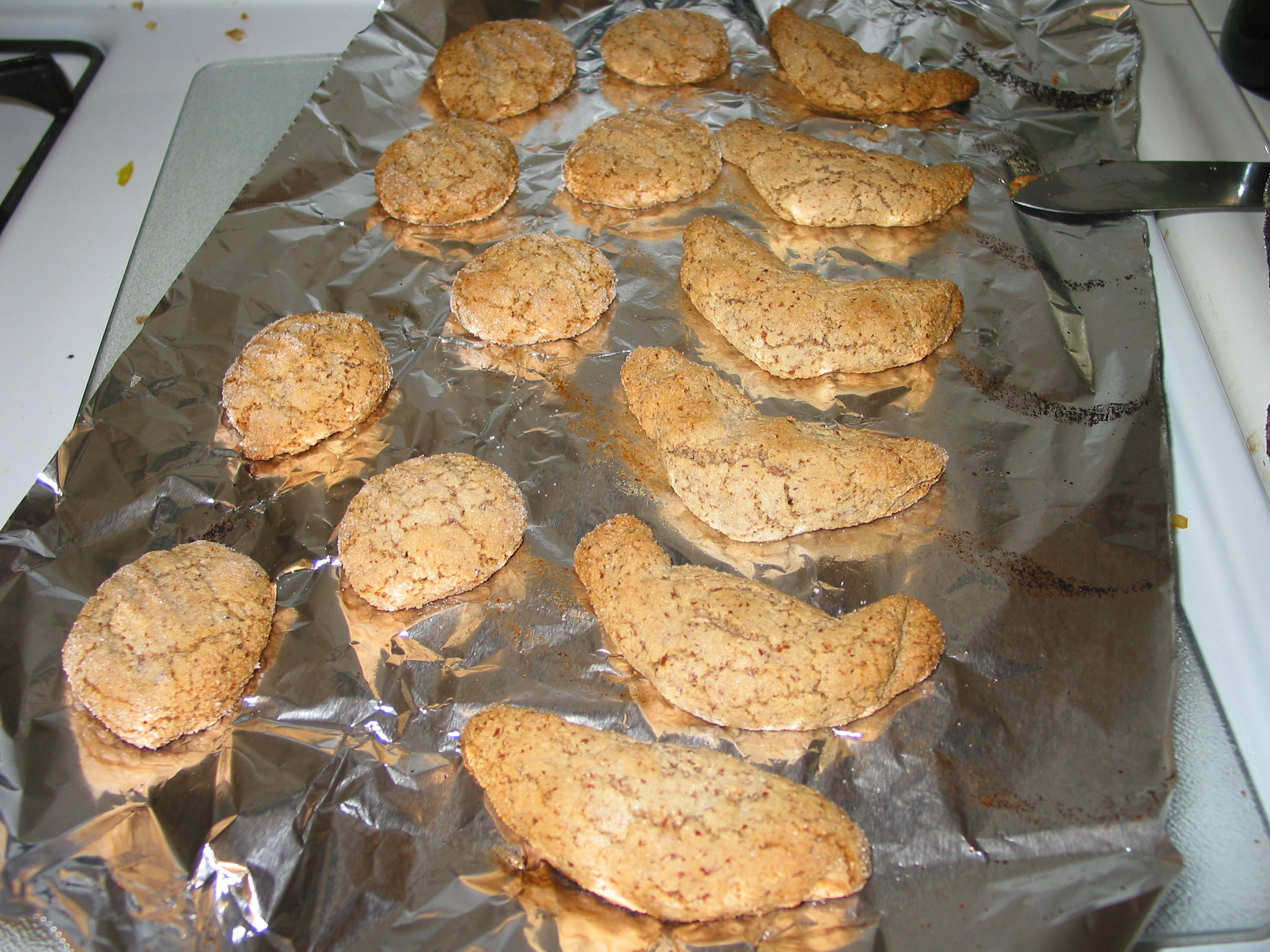
Almond horns and macaroons

Jewish and Greek bakeries often have big, chewy almond horns somewhere in the pastry case, sometimes with the ends dipped in dark chocolate, and whenever I can find them they’re what I home in on. Babka isn’t bad, nor is baklava, don’t get me wrong. I love them both. But neither of them comes anywhere close to mandelhorns in my world. And don’t get me started on mandelbrot–not the same thing at all. AT ALL. Even my great-aunt Tessie’s, which as I understood from my dad were the pinnacle of the form.

Almond macaroons and marzipan confections in general all have three main ingredients–almonds, sugar, and eggs–plus or minus almond extract, rosewater, orange blossom water, or lemon peel, depending on your era and country of origin. They’re very basic sweets that go back at least to medieval times and were made everywhere from the eastern edges of Persia (maybe in China too) to the western edges of Spain and Morocco. You can find recipes for them in The Form of Cury, Richard II’s chef’s cookbook from the late 1300s, and they’re mentioned in early Spanish literature as “Jewish pastries” dating from before the Inquisition.

For years I’ve tried with limited success to make almond macaroons. They always come out flat or hard with shiny bottoms (not that we didn’t eat them all anyway, but really). Over the years I must have collected more than a dozen variations–they’re always listed in the newspapers for Passover, since we traditionally ban baked goods made with flour and other grains during that holiday. Which is coming up.

Right before winter break, I wanted to try and make mandelhorns right for a change, so I could bring some up to my husband’s family. I went back to my cooking file with all the variations and actually looked at them carefully.

There are a couple of ways to make almond macaroons and almond horns right, and I’d been doing none of them. The first is to make an “Italian” or “Swiss” meringue Continue reading

Low-Carb Hamantaschen Without Artificial Sweeteners

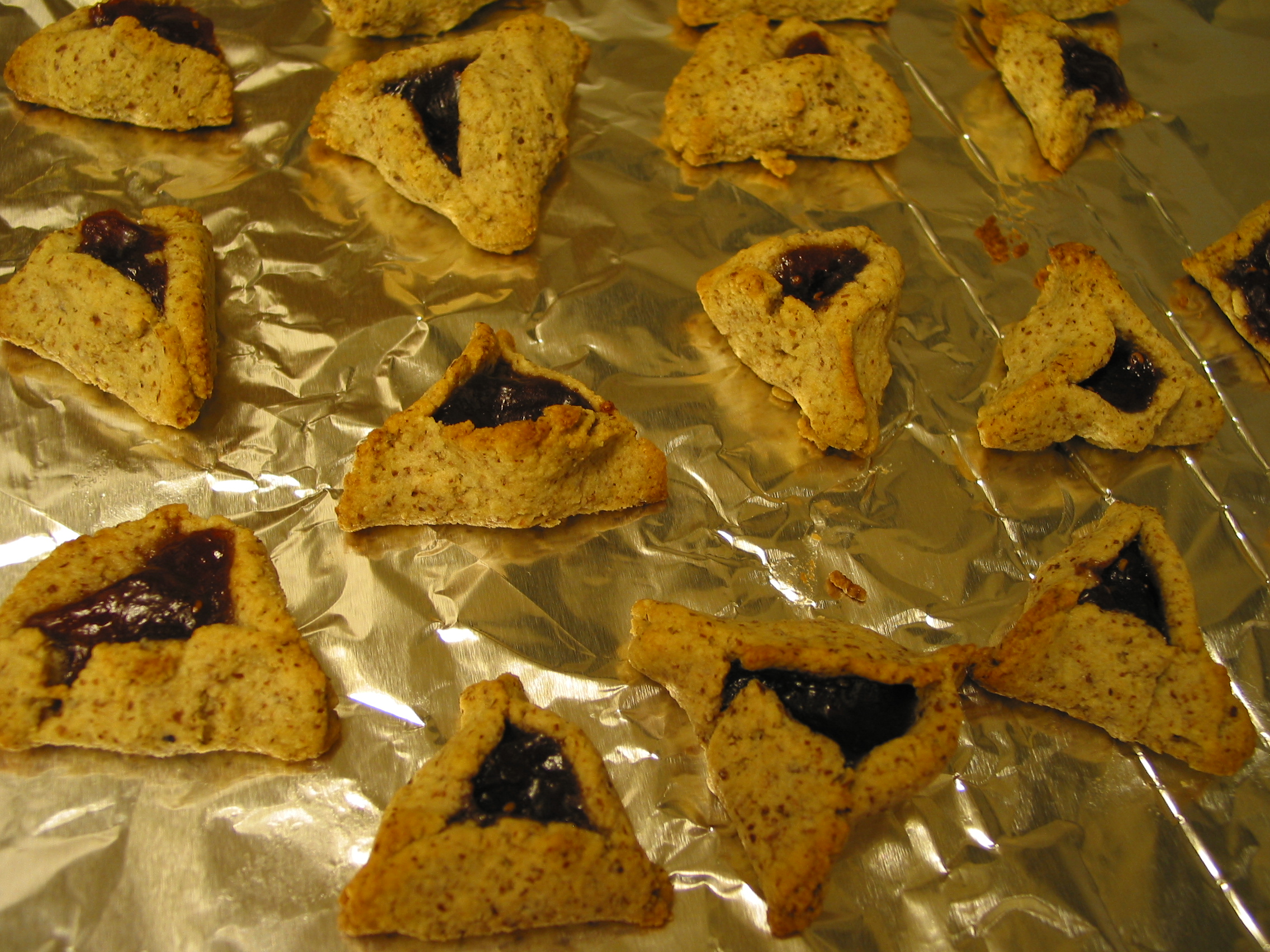
Almond meal-based low-carb hamantaschen

The first batch didn't roll out so easily, but these coin-sized minis tasted pretty good. The next batch rolled out thinner and held together better for a larger cookie with a delicate crust.

Baked goods are a big part of Jewish holidays at this time of year. Purim, being celebrated this weekend, is the last big baking bash before Passover, and hamantaschen (named for the hat, ears or purse of Haman, the villain of the story of Esther) are the cookie of choice. But with a diabetic kid in the house, the usual prospect of baking them takes on a bitter edge.

Hamantaschen–in fact, most cookies–have enough grams of carbohydrate that just two medium-sized cookies contain about half of what she’s supposed to have in any given large meal, twice what’s recommended for a snack, and they don’t have enough fiber or protein to slow down the sugars and avoid a spike in blood glucose. In short, not high-quality nutrition (not that we expect cookies to be). A grownup would have trouble dealing with the prospect of leaving them alone when everyone else gets to have them, but a kid faced with Purim celebrations at school or synagogue is bound for a certain degree of heartbreak.

It’s made me rethink our whole attitude toward things like Girl Scout cookies (this is also the season for that), chips, M&Ms, in fact any casual snack food that gets handed out innocently at school (our current woe–apparently my daughter’s teacher does this kind of thing at least weekly). The snack habit–anytime, anywhere, any or no reason–has become so ingrained in daily life we hardly think about whether it’s appropriate or not. Certainly the handouts are happening more and more frequently in class than I remember when I was a kid–did teachers even hand out treats back then? Not in my elementary school. It’s especially hard for a kid to “just say no” (and we already know how well that advice works in other contexts) when everyone else is taking a cookie or some M&Ms as a reward for answering a question (can they even keep their minds on the subject)? And even worse when it’s the teacher handing them out, because the teacher’s supposed to know whether it’s ok to eat or not.

Maybe we shouldn’t be handing these things out so casually or so often? Because while most people can handle surprise extras like these, they’re probably not all that good for anyone to eat indiscriminately at just any time of day. If they’re spiking a diabetic kid’s blood sugar, you can be sure they’re doing the same thing to your kid’s blood sugar too, only his or her body is responding with extra insulin to cover it. We get to see the results directly every couple of hours with our daughter–complete with sudden attacks of giddiness or tears if things peak and crash too quickly. But the same kind of thing happens to some degree to a lot of kids who aren’t diabetic, and they probably get reprimanded for it. Probably happens to a lot of adults, too.

Still, it’s the holiday, and total deprivation from treats is not really my aim today. So I’ve been trying to figure out a revised recipe for hamantaschen with a more manageable carb count, and preferably one without artificial sweeteners since my kid is still a kid. And neither of us wants it to taste like chalk. Very important.

I start most years with Joan Nathan’s cookie-dough hamantaschen recipe from The Jewish Holiday Kitchen because it’s the best dough I’ve ever tasted for these, even though it’s pareve (non-dairy, non-meat) and doesn’t have butter or cream cheese or the like. It’s not too sweet or too dry, and it doesn’t look or taste chalky or pasty like some of the dead-white offerings at the Purim carnivals. It tastes like a pretty good cookie, and it works really well for rolling out.

Looking at the carb count breakdown for that recipe, at about 12-15 g each, it might not be so bad to do regular hamantaschen, but my daughter would need to eat one or at most two with something protein or fiber, and she’d need insulin for it, so she couldn’t just grab one in between the planned meals. Kind of a pain, no doubt about it.

I was hoping for something closer to carb-free so she could eat hers with impunity when everyone else is eating theirs. This year I scanned the web for low-carb hamantaschen recipes and found only one Continue reading

Rethinking everything

I’ve been away from my desk, my notebooks, this blog for two weeks now. I never expected to be–it’s become a weekly adventure to seek out new topics in food, food politics, nutrition, and alternate methods for cooking real food faster. And then last week my daughter was diagnosed with Type I diabetes.

Diabetes is one hell of a verdict when you think your kid is just growing, and then just has a simple stomach virus, and it turns out to be neither of those things. It was also one of those strange fairytale paradoxes by which a cursed or poisoned feather turns out to save the princess in rags. She’d come home from school three weeks ago with what seemed like a routine stomach bug, but it wasn’t. Instead of a bit of fever, antsy impatience at having to rest and then bouncing back, she was cool, sleeping around the clock, drinking a lot even when she couldn’t stand to eat, and losing weight fast. Taking her back to the doctor the second week, we were thinking anemia, mono–afraid to think anything worse. Thank god our doctor threw in a glucose test along with the usual suspects. By afternoon he’d called and told us to get her down to the ER.

A night in the hospital is no picnic, even if all they’re doing to your kid is putting her on an i.v. and pricking her fingers with a lancet for testing once in a while. The second night is no fun either–everything the doctors have been telling you goes in one ear and slides right out the other as you wonder what your kid will ever be able to do normally again, and how much you’ll have to worry for her the rest of her life, and how you’re going to keep from laying those worries on her. And yet–at some point in the middle of the second night, unable to sleep much between nurse interruptions–I started to realize my daughter’s legs and arms and face were already filling back out, and in fact she had spent a good part of the second day sitting up reading Charlie and the Chocolate Factory for all she was worth, reading me her favorite bits in a silly voice  and cackling every once  in a while. More energy than I’d seen in three weeks. Whatever they’d done to lower her sugars and balance her electrolytes again was really working. She was reappearing before my eyes. I had no idea how to feel anymore except shocked, grateful and slightly absurd.

Furthermore, every time the orderly came by to pick up a menu or leave a meal, my daughter tucked into the food as though it had been catered by Daniel Boulud. (Of course, most of the meals featured meat, which she loves but I don’t make very often.) It is fairly humiliating to have your kid announce that the hospital meals are better than those at home…

Then she started talking about which kinds of potatoes she likes or doesn’t, whether and how soon she can have pizza, how will she ever be able to go to a birthday party and stand not having cake or candy or ice cream without having to figure out the carbs and the insulin beforehand, what about Valentine’s Day and on and on.  Somehow oatmeal raisin cookies became the benchmark of whether she was going to be able to eat like a person or not–and she hasn’t even had a taste for them in at least six months.

The shrinkage, the re-blossoming, and the total fixation on treats and sweets, all within a few days in a hospital bed–suddenly Charlie Continue reading

Putting Pie Crust on a Diet

From a recent LA Times special on savory pies comes a classic calorie-bomb–only, it’s not even the pie. It’s the pie dough itself:

Basic savory pie dough No. 2 (cream cheese)

Servings: 1 double-crust (9-inch) pie or 6 individual hand pies

  • 1 (8-ounce) container cream cheese, at room temperature
  • 1 cup (2 sticks) butter, at room temperature
  • 1/4 cup cream
  • 1 teaspoon salt
  • 2 2/3 cups (11 1/2 ounces) flour

Each of 6 servings: 638 calories; 9 grams protein; 44 grams carbohydrates; 2 grams fiber; 48 grams fat; 29 grams saturated fat; 137 mg. cholesterol; 1 gram sugar; 518 mg. sodium.

Now come on. 638 calories before you ever get to the filling? Who wants to eat that much pie dough at a time, especially one so rich? OK, don’t answer that, but really. Gag.

Except for the extra cream and the teaspoon of added salt (and why do you even need those with a cream cheese dough anyway?) this is really just a classic rugelach dough–you mix the fats together and then stir in the flour a little at a time by hand. Only, rugelach dough is meant to be rolled out as thin as physically possible–1/16 inch thick or even less–before spreading with jam and nuts and chocolate and cinnamon and so on and rolling it up into a crescent shape. And a good thing too, because cream cheese doughs are notoriously rich. More dough per rugelach and you’d soon feel like you’d eaten an airline Danish–it would sit like lead in your stomach for hours.

I compared the recipe above with the one in my much-used spiral-bound 1984 edition of Joan Nathan’s The Jewish Holiday Kitchen (thank you, Hadassah rummage sale!) It was probably the one cookbook that influenced me most as a college student, and I still use it for the classics, especially baked things like rugelach and hamantaschen that I can’t just wing (note–her cookie-style hamantaschen recipe is the best I’ve ever tasted, a far cry from the usual chalky white horrors on the Purim carnival bake sale table).

Based on Nathan’s rugelach recipe, which is the same recipe everyone everywhere seems to use, the quantities in the LA Times recipe above should make something like 40 rugelach, so figure about 15-20 realistic servings, not six. The cooks at the LA Times must be rolling the dough out the standard 3/8 inch thick for their pies, but it seems like a complete waste of this dough’s particular talents. Continue reading