
• Enter your email address to subscribe to this blog and receive notifications of new posts by email.

    Join 241 other subscribers
  • Noshing on

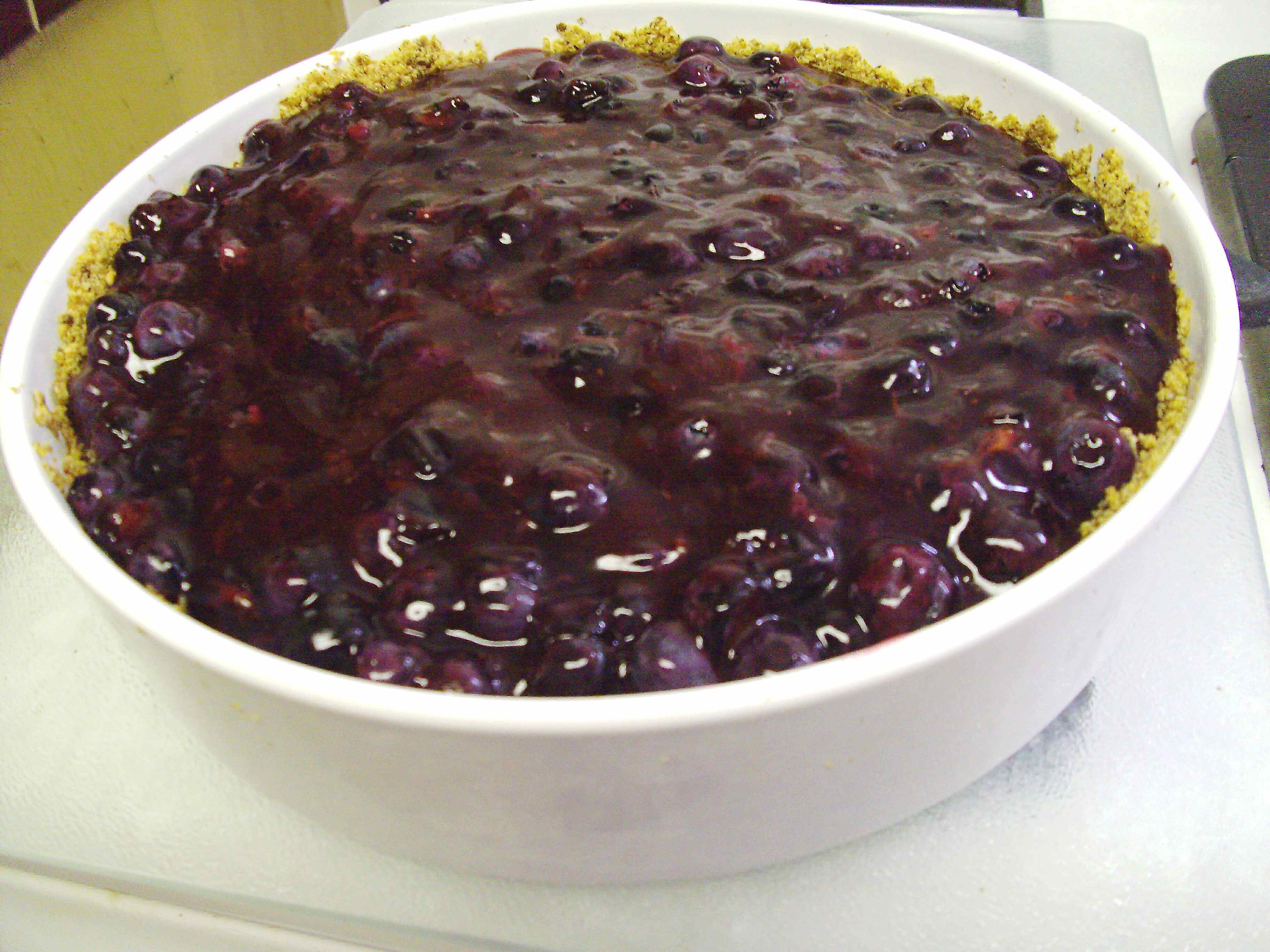
    raw blueberry pie with microwaveable filling and graham cracker crust

    This mostly-raw blueberry pie is a snap to make and very versatile--the filling microwaves in a few minutes, and you don't even have to bake the zippy gingered graham cracker crust--perfect for a hot Fourth of July and all summer long.

  • Recent Posts

  • Contents

  • Archives

  • Now Reading

  • See also my Book Reviews

  • Copyright 2008-2024Slow Food Fast. All writing and images on this blog unless otherwise attributed or set in quotes are the sole property of Slow Food Fast. Please contact DebbieN via the comments form for permissions before reprinting or reproducing any of the material on this blog.

  • ADS AND AFFILIATE LINKS

  • I may post affiliate links to books and movies that I personally review and recommend. Currently I favor Alibris and Vroman's, our terrific and venerable (now past the century mark!) independent bookstore in Pasadena. Or go to your local library--and make sure to support them with actual donations, not just overdue fines (ahem!), because your state probably has cut their budget and hours. Again.

  • In keeping with the disclaimer below, I DO NOT endorse, profit from, or recommend any medications, health treatments, commercial diet plans, supplements or any other such products.

  • DISCLAIMER

  • SlowFoodFast sometimes addresses general public health topics related to nutrition, heart disease, blood pressure, and diabetes. Because this is a blog with a personal point of view, my health and food politics entries often include my opinions on the trends I see, and I try to be as blatant as possible about that. None of these articles should be construed as specific medical advice for an individual case. I do try to keep to findings from well-vetted research sources and large, well-controlled studies, and I try not to sensationalize the science (though if they actually come up with a real cure for Type I diabetes in the next couple of years, I'm gonna be dancing in the streets with a hat that would put Carmen Miranda to shame. Consider yourself warned).

Artificial sweeteners causing glucose intolerance

A new study on artificial sweeteners published in Nature goes a long way toward explaining one of the most puzzling findings about sweetened drinks in recent years: that regular consumption of even diet sodas is associated with an increased incidence of obesity and Type II diabetes. Surely, if the sweeteners have no calories and negligible carbohydrate, this shouldn’t be happening? Surely people should be losing weight? But the national statistics have shown that it is, and they’re not.

According to a news summary in The Scientist (Sugar Substitutes, Gut Bacteria, and Glucose Intolerance), researchers at the Weizmann Institute of Science in Rehovot, Israel, demonstrated that repeatedly consuming zero-calorie sweeteners like saccharin, sucralose and aspartame (e.g., Sweet ‘N’ Low, Splenda, and NutraSweet) increases a person’s glucose intolerance by causing changes to his or her gut bacteria.

The researchers did extensive testing on mice first–fed them artificially sweetened water for several weeks and compared glucose tolerance and gut flora with those of control groups that received either glucose solution or plain water. The experimental mice had much higher rates of glucose intolerance than either of the control groups, including the one that was fed glucose solution.

They also had very different gut bacteria composition, which the researchers thought might be causing the changes in glucose tolerance. Wiping out the gut bacteria of control mice with antibiotics and then repopulating with the gut bacteria from sweetener-fed mice caused glucose intolerance in the normally fed mice.

The researchers repeated their experiments on healthy human subjects, and they got the same dramatic results. The timeframe for measurable changes in glucose tolerance was within as little as six days for one of the tests.

Admittedly, the researchers were dosing their subjects with sweetener concentrations at the highest levels currently deemed safe by the FDA. So if you only consume these sweeteners occasionally and in small quantity–say, chewing sugarless gum once in a while–you might not be causing a drastic change in your gut bacteria or glucose tolerance.

But so many people in the US consume diet sodas and artificially sweetened teas and so on in large quantity on a daily basis that it’s possible they’re coming close to the levels used in these experiments. If you consume even half the maximum defined “safe” daily level, you might well be impairing your glucose tolerance significantly. But there may not be a safe level. There’s no saying what level–if any–of sweetener per day is low enough not to change gut bacteria and raise glucose intolerance–it may be a matter of dose or it may be a matter of how long and how regularly people consume these sweeteners.

Glucose tolerance is a measure of your body’s ability to supply insulin quickly and at the right level whenever you eat or drink something with starches or sugars. Part of the gut’s function is to release glucose into the bloodstream, but Continue reading

10 (or so) Warning Signs of a Half-Baked Diabetes Cookbook

For the past two months I’ve been scouring the library and bookstore shelves in search of practical guidelines for preventing and managing Type II diabetes with  diabetes-careful meal plans.

I have two goals for myself:

1. Get down to a healthier weight by eating less and exercising more–this is the big one with the best correlation to reversing prediabetes. And it’s going okay but slowly.

2. Eat balanced meals with somewhat less carb per meal, fewer free sugars and fewer calories overall than usual. This is the easier one generally…as long as I keep a food diary. Luckily, I know how to cook and I’ve been doing meal planning for a Type I diabetic child for four years now, so I know how to count carbs. And when I don’t, I have a copy of the American Dietetic Association’s handy, simple and cheap $3 or so guide on the shelf. And a link to the USDA nutrition database for the exotic occasional items like chestnuts in the shell (note to self, about 5 grams apiece).

But I still wondered if the diabetes and weight loss cookbooks I see around are solid and I’ve just been too lazy, arrogant or impatient to take them seriously all these years. Hence the trips to the library.

Because no doubt about it, the diabetes cookbook scene is burgeoning. There are loads of good-looking cookbooks out with pretty, gourmet-looking recipe photos and promises of perfect blood sugar management amid the desserts on the cover.

Here’s the short version of this post: a read through most of these books is NOT encouraging. All the popular diet book gimmickry of the past 40 years seems to have been transferred to a lucrative new target (read: gullible victim) market, complete with bright, shiny new drug company advertising and sponsorship potential on the coordinating web sites.

Considering that there’s no precise required diet for diabetes, just guidelines for budgeting meal carb totals and keeping some kind of commonsense balance between starches, fiber and sugars, even the premise of prescriptive diabetic cooking guides is a little shaky to start with. But what’s actually being presented as guidance in these popular books is far from that approach.

Even cookbooks affiliated with or endorsed by organizations like the American Diabetes Association and so on fail some pretty simple commonsense tests for honesty, accuracy, consistency, or relevance to standard public health guidance on preventing, managing and reversing Type II diabetes by way of diet. And if you don’t already know your way around carb counting and portion size measurement, they’re extremely confusing. Sometimes even on purpose.

So here are the main common flaws I’ve discovered in most of these books, with a few books singled out for personal ire and bemusement. You might want to consider these as warning signs if you’re looking for actual guidance to get you through.

10 Warning Signs that Your Diabetes Guide Cookbook is Half-Baked

1. The Dessert First approach to diabetes management. Telltale sign: does it show cake or ice cream on the cover? About half the books I scanned do. They treat desserts and snacks as a top priority, as though that were what diabetes control is all about. As though sweets were somehow necessary at every meal, or even every week. None of them ever say, “just stick with a small apple or orange most days. No recipe required.” Actual endocrinologists recommend keeping desserts occasional and snacks un-glamorous and limited in carb.

1b. Aside: Many of the dessert-first books show cheesecake on the cover, usually a 1/8 to 1/10 cake portion–a pretty hefty wedge by any standards. This is a come-on–cheesecake is usually high in fat calories, so it’s rarely a good pick for anyone attempting to lose weight (the main strategy for Continue reading

Artificial sweeteners–false promise for lower carb counts?

Last Saturday night my family visited a couple from our congregation and had dinner in their sukkah. When we broached the question of what there would be for dinner so my daughter could get an idea of how much insulin to take, the husband announced that he too was diabetic–Type II, for several years. What followed was a bit of a culture clash.

I’m sure he meant to be encouraging as he declared that through a combination of self-discipline and exercise and not eating more than a very limited number of carbs per day (and they really were about half of what our daughter is supposed to eat) that his A1C tests were down in the normal range and he only had to test his blood sugar twice a week. Which of course is fine and nearly ideal for a Type II diabetic if it actually works.

I’m not entirely sure how my daughter took all of this, but he went on to dismiss another Type I diabetic we know as “paranoid and overdoing it” because she tests 6 or 7 times a day, which he assumed was unnecessary since he didn’t need to do that.

He had the shining confidence of someone for whom not much had ever gone awry and, having no idea how lucky he was, assumed it was down to his own skill rather than the fact that he had a working pancreas, wasn’t growing anymore, and wasn’t a girl. All big factors for blood glucose control. Clearly he’d never had a bad low with shakes from an overdose or hormonal surge, or a really sharp unexpected high from a shot that just didn’t get where it was supposed to go.

I was more tactful than I’ve ever been in my life when I pointed these things out. You wouldn’t have recognized me, I swear!

Oddest of all was his insistence that the real secret was his use of artificial sweetener, which let him enjoy all kinds of great desserts. I was puzzled–baked apples sprinkled with xylitol? Surely the apples themselves were pretty carby–as well as pretty sweet on their own. The carb difference between using artificial sweetener, a tablespoon–or even two–of table sugar for the pan, or just leaving the apples to bake without sweetener, would be pretty minimal per serving.

And indeed our host only took two wedges for himself.

The other dessert–and it did taste decent–was chocolate ice cream sweetened with xylitol. Given that the ice cream in question was a plain flavor from my usual brand, I was able to compare it with the ordinary version for carb with reasonable confidence.

It was plenty sweet–maybe sweeter than normal, for that matter. But for carbs?

There was no difference. 17 grams per 1/2 cup serving, xylitol or no.

Which brings up a sobering question: why use artificial sweeteners if they don’t lower the carb count significantly? Continue reading

Cranberry Sauce Without the Fuss

Cranberry sauce in the microwaveI love homemade cranberry sauce, and not just at Thanksgiving. It makes a pretty good jam for breakfast and (should the need arise) a pretty good tisane for a congested sore throat if you heat a dollop in a mug of water and sip it hot, berries and all. Despite the fact that it’s tart, which you’d think would make your throat hurt more, the cranberries actually contain something soothing that will give you at least temporary relief when you’re in the throes of Los Angelitis and the Tylenol hasn’t kicked in yet (you can trust my expertise on this one, unfortunately). But hopefully you won’t need it for anything medicinal this winter and can just enjoy fresh-made cranberry sauce for its own sake.

A lot of people are convinced that just opening a can is the easiest and least scary way to go. They must have read the package directions and decided it was too much work to make the syrup first (very intimidating-sounding) or that adding the berries and letting them pop was likely to spatter the stove until it looks like a magenta Dalmatian.

But really, you can just microwave cranberry sauce and it works fine. Throw all the ingredients (berries, sugar, water) into a 3-cup pyrex bowl, slap a lid on partway, and nuke it for 5 minutes. That’s it. No preboiling. Don’t even bother mixing it. In five minutes, you’ve got standard fresh-made cranberry sauce in a bowl that can go straight to the fridge once it’s cool. And no saucepan or stove top to wash before your guests arrive.

You can dress it up with some orange peel or juice, or a pinch of clove and cinnamon. You could add a chopped, peeled granny smith apple or a well-scrubbed chopped organic seedless orange with the peel to the berries for cooking, or else stir in a spoonful of Cointreau or Triple Sec after the jam cools, and you’d have something a little more sophisticated, but the basic recipe is worth having as a first run.

And most helpfully, if you’re looking for something less sugared, you can cut the typical cup of sugar per 12-oz bag of cranberries in half and it’ll still gel decently. Or you can do it with no sugar at all, let all the berries pop and thicken up just in water, and sweeten it with your preferred artifice after it’s cooled. It won’t be completely carb-free per tablespoon or so even with no added sugar, but it’ll be pretty low.

Approximate carb counts (total and per tablespoon, counting 1 T as ~1/16th c.):

Cranberry-only version without apple or orange

  • With 1 cup of sugar: 242 g carb per 2.5-3 c. cranberry sauce  or 5-6 g/T.
  • With 1/2 c. sugar: 142 g carb/recipe or ~3 g/T.
  • Artificially sweetened only: 42 g carb/recipe or ~1 g/T.

Cranberry sauce with apple or orange

With a good-sized apple or orange chopped in, figure 25 extra grams of carb per recipe or 0.5 gram extra carb per tablespoon.

Any way you go with it, though, homemade cranberry sauce has a good deal less carb per spoonful than other kinds of commercial jams, and probably a good deal less than the stuff in a can. It’s a lot better tasting too.

Microwave Cranberry Sauce

  • 12-oz package fresh cranberries, washed well
  • 1 c. water
  • 1 c. sugar (standard Thanksgiving back-of-package recipe), 1/2 c. sugar (my version this week, which was plenty sweet enough for me), OR no sugar during cooking but artificial sweetener added afterward to taste

optional additions: chopped peeled apple, finely chopped whole scrubbed organic orange, pinch or so of powdered cloves and/or cinnamon, a little grated orange or lemon peel, or a spoonful of orange liqueur or brandy

Put the cranberries, sugar if using, water, and apple or orange if using in a 3-cup pyrex bowl, cover loosely with a microwaveable lid so steam can escape but it won’t spatter, and microwave on HIGH 5 minutes. (If you’ve added an apple or orange, you might need an extra minute to account for the extra fruit.) Keep an eye on it toward the end, but it probably won’t boil over.

The mixture should already be thickening to a sauce/jam consistency (it’ll thicken more as it cools), and most of the berries should be popped. Stir well and microwave a minute or so more with a vented lid if you want it thicker. Let cool to room temperature and, if using artificial sweetener, sweeten to taste. Other flavorings–you could add grated lemon or orange peel (sparingly) or clove or cinnamon before cooking, but save any alcohol-based flavorings for after the jam has cooked so they don’t just evaporate in the microwave.

Rethinking everything

I’ve been away from my desk, my notebooks, this blog for two weeks now. I never expected to be–it’s become a weekly adventure to seek out new topics in food, food politics, nutrition, and alternate methods for cooking real food faster. And then last week my daughter was diagnosed with Type I diabetes.

Diabetes is one hell of a verdict when you think your kid is just growing, and then just has a simple stomach virus, and it turns out to be neither of those things. It was also one of those strange fairytale paradoxes by which a cursed or poisoned feather turns out to save the princess in rags. She’d come home from school three weeks ago with what seemed like a routine stomach bug, but it wasn’t. Instead of a bit of fever, antsy impatience at having to rest and then bouncing back, she was cool, sleeping around the clock, drinking a lot even when she couldn’t stand to eat, and losing weight fast. Taking her back to the doctor the second week, we were thinking anemia, mono–afraid to think anything worse. Thank god our doctor threw in a glucose test along with the usual suspects. By afternoon he’d called and told us to get her down to the ER.

A night in the hospital is no picnic, even if all they’re doing to your kid is putting her on an i.v. and pricking her fingers with a lancet for testing once in a while. The second night is no fun either–everything the doctors have been telling you goes in one ear and slides right out the other as you wonder what your kid will ever be able to do normally again, and how much you’ll have to worry for her the rest of her life, and how you’re going to keep from laying those worries on her. And yet–at some point in the middle of the second night, unable to sleep much between nurse interruptions–I started to realize my daughter’s legs and arms and face were already filling back out, and in fact she had spent a good part of the second day sitting up reading Charlie and the Chocolate Factory for all she was worth, reading me her favorite bits in a silly voice  and cackling every once  in a while. More energy than I’d seen in three weeks. Whatever they’d done to lower her sugars and balance her electrolytes again was really working. She was reappearing before my eyes. I had no idea how to feel anymore except shocked, grateful and slightly absurd.

Furthermore, every time the orderly came by to pick up a menu or leave a meal, my daughter tucked into the food as though it had been catered by Daniel Boulud. (Of course, most of the meals featured meat, which she loves but I don’t make very often.) It is fairly humiliating to have your kid announce that the hospital meals are better than those at home…

Then she started talking about which kinds of potatoes she likes or doesn’t, whether and how soon she can have pizza, how will she ever be able to go to a birthday party and stand not having cake or candy or ice cream without having to figure out the carbs and the insulin beforehand, what about Valentine’s Day and on and on.  Somehow oatmeal raisin cookies became the benchmark of whether she was going to be able to eat like a person or not–and she hasn’t even had a taste for them in at least six months.

The shrinkage, the re-blossoming, and the total fixation on treats and sweets, all within a few days in a hospital bed–suddenly Charlie Continue reading