
• Enter your email address to subscribe to this blog and receive notifications of new posts by email.

    Join 241 other subscribers
  • Noshing on

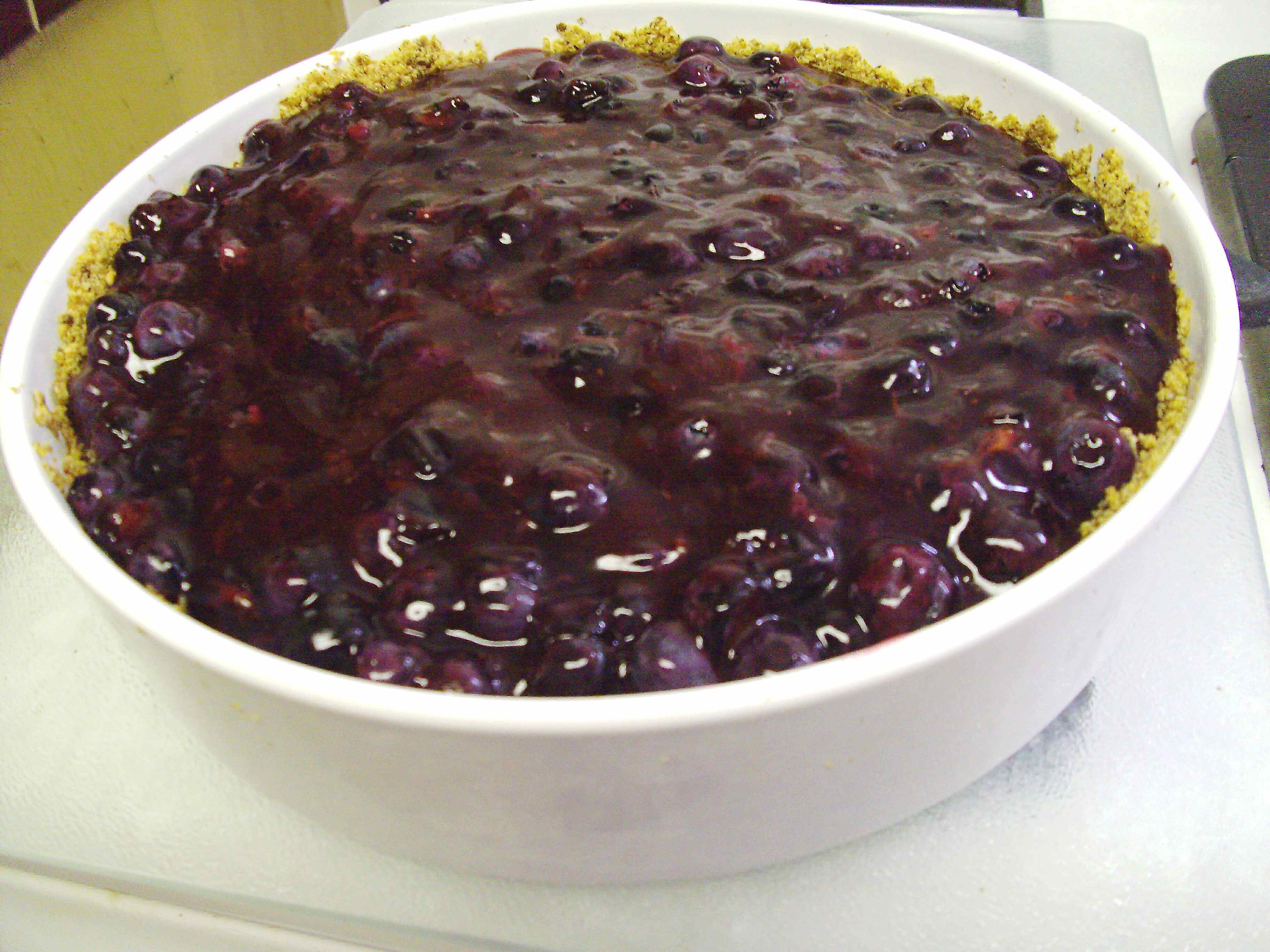
    raw blueberry pie with microwaveable filling and graham cracker crust

    This mostly-raw blueberry pie is a snap to make and very versatile--the filling microwaves in a few minutes, and you don't even have to bake the zippy gingered graham cracker crust--perfect for a hot Fourth of July and all summer long.

  • Recent Posts

  • Contents

  • Archives

  • Now Reading

  • See also my Book Reviews

  • Copyright 2008-2024Slow Food Fast. All writing and images on this blog unless otherwise attributed or set in quotes are the sole property of Slow Food Fast. Please contact DebbieN via the comments form for permissions before reprinting or reproducing any of the material on this blog.

  • ADS AND AFFILIATE LINKS

  • I may post affiliate links to books and movies that I personally review and recommend. Currently I favor Alibris and Vroman's, our terrific and venerable (now past the century mark!) independent bookstore in Pasadena. Or go to your local library--and make sure to support them with actual donations, not just overdue fines (ahem!), because your state probably has cut their budget and hours. Again.

  • In keeping with the disclaimer below, I DO NOT endorse, profit from, or recommend any medications, health treatments, commercial diet plans, supplements or any other such products.

  • DISCLAIMER

  • SlowFoodFast sometimes addresses general public health topics related to nutrition, heart disease, blood pressure, and diabetes. Because this is a blog with a personal point of view, my health and food politics entries often include my opinions on the trends I see, and I try to be as blatant as possible about that. None of these articles should be construed as specific medical advice for an individual case. I do try to keep to findings from well-vetted research sources and large, well-controlled studies, and I try not to sensationalize the science (though if they actually come up with a real cure for Type I diabetes in the next couple of years, I'm gonna be dancing in the streets with a hat that would put Carmen Miranda to shame. Consider yourself warned).

High-speed soup–tomato vegetable

This is something I came up with about 10 years ago. It’s disgustingly easy to make, dirt cheap, vibrant in flavor, filling, entirely real, salt-free, and completely microwaveable. Also diet-smart: eating this every day for lunch, along with a veggie burger or a half-cup of beans for protein, helped me lose 20 pounds in a couple of months. And I’m not naturally good at that.

This vegetable soup has no salt, but it has lots of flavor and lots of vegetables–not a coincidence. The flavor of the vegetables melds with the dill and pepper and garlic, and there’s no salt to drown it out. So instead of being insipid, it, like many homemade soups, gets better the next day. And it takes maybe 15 minutes from start to finish for about 2 quarts of soup, fully cooked.

The trick to getting the most flavor from the vegetables without salt? Wilt the “aromatics” (onion, celery, and carrots) together first, with a little olive oil and nothing else for a few minutes, and then add the liquids and herbs. The order really makes a difference: your aromatics will release a lot more flavor this way than if you added them raw to the liquid ingredients and cooked it all together from the start (see, sometimes the French are right). The small amount of olive oil also helps draw out and trap the flavors (some flavors are fat-soluble) without adding a lot of calories.

High-speed Tomato Vegetable Soup

  • 3 big carrots, peeled and chopped bite-size
  • 3 stalks celery in bite-size pieces
  • 1 big onion, diced
  • drizzle (1-2 T) olive oil
  • 1 28-oz can or 2 15-oz cans salt-free tomatoes in their own juice (e.g., Trader Joe’s or Whole Foods)
  • 1 big clove garlic, grated or minced
  • 2-3 T fresh chopped dill or 1 T dried dill
  • 12 or so whole black peppercorns

1. In 2.5 qt pyrex bowl (or the like), mix onions, carrots, and celery. Drizzle olive oil over and stir lightly to mix. Put the lid over (I use a Corelle dinner plate, how chic) and microwave 5 min. on HIGH.
2. Pour the tomatoes and juice over the wilted vegetables, and break up the tomatoes to bite-size pieces as best possible. Add water to within an inch of the top, stir.
3. Add garlic, dill, and peppercorns, cover and microwave 5 min. to heat through.
4. Serve immediately or refrigerate overnight to meld and sweeten the flavors.

100 Greatest Dishes?

Bon Appetit has revamped its web site, the part separate from epicurious.com, which it shares with Gourmet magazine. One of BA‘s current features is its “Top 100 Dishes”. Of course, I scrolled through the list–who wouldn’t–but with increasing bemusement. Grilled Cheese? Main Dish Salads? Mac ‘n Cheese? Fruit Pies? These are the kinds of things featured on Top 100.

Ice cream, ok, I’m with them. Ice cream, even mediocre ice cream, really is one of the world’s greatest food achievements, a blend of simple, common ingredients engineered under what, up to the 20th century, was an improbable circumstance (freezing temperatures for food in a summer warm enough to enjoy them). There’s also a hint of the four medieval elements (earth-rock salt; air-whipped in; fire-all the hard work cranking, set against all the heat taken out of the liquid mixture; water-ice). And all with a hard-to-guess and sublime outcome. Even in vanilla. So–not a terribly original thought, but a philosophically and gastronomically accurate one, to call ice cream one of the Top 100 Dishes. Pretty much anywhere.

But many of the other dishes or categories are really mundane, even when they’re dressed up to mid-level restaurant and glam foodmag style, as both the grilled cheese sandwich (gouda, ham, gourmet European-style bread) and the mac and cheese (gruyere, English cheddar, AND brie, about 5 cups total, for only 1 lb pasta, broiled with bread crumb crust) are. The grilled cheese sandwich named “top 100” isn’t even the “ultimate grilled cheese sandwich,” (with fresh asiago or mozzarella and roasted peppers) listed further along the page in the related recipe links. Both Top 100 dishes are way too rich for their category, and they both seem like expensive versions of classics that still manage to be kind of bland.

Contrast that with something like the sandwich David Lebovitz described from one of his trips to London. Continue reading

How to Cook a Wolf, 21st Century Version

Two years ago, my husband and I took our young daughter to Paris during an engineering conference. It was our first time there, and in about five days, we spent the equivalent of 10 weeks’ grocery money on food. Just food. We couldn’t cook there, and even modest cafés charged such ridiculously high prices for mediocre food–$14 for a potato omelet or a tuna sandwich? $6 for lemonade or a bottle of water?!–that we had little money to spare for anything else. The next 10 weeks, I told our friends, we were going to be living on beans and rice. I was only joking a little.

Back in 1942, in How to Cook a Wolf, MFK Fisher’s idea of how to cook cheap was to use one’s last few francs to make a pasty, flavorless mixture of ground beef and barley-the cheapest high-nutrient ingredients she could think of at the time-and eat it sparingly throughout the week. It was not her idea of how to eat when you had the choice of anything–anything–better, but it would serve when the wolf was well and truly at your door.

Today, gas prices are double what they were two years ago. The housing market is on the edge of collapse. As a result, the once-insulated and well-educated middle class is closer than ever to the edge of poverty but almost completely unschooled in how to cope. All you have to do is look at the average ratio of credit card debt to savings.

Hence a new trend in food activism-the Food Stamp Challenge. Heartening? Disturbing? You make the call. First taken by a panel of congressmen last spring to “research” the food stamp program monthly allowances for individuals and families, the Food Stamp Challenge tests your ability to stretch $514-the amount currently allotted by the ever-generous federal food aid program–to feed a family of four for a month.

The congressmen couldn’t do it at all. Continue reading

Impatience is its own reward

I learned to cook at the ripe old age of eleven. My mother had gone back to school, I had a younger sister and brother, and I had a problem. Mom said to make spaghetti–so far, so good–but when I got to the kitchen, I discovered there was no tomato sauce in the house. Luckily, there was a little can of tomato paste, and a cabinet full of dried spices that included the essential garlic powder and oregano, plus a bunch of herbs (they came as a set) that my mother owned but never actually touched. And, as I’ve mentioned, there were two guinea pigs available. Good enough.

I learned to cook again when I hit college and started helping a friend with Friday night dinners at the Hillel House. That’s also where I learned how to keep kosher.

I learned a third time when I moved in upstairs as a resident after my sophomore year–I was working a strenuous lab job on a tight budget–no more than $25 a week for anything–and I walked everywhere. My housemates introduced me to two basic spaghetti sauces–one red, one white–and the rest of the time I ate omelettes because eggs were a dollar a carton. I shudder now to think I got through a carton a week, and didn’t ditch any of the yolks. At the time I reasoned that I wasn’t eating meat–couldn’t get kosher meat easily, and it was beyond my budget. I did lose 20 pounds without realizing it. And I started baking my own bread–challah for Friday nights; pita the rest of the week. No real recipes; I went by feel.

The next time I learned to cook was after college, on a year’s study in Israel. In the kitchens of Kibbutz Ma’agan Michael, everything had to be done in a rush because we were feeding 1000 people a day. But they knew their way around an eggplant or seventy (we used the bread machines to slice them all). Up in Ma’alot, I worked in a clinic with everyone from the surrounding towns–Jewish, Muslim, Christian, and Druse–in one of the few truly friendly workplaces in the country, and I spent afternoons tutoring and being fed in people’s homes or else learning to haggle for vegetables in the Thursday open air market. There I learned how to brew tea with mint (in summer) or sheba (petit absinthe) in winter, how to cook with real garlic, how to use a “wonderpot” on top of a gas ring, and how to eat z’khug (chile-garlic-cilantro paste) with just about everything.

When I returned to the U.S., I had to learn to cook all over again. I started keeping a “blank book” (remember those?) for recipes, and I learned, over the course of twenty years, how to cook real food, better food, from scratch, but faster than the cookbooks called for. When my grandmother had a major stroke, I was still in my mid-20s and realized I probably couldn’t get away with an all-eggs-and-cheese diet. Eventually I went to work up at NIH, and discovered that cutting back on saturated fat, cholesterol, salt, and calories really does help cut the national risk of heart attacks and strokes.

After talking with a nutrition expert there, I learned that our tastebuds can adjust to almost any level of sodium and consider it “normal” within just two weeks. Dangerous if you develop a tolerance for high salt and consider it normal even at really exaggerated levels–as many people do. The good news is that we can retrain our palates downward just as quickly, so I tried a completely salt-free, unprocessed food diet for two weeks–with surprising rewards. Without salt to swamp the taste receptors, the natural flavors of vegetables and fruits seem particularly brilliant and clean.

And then I had a kid. And I had to learn to cook all over again–this time, using a microwave oven, because I didn’t want to leave my kid unsupervised while I stood trapped at the stove. I wanted something that would shut itself off when done. But by now I had gotten used to real ingredients and fresh foods, and I had to come up with microwave methods for them. So I did. This blog is the result.