• Enter your email address to subscribe to this blog and receive notifications of new posts by email.

    Join 241 other subscribers
  • Noshing on

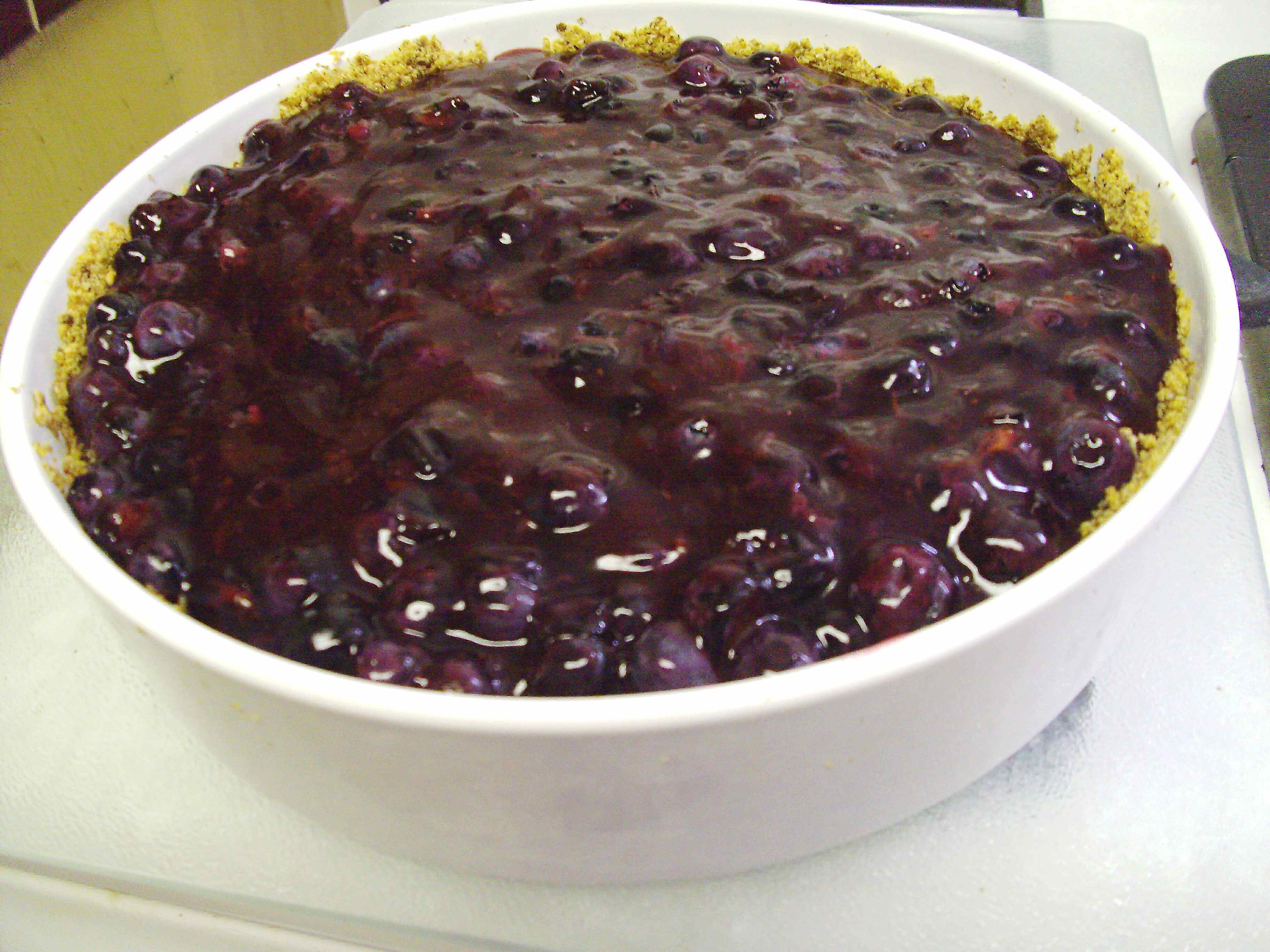
    raw blueberry pie with microwaveable filling and graham cracker crust

    This mostly-raw blueberry pie is a snap to make and very versatile--the filling microwaves in a few minutes, and you don't even have to bake the zippy gingered graham cracker crust--perfect for a hot Fourth of July and all summer long.

  • Recent Posts

  • Contents

  • Archives

  • Now Reading

  • See also my Book Reviews

  • Copyright 2008-2024Slow Food Fast. All writing and images on this blog unless otherwise attributed or set in quotes are the sole property of Slow Food Fast. Please contact DebbieN via the comments form for permissions before reprinting or reproducing any of the material on this blog.

  • ADS AND AFFILIATE LINKS

  • I may post affiliate links to books and movies that I personally review and recommend. Currently I favor Alibris and Vroman's, our terrific and venerable (now past the century mark!) independent bookstore in Pasadena. Or go to your local library--and make sure to support them with actual donations, not just overdue fines (ahem!), because your state probably has cut their budget and hours. Again.

  • In keeping with the disclaimer below, I DO NOT endorse, profit from, or recommend any medications, health treatments, commercial diet plans, supplements or any other such products.

  • DISCLAIMER

  • SlowFoodFast sometimes addresses general public health topics related to nutrition, heart disease, blood pressure, and diabetes. Because this is a blog with a personal point of view, my health and food politics entries often include my opinions on the trends I see, and I try to be as blatant as possible about that. None of these articles should be construed as specific medical advice for an individual case. I do try to keep to findings from well-vetted research sources and large, well-controlled studies, and I try not to sensationalize the science (though if they actually come up with a real cure for Type I diabetes in the next couple of years, I'm gonna be dancing in the streets with a hat that would put Carmen Miranda to shame. Consider yourself warned).

Broccoli IS a conservative political bogeyman!

This exposé from yesterday’s New York Times goes into the longish history of how conservatives started waving broccoli stalks at any issue they don’t like…

Just as I suspected when Justice Antonin Scalia started spouting broccoli-tinged party-line nonsense this March, the Republicans really DID originally decide to blame broccoli based on George Herbert Walker Bush’s stated hatred of an innocent green. Yeesh! You can’t make this stuff up. And I was really, really trying to!

Coconut, minus the hype

dried coconut shreds

Palm and coconut oils have made a huge comeback in the last few years. Both are very high in saturated fats, which promote high blood cholesterol and heart disease, but the vegan community has embraced them as “natural” and they’re turning up in all kinds of baked goods and sweets these days at Whole Foods. Which also sells big mayo jars full of coconut butter. Looks like Crisco, scoops like Crisco, costs 10 times as much.

A lot of the newer vegan recipes and packaged foods are direct mimics of things that used to include lard, beef tallow and suet at the lower end of the classiness scale, or butter at the high end. My local Whole Foods’ pastry case features a lot of croissant and baklava variations these days, all now made with palm oil, as are many of the muffins. Starbucks’ “old-fashioned kettle” doughnuts feature palm oil in two places, both the dough and the icing.

Why are these fats getting so popular? Why all the wishful thinking that a plant source automatically makes them healthy to eat in quantity? Why are all the nutrition advice columnists in the major newspapers and health magazines suddenly “holistic coaches” who graduated college with psych majors and the like rather than board-licensed nutritionists and registered dieticians?

The truth of the matter is that your body doesn’t care so much whether a saturated fat came from lard, a coconut, or a chemical vat–regardless of the source, the fat molecules are shaped the same and your digestive and metabolic enzymes process them all the same way.

Palm and coconut oil? The hip vegan crowd, who consider themselves really indie, would be surprised to learn how thoroughly they’ve been manipulated by a very big industry. In the past 10 years, these oils have suddenly ramped up production wherever palm trees can be grown, mostly in Malaysia and Indonesia, where producers started by stripping the jungles to plant a single crop (though some of the main palm oil traders, like Lever–yes, the soap manufacturer–have made statements that they’re working to reverse some of the damage and buy only from those who “plant sustainably”). The other main centers of palm and coconut oil growers are Africa, India and Latin America.

Palm and coconut oils have taken off not because they’re vegan (outside of India, there just aren’t enough to support the industry boom) but because they’re such a cheap source of fat. Well, cheap everywhere but the Whole Foods shelves. They are indeed useful to the processed baked-goods industry for lending that heavy grease “satisfaction” factor to things that used to be made with butter, suet or lard. And they’re much less heavily regulated in the US by the agricultural inspectors because they don’t trigger all those livestock rules.

But should you be eating them? Buying jars of coco butter for your home cooking? Something tells me you’d be better off eating less of anything that requires cooking in heavy fats as opposed to regular polyunsaturated vegetable oil. And cutting down on all fats unless you’ve actually been diagnosed by an MD, not a holistic coach, as underweight.

Because even the unsaturated fats have a lot of calories. Rip Esselstyn’s “Fire Engine 2 Diet” specifically cut out all oils because the people he was training to eat better really needed to lose weight, and the bottom line is that the 120 calories in a tablespoon of ordinary unsaturated vegetable oil are still extras. There’s no real way around that. Not even if you’re vegan.

And wasn’t the point of nonstick pans supposed to be so you could cut down on cooking fats? (ok, it was really so the pans would be easier to wash, but why not take advantage while you’re at it?)

I’m not saying you shouldn’t ever use coconut itself in cooking–I’ve been a Mounds fan from way back, and please just don’t ask about those poufy huge coconut-sprinked, bright pink marshmallow things we used to clamor for as kids (“Snowballs”? I think it was a half-dome of marshmallow that sat on a cookie…almost as bad as Moon Pies.) These days I try to eat it sparingly, because it’s still fatty, and because most of my coconut exposure now takes place in the form of macaroons at Passover, when I’m already feeling like if I see another can or box of something packaged I’ll pass out.

But seriously–and more sophisticatedly–coconut itself is a worthwhile cooking ingredient in some savory dishes, and it has a subtle, penetrating flavor that means you don’t have to use a ton. You can also find good steam-defatted versions of shredded coconut that have about half the fat of regular, and look for partially decreamed canned coconut milk as well (I think Trader Joe’s sells it, maybe Whole Foods as well). Unfortunately, half the fat for coconut is still pretty fatty, but it’s an improvement.

Even a spoonful of unsweetened shreds can give a curry or aviyal (i.e., coconut-based “dry curry” class of dishes) a satisfying suggestion of richness without adding loads of fat. Maybe a gram or two per serving, and it can help even out jagged edges in the spicing.

To get the most flavor out of a small amount of coconut, I do one of two things. In the aviyal of cowpeas below, I toast a spoonful of dried shreds Continue reading

Hunan Tofu, spare the salt (spoil the child)

tofu with broccoli

Last year my daughter kept hocking me that I never made enough meat. This year she’s going on twelve and decided, about a month before Passover, that she needed to be vegetarian because she has ambitions of becoming a veterinarian. Hard enough for anyone to deal with, but for a diabetic, it’s an added challenge, especially at Passover, which we got through with a lot of vegetables and a dispensation for tofu (though without soy sauce, which contains wheat) so she wouldn’t be stuck with only eggs and cheese and yogurt and nuts for protein. Next year, rice and beans are going back on the menu–I’m not stuck in Ashkenazi-think, and a lot of synagogues in the US are starting to reconsider the role of legumes, pulses and non-wheatlike grains at Passover. I’m all for it.

Still, we’re well past Passover now, and the issue today is tofu; see under: how to feed a vegetarian preteen some protein without overdosing her on sodium. One of our favorite Chinese restaurant dishes is tofu in black bean sauce, but no doubt about it, it’s loaded.

[Update Note, cue theme “Do the Math Yourself”: Check out the recent LA Times’ version of Hunan Tofu with Black Bean Sauce–looks wonderful, right? but the sodium stats at the bottom of the recipe are WAY off, even if Andrea Nguyen, the food writer, had been using low-sodium soy sauce. Perhaps the editors forgot to count the salt in the fermented black beans–which on its own is something like 850 mg per tablespoon, as far as I could find (it’s not listed in the USDA nutrient database). You really can’t rinse that kind of salt out, especially not if you’re using the rinse as a broth and adding it back into the dish. That plus 1/4 t. salt “or more” at 560 or so mg. and a couple of tablespoons of soy sauce–you’re looking at 750-1000 mg for each of 4 servings, or 1500-2000 each as “dinner for two”, or about an entire day’s worth of salt in a single dish–definitely not the 350 or so as stated in the article!]

Cooking at home is a lot cheaper in a number of ways (a 14-oz pack of firm tofu runs about $1.50 where we live), and we can figure out what to do about the sauce if we really want it. Invariably, the restaurant container is always swimming in sauce with a layer of oil on top, so I think just not doing that would be enough to improve the nutrition stats considerably.

Frying tofu at home won’t usually get you that crispy outside texture that you get in the Hunan tofu dishes from the restaurant–mostly, they’re shallow- or deep-frying the cubes or triangles in a lot more fat than you’d want to use at home for an ordinary dinner. A little less than that level of crispy is still okay by me. Getting any kind of brown on the outside would be a step up from the pale, flabby results I was used to achieving in the trusty nonstick pan.

So I started actually paying attention to the cookbooks I have on the shelf and to the techniques I invented for pan-browning things like salmon without salting the dickens out of them. I needed a (small amount of) sauce that tasted okay but wasn’t swamped with sodium. That means a little low-sodium soy sauce and a lot of ginger, garlic, maybe a bit of vinegar and sesame oil–and a surprise ingredient for browning and flavor depth: molasses.

Most syrups (agave included) run about 16 g. carb per tablespoon, a whisker more than a tablespoon of ordinary granulated sugar. Blackstrap molasses runs a bit less, at 11 g. per tablespoon. And it’s really thick, really strong-flavored, and really brownish-black. Also relatively inexpensive. Half a teaspoon will darken and thicken an ounce of sauce for frying tofu. It helps “stretch” the soy sauce–for looks as much as flavor and volume–without adding much sodium or carb to the dish. Even stranger (and better), molasses is a powerhouse source of potassium at 600 mg and iron at 20% of the RDA per tablespoon (not that we’re adding that much here, more like 1/6th tablespoon). The vinegar and sesame oil lend rich pungent flavor that doesn’t depend solely on the saltiness of the soy sauce, and ginger and garlic round out the combination.

So that’s the sauce. To get the tofu to brown in the frying pan, you have to get some of the extra water out of it first. There’s always the press-it-with-a-weighted-plate-on-top-for-30-minutes scheme, which always seems more of a pain than it’s worth. But I’m impatient.

There are two decent ways to press tofu other than the weighted plate setup. One requires thinking ahead (not my forte): slice the tofu and freeze the slices, then thaw them. The other–are you surprised yet?–is to slice and microwave the tofu on an open plate for a couple of minutes, say 4 minutes for a whole 14-oz. pad of firm tofu, or 2 minutes for half a pad. Then drain off the watery stuff that’s come out of the tofu (let it sit another few minutes and redrain), and pat the tofu dry.

To fry, heat a bit of olive or other vegetable oil in a nonstick pan. Brown some onion or scallion a few minutes. Make a frying sauce: 1-3 teaspoons of low-sodium soy sauce, depending on how much tofu you’re making, a minced clove of garlic, a teaspoon of fresh grated ginger, a few drops of sesame oil, a dash of vinegar and a pinch of brown sugar or better, a half-teaspoon of molasses. Hot pepper flakes or z’khug optional.

Pour the sauce into the hot pan and let bubble up a second or two. Then add the tofu cubes or triangles and toss a couple of times in the sauce. The sauce will be just enough to color the surfaces a little and get them started.  It’ll take another 5-10 minutes of stir-frying to get the tofu surfaces to brown nicely, but it does work. Serve atop microwaved broccoli and/or bok choy. Garnish at will with some chopped scallion, toasted almonds, fried mushrooms or slices of red bell pepper (or hot peppers and roasted peanuts for kung pao, if that’s your thing).

Sodium counts for this version:

If you figure the dish serves 3 people a decent meal-sized portion of protein, and the sodium is coming exclusively from the low-sodium soy sauce, a full tablespoon of soy sauce would be about 450-600 mg, so each serving is about 200 mg at the higher end. I don’t think I usually use quite that much for us, but even so it’s pretty reasonable. If you don’t mind doubling the sodium to about 400 mg per serving, you could make another dose of the frying sauce to drizzle the dish with at the last minute.

The Broccoli Bogeyman

choppin' broccoli

Appropriate material warning: In honor of the Supreme Court’s latest quagmire, off-color political comments and remarks on food preferences ahead. No actual body parts mentioned…well, not much. More implied than actually mentioned. Nor will you find much actual swearing, more’s the pity. Nobody, but nobody, gets called a dirty name such as the male equivalent of whatever might have been slung around on a certain talk show whose host contested female citizens’ rights to testify before Congressional committees. Or not much of a dirty name–though some might say it’s implied. And it is. To your healthcare!

Antonin Scalia–and I’m just saying it for what it’s worth, here–what an embarrassment to the United States.  First he squats instead of recusing himself in a case where he clearly has a conflict of interest, namely that he went hunting and dining with the defendant (then-Vice President Dick “New Heart” Cheney), then he blames broccoli for the faults of an imperfect but workable health care plant. I mean plan.

I know this commentary is coming about 2 weeks after the fact, but it’s taken me the full two weeks–one of them Passover–to decide that it really was up to me to fight back. Against Scalia, against broccoli abuse, and apparently against my computer’s quirks, one of which was to eat the camera card and spit out a coupla bent socket pins. Because for a proper rebuttal to the broccoli question, I need incriminating evidence in the form of photos. Exhibit A, as it were.

Whether you think health insurance and the Affordable Care Act should be available to everyone in this country or not, or whether or not you think you personally need health coverage that doesn’t inspect you down to your toenails before charging you extra, the true question here is, why is broccoli always the Republican go-to monster under the bed? Perhaps because their leaders faithfully follow George Bush père‘s overwhelmingly whitebread fear of vegetables, particularly the dreaded broccoli, while adopting his stated  preference for pork rinds?

Let’s put that under the microscope first, shall we? True story:

My first year at university,  two of my sarcastic and adventurous dorm mates bought a packet of pork rinds to try out as political investigation material. This was in 1981, when GHW Bush was the new veep for Reagan, and he’d announced both his loathing for broccoli and his love of pork rinds, as though any of us needed to know that. Eyewatering. Anyway, my friends decided they had an obligation to test out Bush’s aesthetics personally before condemning him. So…they moseyed on down to the university district’s 7-11 store and purchased some test samples. Then they came back to our suite and conducted the (not double-blind, which I’m sure they quickly regretted) taste test with all the rest of us as an audience. About 30 witnesses in all.

Beth and Bill faced each other across our suite’s livingroom floor. Somebody counted down, and they ripped open the pork rind baggie. Next countdown–reach into the bag and select a pork rind at random. They shuddered briefly–the aroma had reached them–but regrouped. This was for the record. For science. For Truth and the American Way. They braced themselves.

On the count of three they each bit into their pork rind of choice.  The reaction was instantaneous. The verdict unanimous.

“Wow, they really do taste exactly as fecal as they smell!” chirped Beth as her face went very, very red. It was clear she was trying not to skew the results by vomiting and giggling simultaneously. Bill didn’t hesitate to spit copiously into our trashcan for several minutes, and we couldn’t blame him. We just told him to take it with him and not leave the damning evidence with us. Chain of custody rules, you know.

Anyway, if Mr. Scalia’s broccophobic remarks are reflective of the officially sanctioned GOP line when it comes to vegetabalia and taste preferences, what our intrepid reporters discovered 31 years ago does suggest that we’d all be better off skipping their national convention banquet this summer.

Back to broccoli. What is so demonic here? It’s actually a popular vegetable these years (quirkily informative market statistic needed, desperately needed, because very, very few Food Network cookbooks contain any recipes for it).

Statistic, statistic, statistic–oh. Here! Average US per-person consumption of fresh broccoli has quadrupled since 1980.  Outpacing frozen by a lot. And the total US market is worth upwards of half a billion dollars a year. And we supply most of Canada’s and Japan’s broccoli. And yet we still import from Mexico, Equador and so on for frozen because the labor’s cheaper.  Demand for broccoli is actually pretty high.

So Scalia, and the rest of the GOP faithful, have really gotten hold of the wrong end of the stem with this broccoli blame game. And all the more surprising to wave it around like that since Scalia is Italian-American.

Somebody tell me when the Italians are supposed to have started fearing broccoli? Even its name is Italian–according to the agriculture info sites, they first brought it over to the States in 1923.

Maybe his parents were rotten cooks? Does he hate garlic too or something? The shame, the shame…

Anyway…

Broccoli–the regular, not the rabe–is, tell the truth and nothing but, easy to abuse culinarily. Mostly by overcooking and then dumping it on the dinner plates unflavored and unloved, graying, sulfurous, lukewarm. Foul color, worse odor, unbelievably bendy and dank. Not exactly a taste explosion.

But broccoli doesn’t have to taste like whatever you might remember from your high school cafeteria, if you’re old enough to remember when they actually served vegetables instead of pizza with a side of fries. And you don’t have to eat it raw either. You have choices. Options, as it were. Continue reading

ANDI Scores, Whole Foods, and diet scheme cha-ching

If you’ve taken a walk through your local Whole Foods Market in the past year, you’ve probably seen a stand with purple and green information sheets listing foods in order of “ANDI Top 10 for Produce”, “ANDI Top 10 Super Foods” and so on. Coordinated recipe cards, a suggested shopping list, and an attractive-looking book round out the offering. And the produce and bulk bins sport matching ANDI score labels. It’s a whole system. But is it right, or just another fad?

What is the ANDI Score system, anyway, and who owns it?

ANDI stands for Eat Right America ™’s Aggregate Nutrient Density Index, a proprietary nutrients-per-calorie scoring system that rates for foods from kale to cooking oil and everything in between on a scale of 1 to 1000 points.

The ANDI scoring system started with Dr. Joel Fuhrman, the author of the diet book Eat to Live. On his home page, Fuhrman describes himself as a family physician and nutrition researcher.  His diet, which he calls “nutritarian” (and you can become a nutritarian too by signing up) is a highly prescriptive weight loss regimen that focuses on high-value vegetables and fruits and eliminates most meats, fats and carbohydrates. His evaluation of vegetables as high-scoring and processed foods, meats, starches and so on as low-scoring seems only common sense.

Fuhrman’s site claims hundreds of articles and interviews as well as numerous appearances as a nutrition expert on national TV. The site also prominently mentions his two US Nationals pairs figure skating wins back in the 1970s. Does he need to have that information on there if what he’s promoting is serious, science-based dietary advice? Altogether, the site has a very infomercial feel about it, with lots of testimonials from members who’ve lost over 75 pounds with before-and-after photos. Fuhrman himself looks very fit and tanned and taut-faced–maybe a little too much? Maybe it’s just the heavy pancake makeup that infomercial packagers are famous for plastering on their experts’ faces.

Eat to Live is a popular book. Fuhrman’s Kindle edition of Eat to Live is the #700-ranked download on Amazon.com. His web site has something on the order of 4000 subscribers, whose questionnaire responses he mines for some of his journal articles. According to one of the journal papers, his audience is about 65% female, 71% married, the largest proportion college-educated with household incomes over$100K.  (At this point, I thought, bingo, the perfect infomercial audience. This is clearly a commercial diet with legs. But wait, there’s more…)

Ahem! Enter Eat Right America, a company started by a businessman who became a fan of Dr. Fuhrman’s. The founder figured there must be a good way to automate the multi-nutrient density calculations for a wider variety of foods and developed a proprietary algorithm based on nutrient values in the USDA’s NAL database. What makes the ANDI algorithm attractive, the company says, is that they weight these calculations per calorie, not per serving. Finally, they claim, you’re getting the “right” comparison of nutrient density for the calories.

But a closer look at the the diet and menus offered on both the Eat Right America and Fuhrman web sites raises a few warning flags. Scan the ingredients list in the Eat Right America 3-day sample menu and you see frequent uses of high-priced fruits, vegetables and grains like quinoa (no surprise there about why Whole Foods might be happy with the shopping list) as well as some trendy and expensive ingredients that don’t sound all that nutritious. Dates? Avocado? Coconut?  Sun-dried tomatoes? Cashews–one of the lower-fiber and more expensive nuts, incidentally. Those are usually extras, snacks, not staples, even in a vegan diet.

More seriously, the menu designers seem to have a penchant for bottled carrot juice. They put 7 whole cups of it in a bean stew that feeds 10. Now, carrots, whole carrots, are fine raw or cooked into a stew. They have fiber and vitamin A and in whole form are relatively low-carb as well. But juice them, and you filter out the fiber. You concentrate the vitamin A and carotenoids about 3-4-fold, well beyond the RDA–risking vitamin A overdose–and you concentrate the sugars. What would ordinarily be a bean and vegetable soup with a reasonable amount of carb per serving–about 15 g per half cup or 30 g for a full cup–quickly rises, with the addition of a big 7-cup dose of carrot juice in the pot (NB also much more expensive than plain carrots) to 75 grams. That’s the amount of carb my diabetic daughter would figure for an entire holiday meal that includes a decent-sized slice of cake or pie.

Some of the Eat Right America recipe nutrition counts look like the ingredients as listed don’t quite account for them. The carb is high–occasionally the sodium doesn’t add up right either. And the overall protein is low. In the vegan versions on Fuhrman’s site, which prescribes a six-week starter regimen of a pound of vegetables a day, a pound of fruit, and a cup of beans, the protein is also incomplete or close to it. No grains, and no dairy or meat or fish. No tofu. Avocado and flax seed, two darlings of the vegan world, are recommended to supplement the caloric intake so you don’t lose too much weight (which I thought was the point, but maybe not for a whole six weeks at a time).

All these recommendations flow from the ANDI scores of the food and produce some logical puzzles. Somehow, you never see plain tofu or fish or cheese or yogurt. Apparently they don’t score as high as avocado. How is this possible? Isn’t avocado pulp high-fat and not too exciting as a vegetable?

So the next thing to check–is the ANDI food-rating method right? If you’re judging solely on the micronutrients list, which is what Eat Right America claims to be weighing into its ANDI scoring formula, no it isn’t. Continue reading

Stuffed onions in a hurry

Stuffed onions ready for steaming in the microwave

With a microwave and a frying pan, you can make stuffed vegetables like Mehshi Basal quickly, and they taste even better than with long roasting. These are just rolled and ready for a few minutes of steaming in the microwave.

Just after Rosh Hashanah I posted my first-ever attempt at an elaborate Syrian Jewish dish of sweet-and-sour stuffed eggplants with quince, and because I had more stuffing than I needed, I went for seconds with Aromas of Aleppo on the spot and tried out the Mehshi Basal, or stuffed onions with tamarind sauce, which was actually even better. It was easier to put together and I was patting myself on the back when we tasted the results.

Still, given that I was using a lentil stuffing in place of ground beef, I was a little dismayed at how long the traditional braising and roasting took to cook the onions all the way through–an hour and a half at least, and that was after stuffing them. A second attempt in November, this time exclusively with stuffed onions for a congregation brunch, did no better on time, and I came away thinking that roasting was an extremely inefficient way to cook these–might even have toughened them inadvertently.

Why, you have to ask, should I make such a big deal about stuffed onions–they’re a party trick, after all, not standard cooking. But we discovered we really liked them, and they’re a pretty good kind of party trick. They were a surprise hit at the brunch. If I hadn’t snuck myself one while setting up in the kitchen, I’d have missed out altogether.

Actually, I think they fascinated everyone as much for the magic trick as for the flavor. People who’d never tasted them before kept coming up to me–and even my daughter–to ask, “How do you get the filling into the onions???”

If they hadn’t been so time-consuming I could have made double the amount and they’d still have disappeared. Or I could throw them together easily just for us on the odd weeknight as a treat–but one with some iron and fiber in it–instead of the standard pasta or rice.

So in the time since, I’ve finally rethought the process and come up with something that requires no oven time and cuts the actual cooking after stuffing them down to about 20 minutes or so–as long as you already have some cooked lentils (microwaved to perfection in about 10 minutes of cooking time and 30-4o minutes of standing time) and tamarind sauce (or “mock tamarind” sauce, a 5-minute microwave-assisted blend of prunes and/or apricots with water and some lemon juice, plus-or-minus tomato paste, applesauce and other flourishes you don’t really need for this) to hand.

I know, you probably don’t have these things sitting around. But this recipe might change your mind. Lentils are good stuff even on their own, and the stuffing here is a knockout.

Even genuine tamarind sauce isn’t so bad anymore, assuming you don’t or can’t just buy a prepared concentrate. I’ve sped the process up from an hour-plus to a few minutes just by nuking it, pulsing in a food processor, and this time, neither filtering it quite so aggressively as I did back in September NOR bothering to boil the stuff down to a sticky residue. It’s so much less painful, and I think it even tastes better, with more of the fruit character left in. See my notes at the end of the post for how to do it the quickie way (in modest jam-jar quantities, not quarts).

Anyway, back to the stuffed onions. I’m actually proud of myself for this one, and I’ve tried it three times in a row so I can vouch for it–the last time, I put my daughter to work stuffing the onion layers, and she did a great job.

For this method all you need are a microwave oven, a frying pan and a food processor. Instead of boiling the onions for 20 minutes to separate the layers, you microwave them in a drizzle of water for 5. Instead of braising the stuffed Continue reading

Medieval in LA: Sweet Spinach Tart

sweetened spinach tart for medieval feast

My daughter’s middle school social studies class has been preparing for this all month: today was the Medieval Feast. Lords, ladies, jesters, knights–and she chose to be the master chef. Others brought bags of apples and peas.

We baked a big Tart of Spinnage (courtesy of The English Huswife, 1615, by Gervase Markham) with adaptations. 1615–that’s Shakespeare and Elizabeth I, the early modern era, not the medieval. Still, some of the recipes were probably conserved, and some of the styles of flavoring as well. The fact that sugar is added to this one is reminiscent of Elizabeth I’s infamous sweet tooth, but it also makes the normally savory spinach a dish more in keeping with the earlier recipe collections so favored by Renaissance Faire participants.

Medieval recipes from the 1300s and 1400s indicate heavy use of cinnamon, ginger, mustard, pepper, galingale, and grains of paradise for the aristocratic classes, at least for their feast dishes. Fruits were routinely added to both meat and fish “Parma” tarts–those tarts, full of eggs, were probably much like today’s quiches.

But the recipe my daughter’s teacher e-mailed me had no eggs. The binder, an interesting choice, was “cast cream” or sour cream. Sour cream bakes up well in cheesecakes–labaneh, a Middle Eastern/Near Eastern version, is a lot thicker and bakes up even more nicely. I’ve made mini-cheesecakes from nothing but labaneh, sugar and lemon rind stirred together and baked in cookie crusts, and they came out beautifully. So I wasn’t too worried about the tart filling firming up enough.

The original recipe also contained no spices other than sugar (maybe I mean “flavorings” rather than “spices”), pepper and salt. Spinach, sour cream, sugar, pepper, salt…bland? Odd? Would the signature combination of vegetable and sweet get lost in the mix? No knowing. But for a medieval version, especially for a classroom tasting, we were going to have to do something slightly different, more purposeful.

A spinach tart with sugar? It was going to be a gustatory challenge for the class and its guests, a flavor combination we no longer encounter very much. Might as well make it interesting, and preferably good.

Which is why I adapted it to a sweetened tart of greens like Swiss chard. Versions of this are still served today in Nice (tourte de blettes or Swiss chard tart) and parts of Italy (torta di verdura or tart of greens) as a dessert. The filling often contains raisins and pine nuts as well as Parmesan cheese, and the pastry is often sweet and dusted with confectioner’s sugar before serving.  If it were awful, surely people like David Lebovitz wouldn’t be putting versions of it on their blogs. Novelty value can take you only so far. And his version contains a layer of apples on top of the chard…

The last thing I thought about was the learning experience for my daughter, the nascent (though not Re-nascent) master chef. The recipe her teacher sent home indicated “pastry shells”. As though you could go to the store and buy them.

No baking powder or soda allowed in the medieval era. No food processor. So my daughter cut up the butter and cut it into the flour with a pastry blender–once she realized the blades weren’t actually sharp–and then mashed it together with her hands, which was a lot more efficient. She made the spinach filling we decided on–very close to the assigned recipe, but with a bit of cinnamon and nutmeg, and a grating of lemon peel. In place of raisins, she put the extra bits of apple in the filling.

patting out the filling

She fit the pastry to the pan, pricked it out, filled it, and topped the spinach with a layer of finely sliced Granny Smith apples–most apples were probably tarter in those days than they are now.

slicing apples for the spinach tart

Dame Felidae demonstrates her knife skills

Then she placed the top layer of dough onto the tart, pinched it shut, slashed it in her own design and “endored” or gilded it with egg yolk/water glaze. We baked it in a (horrors! modern!) oven and thawed the “spinnage” out in the microwave before squeezing it, but other than that I think we were pretty much in the spirit. Continue reading

A Slow Food Fast Thanksgiving

Pumpkin pie in the microwave

I’m not sure how to take all the following good news–it’s been such a strained year that the sudden release of pressure is going to make me zip around the room, once the coffee kicks in.

1. My mother-in-law has threatened to favor the brand-new kosher butcher in her town this holiday season so that we can eat the turkey too this year (and maybe not fight about it). She promised not to smear said turkey with butter. We’ll cross our fingers. But at least we won’t have to cook. I’m keeping that firmly in mind.

2. As of this week, my daughter’s finally on an insulin pump and fairly thrilled about it, so she can navigate dinner AND dessert at my in-laws’ without breaking down and crying that she only gets two tablespoons of pie for a reasonable serving. We are still encouraging her to count carbs and not go hog-wild or she’ll be zipping around the room until midnight.

3. The school concert’s in less than two hours. Is that really enough time to do everything, or at least something? Naaaah. Well, maybe coffee and something other than the news.

4. We still have to schlep up Interstate 5 for about 6 hours tomorrow, starting “early” (i.e., an hour and a half after the time my husband announces this evening as the absolute latest), passing the Harris Ranch and its attendant aromas, which can be more than slightly offputting if you’re not an avid horticulturist. But at least when we get to my in-laws’ we don’t have to cook. As I said, I’m keeping that firmly in mind. I know I already said it, but it’s so important I figured it was worth saying twice.

Despite my firm resolve after last week’s marathon kiddush that I will strive Not To Cook (could I possibly be Peg Bracken’s unacknowledged lovechild? Unfortunately, no. However, my mother was a devotee of the Don’t Cook Too Much school of thought, and I’m starting to appreciate that. Really I am.)…where was I? Oh yeah…I will probably bring at least two lemons, some thyme and rosemary, a head of garlic and a couple of bags of fresh cranberries with us on the road. Call it flavor insurance. For whatever reason, my in-laws, who have developed what can only be called fanatical devotion to Italian food of every possible kind (having both grown up in white bread country), always run out of these basic essentials about halfway through, and my mother-in-law tends to tell my father-in-law to go back out and pick up extras just as the stores are closing…

The cranberries, I’m well aware, aren’t Italian. They’re for making 5-minute microwave cranberry sauce with about half the sugar of regular. My mother-in-law tends to try out her fancier cranberry chutneys and relishes every year, and every year they contain things like chardonnay–which is fine for the grownups but I’m no grownup. Her chutneys have more than 10 ingredients and sit stirring on the stovetop for at least 45 minutes. I don’t know how she does it–I’d go stir-crazy. I’m just not that good.

So anyway–I wish you all a great Thanksgiving at somebody else’s house, so you don’t have to cook or do the dishes. My idea of heaven.

But if you absolutely have to cook, here are a couple of posts for speeding up a few of the obligatory or not-so-obligatory Thanksgiving items–most can go in a microwave (I always, always think that’s worthwhile. Well, usually). A few of these are dairy, so use your discretion.

5-Minute Cranberry Sauce

Microwave Pumpkin Pie

Basic instructions for microwaving green beans, brussels sprouts and other vegetables

Creamed Spinach Variations

“Marbella”-style cooked vegetable relish with artichoke hearts, olives, tomatoes and prunes

Turkey Breast with Ta’am (flavor) –not microwaved, not a whole bird, but it is a lot quicker and tastes unusually good if you have a small crowd. DO keep it covered in the oven to prevent it drying out.

Some options for vegetarian centerpiece dishes… (ideas more than recipes)

Spice mixes because sometimes you want to liven up the party…

Syrian Jewish stuffed vegetables (baby eggplants and onions) with an incredible lentil filling (NOTE–this one is “not exactly quick”; well, maybe for the eggplants microwaving would be enough, but the onions still take some serious roasting even after microwave assistance.  However, it is delicious and impressive.)

Microwave gingerbread and microwave flan (and a recommendation for mead…)


Tomato paste rules…

School lunch debates now apparently hinge on the 30-year-old question: if tomatoes are a fruit and not a vegetable, what’s tomato paste?

The American Frozen Food Institute is quoted as objecting to new proposed government rules that a quarter-cup of tomato paste can no longer qualify as a serving of vegetable in public school cafeteria lunches. I’m shocked that it has up to now.

The organization’s spokesman actually tried to argue that putting enough tomato paste to qualify as a vegetable would swamp the pizza, which he called “a big part of school lunches”.

Well, yes. That’s one of the big contributing factors to the push for better nutrition guidelines. And in complaining so hard about the tomato paste rule, the spokesman effectively admitted that tomato paste isn’t incredibly nutritious in the quantities most people can consume. It may be vegetable in origin, or it may be “a fruit and not a vegetable” if you want to get prissy about it, but mostly, it’s just a condiment, like ketchup or mustard.

Anyone who’s managed to fool the public this far that the little smear of tomato sauce on a commercial pizza is a sufficient serving of vegetabalia for growing kids deserves every possible food-related and financial comeuppance.

And on the other hand…mustard. Hey. Wait a minute! Mustard is a Vegetable! (well, mustard leaves, anyway).

–  –  –  –  –

Actually, what all the hue and cry boil down to is money. The trade organizations for processed and fast food concessions to public schools stand to lose a lot of their profits if they have to provide nutrition along with the colored sawdust they sell as “pizza” and the greasy mush they sell as “french fries”.

They turn around and threaten the school districts with increased cost per meal, perhaps above what the Federal Government will pay per student.

The school districts panic and shake their heads, complaining that $2.79 government reimbursement per student per lunch isn’t enough as it is, and maybe the Federal Government should drag its heels even further on requiring low sodium meals and fewer potatoes and less tomato paste and more vegetables of worth.

–  –  –  –  –

Step on the brakes a second. $2.79 for lunch? Does that include labor and dishwashing? Or just the food?

If that’s just for the food, I have great news for the school districts. A peanut butter and fruit spread (disclaimer: doesn’t meet govt. standards for a full serving of fruit; this too is just a condiment) on whole wheat bread, with carrots and an apple, maybe if we’re feeling fancy some raw cabbage or green beans or cauliflower, comes to significantly less than $2.79 per serving.

And that’s retail with unpaid labor (mine), and it takes less than 5 minutes to prepare in the morning, even including all the standard parental yelling, “Let’s go, we’re gonna be late, it’s already 5 after, where are your socks?!” Believe me, if I can manage it before benefit of coffee, so can the schools.

Surely the school district bursars can figure out how to drive a harder bargain from their suppliers with so much at stake? Surely lunch should be a simpler thing to prepare?

Stuffed Eggplants with Quince, A Vegetarian Odyssey

Stuffed Eggplant with Quince and Stuffed Onion Rolls

I did it. It was 90+ degrees outside yesterday afternoon and felt a lot hotter inside when I started cranking the oven to try this dish right away rather than wait for the weekend, but I’m just no good with delayed gratification.

If I have the mini-eggplants and I have the quinces and I have the tamarind concentrate (homemade! two days ago! it’s practically crying out to be used already!) and I have the “hashu” filling for the vegetables sitting in the fridge smelling wonderful, then it just doesn’t matter that Rosh Hashanah dinner is in what, maybe 3 hours, and I still haven’t braided the challot, to say nothing of baked them. Obviously I’ve gotta try this extra-credit dish out RIGHT NOW.

Actually, I figured the house was going to be heating up anyway once I started baking the challot, so why not get it all over with at once?

There was a more serious reason to try it. Today in services I was still thinking about Dweck’s book and her recounting of her parents’ horror in 1947, when, about to return from a vacation in Europe, they learned the government back home had started massacring whole Jewish communities in reaction to the announcement that the UN had accepted Israel as a Jewish state.

The Syrian Jewish community fled wherever they could–just as my family did under the pogroms in the Ukraine back in the 1880s and 1920s. Dweck maintains that the reception the Syrian Jews got in the US from those of us who were already here was so aloof–they didn’t speak Yiddish, they didn’t look the same, they did a few things differently for kashrut and prayers–that her community kept to themselves ever after.

I can believe it, unfortunately–the period right after World War II and the Holocaust was one of paranoia and circling the wagons for American Ashkenazim.

Eastern and Western Jews had similar discomfort with each other in postwar Europe. Reading between the lines a little in Claudia Roden’s and Colette Rossant’s memoirs, the two, who had just lost everything, thought their new Ashkenazi neighbors were cold and inhospitable and indifferent to their exile; the Ashkenazi neighbors and relatives, meanwhile, thought the wealthy young Egyptian arrivals were horribly spoiled and indifferent to the European disaster they had just missed. Altogether, the Ashkenazi, Sephardi, and Mizrahi communities were in closer touch before World War I than they were after the 1940s.

I can only hope that now, 60 or 70 years on, we have more in common and more regard for each other, no matter where we came from. Israel’s great mix of cultures has been a good influence, even though it originated in hardship, and perhaps today we are in better shape to appreciate what we have in common than we have been for nearly a century.

When I look through Dweck’s family’s photos, I see so many people who look astonishingly like several members of my family–my dad and my sister especially. The dignified lady presiding at the seder table on the front cover is a shockingly exact adult version of a girl I knew from my synagogue’s youth group–it’s the sturdy mouth and chin and the set of the eyes, certainly, but also the irrepressibly thick and curly hair (the 1920s formal chignon has it all over my friend’s 1970s braids, which took her hours to corral her hair into). The formal photographs of families in the 1920s, all the daughters dressed beautifully but in the same fabric the mother is wearing, sailor suits on the boys, stern dignified expressions all–I’m pretty sure each of my grandmothers had at least one of those in her collection. The 1930s-era engagement portrait with pearls and bobbed hair–so modern! Pin it up next to the one of my dad’s parents, who married in 1939 and looked so incredibly naive and young then. The family gatherings at Pesach, grandma presiding over the white lace tablecloth and all the seated cousins glancing behind them at the camera from over their shoulders–there’s probably one or two with my mother as a toddler on someone’s lap in Brooklyn and another of her as a teen, whipping her glasses off and blinking myopically for the photo. It could be any of our families. It could have been us in Syria and Egypt and Turkey, it could have been them in the Ukraine or Germany or Poland. We none of us have entirely safe histories, and none of us are entirely separate.

In any case, Dweck’s book is important to me not only for capturing her community’s traditions, tastes and history but for reaching out to the rest of us and giving us a chance to share it, compare it with our own, and reconsider what it means to be part of the Jewish world now.

So–and this is not to trivialize but to explain, since we sometimes live and remember through food, especially at the holidays–it was a great time to try out a challenging dish (challenging for me, anyway) from her book and serve it last night to my family for Erev Rosh Hashanah. I cook from scratch, I cook a lot, but I’ve never really done  the legendary great-aunts-at-Pesach kind of slow cooking where everyone groans in pleasure and declares “nobody does it like this anymore” when they taste it. I’ve only once cooked a whole turkey, and I’ve rarely tried anything else that took more than an hour and a half to cook. It’s a transformative experience, one that teaches me a lot about my great-aunts and great-grandmothers, both in the shtetls with the wood-fueled pripitschoks and communal ovens, and here in America with modern kitchens and big lace-covered tables. Trying this long-cooked dish gave me the chance to experience both my family’s past celebrations and Dweck’s at the same time.

To my very great pleasure, her recipe worked the way it was supposed to on the first try and tasted like the effort was worth it, even though her instructions are pretty simple and brief. That’s a huge achievement.

So–if you’re ready for this, keep reading–otherwise, glance at the pictures and skip to the bottom…

The “Stuffed Eggplants with Quince” Experience

First of all, let me just say that I LOVE my local Armenian corner grocers for a lot of reasons, but the fact that they have all the ingredients for Dweck’s dishes (other than kosher meat, that is) is a big, big plus.

I would have tried microwaving–and I still will–instead of a 2-hour braise, but I wasn’t sure how it was supposed to taste, whether microwaving would cook the raw rice in the filling well enough, and how the sauce was supposed to interact with the stuffing and the eggplants. I knew from a previous hard-luck experience that quinces don’t do especially well (or even well at all) in the microwave and really need long stewing under conventional heat to get tender and turn bronzy pink and sweet. So all in all, I decided following the directions in Aromas of Aleppo might be the wiser course for a first try. Even though, from my usual 15-minutes-tops perspective on conventional-heat cooking, Poopa Dweck’s method is glacially, almost outrageously, slow.

Basically, you core the baby eggplants, stuff them with hashu (beef-and-rice filling, rice and tomatoes, or in my case lentils-and-rice), and layer them in a saucepan with quince slices. Then you dilute some tamarind concentrate and add a bit of sugar and salt, pour the sauce over the pan and heat for 10 minutes on the stove until the eggplants start to sweat, add water to come about 3/4 of the way up , simmer half an hour to reduce the liquid and cook the rice in the filling, then transfer to the oven to braise covered for about 40 minutes and then uncovered for another 30. It’s a lot like making brisket, actually.

Dweck gives two allspice-laden recipes for the filling, one for ground beef with rice, the other a rice-and-tomato filling that’s close to what I use for dolmas. I opted to follow the ground beef recipe but substitute an equal weight of cooked green lentils for the meat and add a little garlic. It would work, I was pretty sure, and in fact it turned out to be the best, most delicious part of this recipe–which, skipping to the punchline, was pretty terrific and worthwhile, even for the work Continue reading