• Enter your email address to subscribe to this blog and receive notifications of new posts by email.

    Join 241 other subscribers
  • Noshing on

    raw blueberry pie with microwaveable filling and graham cracker crust

    This mostly-raw blueberry pie is a snap to make and very versatile--the filling microwaves in a few minutes, and you don't even have to bake the zippy gingered graham cracker crust--perfect for a hot Fourth of July and all summer long.

  • Recent Posts

  • Contents

  • Archives

  • Now Reading

  • See also my Book Reviews

  • Copyright 2008-2024Slow Food Fast. All writing and images on this blog unless otherwise attributed or set in quotes are the sole property of Slow Food Fast. Please contact DebbieN via the comments form for permissions before reprinting or reproducing any of the material on this blog.

  • ADS AND AFFILIATE LINKS

  • I may post affiliate links to books and movies that I personally review and recommend. Currently I favor Alibris and Vroman's, our terrific and venerable (now past the century mark!) independent bookstore in Pasadena. Or go to your local library--and make sure to support them with actual donations, not just overdue fines (ahem!), because your state probably has cut their budget and hours. Again.

  • In keeping with the disclaimer below, I DO NOT endorse, profit from, or recommend any medications, health treatments, commercial diet plans, supplements or any other such products.

  • DISCLAIMER

  • SlowFoodFast sometimes addresses general public health topics related to nutrition, heart disease, blood pressure, and diabetes. Because this is a blog with a personal point of view, my health and food politics entries often include my opinions on the trends I see, and I try to be as blatant as possible about that. None of these articles should be construed as specific medical advice for an individual case. I do try to keep to findings from well-vetted research sources and large, well-controlled studies, and I try not to sensationalize the science (though if they actually come up with a real cure for Type I diabetes in the next couple of years, I'm gonna be dancing in the streets with a hat that would put Carmen Miranda to shame. Consider yourself warned).

Faster Roasted Tomato Soup

Yeah, I know, it’s early March, the winds and rain and snow and tornadoes are still doing their thing around much of the country and here in Pasadena the chill has set in…sort of, to about 75 degrees or so daytime. With actual rain last night.

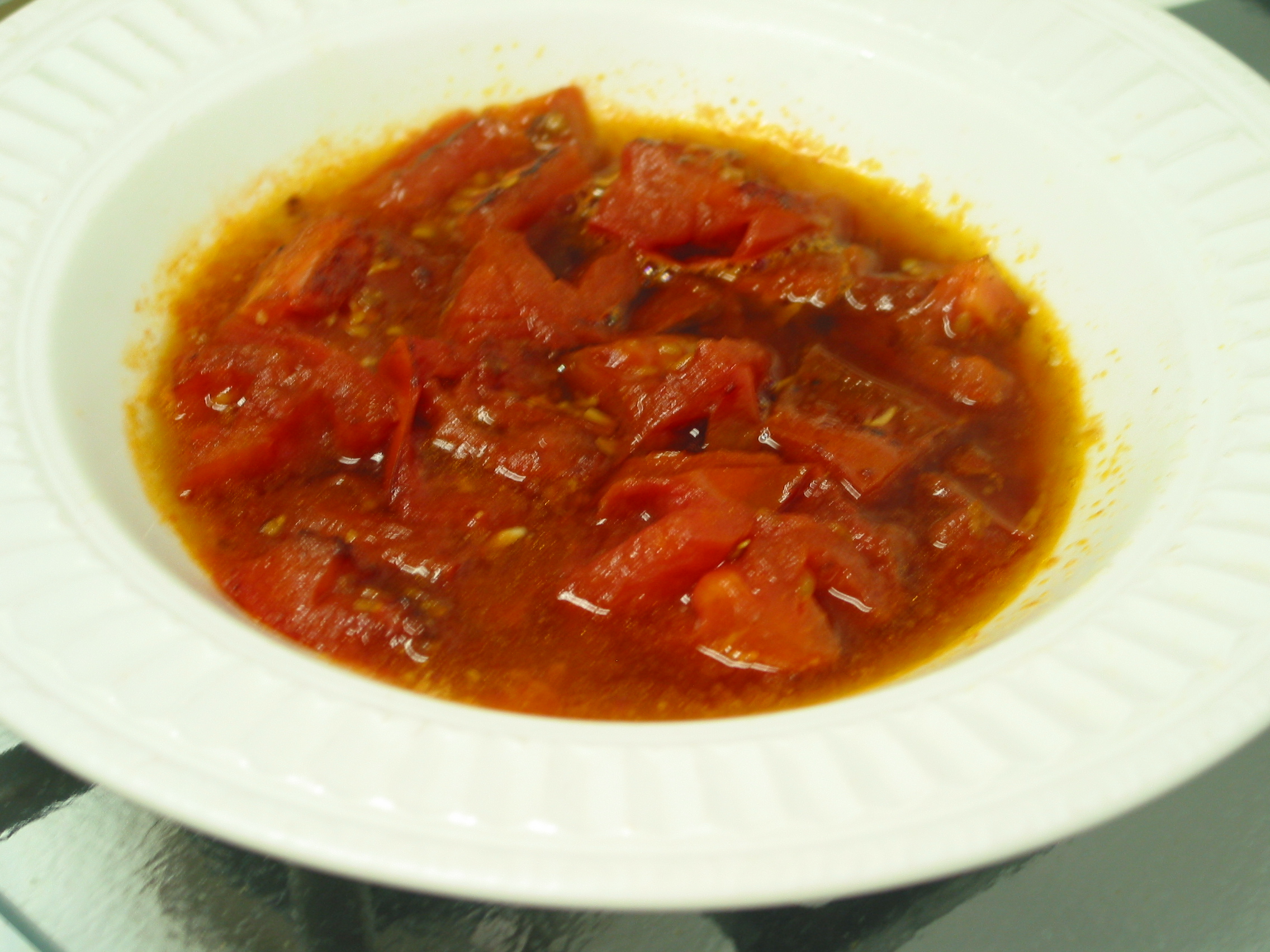
Chunky pan-roasted tomato soup

And it’s tax season.

So what we really need is something to brighten the last dregs of winter. I was thinking tomato soup, myself.

Why was I thinking it? Because so many food articles in the past couple of weeks have mentioned slow-roasted tomatoes, charred tomatoes, and so on to improve the obviously lacking flavor of winter tomatoes and avoid using canned ones. One  chef got flamed for suggesting in the New York Times food section that “local” is not the sane way to go with produce that simply isn’t producing in winter in the northeast, and that canned tomatoes are not the worst idea in the world after all. Shame! Shame!

Actually, I agree with her–and not just because I’m the original purple thumb when it comes to gardening. In a surreal reversal of my hideously lacking garden skills, I actually have three–count ’em, three–grape tomato plants in bloom and producing the occasional tomato-let as we speak. I even have basil and rosemary and mint and thyme that I haven’t killed through inattention and forgetting to water. But really, even so, there’s no way I’d set myself up as a homesteader on those flimsy credentials. We’d starve.

Tomatoes are one of those things–either you’ve got the Fresno specials (or something local and preferably from your own garden so you can brag) in the summer and they’re divine with nothing but a bit of olive oil and vinegar, or even just plain, or else it’s winter and you’ve got blah tomatoes that are kind of orange and grainy. Or you’ve got canned tomatoes, preferably no-salt Romas. Frankly, there’s nothing wrong with that in winter. Or any other time you’re making microwave marinara.

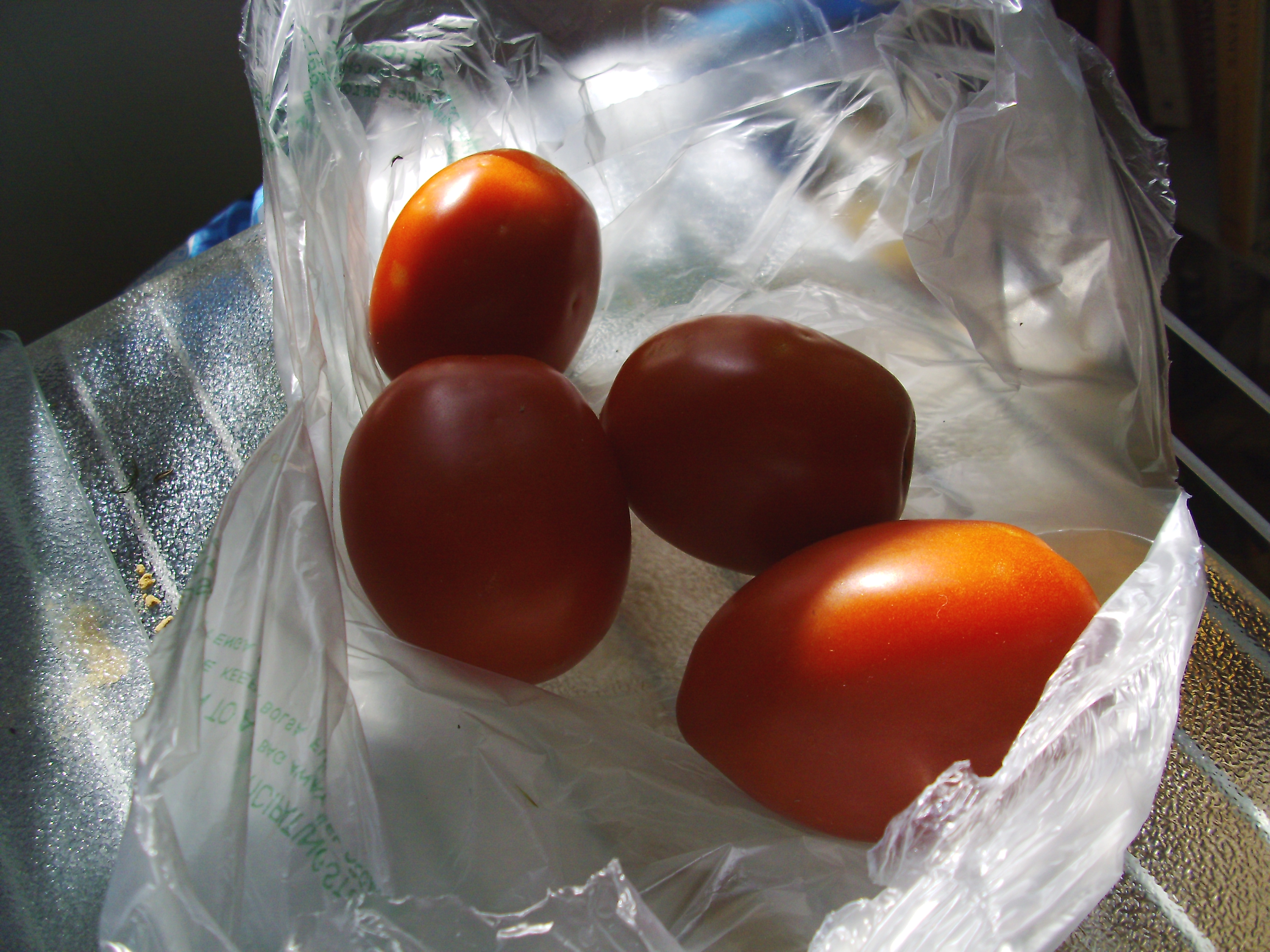
ripening roma tomatoes

However…If your supermarket tomatoes will consent to ripen on a counter near a window for a couple of days, you might be able to eke out some actual tomato flavor from them. They may still not be fantastic, and one or two may start to develop soft spots, but it’s still worth doing anyway. Keep turning them gently every day to minimize the risk of spoilage and use them. They should at least redden.

And as mentioned above in the numerous food section articles, you can do the slow-roast-on-parchment-in-the-oven thing to them and they’ll be a bit more flavorful for sauces and tomato soup. But it takes about 45 minutes to an hour. And I’m impatient.

So today I rescued a couple of aging Roma tomatoes from my countertop and decided to try pan-roasting them, as in frying pan. Would they take on a char? Would they taste better? Would they make soup worth eating?

Bear in mind this is an experiment more than a proper recipe with specific quantities, but yes, it worked, and it only took about 10 minutes from start to finish. Maybe the flavor’s not as glorious as if I’d oven-roasted them for an hour, but the lack of waiting makes it reasonably good, and the garlic makes up for the rest of it. Continue reading

Green Beans Get Serious

If you’ve gone to the supermarket the last couple of weeks, and seen huge haystacks of green beans on sale for under a dollar a pound, you might be wondering to yourself how much green bean casserole can any one family take? Pretty bad that Thanksgiving only has one sanctioned green bean recipe, and that no one can think of anything better to do with them over the holidays.

Not that I’m against plain and simple green beans, as long as they’re actually still green. Fresh, lightly steamed or microwaved or stir-fried, not boiled to death. Although frankly, I often prefer them raw and fresh as something to just wash and nosh, like carrot sticks or celery.

Even frozen green beans are fine if you treat them gently and cook them a bit less than you would fresh ones–the freezing and thawing break down all vegetables slightly, and you don’t want them to go to mush or turn brown.

Just not the dank, slimy brown horrors that emerged from a can every once in a while when I was a kid, and which my mother insisted, against all reason, had once been something living. Canned green beans are the zombies of the green bean world.

But with a bounty of cheap greens in winter, what to do with them is a pretty good question, and one that begs a three-minute solution, especially when most green vegetables are getting harder to come by. You want to stock up but you don’t want to be eating the same old, same old for a month.

My best solution for a quick green bean dish–other than the grab-and-go raw snack vegetable business above–is of course to wash and trim the tough ends from a bunch of green beans (I usually grab about a pound at a time). Stick them in a covered container or between two microwaveable stoneware or Corelle dinner plates with a drizzle of water (anything from a couple of tablespoons up to about a quarter-inch in depth) .

Three minutes on HIGH should cook a pound of rinsed and trimmed green beans to that crisp-tender ideal where they’re still green and just cooked but still have a bit of bite to them. Basically like blanched or steamed, but without the big stockpot of boiling water (which I hate to wait for and which seems a waste), the strainer, or the ice water bath (another wasted bowl).

And you can do it right before dinner as a last-minute thought, just enough for that meal so they stay green. Drain and serve them ASAP for best results. Don’t give ’em a chance to go brown.

If you want to keep them green for later, microwave them a little less, maybe 1.5-2.5 minutes per pound, just until they begin to turn jewel green, rinse them under a cold tap as soon as they’re done, drain and chill. Do not add anything acidic to them until just before you serve them so they don’t turn olive-brown.

Yes, it’s pretty plain–which is handy if you want it versatile. You can serve them hot with a mustard garlic vinaigrette or other salad-type dressing to dip into or drizzle over them. Or the richer (but not saturated-fat) sauces, tehina with lemon and garlic (and either water or plain yogurt), or Asian peanut sauce with chile, garlic and ginger are also good.

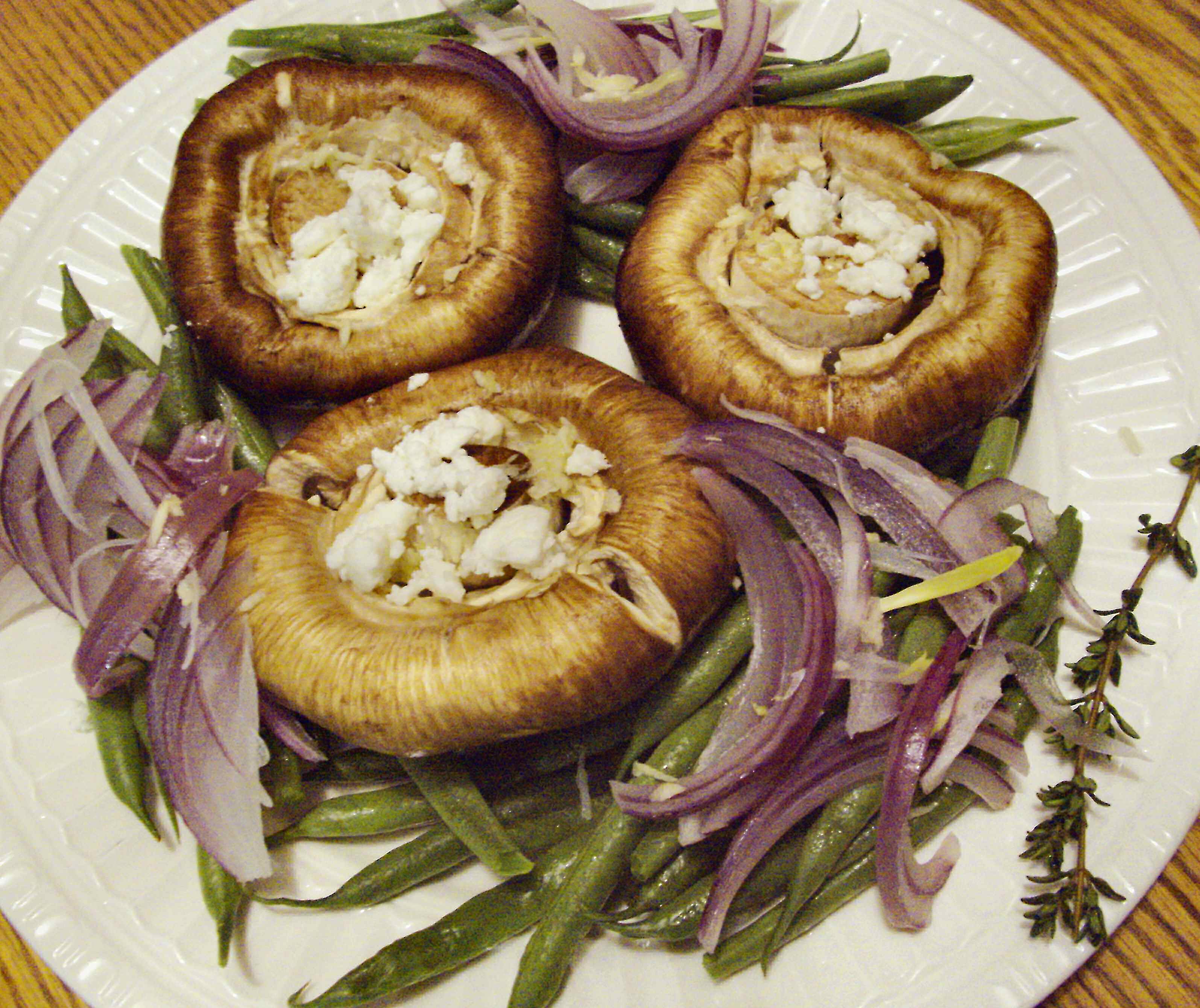
If you want something a little fancier-looking and vaguely French (we’re going for “day in Monet’s Garden,” not “tacky tourist café with haricots verts side dish that turns out to be nothing more than buttered overcooked green beans”) you can arrange the green beans in a covered stoneware platter or bowl, with thinly sliced onions and a bit of thyme and minced garlic strewn around to get a fairly nice-looking and savory microwave-to-table kind of dish that still only takes a few minutes to throw together and zap to perfection.

greenbeanswithstuffedcriminimushrooms

Slice some mushrooms over the green beans or nestle mushroom Continue reading

How to fly with a pie

Happy Chanukah–tonight was the first night–and as per usual, a belated Happy Thanksgiving too. I hope everyone ate nice, had fun, enjoyed and helped do the dishes wherever you gathered.

Now that it’s over, I have a few more additions to the list of things I’ve learned–good or bad–about How To Travel With Food ™. Because my in-laws, who usually host Thanksgiving, are traveling in Africa (!!!–think elephants coming up to their cabin porch), my ex-brother-in-law invited all the rest of us to join him for the weekend instead. In Sonoma. At what turned out to be not a cabin with or without elephants, but a luxurious private residence he’d booked for the group as a vacation rental. And it was out and out marvelous. If a little weird and unsettling in its own way.

Sonoma-Kenwood.jpg

When we were still deciding how to reach Sonoma from Pasadena, we realized with dismay that it’s about 10 or 11 hours by car at the best of times, and Thanksgiving week is not the best of times. When we lived on the east coast, a trip like that would have us thinking airplane automatically, but out here we usually just suffer. My niece and her boyfriend drove up from San Luis Obispo, usually 4 hours north of us, and it took them 9 hours instead of 5 or 6. So I was really grateful to my husband for finding affordable plane tickets for an hour’s flight into Oakland. So far, so good, and it took a lot of the strain out.

But all those airline rules. And we were the ones bringing pumpkin pie. In carry-on. My ex-BIL offered to pick up a couple of big stalks of brussels sprouts for me up there (I don’t think we even had any more at down here by this time; Trader Joe’s was out of them by weeks) as well as a green cabbage for Greek cabbage salad. These are big heavy scary-looking items you just don’t want to schlep on a plane unless you’re auditioning for the live version of Shrek. As the shopping list got longer, I decided to just bake the pies at home, cool them, freeze them as far as possible, and take them in a stiff box with some ice packs stuffed in the corners and hope for the best.

Continue reading

Another Greek salad

Greek cabbage saladWhen we think of Greek salads here in the US, it’s mostly horiatiki (a version of which is my current favorite lunch)–chopped tomato, cucumber, maybe peppers, some onion, feta and olives. Lahano salata, a shredded cabbage salad with lemon and olives, is less familiar and served, according to cookbook author Rena Salaman in The Greek Cook: Simple Seasonal Food, (Aquamarine/Anness Publishing, NYC ©2001), as a winter side dish–because you always have cabbage available, and lemons are a winter crop in the Mediterranean (and southern California). All you need to add are garlic, parsley, olives and olive oil and you’ve got it. Actually, that really sounds like a perfect summer thing to me.

I picked up a green cabbage today at my local greengrocer’s because it was there, it was cheap, I already had a red cabbage at home for other stuff, and besides, you can’t just hang around your local greengrocer’s picking up seven or eight pounds of fabulously ripe Fresno tomatoes all on their lonesome every couple of days. People will suspect you of becoming a tomatoholic. You need to branch out. And besides, I’d already made a tomato-cucumber-pepper salad pretty much every day for the past two weeks for lunch (as noted above). Not that I’m bored with it, but it gives me permission to do something else for dinner.

This Greek slivered cabbage salad is something I’d had in the back of my mind for half a year or so since paging through Salaman’s cookbook and its gorgeous food photos. But since it’s summertime, limiting the herbs to parsley seems like a missed opportunity when there are so many fresh herbs going wild in my fridge.

Dill, basil, mint, scallions–my current favorite mix for the lunch salad would probably also be good with shredded green cabbage. So I did a variation using those and foisted it on my unsuspecting nearest and dearest, who were both in need of something lighter than usual for supper. It went pretty well and we all agreed it would be a good filler for the salad part of a felafel pita.

I mixed this salad up about an hour before serving and stuck it in the fridge. I realized belatedly that the abundant lemon juice in the dressing would probably start wilting the cabbage, and it did slightly. It would have retained more crunch if I’d mixed it right as we were about to eat, but we still liked it and it wasn’t actually limp, just a little softened. I didn’t think the leftovers would hold up more than a day in the fridge but they did okay and didn’t wilt further overnight–perhaps because I poured off the excess liquid before storing the salad in a snaplock container.

One thing I like about cabbages is that they go a long way. You can take a quarter, wrap and refrigerate the rest and it should stay good for a couple of weeks. You might have to shave off any dried-out cut surfaces the next time (certainly for red cabbage, which also discolors a little at the dried surfaces) but the rest should stay pretty fresh.

Lahano Salata (Greek Green Cabbage Salad, Summer-style)

(Adapted from Rena Salaman’s The Greek Cook: Simple Seasonal Food; ingredient amounts are “use your best judgment”)–for 3-4 people as a side dish or pita filling as a bed for other stuff like felafel or kebabs. If you use a whole head of cabbage as in Salaman’s original recipe, increase everything by about 4-fold or to taste.)

  • 1/4 head of a washed green cabbage (the two outer leaves peeled and discarded, the rest rinsed under the tap)
  • small handful of herbs–a sprig or two each of dill, basil, and mint; parsley is okay too–finely chopped
  • 2 scallions, finely chopped
  • 3-4 pitted Greek-style olives (kalamata, Alfonso, Gaeta…), slivered
  • juice of a lemon or to taste–half a very large lemon was pretty lemony for just a quarter of a cabbage. For a medium or small lemon, taste and add a 3rd half if you think it needs more
  • 1-2 T olive oil

Shred the cabbage finely with a sharp knife and chop into manageable lengths unless you like the shreds long (Rena Salaman’s book had a pretty photo with very long straight shreds, almost like angel hair pasta. She mentions that the cabbages in Greece are different from standard American or northern European ones, so that may be part of it. Ours are curlier when shredded). Add the herbs, scallions and olive slivers, squeeze on the lemon and drizzle on the olive oil, then toss with two forks until everything’s well mixed. You can let the salad soften a little in the fridge for half an hour or so, or you can serve it straight up while it’s still a bit crunchy–it’s good either way.

Frittata on the Rebound

Dr. Lustig’s “Teaching Breakfast” clinical teaching program for families with obese or diabetic children posed a question for me that I didn’t get a chance to test out until this morning. If something with balanced protein and vegetables–say, an omelet–is a better choice than most breakfast cereal, or poptarts, or doughnuts, or whatever most kids are eating before they go to school, how do you get that to be affordable and quick to prepare on a schoolday?

The easiest way to do eggs for several people at a time without overdoing the cholesterol is probably to do a big omelet or scramble and take out some of the yolks. But you might not have time  to do it at the optimal time for the gourmet–that is, right before you’re going to eat it. Not if you’re heading your kid(s) out the door with the daily litany to grab socks, shoes, homework and lunches and not to worry about what color lipstick (or hairstyle, or comic book, depending on age and taste) because you’re going to be late and come on, already.

We didn’t have this problem in my childhood; you either got out to the bus stop on time by yourself or you walked to school in disgrace, because my mother was not going to make our breakfast or lunch (for which we were immensely grateful), or do any big rescues for “emergencies” based on footdragging. And staying home was not an option we wanted to explore. My sister and I could count on the other one telling on us, not to mention the prospect of running into Mom if she came home early or picked up a phone call from the school attendance clerk. Motivation is everything…

But grownups have these dilemmas too. Who wants to be messing about with a frying pan and washing up when you’re trying to get to work? So many of my daughter’s teachers last year could be spotted out in the parking lot of the school right before the first bell, standing by their cars and bolting down an egg mcmuffin-type thing from a fast food drive-through (drive-thru? hate that commercial spelling) with a cup of coffee in the other hand. Quick, seemingly nutritious, but actually horribly high-salt-and-fat-and-calorie-for-what-it-is, and quite expensive too. Not a good daily habit. If you can do eggs and coffee from scratch at home, you’re bound to do them better and a lot cheaper. You could probably save up for a new tablet or pair of theater tickets within weeks, and you might even lose a bit of weight.

So eggs. A frittata has a lot more vegetation in it than a classic French-style omelet, and it’s more sturdy–look at the very solid, nearly stiff Spanish potato-filled version; always served at room temperature in cubes or wedge slices, almost as some kind of potato kugel.

Well, okay, you don’t want a potato frittata if you’re trying to get the nutrition up to snuff without tons of calories or grams of carb. You want some lighter but substantial vegetables so you don’t end up feeling like you swallowed a lead balloon for the rest of the day.

But the good news is that you don’t have to cook and serve it right on the spot. You can do it ahead and stick it in the fridge. If you do it the night before, you can cut it into wedges and microwave one on a plate for 15-30 seconds and you’re ready to go. Or, of course, you can serve it cold–kind of like the classic cold pizza for breakfast, only  better balanced. And most frittatas go well with salsa.

I am not a fan of the kind of isn’t-it-rustic-Italian-or-Provençal glossy magazine frittata instructions that call for frying first and then running under a broiler or what have you. That takes time and heats up the house ( bad in Los Angeles) and probably calls for expensive stovetop-to-oven-friendly cookware, which is usually not [sorry, forgot the “not” when I first posted this] nonstick. A lot of excess fuss for an effect you can perfectly well achieve in an ordinary nonstick frying pan in a couple of minutes on the stovetop, which is how most people who make frittatas at home “authentically” in tiny Italian or Provençal kitchens actually make them. Unless you’re doing a fancy brunch service for 20 diners at a time, in which case it might actually be quicker to do a baked eggs thing in a big casserole and skip the frying. But then I’d hope you were getting paid through the nose for that. Little chance of collecting caterer’s fees at home.

As for the vegetables, cauliflower and zucchini are both very good low-carb, low-calorie stand-ins for potato, and they’re pretty inexpensive and easy to prepare, especially if you have a microwave so you can parcook them on a plate for a minute or so before adding them to the frying pan. That gives you a chance to soften them through quickly and at the same time drain off some of the liquid–they’ll fry faster and won’t make the frittata soggy.

Cauliflower has more fiber, vitamin C and calcium than zucchini, and it’s a bit firmer as well. Zucchini is milder and easier for kids (or adults) who aren’t yet used to eating a variety of vegetables. A frittata like this is also the ideal way to use up that scary-big overgrown zucchini your enthusiastic gardening neighbor gifted you with. Or that someone anonymous parked on your doorstep in the middle of the night.

…It is getting to be the season for that sort of reverse larceny, now that I think about it. Someday I feel it would be right to invent a spring-loaded, siren-enhanced trap for stealth zucchini donors. Something involving on-the-spot forced acceptance of a large cafeteria-style green or orange jello mold with canned fruit cocktail floating in it, faded-pink “cherries” and all, as the price of escape…  Or maybe I’ve just been watching too much “Big Bang Theory” with my daughter this weekend and have started to channel my inner Sheldon. And really, I don’t mind stealth zucchini nearly as much as gifted Meyer lemons.

Okay. Back to the frittata–after all, if you already know how to make a basic omelet, this post is mostly just for entertainment, a mere vehicle for shocking photos of various vegetables that have been foisted off on us by well-meaning friends. It’s enough to make you feel like Wallace & Grommit in “The Curse of the Were-Rabbit”:
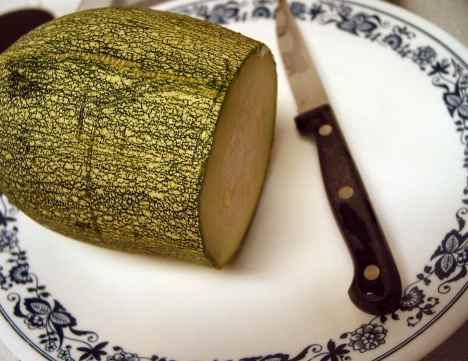
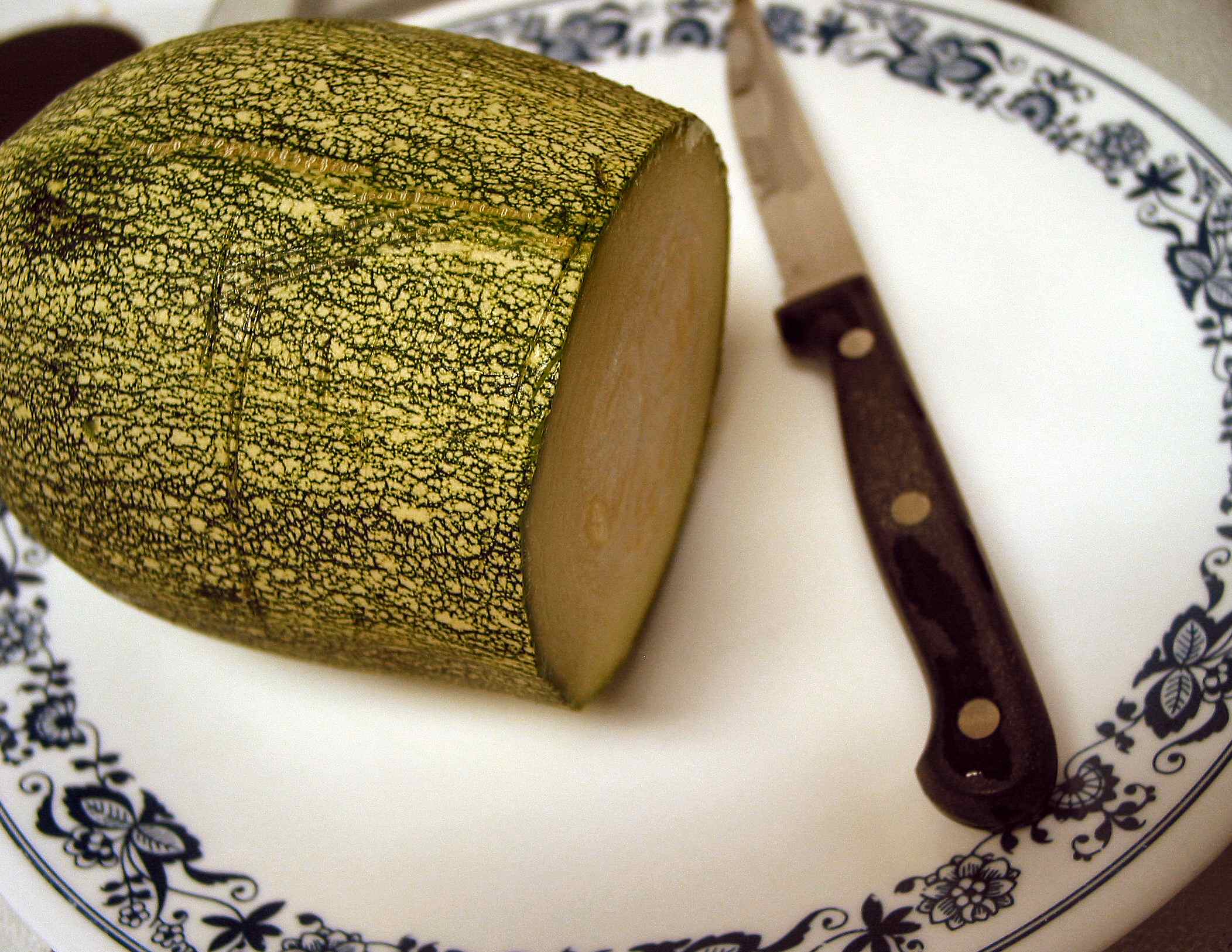
Monster zucchini half

Monster zucchini. This is a dinner plate and steak knife we’re talking about here. And only half the zucchini. The other half of which I’m sure is still stalking the neighborhood in the wee hours of the night.

IMG_8903

Breaking down a zucchini (well, how would YOU go about it? I didn’t have a wooden stake or silver bullet or anything) for a monster omelet.

Continue reading

Sleepover fare

My daughter who loves vegetables and will often eat them ahead of whatever else is on the plate at supper suddenly became selfconscious yesterday about serving them to her friends at her birthday sleepover–no, no, no, Mom, none of my friends will eat them, and they probably don’t want fish, we want pizza. Not your pizza. Pizza from the good takeout place in Sierra Madre. And no anchovies this time.

We’ve known these girls since kindergarten–or earlier. They eat vegetables. But pizza it was. With some raw veggies for snack thrown in beforehand.

Our experience with the standard kid party fare is not very happy. Chips, soda, candy, popcorn–and that’s just the open bowls sitting around. Then pizza, cake, ice cream, possibly more candy.You’ve got to wonder what kind of parents actively choose such a menu–and the answer these days is, most people. All of these things are pretty addictive–everyone grabs for seconds without thinking.

Our daughter has been to a few of these parties and discovered the hard way that everything she knows how to do as a Type I diabetic flies out the window the instant she gets there. All her friends are grabbing handfuls of these very high-carb, mostly processed foods which we never get at home (except for ice cream), and the behavior is as addictive as the snacks. Even when she plans a strategy ahead of time with a goal for a limited reasonable maximum of carb grams and she calculates insulin for everything meticulously, she ends up pretty high hours later–as in, at 3 a.m., long after the insulin for the food has run its course.

It’s extremely hard to calculate carbs accurately enough with most processed snack foods at a party to avoid big glucose spikes later on. Even if you do everything right. There’s just something about junk foods–either you end up eating three meals’ worth of carbs in an hour of snacking without even feeling it because your friends are eating that way and it seems normal at the time, or these foods really digest a lot differently from standard things like bread or pasta. If it’s happening to our daughter, who can see the ugly results by getting a fingerstick three or four hours down the road, when she’s antsy and fractious and can’t sleep at 3 a.m., you know it’s also putting an extra burden on your kid who has a working pancreas.

So it might be a good idea to get fresh with the standard teen birthday party menu–if you’re doing pizza, skip the bags of chips and soda, add some veg and lighten up on dessert.

Salad was not achieved despite best intentions only because there was no room to get through to the kitchen where the vegetables of the week were lounging in the fridge. With the girls suddenly launching into “girl tawk” over pizza (a less appetizing combo would be difficult to imagine), and since we don’t have a separate den, our living room and dining room quickly became no-parent territory. My husband and I sidled up, grabbed some pizza and some carrot sticks and hid out in our bedroom so as not to intrude or have to hear any of it–win/win.

So given the awkwardness of getting past them and into the kitchen, vegetabalia last night was reduced to the bag of sugar snap peas and a bag of baby carrots we’d put out for a snack–not up to par, really, but it worked out fine. The girls ate them happily enough and didn’t notice the lack of or even seem to miss chips, cheetos, popcorn, potato chips, pretzels, goldfish etc. They were all too busy watching “Big Bang Theory” episodes and gossiping nonstop. It just goes to show you–the party is not in the bag [of chips, as per the tv ads], it’s in the participants.

I’d made a rather large and beautiful raw blueberry pie for dessert–chocolate cake after pizza just seems so wrong when it’s so hot out, and besides it’s summer with a vengeance. All indications (pretested and verified by my kid) were that both the crust and the filling were up to snuff. My daughter calculated for her best chances of being happy and more or less within range at her own party so she could have a piece with her friends, and she stopped worrying about the lack of junk food. I mean, pizza serves perfectly well as its own form of junk food–you don’t need any extra.

Plus you don’t want to be crunching too loudly when Sheldon and Leonard are going at it over whichever comic book hero’s superpower is the more mathematically sound.


This always happens right before vacation…

Finally, finally, we are going to the East Coast. We’ve had to put off seeing my mom and my sister (and assorted boys) twice since December due to incessant snow, none of which hit Los Angeles in the slightest. So as soon as school lets out, we’re packing for an ungodly wake-up call the next morning and getting out of SoCal for a bit more than a week. The cat gets a hotel/spa vacation without all the schlepping around between Bahston and New Yawk. We get the do-we-have-enough-clean-undies-to-make-it version.

So good, already. But as in many of my tangled big-event preparation schemes, I have a slight problem with the fridge:

Stuffed fridge right before traveling

The problem, part I…Note the tomatoes: 10+, excessively ripe, and the invisible 6 or so red peppers behind them. Not to mention the huge bag with 7-8 bunches of fresh herbs…

fridgedoor

Part II, the door…Note the huge bag of nectarines, lower left, the chiles just behind the mushrooms and two bags of apricots at right, just because…

AAAgh…just a little insane. Suffice it to say, it’s been an enthusiastic week or so vegetable-shopping-wise because the Fresno tomatoes are back in my local greengrocer’s, along with a lot of other produce, and I’ve gone overboard on a number of items, not least of which are lemon basil, mint, dill and tarragon (which I haven’t even decided if I like). The market beckons, the low prices for herbs and vegetables even more so, and the sun’s finally come out again after a month of gray days. And I’m a purple thumb as a gardener, so the greengrocer’s wares beckon even more strongly. How could I not want it all? But a little thought for the calendar might not have gone amiss.

So I’m in trouble again. We leave in 4 days. There are a maximum of three humans in the house (depends how we’re behaving at any given moment). Nobody but me really gets into gazpacho the way they should–though they will go with salads (the coarse-cut version of gazpacho). And it’s a sorry day when you have to threaten people with apricots and nectarines three meals a day. We should be reveling in the produce section, not roiling in it. If we were staying here, this would be an ideal scenario for the next week and a half, Continue reading

Parsley Doesn’t Count

It’s nearly June, the big northeast snowfest that lasted into April is pretty much over, and all the May and June issues of the big food magazines are showing…almost no fresh vegetables on the covers. Or inside. Oh, you do see some green–but it’s garnish. Flat-leaf parsley, a little cilantro, a sprig of basil maybe, chopped or torn over the cover dish to make it pretty. But very few actual vegetables–take a little walk with me down the newsstand for a sec.

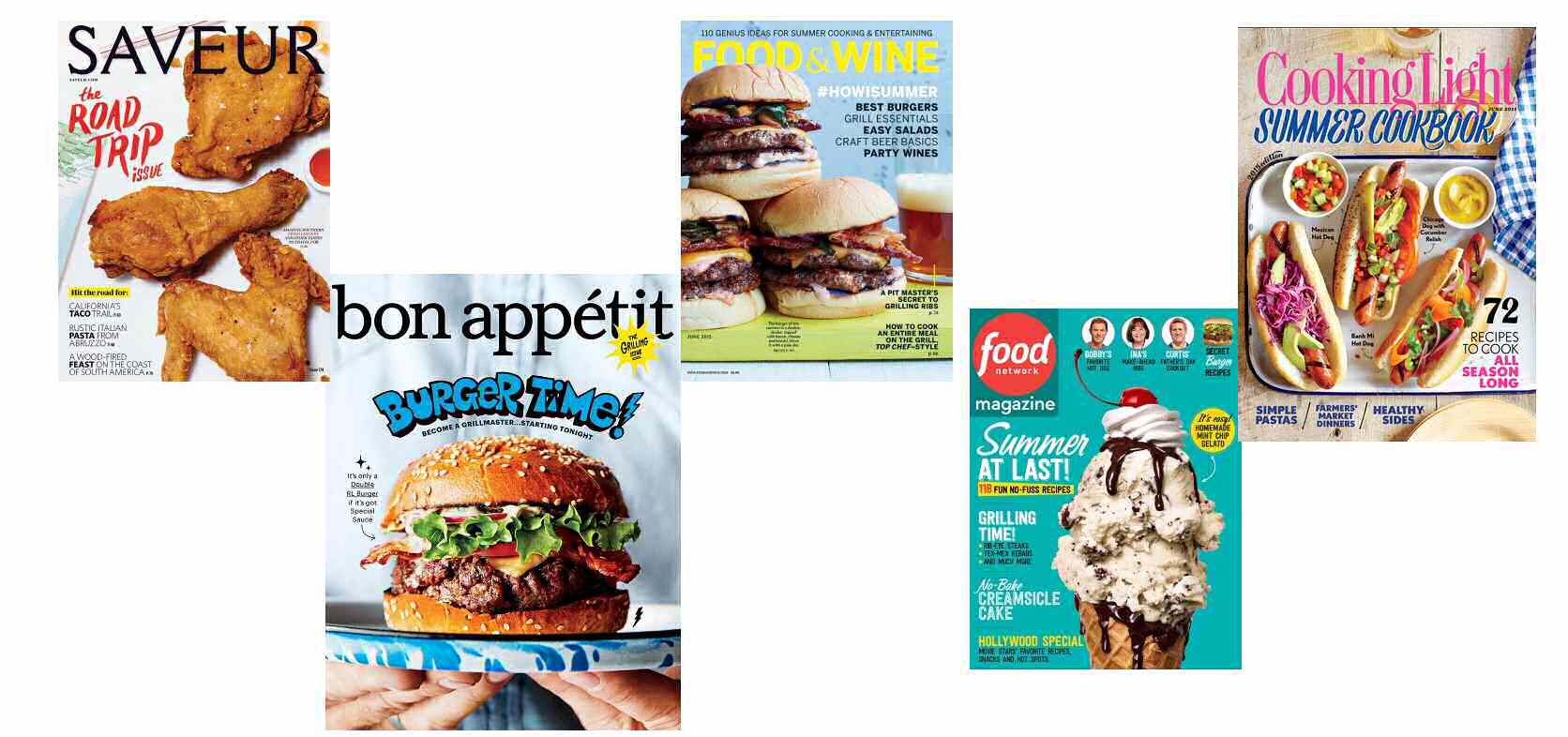
magcovers

All magazine cover thumbnails shown have been lifted shamelessly–they’re not mine, they’re the property of their respective publishers–and pasted together here solely for parody value and critical review of the food literature.

Saveur? Fried chicken. Seriously. Cooking Light? Hotdog special–one with a slice of pickle and tomato, another with avocado, to represent Vietnamese and Mexican, respectively.  Whoo-don’t you feel like a world traveler now. Food and Wine? Burgers by Bobby Flay. Bon Appétit? Another burger. Food Network? They don’t even pretend. Ice cream cone. With whipped cream and a cherry on top. On a cone.

The women’s mags are leaning toward desserts: Martha Stewart–cake. Southern Living, Allrecipes–pie. Better Homes & Gardens and BHG Diabetic Living both feature watermelon and ice cream or sorbet assortments. All of it very pink.

Eating Well cover Vegetarian Times cover

But even EatingWell and Vegetarian Times aren’t doing all that much vegetabalia on their green-looking covers. EW has a vegetable serving platter with a nice looking bunch of raw green beans and tomatoes at the bottom, but more than half of the platter is canned  beans or dip. Not that I’m against those, but they really aren’t fresh veg.  VT has a grilled veg and quinoa salad platter that looks wholesome enough, but if you zoom in for a closer look you realize it’s not mostly veg either. If you took a quarter of it for yourself, you’d only get 3 or 4 thin slices of pepper and zucchini on your plate along with the grain. Most of the green you see in the picture is a token sprinkling of arugula and basil sprigs strewn over the top–a strategy that’s being used and abused in the less veg-forward pubs to make steak or pork loin or mac ‘n’ cheese look like they have something fresh and healthy about them.

Lucky Peach and Cook’s Illustrated both go for graphics rather than photos. LP has a cartoony poster graphic of garden lushness for “The Plant Issue”–do they really have vegetabalia inside? Cook’s Illustrated has a pastel of radishes.

It’s as though they all decided to try to look summery without  including actual bulk greens–the signature of summer (well, other than watermelon). I’ve complained about this before, I know, but back then I was talking about friends who don’t cook much and are somewhat veg-phobic, not about upscale food media. For years the food glam world has been touting local sourcing, farmers’ markets, heirloom this and that, Provençal and Spanish and Italian and Middle Eastern cuisines, which are full of vegetables one way and another. But they really are no longer practicing what they preach. They’ve shrunk their focus down to the meager American fast food paradigm while pretending otherwise. And charging you between 4 and 10 dollars an issue.

But vegetables are so easy to ruin, you say. The green ones turn brownish olive if you hold them too long after cooking. If you’re going to hang around a whole hour waiting for the photographer to get the right shot, you’re going to have to cook a couple of batches in a row. Strewing a couple of sprigs of cilantro or parsley over something is so much easier!

The other reason we’re not seeing vegetables on the magazine covers: editorial production lag. Monthly magazines typically take anything from 2-6 months to produce from start to finish, so they work ahead. The May and June issues probably went to press two months ago, when it had barely stopped snowing in the northeast (per my mother and sister). Summer vegetables are not bountiful in March and April under those conditions–at least not in New York and Boston. But the editors could have put together something decent and thematic for the covers if they wanted to–I’m pretty sure I could have sent them a likely looking CARE package from my local greengrocer’s if they’d only asked and were willing to foot the overnight shipping.

A weekly haul from my greengrocer's comes in under $30 even with coffee, spices and special items.

Eat your heart out, foodie magazines! Time to gloat. A typical weekly haul from my greengrocer comes in at under $30 even with a pound of coffee or tehina or yogurt (not shown, obviously), bagged spices, dried beans, and  specials on fruit or nuts. When the tomatoes are better I stagger out the door with 5-10 lbs. at a time, but on the other hand the snow peas were a serious bargain this time around.

There are plenty of good vegetables around. Fresno tomatoes are back in my Armenian grocery (for which, oh! be joyful), we have green and romano beans, we have lettuces and purslane and bunches of fresh basil and dill and mint and za’atar (and yes, parsley, Continue reading

Persian Posh and Jewish Soul: Two Veg-Friendly Cookbooks for Spring

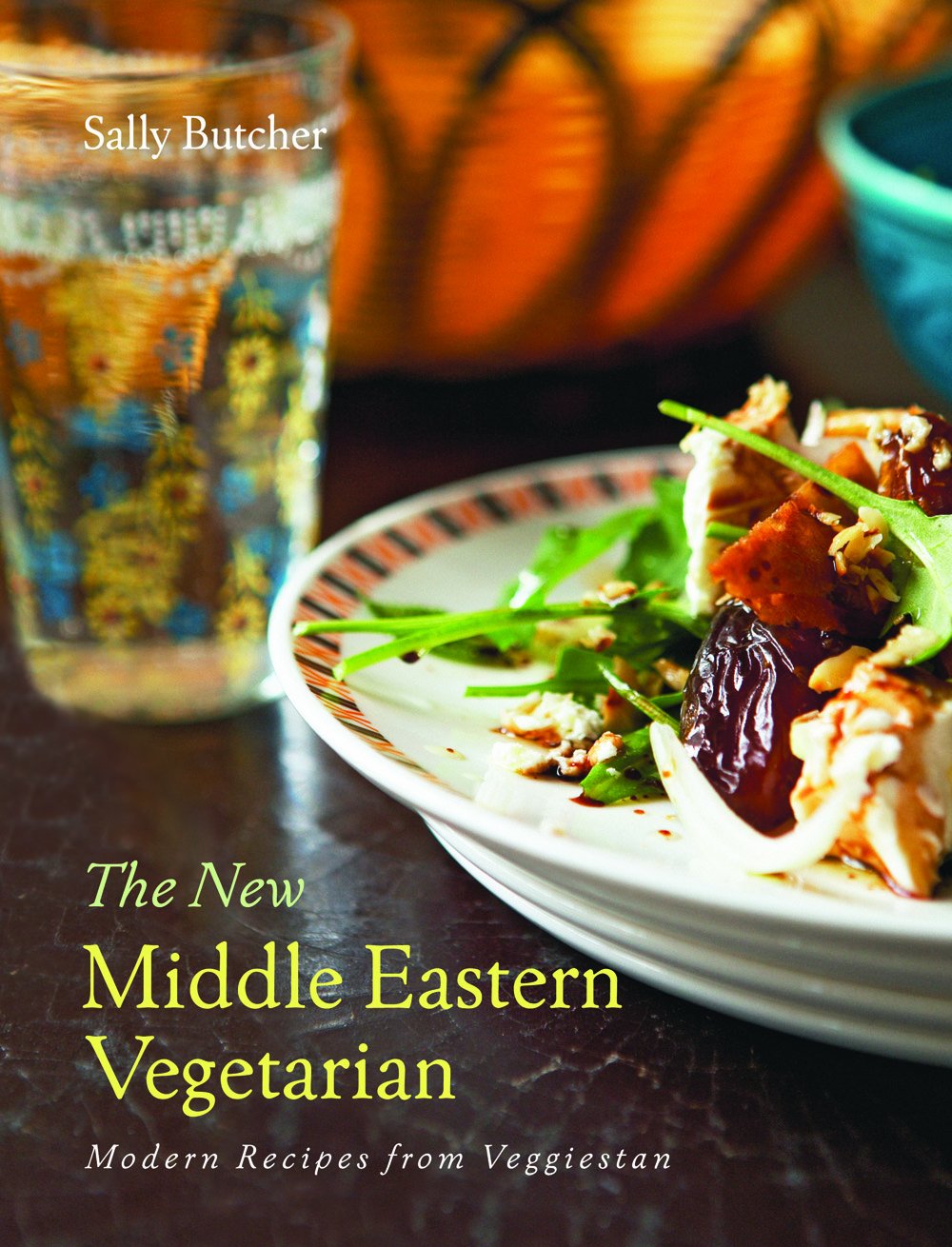
"The New Middle Eastern Vegetarian" (aka "Veggiestan" in the UK) by Sally Butcher, cover photo from amazon.co.uk "Jewish Soul Food: From Minsk to Marrakesh" by Janna Gur. Cover photo from amazon.com


Passover week didn’t exactly go the way I’d hoped, with loads of new vegetable dishes to play with and experiments in microwave gastronomy that would wow the most cynical reader…

After the optimistic start with the chocolate almond torte and the microwave shakshouka for one, I suddenly caught a bug–my husband caught it first, suffered a day or so, got better and then kindly passed it to me, and I ended up sick for the better part of the week. We all agree we got it from a kid he was sitting next to at seder. Now that our kid’s a teenager, we’re no longer used to it. Clearly we’ve gone soft.

So I was–shall we say–less than enthusiastic about cooking the last week or so, and ended up with lots of ideas that stayed in my head while I stayed in bed, attempting to keep up on tea, rice, poached eggs and applesauce. And feeling really embarrassed that every time I opened the fridge and saw all the beautiful vegetables I’d bought for the week, I peered at them suspiciously–how much trouble would they cause me? Was it really a crappy virus or was it maybe secretly food poisoning, even though everyone else was able to eat? Maybe tomorrow–and closed the fridge door again and groaned. It took a couple of extra days to start looking at vegetables with any enthusiasm at all.

This, I thought, is what most of the country thinks about fresh vegetables if a dolled-up superstar chef isn’t holding one on the cover of a glossy magazine (or even if he is). Maybe with a little less queasiness or dizziness than I experienced, but with that lurking suspicion that vegetables have dirt on them, that you have to wash them off and then cut them up and do something to them, that they’re not sterile and wrapped in plastic for your protection, and that it’s all too much bother. What a lousy, paranoid way to live.

So anyway, now that I’m better the vegetables are looking good again, and the (four or five) leftover matzah boxes have been relegated to a top shelf for sometime when I’m not sick of them and want to experiment a bit for next year.

Two bright and sun-filled new (or newish, anyway) cookbooks that make lavish and hearty use of vegetables were languishing on my desk for the entire week of Passover (and two weeks before that, when I was too busy to do more than look at them wistfully). Sally Butcher’s Veggiestan is a collection of pan-Middle Eastern vegetarian recipes that centers on her husband’s family Persian cuisine and their experience as the proprietors of a Persian specialty grocery in London. Jewish Soul Food: From Minsk to Marrakesh is Israeli food writer/editor Janna Gur’s second major English-language cookbook, and it focuses on Jewish “grandma” food from all the cultures Israel is home to.

Both books run something along the lines of Yotam Ottolenghi’s approach to food–appealing, vegetable-filled, exotic, and fun to cook and eat. But the food is generally simpler and homier, more traditional and with fewer trendy/haute touches or UK-specific ingredients like salsify or seabeans that you just can’t find most places in the US. Butcher and Gur each have a foot in both professional and home cooking, which may make the difference. The recipes here are not chefly so much as cookable. Eminently cookable, and they make me want to run right out and try so many things (especially if I can stuff any of the steps into the microwave) that I’m just going to have to get them both and give back my overdue library copies.

The authors share an approach to traditional and modern Middle Eastern food that is enthusiastic, knowledgeable, ecumenical and–I’m not sure how to say it exactly, but  neighborly comes close. Reading these books is like hanging out in the farmer’s market and the kitchen with a friend who knows how to make all the dishes your grandmother might have made but never showed you.

Veggiestan is the original 2011 UK title of Butcher’s mid-sized cookbook, now out in trade paperback,  but the publishers thought that title would be too controversial for the US (land of “freedom Continue reading

Microwave Tricks: Shakshouka

IMG_0458

Marinara plus a pepper makes a good start.

Sometimes during Passover you just can’t take any more matzahnola. Or matzah with jam, or matzah brei. Or cake. Or macaroons. Anything for breakfast that doesn’t involve at least one vegetable (other than yourself, before coffee). Your tolerance for sweet stuff has been exhausted, and as for the leftover gefilte fish and hrein…no. We are not going there. No matter how much my husband insists it’s “perfectly good” (and I notice he hasn’t schlepped the rest of the jar with him to the office!)

Forget all that. There’s a pretty good cure for the Pesach blahs–you need some chile peppers and you need them now. Not in 20 minutes, no major cooking involved. You have a microwave, some cheap microwaveable soup bowls or the like, and you’re not afraid to use ’em for an increasingly popular Israeli brunch dish–shakshouka. Which is basically the Jewish version of huevos rancheros, only without beans or potatoes. Or lard.

Yotam Ottolenghi has made shakshouka popular and photogenic in at least one of his famous cookbooks, probably prettier than what I’ve got here. But it takes longer too, and I’m impatient.

To make shakshouka, you usually need a frying pan, olive oil, some tomatoes, peppers and onions, plus garlic, cumin, chile peppers, maybe a couple of oregano-or-thyme-and/or-cilantro-type herbs–sounds like the makings of salsa, no?–and some fresh eggs to crack into the resulting sauce. The sauce takes some 20-30 minutes to cook down, the eggs another 5-7 to cook more or less sunny-side-up in the middle of the sauce. That’s a lot of time for breakfast. I wanted a shortcut this morning.

Most jarred salsas are not kosher for Passover–it’s the distilled vinegar thing. That’s okay, because yesterday in a fit of domestic planning (uncharacteristic, I swear) I decided to make a batch of microwave marinara from some unsalted canned tomatoes. I don’t have a kosher-for-Passover food processor this year, though, so I decided, after trying to chop up some pretty tough Roma tomatoes (even with the skins off!) that I should just do as the Sicilians do and break them up with my hands as Tony Danza advises. A little chunkier than usual, but just fine. And actually ideal as a base for shakshouka–both its readiness for a mid-morning fridge scrounge and its rusticity made for a good start. A good dollop in a microwaveable soup bowl.

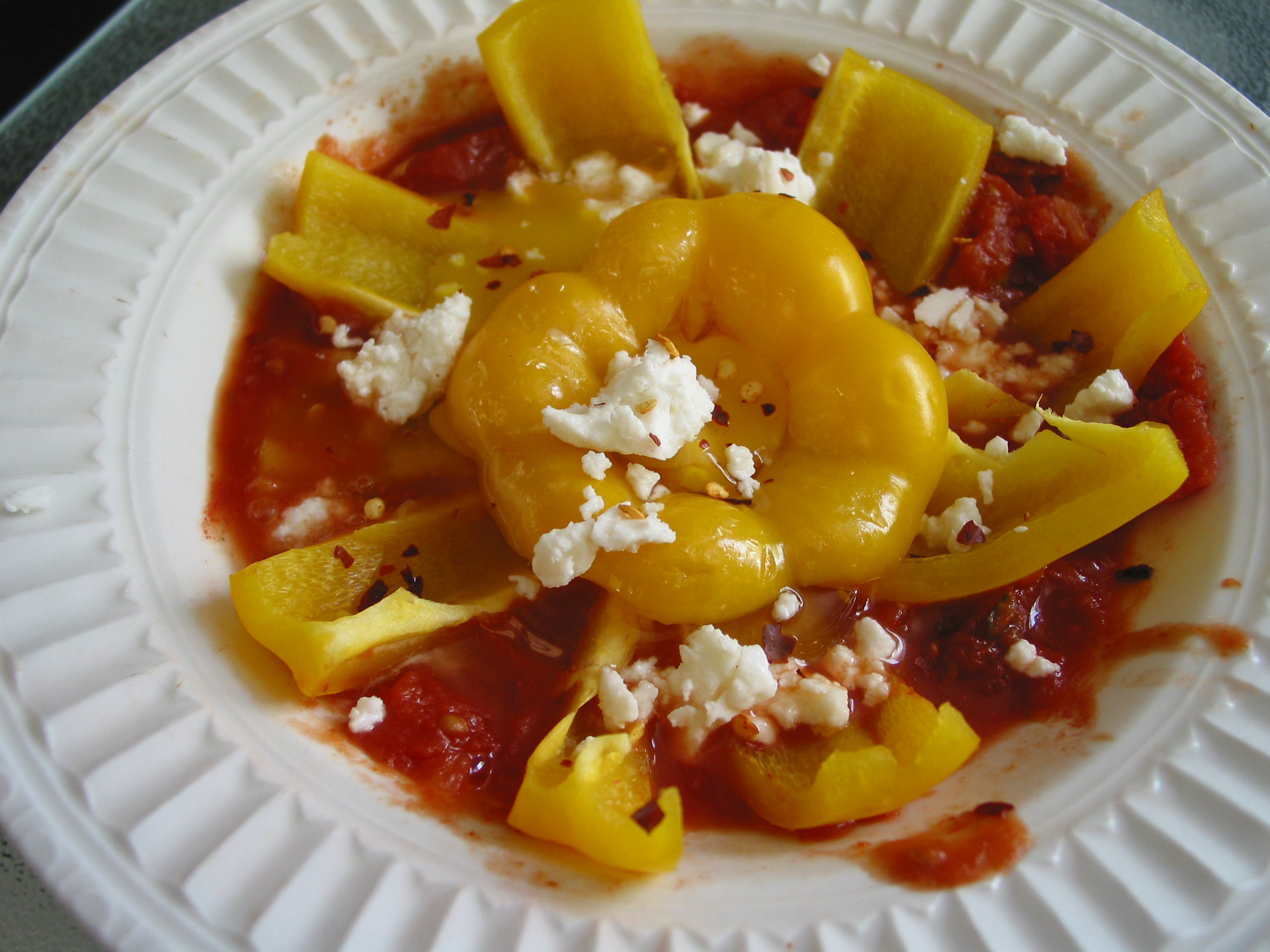
What else do you need? Maybe a bell or Anaheim-type pepper that needs to get used up. Cut it up (I got whimsical, you don’t have to potschky around with flower shapes). Add more onion if you feel like it; I didn’t. Stick it in the microwave for a minute or two to wilt the pepper and possible onion pieces.

IMG_0461

Then crack an egg or two into it, sprinkle on a bit of feta or panela or queso fresco as desired, maybe a pinch or so of chile pepper flakes or z’khug (I’d run out) and/or chopped cilantro as desired.

IMG_0463

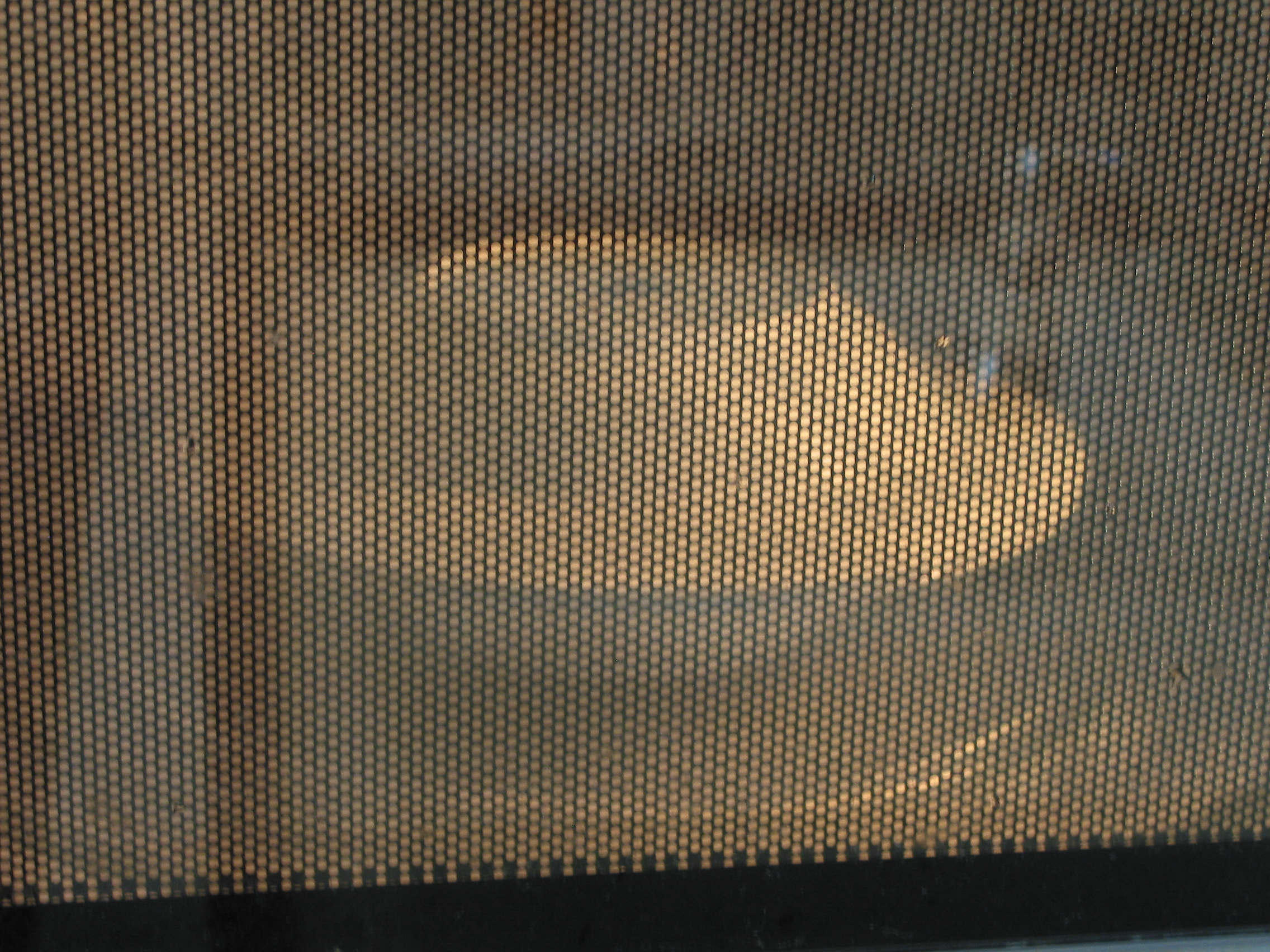
Put another soup bowl on top as a lid, and microwave another minute or two until the eggs are cooked to your liking–check and add 30 seconds if you think it’s still got a raw spot somewhere, and/or leave the lid on for a few minutes and let it finish cooking in the residual heat of the sauce.

Obviously if you’re having people over for brunch, the standard frying pan method is better and quicker–more eggs and salsa means more time in the microwave, and no one wants to sit around as you microwave individual portions. But if it’s just you, or you and your partner, the microwave method works pretty well. Just add a little time (maybe another minute or so in 30-second increments) for four eggs as opposed to two.

IMG_0464

Hafla! (celebratory remark when there’s something good on the table and you didn’t have to wait an hour for it) Grab some matzah and a cup of hot coffee and b’te’avon (mangia bene/bon appétit/eat nice)!