
• Enter your email address to subscribe to this blog and receive notifications of new posts by email.

    Join 241 other subscribers
  • Noshing on

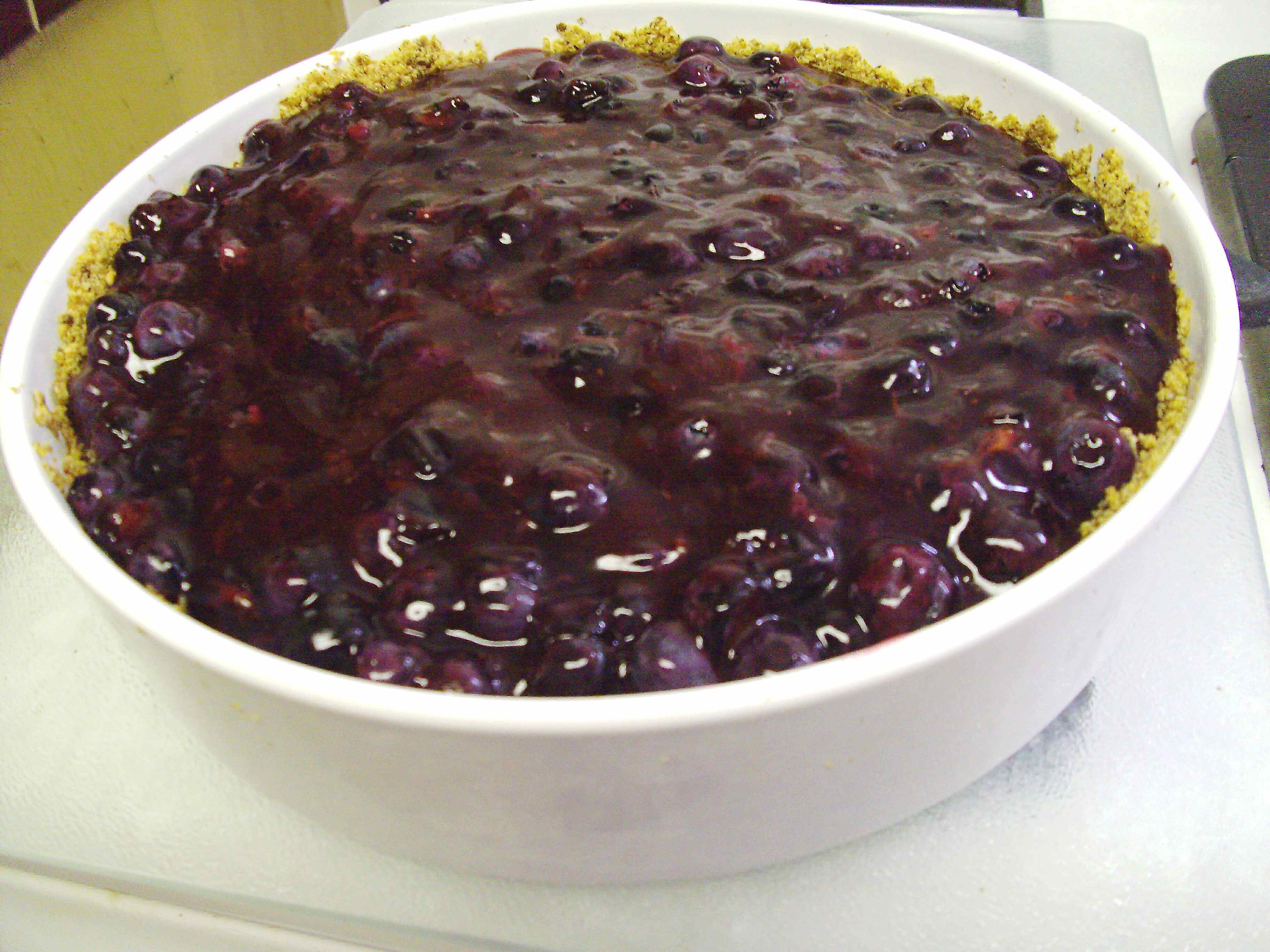
    raw blueberry pie with microwaveable filling and graham cracker crust

    This mostly-raw blueberry pie is a snap to make and very versatile--the filling microwaves in a few minutes, and you don't even have to bake the zippy gingered graham cracker crust--perfect for a hot Fourth of July and all summer long.

  • Recent Posts

  • Contents

  • Archives

  • Now Reading

  • See also my Book Reviews

  • Copyright 2008-2024Slow Food Fast. All writing and images on this blog unless otherwise attributed or set in quotes are the sole property of Slow Food Fast. Please contact DebbieN via the comments form for permissions before reprinting or reproducing any of the material on this blog.

  • ADS AND AFFILIATE LINKS

  • I may post affiliate links to books and movies that I personally review and recommend. Currently I favor Alibris and Vroman's, our terrific and venerable (now past the century mark!) independent bookstore in Pasadena. Or go to your local library--and make sure to support them with actual donations, not just overdue fines (ahem!), because your state probably has cut their budget and hours. Again.

  • In keeping with the disclaimer below, I DO NOT endorse, profit from, or recommend any medications, health treatments, commercial diet plans, supplements or any other such products.

  • DISCLAIMER

  • SlowFoodFast sometimes addresses general public health topics related to nutrition, heart disease, blood pressure, and diabetes. Because this is a blog with a personal point of view, my health and food politics entries often include my opinions on the trends I see, and I try to be as blatant as possible about that. None of these articles should be construed as specific medical advice for an individual case. I do try to keep to findings from well-vetted research sources and large, well-controlled studies, and I try not to sensationalize the science (though if they actually come up with a real cure for Type I diabetes in the next couple of years, I'm gonna be dancing in the streets with a hat that would put Carmen Miranda to shame. Consider yourself warned).

The Cheap Vegetables–Snack Edition

A food marketing study released findings a few days ago about the top 10 fastest growing snack food preferences for kids 2 to 17 years old. Yogurt came out as number one, then potato chips, then–very surprisingly to me–fresh fruit. The others down the rest of the list were a soggy but predictable mash of candy, chips, “donuts” [sic], and other junk foods, though I think cheese cubes were in there somewhere. If yogurt and fresh fruit are in the top three, though, the news must be good, right?

Um. Maybe. But both of them are sweet or sweetened (in the case of most flavored yogurts, very heavily sweetened compared with plain)–so they kind of fit in with the candy, donut, carb-carb-carb kinds of snacks in the rest of the list.

What’s missing from the top 10 list? Plain milk, pasta or beans, bread and jam, the simpler unpackaged, unprocessed, or unbranded stuff you could bring from home, are all missing. But most of those are hard to take to school, and none of them are crunchy, which is a big part of the pleasure of snack. Actually, few of the packaged snacks are crunchy any more either. It’s a sad state of affairs, but there is a simple way to restore the full joy of snacktime.

Because mostly what you don’t see on the marketing study list are vegetables. Raw, crunchy vegetables, low in calories, starches and sugars, fats and  sodium, are high in potassium and fiber and vitamins, easy to prepare (another chorus of “just wash and nosh”) and perfect for snack. A handful of red cabbage or a couple of carrot or celery sticks along with a piece of cheese or a few nuts will keep kids from hunger for a lot longer than the carb-laden snacks on that list, and they’re a lot less expensive–on your wallet or your kids’ waistline.

Parents at school complain all the time that vegetables are too expensive, too time-consuming, take too much preparation by hand, and are not convenient to deal with, and their kids “won’t eat them”. But I wonder if that’s true, because whenever I go at lunchtime, I see many of those same kids enjoying the vegetables that come out of the school garden. They aren’t whining and they don’t appear to be suffering, and nobody seems to be sneering at anyone else that their lunch has Brand A taco chips and all the other poor schlub’s mother packed was vegetables. They’re all waving broccoli or lettuce leaves around, holding them up for comparison, and using them as props for one or another comic performance before chomping into them with savage glee.

And I know an ordinary bunch of celery–even a head of cauliflower–is the same price or cheaper than an econo bag of Doritos. Even at the big brand supermarkets. Celery. Carrots. Red or green cabbage. Raw green beans or if you’ve got the extra cash, snow pea pods. Broccoli or cauliflower. Lettuce wedges. Tomatoes. Cucumber. Bell pepper. None of these are hideously expensive, all of them taste good raw, and all of them store well washed, dried gently, and kept in the fridge.

So what’s stopping the parents from packing vegetables as lunchbox fare? The fact that they have to wash them to get the dirt off? Get their hands wet doing it? Maybe peel some of the vegetables? Find a knife to cut them up with? Use them up within a week or so of buying them? I honestly don’t know, but a lot of the parents seem whinier than their kids. Maybe they should all learn to just wash and nosh.

It only takes a minute or two to deal with a full head of broccoli or cauliflower, or a bunch of celery, and it’ll last you several days’ worth of school and work snacks at a cost of under $2. The most prep required is for carrots, if you start with an actual bunch. Not that I’m advocating the prepacked “baby cut carrots” bags, which are more expensive, but if you really hate peeling and cutting up carrots, you could go this way and still do better than chips and snack packs and the like.

All I can tell you is, if the vegetables are fresh and crunchy, most kids will get into them as long as their friends are doing it too, and there’s no great way to overeat them (except maybe for carrots). And some vegetables are just plain fun–red cabbage in particular is handy for revealing secret invisible baking-soda messages, and if your kids eat it at recess they can compare purple tongues with their friends afterward.  Can’t do that with taco chips.

FDA Regulation–Too Slow on Salt?

The Washington Post carried a story today that the FDA is finally getting a move on and planning how to regulate salt in processed foods–after numerous and repeated failures of laissez-faire voluntary self-regulation attempts. It’s been a long time coming; the FDA has been petitioned repeatedly by the American Heart Association, the Center for Science in the Public Interest, and many other organizations, both private and governmental, and has always maintained up to this administration that salt was a “generally recognized as safe” ingredient.

So I’m glad that the FDA is finally making some effort to regulate sodium in food and drop the “generally recognized as safe” status. I’m unfortunately not amazed at all that they’re trying to drag it out to a 10-year process. People’s taste for salt can be downshifted significantly in two or three weeks on average, so there’s really no excuse for such a gradual decrease except for the manufacturer’s cost of reformulation. They seem to be pacifying the processed food manufacturers–all the classic  prechewed food industry claims about reduced customer satisfaction appear to be overtaking discussion and usurping the issue of health risk.

But what really gets me is the last quote in the article:

“Historically, consumers have found low-sodium products haven’t been of the quality that’s expected,” said Todd Abraham, senior vice president of research and nutrition for Kraft Foods. “We’re all trying to maintain the delicious quality of the product but one that consumers recognize as healthier.”

Tell the truth: Those foods aren’t really all that delicious now. It’s like admitting that heavy salt is the predominant flavoring (the other being cardboard).

Not Your Parents’ Mom & Pop

Mom & pop stores–the little independent family-run corner grocery, hardware store, café, bakery, or barber shop–are, like local farmers’ markets, neighborhood gems just waiting to be rediscovered by a new generation. Some are the old-fashioned kind, limping along in the recession but fostering a friendly atmosphere and clientèle. Others mix old-fashioned personal service with cutting-edge specialties. Within five minutes of my house are five worth spending time in.

The bike shop at the other end of my block sells and fixes everything from used kids’ bikes with training wheels (which they’ll adjust for you) to the fancy $4000-plus professional racing bikes (ditto). Around the corner, beyond the Starbuck’s, is a young-chic type all-day café with arty rectangular plates, pretty good coffee–and outlets for every patron’s laptop. Down the street is a British pub owned by the chef and his wife, with the world’s crispest, most astonishing fish & chips and dozens of artisan beers on tap. No outlets here, but you can play darts on the bar side of the pub. The coffee shop across from my daughter’s school hosts tutoring sessions and keeps a frequent customer card file for regulars as well as a shelf of books  you can buy or just borrow while catching a break. And the fifth, my personal favorite, is an Armenian corner grocery with great deals, lots of unusual ingredients and spices, actual ripe tomatoes and one or another family member always willing to discuss the best way to cook something–or debate the merits of the latest Rose Parade.

These businesses are always under siege from the chain restaurants and big box price cutters, which pop up and then close suddenly whenever something better comes along for the long-distance investors, undercut the locals while they’re here, and leave a trail of mistreated minimum-wage employees and other forms of exploitation in their wake.  And yet often the mom & pop stores offer a better deal, unique merchandise, and certainly better service.

Most important is the way local shops change the way we interact when we come in to buy something. The owners treat everyone like a neighbor or a member of their congregation (in the case of the corner grocery, they usually are). The staff are usually the sons and daughters and grandchildren of the owners. Even shy customers come in ready to say hello, ask questions, compliment the new light fixtures, complain about the state budget cuts or the new parking meters near the center of town and generally catch up on the latest. They don’t ignore or avoid the staff the way everyone does at the big box stores, and they don’t feel ignored or pestered either. Kibbitzing and schmoozing are almost lost arts everywhere else, but the better mom & pop businesses have a way of restoring that sense of belonging to neighborhood shoppers.

So it’s with pleasure that I recommend two fairly recent books on the mom & pop phenomenon, with a side dish of a newly released French film.

Dough (2006), by Mort Zachter, is a well-told cautionary tale about working for family, especially if that family’s roots are in the Great Depression. Zachter, a former tax lawyer, learned the hard way that his uncles’ family bread business wasn’t exactly what he’d assumed as a kid. One day a phone call from his uncles’ stockbroker revealed that while his uncles almost never closed the shop, lived together like paupers in a dingy run-down tenement apartment, and certainly never paid Zachter’s mother anything for helping out, they had been sitting on a multimillion dollar account balance for decades. How they came by such wealth and why they never used it to better their lives or anyone else’s in the family is the riddle Zachter works to solve. Although there’s a bitter line of frustration Continue reading

How to Eat Vegetables and Lose Weight and Save the Planet (Without Really Trying)

One of my favorite stops at the New York Times online is Mark Bittman’s “The Minimalist” column, a series of 5-minute videos in which he demonstrates simple but pretty good cooking with clear and manageable directions and an easy close-up view of the pots and pans in action.

I’d say he takes a no-nonsense approach to cooking, but that would be misleading. He takes a full-nonsense, marble rye approach to the patter while doing some very basic common sense things like cutting up, mixing, and sauteing. And he features vegetables prominently.

Bittman,  recently seen schmoozing around Spain in a top-down convertible,on PBS yet, with Gwyneth Paltrow and Michael Stipe and occasionally Mario Batali and trying to look interested in the food (which somehow got upstaged, can’t imagine how), is the author of several big yellow cookbooks, notably How to Cook Everything in both meat-eater and vegetarian editions.

This year he’s come out with a new, slimmer volume called Food Matters: A Guide to Conscious Eating* (and the asterisk leads to: *With More than 75 Recipes).

Unfortunately, we have to disregard the fact that Bittman’s title manages to evoke both Phil McGraw’s Self Matters and David Reuben, M.D.’s 1970s classic romp, Everything You Always Wanted to Know About Sex* … *But Were Afraid to Ask (or, more happily, Woody Allen’s movie send-up of same). This is a Serious Book. And like many Serious Books today (and anything at all with a “go green” theme), it’s a hybrid vehicle.

Between the asterisks on the cover sits a Granny Smith apple photoshopped with a map of the world and a red label, “Lose Weight, Heal the Planet.” The back blurb reads, “…the same lifestyle choice could help you lose weight, reduce your risk of many long-term or chronic diseases, save you real money, and help stop global warming…”

Food Matters is Bittman’s argument for getting the lard out and the greens in, for the sake of health, looks, and planet (quick, look holistic and place your hands reverently over your heart, if you can find it). The first half of the book is a set of essays reporting on the state of Big Food in the U.S., the state of obesity, the state of greenhouse gases and the global cost of raising a serving of beef as opposed to a serving of broccoli or tomatoes or whole grains.

Following Michael Pollan’s now-famous dictum “Eat food. Not too much. Mostly plants,” and citing him heavily, Bittman sets out to encourage readers to replace at least some of the earth-taxing meat and dairy in their daily eating with…plants. Which makes sense, of course.

The second half is a primer, with recipes, on how to eat more vegetation. Given that his pitch is geared at least partly to a male audience (he also writes a food column for Men’s Health, and the tone here is similar), you’d think his advice on the quickest route to getting vegetables into one’s diet would involve the least fuss: just wash and nosh. But no.

Bittman used to edit Cook’s magazine and the cookbooks he writes today do tend to feature recipes. It’s a common downfall, but what can you do? Continue reading