• Enter your email address to subscribe to this blog and receive notifications of new posts by email.

    Join 241 other subscribers
  • Noshing on

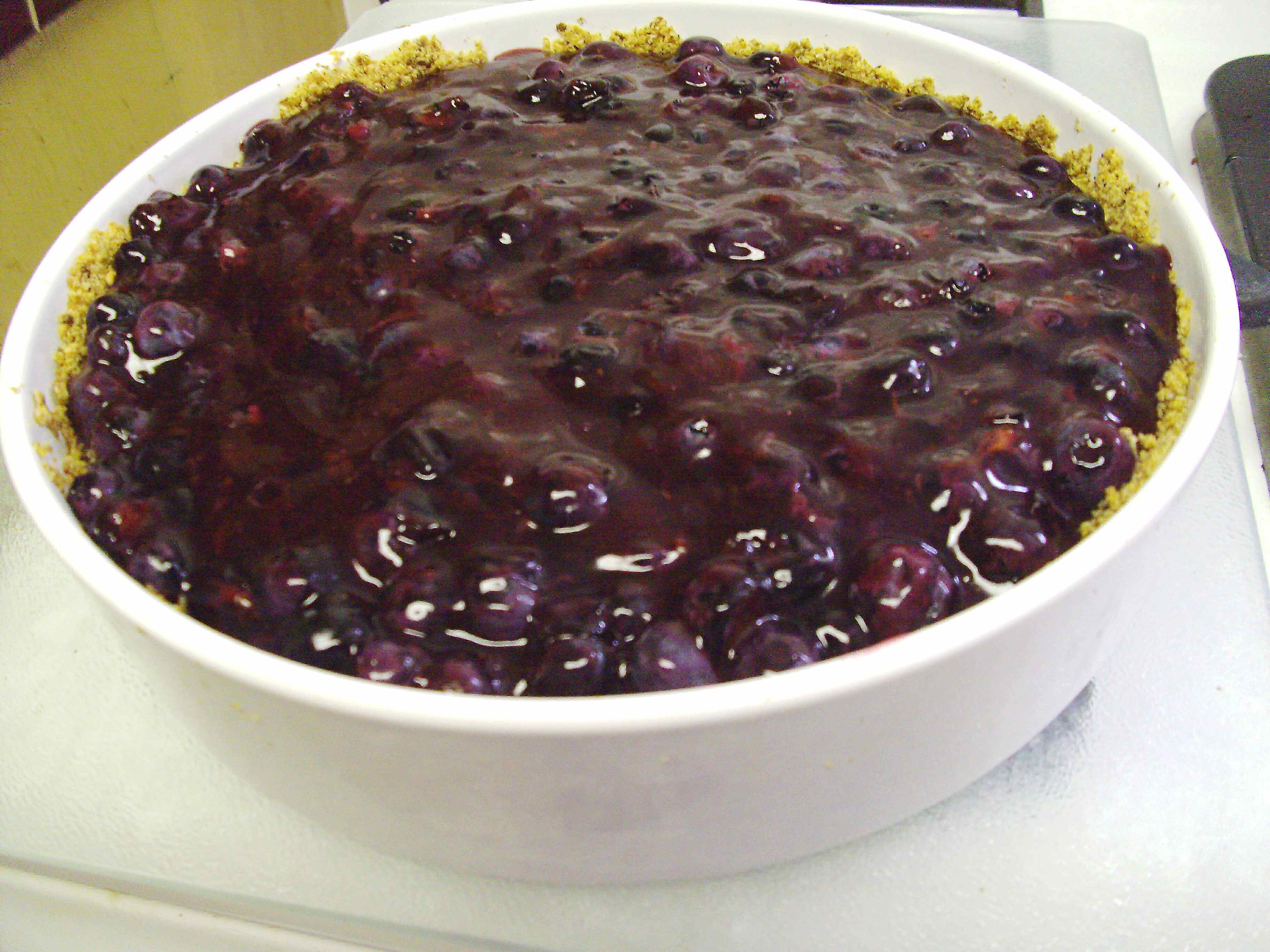
    raw blueberry pie with microwaveable filling and graham cracker crust

    This mostly-raw blueberry pie is a snap to make and very versatile--the filling microwaves in a few minutes, and you don't even have to bake the zippy gingered graham cracker crust--perfect for a hot Fourth of July and all summer long.

  • Recent Posts

  • Contents

  • Archives

  • Now Reading

  • See also my Book Reviews

  • Copyright 2008-2024Slow Food Fast. All writing and images on this blog unless otherwise attributed or set in quotes are the sole property of Slow Food Fast. Please contact DebbieN via the comments form for permissions before reprinting or reproducing any of the material on this blog.

  • ADS AND AFFILIATE LINKS

  • I may post affiliate links to books and movies that I personally review and recommend. Currently I favor Alibris and Vroman's, our terrific and venerable (now past the century mark!) independent bookstore in Pasadena. Or go to your local library--and make sure to support them with actual donations, not just overdue fines (ahem!), because your state probably has cut their budget and hours. Again.

  • In keeping with the disclaimer below, I DO NOT endorse, profit from, or recommend any medications, health treatments, commercial diet plans, supplements or any other such products.

  • DISCLAIMER

  • SlowFoodFast sometimes addresses general public health topics related to nutrition, heart disease, blood pressure, and diabetes. Because this is a blog with a personal point of view, my health and food politics entries often include my opinions on the trends I see, and I try to be as blatant as possible about that. None of these articles should be construed as specific medical advice for an individual case. I do try to keep to findings from well-vetted research sources and large, well-controlled studies, and I try not to sensationalize the science (though if they actually come up with a real cure for Type I diabetes in the next couple of years, I'm gonna be dancing in the streets with a hat that would put Carmen Miranda to shame. Consider yourself warned).

You must read this. Take an hour if you have to.

Today’s New York Times has an excerpt from investigative reporter Michael Moss’s forthcoming book on the processed food industry’s push to engineer addictive foods. It’s a long article, more than 12 pages, but well worth the read.

The Extraordinary Science of Addictive Junk Food – NYTimes.com.

Frankenbeanies: Gigantes, take II

Giant favas or gigantes are really as big as they look

Giant favas or gigantes really are as big as they look.

No kidding. That’s a soup spoon on the right, up there in the photo. These giant fava beans are huge–which is part of the fun of cooking them.

Because I had so much trouble getting the nice-looking pre-peeled dried giant favas to cook last week (and the time before), I went and got the bulk giant favas with the brownish-greenish-pinkish peels left on this time. And I was right. Buying the ones with the peels still on means that the dried beans stay relatively fresh and cook up a lot better–and faster–than the pre-peeled ones.

To peel them, dump the washed and sorted beans into a big bowl of very hot-to-boiling water and let them sit about an hour. The peels will start to wrinkle around the edges and turn leathery-soft. A sharp little paring knife makes it easy to crack into them and pop them off. Then soak them overnight in cold water. (Or soak the beans first and then take the peels off. Whatever’s easier.)

These beans were clearly fresher than the pre-peeled ones–in the morning, the bean water smelled almost like fresh apple juice. Bizarre. Anyway.

Rinse and cover with fresh cold water. And then you can actually microwave them 10 minutes (for a pound of peeled gigantes in a bowl with water to cover by about an inch and a lid on top) and let sit half an hour and they’ll be about halfway there, then nuke again for 5-7 minutes once or maybe twice, with 20 minutes in between. Or you could simmer them on the stove about an hour.

Or of course you could buy them in cans, but where’s the fun in that?

Government nutritional estimates for “mixed dishes”–where do they come from?

The federal “MyPlate” program has expanded its consumer information on dietary guidelines but some of it looks suspiciously old-hat and soft on nutritional crime, very much in keeping with the USDA’s traditional approach of pandering to the processed food industry. I stumbled across it while helping my daughter find school lunch nutrition information for her latest science project, which was to analyze her new public school’s lunch program.

Of course, my 7th grade daughter’s reaction to her first day in a real live public school cafeteria last month was shock. Because she’s diabetic and vegetarian, we agreed the best strategy for her would be to bring her standard lunch from home–PBJ on whole wheat with an apple. She had trouble the first day with the routine–shove through the cafeteria line, squeeze in at a table, shovel down food, run for the bell.

What did the other kids eat? I asked. “They ate crap,” she answered without so much as a pause. “Pizza and french fries, stuff they can eat in about five minutes while gossiping with their friends. They hardly even notice.”

Now–as I’ve said before–peanut butter and jam on whole wheat is not gourmet, but it’s fairly nutritious (beats Oscar Meyer bologna for protein, believe it or not) and with a small apple, it’s reasonably worthwhile and you can eat it fairly quickly–certainly within 15 minutes, if you can shove through the cafeteria line and find a seat. If you make friends, as my daughter quickly did, you can even find some time for gossiping and having fun. And it costs less than a dollar and takes less than 5 minutes to pack at home. The school lunch is $2.35, and yes they do offer apples and some sort of packaged salad stuff and skim milk, but as my daughter noticed, few of the kids actually eat those items. Maybe the milk–well, at least offering the fresher food is a start.

Still–“crap” is not that far off. Pizza AND fries? A tough act to follow with anything but gallbladder surgery at 40.

And as she looks at the school menus online for September–they declare that they follow the USDA school nutrition guidelines–we notice a lot of things that aren’t really sound thinking from a diabetic’s point of view. A lot of menus that don’t come close to matching the ChooseMyPlate.gov guidelines, which call for half the plate to be vegetables and fruits (in that descending order of quantity), a quarter of the plate protein, a quarter complex carbohydrate.

“There’s a lot more meat,” she says. “Actually, my friend had the chicken patty today and spat it out. She said it wasn’t chicken. My other friend said it was, it was just cafeteria chicken.” Sounds like some of her new friends have a better take on the school food than the government does. My bet–the chicken patty is like standard bologna, only about half is anything that actually came from a chicken–including fat and skin–and the rest is probably starchy and high-salt fillers.

So, speaking of food that really isn’t as good as it seems…

The ChooseMyPlate.gov brochure on “mixed foods”, which is what I promised up at the top, might be part of the same sad thing. Here’s the sample chart they offer for things like pizza, lasagne, double cheeseburgers, burritos…that are supposedly hard to judge on nutrition.

MixedDishes.pdf 

Any takers on this one? My first impression is that the calorie counts are probably low–maybe as little as half–for a standard chain restaurant or frozen-entree serving of any of these items. Probably because a USDA recommended standardized “portion” for nutrition labeling purposes is very small compared with what people are actually eating and what companies are serving.

My second impression is–fruit servings? for pizza? who are they kidding, and why is this column even in here? Fruit is optional–it’s a carb. Nonstarchy vegetables with some actual vitamins and fiber are required eating. It’s pretty obvious from the table that the vegetables are pretty scant in this list of “mixed foods” too–mixed in this case seems to mean starches and fats plus some form of meat.

And what isn’t listed–the salt and fat and total carb. The fiber, vitamins and minerals. Most of this food is high in stuff that should be low, and low in stuff that should be high.

On second thought, maybe we should just read down this table for suggestions on what not to serve.

New York big-soda ban, long overdue

All the food behavioral experts on both coasts seem to be whining that New York City’s new ban on oversized sodas “won’t work”. Well, all the experts in New York and LA. Even Michelle Obama has backed off delicately from taking a position on it. Oy. People!

The Washington Post‘s columnists Ruth Marcus and Alexandra Petri have two different takes–one more serious but employing Yiddish to describe the psychology of the whole protest, the second, despite lack of Yiddish, funnier about people who insist on their right to drink a whole tubful of soda at a go. So I’m going to take the middle road–oh, screw it, I’m going to use Yiddish if I feel like it and still be hilarious despite my gravitas. Because it really is hilarious. If only it weren’t so sad.

Jon Stewart is quoted as kvetching that Mayor Bloomberg’s proposed ban is the only thing that can make him agree with conservatives. David Just, partner expert to Brian Wansink, says people “want” their big drinks and will surely just find a way to work around the restrictions.

Well, maybe a few will really want 20+ ounces of soda at a sitting badly enough to go back to the concession stands and wait in line three times to get 3 separate drinks of 8 ounces or so. Or juggle 3 small bottles back to wherever they’re drinking it all. But I’m betting most people won’t.

Why do people supposedly “want” such huge drinks in the first place? The oversized Big Gulp-style cups were a marketing ploy that started about 15-20 years ago at the burger franchises and the 7-Elevens. They were supposed to look like a huge bargain–for an extra however many cents, they’d double the amount of soda they gave you. What a deal! And the ploy worked–created a habit.

Most people don’t really need or even want that much soda, but as many of my coworkers–women especially–used to say, shrugging helplessly, “Well, I don’t really want this much, but this is the only size they sell.” And you really can’t split a 20-ounce with ice back at the office unless you have cups. Everyone will wonder whether you got tempted on the way back and started sipping from it. Eeeewww. You can’t save it in the fridge for later either because it goes flat pretty quickly.

The soda companies got the concessions for school cafeterias–why not brand the captive audience early–in exchange for money the schools have lost from their cities and states anytime those governments wanted to hand out tax relief to corporations–like soda bottling plants. A different version of “eat local”.

By now, people are so used to the soda bloat they’ve started to decide it’s their right to drink bigger than their stomachs–or bladders–can handle. And it is–you’re allowed to be stupid if you want to.  Only problem is, did the soda companies also offer to build more bathrooms to handle the outflow?

So I say Mayor Bloomberg, who’s in charge of the biggest city in America, is doing his city a huge favor by trying to get the soda industry’s claws back out of them. There’s no way the industry will scale back its sizes voluntarily, especially not if they can get experts like David Just to voice their incredible “the-consumer’s-the-one-who-wants-the-elephant-sized-drinks-we’re-just-providing-it-for-them” act.

When you get the big gulp-style Coke, how much of it are you really tasting? Maybe the first third of it? Maybe less. After that, are you drinking it while reading your computer screen? Driving? Watching tv or a movie? Would you really want someone to film–and then post on YouTube–footage of you slurping mindlessly throughout the day?

If you’re not paying attention to what you drink, is it worth drinking just because it’s there? Same for eating. And David Just and Brian Wansink–weren’t these the guys who did all that people-eat-30-percent-more-when-parked-in-front-of-a-tv-screen-than-at-the-table research? I do believe they were.

So getting back to a small Coke that you’ll actually pay enough attention to to taste? That might be worthwhile. Then you can think about what you’re tasting and decide if it’s good enough to keep drinking. Or whether, like me, you’d rather wait until next Passover, when Coke and other big soda manufacturers put out limited editions made with cane sugar instead of corn syrup.

I haven’t been a big soda drinker for years, and I usually don’t miss it at all. It was astoundingly easy to give up, and my teeth have thanked me ever since. On the rare occasion when I have a little at a party, my preferred soda is and always was definitely root beer or ginger ale, not cola, and usually I can only take about half a glass–it’s all way too sweet, even with ice. So I’m not the right person to sympathize with habitual soda drinkers–I just can’t get into it, and diet is gross.

But having tasted the sugar version of both Coke and Pepsi, I can say the difference it makes to both versions is amazing–much cleaner flavor, and a little is enough to be happy with it.

Meanwhile, a better idea would be to drink water instead of the big-3 flavors and save your shekels for small niche sodas with better, realer, more interesting flavors as an occasional treat.

Case in point: a summer soda tasting event in Los Angeles to raise money to reopen exhibitions from the shuttered Southwest Museum in Highland Park. The Southwest museum had wonderful Native American collections–kachinas, headdresses, Bakelite jewelry of the 1930s, photos, and much more. It was taken over by the Autry Museum a couple of years ago, but has remained dormant since then with a lot of its collections in storage and out of the public eye. I was fortunate enough to have taken my husband and daughter there about 10 years ago, before it closed.

Galco’s Soda Pop Stop, an independent soda market run by curator John Nese in Highland Park, is hosting the soda tasting–his second–with something like 500 different small brands, including plenty of nostalgia brands (though no NeHi Grape–don’t know if they’re still around) and imports.

According to a profile of Nese in The Quarterly Magazine, Galco’s motto is “Freedom of Choice”, with flavors like coffee, bananas, spruce, cucumber, mint julep, and many others–check out their huge soda list, which includes ingredients, prices and bottle sizes! Amazing. Maybe that’s the kind of freedom soda fans should be going for. Amazingly enough, most of these flavors don’t come in 20-ounce monstrosities, or even in plastic.

If you’re in Los Angeles on July 22, check it out–tickets are only $12 in advance, $15 the day of the event, and you can get them at Galco’s on York Blvd. or through the Friends of the Southwest Museum web site.

Eat the City, Read the Book

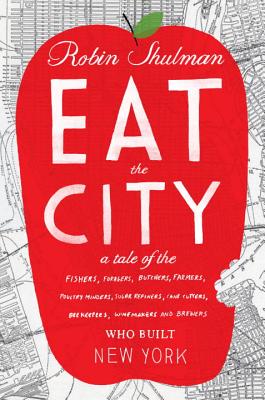
Robin Shulman's "Eat the City" bookcoverI’ve just received an advance copy of Robin Shulman‘s forthcoming book, Eat the City: A Tale of the Fishers, Foragers, Butchers, Farmers, Poultry Minders, Sugar Refiners, Cane Cutters, Beekeepers, Winemakers and Brewers Who Built New York.

[Or at least that’s the title on the cover art–the copyright info page version of the book title squeezes in even more food trades–what, or rather who, the heck are “hungers”? People who “curate” aged hanger steaks?]

Shulman, a well-known reporter who has worked for the New York Times, the Washington Post, the Los Angeles Times, Slate and other venues, has covered hard-news beats from city politics and urban blight to Middle East diplomacy. In Eat the City, Shulman explores the neighborhoods of New York, where she lives, and from hundreds of interviews, she harvests seven key stories to tell in depth: Honey, Vegetables, Meat, Sugar, Beer, Fish and Wine.

Each chapter, rich and multilayered, cuts across decades of urban history, whether development or decay, recounts conflicts and unexpected cooperation between would-be urban farmers and the neighborhood factories or city agencies they deal with, and uncovers the not-so-obvious ways these individual entrepreneurs bring a sense of connection and vitality to the city.

So we meet a man who after returning not entirely whole from a stint in Iraq, got enthusiastic about beekeeping when it was still illegal. In 2010, he rallied New York’s clandestine beekeepers to convince the city to rescind its ban on rooftop hives, and started training hundreds of apprentices. The retired numbers runner who farms vacant lots in Harlem–something he started as a cover for his gambling operations in the ’60s and turned into one of the first urban community garden projects–is still going strong in his 70s, but he’s seen several of his neighborhoods fall silent over the decades as buildings crumbled and the city neglected the people. The Manhattan ad exec risks her health and her freedom sneaking into taped-off areas to fish striped bass from the East River–she’s not sure it’s safe to eat, but she’s as hooked as her catch, and often announces her triumphs on Facebook. And somewhere toward the end of the book is the true and presumably unvarnished story of Manischewitz, the first big brand of kosher wine in America (and actually, probably anywhere, since before the 20th century most people made their own kosher wine at home).

Eat the City is due out in July, and all I can say is get out there and reserve yourself a copy, or clamor at the cash register of your local bookstore to order you one. Because this is the best book I’ve read in quite a while on the history and present fortunes of small independent food growers in one of America’s largest urban landscapes.

Like Michael Pollan’s books, it has depth and thoughtful analysis of the meaning of food in modern life. Unlike Pollan, Shulman isn’t advocating a lifestyle choice, she’s giving you a window on individuals as they elbow their way into a crowded city to make room for themselves.

Food is the medium here, but the impulse is universal, and the result is a better understanding of both food entrepreneurs and the meaning of city life itself. If you want to know what’s really happening beyond the wide-eyed grow-your-own-tomatoes-in-Brooklyn blogs, just pick a chapter and start digging in.

Coconut, minus the hype

dried coconut shreds

Palm and coconut oils have made a huge comeback in the last few years. Both are very high in saturated fats, which promote high blood cholesterol and heart disease, but the vegan community has embraced them as “natural” and they’re turning up in all kinds of baked goods and sweets these days at Whole Foods. Which also sells big mayo jars full of coconut butter. Looks like Crisco, scoops like Crisco, costs 10 times as much.

A lot of the newer vegan recipes and packaged foods are direct mimics of things that used to include lard, beef tallow and suet at the lower end of the classiness scale, or butter at the high end. My local Whole Foods’ pastry case features a lot of croissant and baklava variations these days, all now made with palm oil, as are many of the muffins. Starbucks’ “old-fashioned kettle” doughnuts feature palm oil in two places, both the dough and the icing.

Why are these fats getting so popular? Why all the wishful thinking that a plant source automatically makes them healthy to eat in quantity? Why are all the nutrition advice columnists in the major newspapers and health magazines suddenly “holistic coaches” who graduated college with psych majors and the like rather than board-licensed nutritionists and registered dieticians?

The truth of the matter is that your body doesn’t care so much whether a saturated fat came from lard, a coconut, or a chemical vat–regardless of the source, the fat molecules are shaped the same and your digestive and metabolic enzymes process them all the same way.

Palm and coconut oil? The hip vegan crowd, who consider themselves really indie, would be surprised to learn how thoroughly they’ve been manipulated by a very big industry. In the past 10 years, these oils have suddenly ramped up production wherever palm trees can be grown, mostly in Malaysia and Indonesia, where producers started by stripping the jungles to plant a single crop (though some of the main palm oil traders, like Lever–yes, the soap manufacturer–have made statements that they’re working to reverse some of the damage and buy only from those who “plant sustainably”). The other main centers of palm and coconut oil growers are Africa, India and Latin America.

Palm and coconut oils have taken off not because they’re vegan (outside of India, there just aren’t enough to support the industry boom) but because they’re such a cheap source of fat. Well, cheap everywhere but the Whole Foods shelves. They are indeed useful to the processed baked-goods industry for lending that heavy grease “satisfaction” factor to things that used to be made with butter, suet or lard. And they’re much less heavily regulated in the US by the agricultural inspectors because they don’t trigger all those livestock rules.

But should you be eating them? Buying jars of coco butter for your home cooking? Something tells me you’d be better off eating less of anything that requires cooking in heavy fats as opposed to regular polyunsaturated vegetable oil. And cutting down on all fats unless you’ve actually been diagnosed by an MD, not a holistic coach, as underweight.

Because even the unsaturated fats have a lot of calories. Rip Esselstyn’s “Fire Engine 2 Diet” specifically cut out all oils because the people he was training to eat better really needed to lose weight, and the bottom line is that the 120 calories in a tablespoon of ordinary unsaturated vegetable oil are still extras. There’s no real way around that. Not even if you’re vegan.

And wasn’t the point of nonstick pans supposed to be so you could cut down on cooking fats? (ok, it was really so the pans would be easier to wash, but why not take advantage while you’re at it?)

I’m not saying you shouldn’t ever use coconut itself in cooking–I’ve been a Mounds fan from way back, and please just don’t ask about those poufy huge coconut-sprinked, bright pink marshmallow things we used to clamor for as kids (“Snowballs”? I think it was a half-dome of marshmallow that sat on a cookie…almost as bad as Moon Pies.) These days I try to eat it sparingly, because it’s still fatty, and because most of my coconut exposure now takes place in the form of macaroons at Passover, when I’m already feeling like if I see another can or box of something packaged I’ll pass out.

But seriously–and more sophisticatedly–coconut itself is a worthwhile cooking ingredient in some savory dishes, and it has a subtle, penetrating flavor that means you don’t have to use a ton. You can also find good steam-defatted versions of shredded coconut that have about half the fat of regular, and look for partially decreamed canned coconut milk as well (I think Trader Joe’s sells it, maybe Whole Foods as well). Unfortunately, half the fat for coconut is still pretty fatty, but it’s an improvement.

Even a spoonful of unsweetened shreds can give a curry or aviyal (i.e., coconut-based “dry curry” class of dishes) a satisfying suggestion of richness without adding loads of fat. Maybe a gram or two per serving, and it can help even out jagged edges in the spicing.

To get the most flavor out of a small amount of coconut, I do one of two things. In the aviyal of cowpeas below, I toast a spoonful of dried shreds Continue reading

Lightening up homemade scones

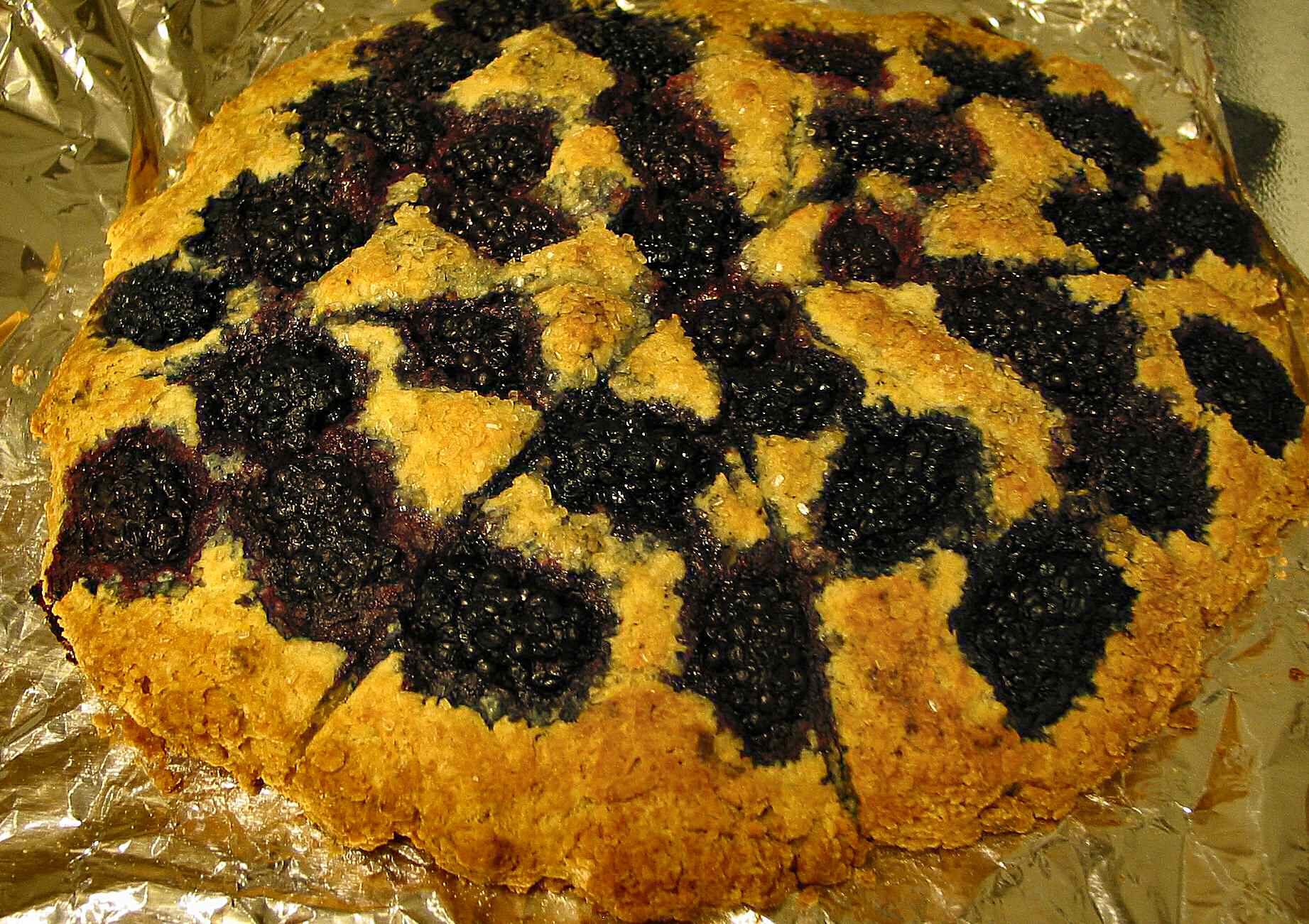
Blackberry scones for brunch

I’ve been wanting to post my favorite scone recipe for some time, but it seems to me that most food blogs start out with good intentions and end up maxing out on the desserts-and-starches end of the food spectrum.

The reason is pretty simple: if you’re a food blogger,  a baking recipe and a pretty picture (or any picture of an aggressively-frosted cupcake) will never put you wrong, even if the real result tastes kind of blah. I mean, cupcakes? Isn’t that what Duncan Hines is for? But if you do feature cupcakes, somebody’s sure to repost it or call it awesome, particularly if you figure out how to add bacon to it. Somehow people just don’t flock to posts about green beans in droves unless you’re redoing the Thanksgiving-straight-from-the-can classic, complete with canned fried onions.

There are way too many variations for every kind of baked good, none with a clear and permanent advantage, and people take them all literally (see under, my New Year’s apple pie insecurities).

So as I say, I’ve been reluctant to put up too many baking posts. Scones, though they’re not exactly the staff of life, are very easy to make and actually taste best when you make them from scratch–much better than buying them in a store and definitely not at your local Starbucks. The question I have is whether it’s a good idea to do it very often–I usually don’t, even on the weekend, but partly that’s because I live in southern California and heating the oven for more than five minutes in my little galley kitchen is often a Very Bad Idea. The other reason is that I keep remembering something Valerie Harper once said (maybe in the role of Rhoda Morgenstern; can’t remember): “I don’t know why I bother to eat this piece of chocolate cake. I should just apply it directly to my hips.”

Most quick breads (i.e., raised with baking soda or powder, or beaten egg whites, not yeast) do fine in a microwave as long as you don’t need them to brown. So lemon-poppyseed cake is okay, as is gingerbread. Scones, which to my mind require a deep and crunchy crust, need a regular oven to do well, but I make the sacrifice (90-degree weather makes it a genuine sacrifice) once in a while on Sunday mornings, because they taste terrific and they’re not exactly rocket science to make.

So if they’re that easy, should I really be posting about them–haven’t you already seen too many wide-eyed, “Look, Ma, I made SCONES!” kinds of posts?

Let’s face it. You can make great scones in a food processor from a very short list of ingredients for cheap, in about half an hour including baking time, and flavor them simply or exotically. Fruit or chocolate chips or chiles and herbs and cheese–all optional. I stick with berries and turbinado sugar, which makes the crust crunchy and glittery. Continue reading

Whif? Whaf? The Wonka of breathable food faces FDA review

It looks like a sleek, avant garde  lipstick or  a purse-sized cologne atomizer–one designed by Halston or Calvin Klein. Atomizer is the right word. Only these AeroShot canisters, which got their start at Harvard’s The Laboratory Art/Science project under David Edwards and became available in the US last fall, are packing “breathable caffeine” (plus a couple of B vitamins).

The previous model, aka “le Whif”, packs “breathable” chocolate powder. It was a moderate success in Paris, where Edwards’ Bauhaus-like other lab center (named Le Laboratoire) produced and promoted the experimental chocolate inhalers as an aesthetic experience at celebrity events, and in London, where its spinoff company Breathable Foods now holds court.

Where did this strange, possibly ludicrous idea come from, that it’s a better aesthetic experience to inhale a shpritz of caffeine (please note: flavorless though with a kick, and definitely a drug-I-have-worked-with-in-the-lab-because-it-blocks-G-protein-coupled-receptors) than drink a long, hot cup of intense coffee while reading this blog and contemplate the degree to which your barista still favors you by regarding the temperature and the decoration in the steamed milk foam served on top? Why is it better to puff a little chocolate-flavored powder on your tongue than eat actual chocolate? Somehow, I don’t think the “calorie-free” argument really plays into the decision very strongly, so what’s driving this?

Do we not still have taste buds? Do we not long to extend our coffee break as far from our cubicles as it will stretch? Do we really want our hearts to suddenly kick into overdrive after we have to get back to the office, just when we’re stuck behind the counter, attempting to explain that glitch in the irate customer’s bill? For that matter, do we really want to ingest B vitamins with our caffeine? Or figure out which recycling bin the little plastic aerosolizer goes in when it runs out? Will the aerosolized flavors or food components even still be interesting if we have a stuffy nose?

Do we want to miss out on the gustatory satisfaction of real food?

In the public demos for Le Whif, (according to Edwards’ book, anyway) the French surprisingly enough didn’t mind the fact that many of the chocolate inhalers didn’t work well, or that they started coughing whenever the chocolate powder went the wrong way. They didn’t mind being used as impromptu guinea pigs–or perhaps realize that they were–despite the fact that these products were being tested informally and some of them demonstrated the adverse health risks right away, and that just possibly breathing chocolate-flavored particulates into your lungs might not be all that smart, particularly if you have asthma.

These things obviously didn’t bother the French too much. The packaging was chic, the concept ultramodern, and the activation gestures analogous enough to lighting up a (now-forbidden) cigarette with one’s coffee at a sidewalk café table. And, so the company promised, it was a calorie-free chocolate experience.

Even more surprisingly, it didn’t really matter what kind or quality of chocolate was in the little gadgets, or how it actually tasted in comparison with ordinary solid chocolate. This was closer to participating in Modern Art, or at least in fashion’s idea of modern art. Like a visit to the now-closed El Bulli, which paired some dishes with a side beaker of aromatic vapor, only much less expensive, disposable, and with a simple popular flavor everyone understands. Molecular gastronomy for the common man. Or woman.

Americans of my generation–which also happens to be Edwards’–are a little less sure than the French about the chic value of shpritzing odd substances onto one’s tongue, much less as a high-class cultural or intellectual activity. Our references include tacky mouth spray breath fresheners (made fun of in numerous movies and tv shows over the decades), Bic lighters, Pez dispensers, and asthma inhalers. Kind of low on chic.

So Breathable Foods found the right marketing paradigm–“buzz”–for its target audience:  college students cramming at exam time, athletes who want that Continue reading

ANDI Scores, Whole Foods, and diet scheme cha-ching

If you’ve taken a walk through your local Whole Foods Market in the past year, you’ve probably seen a stand with purple and green information sheets listing foods in order of “ANDI Top 10 for Produce”, “ANDI Top 10 Super Foods” and so on. Coordinated recipe cards, a suggested shopping list, and an attractive-looking book round out the offering. And the produce and bulk bins sport matching ANDI score labels. It’s a whole system. But is it right, or just another fad?

What is the ANDI Score system, anyway, and who owns it?

ANDI stands for Eat Right America ™’s Aggregate Nutrient Density Index, a proprietary nutrients-per-calorie scoring system that rates for foods from kale to cooking oil and everything in between on a scale of 1 to 1000 points.

The ANDI scoring system started with Dr. Joel Fuhrman, the author of the diet book Eat to Live. On his home page, Fuhrman describes himself as a family physician and nutrition researcher.  His diet, which he calls “nutritarian” (and you can become a nutritarian too by signing up) is a highly prescriptive weight loss regimen that focuses on high-value vegetables and fruits and eliminates most meats, fats and carbohydrates. His evaluation of vegetables as high-scoring and processed foods, meats, starches and so on as low-scoring seems only common sense.

Fuhrman’s site claims hundreds of articles and interviews as well as numerous appearances as a nutrition expert on national TV. The site also prominently mentions his two US Nationals pairs figure skating wins back in the 1970s. Does he need to have that information on there if what he’s promoting is serious, science-based dietary advice? Altogether, the site has a very infomercial feel about it, with lots of testimonials from members who’ve lost over 75 pounds with before-and-after photos. Fuhrman himself looks very fit and tanned and taut-faced–maybe a little too much? Maybe it’s just the heavy pancake makeup that infomercial packagers are famous for plastering on their experts’ faces.

Eat to Live is a popular book. Fuhrman’s Kindle edition of Eat to Live is the #700-ranked download on Amazon.com. His web site has something on the order of 4000 subscribers, whose questionnaire responses he mines for some of his journal articles. According to one of the journal papers, his audience is about 65% female, 71% married, the largest proportion college-educated with household incomes over$100K.  (At this point, I thought, bingo, the perfect infomercial audience. This is clearly a commercial diet with legs. But wait, there’s more…)

Ahem! Enter Eat Right America, a company started by a businessman who became a fan of Dr. Fuhrman’s. The founder figured there must be a good way to automate the multi-nutrient density calculations for a wider variety of foods and developed a proprietary algorithm based on nutrient values in the USDA’s NAL database. What makes the ANDI algorithm attractive, the company says, is that they weight these calculations per calorie, not per serving. Finally, they claim, you’re getting the “right” comparison of nutrient density for the calories.

But a closer look at the the diet and menus offered on both the Eat Right America and Fuhrman web sites raises a few warning flags. Scan the ingredients list in the Eat Right America 3-day sample menu and you see frequent uses of high-priced fruits, vegetables and grains like quinoa (no surprise there about why Whole Foods might be happy with the shopping list) as well as some trendy and expensive ingredients that don’t sound all that nutritious. Dates? Avocado? Coconut?  Sun-dried tomatoes? Cashews–one of the lower-fiber and more expensive nuts, incidentally. Those are usually extras, snacks, not staples, even in a vegan diet.

More seriously, the menu designers seem to have a penchant for bottled carrot juice. They put 7 whole cups of it in a bean stew that feeds 10. Now, carrots, whole carrots, are fine raw or cooked into a stew. They have fiber and vitamin A and in whole form are relatively low-carb as well. But juice them, and you filter out the fiber. You concentrate the vitamin A and carotenoids about 3-4-fold, well beyond the RDA–risking vitamin A overdose–and you concentrate the sugars. What would ordinarily be a bean and vegetable soup with a reasonable amount of carb per serving–about 15 g per half cup or 30 g for a full cup–quickly rises, with the addition of a big 7-cup dose of carrot juice in the pot (NB also much more expensive than plain carrots) to 75 grams. That’s the amount of carb my diabetic daughter would figure for an entire holiday meal that includes a decent-sized slice of cake or pie.

Some of the Eat Right America recipe nutrition counts look like the ingredients as listed don’t quite account for them. The carb is high–occasionally the sodium doesn’t add up right either. And the overall protein is low. In the vegan versions on Fuhrman’s site, which prescribes a six-week starter regimen of a pound of vegetables a day, a pound of fruit, and a cup of beans, the protein is also incomplete or close to it. No grains, and no dairy or meat or fish. No tofu. Avocado and flax seed, two darlings of the vegan world, are recommended to supplement the caloric intake so you don’t lose too much weight (which I thought was the point, but maybe not for a whole six weeks at a time).

All these recommendations flow from the ANDI scores of the food and produce some logical puzzles. Somehow, you never see plain tofu or fish or cheese or yogurt. Apparently they don’t score as high as avocado. How is this possible? Isn’t avocado pulp high-fat and not too exciting as a vegetable?

So the next thing to check–is the ANDI food-rating method right? If you’re judging solely on the micronutrients list, which is what Eat Right America claims to be weighing into its ANDI scoring formula, no it isn’t. Continue reading

Pecans, Profits, Poverty: reason to remember the gleaners

From the New York Times today:
In Georgia, Pecan Thieves Find Windfall, at $1.50 a Pound

Now I know stealing is stealing, and scrumping is scrumping, but there’s a decent argument in here somewhere for leaving some of the fallen nuts for the poor to gather–even if it’s to sell to local nut brokers at a dollar-fifty a pound. The farmers claim their losses are growing this year–small wonder!–but one of the biggest growers estimates he’s selling 7 million pounds and the thefts total to about 10,000 pounds. Less than one percent. The article quotes $3 per pound as standard wholesale–all I can say is, out here in California our best local price is $9 per pound for shelled pecans (I don’t bother with the ones still in the shells; I’m not that good).

Some of the thieves are stealing amounts large enough to be serious theft–1400 pounds in one case–and cutting fences to break in. You get no argument from me for calling the sheriff on them. But most are genuinely poor–laid off and out of work, trying to make 15 or 20 bucks with the bit they can gather in a bucket or sack from the edges of the local pecan groves. Yes, that starts to add up if you have 50 people doing it, and yes, it’s more than one person would expect to be able to eat because they were hungry, but perhaps the talk of theft should be reconsidered and turned around to a discussion on gleaning, and not trimming the corners of your fields but rather leaving the last bits of the harvest for the poor to gather. The amount of money these small-scale gatherers can expect to make by selling to the local nut brokers is paltry and nowhere near in competition with the price the growers can get per pound.

Ironically, if the growers let locals pay a significant discount price per pound–50 cents a pound? 75 cents? to gather fallen nuts themselves after the main harvest, as many apple orchards do, they might reduce the incentive for break-ins, reduce their financial losses from theft and security costs, and save themselves some labor and wear-and-tear on their expensive ground harvesters. And they might still be seen as generous.