
• Enter your email address to subscribe to this blog and receive notifications of new posts by email.

    Join 241 other subscribers
  • Noshing on

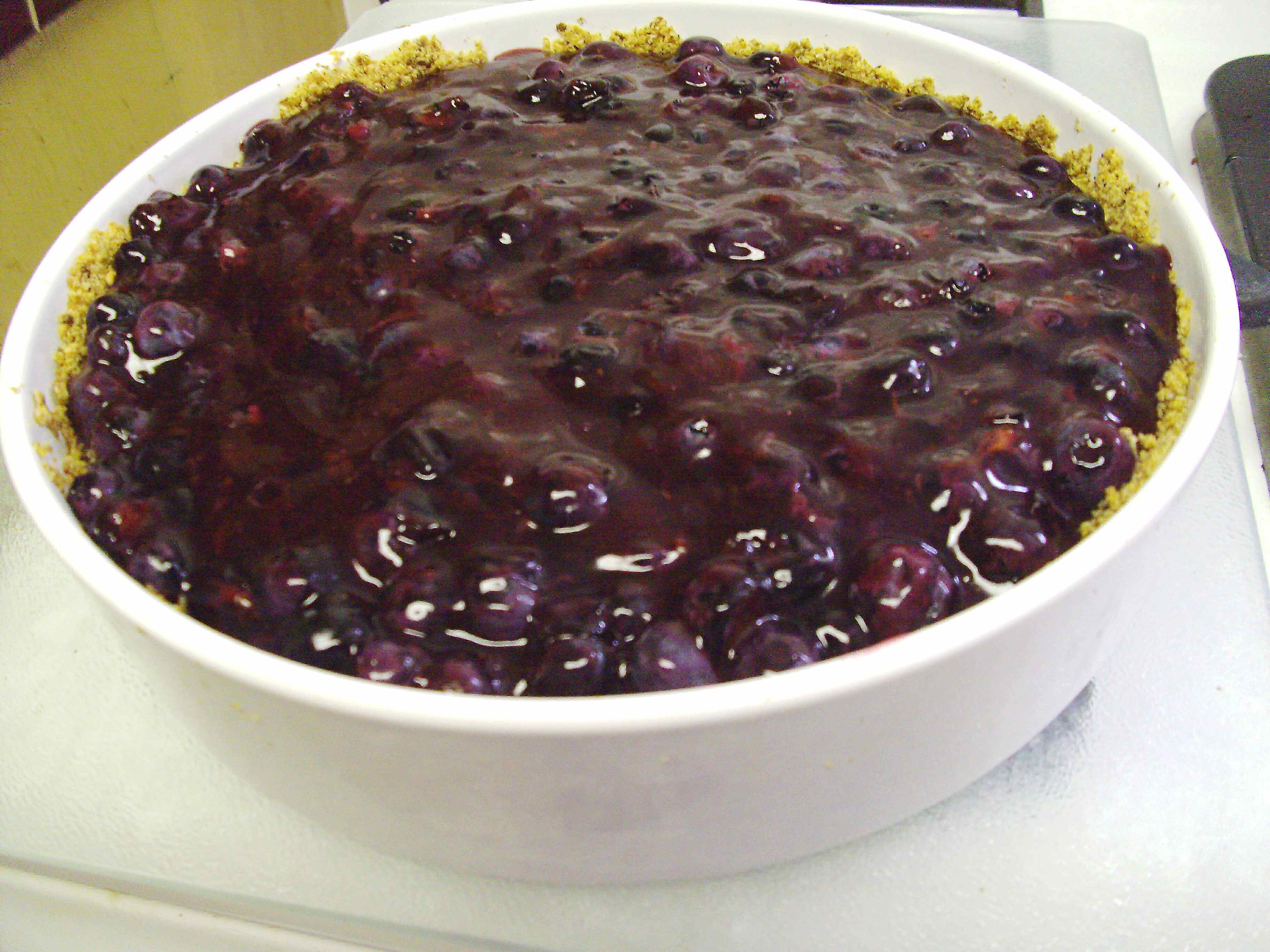
    raw blueberry pie with microwaveable filling and graham cracker crust

    This mostly-raw blueberry pie is a snap to make and very versatile--the filling microwaves in a few minutes, and you don't even have to bake the zippy gingered graham cracker crust--perfect for a hot Fourth of July and all summer long.

  • Recent Posts

  • Contents

  • Archives

  • Now Reading

  • See also my Book Reviews

  • Copyright 2008-2024Slow Food Fast. All writing and images on this blog unless otherwise attributed or set in quotes are the sole property of Slow Food Fast. Please contact DebbieN via the comments form for permissions before reprinting or reproducing any of the material on this blog.

  • ADS AND AFFILIATE LINKS

  • I may post affiliate links to books and movies that I personally review and recommend. Currently I favor Alibris and Vroman's, our terrific and venerable (now past the century mark!) independent bookstore in Pasadena. Or go to your local library--and make sure to support them with actual donations, not just overdue fines (ahem!), because your state probably has cut their budget and hours. Again.

  • In keeping with the disclaimer below, I DO NOT endorse, profit from, or recommend any medications, health treatments, commercial diet plans, supplements or any other such products.

  • DISCLAIMER

  • SlowFoodFast sometimes addresses general public health topics related to nutrition, heart disease, blood pressure, and diabetes. Because this is a blog with a personal point of view, my health and food politics entries often include my opinions on the trends I see, and I try to be as blatant as possible about that. None of these articles should be construed as specific medical advice for an individual case. I do try to keep to findings from well-vetted research sources and large, well-controlled studies, and I try not to sensationalize the science (though if they actually come up with a real cure for Type I diabetes in the next couple of years, I'm gonna be dancing in the streets with a hat that would put Carmen Miranda to shame. Consider yourself warned).

Big Food mobilizes against child marketing guidelines

This Washington Post article isn’t the absolute clearest–looks like it was written as a last-minute rush piece, actually, but it’s worth getting to the end.

The basic idea is that in 2009 Congress demanded the CDC, FDA, USDA and FTC come up with a coherent set of voluntary nutrition guidelines for what the food industry can market directly to kids.

I’m not a big fan of voluntary nutrition or safety compliance guidelines for the food industry–mostly because industry players generally feel free to ignore or toy with them and then claim some kind of advertising advantage they haven’t earned. Voluntary guidelines also come with all kinds of soft landings and easy outs, and the proposed guidelines here are no great exception.

But in any case, now the four agencies have done it, and the food and restaurant industry is doing the predictable–throwing big lobbying bucks into a disinformation campaign-slash-tantrum.

How big? The campaign manager won’t say, but the preliminary guidelines report that US food industry marketing to kids 2-17 years old is currently something over $1 billion in three key categories (breakfast foods, restaurant chain food, and snacks).

So it probably won’t surprise you that companies like General Mills, Kellogg, and Pepsico have teamed up with ad-carrying media partners like Viacom (read: Nickelodeon) and Time Warner to try and quash the voluntary industry guidelines. Figure on the campaign to be spending in the mid-millions or more. They’d rather “salt and burn” instead of “cut the salt and learn.” And what a waste.

What will probably surprise you is just who this coalition–calling itself the “Sensible Food Policy Coalition”–?!!–hired to handle the campaign: Anita Dunn, a former Obama communications director whose husband, Robert Bauer, is  still White House counsel. Not a really lovely mashup, there.

Why she’s taking on the food industry campaign so they can keep protecting their ability to market garbage to the young and vulnerable is one question. Why the FDA and FTC, which have the power to decide what nutritional and medical claims, among other criteria, are valid and can be used in advertisements to adults, let alone kids and teens, are bothering with a voluntary measure instead of doing a proposed regulation to limit such marketing to youth is another.

In both cases, the answer is almost certainly money. The food and media industries have it, the federal agencies don’t.

[As it turns out, the FDA and FTC don’t have power to restrict Big Fo0d’s marketing to the under-17 crowd after all. They lost that specific ability in 1981–start of the Reagan administration… Reagan’s “ketchup is a vegetable” declaration was the beginning for drastically lowered nutritional standards and branded fast food concession contracts for public school lunches.]

So the right question under these circumstances is, where do you want to put YOUR money? How about this, if the federal agencies can’t get a decent result and the lobbies are buying off everyone else:

Boycott the Boxes. Hit ’em where it hurts.

Box 1–TV: If you have kids, limit their access to TV, and teach them to turn off the sound during the ads. Do it yourself. Treat the ads like the silly nuisance they are from the minute your kids are old enough to watch. Tell your kids the truth: most of the products advertised on kids’ shows are too shoddy–and overpriced–to market to grownups. The companies make them bright and loud and cheesy because they think kids can be fooled easier (your kids should be beautifully insulted at that if they’re about six or seven years old).  Go with PBS and videos you approve rather than commercial TV as much as you can.

Box 2–Packaged stuff parading as food: Skip almost everything that comes in a cardboard box or a plastic overwrap, or in a can. You can do this. You’ll save an awful lot of money by buying store brands only and cutting out the most pernicious items–sugared and high-salt packaged breakfast cereals, bags of starchy snack extras, and sodas, at least on an everyday basis. Save sodas and chips for parties, not for school lunch or part of dinner.

You’d do even better to go with fresh vegetables and whole fruits for most snacks and make a good habit for relatively cheap. They taste pretty good, don’t take long to fix, last at least a week in the fridge, and your kids won’t get sick overeating them.

There’s a reason the Pringle’s slogan is the very smug  “Betcha can’t eat just one.” No one says that about carrots or broccoli, or even about apples. Ever eaten too many of those in one sitting? Didn’t think so. Vegetables and whole fruits keep you satisfied longer, don’t hyperstimulate your appetite for snacks, and they don’t put on pounds that take a long time to work back off. They don’t promote cavities, either. Even nonsweet junk foods do–all that processed starchy stuff sticks to your molars like glue.

Acai, African mangoes, and the ‘tiny belly’ con

The Washington Post:  ‘tiny belly’ online ad part of scheme, government says

Acai berry distributors have been under scrutiny from the FTC since the spring, but the “tiny belly” and “1 weird old tip” ads that flood the margins of your online newspaper are part of an elaborate scheme to sell you fake diets based on acai, African mangoes, hCG (placenta extract), and other snake oil.

According to the FTC, though, the true objective may be something else–the “free samples” require you to register your credit card.

Google and the other main ad server claim they’re weeding out bad ads, but this one is so prominent on so many sites you just have to wonder what kind of cut they’re getting from it. Because the same damn wiggling abdomen cartoon is everywhere, used over and over, it should be a snap to eliminate.

File this under: unappetizing.

On the inevitable hot dog eating contests

I did something at my in-laws’ Fourth of July cookout that I haven’t done in years: I ate a hot dog. So did my husband. I think my daughter ate two and a half hot dogs (actually, I think she ate more and gave us a story, but her grandfather maintains that someone else may have gotten the extras in the pack). Given how crappy hot dogs generally are, you may be wondering why we did this: because my in-laws made the effort to buy kosher ones for us, and because Hebrew National hot dogs don’t have much in the way of carb, and my daughter is fairly crazy about them (because we don’t cook enough meat for her tastes at home).

What hot dogs, kosher or otherwise, do have–and this is why I have to put in a huge caveat–is sodium. And saturated fat. A regular H-N hot dog has about 490 mg sodium. A knockwurst (which we decided against; the flavor’s not really very different, it’s just bigger) has 810 mg. Plus more calories and saturated fat, though the regular’s no great bargain–as much fat as protein, easily.

I have to admit they taste a lot better grilled outdoors on an actual grill than they do indoors in a grease-laden cafeteria service pan, especially since you can dress them up significantly with sharp mustard, crusty French rolls instead of whitebread buns, and sauerkraut and browned onions instead of the usual insipid cafeteria ketchup. So I can go with the “once a year, enjoy, and just eat a little more carefully the rest of the week” argument.

However. Hot dog eating contests are just wrong. Sixty-two or however many hot dogs appear in the “ain’t it amazing?” recordbreaking stories section of your local newspaper the next morning? Enough hot dogs for 30 people or so? That’s not enjoyment, that’s not even tasting the food–tasting slows one down, and possibly triggers the dire appetite signal to retreat or suffer an immediate reversal of fortune after just a few hot dogs. Even for teenage contestants.

For the non-contestants among us (such as my daughter), I say, two hot dogs is probably the outer limit of sanity in one day–so just figure you’ll eat the other sixty another time. Two is about half your recommended daily max for sodium intake and about the max for saturated fat. And it’s not really delivering much in the way of protein. What’s true of bologna is just about as true for hot dogs–they’re made of meat, but they don’t add up nutritionally to actual meat (about 6 or 7 grams of protein per dog), and they sure have a lot of downsides without delivering the really distinctive flavors and variety of, say, gourmet specialty sausages.

There aren’t a lot of kosher specialty sausages made widely available in the US at this point. Actually, according to my father-in-law, there aren’t enough true (pork) and high-quality bratwurst distributors either anymore, and the owner of the one available to them, who happens to operate in my mother-in-law’s native state of Wisconsin, has openly supported political causes and candidates that are thoroughly repugnant to them.

I suspect that leaves a bad taste in everyone’s mouth on the Fourth of July.


Truth in restaurant menus, one way or another

The LA Times has this to say about restaurant nutrition today–seems like restaurant chains are starting to wake up to the embarrassment of their menu offerings now that California, New York City, Philadelphia and a few other governments have made nutrition info mandatory. The FDA is slated to make restaurant nutrition labeling and disclosure apply across the nation sometime in the coming months–the proposed regulation was released for public comment in April and the comment period has been extended to July 5th, and the finalized regulation is supposed to take effect 6 months after publication.

So chains like Panera, Applebee’s, California Pizza Kitchen and IHOP are hustling to look a little less awful before the big wave hits.

About time, too: the other night my husband rented “Super Size Me” (we’re always more than a little behind the times) and I could only stand to watch about five minutes of it. Somehow, between putting the dishes away and getting a few of my own chores done, I managed to catch the movie’s key scenes–I see a glimpse of director Morgan Spurlock doing pushups and then getting his abdominal fat measured at the doctor’s with a caliper before launching the month of MacDonald’s. A minute or so later I see him eating the first of many supersized burger-and-fries meals while narrating the experience from the driver’s seat of his parked car. He’s burping and starting to sweat about a third of the way through. I was horrified–Spurlock is obviously suffering but he keeps pushing himself anyway (chorus: because he’s a boy). Back to the kitchen and my husband is laughing uncontrollably (chorus: because he’s also a boy). Suddenly the inevitable (and highly appropriate) happens–Spurlock excuses himself, opens the door just in time, and starts vomiting onto the pavement. I just left my husband to it at that point. I think he was starting to weep.

The next day, though, he gave me the upshot of what I’d missed. Despite the hilarity of it all, the outcome was pretty sobering–in about 3 weeks of the Mac-only diet, Spurlock has gained 24 pounds that will take him months to work back off with 4 pounds extra that just don’t want to come off at all, and his cholesterol has shot up from enviable (<180 mg/dL, I think) to borderline high. Do the MacDiet for more than a month–for a whole year, say–and you might be looking at the crossover from fit to overweight to actually obese. So, as much as I make fun of them, sometimes boys can pay attention once they get over the thrill of a good grossout.

But back to the restaurant menu scramble.

Some of the chains’ solutions look reasonable–offering half-sandwiches with a salad or soup, paring down the calories and fat in the salads and soups, for that matter, and–gee, how ever did they come up with this miracle answer?–taking some of the cheese (or “cheez”, depending on the caliber of restaurant) back off everything, or at least going to part-skim.

The half-sandwich thing is a bit of a cop-out, but given how big standard sandwich portions have gotten over the past twenty years, it’s definitely a step back from linebacker troughing.

On the other hand, some of the chains really aren’t working hard enough to make a real change. Personally, I hate any form of plopped scoops of straight grease added purposely as a garnish and I always have, so the move to lower-cal mayo doesn’t impress me, nor does the new-improved strategy of not dolloping whipped cream onto every dessert. Ditto the menu recommendation at IHOP that you don’t have to add pats of butter to your stack of pancakes if you don’t want to. (Whew! Finally!)

I know that in fact these are going to be important steps back to sanity for some people, but tell me the truth, here: does a 120-calorie tablespoon serving of fat make the real difference in an 1100-calorie supersized sandwich with a deep-fried filling and cheese on top? Or a stack of pancakes the size of your plate and the height of your head and loaded with enough gooey canned topping to frost a cake?

For chain restaurants, the real problem here is the serving size–they’ve been working way too hard to keep up with the Joneses because serving bigger is impressive, you can charge more, and it’s almost as cheap wholesale as a proper-sized serving. P.F. Chang’s pasta dishes also currently run something like 1100 calories a plate, and no wonder–each of the bowls holds enough pasta to feed three or four normal adults if they were eating at home and had a salad to go with it.

These restaurants are at least doing something in the right direction (or stopping doing everything in the wrong direction, anyway). But upscale restaurants don’t have the government pressure to change and they’re less likely to look–at first glance–as though they’re overfeeding you for the money. Tiny chic portions, right? Check again, because here’s the other kicker in the LA Times this morning:

Pizzeria Ortica’s budino di cioccolato

This one is actually in the Food section, a “Culinary SOS” request for a layered chocolate and caramel pudding. I’m only linking to the 2nd page of the recipe–so scroll down to the bottom and check out the nutrition on it. If the poor lady who requested the recipe has already seen it, she’s probably cringeing.

Each—that’s EACH–small, elegantly served glass of pudding Continue reading

Bravo to LAUSD

Some actual good news on the school lunch front appeared in the LA Times  yesterday:

L.A. Unified removes flavored milk from menu

The Los Angeles public school district, one of the largest in the nation, had to vote its bigger contracts for things like milk early, so they made the announcement yesterday. They’ve also announced they’re going to drop breaded, fried wastes of space like chicken nuggets and offer more vegetarian options, more farm-to-school contracts for actual fresh produce, all the good things we’ve been waiting decades to see again.

This is all in deep contrast with the frosty reception Jamie Oliver’s “Food Revolution” show has received from actual LA schools in the past few months. And there’s a reason for it that you don’t have to dig too deep to get to. A lot of the fine upstanding revisions to the LAUSD school lunch menus and cafeteria revamps have not actually gone through for budget-crunch reasons. Some of the salad bars were never installed and implemented. As with many pieces of legislation, the intentions were good, or sounded good, but the money never showed up. Benefit: zero.

And a friend of ours who’s a school principal says the federal food subsidy program for poor students–there are an awful lot of them in his school, as in many of the LA area schools–is woefully underserving those kids. Some wouldn’t get a meal at all if they didn’t eat at school, and the food they get today is barely worth the name.

If the LAUSD can actually manage this year’s resolutions right, it’ll be a big step forward. The chocolate milk wars in the city board offices have been surprisingly intense–proponents of keeping the sugared chocolate and strawberry-flavored drinks argued that if they were pulled, most kids wouldn’t drink milk at all, 60 percent drink the flavored milks when available and that there’d be a big drop in milk consumption.

Proponents of going to plain (and Lactaid, and soy, to accommodate everyone, this is California after all) countered with the ugly fact that  the amount of sugar in the flavored milks puts them just about in the range of Coke, and argued that if fast food choices weren’t waved so constantly in the kids’ faces and the cafeterias offered real food instead, rather than alongside, the kids would eat more real food. And they’d get used to plain milk quickly enough.

I can attest to this phenomenon. We don’t keep fast food or junk food in the house, and I’ve been serving fresh vegetables and whole foods rather than prepared or processed things out of a box most of my adult life. I don’t get too many complaints, not only because my husband’s no cook, but because that’s what there is to eat and it’s the way we grew up eating at home.

Our daughter came along and started out with plain unsweetened yogurt, vegetables, bread and plain oatmeal or the lower-salt store brand versions of Cheerios. Also, for reasons that aren’t particularly clear even now, she had a thing for Indian food, spices and all. The maitre d’ at our favorite restaurant laughed when he saw this two-year-old kid tucking into a hot cauliflower dish and saag paneer. He remembered me coming in for a serious feast with my husband when I was very, very pregnant and hoping it would either induce labor or at least last me until I was in shape to come back. I’d never considered that she’d like to eat what I ate while pregnant–I’m still not sure it’s true, but I figure Indian families would have more experience with seeing how their kids develop a taste for vegetables and varied spices. Even now, she likes a wider variety of non-sweet flavors than her friends. I like to think it’s because she’s gotten to taste them, and because we like to experiment.

Part of the comparatively low-sugar diet for her was self defense–she was an up-like-the-rocket, down-like-the-stick kind of toddler if she ate many sweets at a time, even then. Years before, my sister’s older son had gotten stuck in a serious chocolate milk habit at that age, because my sister had given it first as a treat, then as a regular drink, then for comforting him or to appease temper tantrums, then to get him to do the things he should have been doing with or without milk. She had a hell of a time getting them both back out of the vicious cycle. I’m not as organized and can’t fool myself, so I took it as a warning.

My daughter got sweets occasionally, but mostly she was eating the kinds of foods we ate and now that she’s diabetic AND eleven at the same time (pity me!), I’m extremely grateful that she got the taste for nonsweet foods early in life. She only really wants junk foods if they’re right in front of her, or hungers out loud for what she knows are exaggeratedly high-carb items if her blood glucose is a bit high. When she’s in good shape, she goes for vegetables and fruits and cheese and Continue reading

Who’s dissing the lentil?

red lentils

One more point on reactions to the new USDA MyPlate icon, this from foodnavigator.com:

Whether the new food icon was an ‘economic plate’ however, remained to be seen, said Drewnowski. “It’s great that dietary guidelines say we should eat fresh , minimally processed fruits and vegetables, fresh fish and lean meat, but these cost money. Are we asking low income people to adopt a high income diet?

“It’s easy for people to say that people on low incomes should boil up a big lentil and vegetable soup and make it last all week, but who wants to do that?”

Actually, I would. Because it’s really cheap and easy, and you can do it in a microwave, or at least partly. Also because most people used to make some kind of lentil or bean soup on a weekly basis, and in Los Angeles, particularly among the Latino and Armenian communities, a lot of families still do, and do it well. Here are three of my earlier posts, including the first of the infamous “War and Prunes” trilogy (I got a little carried away last summer. What can I say?)


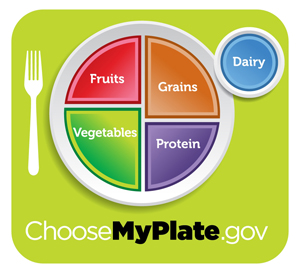
The new MyPlate icon–fantastic or plastic?

Everyone in the food press seems to be weighing in on the new replacement for the much-cursed USDA Food Pyramid in all (both?) its glorious confusion and obfuscation of real nutritional goals that might have (and should have) undermined the beef, corn, pork, corn, sugar, corn, and soy industries if they’d ever been presented honestly.

So where does that leave us? With ears of fresh corn that are more than 50 cents apiece in Los Angeles supermarkets, and the new…

USDA MyPlate logo

Already, the USDA’s MyPlate web site is in a certain amount of branding trouble (and of course, that’s what counts most in America): the Texas DMV had already bagged “MyPlates.com” for its vanity license plate division (highly unappetizing), and Livestrong.com already has its own well-established “MyPlate” food calculator and fan base. And those items come up first on Google searches. As in, the whole first page or more. The government site ranks way down the list and had to water down the impact of its original name choice with “choose” just to get a URL. Can it elbow out the competition just by bolding the “MyPlate” part?

What really counts are the food and nutrition opinion maker comments, though. And a lot of those are detracting in a nitpicking way that I think kind of misses the point.

The first thing they all have to say is that the plate looks dumbed down. Forgive me, but wasn’t the Food Pyramid’s unreadable and unusable design a large part of the problem? The MyPlate icon is simpler and more direct, and it names real food groups, not “Big Mac” or, on the haute side of things, any of Ferran Adrià’s foams. No wonder foodies and populists alike are wondering what it has to do with them.

A small sampling of the main arguments:

MyPlate: The Food Pyramid for dummies? (LA Times): Dr. Andrew Weil and others discuss what’s still wrong with the new icon. Weil says “fruits” could still include fruit juice, which is usually a useless sugar bomb in comparison with whole fruit, and he worries that the protein section, which comes with a guideline to eat 8 oz. of fish per week, might encourage unthinking people to increase their mercury intake since swordfish is on the guideline menu, as are some of the generally overfished popular species of fish. Weil’s not wrong about the fruit juice vs. actual fruit, but his hand-wringing about fish is really geared for well-off readers who can afford to eat much of it. All the fishes he names are Continue reading

Questionable sodium study, even more questionable comments

A new European study that purportedly shows low-sodium diets to be ineffective in preventing high blood pressure, and even more unlikely, that they increase the risk of death from heart attack or stroke, is being published in the May 4 issue of JAMA, and predictably it’s already excited a variety of comments in Gina Kolata’s current New York Times article from the CDC and from…Dr. Michael Alderman.

Predictably, because the CDC researchers think too few people were studied for too short a time with unreliable methods (24-hour urine collection to measure sodium intake indirectly, after the fact as it were.)

Alderman’s reaction was also predictable: he’s still insisting that only a nation-wide feeding study sort of clinical trial that follows its subjects until they die is sufficient to prove a true link between sodium intake and cardiovascular disease. Something so expensive and unwieldy it couldn’t be completed even if it were started, and we’d still be waiting around 30 years later wondering if salt had anything to do with heart attacks or strokes. Very convenient for the processed food industry, but pretty useless for public health. And also conveniently, Gina Kolata found more than one expert to say so.

What she didn’t find, but could have, is that a number of large-scale feeding studies have already been done and shown that eating a balanced lower-sodium diet helps reduce blood pressure and prevent blood pressure increases. DASH-Sodium is one of them. And no one had to wait until the study subjects died to figure it out.

A Closer look at Einstein Bros. Bagels

A few weeks ago I bought a challah from Einstein Bros. Bagels, which had taken over from the Noah’s in my town sometime last fall. Noah’s had supplied my daughter’s school on Fridays and their challah was pretty good for store-bought–this tasted the same. I hadn’t been in the store since the takeover so I didn’t really know what to expect, but other than the name change outside, it looked the same and had more or less the same offerings as ever.

I’m not sure what prompted me to go online and look for their nutrition information sheet, but I wanted an idea of what was in the challah, so I looked. I couldn’t find it on the Einstein Bros. site, but there was a pointer to the Noah’s web site–still up after the takeover, apparently, and that had the challah listed. What I found for the challah itself wasn’t incredibly shocking or anything, ingredients more or less kosher, not too bad on any of the nutritional factors. In fact, it’s probably one of the best bets at our former Noah’s, although you have to order a couple days ahead for Friday morning pickup.

On the other hand, the bagels and other menu items really stood out for sodium–most were over 500 mg per bagel, and some of the “gourmet” varieties of bagels were in the 700-900 range, even without lox. A few sandwiches soared as high as 3500 mg sodium (more than a day’s worth even for today’s average intake, and about two days’ worth according to the CDC and AHA guidelines)–just for a sandwich. Anything with chicken on it was astronomical as well–above 1600. Which sounded like Denny’s or Chili’s to me.

I started to wonder just who designed the food and how “designed” it was. Were we talking mostly bagel joint, or were we talking fast food with a highly engineered, set-in-stone formulation? If I wanted to contact them to ask about lowering the sodium in their dishes, was there a real person I could talk to?

The Einstein’s web site doesn’t have a lot on it other than Flash bells and whistles–the site is extremely corporate as far as information goes. The only thing I found that seemed worth noting here is the management team, and even that–maybe it was the Flash, or maybe there was some programming in the web site, but after three management biographies it failed to load any others. I had to shut my browser, clear my cache, and try again.

What I found surprised me (I’m kind of naïve, I know it). Even with all the evidence to the contrary–my sister once did a comprehensive marketing survey of west coast bagelries and concluded none of them had the real, crackle-crusted thing, it was all just ring-shaped white bread–I still harbor a faint hope that if it’s a bagel shop, it must be Jewish. Especially since the founder of Noah’s is, and Einstein Bros.–well, what would you conclude? But you would be wrong. Continue reading

Microwave Tricks: Make-Ahead Stuffed Shells

Stuffed shells in the microwave

Stuffed shells (shown here with plastic wrap for the fridge) cook up really quickly and easily in a microwave

This was the second try at a quick supper while juggling too many other things at once. The first half box of pasta shells I cooked in the microwave as I usually do but they ended up staying in the water much too long while I was busy elsewhere (lecturing my kid about waltzing out of the house without letting us know–Oy! I thought we had this down by now, but 10 is 10, with a lot of eye-rolling and forgetfulness and sudden impatience for all the ordinary rules).

When I returned to the kitchen, the bowl of shells had long since cooked, softened, soaked and turned to pasty shell-shaped mush–too far gone to rescue. Bleagghhh…I threw them out and started over. Luckily, a microwave cuts the time it costs to boil the water for a new batch, and I’d already made the stuffing and had some tomato sauce ready. This time, I decided to pay attention, and it came out fine.

If you have fewer distractions or better time sense than I do so you can catch your pasta before it falls apart, you can put together a number of good filled pasta casseroles like this one all (or at least mostly) by using your microwave, and they might take less than half an hour from start to finish. Two other examples–the very similar spinach lasagne I make with eggroll wrappers (same spinach/ricotta/feta filling, same microwave marinara but don’t cook the eggroll wrappers before layering them, and use two wrappers at a time, since they’re so thin), or even butternut squash or sweet potato ravioli with wonton or gyoza wrappers and a mozzarella-based cheese sauce. Once the shells are cooked al dente (still a little chewy, but not hard), the dish goes together in about 5 minutes and cooks just to heat it through.

Stuffed Shells in the Microwave

  • 1/2 lb or so dried large pasta shells for stuffing (about 20 shells or 1/2 box)
  • 1 recipe Microwave Marinara or about 1 c. of your preferred tomato sauce
  • pinches of fennel seed, dried or fresh thyme or oregano, and/or hot pepper flakes
  • shredded mozzarella for topping (optional)

Filling:

  • 2 c. low-fat or skim ricotta
  • 2 oz. or so crumbled feta
  • 1/2 lb defrosted/cooked spinach
  • 1/4 onion
  • 1 fat clove garlic, grated, minced or mashed
  • a few leaves shredded basil and/or thyme or marjoram
  • pinch or grating of nutmeg
  • 6-8 microwave-marinated artichoke hearts, optional

Put the shells in a big pyrex mixing bowl (2.5 qt or liter), fill with water to about 2 inches above the shells, cover with a microwaveable plate and microwave on HIGH about 9 minutes, or until the water is bubbling but not boiling over. Leave the shells in the microwave another 5 minutes to absorb and check for doneness–you may need another 2 minutes or so. When they’re just cooked through but still firm, drain them gently so they don’t tear apart.

In the bottom of a microwaveable casserole (in my case, a pyrex deep dish pie plate), spoon about 1/4 c. tomato sauce and spread it around. Sprinkle on the fennel seed, oregano and/or hot pepper flakes if using, or just mix them into the sauce before you start.

Mix all the filling ingredients together by hand. Stuff each shell with a soup spoonful of the filling and set it in the casserole–you can fit about 20 stuffed shells into a deep dish pie plate, maybe more if you pack them tighter than I did. Carefully spoon the rest of the sauce between the shells and if it seems too dry on top or your shells are parcooked and kind of stiff, drizzle a few spoonfuls of water, maybe 1/4 c. total, on the sauce but not on the shells themselves. If you’re using mozzarella to top the shells, sprinkle it on now and add a pinch of oregano if you like it. Cover the casserole with a microwaveable plate or lid and microwave 7-8 minutes on HIGH or until heated through. The cheese should be melted on top and the shells should be tender.

You can reheat the casserole the next day very easily–check to see if it feels dried out at all, and drizzle in a tiny amount of water (spoonful or so) if it does, then cover with a microwaveable plate and heat for 5 minutes on HIGH.

DIABETIC/CARB COUNT NOTES:

Barilla says their shells are 37 grams of carbohydrate per 5 shells, or about 7 grams apiece. Ricotta has about 3-4 g. carb per 1/4 c. serving (about 2-3 shells’ worth), so for 5 shells maybe 5-7 g. carb. If you use my microwave marinara, it has just tomatoes and a bit of onion, none of the commercial added sugars or starch thickeners, so negligible carb count per serving.

Total: about 45 g. per 5 shells, or about 8-9 g/shell.