
• Enter your email address to subscribe to this blog and receive notifications of new posts by email.

    Join 241 other subscribers
  • Noshing on

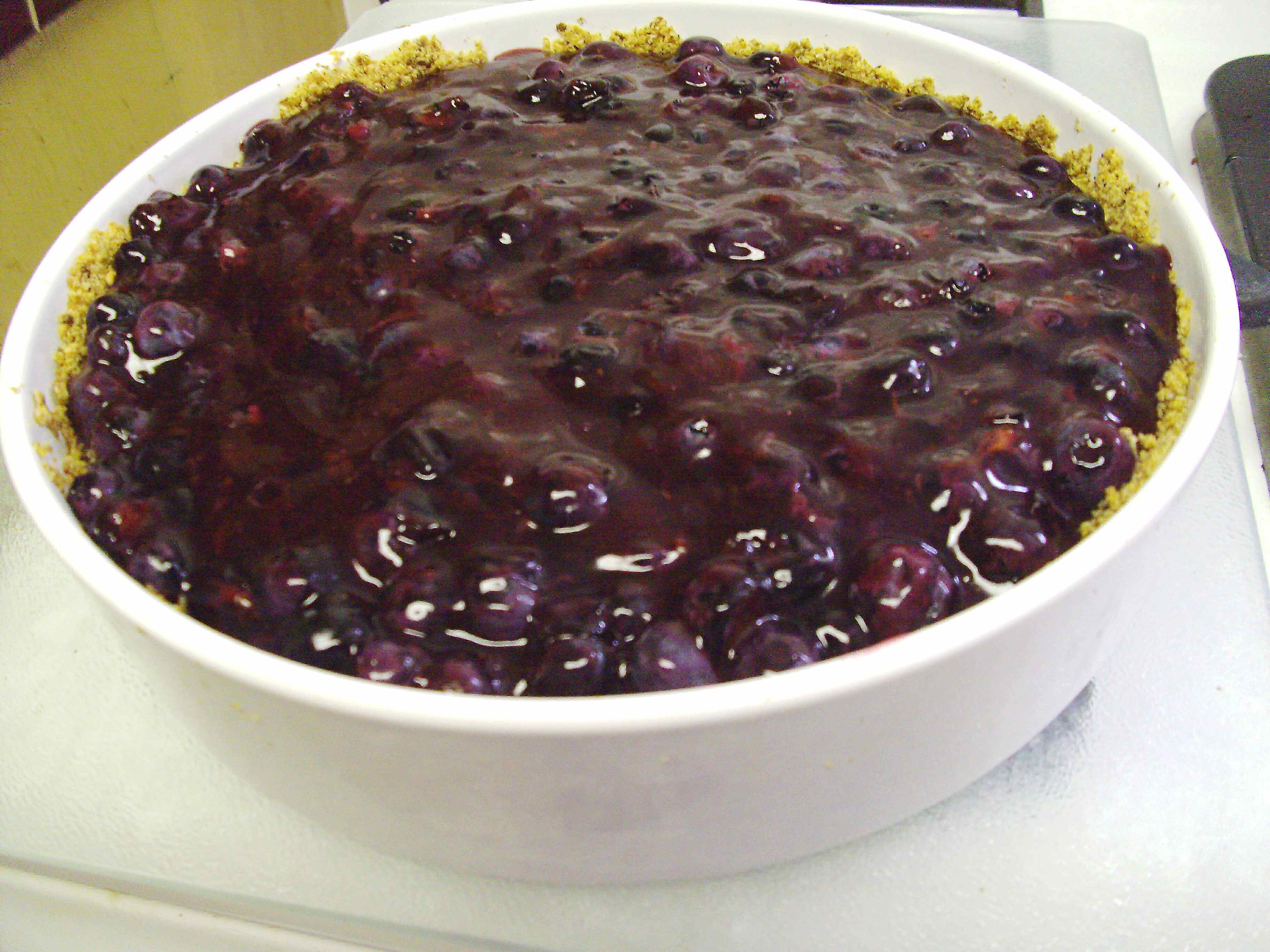
    raw blueberry pie with microwaveable filling and graham cracker crust

    This mostly-raw blueberry pie is a snap to make and very versatile--the filling microwaves in a few minutes, and you don't even have to bake the zippy gingered graham cracker crust--perfect for a hot Fourth of July and all summer long.

  • Recent Posts

  • Contents

  • Archives

  • Now Reading

  • See also my Book Reviews

  • Copyright 2008-2024Slow Food Fast. All writing and images on this blog unless otherwise attributed or set in quotes are the sole property of Slow Food Fast. Please contact DebbieN via the comments form for permissions before reprinting or reproducing any of the material on this blog.

  • ADS AND AFFILIATE LINKS

  • I may post affiliate links to books and movies that I personally review and recommend. Currently I favor Alibris and Vroman's, our terrific and venerable (now past the century mark!) independent bookstore in Pasadena. Or go to your local library--and make sure to support them with actual donations, not just overdue fines (ahem!), because your state probably has cut their budget and hours. Again.

  • In keeping with the disclaimer below, I DO NOT endorse, profit from, or recommend any medications, health treatments, commercial diet plans, supplements or any other such products.

  • DISCLAIMER

  • SlowFoodFast sometimes addresses general public health topics related to nutrition, heart disease, blood pressure, and diabetes. Because this is a blog with a personal point of view, my health and food politics entries often include my opinions on the trends I see, and I try to be as blatant as possible about that. None of these articles should be construed as specific medical advice for an individual case. I do try to keep to findings from well-vetted research sources and large, well-controlled studies, and I try not to sensationalize the science (though if they actually come up with a real cure for Type I diabetes in the next couple of years, I'm gonna be dancing in the streets with a hat that would put Carmen Miranda to shame. Consider yourself warned).

Paula Deen and the diet that bites you back

This week’s “revelation” that Paula Deen, “the Butter Queen” is now a Type II diabetic was a surprise to nearly nobody. Deen, who revealed a harrowing backstory in her memoir of a bootstrapped career in catering, has enjoyed a surprising rise to fame on television. Two weeks ago, following in Emeril Lagasse’s footsteps, she appeared as Grand Marshal for the Rose Parade right here in Pasadena.

Of course, her otherwise ordinary “Southern Cooking” has been exaggerated out of all recognition with extra excess butter and sugar and mayonnaise, and so for years now cads like Anthony Bourdain have called her a scourge on the culinary scene (well, actually, he called her a lot worse than that, but he’s Anthony Bourdain. I’m paraphrasing politely, even though I kind of agree, at least foodwise).

With the revelation that she’s Type II, which everyone knows and fears due to their own increasing girth, Deen is bound to be the butt of predictable jokes this week and next, or until the next big Kardashian “revelation” that newspaper readers apparently care deeply about, or at least they do according to the reality TV networks footing the ad bills. (Even the New York Times has wasted column inches on this kind of drivel this year. Journalistic standards are dropping all over the place, I tell ya.)

But tell the truth, y’all: she ain’t the only one responsible. Not by a long shot. Read any “major” chef’s cookbooks and magazine offerings, other than perhaps those of Nobu, who deals mainly in raw seafood unadorned by carbs or noticeable layers of fat, and you’ll quickly realize that MOST of them exaggerate the salt, sugar and fat content of their dishes well beyond reason. Very few of them deal out plain vegetables on the plate. Very few deal out meats or fish without big sauces.

The other big, big feature stories on food in the New York Times this week:

1. Mark Bittman doing a quasi-deep bankruptcy commentary on Hostess that manages to recount his entire childhood consumption of Twinkies and co. in loving, fine-grained detail. He still attempts to sound self-righteous about it by the end because the ingredients include “ultra-processed flour”.

2. David Tanis of Chez Panisse, waxing lyrical about French lentils (du Puy or Die) as a salad with vinaigrette, hard-boiled eggs (so far, so good), some lettuce and….big fatty slabs of pork belly on top. Five or six of them per plate.

3. “The Miracle of Bo Ssam”–which turns out to be David Chang of Momofuku’s recipe for pork shoulder slathered in salt and brown sugar–twice–and cooked down for six hours in the oven. Caramelized barbecue. In fact, “crack” barbecue, to match Momofuku Milk Bar’s world-famous (to bloggers, anyway) “crack” pie made with most of the same ingredients.

Now people. With all of that going on, with Thomas Keller still boiling his vegetables in brine and poaching his lobster bits in butter, with the Culinary Institute of America instructing its naive young students to salt, salt some more, and salt yet again to achieve that perfect degree of salting in each dish (Coronaries ‘R’ Us), and with Congress sucking its collective thumb about local schools’ move this year to exclude french fries and pizza from the “vegetable” categories in their cafeterias—–

Does anyone really think that Paula Deen is NOT a woman of her time?

She’s nowhere near the worst–she’s just not as fashionable as all the tatted-up young bucks who get picked for Top Chef. She’s also not dishy, like Nigella Lawson, whose cookbooks, which started out about 10-15 years ago emphasizing lighter fare like Vietnamese salads with chiles, have also drifted drastically in the direction of high-calorie “indulgence” foods–some of them utter unmitigated goo-fests (avocado, mayo, roquefort? peanut butter, corn syrup, marshmallow fluff, chocolate bars? puff-pastry chicken pot pies-for-one?). Lawson makes the national news, at least in the UK, when she comes back out in public looking svelte again after puffing up too far past the point where male reviewers are still drooling. Will her next book of recipes slim down commensurately?

Unlike the more fashionable TV chefs on her network, Paula Deen is middle-aged and looks it. She’s fat, she’s gray though beautifully coiffed, she’s politely made up and decently dressed–no orange signature clogs–and she smiles. Maybe a little dippily, but if you didn’t know who she was, Continue reading

There’s something wrong when a veggie burger is worse for you than cheesecake

Recently spotted in the Los Angeles Times Food Section “Dear SOS”

Veggie burgers from North Peak

Dear SOS: My family and I just got back from a trip to Traverse City, Mich., where I had the absolute best veggie burger I’ve ever had. Is there any way you could coax North Peak Brewery Co. to give up its recipe for its Black Bean and Portobello Mushroom Burger?

Dear —–: This burger even had some non-vegetarians going for it. The restaurant also sometimes serves it with provolone cheese and sliced avocado along with a dab of basil pesto aioli on toasted ciabatta rolls.

Total time: 1½ hours, plus cooling time Servings: 8

The recipe starts out with a 9-ingredient pico de gallo homework item–let’s just agree it’s basically salsa, and it gets mixed into the beans and other stuff at midpoint in the cooking process–which is long. One and a half hours? Yikes. But then check out the rest of the ingredients for the veggie burger itself:
Veggie burgers and assembly
  • 4 cups cooked black beans, from about 2½ (15-ounce) cans (drained)
  • 1/4 cup honey
  • 1/4 cup molasses
  • 2 teaspoons salt, more to taste
  • 1 tablespoon cumin, more to taste
  • 1/4 cup plus 1 tablespoon olive oil, plus more for sautéing the burgers
  • 1/2 cup finely diced onion
  • 9 ounces portobello mushrooms, cut into ¼-inch pieces (about 4 cups)
  • 1 cup pico de gallo
  • 3 cups panko bread crumbs
  • Semolina flour for dusting
  • Sliced cheese, if desired
  • Sliced toasted ciabatta rolls

And then — guess the nutrition stats?

Each burger (without cheese or garnishes): 604 calories; 21 grams protein; 103 grams carbohydrates; 11 grams fiber; 13 grams fat; 1 gram saturated fat; 0 cholesterol; 16 grams sugar; 1,227 mg sodium.

Whoa. 604 calories for a single veggie burger. 103 grams of carbohydrate–more than a meal’s worth just by itself. Honey, molasses and panko turn what might have been a reasonable amount of carb from a serving of black beans into something that reminds me of the old sketch from Garrison Keillor’s A Prairie Home Companion on NPR: “Here’s my secret. I just add sugar to the same tired dinner and wow! suddenly everyone loves it!” … or words to that effect.

No doubt the honey and molasses also go a long way toward disguising the fact that each burger contains more than 1200 milligrams of sodium. Where’s that coming from, anyway? the canned beans–400  mg or so per serving. The added salt–a quarter-teaspoon or about 560 per serving. Breadcrumbs–more salt. Add a ciabatta roll and cheese and you’d be above 1500 mg easily.

At this point, despite their long laundry list of ingredients, the MorningStar Griller’s Vegan burgers I used to eat are looking a little more decent nutritionally–about 300 calories apiece and 280 or so mg. sodium. So if they could do it, why couldn’t you?

In theory, at least, you could make veggie burgers a little less dangerous and cheesecake-like if you just skipped the added syrups and salt, and cut the large excess of frying oil for the mushrooms and other sundries by simply microwaving them to precook. That is, choose a sensible recipe instead of something ridiculous.

Oh yeah. But then it would just be, you know, veggie burgers. Not keeping-up-with-the-chain-restaurants versions with the pumped-up sugar-salt-and-fat formulas. I ask again, is there any hope?

LA County gets school lunch program wrong

The LA Times recently reported that the public school cafeteria revamp the county worked so hard on for this year is a dead flop; kids are dumping whole trays of the healthier dishes they approved of in focus groups over the summer.

But there’s a catch: the dishes, which replace the concession-stand burgers-fries-pizza formula, were prepared well over the summer. The students say a lot of the stuff they’re being served now in the guise of “healthy” whole-grain salads and so on in the actual cafeterias is inedible: undercooked or burnt rice and other grains, undercooked meat, moldy bread, milk and other sealed cartons past their due dates, and so on. And when the students brought it to media attention, some of the cafeterias responded by removing the due dates.

The story was so eye-catching the New York Times picked it up last week to throw the issue to its own readers for comment. (Or you could say it regurgitated it–near the truth; the major newspapers seem to be following each other a little too closely these days. What is this, Reader’s Indigestion? what’s the nation coming to???)

The comments–well, as always for newspaper free-for-alls, they’re not generally on the ball. Most bashed the school board for being too liberal and trying to shove ethnic variety dishes like pad thai down the throats of poor kids trained on burgers and fries and pizzas. A lot of them were bemoaning the complete success of the fast food concessionaires in conditioning our kids not to like or even tolerate real food. A few–those who can read and think?– pointed out the spoiled or miscooked food problems mentioned in the LA Times but not in the NY Times digest version.

They all seem to have missed the most serious point, though: the school district may have retooled the menus, but they haven’t restored proper working kitchens to the school cafeterias. There’s no proper cooking facility behind that wall–certainly not for a thousand or so kids in each school. A lot of the new dishes are still being prepared offsite, just as the pizzas and burgers and fries were. Those prepared onsite are handled by staff used to doing nothing more complicated than heating up a bunch of frozen boxes from a concession company using minimal “kitchen” facilities.

The fault in the LA Unified School District healthy food menu plan lies partly in its complexity and partly in its execution. Upscale restaurant-style dishes might not be the best way to go for a first run at better food, and not just because they might repel students used to commercial stodge. They’re a bad starting choice because they’re more complex than the minimally experienced and underequipped cafeteria workers can handle on site, and the facilities that produce them clearly haven’t got their protocols down for “quinoa salads for 1000”.

The freshness factor is another problem. With “just reheat” trays of frozen pizzas, burgers and fries, no one has to think about sell-by dates. Heck, the sodium level is so high they probably don’t even need to freeze the meals. We’ve all seen the blog post where the woman let a Happy Meal sit on one of her shelves for an entire year…and nothing appeared to have changed in all that time. Real food with expiration dates? The school cafeterias are now out of their depth.

But by the same token, the schools shouldn’t have to throw in the towel so easily and go back to pizza, burgers and fries.

What would have been easier to get right–better balanced, and with better buy-in from the students–might have been “build your own” sandwich and/or salad bars.

You see the complicated versions  at any Whole Foods or Souplantation. But pick one theme per day–brown-bag sandwiches, Italian subs or hoagies, felafel and pita, soft tacos… Offer two or three nutritious and fairly familiar choices for protein fillings, one of them vegetarian. Two or three raw, fresh vegetables as accompaniment and a choice of sauces or toppings, and fairly simple bread. Then you’ve got the makings of something students can deal with and find appetizing as well as nutritious, but without a lot of complicated prep.

You don’t have to provide a zillion choices for lunch every day. You don’t have to salt or bread the dickens out of the fillings, and you don’t have to provide sweetened, oversalted sauces for them. Fewer ingredients and processes are better. Just make sure the food is fresh.

I wish to god the school cafeterias and the board members who debate what they serve would stop trying to imitate the  chain restaurants or the upscale restaurants–or indeed any restaurants. It’s lunch, not a field trip downtown to the California Science Center, where the brand-name burger chain running its concession stand/cafeteria sends the smell of frying grease wafting up to every one of the exhibits to make sure you know what you’re really supposed to be paying attention to.

Why don’t school cafeterias do regular sandwiches anymore?


School lunch vs. Congress: Ketchup all over again

The House and Senate’s reconciled spending bill–surprise, surprise–now strips out the new USDA rules on school lunches. You know, the new rules to lower sodium, limit potatoes as in french fries, and debunk the idea that the smear of tomato paste on a commercial frozen pizza slice sold to the school through a fast food concession contract somehow counts as a vegetable. Those rules.

The spending bill is due for a final vote later this week and you won’t be surprised at all to find that the “no new lunch” provisions come primarily from the hands of a number of Republicans in both houses. Worse, one of their chief arguments is that because vegetables other than potatoes, corn and other starches are expensive, the schools shouldn’t have to comply.

But who made–and keeps making, take a look at the other parts of the spending bill–greens so much more expensive to grow than wheat, corn, soy, potatoes…the big heavily-subsidized commodity crops? You got it.

The shamelessness is everywhere though. While trying to verify the details of the bill in the Washington Post article, I looked up “House Budget Committee” (which isn’t exactly it; the official spending bills for the House come from the Appropriations Committee, but I wasn’t thinking official terminology first thing before coffee this morning).

I was disgusted to find an official House committee page apparently dedicated to singing the outsized praises of one party’s platform rather than to presenting actual public business–bill texts and status, committee assignments and mandate–conducted by and representing the work of all the members of the committee, whatever their party affiliations.

The Budget Committee’s chair, Paul Ryan, has commissioned a web site so grossly propagandist and silly it should be a public embarrassment. Go visit it. Am I wrong? Or does almost every single item on the front page mention Paul Ryan prominently in tones that suggest he led the Battle of the Bulge or launched NASA or some equally visionary achievement?

Given his performance in the GOP debates and the many polls that show his true popularity among voters, I shudder to think how much he had to spend out of the committee budget to get someone to put up such a flattering page.

If the House wants budget cuts, maybe this is where the supercommittee (and is that ever an overrating) should start. And then they should get back to work and put some actual food on the tables in public schools. $6.8 billion to improve school lunches and the federal breakfast program for low-income students is a pittance. It’s not enough to do everything students need, but it would do a lot if it weren’t wasted battling the processed food lobbyists over salt, potatoes, pizza, tomato paste and ketchup.

As it is, the food lobbies are likely to win this round in the legislature, or so the newspapers predict.

What power is left? Your purse. Your vote. Your phone calls to your senators and congressional representatives.

Likewise your ability not to pay for garbage. Boycott frozen pizza. Boycott french fries. Boycott soda. Stop buying this stuff for home and tell your kids why. These shameful food substitutes are a lot more expensive than they look. Pack your kids a real lunch–it could be leftovers or a sandwich, but pack something with protein, a little whole-grain starch, and actual vegetables. Maybe a fruit. Keep it cheap and whole–apples/oranges, not passionfruit.

I would also like to see students whose families can afford it to chip in by bringing a bag of apples to school, or a bag of carrot sticks, or a can of tuna, or a pound of cheese or a loaf of bread. Not every day, but every week or month. I have the idea that if all of that donated food went into a kitty for the low-income students, they might eat better than the way they do now.

Tomato paste rules…

School lunch debates now apparently hinge on the 30-year-old question: if tomatoes are a fruit and not a vegetable, what’s tomato paste?

The American Frozen Food Institute is quoted as objecting to new proposed government rules that a quarter-cup of tomato paste can no longer qualify as a serving of vegetable in public school cafeteria lunches. I’m shocked that it has up to now.

The organization’s spokesman actually tried to argue that putting enough tomato paste to qualify as a vegetable would swamp the pizza, which he called “a big part of school lunches”.

Well, yes. That’s one of the big contributing factors to the push for better nutrition guidelines. And in complaining so hard about the tomato paste rule, the spokesman effectively admitted that tomato paste isn’t incredibly nutritious in the quantities most people can consume. It may be vegetable in origin, or it may be “a fruit and not a vegetable” if you want to get prissy about it, but mostly, it’s just a condiment, like ketchup or mustard.

Anyone who’s managed to fool the public this far that the little smear of tomato sauce on a commercial pizza is a sufficient serving of vegetabalia for growing kids deserves every possible food-related and financial comeuppance.

And on the other hand…mustard. Hey. Wait a minute! Mustard is a Vegetable! (well, mustard leaves, anyway).

–  –  –  –  –

Actually, what all the hue and cry boil down to is money. The trade organizations for processed and fast food concessions to public schools stand to lose a lot of their profits if they have to provide nutrition along with the colored sawdust they sell as “pizza” and the greasy mush they sell as “french fries”.

They turn around and threaten the school districts with increased cost per meal, perhaps above what the Federal Government will pay per student.

The school districts panic and shake their heads, complaining that $2.79 government reimbursement per student per lunch isn’t enough as it is, and maybe the Federal Government should drag its heels even further on requiring low sodium meals and fewer potatoes and less tomato paste and more vegetables of worth.

–  –  –  –  –

Step on the brakes a second. $2.79 for lunch? Does that include labor and dishwashing? Or just the food?

If that’s just for the food, I have great news for the school districts. A peanut butter and fruit spread (disclaimer: doesn’t meet govt. standards for a full serving of fruit; this too is just a condiment) on whole wheat bread, with carrots and an apple, maybe if we’re feeling fancy some raw cabbage or green beans or cauliflower, comes to significantly less than $2.79 per serving.

And that’s retail with unpaid labor (mine), and it takes less than 5 minutes to prepare in the morning, even including all the standard parental yelling, “Let’s go, we’re gonna be late, it’s already 5 after, where are your socks?!” Believe me, if I can manage it before benefit of coffee, so can the schools.

Surely the school district bursars can figure out how to drive a harder bargain from their suppliers with so much at stake? Surely lunch should be a simpler thing to prepare?

Artificial sweeteners–false promise for lower carb counts?

Last Saturday night my family visited a couple from our congregation and had dinner in their sukkah. When we broached the question of what there would be for dinner so my daughter could get an idea of how much insulin to take, the husband announced that he too was diabetic–Type II, for several years. What followed was a bit of a culture clash.

I’m sure he meant to be encouraging as he declared that through a combination of self-discipline and exercise and not eating more than a very limited number of carbs per day (and they really were about half of what our daughter is supposed to eat) that his A1C tests were down in the normal range and he only had to test his blood sugar twice a week. Which of course is fine and nearly ideal for a Type II diabetic if it actually works.

I’m not entirely sure how my daughter took all of this, but he went on to dismiss another Type I diabetic we know as “paranoid and overdoing it” because she tests 6 or 7 times a day, which he assumed was unnecessary since he didn’t need to do that.

He had the shining confidence of someone for whom not much had ever gone awry and, having no idea how lucky he was, assumed it was down to his own skill rather than the fact that he had a working pancreas, wasn’t growing anymore, and wasn’t a girl. All big factors for blood glucose control. Clearly he’d never had a bad low with shakes from an overdose or hormonal surge, or a really sharp unexpected high from a shot that just didn’t get where it was supposed to go.

I was more tactful than I’ve ever been in my life when I pointed these things out. You wouldn’t have recognized me, I swear!

Oddest of all was his insistence that the real secret was his use of artificial sweetener, which let him enjoy all kinds of great desserts. I was puzzled–baked apples sprinkled with xylitol? Surely the apples themselves were pretty carby–as well as pretty sweet on their own. The carb difference between using artificial sweetener, a tablespoon–or even two–of table sugar for the pan, or just leaving the apples to bake without sweetener, would be pretty minimal per serving.

And indeed our host only took two wedges for himself.

The other dessert–and it did taste decent–was chocolate ice cream sweetened with xylitol. Given that the ice cream in question was a plain flavor from my usual brand, I was able to compare it with the ordinary version for carb with reasonable confidence.

It was plenty sweet–maybe sweeter than normal, for that matter. But for carbs?

There was no difference. 17 grams per 1/2 cup serving, xylitol or no.

Which brings up a sobering question: why use artificial sweeteners if they don’t lower the carb count significantly? Continue reading

Weighing in on kitchen scales

Digital kitchen scale

Farhad Manjoo, better known for his columns on computer and phone technology, has now tackled kitchen tech for the New York Times in his  ode to the electronic kitchen scale.

And while I applaud the general idea that it’s a valuable tool–after all, we use ours daily–I’m both stunned and unsurprised at the same time at the limited perspective he shows [chorus, because he’s a boy]. For Manjoo, as for the food bloggers he quotes (J. Kenji Lopez-Alt of Serious Eats, Deb Perelman of Smitten Kitchen), using a kitchen scale is about cooking more precisely and with fewer measuring cups, spoons, bowls, etc. Which is fair enough, I suppose, if you’re really worried about whether you already cook well, or if you have ambitions for exactitude.

But why do most Americans who actually have a kitchen scale get one in the first place? The fact that our kitchen scale came with a “The Biggest Loser” sticker on it might give you a solid clue.

We got our scale because our daughter developed Type I diabetes at age nine. Although we started out with half- and third-cup measures for simple foods like beans or plain pasta, we really needed to be able to calculate how much carbohydrate was in more complex or variable-density foods like breads and baked goods so we could give her the right amount of insulin for them.

Our school office manager said she’d gotten one on doctor’s orders after suffering a stroke in her early 40s, and she swore by it to help her cut back significantly on carbs and get her portions right.

Health concerns, not haute cuisine, are the most urgent reason to learn to use a kitchen scale. Not that better-tasting food isn’t important, but learning how to eat more moderately by measuring and knowing what’s in a serving would help at least two-thirds of Americans back themselves down off the high-BMI, pre-diabetic ledge. Especially since an international diabetes conference just reported something like 350 million people worldwide now have diabetes, double the number from 20 years ago.

Digital scales seem to do the most good, for us at least, in preparing homemade pastries or complex dishes (such as quiches or filled pastas). Our other best use is weighing out complex high-carb foods like pastries and candies that we’ve bought elsewhere, since they can be so variable in density or sugar content.

Unfortunately, weighing out treats is usually a big eye-opener for us as well as our daughter. That blackberry pie my husband lugged home from a specialty bakery run is worth a meal and a half of carbs if you do the picture-perfect wedge. We’ve started to cut our pieces a little thinner not just so our daughter doesn’t feel shortchanged but so we don’t get slapped when we step on the big scales the next morning.

Along the way the scale has helped us learn carb fractions for different foods and figure portions for them so it’s easier to estimate when we eat out.

It’s not so tempting to eat a whole doughnut for Sunday breakfast from the surprisingly good and inexpensive bakery three blocks away when you discover that even the relatively modest sugar twist (a real doughnut utterly unlike Starbucks’) represents 60 grams of carb, worth a whole meal without even accounting for a glass of milk, and the jelly doughnut is something like double that. And once you’ve eaten it, you won’t really feel full. Dangerous goods. Better to split the doughnuts and eat something more substantive with them.

Bonus points for my daughter’s practical algebra skills here: she’s figured out how to calculate carb fractions based on the nutrition labels for her own custom blend of low-carb, high-fiber cereal and ultra-carby granola on regular mornings, and she’s pretty fast by now. The extra flourish on the calculator may make me roll my eyes (and yes, at a certain point I’m always thinking, “Just pour it, already!”) but she’s having fun showing off. Even though she’s done the measurements and calculations often enough to be able to eyeball the amounts in a cup if she wanted to.

Because of course, it can be taken too far…

After all, you can’t lug a kitchen scale to school with you in your backpack every day. Most diabetics of longer experience count by eyeballing and estimating when they eat out rather than agonizing over every gram. You can get a little too involved and dependent on the precision a scale offers and forget how to trust–and train–your innate abilities.

Which brings me back to Farhad Manjoo’s column. There’s nothing actively wrong with the way he’s using his scale, I suppose–except for his exuberance about pouring flour straight from the bag into the mixing bowl, then pouring sugar straight on top of that. If you overpour, you should be taking some back out, but then what? Discard the excess sugar now that it’s contaminated with flour? Ignore the contamination and scoop it back into the sugar sack? Take it from a former lab rat, you’d have done better in the waste-not sense as well as the food safety sense to weigh each separately into a paper cup or onto a plate and then pour it in the bowl.

But that’s for things that really benefit from weighing. Manjoo’s using the scale to figure the exact portion of coffee beans to use each day. One of his interviewees is using the scale to weigh out the exact amount of sugar for his iced tea. These things would do fine by eyeballing–or just using a spoon like a normal person.

Do you really need a kitchen scale to figure out how much grated cheese you want in your mac and cheese? Wouldn’t grating it until it looks and tastes good to you work at least as well?

These guys have lost their trust in their ability to eyeball or cook by feel as they check and recheck their precision on the digital scale. Couple that with the cachet of doing as the French do (that is, when they bother to weigh ingredients instead of cooking by instinct, which they’re inordinately proud of) and you have a new American tech obsession parading itself as competence chic.

It’s like checking your e-mail every 20 minutes. Or bringing your new iPhone to the dinner table and looking up instant info on the Web every time your wife brings up a topic to which neither of you knows the answer. (AHEM!!!) Not that I’ve ever met (or acknowledged meeting) any certain husbands who got that obsessive over their apps. Trust me, it does NOT make them more competent or enjoyable conversationalists…even if they do occasionally bring home some serious pie.

Really? No, not really.

Reason for dismay at the top level restaurants:

(LA Times Food Section) “Three top chefs create more healthful versions of favorite dishes”

They cut down a little on the calories–as in, substituted olive oil for butter, or ricotta for mascarpone, or even ground chicken for ground pork. But only one of them cut down significantly on the sodium–and even then it was 1000 mg for the dish, down from about 1400 mg. Give Daniel Mattern credit where it’s due, but it’s still a lot. Josiah Citrin’s dish, which started out about 650 mg, not horrible for restaurant food, actually went up in the modified version.

In Susan Feniger’s case (and she was far from succeeding or even trying hard on the sodium reduction), the sodium count was more than a day’s worth in one dish–from 2100 mg or more to 1800-plus. Choke. She did skip marinating the ground chicken, but the “mabo” sauce, which she didn’t change at all, contains three different kinds of soy sauce AND fermented black beans. Because you really need a sauce that salty in fine food?

Couldn’t she have done a different sauce, more savory or spicy but less salted? That’s the first thing I would have targeted. I probably would have used my low-sodium prune-based Asian barbecue sauce instead of the black bean sauce–it’s different, but good, and it’s similar enough in texture and flavor density to substitute well.

In fact, none of the chefs tried to go radically different–they were all too fixated on whether diners could tell the difference between the originals and the modified dishes. Well, if they’d changed anything worth changing, I’m sure the diners would have been able to taste the difference. The real question is, would it have been a good dish and would they have liked it? I think the chefs could certainly have gone after bigger, more ambitious changes and made the dishes satisfying–perhaps even better–without choking the diners on salt.

The bad part of the article came at the end. All three chefs just gave an arrogant little shrug when the results were revealed at the end of the test (showing that they hadn’t done all that well). They all said grandly that it doesn’t really matter, because as Josiah Citrin put it, their customers come “to be blown away” by the food.

And so, just like the fast food kings, they put the blame on the diners for not demanding better, saner nutritional standards. Beats workin’.

Microwave tricks: Seitan without Simmering

My sisters-in-law from Oakland were planning a visit to us this summer now that we actually have a house and can host them. It fell through, but the prospect got me thinking about vegan food and what we might serve them. They’re both good cooks, but they eat a lot of commercially-prepared vegan meat substitutes along with their own fresh vegetables and grains and baked goods.

I’m not great on packaged foods in general, and unfortunately, vegan proteins other than plain fresh tofu and dried beans look an awful lot like vegetarian versions of Oscar Meyer sliced bologna and turkey loaf to me. Not just the appearance, but the cost per serving (really high–something like 4-6 bucks for a chic little package that serves two, ostensibly) and the salt (also really high–600 mg and up per serving). And the ingredients lists are always long and kind of mysterious-sounding, either in a surprisingly chemical way or in a Japanese-ingredient-names-as-authenticity way. Not that I’m not working to figure out exactly what kombu and dulse and Job’s tears are. Two seaweeds and a resin? I think, anyway.

There’s also a lot of yeast extract in some of these processed vegan proteins–sounds like between that and the salt, what they really did was dump in Vegemite or Marmite. Bleagh (my husband’s sister is kind of an Anglophile, but that doesn’t excuse either version to me).

On the other hand, some of the vegan cookbooks out now have do-it-yourself recipes for seitan, and so do Ellen’s Kitchen and FatFree Vegan Kitchen.

Seitan is basically wheat gluten dough cooked in stock. If you do it yourself at home, it may take an hour to simmer but really isn’t very expensive compared with the commercially prepared versions. A 5-lb bag of flour at about $2-3 or a few ounces out of a 22-oz bag of vital wheat gluten (about $6-8, depending where you buy it, and worth it for getting 100% gluten out of the bag and not having to wash the starches out of the dough since it’s already done for you) produces something like a pound or two of seitan at a go. That’s enough for a larger meal, maybe even for that elusive home-made vegetarian centerpiece dish

Why is this worth doing if you don’t eat vegan and aren’t actually having vegan guests in the house after all? (and now that I’ve schlepped the last of the moving boxes out of the living room, I’m really wondering).

I think back to my favorite Chinese restaurant back east, the Hunan Manor in Columbia, MD. Every time we fly back east we try to make a stop there.

One of the things that makes the Hunan Manor great is their willingness to experiment and invent. They serve a wide variety of vegetarian versions of standard banquet dishes using “vegetarian chicken”–basically seitan cut and fried as for meat. These dishes complement their masterful use of tofu with textures from nearly silken to deep-fried to pressed and diced for the vegetarian jao tse, which I’ve always thought looked better and probably tasted better than the pork-based meatball filling our nonkosher friends would get (though they raved about them, and I’ll take their word for it).

The last time we came east, the restaurant had added several new dishes using a different form of seitan with very finely layered rolls that were cut in bite sized pieces, coated and fried–a pretty close simulation for the layered flesh of chicken. It was really delicious in their orange “chicken” with perfectly cooked bright green broccoli. It was unexpectedly unsalty as well, so I don’t know whether they made it in-house or had bought the prepared seitan in an unflavored form.

Either way, the dish was a great argument for using seitan creatively, and I don’t think my sisters-in-law, competent cooks though they are, have eaten any seitan dishes that good using anything from a little Gardein package.

So I decided I’d like to try my hand at seitan at home and see if I can’t come up with something flavorful, chewy, satisfying and nutritious, without having it scream salt. After all, once you’ve got the finished loaf or pieces, you’re Continue reading

Cannoli that won’t bust the carb count

Cannoli paste my way

This is a story about frugality–of the serendipitous sort.

The other week my daughter was with me at the supermarket (sometimes a mistake, sometimes an inspiration), and asked if we could get a packet of sugar cones to go with a drum of Dreyer’s ice cream. This was a trade-off for forfeiting Baskin-Robbins, whose ice cream is consistently higher in fat and carb than Dreyer’s or Breyer’s.

(Shakespearean aside #1) The B-R nutrition brochure is worth a pretty serious look for calories, fat, carbs, the total picture. You can definitely eat a days’ worth of calories–upward of 1500–in a single sitting if you order one of the fancier items. Skip the soft serve and stick to the single cone, for sure.

Not that we never stop in for a cone, but we never knew what the sugar cones were worth carbwise so Abby was limited to a paper cup or a cake cone. And of course for the price of two modest single cones at B-R, you could buy a 1.5 qt. carton at the store and scoop about 10 servings out of it yourself.

In the supermarket, the box with the sugar cones says 10 grams for Keebler and 11 grams for the Ralph’s (Kroger-affiliated) store brand, which is on sale, and about 50 calories per cone. The sugar cones have surprisingly simple ingredient lists for a processed food–wheat, brown sugar, vegetable oil, oat fiber (Ralph’s version) and a bit of salt (though not much–20 mg/cone) and maybe a little caramel coloring and malt flavoring.

But of course the ice cream tends to run out a bit sooner than the cones. And then what? Here’s where the “frugality” comes into it again (okay, I’m sort of rolling my eyes too, but still.)

I had about half a quart of ricotta left over from manicotti (same idea as for the microwaved stuffed shells, only using a plastic baggie with a corner torn out to pipe the spinach and cheese filling into both sides of the parcooked pasta tubes–worked pretty well actually). And ricotta, even on sale, is kind of expensive if you just let half of it sit in the fridge until it goes bad because there isn’t quite enough for another batch of pasta and you don’t know what else to do with it.

So anyway, the availability of leftover ricotta (I’m too cheap to do it with a brand new carton) plus the leftover cones added up in my head the other night to “Hey! Impromptu cannoli! Right now! And I don’t even have to go back to the store!”

I should probably explain.

The first cannoli I ever had were also the best. The parents of one of my sister’s high school friends ran a tiny Italian deli and specialty shop way out near the airport of our town, and what can I say–it was worth the schlep. In addition to imported pastas and olives and pickled peppers and salami and so on, you could buy a tub of their own fresh cannoli paste and a box of carefully packed pastry tubes so you could assemble the cannoli yourself at home and not risk sogginess or breakage on the way.

The D’Elicios’ cannoli paste contained ricotta, of course, sugar, and something else that I finally pinned down as lemon (and possibly orange) rind. And it was heaven on a spoon. So good I asked my mom to bring a box of their cannoli instead of a birthday cake to my college dorm  for my 18th birthday.

How was I to know that would be the last of the really great cannoli for decades? Continue reading