
• Enter your email address to subscribe to this blog and receive notifications of new posts by email.

    Join 241 other subscribers
  • Noshing on

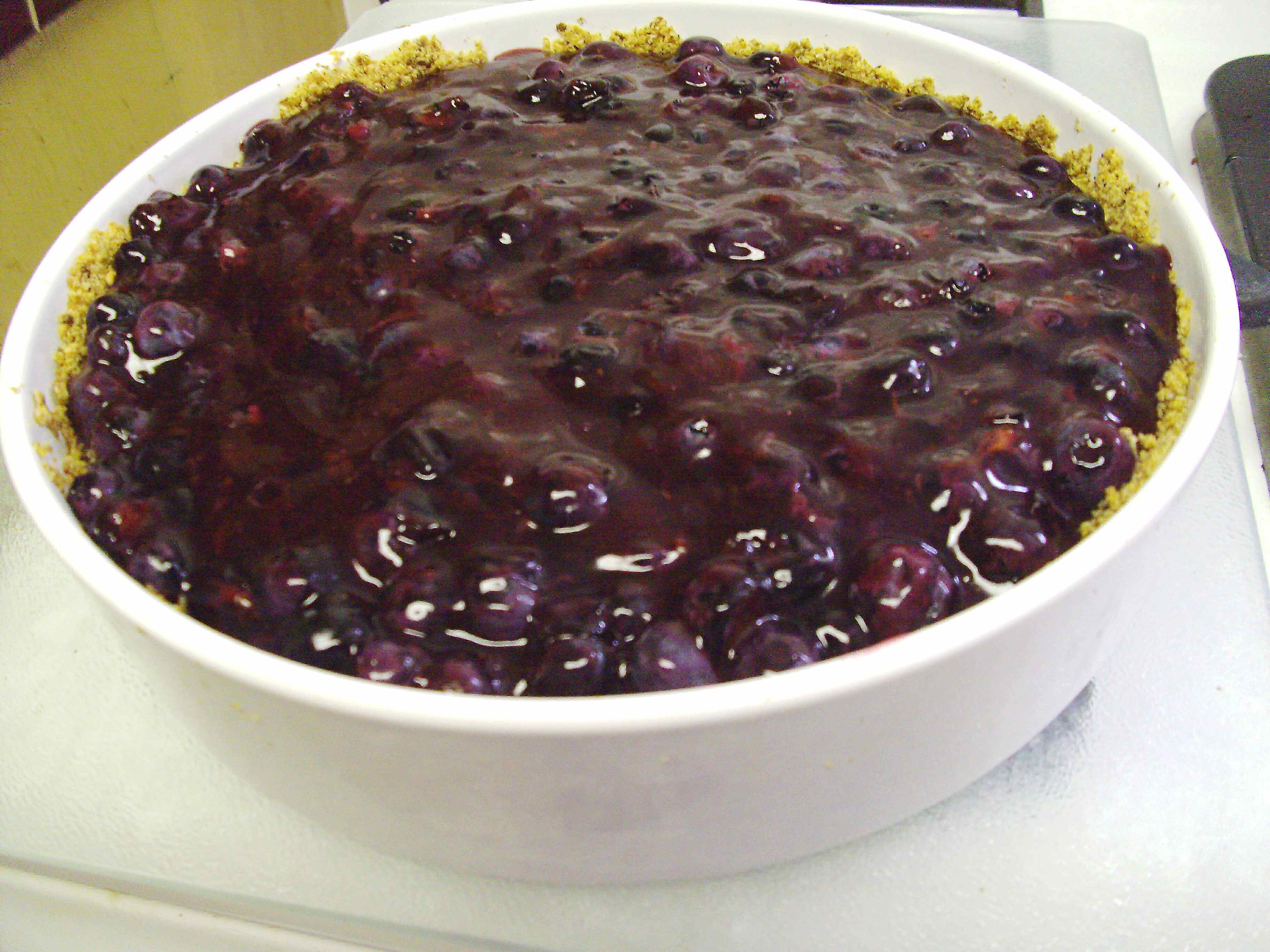
    raw blueberry pie with microwaveable filling and graham cracker crust

    This mostly-raw blueberry pie is a snap to make and very versatile--the filling microwaves in a few minutes, and you don't even have to bake the zippy gingered graham cracker crust--perfect for a hot Fourth of July and all summer long.

  • Recent Posts

  • Contents

  • Archives

  • Now Reading

  • See also my Book Reviews

  • Copyright 2008-2024Slow Food Fast. All writing and images on this blog unless otherwise attributed or set in quotes are the sole property of Slow Food Fast. Please contact DebbieN via the comments form for permissions before reprinting or reproducing any of the material on this blog.

  • ADS AND AFFILIATE LINKS

  • I may post affiliate links to books and movies that I personally review and recommend. Currently I favor Alibris and Vroman's, our terrific and venerable (now past the century mark!) independent bookstore in Pasadena. Or go to your local library--and make sure to support them with actual donations, not just overdue fines (ahem!), because your state probably has cut their budget and hours. Again.

  • In keeping with the disclaimer below, I DO NOT endorse, profit from, or recommend any medications, health treatments, commercial diet plans, supplements or any other such products.

  • DISCLAIMER

  • SlowFoodFast sometimes addresses general public health topics related to nutrition, heart disease, blood pressure, and diabetes. Because this is a blog with a personal point of view, my health and food politics entries often include my opinions on the trends I see, and I try to be as blatant as possible about that. None of these articles should be construed as specific medical advice for an individual case. I do try to keep to findings from well-vetted research sources and large, well-controlled studies, and I try not to sensationalize the science (though if they actually come up with a real cure for Type I diabetes in the next couple of years, I'm gonna be dancing in the streets with a hat that would put Carmen Miranda to shame. Consider yourself warned).

Pastry again: vinegar adds the tender touch

Most people, if faced with a quick baking dilemma, probably go to the supermarket and buy cookies or brownie bites or something.  And it makes sense, kind of, although with a food processor, you can make pretty good cookies and brownies in less time than it would take you to fight over holiday parking, much less elbow your way through the store.

The corresponding shortcut for most people who do bake would probably have to be pie crust–to say nothing of puff pastry dough. For years I’ve been looking for ways to make a pastry dough that is close to puff pastry–flaky and light and puffy–without being as heavy on saturated fats and calories. Not the easiest combination.

Fillo (purchased, I’m not enough of a DIYer to make my own yet and my kitchen’s too tiny for rolling and tossing a huge thin sail of dough the right way)–fillo is good for a lot of things, but it’s so obviously itself and not pie dough, tart dough or puff pastry. It’s also pretty salted–I always have to comparison-shop to remember which commercial version has the least sodium per ounce (they vary within brands, because some are intended for savories and the others for sweet pastries. I think the savory ones are much too salty and use the less-salted ones for spanakopita and so on as well as for baklava).

After having made a variety of pie doughs–standard flour-butter-salt-water, olive oil tart dough, rugelach butter-cream-cheese dough, and even a puff pastry recipe with about half the fat called for in the classics–plus croissants that I finally got right–I can say my latest experiment is something of an eye-opener for me.

All of these worked okay as doughs, but except for the olive oil tart dough, which I use routinely for quiche, none are really all that light-tasting or actually light in terms of fat content and overall calories. And rolling them thinner than the standard 3/8 inch (thinner equals less dough and fewer calories per serving…) sometimes leads to a tough pastry. The fact that I tend to use bread flour instead of all-purpose or cake flour is probably at fault as well, I’m sure, but I’m mostly a bread baker and not exactly a perfectionist, so how many different sacks of flour do I really want hanging around my cramped galley kitchen at any given time?

A week or two ago I checked out an older cookbook (late ’80s) on Armenian food and tried to puzzle out the Armenian, Lebanese, Turkish and Russian influences–it’s a real mix. I was looking for a recipe for bureka dough, and this book had one.

The recipe for spinach burekas had an accompanying (and aging, over-tinted ’80s-style) photo of a browned and flaky dough wrapped around a log of improbably-green spinach filling on a platter lined with too-green lettuce and too-orange tomato slices underneath. But other than the color enhancements, the spinach log, kind of like a spinach Wellington, looked pretty nice.

To my great surprise, the dough was quite similar to some of the ones Joan Nathan had in The Jewish Holiday Kitchen.  The key ingredient differences from my standard pie doughs are:

1. slightly more butter for the amount of flour than for standard pastry dough (to be expected–you want it flakier, you probably need more fat in the dough) though a lot less than for rugelach or puff pastry

2. a little vegetable oil as well

3. an egg. Nathan’s “muerbeteig” egg dough for a plum pie calls for a hard boiled egg yolk, of all things, but the one here is raw. I’m not sure what it’s for, exactly. Perhaps for leavening or some other structural purpose–maybe it helps the dough puff into layers and hold them better with less hard fat than puff pastry requires?

4. a quarter-cup of dry white wine–which I didn’t have, only red, which would have turned the dough gray…so I substituted half apple cider vinegar and half water–the vinegar because Nathan had used it in a dough with egg. Why wine or vinegar? I think–don’t quote me–it’s the acidity, which breaks down gluten a little and tenderizes the dough. Certainly it did in this case compared to my usual experience.

So anyway–this dough came out surprisingly well. It doesn’t puff anywhere near as much as puff pastry–at least not while rolled out as thin as possible, and I haven’t tried it thicker–but it’s light, crisp and tender at the same time and not heavy or greasy. It’s unsweetened and mostly unsalted and would be equally good for savory pastries, Wellingtons and other encased main-dish things (like pot pies, coulibiac of salmon, and spinach-type fillings) where it’s the top layer or a wraparound, and for sweet ones like the impromptu almond paste and apple tartlet at the bottom of this post. Continue reading

10 (or so) Warning Signs of a Half-Baked Diabetes Cookbook

For the past two months I’ve been scouring the library and bookstore shelves in search of practical guidelines for preventing and managing Type II diabetes with  diabetes-careful meal plans.

I have two goals for myself:

1. Get down to a healthier weight by eating less and exercising more–this is the big one with the best correlation to reversing prediabetes. And it’s going okay but slowly.

2. Eat balanced meals with somewhat less carb per meal, fewer free sugars and fewer calories overall than usual. This is the easier one generally…as long as I keep a food diary. Luckily, I know how to cook and I’ve been doing meal planning for a Type I diabetic child for four years now, so I know how to count carbs. And when I don’t, I have a copy of the American Dietetic Association’s handy, simple and cheap $3 or so guide on the shelf. And a link to the USDA nutrition database for the exotic occasional items like chestnuts in the shell (note to self, about 5 grams apiece).

But I still wondered if the diabetes and weight loss cookbooks I see around are solid and I’ve just been too lazy, arrogant or impatient to take them seriously all these years. Hence the trips to the library.

Because no doubt about it, the diabetes cookbook scene is burgeoning. There are loads of good-looking cookbooks out with pretty, gourmet-looking recipe photos and promises of perfect blood sugar management amid the desserts on the cover.

Here’s the short version of this post: a read through most of these books is NOT encouraging. All the popular diet book gimmickry of the past 40 years seems to have been transferred to a lucrative new target (read: gullible victim) market, complete with bright, shiny new drug company advertising and sponsorship potential on the coordinating web sites.

Considering that there’s no precise required diet for diabetes, just guidelines for budgeting meal carb totals and keeping some kind of commonsense balance between starches, fiber and sugars, even the premise of prescriptive diabetic cooking guides is a little shaky to start with. But what’s actually being presented as guidance in these popular books is far from that approach.

Even cookbooks affiliated with or endorsed by organizations like the American Diabetes Association and so on fail some pretty simple commonsense tests for honesty, accuracy, consistency, or relevance to standard public health guidance on preventing, managing and reversing Type II diabetes by way of diet. And if you don’t already know your way around carb counting and portion size measurement, they’re extremely confusing. Sometimes even on purpose.

So here are the main common flaws I’ve discovered in most of these books, with a few books singled out for personal ire and bemusement. You might want to consider these as warning signs if you’re looking for actual guidance to get you through.

10 Warning Signs that Your Diabetes Guide Cookbook is Half-Baked

1. The Dessert First approach to diabetes management. Telltale sign: does it show cake or ice cream on the cover? About half the books I scanned do. They treat desserts and snacks as a top priority, as though that were what diabetes control is all about. As though sweets were somehow necessary at every meal, or even every week. None of them ever say, “just stick with a small apple or orange most days. No recipe required.” Actual endocrinologists recommend keeping desserts occasional and snacks un-glamorous and limited in carb.

1b. Aside: Many of the dessert-first books show cheesecake on the cover, usually a 1/8 to 1/10 cake portion–a pretty hefty wedge by any standards. This is a come-on–cheesecake is usually high in fat calories, so it’s rarely a good pick for anyone attempting to lose weight (the main strategy for Continue reading

Advertising Vegetables–is it really so hard?

Michael Moss of the New York Times tells what happened when he challenged a prominent ad agency to come up with a campaign for broccoli. Fresh actual broccoli, no brand name. Which I’ve been hoping for years someone would do, but as I read his article, my heart sank. All the veg-phobia and all the typical slanders against broccoli raised by the vegetable-avoidant generation (now adults) quickly rose to the surface in the ad agency focus groups. Turning a corner on that would be an extreme makeover indeed.

So a little help on how to deal with the great green broccomonster:

Fifty, or “Sugar Shock, Part II”

I’m back, though a little bummed out. I didn’t post anything at all in September. There’s a reason for that. No, it’s not because I turned 50 last month (which I did). No, it’s not because I rebelled and declared against cooking anything ever again (which I almost wish I had, even though most of what I cooked was pretty good).

It’s because my routine physical showed up with a higher-than-normal-for-nondiabetics A1c even though my fasting blood glucose was under 100. The A1c measures the fraction of hemoglobins (the red blood cell proteins that include iron atoms and transport oxygen) with glucose molecules stuck to them. There’s always some level of glycosylated protein in the bloodstream, but above a certain threshold it means your average blood glucose for the previous 3 months or so has been over 100.  Not a good thing at 50. And when I borrowed my daughter’s old glucose meter and tested myself before breakfast a couple of days in a row, I saw why my A1c had been up–my fasting glucose was now hovering about 105, 110, even though it didn’t happen to be up on the day I tested at the lab.

Don’t that just figure, I thought. Happy birthday to me.

So I’ve been pretty PO’d and somewhat panicked. I do NOT want to become a full-blown diabetic. One in the family is more than plenty, thanks. Even though all the finest news outlets announced today that Tom Hanks is now diabetic. Not a huge comfort.

I think of myself as eating a generally healthy diet. I know full well how to count carbs, having had to for the past 4 years. My blood pressure’s good. I walk nearly every day. I know how to balance a meal.

But the Type II diabetes prevention and management advice I can find in the popular diabetes magazines and cookbooks (and online sites), even the ones endorsed by the American Diabetes Association, always seems to be ludicrously lax and useless compared with what we already have to do at home.

I’ve spent the past month reading up and seeing why the popular diabetes cookbooks and magazine recipe sections seem so useless–or even deceptive. Next post, coming up this week. You won’t believe what I found in most of them (other than all the pharmaceutical and sweetener ads, of course).

But for now, back to basics. Can I do the simple common-sense stuff they tell you (without actual instructions) at the doctor’s office to back away from diabetes risk?

Marion Nestle has pointed out that in large studies, the factors with the highest Continue reading

Beating sugar shock

A new dietary sugar intake study from the University of Utah shows what happens when mice eat the kind of diet many Americans now eat:  25% of total calories in added sugars and high-fructose corn syrup (HFCS). The results were chilling: females died at twice the rate of controls, while males lost fertility and territorial instinct. And as the researchers pointed out when the corn and sugar associations tried to downplay the significance and shuffle blame, city mice tend to eat what humans near them eat. Yeah.

So of course, as the mother of a diabetic kid with a known and prominent sweet tooth (that goes for both of us, but we also love vegetables, or we’d never survive), I have to ask, how do you keep your added sugar calories under maybe 13% instead of 25%?

I don’t have a simple answer to this, particularly as I’ve discovered that most of my friends don’t cook anymore, if they ever did. Most of them think making soup means opening a can and dinner means ordering pizza. Snack, and occasionally breakfast too, is a power bar (shudder). All vegetables are precut, and many die in the fridge of sad neglect. They have good intentions; Whole Foods rubs its hands with glee when they see them wander in.

And although they’re smart, they have a very hard time wrapping their heads around the differences between added sugar, “naturally”-sourced or “unprocessed” brown sugar, sugars naturally present in whole unprocessed foods…agave syrup, power bars, “sugar-free” cookies…blah blah blah…all the gimmicks, in other words.

They don’t really understand the noncommercial measure that counts most for actual diabetics: total grams of carbohydrate in the current meal. Because that’s what you have to calculate and dose insulin for. Not just the sugars.

But even then, you don’t calculate for the whole day’s eating and just give one big dose based on a guess of what you might eat later. You calculate meal by meal and give a dose of short-acting insulin for that meal.

Calculating added sugar calories against total calories in a day is really difficult when you’re the mouse, so to speak. That’s the way nutrition researchers think about measuring the effects of your diet. It’s not the way people think as they’re getting ready to eat.

Especially if you’re eating out or you don’t have every food label right in front of you or you don’t walk around every minute with a meticulous food diary.  It’s like doing taxes when all you want to do is choose and eat a decent lunch.

WHAT DOES WORK?

I’d say, thinking like a diabetic. Or rather, in this case, like a diabetic’s mom.

  • First, definitely go meal-by-meal. Be sane.
  • Second, in any given meal–or snack–estimate the sugar grams as a fraction of the total carb grams, not the total calories, which can come from fat as well as carb. Too confusing.
  • Third, just count all the sweet stuff together. The whole idea of comparing added sugar vs. total consumed sugar is a pain in the tush to figure out. Once it’s in your system, it’s all sugar, and popular New Age-y fantasies about agave syrup and Hawaiian brown sugar and palm sugar being “natural” and “healthier” tend to fog things even worse.
  • Count fresh fruit, plain milk and yogurt-these are also in the form of sugar, not starch–and just figure that fresh fruit, milk and yogurt are the best choices (duh) per serving because they’re less concentrated in sugars than candy, pies, cakes, cookies, snack bars, power bars and …. syrup.
  • And then really look at the nutrition labels for anything packaged or processed. Including vegetables. If nothing else, it’ll be obvious why I rant against carrot juice instead of whole carrots, for example…

The first step for any of this, though is to know how much carb you’re actually eating.

Step 0. Know thou thy carbs. Continue reading

Emergency eclairs

Note: this is not my photo–I have not been to the balcony of Notre Dame lately. I merely share their dismay. [Source: Brittanica Online, with gentle modifications for parody purposes]

You may be wondering what to do if you drop half your éclair over the balcony of the Eiffel Tower, or worse yet, Notre Dame, while pondering your options for the afternoon’s conquest…YSL first, or peut-être Dior?…ooh-la-la-oops!

AAAAAGGGGHHHH!

Screaming will not get your éclair back, though it is a good start. You need to get down to ground level and purchase another tout de suite!

No, this is not really me channeling Miss Piggy at her “Who, Moi?” finest. I don’t have the lavender satin opera-length gloves for it, for one thing. I’ve just been watching too many of the various Muppet movies with my daughter lately.

Plus, and let’s be honest about it, the one time I ever tried on a long blonde wig (for a college skit), I took one look in the mirror and fell down on the costume department floor laughing until my ribs hurt. It was 20 minutes until I could breathe again. Picture Danny deVito (his eyebrows, anyway) peering out from under that wig, hoping to stand in for La Porcette,  and you understand why Frank Oz can never, ever go on vacation.

I have not been to Paris in seven years, and when we were there (for an engineering conference, with our then-kindergartner) we did not actually eat any éclairs. We also did not shop at Pierre Hermé, nor at Hermès, nor anyplace that wasn’t either a museum, an RER or métro stop,  a café or a tchotchke booth along the Seine. Other than for food, if it cost more than 15 bucks (or 11 euros, as for example, the tiny 3-inch-long stuffed unicorn at the Musée du Moyen Age, which we paid for hastily during a shall-we-say-jetlag-inspired meltdown), it was out of the question. I actually spent two full hours–ON VACATION IN PARIS–sitting forlornly in a coin-op laundromat down the alley from our hotel, hoping I had enough change to get all the horrible perfumed detergent back out of our clothes, while my husband and daughter went to the park. Not exactly the Paris experience I’d imagined way back in my high school French class.

So what am I doing imagining that I could climb up OR down the Eiffel Tower in chic heels (instead of the more believable sneakers and backpack with the entire belongings of my family plus bandaids and extra sandwiches…), waving an éclair around with incredible nonchalance and somehow not lose it (which I’ve never actually done; I’m a fervent believer in pastry) or break an ankle (which I have actually done, wearing flats), or both, with loads of people looking on?

Who knows–daydreams like these are the kind of thing mentioning Paris does to one when one blogs about food or fashion. Practically obligatory. It’s fun to imagine a life where such trivial matters can leaven, not to say inflate, my expectations. And, of course, where I’m not the one who has to schlep all the emergency supplies up however many flights of stairs. And back down.

Let’s face it, I’m a natural pessimist and (therefore) fan of both the Muppets and Matt Groening. Tell me true, now, doesn’t the gargoyle on the right look like the original inspiration for that sad shrimpy one-horned character in Life is Hell? He’s even wearing my backpack.

Real life is hard, gritty for more serious reasons than high-heeled éclair mishaps, and it’s filled with nagging of the now-ex-7th-grader. Ahem! These are things we just have to get through because there’s no great alternative (…yet. I’m working on it, believe me.)

Eclairs, on the other hand, are not actually difficult to make. And eating them makes one feel a lot less like life is hell, particularly if one skips the high heels and eats them barefoot.

And on the other other hand, baking anything in Los Angeles, even in winter, may well make one feel that one is actually living in hell, at least while the oven’s on. And right now it’s June.

How to cope? Toaster oven? Microwave?! The eagle squawking in shock above left may not approve of my methods, but he’d find it hard to argue with the results. Especially if you’re in the mood for just a couple of éclairs Right Now, and you have ice cream on hand so you can skip the custard chilling and filling bit and go right to profiterole heaven.

The pastry for éclairs, called pâte à choux, or choux paste (shoe paste! I knew there was a connection to the sudden appearance of high heels in my daydream), takes only a couple of ingredients: flour, water, butter, sugar, eggs. Maybe a pinch of salt too, okay.

Everyone and their uncle (or aunt) who’s ever written a Frenchy kind of cookbook has a recipe for éclairs, but who do you know anymore who’s ever actually made them? Right.

But actually, they’re pretty easy to make. At least as easy as brownies from a mix, and they seem fancier. You boil the butter, sugar and salt with the water, dump in the flour and stir until it looks like stiff mashed potatoes, then take it off the heat and beat in the eggs one at a time and voilà, there you have the dough–shiny yellow stuff to pipe out or dollop out onto a greased and floured baking pan and bake at high temperature for about 30 minutes until they’re really puffed and brown and don’t collapse anymore when you let them cool.

David Lebovitz has the classic recipe on his web site — a cup each of flour and water, 6 T butter, 2 t sugar, 1/2 t salt, and 4 large eggs. Pierre Hermé of exotically-flavored-macaron fame has a richer one with more butter and 6 eggs for the same amount of flour. And I’m sure they’re wonderful. But I can’t help messing around.

First off, I want fewer than 24 éclairs–what do you do with the rest of the dough? (turns out you can pipe it and freeze it, then bake straight from frozen sometime later, or else freeze the baked shells. OK. But still.) So I cut David’s basic proportions in half. Limit the damage to the avoirdupois, I always say. Fewer situps required.

Second, the butter. I know éclairs are the ultimate Unalterable Classic French Recipe but…here starteth the messing around. Like I say, I can’t help it. Continue reading

You must read this. Take an hour if you have to.

Today’s New York Times has an excerpt from investigative reporter Michael Moss’s forthcoming book on the processed food industry’s push to engineer addictive foods. It’s a long article, more than 12 pages, but well worth the read.

The Extraordinary Science of Addictive Junk Food – NYTimes.com.

Paying the piper too young

This winter break we traveled east to celebrate with friends who are as close as family. Our daughters hit it off immediately as they do every couple of years when we manage to get back together. But the contrast between them had become striking in only two years away: our daughter, although (or perhaps because) she’s Type I diabetic and has to pay attention to what she’s eating, is growing up basically healthy. Our friends’ daughter, a few months older, is shorter but 25 pounds heavier and her mother told me she’s spent the past year taking her to a slew of medical specialists to figure out why she’s suddenly having so much pain in her legs and feet.

This girl is wonderful and energetic, full of beans, a live wire, and smart as a whip, but she doesn’t last long on the the gym floor at school, and worse yet, she had to leave the dance floor at her own celebration just as the dj was getting started because her feet and legs started hurting so much she had to sit down within minutes. The night before, she’d taken four ibuprofens for pain in a single day–just from walking around at school and later at the hotel.

So far nobody’s found much except low vitamin D and iron. The spine guy, the neurologist, nobody’s found anything they think could be doing this. The pain clinic is apparently all too ready to dish out a laundry list of pills nobody should be taking at age 13–among them antidepressants, despite the fact that they haven’t found a cause for what is obviously physical pain, and that nobody’s actually diagnosed major clinical depression. My friend is beyond worried for her daughter and exasperated at what is looking like the classic runaround from an otherwise very highly regarded medical system.

Continue reading

Rugelach and the Chanukah Fairy

Doesn’t that sound like the perfect title for an equal-opportunity holiday-themed kiddie book? Too bad my daughter’s too old for it now, and so are my nephews. Plus no one under 30 knows how to pronounce rugelach anymore. The “ch” always makes for Adam Sandler jokes because it’s so obviously Hard to Pronounce and even more obviously Not English–you use your throat to talk? Gross joke alert! The young and self-conscious have even taken to respelling Chanukah Hanukkah, just to avoid getting laughed at by their friends. Or their parents.

You may be asking what on earth rugelach have to do with Chanukah–and I’m a little late discoursing about Chanukah this week, since it just ended. However, let me warn you, they’re entirely relevant to the holiday treats vs. self-control dilemma.

Rugelach rolls slashed, baked and ready to be cut apart

Forming long rolls, slashing them partway before baking and then slicing them after is a quicker and easier way to form rugelach, especially with a very soft, delicate and hard-to-handle dough. It also lets the dough bake into crisp layers without letting the jam leak out. These two rolls are half the batch.

Fresh cheese (cream cheese, farmer’s or pot cheese) and sour cream are symbolic of Chanukah just as much as frying latkes or sufganiyot (doughnuts) in olive oil. During the war with the Assyrian Greeks in ca. 165 BCE that led to the rededication of the Temple (the event that sparked Chanukah), a Jewish woman named Judith invited the Assyrian Greek general Holofernes into her tent for what he thought was dinner and a movie–and she served him rich cheesecake (sometimes the story says “cheese pancakes”–maybe blintzes? who knows) to make him thirsty and then offered him a lot of undiluted wine. After that, the tryptophan got to him as she’d hoped (they didn’t have turkey back then) and he fell asleep. She chopped off his head (possibly to save the Jews, probably to stop the snoring) and Famous Western Painters from Rubens to Klimt have been painting her portrait ever since.

Puts another spin on the supposed tameness of homestyle baking, don’t it? Also serves as a warning on the more-is-more approach to pigging out. But old-style rugelach are designed to prevent both tameness and pigging out.

Now rugelach–the real thing–are what Pop Tarts never aspired to be (see Jerry Seinfeld’s Pop Tart joke in development at the New York Times online). That is, rugelach are self-limiting (an anti-commercial value) not because there are only two in the package but because they are serious pastry and taste like it.

The real thing is rich and flavorful enough that a few bites, one or two rugelach, are plenty even though they’re small. And before you ask why, it’s the use of cream cheese in the dough; the  tang makes the flavor seem a lot richer with a little less fat than an all-butter pastry dough. And it makes the dietary badness self-limiting: you really know when you’ve had enough.

One or two–delightful, blissful, they don’t do it like this anymore, it’s really Old School, my grandmother used to make these, how do you get them so flaky? Three–these are delicious, these are so evil, you’ve got to try the chocolate apricot one, I’ve already had so many! Four–klunk, groan (head hits knees in queasy stupor). It never fails.

Despite the Americanization and factory production of rugelach (even Starbucks sells a tame untangy version of them occasionally, or they used to), rugelach are a Jewish bakery specialty with a very simple dough that gives unbelievably rich, flaky, almost strudel-like results if you do it right. And luckily for me, it’s easy to do right. But it’s still too dangerous to do often.

And yet I’ve found myself making several batches this “holiday season”–one for my daughter’s piano recital, using the classic (and palming off the leftovers on the hosts so I wouldn’t have them at home), one for an experimental “lite” version that almost, but not quite, worked. It had flake, it lacked character. Sort of like the bland Americanized versions. What can I tell you? The lack of tang can’t be made up with salt and sugar–the tang is really what does it, which is why I went back to the classic and won’t revisit it again until next year.

…Although a woman in my congregation says she has a recipe that uses cottage cheese instead of cream cheese and is really good, I am choosing not to believe her.

Note on the dietary badness factor: If you go with either of these doughs and the fillings as directed in the recipe (i.e., you don’t double the sugar or use very sugary jam), a single rugelach comes out with about 6 grams total fat and 6 grams carbohydrate, about 65 calories, and about 20 mg. sodium. The degree of saturated fat depends on which recipe you use.

Classic Rugelach Dough (makes 44-48)

The classic recipe for the dough is:

  • 2 sticks (8 oz., 1/2 lb.) unsalted butter
  • an 8 oz package cream cheese
  • 2 c. flour

So basically equal and large amounts of butter and cream cheese. Soften them both and beat them together (a food processor is fine). Put the blended fats in a big mixing bowl and fold in the flour very gently with a wooden spoon, a couple of forks or the like, and don’t mix too thoroughly,  just barely enough for everything to come together as a very soft crumbly dough you can press into a ball. Put the dough in a plastic bag and pat it into a disk, divide it into four parts with a knife, and chill in the fridge or freezer about an hour until it’s firm enough to roll out. Easy, right?

Some people decorate the basic recipe with extra salt or sugar or, G-d help us, vanilla (Gale Gand puts in all three, why I don’t know). But really, the basic is the best. It gives you a nonsweet, very savory base for a sweet filling, and it’s anything but boring. It does NOT need jazzing up any more than French or Danish puff pastry does. And it builds character to make a pastry that doesn’t bow to middle-American excess. We have plenty of our own excess, thank you very much.

But cream cheese AND butter. A pound of fats for only two cups of flour, and almost all of it’s saturated. Yikes.

So I got to thinking (it had to happen sometime last week). Could I make the dough a little less rich and still great? Subbing in a reduced-fat labaneh from Karoun Dairies for the cream cheese? Maybe–but there’d be some water in it. Might not flake right. Hmm. Try it anyway, report back. Continue reading

Government nutritional estimates for “mixed dishes”–where do they come from?

The federal “MyPlate” program has expanded its consumer information on dietary guidelines but some of it looks suspiciously old-hat and soft on nutritional crime, very much in keeping with the USDA’s traditional approach of pandering to the processed food industry. I stumbled across it while helping my daughter find school lunch nutrition information for her latest science project, which was to analyze her new public school’s lunch program.

Of course, my 7th grade daughter’s reaction to her first day in a real live public school cafeteria last month was shock. Because she’s diabetic and vegetarian, we agreed the best strategy for her would be to bring her standard lunch from home–PBJ on whole wheat with an apple. She had trouble the first day with the routine–shove through the cafeteria line, squeeze in at a table, shovel down food, run for the bell.

What did the other kids eat? I asked. “They ate crap,” she answered without so much as a pause. “Pizza and french fries, stuff they can eat in about five minutes while gossiping with their friends. They hardly even notice.”

Now–as I’ve said before–peanut butter and jam on whole wheat is not gourmet, but it’s fairly nutritious (beats Oscar Meyer bologna for protein, believe it or not) and with a small apple, it’s reasonably worthwhile and you can eat it fairly quickly–certainly within 15 minutes, if you can shove through the cafeteria line and find a seat. If you make friends, as my daughter quickly did, you can even find some time for gossiping and having fun. And it costs less than a dollar and takes less than 5 minutes to pack at home. The school lunch is $2.35, and yes they do offer apples and some sort of packaged salad stuff and skim milk, but as my daughter noticed, few of the kids actually eat those items. Maybe the milk–well, at least offering the fresher food is a start.

Still–“crap” is not that far off. Pizza AND fries? A tough act to follow with anything but gallbladder surgery at 40.

And as she looks at the school menus online for September–they declare that they follow the USDA school nutrition guidelines–we notice a lot of things that aren’t really sound thinking from a diabetic’s point of view. A lot of menus that don’t come close to matching the ChooseMyPlate.gov guidelines, which call for half the plate to be vegetables and fruits (in that descending order of quantity), a quarter of the plate protein, a quarter complex carbohydrate.

“There’s a lot more meat,” she says. “Actually, my friend had the chicken patty today and spat it out. She said it wasn’t chicken. My other friend said it was, it was just cafeteria chicken.” Sounds like some of her new friends have a better take on the school food than the government does. My bet–the chicken patty is like standard bologna, only about half is anything that actually came from a chicken–including fat and skin–and the rest is probably starchy and high-salt fillers.

So, speaking of food that really isn’t as good as it seems…

The ChooseMyPlate.gov brochure on “mixed foods”, which is what I promised up at the top, might be part of the same sad thing. Here’s the sample chart they offer for things like pizza, lasagne, double cheeseburgers, burritos…that are supposedly hard to judge on nutrition.

MixedDishes.pdf 

Any takers on this one? My first impression is that the calorie counts are probably low–maybe as little as half–for a standard chain restaurant or frozen-entree serving of any of these items. Probably because a USDA recommended standardized “portion” for nutrition labeling purposes is very small compared with what people are actually eating and what companies are serving.

My second impression is–fruit servings? for pizza? who are they kidding, and why is this column even in here? Fruit is optional–it’s a carb. Nonstarchy vegetables with some actual vitamins and fiber are required eating. It’s pretty obvious from the table that the vegetables are pretty scant in this list of “mixed foods” too–mixed in this case seems to mean starches and fats plus some form of meat.

And what isn’t listed–the salt and fat and total carb. The fiber, vitamins and minerals. Most of this food is high in stuff that should be low, and low in stuff that should be high.

On second thought, maybe we should just read down this table for suggestions on what not to serve.