• Enter your email address to subscribe to this blog and receive notifications of new posts by email.

    Join 241 other subscribers
  • Noshing on

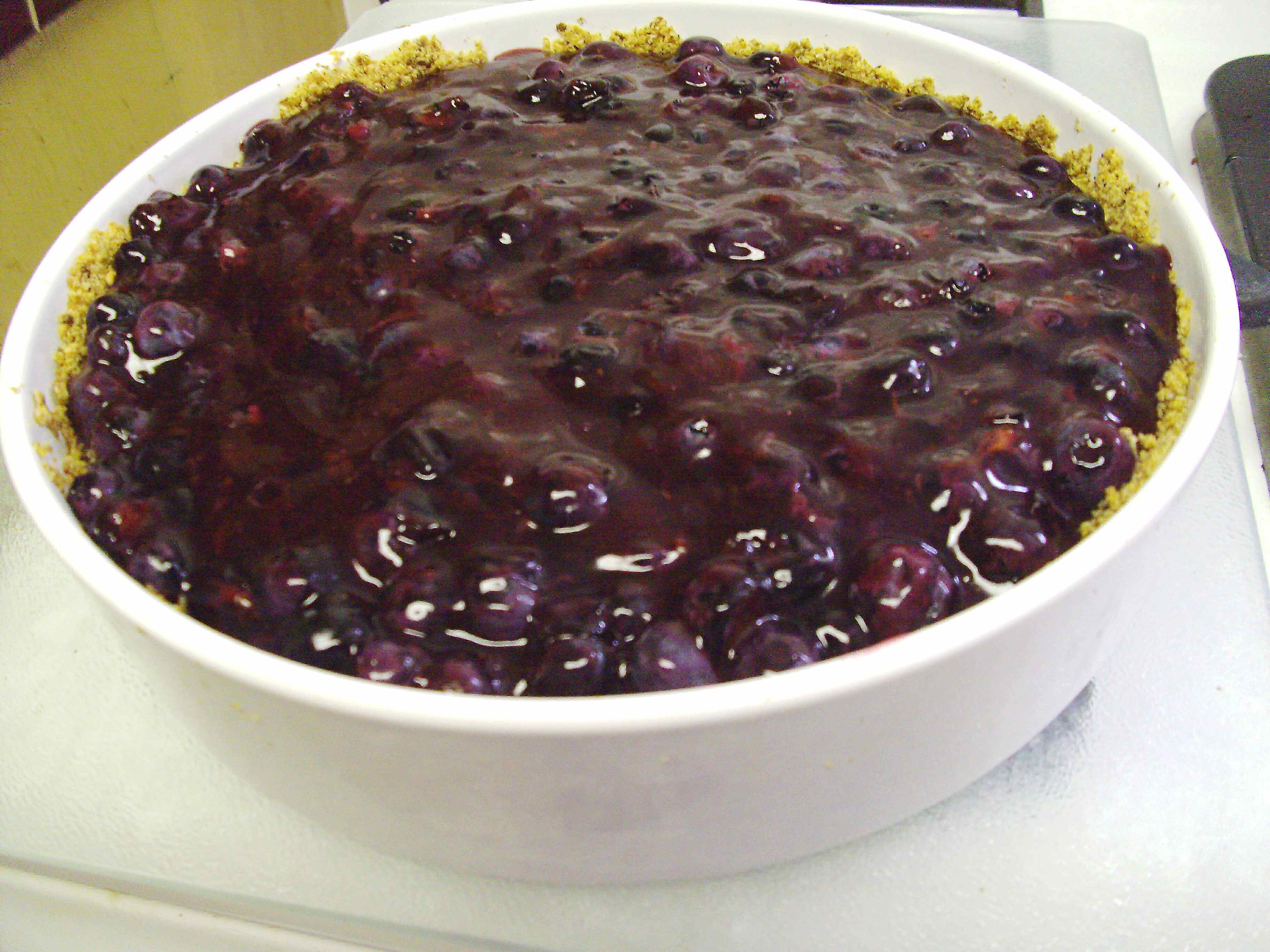
    raw blueberry pie with microwaveable filling and graham cracker crust

    This mostly-raw blueberry pie is a snap to make and very versatile--the filling microwaves in a few minutes, and you don't even have to bake the zippy gingered graham cracker crust--perfect for a hot Fourth of July and all summer long.

  • Recent Posts

  • Contents

  • Archives

  • Now Reading

  • See also my Book Reviews

  • Copyright 2008-2024Slow Food Fast. All writing and images on this blog unless otherwise attributed or set in quotes are the sole property of Slow Food Fast. Please contact DebbieN via the comments form for permissions before reprinting or reproducing any of the material on this blog.

  • ADS AND AFFILIATE LINKS

  • I may post affiliate links to books and movies that I personally review and recommend. Currently I favor Alibris and Vroman's, our terrific and venerable (now past the century mark!) independent bookstore in Pasadena. Or go to your local library--and make sure to support them with actual donations, not just overdue fines (ahem!), because your state probably has cut their budget and hours. Again.

  • In keeping with the disclaimer below, I DO NOT endorse, profit from, or recommend any medications, health treatments, commercial diet plans, supplements or any other such products.

  • DISCLAIMER

  • SlowFoodFast sometimes addresses general public health topics related to nutrition, heart disease, blood pressure, and diabetes. Because this is a blog with a personal point of view, my health and food politics entries often include my opinions on the trends I see, and I try to be as blatant as possible about that. None of these articles should be construed as specific medical advice for an individual case. I do try to keep to findings from well-vetted research sources and large, well-controlled studies, and I try not to sensationalize the science (though if they actually come up with a real cure for Type I diabetes in the next couple of years, I'm gonna be dancing in the streets with a hat that would put Carmen Miranda to shame. Consider yourself warned).

USDA Dietary Guidelines released…a full year later

The Dietary Guidelines Advisory Committee’s scientific report, essentially the major draft of the USDA “Dietary Guidelines for Americans” guidelines, was finished last February. The Dietary Guidelines for Americans, 2015-2020 has finally been released in its official form to the public–but it’s only available online at health.gov as of this week, with promises of an eventual PDF.

To that end, because the Health.gov site doesn’t yet have a downloadable version, I’ve pulled the text and images of the final “Dietary Guidelines for Americans 2015-2020” into a quick-and-dirty two PDFs you can download below for free. It’s not perfect–the pages don’t all flow with gorgeous layout and some of the graphics were so oversized I had to kind of select-cut-and-paste them in sections to get the charts to fit. I think I’ve got it all in there, though, including most of the helpful nutrition and diet charts in the appendices (with notes where I didn’t catch on that there was more to a chart than first appeared).

What can I say–“Enjoy.” Ummm….well, anyhow, here they are:

Dietary Guidelines for Americans, 2015-2020–this includes the Table of Contents, Intro, Executive Summary, and body of the report (Chapters 1-3).

USDA DGA 2015-20 Final-IntroandChapters (PDF, 3.4 MB)

Appendices (14 of them) for the Dietary Guidelines –I couldn’t get Adobe to stick this on the end of the document nicely, so it’s separate but useful.

USDA DGA 2015-20 Final Appendices (PDF, 263 KB)

The original Dietary Guidelines Advisory Committee Scientific Report from last February is available here.

What was the holdup? What are the differences from the health-basis-only recommendations of the DG Advisory Committee’s version last year?

Given the shoddy job major media gave the advisory committee’s scientific report last winter and spring, perhaps the best thing to do this time around is skip the media coverage hyperbole and compare the two reports directly and see what gives.

Professor Marion Nestle digs in with dissatisfaction as to some of the likely buyoffs this time around–she deems that the big meat, egg, sugar, etc. producing industries have won some victories in what wasn’t said. She also complains, as I do, that the online version is full of stupid bells and whistles. It’s hard to navigate, there are a lot of windows and figures that are actually slide shows and you have to know to click on them to get the rest of the information. Hopefully the PDFs above will be more readable.

Nestle’s take is more political than mine (for a change? not really). She notices more of the inconsistencies with naming food categories only when they’re favorable, and using nutrient names (sugar, saturated fat, sodium) as substitutes for the big-business food categories that are poor nutritionally.

I’m less incensed about most of that– and ironically a little more optimistic about what was included. Continue reading

Another reason to avoid processed and fast food

In the past five or ten years, obesity and diabetes researchers have started taking a closer look at environmental factors that have unexpectedly strong disruptive effects on our appetite, food consumption levels and metabolism, even at levels currently deemed safe by the Food and Drug Administration. The potential of artificial sweeteners to lower glucose tolerance in less than a week by shifting the balance of gut bacteria is only one unnerving example.

Environmental chemicals like fungicides, pesticides and plasticizers (BPA and the like) have long been of concern for cancer, endocrine disruption and infertility. Some extensive and carefully conducted studies now reveal that some of these chemicals can also increase fat cell development and storage as well as insulin resistance. Low levels of exposure directly increase the rate of obesity in rats, and  population studies, though not as extensive, show that exposure also tracks with obesity in humans.

These common chemicals are now being considered obesogens–chemicals that cause obesity or at least make people more prone to it. And these are effects that may end up being passed down.

In the rat studies, the effects lasted for several generations, and that also seems to tally with earlier findings on environmental endocrine disruptors and male infertility. Some of the tests that were conducted on rats in the obesogen study were too invasive to perform on human subjects, and a human generation is a lot longer than a rat generation–20+ years vs. 6 weeks–so it may be hard to trace inheritance in humans just yet.

Well–so what does it mean for us while we wait for the perfect definitive human study to come along?

To my mind, it means taking a harder look at how we choose the food we eat. We can’t remove all pesticide residues from the environment but we can probably eat fewer things wrapped pristinely in plastic and cut down our reliance on plastic utensils and disposable containers.

As I look around my kitchen, I realize just how often I reach for plastic sandwich bags–daily for lunches, but also for leftovers, herbs, halves of onions or lemons, cheese, vegetables. Stacking plastic storage containers keep soup, salad, rice or beans–or this week, an overload of stuffed shells, since I finally got my cook-once-eat-six-times-or-so batch cooking mojo figured out. And almost everything else in my fridge and on my shelves is in contact with plastic at one time or another.

Plastic wrappings pervade most of the supermarket offerings–overwraps on plastic-coated juice boxes, plastic see-through windows on cardboard pasta boxes, sacks of dried beans and rice, loaves of bread, plastic inner bags for boxed cereals and snacks, and plastic linings on the insides of tin cans. Also, of course, all those bottles of soda and energy drinks and vitamin waters and juices and milk. And yogurt. To say nothing of fast food, vending machine food, and so on.

Plastic is everywhere because it’s cheap, light, flexible, avoids breakage in shipping, and it helps you keep your food dry if you want it dry or moist if you want to keep it from drying out. You can keep everything separate and clean and airtight even when stored side by side. You can store it in the freezer and take some types of plastic containers right to the microwave. If you want to give up plastic, either for health reasons or environmental ones, you have to give up some of those advantages too.

Your next best bets are glass, which is heavy and breakable and no longer reliably tempered borosilicate, at least not in the US. Or perhaps stainless steel, at least for cold containers–maybe a stainless steel kit for lunches? I don’t know–if you don’t take strict care of it, or if it’s in contact with wet or acidic foods for long periods, it may rust. Storing salads or tomato-based items might be a problem. Ceramic bowls and containers–also heavy and breakable, and some of the food-approved glazes still leach measurable amounts of copper and other metals.

I do occasionally see someone from the homesteading and health food store generation, or else in Amish or Mennonite-style dress, loading up on bulk buy drygoods at Whole Foods with their own glass jars and cotton drawstring bags. And I always admire them for it, but I also think that’s an awful lot of stuff to trundle around to the store and get the clerks to okay. It is not easy to do and it’s obvious they’ve saved up for a monthly trip to stock up because you wouldn’t want to have to do it more than that often, especially when you have young children in tow, even very well behaved young children as they often do (another thing to admire them for; my daughter used to go and play hide-and-seek in the corner grocery when she was that young. At least she knew not to take anything).

But back to plastics and food storage. The obesogen phenomenon is intriguing but probably not the main source of the current obesity epidemic. Common sense says people might have slightly more propensity for developing fat cells but they’d still be small cells if people weren’t overfeeding them by eating more calories than they used to. That’s the major trend, by far. It’s still the food itself that matters most.

Processed and fast food still dominate as popular items of diet, and they’re very high-calorie-density compared with most nonstarchy bulk vegetables, which never seem to be recommended first on any popular weight loss and fitness show anymore (cough–Dr. Continue reading

Lackluster “Secrets” from the Eating Lab

I’ve just read Dr. Traci Mann’s popular book, Secrets from the Eating Lab, which came out in April (and is hence a “new book” at my library at the moment…). I had some real hopes for this book on dieting, obesity, and the psychology of eating. Mann has some fame in behavioral psychology, and her lab at the University of Minnesota is influential. Plus she just wrote an op-ed that Oprah Winfrey’s investment in WeightWatchers is a smart business move because diet failure, which leads to repeat customers, is a built-in and stated profit strategy for the company. Mann points out it’s the same logic that runs casinos. Big revelation? probably not, but still a good point and illustrative of the circular logic in popular American diet culture.

So about Secrets from the Eating Lab. The tone of the book is personable and it’s a quick read–a couple of hours will cover it. But…it’s not really a very good book and it makes Mann look a little like the huge parade of airheaded “pundits” who show up on Fox News and Good Morning America and Dr. Oz to talk about emotional eating right before presenting a plate of “healthy treats” that turn out to be brownies.

OK, it wasn’t quite that brainless. I even liked a lot of what Mann had to say about how to live an integrated life and not obsess over weight. But the book is a very good example of why someone who’s reasonably expert in one facet of diet research may not be the right person to interpret other areas for the public.

The behavioral studies are interesting and entertaining. Although the findings are not altogether news anymore, the lab setups she and her team used to demonstrate them are fun to read about. A sample of the psych experiment findings, which are the strongest part of Mann’s book:

  • The eating style of your companions is likely to influence you pretty strongly when you eat as a group. Her lab tested this in an entertaining series of experiments.
  • “Determination and willpower” is more wishful thinking than a successful diet strategy for a lot of people, and structuring your environment is more effective.
  • Keeping a bowl of treats even more than arm’s length away from you reduces your likelihood of grazing, and if you actually have to get up and walk to get more, you probably won’t.
  • People eat more when distracted with screentime or eating while driving or whatever than when focusing on their food.
  • Smaller plates lead to greater satisfaction with less food.
  • Offering vegetables at the school cafeteria before serving the rest of lunch, and without competition from french fries, gains a much higher rate of takers than when there are other foods available.
  • Announcing foods as “healthy” is a turn-off.
  • Most intriguingly, “comfort food” is no more effective than any other food, or even no food, for recovery after an emotional shock.

All of these findings mesh with common sense, and few of her recommendations are implemented as regularly as one would like in daily life at school or work. But the behavioral studies from her lab are only a small part of the book, one or two chapters in the middle. Where Mann runs into trouble is nearly everywhere else. Put bluntly, she’s way out of her depth in the larger world of academic obesity research, and neither she nor most of her readers or even, crucially, her book editor seem to know it.

The main themes of Secrets from the Eating Lab are 1. that diets don’t work, 2. obesity is not the deadly killer everyone assumes it is, and 3. therefore you should stop obsessing and be healthy in other ways, for example by exercising to relieve stress.

These claims are stated as blanket facts rather than opinions she wants to explore, even when she bolsters them with studies. Outside of her own lab’s experimental framework she makes fundamental and glaring misstatements and assumptions of fact that can easily be disproven. The result is not markedly better than what you might expect from a high school debate team’s background prep for the season topics, “Do Diets Work?” and “Does Obesity Kill?”

In the “diets don’t work” chapter, Mann scours the literature for a largeish number of diet studies in which subjects attempted to lose weight, then winnows the 300 or so studies down to about 26 that meet her criteria of a randomized controlled study with reasonable participant recruitment and retention. Although some studies demonstrated short-term weight loss or differential success between two test diets over the course of weeks, months or a year, longer followup revealed no net loss and a large degree of regained weight among participants, and most of the studies had a lot of dropouts before completion. Moreover, most were less than carefully conducted and relied on self-reported weight and diet recall from the subjects rather than weigh-ins and so on.

Well, fair enough. But she doesn’t look at more recent and stringent work, as a nutrition researcher would be expected to. And she doesn’t really explore what the behavioral environments of the experiments might have contributed–something she might have been able to lend better insight into. Continue reading

Fish Tale: Omega-3s and Greenland’s shores

Well…another shining example of “magic bean” and “superfoods” wishful thinking has bitten the dust, thanks to more careful research. It may be a good thing.

In recent years, several reassessments of the heart health benefits of popular fish oil supplements have failed to find a significant protective effect from omega-3 fatty acids. A new genetic study of the Inuit in Greenland revisits the old 1970s finding that started the whole fish oil phenomenon (and salmon farming) and explains a lot of that failure. The researchers found a specific gene variant in almost all the participants but not in other populations.

The gene in question helps package fatty acids from the Inuits’ traditional all-fish-whale-and-seal-meat diet more efficiently to keep blood lipid levels down. Researchers noted another striking effect: participants who have two copies of this particular gene variant are also significantly shorter and ten pounds lighter on average than those without it. And although this gene variant is very common among people of mostly-Inuit descent (today a lot of Greenlanders have mixed Inuit and Danish heritage), the ethnic and racial group with the next highest concentration of this gene variant, as far as it’s been tested, appears to be the Chinese, but only about 25 percent of them have it. People of European descent mostly don’t have this variant.

What does this mean for omega-3s and fish oil supplements in North American popular culture? The New York Times article didn’t go that far, but the implication should be clear: Unless you’re Inuit, you probably don’t have the specific gene variant that helps your body deal with omega-3s, so for you, omega-3s are like most other animal-derived fatty acids–adding more to your diet is just adding more to your blood lipid burden. Rich fish like salmon may taste nice, but lipids are lipids, and calories are calories. Given the likelihood that they’re really not cardioprotective after all, overeating them doesn’t make sense, especially for a population as overweight as ours has become.

Fish oil supplements are probably even less of a good idea, and they don’t even taste good. They won’t really protect your health as claimed, not for omega-3s, anyway (cod liver oil is still probably good for vitamin D, if you can still find it, but most people would probably prefer a mercifully flavorless vitamin pill).  So save your shekels, buy actual salmon once in a while, and enjoy it–but sparingly.

Frittata on the Rebound

Dr. Lustig’s “Teaching Breakfast” clinical teaching program for families with obese or diabetic children posed a question for me that I didn’t get a chance to test out until this morning. If something with balanced protein and vegetables–say, an omelet–is a better choice than most breakfast cereal, or poptarts, or doughnuts, or whatever most kids are eating before they go to school, how do you get that to be affordable and quick to prepare on a schoolday?

The easiest way to do eggs for several people at a time without overdoing the cholesterol is probably to do a big omelet or scramble and take out some of the yolks. But you might not have time  to do it at the optimal time for the gourmet–that is, right before you’re going to eat it. Not if you’re heading your kid(s) out the door with the daily litany to grab socks, shoes, homework and lunches and not to worry about what color lipstick (or hairstyle, or comic book, depending on age and taste) because you’re going to be late and come on, already.

We didn’t have this problem in my childhood; you either got out to the bus stop on time by yourself or you walked to school in disgrace, because my mother was not going to make our breakfast or lunch (for which we were immensely grateful), or do any big rescues for “emergencies” based on footdragging. And staying home was not an option we wanted to explore. My sister and I could count on the other one telling on us, not to mention the prospect of running into Mom if she came home early or picked up a phone call from the school attendance clerk. Motivation is everything…

But grownups have these dilemmas too. Who wants to be messing about with a frying pan and washing up when you’re trying to get to work? So many of my daughter’s teachers last year could be spotted out in the parking lot of the school right before the first bell, standing by their cars and bolting down an egg mcmuffin-type thing from a fast food drive-through (drive-thru? hate that commercial spelling) with a cup of coffee in the other hand. Quick, seemingly nutritious, but actually horribly high-salt-and-fat-and-calorie-for-what-it-is, and quite expensive too. Not a good daily habit. If you can do eggs and coffee from scratch at home, you’re bound to do them better and a lot cheaper. You could probably save up for a new tablet or pair of theater tickets within weeks, and you might even lose a bit of weight.

So eggs. A frittata has a lot more vegetation in it than a classic French-style omelet, and it’s more sturdy–look at the very solid, nearly stiff Spanish potato-filled version; always served at room temperature in cubes or wedge slices, almost as some kind of potato kugel.

Well, okay, you don’t want a potato frittata if you’re trying to get the nutrition up to snuff without tons of calories or grams of carb. You want some lighter but substantial vegetables so you don’t end up feeling like you swallowed a lead balloon for the rest of the day.

But the good news is that you don’t have to cook and serve it right on the spot. You can do it ahead and stick it in the fridge. If you do it the night before, you can cut it into wedges and microwave one on a plate for 15-30 seconds and you’re ready to go. Or, of course, you can serve it cold–kind of like the classic cold pizza for breakfast, only  better balanced. And most frittatas go well with salsa.

I am not a fan of the kind of isn’t-it-rustic-Italian-or-Provençal glossy magazine frittata instructions that call for frying first and then running under a broiler or what have you. That takes time and heats up the house ( bad in Los Angeles) and probably calls for expensive stovetop-to-oven-friendly cookware, which is usually not [sorry, forgot the “not” when I first posted this] nonstick. A lot of excess fuss for an effect you can perfectly well achieve in an ordinary nonstick frying pan in a couple of minutes on the stovetop, which is how most people who make frittatas at home “authentically” in tiny Italian or Provençal kitchens actually make them. Unless you’re doing a fancy brunch service for 20 diners at a time, in which case it might actually be quicker to do a baked eggs thing in a big casserole and skip the frying. But then I’d hope you were getting paid through the nose for that. Little chance of collecting caterer’s fees at home.

As for the vegetables, cauliflower and zucchini are both very good low-carb, low-calorie stand-ins for potato, and they’re pretty inexpensive and easy to prepare, especially if you have a microwave so you can parcook them on a plate for a minute or so before adding them to the frying pan. That gives you a chance to soften them through quickly and at the same time drain off some of the liquid–they’ll fry faster and won’t make the frittata soggy.

Cauliflower has more fiber, vitamin C and calcium than zucchini, and it’s a bit firmer as well. Zucchini is milder and easier for kids (or adults) who aren’t yet used to eating a variety of vegetables. A frittata like this is also the ideal way to use up that scary-big overgrown zucchini your enthusiastic gardening neighbor gifted you with. Or that someone anonymous parked on your doorstep in the middle of the night.

…It is getting to be the season for that sort of reverse larceny, now that I think about it. Someday I feel it would be right to invent a spring-loaded, siren-enhanced trap for stealth zucchini donors. Something involving on-the-spot forced acceptance of a large cafeteria-style green or orange jello mold with canned fruit cocktail floating in it, faded-pink “cherries” and all, as the price of escape…  Or maybe I’ve just been watching too much “Big Bang Theory” with my daughter this weekend and have started to channel my inner Sheldon. And really, I don’t mind stealth zucchini nearly as much as gifted Meyer lemons.

Okay. Back to the frittata–after all, if you already know how to make a basic omelet, this post is mostly just for entertainment, a mere vehicle for shocking photos of various vegetables that have been foisted off on us by well-meaning friends. It’s enough to make you feel like Wallace & Grommit in “The Curse of the Were-Rabbit”:

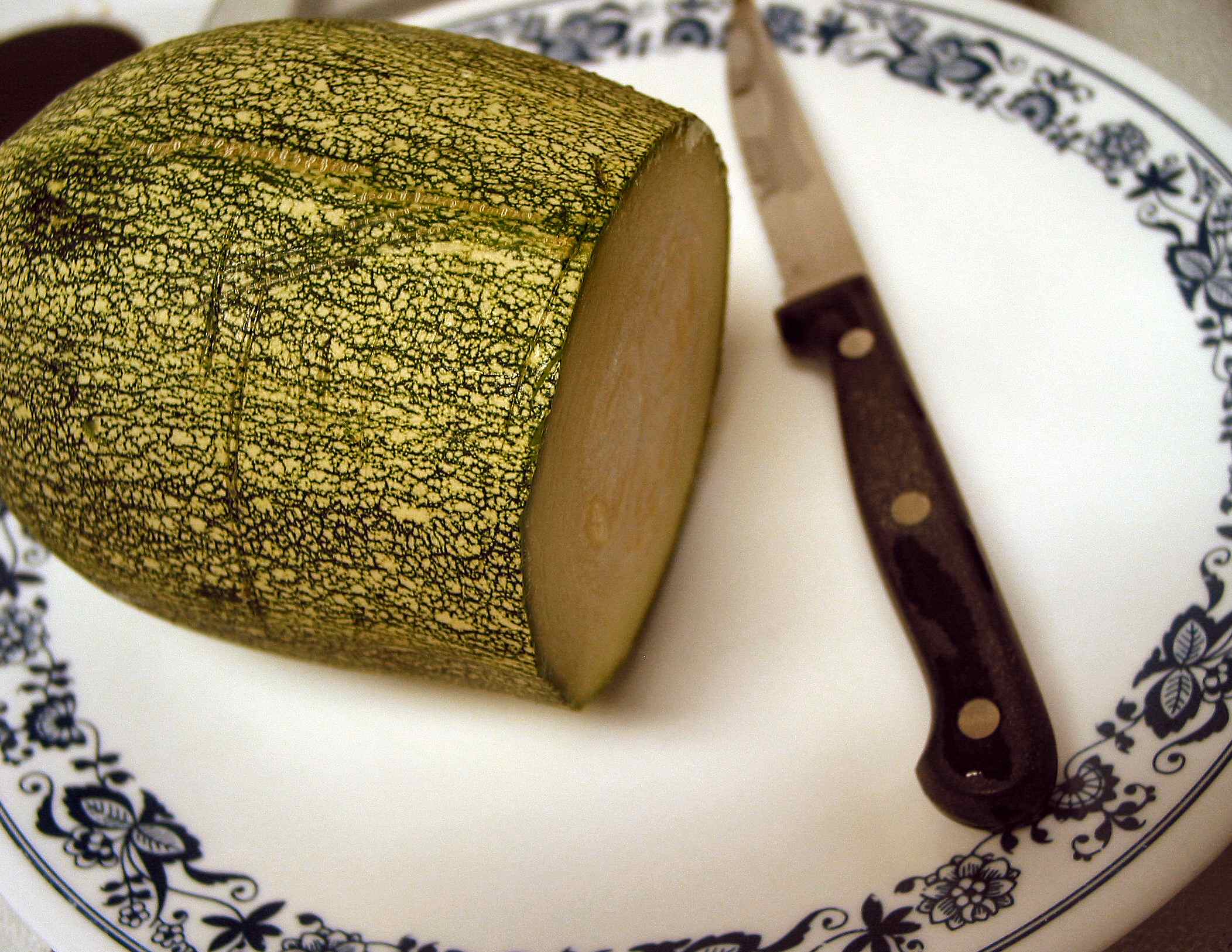
Monster zucchini half

Monster zucchini. This is a dinner plate and steak knife we’re talking about here. And only half the zucchini. The other half of which I’m sure is still stalking the neighborhood in the wee hours of the night.

IMG_8903

Breaking down a zucchini (well, how would YOU go about it? I didn’t have a wooden stake or silver bullet or anything) for a monster omelet.

Continue reading

Chain-restaurant excess strikes again

The Center for Science in the Public Interest has found itself swamped for choice in its 2015 Xtreme Eating “awards” list.

What’s the highest calorie chain-restaurant meal in America? (LA Times online, 6/3/15)

The entries are frightening–typically 1-2 days’ worth of calories, 3 days’ worth of saturated fat and sodium, huge oversized amounts of food. One steakhouse platter with so much hamburger meat–not even steak–seven burgers, each piece topped with cheese or at least cheez–it’s like eating several Double Whoppers at once. Ice cream float-type concoctions with no actual pie but pie crust pieces crumbled on them. They start at 32 ounces. Which is clearly the new 20 ounces if you actually read through the horrible meal descriptions, because another chain’s sweet tea is only offered in a 32 oz size as well. That’s a quart. For one person. There’s a 900-calorie margarita in there somewhere at 24 ounces.

I’m sure Michael Jacobson, CSPI’s president, never dreamed there’d be something fully twice as bad on any restaurant menu as fettucine Alfredo, which he termed “a heart attack on a plate” only what, 20 or so years ago?

What the hell is going on here?  The chains may be cutting down slightly on artificial colors and trans-fats and GMO ingredients, but they’re serving meals with an entire day’s worth of calories embedded in the endless parade of glop that is routinely slathered on otherwise reasonable-sounding main ingredients like chicken breast (note: a top offender for hidden sodium in the “healthy” chain offerings, especially on salads). “Special” sauces, breadings, cheese, frying oil, stuffings, dips, and less-announced coatings (the problem with the chicken) that add surprising amounts of sweet, salt and/or fat. Chipotle isn’t on CSPI’s wall of shame over this, but it’s just as true of them as of any of the others–their meals typically run 500-800 calories for a burrito without chips, guacamole or salsa (not to mention sour cream and added cheese), and the same number of milligrams of sodium.

The meal insults listed on CSPI’s site consist of huge portions that could more normally serve four people, not one. Dishes are never less than 3″ high and cover every square millimeter of the plate. Burgers are multiplied–if one or two are okay, six or seven must be even better. Vegetables have disappeared, of course.

Accessories double or triple the calorie, fat and sodium counts of the full “meal”: caesar salad, fries, biscuits, half-gallon drinks, whole quarts of ice-cream-related desserts. Why is this gargantuan approach even appealing?

They didn’t list Baskin-Robbins 31 Flavors, but maybe they should have–a couple of years ago I took my daughter there for a post-diabetes-diagnosis ice cream cone so we could do something normal for summer, albeit with a shot of insulin (it was a new experience) and we got the entire brochure of offerings when we asked for the nutrition info. The single cone, no lightweight for any of the flavors at about 250-300 calories (double or triple what it would be for Dreyer’s/Edy’s half-the-fat, our standby) and 25-30 grams of carb (also double the D/E per serving), turned out to be a best bet. Some of the sundaes were getting to the 20 oz. range, with over 1500 calories and two days’ worth of carb and fat. The soft serves were actually the worst nutritionally, much higher in calories, carb and fat than they look for the volume you get–and especially given how plain the flavors always are.

Overall, the picture of chain food is not lookin’ good. It’s a nightmare of shameful, pointless stuntlike excess, the stuff parodied in Wall-E and Idiocracy among other movies from the past decade. Only as one of the CSPI judges remarked, it’s become the new normal, and much faster than the screenwriters imagined. Maybe we should all look at the before pictures of the participants on The Biggest Loser, as shown in all the accompanying guidebooks (see your local Friends of the Library bookstore) and ask ourselves if we really want to do that. Because that’s a lot of work.

Media misread on the new USDA dietary guidelines

The new USDA public nutrition guidelines are being updated again, as scheduled, and the Dietary Guidelines Advisory Committee’s version now says some egg yolks are okay and to limit carbs and sugar instead. A variety of media commentators have jumped all over that, even though it’s not very different from what the guidelines have been emphasizing for years. Now, if anything, I would have hoped that most of the commentaries in the newspapers of record would be critical of the industry influence on the USDA’s nutrition guidelines for the general public each time, but no.

The most prominent commentators, notably Nina Teicholz, whose op-ed in last Sunday’s New York Times really bothered me, are well-educated and should know how to “read a french fry” as it were. But instead of looking at the likely effect of loosened USDA dietary limitations on a public that has gone so seriously overboard on calorie-dense food, they’ve taken the opposite tack. Mostly to declare self-righteously that the new relaxation of standards really means all the previous recommendations to limit saturated fat and cholesterol were bunk and a waste of time based on “uncertain” and “weak” or even “junk” science.

Which is untrue. Epidemiologic research–large observation studies and surveys, like the NHANES diet and cardiovascular health survey series from the 1970s onward, and the big Framingham Heart Study of the 1950s onward, are not junk science. They do what clinical feeding trials can’t: they look for the contribution of individual dietary risk factors to chronic and complex-origin health conditions like heart disease and stroke across very large population groups. Both the processed food industry and people like Teicholz claim that clinical feeding trials are the only legitimate way to provide “proof” of cause and effect, but the cost of conducting them carefully long enough and with a big enough participant pool for meaningful results would bankrupt the nation halfway through.

Epidemiologic findings matter on the large public scale. Not every specific applies absolutely and equally to every single person, but that’s not what population-wide studies are for. The big studies, loose as they might seem compared with DNA fingerprinting and perfectly demonstrated cause-and-effect kinds of lab workups for individual cases, give best-bet recommendations for most people to reduce their risk.

Your genetics determine how well that works for you specifically, but most of us don’t have access to DNA testing on that level, and the “big six” lifestyle risk factors (high sat fat, high blood cholesterol and blood pressure, overweight, lack of exercise and smoking) are a lot easier to change and get some control over. After all, you can’t change your genetics much (and yes, my daughter is quite disgruntled that she can’t pick cooler parents. But tough. We couldn’t pick ours either).

So anyway, I know I’m unusually irritated with any news about USDA dietary guidelines–I used to work at NIH, and some of my colleagues had attempted to serve on the dietary guidelines committee and ended up completely frustrated at how “bought” the process became. The USDA has always had a conflict of interest when it comes to public health recommendations because its main mission is support of US agriculture, and public health always comes a distant second to big business. The committees have repeatedly subverted and weakened the scientific nutrition panelists’ best-finding recommendations by including food industry participants and weighting toward industry priorities in the consensus mix. There’s no great reason to expect the food industry isn’t still playing and winning the same game on the same committee this time around. [Update: the meat industry has just asked for an additional 75 day comment period].

But the main problem I see at this point is how poorly mainstream journalists and editors have handled the announced overhaul. None really seem to have dug into the comparison between current and previous issues of the guidelines, much less compared the USDA’s final takes with dietary guidelines from the DGAC, a combined group of more purely biomed/scientific research experts representing HHS (including NIH) and the FDA, or those of the major health advocacy organizations such as the American Heart Association.

And declaring that it’s now fine for anyone to eat all fats without limitation is nonsense and a misread. The USDA guidelines don’t say that–the DGAC draft guidelines certainly don’t say that. And if the USDA does attempt to drift in that direction for the final release, as some of the director’s announcements suggest, given the participation of Big Food and Big Agriculture hoping to sell the public more meat, eggs, and cheese, along with more profitable processed goods, would you necessarily believe them?

Is it really the fault of the scientists on the panels over the years, as Teicholz claims (“How did they get it so wrong?”), that the epidemiology findings they relied on for previous rounds of recommendations weren’t borne out by much smaller and less conclusive clinical studies?

Maybe the role of saturated fat is less apparent in a clinical study. I don’t doubt that. But as noted above, the statistical power of the comparatively short-term clinical trials for cardiovascular disease effects is bound to be a lot lower than in a long-term population-wide study, even if the controls are tighter. There are so many interfering factors–other dietary and lifestyle factors, and so many varieties of genetic risk factors within and among different population groups, genders, and age groups, that you need the big numbers and the large timescale to see effects above the noise. Meta-analysis of a lot of limited clinical studies with iffy results doesn’t make up for that. If anything, it compounds their individual uncertainties.

[And in fact it turns out that much of Teicholz’s assumption on that point is based on a very poorly conducted, much criticized meta-analysis of studies on saturated fat and cardiovascular disease published last spring. Most inclusive meta-analyses performed using standard stats analysis best practices actually show reductions of between 14 and 26% in CV events and deaths when subjects cut their saturated fat intake below 10% of calories and ate more vegetables instead of carbs, or else substituted polyunsaturated fats for them.]

Teicholz’s op-ed had carefully modulated but still overt indignation at the imperfect scientific basis behind previous recommendations to cut saturated fat and limit egg yolks and other high-cholesterol foods. What should be there and isn’t is the acknowledgement that when those recommendations were first announced to the public–by the AHA, the CDC and the USDA in the late 1960s, population trend studies over the next 10 years showed a stark drop in the rate of heart attacks–about a 30 percent drop. In other words, it worked. Big time.

And the broad peak of the population curve for a first heart attack shifted to the right by 10 years–that is, the average age for men went from about 50 to about 60, and for women from about 60 to 70. These were huge improvements in public health overall, and they were achieved partly because the public believed and paid attention, and partly because the nutrition and health experts hadn’t given up and abdicated responsibility in the face of industry pushback.

Clearly these results didn’t last; but is that the fault of the studies that identified saturated fat and cholesterol as things to reduce (note: not eliminate completely, just reduce)? The 1980s ushered in a long Republican-led era of unfettered, uncritical support of corporate priorities over public health, Reagan’s “ketchup is a vegetable” quip and the conversion of school lunches to chain restaurant concession contracts, a popular nose-thumbing at so-called “food police” health recommendations, the rise of high-fat-and-sugar-and-oversized-portion “comfort” and “indulgent” foods in restaurants and food magazines, and an entrenched anti-science bias in Congress that still haunts us today.

Not that much has changed from Reagan’s time in office–including the sad observable fact that most Americans for the past decade or so clearly aren’t paying serious attention to or even attempting to follow those modest earlier USDA recommendations, particularly the recommendations to eat more vegetables rather than more boxed, labeled namebrand processed foods, whether Big Macs or Ding Dongs or Froot Loops…

So few Americans today eat any vegetables at all compared with people of the same ages in the 1970s. As I’ve mentioned before, a shocking number of my friends, in their 40s and 50s already, do not cook at all. They have advanced degrees, if mostly in the humanities. They nervously repeat but don’t understand how to  read between the lines of whatever diet and health claims are in the news, and they’ve come to think cooking is too hard. They have a lot of takeout menus on their iPhones.

There is just one more factor to mention here: the profit motive. Teicholz, a former contributor to NPR, Gourmet and Men’s Health, wrote that op-ed in part to promote her new book, The Big Fat Surprise, which claims that diets high in meat, butter, Continue reading

Artichoke-olive spanakopita for a party crowd

Artichoke and olive spanakopita tastes authentic even though it's completely nondairy. The party round is pretty quick to put together, too.

Artichoke and olive spanakopita tastes authentic,  even though it’s completely nondairy by request–which makes it a good vegan choice too. And it’s easy to put together.

Last night we went to a big New Year’s Eve party–a rarity for us; we’re usually with family one coast or the other. Of course, getting to go to a party means rushing around the house a few hours ahead to find an outfit that fits, is clean, looks about right, doesn’t require very high heels or an engineering degree to figure out how to put it on. Luckily most of our friends are low-key that way.

The party was potluck–the hosts provided a couple of solid main dishes and we and the other guests brought the side dishes and accoutrements. A pretty good division of labor, I think. So I offered to bring spanakopita, which is pretty easy. Or at least, I figured out an easier way last week to get the spinach squeezed out than by doing three pounds of spinach handful by painful handful, and it was pretty good for the Chanukah party, so why not do it again?

But our hosts’ family, all five of them, have a cluster of serious food allergies–primarily eggs and dairy, but a couple of other odd ones like cinnamon as well, and not all of the allergies match up from person to person. It’s a testament to their bravery and sociability (which I admire and wish I had greater stores of) that they throw big parties and let other people bring food.

I decided to do spanakopita anyway and just leave out the dairy–butter isn’t a big deal if you have olive oil for the fillo leaves, and I don’t make it with eggs in the filling. So far, so good. But what should I substitute for the feta? Feta’s usually a big part of the show.

Tofu might have been easy, and it’s a protein source, but one of the kids can’t do soy, and it doesn’t really taste right. Nuts–don’t know. Nondairy cheese substitutes–I haven’t tasted these myself and they have so many ingredients plus loads of salt that it wasn’t worth chancing without consulting the family.

My best options to add to the spinach came down to:

1. Greek olives, pitted and chopped–right on the saltiness, but maybe odd-looking. No one else I know has ever paired up spinach filling with olives.

2. Cooked and drained mushrooms–I would do this, but my daughter confesses she doesn’t like them when I make spinach quiche. And she does like my spanakopita. So…

3. Marinated artichoke hearts–they have a little saltiness, but mostly lemon and garlic, which is just about right. And artichoke hearts pair pretty nicely with spinach and are a familiar enough combination that most people will probably be okay with them. You just have to remember to drain them well so they don’t make everything soggy.

I thought I’d go with the artichoke hearts alone, but after tasting the spinach and artichoke heart filling, adding more lemon and garlic (because you can never have enough) and herbs and scallions, I decided what the heck and threw in a handful of Alfonso olives I had in the fridge–12 big purple, winy olives, pitted and slivered, did not look weird after all and they gave just enough distinctive tang and salt for the big salad bowl worth of filling to satisfy without overpowering it.

I figure, when you try something new or off-beat with a substitution, you have to test-taste to know if it’s worth doing again or recommending to anyone else. Maybe no one will agree with you, or maybe they will, but if you don’t like the result to start with, you’ll feel bad serving it up. Or maybe you’re made of tougher stuff than I am and it depends on who you’re serving it to and what have they done for you lately?

So anyway, if you can’t have feta or other dairy, this is definitely a good way to go. The olives and marinated artichoke hearts are authentically Greek enough not to taste or feel like fakey or second-rate substitutions. The spanakopita ended up tasting pretty good, and got eaten up amid some serious competition.

Also, I’ve decided this is also a good time for a slideshow. For a while now I’ve been meaning to do a step-by-step post on setting up a round tray of spanakopita or baklava, because I think it’s simpler and quicker than a plain rectangular casserole, and it looks more impressive and party-ready too. So I took some pictures as I went along (note to self: wipe olive oil thumbprints off camera grip), Continue reading

A salad in winter: counterintuitive comfort food

box of winter salad

If you skip the lettuce and choose more robust vegetables, you can make a big box of salad in minutes and keep it crisp several days in the fridge.

It’s gotten cold here. Ok, so no one else is pitying us; we had 80-plus degree weather only last week, but now there’s a very dry, sunny cold spell setting in, it’s in the 50s daytime, 40s at night, and Southern California doesn’t do insulation that well. Or ski jackets. Or wool.

On the upside, it’s been cold enough so that I can run the oven and bake–a rarity in Pasadena this year. [OK again: prepare for a couple of digressions from the main topic]

I made a big round spanakopita for a Chanukah party, quick pizzas for my daughter and her friends and calzones for me and my husband, rosemary and sesame bread, and rye bread–which is still in the attempt stage; I didn’t have a properly developed sour and wasn’t scrupulous about weighing out and getting the hydration and gluten ratios right and all that the first time around, and it collapsed in the oven…

I’m determined to get the sour and the rise textures right, so now I’m following the Inside the Jewish Bakery instructions more closely, having met and been impressed by one of the authors. It’s a matter of some urgency: my grandmothers are no longer alive to schlep good deli or bread out here on a visit, Trader Joe’s has broken ties with the really good bakery that made serious “pain miche” half-rounds that tasted like kornbroyt, none of the commercial rye breads in SoCal (or most of the country) are anything more than tanned white bread, and I’m desperate for the real thing–tough, chewy, tangy, caraway-laden, with a serious crust. Before my genes start going beige and I start deciding Bing Crosby was a really good singer.

[True unexpected fact here: a church choir director I know says that because of all the practice sessions, she and all her colleagues get serious carol fatigue by about two weeks before Christmas every year. I thought it was just me avoiding the mall, but no.]

In the meantime, I’ve been thinking about comfort food, because winter cold brings on the desire for heavier dishes–stews, starches, cheeses, meat and potatoes, and more starches, and the winter holidays bring their own calorie-laden version of cheer to the table with abundant puff pastry, eggnog, latkes (potato pancakes), sufganiot (jelly doughnuts), cookies, fruitcake, and all the rest of it.

Not too many people think about salad as a comfort food this time of year. Potato salad, maybe.

And yet…it’s really not very comfortable to find you’ve gained five or ten pounds in a month when you didn’t mean to, and New Year’s is coming with an actual dress-up-like-a-grownup-with-a-life party invitation. If I’ve managed not to succumb to the excess so far this year, it’s only because I’ve been cautious-to-paranoid about eating latkes and sufganiot last week and even my typical penchant for cheese and dark chocolate (not together!) has me thinking twice. I don’t know about you, but I can’t afford to regain the weight I lost last year–even though it was “only” ten pounds, it was hard enough, and like many people, I could use another ten down before spring without having to work too hard.

So salad is what I have in mind at the moment. Yes, there will also be stew–this week, spicy vegetarian eggplant and chickpea stew, because I made a vat of it and stuck it in the fridge. Very hearty, filling, warming, and all that winter-holiday-recipe-talk, yet not very devastating diet-wise, and doesn’t make you feel like you need another nap pronto. Plus once it’s made, it’s really fast to reheat in the microwave. As I discovered yesterday, a mug (nuked less than 2 minutes and eaten on the run) can power me through a rushed non-cook evening–something I don’t do often or well–of ferrying my kid to the movies at the mall with her friends. During the very unpleasant after-Christmas sales season. What can I say–when put to the test, it was faster than fast food and twice as effective.

If only salad were like that [finally back on topic]. I’m not generally a cook-for-the-month kind of person, but it seems to me that if a restaurant salad bar can get away with making blah bulk salads that sit out for hours, surely I can do a bulk salad that looks and tastes lively and stores nicely for a couple of days in the fridge without going bad. Chop once, eat twice, right? Continue reading

2000-calorie meals in pictures

The New York Times has just posted a very clear picture-it chart of how people get to 2000 calories in a single meal, sometimes even a single dish, without realizing it when they eat out. Not just at Burger King, Denny’s or IHOP, either–some of the upscale chains’ ordinary dishes are just as devastating. If you’re having trouble figuring out your own diet, you might take a look and see What 2,000 Calories Looks Like.

One thing I like about the restaurant-by-restaurant feature is the breakdown of calories for each item in the meal, so you can see how you might do better while eating out.

One obvious takeaway–so to speak–is that fries, shakes, full dinner plates of pasta with cream sauce (or any sauce, really), and slices of cake as big as your head–topped with caramel goo!–are a bad deal for excess calories, lack of nutritional value, and are basically not really necessary.

The other obvious takeaway is that for things like sandwiches, burritos, burgers and similar protein-containing main dishes, you probably don’t want to be eating more than about 500 calories at lunch or maybe 600ish at dinner. Preferably 350-450, to give yourself some room for a salad or fruit. So the hoagies and double cheeseburgers at 900-1100 calories should really be split in two–maybe three. Share one with a friend unless you’re actually a linebacker in training. Or else get rid of the cheese, the excess meat, the bacon, the mayo-based sauces. Go back to a single burger with ketchup and mustard and a couple of pickle slices. And maybe you shouldn’t eat anything else with one of those but a plain apple or orange or some tomatoes or carrot sticks.

The other thing I like is the set of pictures at the bottom–whole days’ worth of decent food from home that are worth 2000 calories per day, and they look a whole lot better than what you get at the restaurants. For the same money or less, and with a microwave, maybe even in less time. A lot more vegetables and fruits, a decent amount of meat and fish and dairy, a lot less in the way of french fries, milkshakes, salad dressing, breadings, special sauces, burger buns and unlimited pasta.