
• Enter your email address to subscribe to this blog and receive notifications of new posts by email.

    Join 241 other subscribers
  • Noshing on

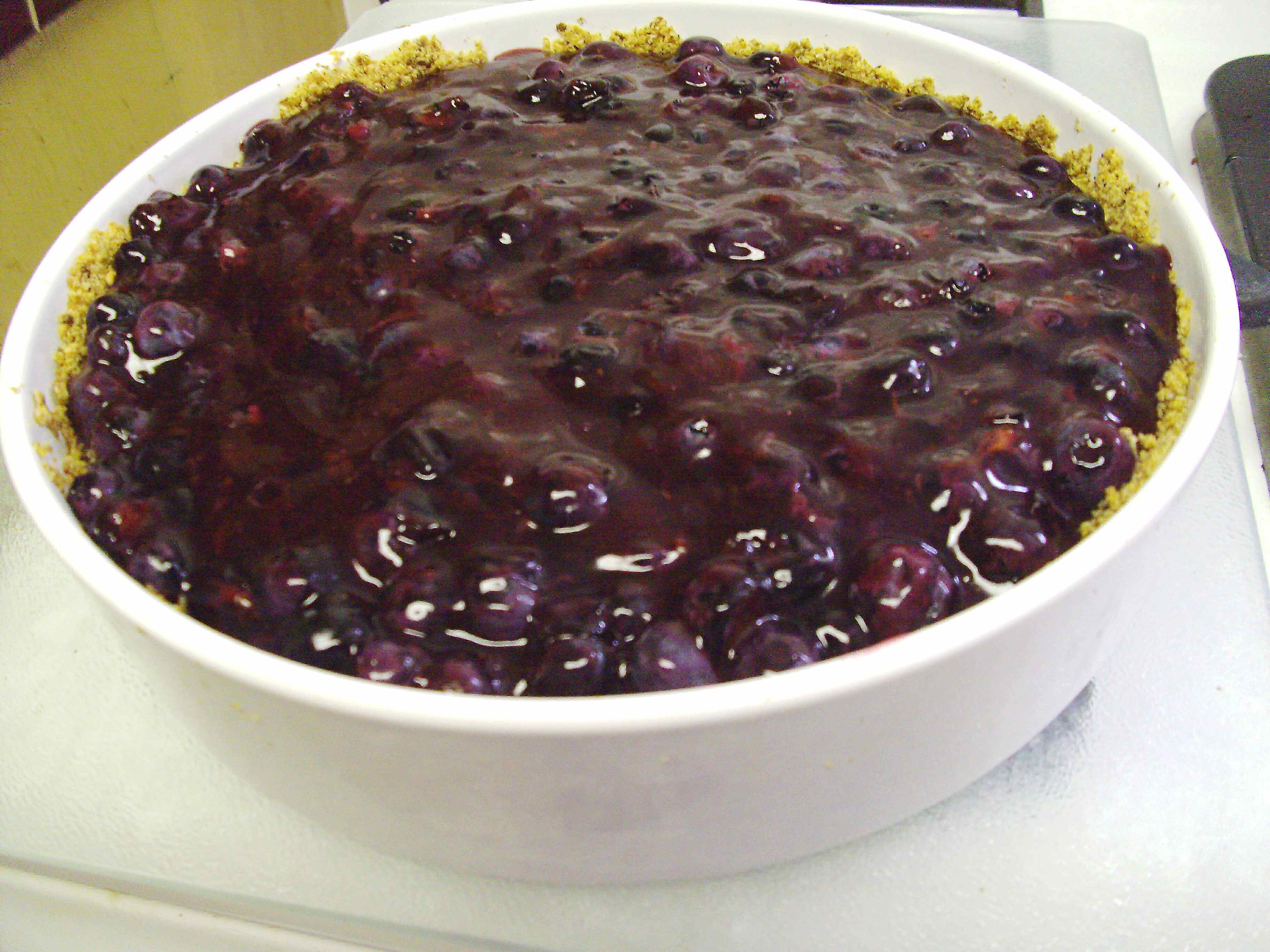
    raw blueberry pie with microwaveable filling and graham cracker crust

    This mostly-raw blueberry pie is a snap to make and very versatile--the filling microwaves in a few minutes, and you don't even have to bake the zippy gingered graham cracker crust--perfect for a hot Fourth of July and all summer long.

  • Recent Posts

  • Contents

  • Archives

  • Now Reading

  • See also my Book Reviews

  • Copyright 2008-2024Slow Food Fast. All writing and images on this blog unless otherwise attributed or set in quotes are the sole property of Slow Food Fast. Please contact DebbieN via the comments form for permissions before reprinting or reproducing any of the material on this blog.

  • ADS AND AFFILIATE LINKS

  • I may post affiliate links to books and movies that I personally review and recommend. Currently I favor Alibris and Vroman's, our terrific and venerable (now past the century mark!) independent bookstore in Pasadena. Or go to your local library--and make sure to support them with actual donations, not just overdue fines (ahem!), because your state probably has cut their budget and hours. Again.

  • In keeping with the disclaimer below, I DO NOT endorse, profit from, or recommend any medications, health treatments, commercial diet plans, supplements or any other such products.

  • DISCLAIMER

  • SlowFoodFast sometimes addresses general public health topics related to nutrition, heart disease, blood pressure, and diabetes. Because this is a blog with a personal point of view, my health and food politics entries often include my opinions on the trends I see, and I try to be as blatant as possible about that. None of these articles should be construed as specific medical advice for an individual case. I do try to keep to findings from well-vetted research sources and large, well-controlled studies, and I try not to sensationalize the science (though if they actually come up with a real cure for Type I diabetes in the next couple of years, I'm gonna be dancing in the streets with a hat that would put Carmen Miranda to shame. Consider yourself warned).

Sweet Potato Ice Cream

Some time back I was bemoaning the lack of reasonably priced butternut squash at the height of the season in my local markets–I was clearly spoiled by last year’s bargains, or so I figured. So when I tried making pumpkin ravioli at home, I substituted yams, which were a lot more plentiful and much less expensive per pound.

But as it turns out, there’s more to the missing squash mystery than I realized. Just before Thanksgiving last year, Libby’s sent out a public warning that they were facing deep shortages due to heavy rains during harvest in central Illinois, where most of their pumpkins are grown. Heavy rains and soggy fields meant harvesters couldn’t get out every day to pick, and a lot of pumpkins mildewed on the vine and had to be plowed under. Oregon’s organic pumpkin growers, who had an unusually good crop, were able to  step in as an alternate source for buyers running short, but organic pumpkins are still only a few percent of the national consumption each year.

Following on a short crop in 2008, the Midwest is looking for a better harvest this fall, but right now the shortage is pretty noticeable on store shelves. A global produce outlook web site even posted a recent factoid that, at the moment, Libby’s remaining inventory of 100% packed pumpkin stands at something like six cans. Six.

According to the article, people have been bidding up to $30 a can on eBay for those extras you probably squirreled away in the corners of your pantry and never got around to making.

But it still doesn’t explain why winter squash was so scarce and expensive in California this past year–unless our supermarkets were importing all the way from Illinois as well. Hmmmph.

Where’s the Charlie Brown Theme Song when you really need it?

In any case, yams and sweet potatoes nearly the size of footballs have been pretty plentiful in Southern California, and cheap with it. There’s very little waste on a sweet potato–just the peel, usually (or buy organic, if you can find them, and scrub them well before cooking so you can eat the peel too).

So I’ve been finding a place in my refrigerator for them and microwaving them in a lidded pyrex bowl or casserole with a little water in the bottom for about 8-10 minutes (for a big one). Because I don’t like the prospect of nasty kitchen accidents, if I can’t cut into them easily right away I wait to split these monsters in halves or quarters about 6 minutes into the cooking time, when they may not be fully cooked yet but at least they no longer require an axe.

Sweet potatoes and yams substitute pretty well in standard pumpkin pie recipes, but you generally have to bake twice as long as for the canned pumpkin, which has had a lot of the water cooked out before it was packed. They also make  good fillings for large ravioli–pretty easy with wonton or gyoza wrappers, and microwaveable too.

But…it’s now June in Los Angeles, which means “June Gloom” overcast cool weather in the morning, burning off to the mid-90s by lunchtime. And my daughter looks at the huge quarters of yam cooling on the counter and says, suddenly, “I wish we could have pumpkin ice cream instead.” I think about it and decide I wish that too.

I have buttermilk, regular milk, sugar and a variety of pumpkin pie-type spices on hand. I don’t think I’ll need eggs because the sweet potato has so Continue reading

Selling salt, one con at a time

Michael Moss’s new investigative piece,   “The Hard Sell on Salt” at the New York Times, traces the strategies used by the processed food industry over the past 30 years or more to fight any regulation on the amount of salt they dump into everything.

I have wondered for years why TV chefs (Moss ticks Alton Brown on this for having shilled in an ad for Cargill, a major salt producer), the Culinary Institute of America, big-name restaurant chefs and their fans (prominently Michael Ruhlman), and the food processing industry have all pushed salt so hard and why the discussion about reducing salt always, always turns to “what can we substitute” rather than “why not just leave it out.”

It’s not as if any of these players, other than the actual salt production companies, have an intrinsic mission that requires them to sell salt.

Moss turns up a few of the answers. Not surprisingly, products like low-salt tomato sauce require actual fresh ingredients (vine-ripened tomatoes, fresh herbs) to make up the difference in flavor from the current formulas for salted jar sauces, which contain dried herbs and low-grade tomatoes and range from 450-700+ mg. sodium per serving.The low-salt sauces are more expensive to produce. On the other hand, they’re higher quality and they do actually taste good.

But that’s about the simplest case. Tomato sauce actually is made from tomatoes, whether high- or low-grade, and is therefore (if you discount the addition of starch or gum thickeners, sugar or corn syrup, spice “extractives” and preservatives in so many brands) about as close to the actual homemade product as processed food gets. Most of the major processed foods aren’t so recognizable.

Peanut butter should be in the same category as tomato sauce–something with a simple real main ingredient that tastes like what it is. And a number of smaller companies do offer unsalted natural peanut butter–peanuts-only, and it tastes just fine. But the major brands insist that if you take out any of the salt (notably, not “all”) from their formulations, you “have to” add sugar or something else to compensate for the loss of flavor. Read the major brand labels and you realize why: their peanut butters are already mixed with corn syrup sweeteners and solids, gums and emulsifiers and mono- and diglycerides and starches and fillers. The salt is there not so much to highlight the peanuts but to cover all of that extra gunk. You have to wonder whether the nutrition is reduced as well–something like the case of bologna vs. actual meat.

Particularly telling (and entertaining, from my point of view), are the taste consequences of cutting salt in some very popular products:

Even as it was moving from one line of defense to another, the processed food industry’s own dependence on salt deepened, interviews with company scientists show. Beyond its own taste, salt also masks bitter flavors and counters a side effect of processed food production called “warmed-over flavor,” which, the scientists said, can make meat taste like “cardboard” or “damp dog hair.”

I have to admit I really adored that one. My general reaction to things like Lean Cuisine, South Beach Diet, etc microwave meals-for-one is that, with so much sodium per serving (up to 1200 mg or worse) you’d be better off tossing out the “meal” and eating the box. Tastes about the same, salt’s gotta be lower, and at least you’d get some fiber. Now we know it’s true.

As a demonstration, Kellogg prepared some of its biggest sellers with most of the salt removed. The Cheez-It fell apart in surprising ways. The golden yellow hue faded. The crackers became sticky when chewed, and the mash packed onto the teeth. The taste was not merely bland but medicinal.

“I really get the bitter on that,” the company’s spokeswoman, J. Adaire Putnam, said with a wince as she watched Mr. Kepplinger struggle to swallow.

They moved on to Corn Flakes. Without salt the cereal tasted metallic. The Eggo waffles evoked stale straw. The butter flavor in the Keebler Light Buttery Crackers, which have no actual butter, simply disappeared.

Perhaps there’s a lesson here. Kellogg’s certainly not the only company that’s been selling Americans the food equivalent of the Emperor’s New Clothes. Perhaps all the food execs should be required to eat their own products, without “benefit” of salt, and preferably in front of an FDA regulatory panel or a Congressional committee?

Microwave Cheesecakes

Microwave cheesecakeThis week we celebrated Shavuot, the feast of first fruits and giving of the Torah at Mt. Sinai. Shavuot has only two solid traditions I can remember from childhood: studying all night (three ultra-dedicated guys from my congregation would hang out and do it for the rest of us, kind of like the Jewish Scholarship Marathon), and eating cheesecake. Which is a pretty good tradition, actually.

I go for the serious New York-style tall, lemon-tinged cheesecakes that are rich and just dry enough to have a fluffy crumb to them. The only one of these I ever made myself was the glorious one from (once again) Joan Nathan’s The Jewish Holiday Kitchen. It was huge, it was beautiful, it took two whole hours of baking with the oven on and off, and I was just barely smart enough to wrap it tight in a double layer of heavy-duty tinfoil  right before carrying it out to the car for a brunch setup. Because of course it took a nosedive onto the parking lot pavement–but the foil held up! And the cheesecake was only a little bashed! And we covered it pretty liberally in sour cherry jam, and everyone ate it happily, and no one kvetched. A miracle!

The story of how G-d gave the Torah law to the Jewish people on Mt. Sinai, is kind of hard to picture. Supposedly it was all so shockingly loud and bright people started to hear colors and see sounds (or else the lightning was so close it started to short out their neural circuits). But what is clear is that  everyone was so awed and shocked they stopped arguing, at least for a few minutes.

So of course it has everything to do with today’s topic, which is still cheesecake. It’s an established fact–feed cheesecake to your people and you’ll get a few minutes of blessed silence. It’s quicker and cheaper than group electroshock therapy, too, and it tastes better.

So I’d wanted to make a cheesecake for Shavuot, but not take two hours about it, especially in May in Los Angeles. Also, cheesecake is  a traditionally loaded food–one look and you can hear your gallbladder calling you.  But it’s a real challenge to make a decent-tasting, genuinely low-fat version that isn’t just “use neufchâtel and cut out 3 calories!” Or else hideously tough or gelatinous or watery or flavorless or grainy or otherwise weird.

Drained nonfat yogurt–no. Tough, tangy AND watery after baking. Ricotta–not bad, especially for Roman-style cheesecake, but bland and a bit grainy. Gelatin’s out for me because it’s not a kosher ingredient. Fat-free cream cheese–I’m just not a fan, it’s too salty and processed-tasting somehow. Not fresh. And on the web I’ve seen everything from tofu to tehina (sesame paste)–I can’t imagine, but to each his or her own.

Still, I think with the microwave I’ve got the time thing solved in a way that will work for a number of different versions. A while back I discovered you can take pretty much any standard New York-style cheesecake recipe (eggs, flour, cream- or other suitable cheese, vanilla, lemon juice), put it in a microwaveable baking dish, cover and nuke it through in a couple of minutes without ruining the texture. It’s probably better without a crust, but if you prebake the crust then pour the filling, cover, and nuke while it’s still hot, it might prevent sogginess.

The only versions that might be really troublesome would be ones with yogurt, which is usually too thin and watery even when drained, or else cottage cheese, which works in a conventional oven but not the microwave. For some strange reason cottage cheese curd liquefies into a buttermilk-like mess in the microwave rather than setting up. Frustrating. But ricotta works pretty well, cream cheese–of course, labaneh–astoundingly perfect, and even…nonfat powdered dry milk (NFPD) with buttermilk. Odd but true. So it will work with a range of adaptations from full-fat to ultra-lean, and the rest is up to your tastebuds. Continue reading

The Cheap Vegetables–Snack Edition

A food marketing study released findings a few days ago about the top 10 fastest growing snack food preferences for kids 2 to 17 years old. Yogurt came out as number one, then potato chips, then–very surprisingly to me–fresh fruit. The others down the rest of the list were a soggy but predictable mash of candy, chips, “donuts” [sic], and other junk foods, though I think cheese cubes were in there somewhere. If yogurt and fresh fruit are in the top three, though, the news must be good, right?

Um. Maybe. But both of them are sweet or sweetened (in the case of most flavored yogurts, very heavily sweetened compared with plain)–so they kind of fit in with the candy, donut, carb-carb-carb kinds of snacks in the rest of the list.

What’s missing from the top 10 list? Plain milk, pasta or beans, bread and jam, the simpler unpackaged, unprocessed, or unbranded stuff you could bring from home, are all missing. But most of those are hard to take to school, and none of them are crunchy, which is a big part of the pleasure of snack. Actually, few of the packaged snacks are crunchy any more either. It’s a sad state of affairs, but there is a simple way to restore the full joy of snacktime.

Because mostly what you don’t see on the marketing study list are vegetables. Raw, crunchy vegetables, low in calories, starches and sugars, fats and  sodium, are high in potassium and fiber and vitamins, easy to prepare (another chorus of “just wash and nosh”) and perfect for snack. A handful of red cabbage or a couple of carrot or celery sticks along with a piece of cheese or a few nuts will keep kids from hunger for a lot longer than the carb-laden snacks on that list, and they’re a lot less expensive–on your wallet or your kids’ waistline.

Parents at school complain all the time that vegetables are too expensive, too time-consuming, take too much preparation by hand, and are not convenient to deal with, and their kids “won’t eat them”. But I wonder if that’s true, because whenever I go at lunchtime, I see many of those same kids enjoying the vegetables that come out of the school garden. They aren’t whining and they don’t appear to be suffering, and nobody seems to be sneering at anyone else that their lunch has Brand A taco chips and all the other poor schlub’s mother packed was vegetables. They’re all waving broccoli or lettuce leaves around, holding them up for comparison, and using them as props for one or another comic performance before chomping into them with savage glee.

And I know an ordinary bunch of celery–even a head of cauliflower–is the same price or cheaper than an econo bag of Doritos. Even at the big brand supermarkets. Celery. Carrots. Red or green cabbage. Raw green beans or if you’ve got the extra cash, snow pea pods. Broccoli or cauliflower. Lettuce wedges. Tomatoes. Cucumber. Bell pepper. None of these are hideously expensive, all of them taste good raw, and all of them store well washed, dried gently, and kept in the fridge.

So what’s stopping the parents from packing vegetables as lunchbox fare? The fact that they have to wash them to get the dirt off? Get their hands wet doing it? Maybe peel some of the vegetables? Find a knife to cut them up with? Use them up within a week or so of buying them? I honestly don’t know, but a lot of the parents seem whinier than their kids. Maybe they should all learn to just wash and nosh.

It only takes a minute or two to deal with a full head of broccoli or cauliflower, or a bunch of celery, and it’ll last you several days’ worth of school and work snacks at a cost of under $2. The most prep required is for carrots, if you start with an actual bunch. Not that I’m advocating the prepacked “baby cut carrots” bags, which are more expensive, but if you really hate peeling and cutting up carrots, you could go this way and still do better than chips and snack packs and the like.

All I can tell you is, if the vegetables are fresh and crunchy, most kids will get into them as long as their friends are doing it too, and there’s no great way to overeat them (except maybe for carrots). And some vegetables are just plain fun–red cabbage in particular is handy for revealing secret invisible baking-soda messages, and if your kids eat it at recess they can compare purple tongues with their friends afterward.  Can’t do that with taco chips.

Sorry, Starbucks, no doughnut

On Sunday mornings, my daughter likes to drag her father out around the corner without me to the local Starbucks so he can buy himself coffee and get her some kind of small baked good that I’m not supposed to know about. Because I am, in fact, generally opposed to “doughnuts for breakfast” and both of them know it. It’s a ritual that had to be suspended for a while this spring, until we could figure out what kind of treat had how many grams of carbohydrate and how much of it she could eat and still eat something else more nutritious as the majority of breakfast.

Most of the pastries will never be what I consider top baking, but it’s not me who’s going to eat them. And my daughter wanted a doughnut, or part of a doughnut, if she could make it work out.

So–I went online to the Starbucks web site to try and hash out the vagaries of “petite” mini scones, mini doughnuts, coffee cake slices, and all the rest of it. Starbucks markets itself to the upscale, the midscale, and the would-be midscale of my town with all kinds of brochures about fair trade and global responsibility, and their web site is not much different. The do-right message is right up there with the latte of the week, and you’d expect the nutrition info to be present and helpful without the usual twisty chain-restaurant disguises and trickery.

Or would you? Starbucks got its tail caught several years ago when numerous commentators, among them its own employees, let the public know that some of the lattes and other mixed coffee drinks were topping out at over 700 calories per, with more fat than some burger chain offerings. Since then Starbucks has offered more health-conscious choices below the pastry case and taken a pro-active posture on nutrition and informing the customer and so on. But how do they really feel?

The nutrition info page falls under the “menus” navigation item at the top. OK. It’s readable, not a shrunken PDF file–good. You find a long scrolling list of each of the bakery items with calories, fat, carbs, and proteins. Doughnut, doughnut–old-fashioned glazed doughnut…440 calories, 21 grams of fat (10 saturated), 57 grams of carb…Ouch. Well, she could have half of one, I suppose, with a small bowl of oatmeal and some milk, and eat something better at lunch…but wait a minute. Where’s the sodium info?

All I could find about sodium was a little note about “healthy choices”, in which the Starbucks nutrition page asserts that such items have fewer than 10 grams of fat and fewer than 600 mg sodium. A stunner–that’s more than the classic 500-mg bowl of Campbell’s Tomato Soup that caused all the corporate protests against the NIH dietary salt guidelines in the 1980s. Who on earth would claim 600 mg sodium for a single snack or breakfast item was “healthy”–especially with the growing public and government concern over excessive salt in restaurant food?

And I still couldn’t find any specific sodium stats for doughnuts or mini scones or the other things my daughter was hoping for, much less an ingredients list. So I searched a variety of diet and nutrition web sites that catalog such things. The closest I could get to a current verified  standard nutrition label was from livestrong.com (accessed 5/3/10):

Starbucks Top Pot Old-Fashioned Glazed Doughnut

Serving Size: 1 Pastry (113g) Calories 480 Calories from Fat 210

  • Total Fat 23g 35%
  • Saturated Fat 9g 45%
  • Trans Fat 0g
  • Cholesterol 20mg 7%
  • Sodium 410mg 17%
  • Total Carbohydrate 64g 21%
  • Dietary Fiber 0.5g 2%
  • Sugars 39g
  • Protein 4g 8%
  • Vitamin A0%
  • Vitamin C 0%
  • Calcium 2%
  • Iron 10%

Est. Percent of Calories from: Fat 43.1% Carbs 53.3% Protein 3.3%

These stats are higher than what’s stated at the Starbucks page (see below). And the sodium in a single doughnut is pretty high. So’s the carb. So’s the fat. So’s the increase in size and calorie stats and so on from the glazed doughnuts they were offering in 2006, according to archived nutrition labels on a number of older diet web sites. Continue reading

For recipe sodium counts, better do your own math

Another Martha Rose Shulman recipe for a peanut sauce to go with soba and other noodles appears in today’s NY Times “Recipes for Health” column. Which would be fine but the nutrition counts below it don’t add up–at least for sodium. She’s specified unsalted peanut butter–but has 1 or 2 tablespoons of regular, not low-sodium, soy sauce at 1200-2400 mg sodium, and not low-sodium but regular or unspecified vegetable or chicken broth, both of which are pretty loaded, so anything from 150-750 mg per cup. If you look down to the nutrition counts, though, each of 4-6 servings is supposed to be 150 mg of sodium. How? In my daughter’s 4th grade math text, ~3000 mg for the total recipe at the higher options (650-750 mg broth, 2400 for 2 T soy sauce)  would give you 500 mg for 6 servings. For 4 servings, it would be 750. The best you could do would be the lower-sodium options for 1350ish in the total recipe, so about 350 mg. per serving.

On her own web site, Shulman claims not to care about sodium counts when she creates new recipes or adapts old ones (not clear how she can claim that makes them recipes for health), so perhaps this is one column to take with(out) a grain of salt.

FDA Regulation–Too Slow on Salt?

The Washington Post carried a story today that the FDA is finally getting a move on and planning how to regulate salt in processed foods–after numerous and repeated failures of laissez-faire voluntary self-regulation attempts. It’s been a long time coming; the FDA has been petitioned repeatedly by the American Heart Association, the Center for Science in the Public Interest, and many other organizations, both private and governmental, and has always maintained up to this administration that salt was a “generally recognized as safe” ingredient.

So I’m glad that the FDA is finally making some effort to regulate sodium in food and drop the “generally recognized as safe” status. I’m unfortunately not amazed at all that they’re trying to drag it out to a 10-year process. People’s taste for salt can be downshifted significantly in two or three weeks on average, so there’s really no excuse for such a gradual decrease except for the manufacturer’s cost of reformulation. They seem to be pacifying the processed food manufacturers–all the classic  prechewed food industry claims about reduced customer satisfaction appear to be overtaking discussion and usurping the issue of health risk.

But what really gets me is the last quote in the article:

“Historically, consumers have found low-sodium products haven’t been of the quality that’s expected,” said Todd Abraham, senior vice president of research and nutrition for Kraft Foods. “We’re all trying to maintain the delicious quality of the product but one that consumers recognize as healthier.”

Tell the truth: Those foods aren’t really all that delicious now. It’s like admitting that heavy salt is the predominant flavoring (the other being cardboard).

Matzah Brei–blintzes?

Matzah Brei Blintzes

Thursday morning I broke down and decided to cook  breakfast for my daughter instead of leaving it at matzah, jam, yogurt and fruit. I’m not a big fan of matzah brei, a poor substitute for french toast in which the eggs never really seem to absorb very well and you’re left swallowing the hard corners of the matzah. Neither crisp nor soft, it always seems like a wrong turn to me.

On the other hand, I didn’t have any matzah meal in the house for pancakes (how much extra matzah product do you really need when you’re trying to eat less of it?) So I broke down and took a couple of sheets of the whole wheat matzah from the latest box and prepared to do battle.

I think I’ve mentioned once or twice that I hate waiting for water to boil. But a pyrex pie plate with half an inch of water in the bottom takes only 2 minutes to heat up fairly well in the microwave. And it has room for the matzah, which I broke up into halves. But whole wheat matzah doesn’t soak up all that well, even after several minutes in hot water. It’s the tougher bread of affliction. What now?

I fished out a dinner plate and covered the pie plate with it, stuck it all back in the microwave, and hit stun for another minute. To my surprise, it worked–really worked. The matzah didn’t fluff up or anything–but it was soft and pliable and even a bit elastic, something like just-cooked lasagne noodles. No hard corners. I drained off the hot water and poured on the egg-milk soak, which didn’t really soak in much even though the matzah was now soft. Sigh.

My daughter came around a corner, looked at me fishing one of these matzah halves out of the pie plate, and said, “I wish we could have blintzes” and I thought–well, these actually bend–could we? Why not?

Matzah brei blintz ready for frying

Matzah brei blintz, ready for frying

Continue reading

Getting Sensitive to Snacks

In the past two weeks since my daughter returned to school as a newly diagnosed diabetic, we’ve started finding out just how many times a week students are presented with treat foods as extra snacks, even outside of what they bring from home. Happens at least twice a week. Why? They’re not in kindergarten.

I know I kind of “got into this” in my post two days ago about making hamantaschen lower in carbs. But my lingering amazement at the automatic and frequent food handouts in class, between snack and lunch even, got a boost this morning when I read the New York Times article by Tara Parker-Pope on the big rise in kids’ snacking over the past 30 years.

Barry Popkin, a nutrition researcher at UNC-Chapel Hill, and one of his students have just published an analysis of American kids’ snacking over the past 3o years. They compiled data from four national diet and health surveys and found that kids are now snacking an average of 3 times a day, mostly on cookies, chips, candy, sodas etc., not vegetables or whole fruits. They’re taking in more than a quarter of their daily energy, about 600 calories, from these low-nutrition processed foods. That’s 168 more calories on average than 30 years ago, and kids 2-6 seemed to be in even worse shape.

The percentage of kids who snacked at least once a day in 1977 was about 75%, but now it’s up to about 98%. About half the kids today snack 4 times or more per day. Some snack 10 times a day. What on earth?

This article in the NY Times “The Well” section was quickly followed by another in which Parker-Pope reviews countering arguments about the real harm a single cookie a day may or may not be doing. Studies cited a bit more vaguely than the Popkin study may suggest a lack of consistent benefit to insisting that everyone cut out a cookie a day to lose weight.

Will cutting out a cookie a day help if you’re eating other extras instead or not exercising? Maybe not–in fact, probably not. But I have to wonder why this hedging, wishy-washy kind of article followed so quickly on the heels of the report on the bigger study with hard numbers.  Does Parker-Pope’s second piece negate what Popkin and his student Carmen Pierna have reported on snacking trends? Not legitimately.

My daughter actually needs to eat a snack between meals these days. But she’s an exception, not only for needing it at age 9 but for eating a specific and limited snack with some nutrition to it in a timely, coordinated way rather than grabbing up unlimited treat foods without regard to the regular meal plan.

Automatic, constant, reason-free snacking–now not even limited to snack time!–is just not a necessity. It’s a habit that’s snowballed until it seems so normal people don’t even realize they’re doing it anymore or why it’s not a good idea.

All I can say is, it shouldn’t take having to be diabetic to notice the excess snack habit and steer clear. Is it time for the Great American Snack-Out?

Low-Carb Hamantaschen Without Artificial Sweeteners

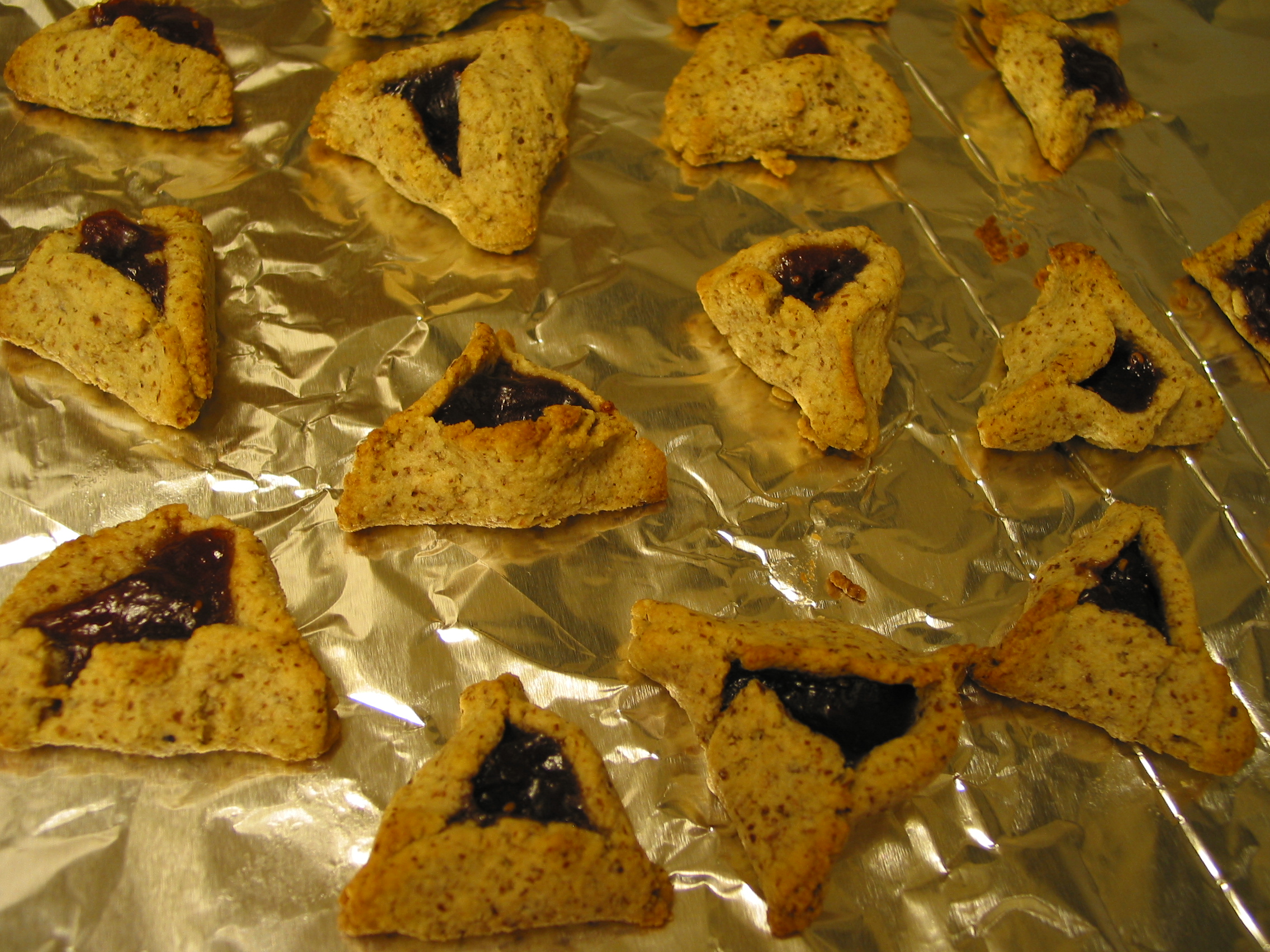
Almond meal-based low-carb hamantaschen

The first batch didn't roll out so easily, but these coin-sized minis tasted pretty good. The next batch rolled out thinner and held together better for a larger cookie with a delicate crust.

Baked goods are a big part of Jewish holidays at this time of year. Purim, being celebrated this weekend, is the last big baking bash before Passover, and hamantaschen (named for the hat, ears or purse of Haman, the villain of the story of Esther) are the cookie of choice. But with a diabetic kid in the house, the usual prospect of baking them takes on a bitter edge.

Hamantaschen–in fact, most cookies–have enough grams of carbohydrate that just two medium-sized cookies contain about half of what she’s supposed to have in any given large meal, twice what’s recommended for a snack, and they don’t have enough fiber or protein to slow down the sugars and avoid a spike in blood glucose. In short, not high-quality nutrition (not that we expect cookies to be). A grownup would have trouble dealing with the prospect of leaving them alone when everyone else gets to have them, but a kid faced with Purim celebrations at school or synagogue is bound for a certain degree of heartbreak.

It’s made me rethink our whole attitude toward things like Girl Scout cookies (this is also the season for that), chips, M&Ms, in fact any casual snack food that gets handed out innocently at school (our current woe–apparently my daughter’s teacher does this kind of thing at least weekly). The snack habit–anytime, anywhere, any or no reason–has become so ingrained in daily life we hardly think about whether it’s appropriate or not. Certainly the handouts are happening more and more frequently in class than I remember when I was a kid–did teachers even hand out treats back then? Not in my elementary school. It’s especially hard for a kid to “just say no” (and we already know how well that advice works in other contexts) when everyone else is taking a cookie or some M&Ms as a reward for answering a question (can they even keep their minds on the subject)? And even worse when it’s the teacher handing them out, because the teacher’s supposed to know whether it’s ok to eat or not.

Maybe we shouldn’t be handing these things out so casually or so often? Because while most people can handle surprise extras like these, they’re probably not all that good for anyone to eat indiscriminately at just any time of day. If they’re spiking a diabetic kid’s blood sugar, you can be sure they’re doing the same thing to your kid’s blood sugar too, only his or her body is responding with extra insulin to cover it. We get to see the results directly every couple of hours with our daughter–complete with sudden attacks of giddiness or tears if things peak and crash too quickly. But the same kind of thing happens to some degree to a lot of kids who aren’t diabetic, and they probably get reprimanded for it. Probably happens to a lot of adults, too.

Still, it’s the holiday, and total deprivation from treats is not really my aim today. So I’ve been trying to figure out a revised recipe for hamantaschen with a more manageable carb count, and preferably one without artificial sweeteners since my kid is still a kid. And neither of us wants it to taste like chalk. Very important.

I start most years with Joan Nathan’s cookie-dough hamantaschen recipe from The Jewish Holiday Kitchen because it’s the best dough I’ve ever tasted for these, even though it’s pareve (non-dairy, non-meat) and doesn’t have butter or cream cheese or the like. It’s not too sweet or too dry, and it doesn’t look or taste chalky or pasty like some of the dead-white offerings at the Purim carnivals. It tastes like a pretty good cookie, and it works really well for rolling out.

Looking at the carb count breakdown for that recipe, at about 12-15 g each, it might not be so bad to do regular hamantaschen, but my daughter would need to eat one or at most two with something protein or fiber, and she’d need insulin for it, so she couldn’t just grab one in between the planned meals. Kind of a pain, no doubt about it.

I was hoping for something closer to carb-free so she could eat hers with impunity when everyone else is eating theirs. This year I scanned the web for low-carb hamantaschen recipes and found only one Continue reading