• Enter your email address to subscribe to this blog and receive notifications of new posts by email.

    Join 241 other subscribers
  • Noshing on

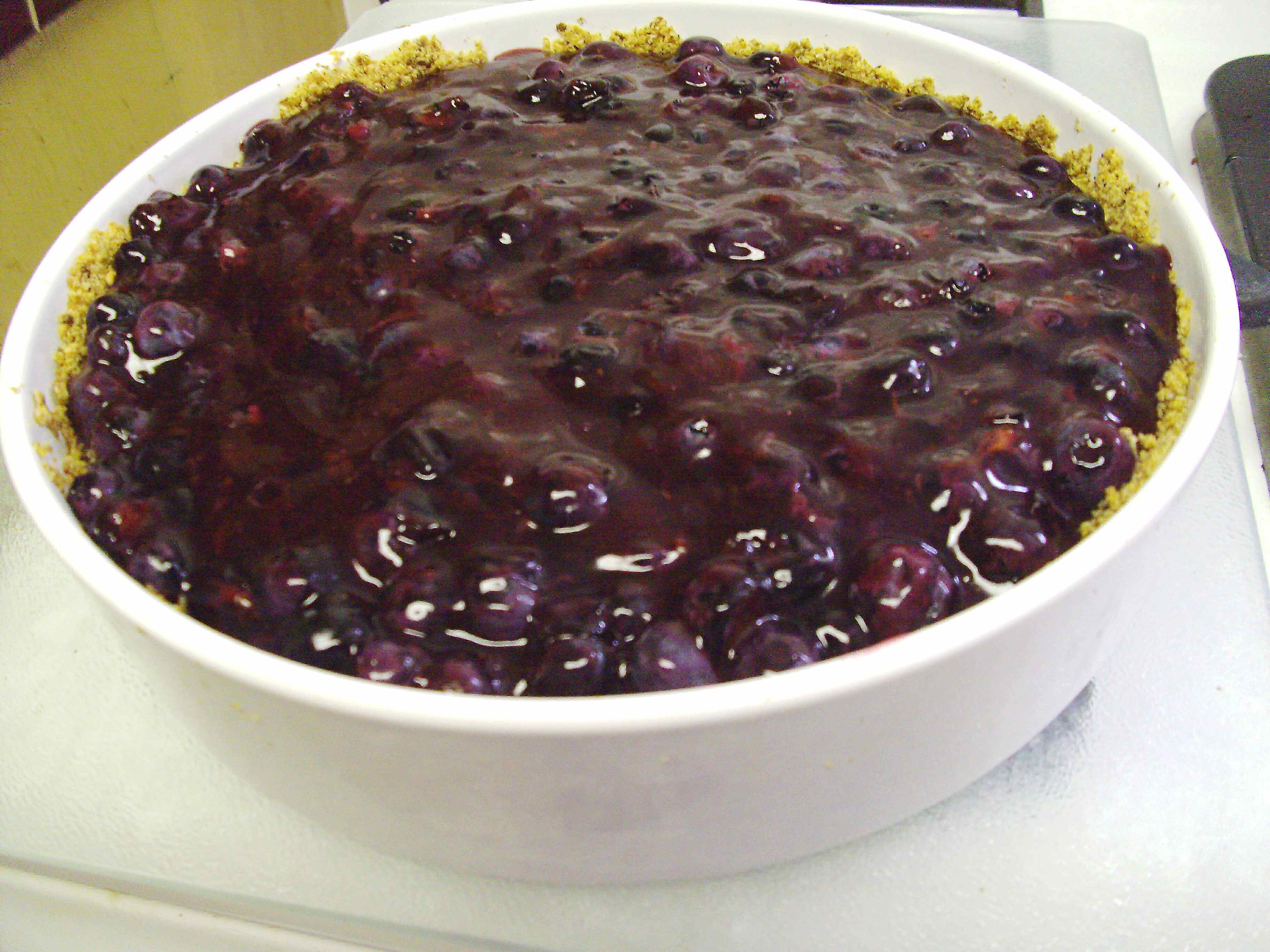
    raw blueberry pie with microwaveable filling and graham cracker crust

    This mostly-raw blueberry pie is a snap to make and very versatile--the filling microwaves in a few minutes, and you don't even have to bake the zippy gingered graham cracker crust--perfect for a hot Fourth of July and all summer long.

  • Recent Posts

  • Contents

  • Archives

  • Now Reading

  • See also my Book Reviews

  • Copyright 2008-2024Slow Food Fast. All writing and images on this blog unless otherwise attributed or set in quotes are the sole property of Slow Food Fast. Please contact DebbieN via the comments form for permissions before reprinting or reproducing any of the material on this blog.

  • ADS AND AFFILIATE LINKS

  • I may post affiliate links to books and movies that I personally review and recommend. Currently I favor Alibris and Vroman's, our terrific and venerable (now past the century mark!) independent bookstore in Pasadena. Or go to your local library--and make sure to support them with actual donations, not just overdue fines (ahem!), because your state probably has cut their budget and hours. Again.

  • In keeping with the disclaimer below, I DO NOT endorse, profit from, or recommend any medications, health treatments, commercial diet plans, supplements or any other such products.

  • DISCLAIMER

  • SlowFoodFast sometimes addresses general public health topics related to nutrition, heart disease, blood pressure, and diabetes. Because this is a blog with a personal point of view, my health and food politics entries often include my opinions on the trends I see, and I try to be as blatant as possible about that. None of these articles should be construed as specific medical advice for an individual case. I do try to keep to findings from well-vetted research sources and large, well-controlled studies, and I try not to sensationalize the science (though if they actually come up with a real cure for Type I diabetes in the next couple of years, I'm gonna be dancing in the streets with a hat that would put Carmen Miranda to shame. Consider yourself warned).

Microwave Tricks: Getting more chocolate power from cocoa

Chocolate pot from the movie "Chocolat"

The infamous chocolate cauldron, image © Miramax

In the movie Chocolat, the riverboat captain tells the chocolatier that his favorite of all her confections is none other than the prosaic cauldron of hot chocolate she keeps on the hob to thaw out her customers. When she pours out a cup, it’s so thick it’s like hot molten chocolate bars. Hard to imagine how anyone could swallow more than a spoonful of it in reality, but you immediately believe it’s superior to the thin, miserly stuff that’s been passed off as hot chocolate in your childhood. And you’re right.

And on the other hand, how could anyone in their right mind want to down a cup of melted chocolate bars? Too rich, and for me, much too fatty. And with much too much cleanup–the last image that stuck in my mind from Chocolat was actually not the hot chocolate Juliette Binoche handed Johnny Depp and Judi Dench but the thickly encrusted cauldron that had been cooking chocolate all day long. Scary, and what a waste of chocolate for one scene!

So I don’t go for that myself, or at least not on such a grand scale. Though if you want that kind of recipe–go to David Lebovitz’s blog and look for Parisian (or worse yet, with even more chocolate, Belgian) hot chocolate. He’s got two kinds of Mexican hot chocolate drinks too.

Cocoa powder, the ordinary day-to-day stuff of American hot chocolate mixes, seems so much less potent and chocolaty than all the fancy recherché chocolate bars with the cocoa solids percentages, the exotic Latin American or African source names, the single-source, fair-trade, wine-label-styled descriptions. Cocoa powder is so prosaic (unless it’s Scharffen-Berger or Valrhona or another premium brand). How could it possibly be good enough for a high-class, French-style cup of hot chocolate?

Granted, cocoa powder–dutched, natural, either way–it’s pure cocoa solids. But it doesn’t really give you the full chocolate experience if you just mix it into things. Something’s missing.

Most professional chefs and chocolatiers will probably tell you it’s the cocoa butter that’s missing. And they’re not entirely wrong–fat does carry flavor and keeps the more volatile, delicate aromas in the chocolate from evaporating off too quickly or breaking down under heat.

But if that were the entire reason, cocoa powder, stripped of all its fat and stored in warehouses and supermarket shelves for months at a time, would be flavorless and dead by the time you got it home from the store, and we know that’s not the case.

When you make brownies or chocolate cake with cocoa powder, there comes a point in the baking when you suddenly smell the chocolate wherever you are in the house at that moment. Before you even realize you’re smelling it, before any Continue reading

When life hands you sour cherries, pit them!

Sour cherries after microwaving

Vishniak–I’m probably spelling it wrong–is sour cherries turned into a compote, a syrup, a soda (as in, Frank’s Cherry Vishniak from Philadelphia), or a cherry brandy.

How do I know, you ask. Ah–(and with the “Ah” I’m pulling a Dad and giving you the flavor of a particularly smug conversation he had explaining it all to me when I was 15 and had never heard of vishniak either). Because my mother’s father, as it turns out, had made a particularly fine cherry vishniak by accident, about 20 years before this story begins.

My Grandpa Abe came to the States in 1923 as a child from a harsh place whose main compensations were family, music, tea, Bessarabian grapes, and the cherry harvest. His family had survived the pogroms in the Ukraine, his father had survived being drafted into (probably the Tsar’s) army during the Bolshevik Revolution and decided that was enough already, and the family arrived on the last boat allowed to bring Jews into Ellis Island that year–sometime in August.

The family started out dirt-poor, with no English, stripped of everything by the old Russian and new Soviet border guards. And yet Grandpa ended up a doctor, head of internal medicine, energetic and cheerful, unusually beloved by the nurses in the ICU, and an avid world traveler in his later years (my grandmother was a little less thrilled, but a good sport and better at languages than he was).

Some time in the late 1950s, out on Long Island, a friend gave him a gift of sour cherries, which he quickly put up with sugar and vodka in a sterilized glass Mott’s prune juice jug (why, oh why did all four of my grandparents keep prune juice in the house? I never figured it out. They weren’t even out of their 50s when I was little, and I’m almost 50 now myself.)

But in any case Grandpa put the vishniak jug in a dark, quiet corner of the garage to mature for a couple of months and promptly forgot about it.

He and Grandma moved into a New York City apartment sometime in the mid-1960s, and then in the late 1970s, when I was 15, he retired and they moved back out to Long Island. My family came up to help them sort things out–and that’s where my dad started rooting around among the boxes in the garage and found a dust-caked jug with a faded Mott’s label and some dark reddish liquid and cloudy, lumpy slush at the bottom.

“Abe!” he said, horrified. “What are you doing keeping this old jar? And what the hell’s that stuff at the bottom?”

My dad had just spent at least an hour finding similarly dubious-looking treasures of neatly folded foil, rubber bands, wax paper, and other saved-up sundries that my ever-careful grandparents had paid good money to have moved back out of the New York apartment. Was this yet another such item meant to ward off the next Great Depression, or was Grandpa collecting surgical specimens for posterity?

My grandpa took one look at the cloudy jar and beamed–it had all come back. In true shtetl fashion, he uttered the magic word–“Ah!”–and with no further explanation, bustled around in the kitchen to find a couple of sherry glasses that weren’t too dusty. Dad wasn’t looking too thrilled.

In even truer shtetl fashion, Grandpa returned and promptly challenged my dad to a game of chess to celebrate. We kids were left baffled, but not for long–as the game was set out, we each got a tiny sip, and it was incredible.

It turned out that forgetting the cherry vishniak for 20 years or so was the best thing Grandpa could have done to it. When Grandpa opened the jar the vishniak aroma alone was so developed, so rich, that Dad just stopped kibbitzing in his tracks for a minute and inhaled reverently. The liqueur was a clear bright red–astonishing after 20 years–and at the bottom were all the brandied cherries. When it was time for us to leave, Grandpa filled us a little Paul Masson carafe (remember those?) with vishniak to take home.

Now, I don’t have the head for anything more than half an inch of wine–and that’s actually something I inherited from my dad more than my mom–but my local Armenian grocery was selling fresh sour cherries this summer and I managed to snag a box. What to do with them? I washed and stemmed them, then stuck them in the fridge until I figured it out.

This was not really a great move. They sat for at least 3 weeks in there–it’s a miracle more of them didn’t go moldy, but I lost quite a few when I finally opened the container today. The price you pay for dithering. I sorted them, washed the good ones really well and pitted them with a sharp little paring knife. But what now?

I have a bottle of vodka from years ago–still unopened, maybe I’ll use it next summer and put up some vishniak. But there aren’t enough cherries this time around. So I decided to try making a quick preserve the way I do with cranberries.

The raw cherries aren’t really that sour–they’re more bitter with a faint sweetness, like the wild unofficial and unrecognized variety that used to grow at the edges of the woods in the backyard when I was a kid in Virginia. But I decided to try them anyway.

I had a smallish bowlful–maybe a cup, cup and a half, of pitted cherries–and put a couple of tablespoons of sugar on them. Lemon–no lemons in the house. Citric acid “sour salt” I had in a shaker–you can get Rokeach brand in the Jewish section of your supermarket’s International Foods aisle, next to the Telma bouillon cubes and the unsold jars of Manischewitz gefilte fish from last Passover. But a little goes a long way–one modest shake was plenty.

Then–you won’t be entirely surprised at this, but I covered the bowl with a saucer and nuked it for 3 minutes on HIGH. It didn’t gel–I think you need a lot more sugar to make it gel without adding pectin–but it did make some liquid, and the smell–I’d taken all the pits out carefully before microwaving, but there was still a distinctly almondy smell when I moved the lid a little. Powerful stuff.

A tiny taste–heady and bursting with cherries. With more sugar, more cherries, and a bottle of vodka to add it to, in 20 years it might be worth talking about. But in my house it’s not gonna last that long.

I’ve learned my lesson–if you’ve got something rare like fresh sour cherries at a good price, get with it and use them right away. You can freeze them after you pit them, or you can cook them–or put them up with sugar and vodka, though I don’t think Mott’s is still issuing its juices in glass jugs, more’s the pity. The main thing is to act swiftly, and if anyone gives you trouble, threaten them to a game of chess.

Stuffed Eggplants with Quince, A Vegetarian Odyssey

Stuffed Eggplant with Quince and Stuffed Onion Rolls

I did it. It was 90+ degrees outside yesterday afternoon and felt a lot hotter inside when I started cranking the oven to try this dish right away rather than wait for the weekend, but I’m just no good with delayed gratification.

If I have the mini-eggplants and I have the quinces and I have the tamarind concentrate (homemade! two days ago! it’s practically crying out to be used already!) and I have the “hashu” filling for the vegetables sitting in the fridge smelling wonderful, then it just doesn’t matter that Rosh Hashanah dinner is in what, maybe 3 hours, and I still haven’t braided the challot, to say nothing of baked them. Obviously I’ve gotta try this extra-credit dish out RIGHT NOW.

Actually, I figured the house was going to be heating up anyway once I started baking the challot, so why not get it all over with at once?

There was a more serious reason to try it. Today in services I was still thinking about Dweck’s book and her recounting of her parents’ horror in 1947, when, about to return from a vacation in Europe, they learned the government back home had started massacring whole Jewish communities in reaction to the announcement that the UN had accepted Israel as a Jewish state.

The Syrian Jewish community fled wherever they could–just as my family did under the pogroms in the Ukraine back in the 1880s and 1920s. Dweck maintains that the reception the Syrian Jews got in the US from those of us who were already here was so aloof–they didn’t speak Yiddish, they didn’t look the same, they did a few things differently for kashrut and prayers–that her community kept to themselves ever after.

I can believe it, unfortunately–the period right after World War II and the Holocaust was one of paranoia and circling the wagons for American Ashkenazim.

Eastern and Western Jews had similar discomfort with each other in postwar Europe. Reading between the lines a little in Claudia Roden’s and Colette Rossant’s memoirs, the two, who had just lost everything, thought their new Ashkenazi neighbors were cold and inhospitable and indifferent to their exile; the Ashkenazi neighbors and relatives, meanwhile, thought the wealthy young Egyptian arrivals were horribly spoiled and indifferent to the European disaster they had just missed. Altogether, the Ashkenazi, Sephardi, and Mizrahi communities were in closer touch before World War I than they were after the 1940s.

I can only hope that now, 60 or 70 years on, we have more in common and more regard for each other, no matter where we came from. Israel’s great mix of cultures has been a good influence, even though it originated in hardship, and perhaps today we are in better shape to appreciate what we have in common than we have been for nearly a century.

When I look through Dweck’s family’s photos, I see so many people who look astonishingly like several members of my family–my dad and my sister especially. The dignified lady presiding at the seder table on the front cover is a shockingly exact adult version of a girl I knew from my synagogue’s youth group–it’s the sturdy mouth and chin and the set of the eyes, certainly, but also the irrepressibly thick and curly hair (the 1920s formal chignon has it all over my friend’s 1970s braids, which took her hours to corral her hair into). The formal photographs of families in the 1920s, all the daughters dressed beautifully but in the same fabric the mother is wearing, sailor suits on the boys, stern dignified expressions all–I’m pretty sure each of my grandmothers had at least one of those in her collection. The 1930s-era engagement portrait with pearls and bobbed hair–so modern! Pin it up next to the one of my dad’s parents, who married in 1939 and looked so incredibly naive and young then. The family gatherings at Pesach, grandma presiding over the white lace tablecloth and all the seated cousins glancing behind them at the camera from over their shoulders–there’s probably one or two with my mother as a toddler on someone’s lap in Brooklyn and another of her as a teen, whipping her glasses off and blinking myopically for the photo. It could be any of our families. It could have been us in Syria and Egypt and Turkey, it could have been them in the Ukraine or Germany or Poland. We none of us have entirely safe histories, and none of us are entirely separate.

In any case, Dweck’s book is important to me not only for capturing her community’s traditions, tastes and history but for reaching out to the rest of us and giving us a chance to share it, compare it with our own, and reconsider what it means to be part of the Jewish world now.

So–and this is not to trivialize but to explain, since we sometimes live and remember through food, especially at the holidays–it was a great time to try out a challenging dish (challenging for me, anyway) from her book and serve it last night to my family for Erev Rosh Hashanah. I cook from scratch, I cook a lot, but I’ve never really done  the legendary great-aunts-at-Pesach kind of slow cooking where everyone groans in pleasure and declares “nobody does it like this anymore” when they taste it. I’ve only once cooked a whole turkey, and I’ve rarely tried anything else that took more than an hour and a half to cook. It’s a transformative experience, one that teaches me a lot about my great-aunts and great-grandmothers, both in the shtetls with the wood-fueled pripitschoks and communal ovens, and here in America with modern kitchens and big lace-covered tables. Trying this long-cooked dish gave me the chance to experience both my family’s past celebrations and Dweck’s at the same time.

To my very great pleasure, her recipe worked the way it was supposed to on the first try and tasted like the effort was worth it, even though her instructions are pretty simple and brief. That’s a huge achievement.

So–if you’re ready for this, keep reading–otherwise, glance at the pictures and skip to the bottom…

The “Stuffed Eggplants with Quince” Experience

First of all, let me just say that I LOVE my local Armenian corner grocers for a lot of reasons, but the fact that they have all the ingredients for Dweck’s dishes (other than kosher meat, that is) is a big, big plus.

I would have tried microwaving–and I still will–instead of a 2-hour braise, but I wasn’t sure how it was supposed to taste, whether microwaving would cook the raw rice in the filling well enough, and how the sauce was supposed to interact with the stuffing and the eggplants. I knew from a previous hard-luck experience that quinces don’t do especially well (or even well at all) in the microwave and really need long stewing under conventional heat to get tender and turn bronzy pink and sweet. So all in all, I decided following the directions in Aromas of Aleppo might be the wiser course for a first try. Even though, from my usual 15-minutes-tops perspective on conventional-heat cooking, Poopa Dweck’s method is glacially, almost outrageously, slow.

Basically, you core the baby eggplants, stuff them with hashu (beef-and-rice filling, rice and tomatoes, or in my case lentils-and-rice), and layer them in a saucepan with quince slices. Then you dilute some tamarind concentrate and add a bit of sugar and salt, pour the sauce over the pan and heat for 10 minutes on the stove until the eggplants start to sweat, add water to come about 3/4 of the way up , simmer half an hour to reduce the liquid and cook the rice in the filling, then transfer to the oven to braise covered for about 40 minutes and then uncovered for another 30. It’s a lot like making brisket, actually.

Dweck gives two allspice-laden recipes for the filling, one for ground beef with rice, the other a rice-and-tomato filling that’s close to what I use for dolmas. I opted to follow the ground beef recipe but substitute an equal weight of cooked green lentils for the meat and add a little garlic. It would work, I was pretty sure, and in fact it turned out to be the best, most delicious part of this recipe–which, skipping to the punchline, was pretty terrific and worthwhile, even for the work Continue reading

The Birthday Project: New Year, New Food

I was born halfway between Rosh Hashanah and Yom Kippur, so on any given year, I could be stuck eating honeycake or none at all on my birthday. I think I’ve had maybe two actual birthday parties in my life. It’s a concept my daughter, born in June, doesn’t get.

But occasionally I luck out–and this year was one of the best. My husband asked what I wanted and I had a real answer–a cookbook I’ve been lusting after at the library and that costs only slightly more than my probable library fines if I don’t return it.

So this is it–feast your eyes, I’ll turn the pages:

Aromas of Aleppo by Poopa Dweck

And this is the project that sold me on it:

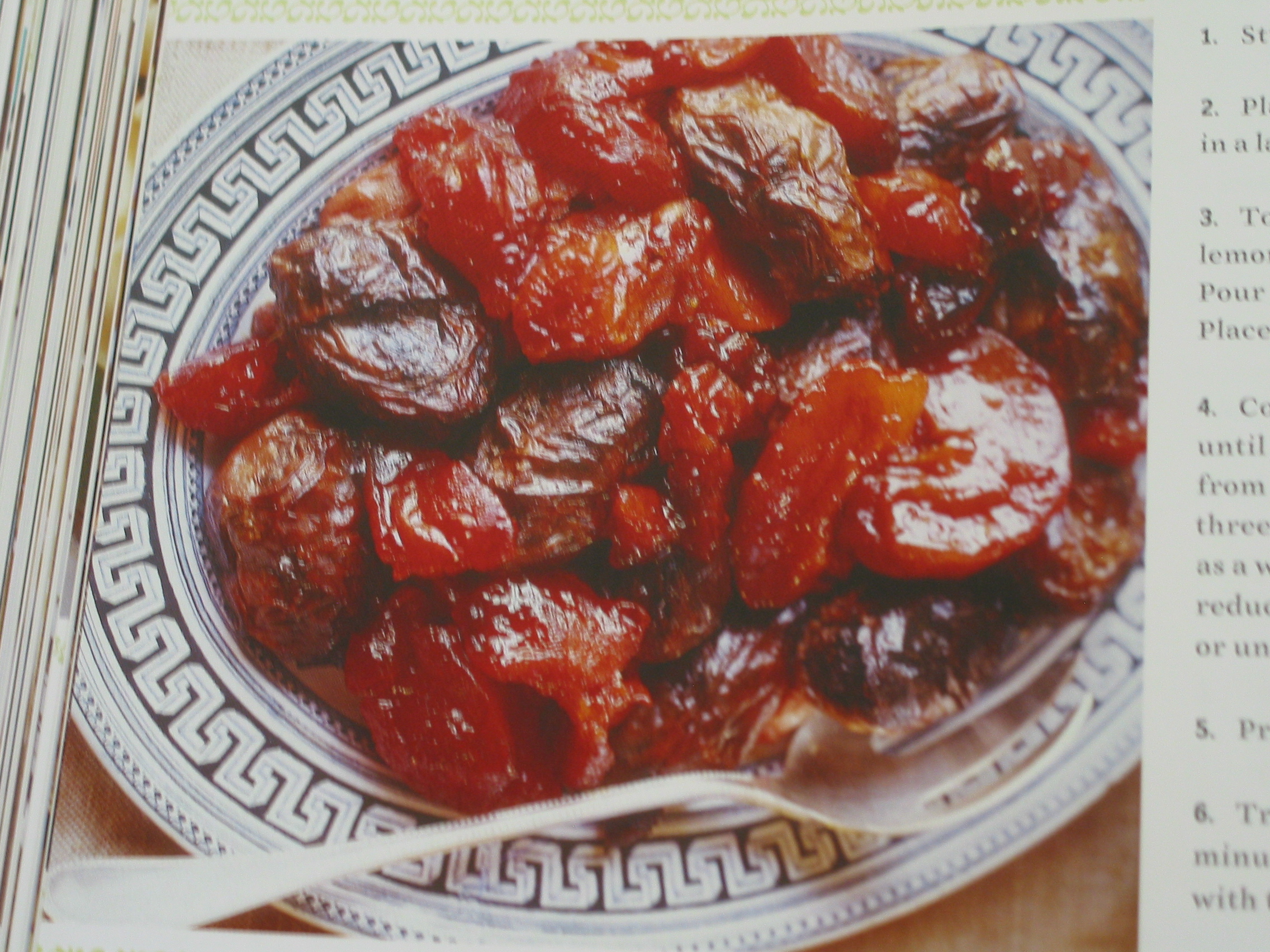
Stuffed Eggplant with Quince

Stuffed Eggplant with Quince

Poopa Dweck, a cousin by marriage to Claudia Roden, has edited the New York Syrian Jewish community’s version of a sisterhood cookbook (every synagogue in America’s sisterhood seems to have put out at least one of those) for something like 20 years, only people in her community actually used it frequently. My birthday gift is the 2007 culmination of Dweck’s experience, and it’s just a very beautiful cookbook to leaf through–visually but also for the possibility that when you try the dishes, they’re actually going to work.

It doesn’t take much reading for me to realize that despite the unfamiliarity of some of the flavors–allspice in meat stuffings, tamarind-based sauces–this is the best kind of traditional Jewish home cooking, the kind that has your favorite great-aunts outdoing each other for Pesach, Rosh Hashanah, and other big celebrations. So, somewhat exotic in flavoring but utterly familiar in spirit. (And actually, as I discovered in another Syrian Jewish cookbook, A Fistful of Lentils, by Jennifer Felicia Abadi, a few dishes, like stuffed cabbage with a sweet-and-sour sauce, and manti, a kind of ravioli, are pretty similar to Ashkenazi holishkes and kreplach.)

Like all Jewish great-aunt dishes for the holidays, this dish of stuffed eggplants and quinces comes with two required homework items: the beef and rice stuffing, and tamarind concentrate. The beef I’m not worried about–my first try on this is going to be vegetarian, because I’m not planning on heading out to the kosher butchers in the Valley. I can use a green lentil and rice filling that I already know will taste fine with those flavorings of allspice and cinnamon and onion. Maybe a hit of garlic too, and maybe a bit less salt than for the beef–as I discovered a few weeks ago, with the green lentil sausages, lentils don’t hide the salt flavor as much as beef might.

The other item, tamarind concentrate, turns out to be inexpensive but somewhat unlovely to make–though still something of an adventure. Especially for a blog called Slow Food Fast.

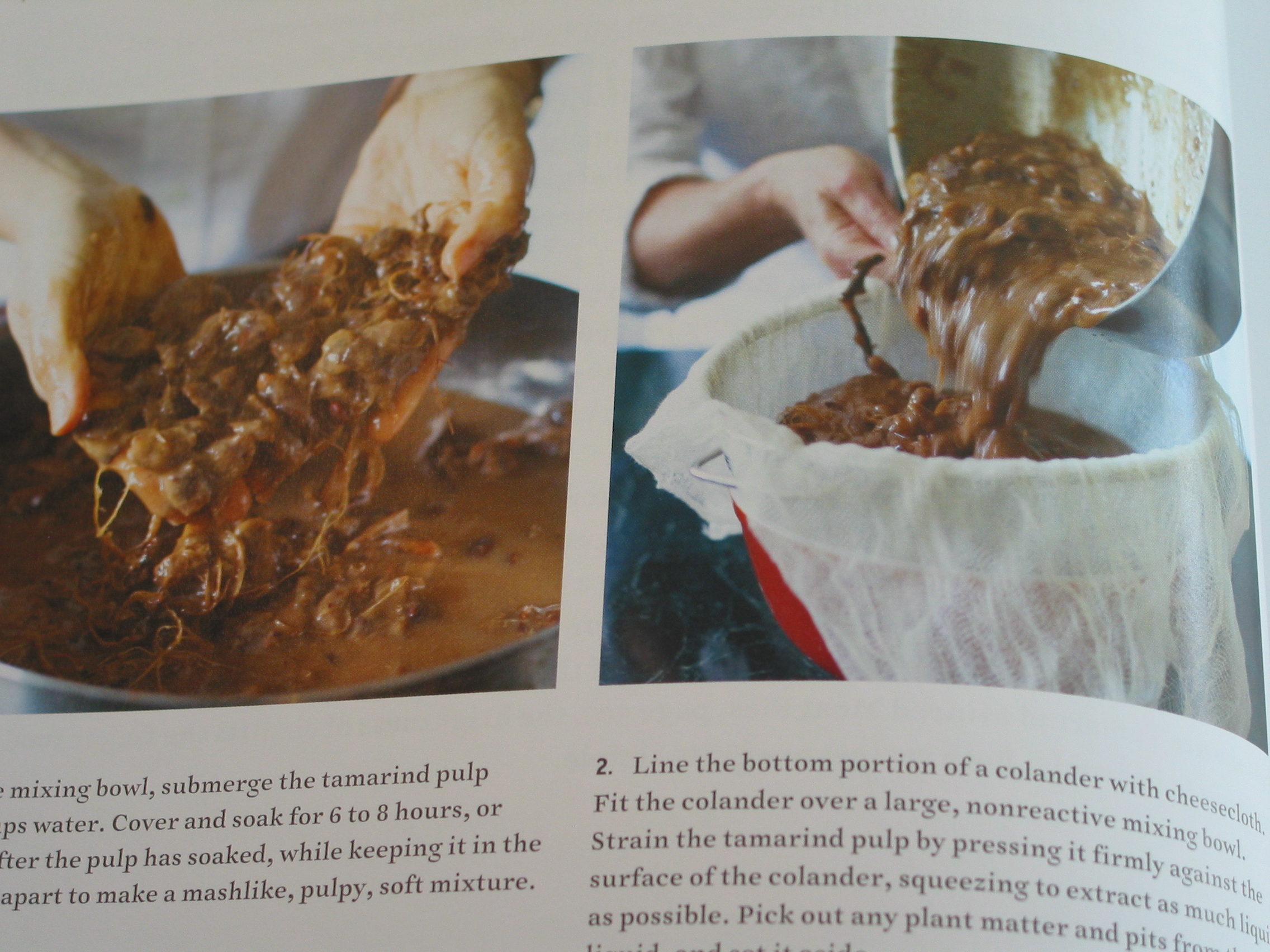
Here’s what’s on page 42 of Aromas of Aleppo for how to work the tamarind pulp into something that will give up its flavor to a sauce:

Poopa Dweck's Aromas of Aleppo--instructions for making tamarind concentrate

Working the tamarind pulp

Now, I’m not all that squeamish, but bleaaghhh. First ya gotta soak the stuff overnight, then ya gotta get in there and mish around–I dunno. I decided to speed it up where I could…

I thought about the little 1-lb. brick of pressed seedless tamarind pulp I’d bought from my Armenian greengrocers for this dish. It just seemed like a tougher version of dried prunes or apricots, which I usually soak up successfully enough in a few minutes by heating them with water in the microwave. Would it work here or would it ruin the flavor? I cut off a chunk, submerged it in water in a microwaveable bowl, and tried it.

Tamarind pulp rehydrated in the microwave

Five minutes of microwaving, covered, plus about 20 minutes sitting time–it was definitely done. And really, really incredibly tart, a surprise given tamarind’s distinctly plummy aroma. Success! But no wonder they call it “ouc” (pronounced OO-rgh, according to Dweck)–that was my immediate reaction when I tasted a tiny sip. It’s THAT sour. My second reaction was that I should probably say Shehekheyanu–the blessing for any new venture, especially for holidays and the first taste of a new fruit in the year.

I realized only afterward that I should have done the whole brick while I was at it–I was about to discover why Dweck calls for preparing three pounds of pulp at a time, not a couple of ounces.

Next step–squishing the pulp in the water to extract as much flavor as possible before filtering through cheesecloth and reextracting the pulp left behind in fresh water…no. Just no. I am not a cheesecloth girl–it never, never cuts neatly, even with Fiskars shears.

So, I was thinking, I have a microwave for a reason. I also decided I have a food processor for a reason, and this is definitely it. I stirred once with a fork first to make sure there really weren’t any pits in there, as advertised on the package front. Then I poured it all into the food processor, and gave it a whirl. That worked too. I seemed to be on a roll with the speed-it-up-immensely daydream.

Filtering the tamarind liquid

Filtration–I’ve used overlapping coffee filters in a colander whenever I make paneer in the microwave, and it worked pretty well here too–maybe better than Dweck’s photos, which show a cloudy filtrate coming through the cheesecloth. Mine was clear and amber–maybe too clear? Was it going to taste authentic without the silty stuff? I could only hope. It sure was sour, even dilute as it was. Continue reading

Green Lentil Sausages

A month or so ago I had been intrigued with a recipe on “Is This My Bureka?” (see sidebar for link) for Romanian mititei, a spicy cross between meatballs and sausages, and wondered whether I could make a vegetarian version with green lentils. Not because I can’t eat beef–I can if it’s kosher–but because I generally don’t like handling meat. (I don’t mind fish nearly as much; don’t ask about the logic, it’s just a preference.) All my meat dishes are still in storage, four months after the move. That’s not accidental–I hate switching over the dishes even more than I dislike handling meat.

So in any case, I tried it. Green lentils are on my list of easy-to-microwave, ultracheap nutritious staples. I cooked up about half a pound of dried lentils in water to substitute handily for a pound or pound and a half of ground beef. The mixture I made was heavy on garlic, pepper, and a variety of spices ground in the coffee mill. It was a lot lower on salt than BurekaBoy’s because I tasted it with a couple of pinches of salt–between 1/4 and 1/2 teaspoon–in the mix and that was more than plenty. Scared to think what a teaspoon and a half would have done. Maybe ground beef requires more, or maybe the lentils don’t absorb and hide the salt flavor as much.

The green lentil mixture was delicious even before cooking–with vegetarian sausage, burger or meatloaf recipes, unless you have raw eggs or uncooked flour in your mix, you can taste for seasonings pretty safely. If you do have eggs or raw flours in the mix or are making a sausage recipe with meat, poultry or fish, cook a spoonful first in the microwave and then do the taste test.

Unfortunately, though, the paste didn’t hang together as well as I’d hoped–cooking it didn’t help much. It was still delicious and spicy, but it just crumbled. And although I could live with it, I’ve been thinking about it ever since.

So my recent purchase of a bag of vital wheat gluten and my first foray into the mysterious world of seitan set me off. What if I added a little gluten to the lentil mix instead of the other way around? That way it would stick together and still be mostly lentils. The proteins would be balanced better by combining a pulse (lentils) with a grain (wheat). It would have loads of flavor without needing soy sauce or salty broth. It would be microwave-steamable, and probably fryable or grillable too. And I could still taste it safely before cooking to ensure there was the right amount of excessive garlic present.

And–half a cup of gluten wasn’t quite enough for the three or four cups of cooked lentils I used. Still kind of dry and crumbly when I made a few small patties and cooked it two ways (microwave and frying pan). I added a little more gluten to the rest of the uncooked mixture. Three-quarters of a cup of gluten per 3 or so cups of lentils was better–I could see the threads of gluten forming as I kneaded it together in the bowl.

The patties were still dryish and of course lentil gray-green, though this version hung together better when cooked. It still tasted good, very peppery and garlicky, with a hint of the allspice, fennel, coriander seed and other spices I’d put in. But because of the dryish texture I wasn’t sure I could recommend it fully–it was definitely a case of “Dance 10, Looks 3” at that point.

I cooked up the rest of the mix by microwave steaming, followed by a light pan fry in olive oil, and bagged them into the fridge. The next day, there they were–still a bit soft and crumbly, but hanging together better with a little more chewiness to them. Still not pretty but they tasted good. Waste not, want not, I thought. Pretty is for some other day. Continue reading

Microwave tricks: Seitan without Simmering

My sisters-in-law from Oakland were planning a visit to us this summer now that we actually have a house and can host them. It fell through, but the prospect got me thinking about vegan food and what we might serve them. They’re both good cooks, but they eat a lot of commercially-prepared vegan meat substitutes along with their own fresh vegetables and grains and baked goods.

I’m not great on packaged foods in general, and unfortunately, vegan proteins other than plain fresh tofu and dried beans look an awful lot like vegetarian versions of Oscar Meyer sliced bologna and turkey loaf to me. Not just the appearance, but the cost per serving (really high–something like 4-6 bucks for a chic little package that serves two, ostensibly) and the salt (also really high–600 mg and up per serving). And the ingredients lists are always long and kind of mysterious-sounding, either in a surprisingly chemical way or in a Japanese-ingredient-names-as-authenticity way. Not that I’m not working to figure out exactly what kombu and dulse and Job’s tears are. Two seaweeds and a resin? I think, anyway.

There’s also a lot of yeast extract in some of these processed vegan proteins–sounds like between that and the salt, what they really did was dump in Vegemite or Marmite. Bleagh (my husband’s sister is kind of an Anglophile, but that doesn’t excuse either version to me).

On the other hand, some of the vegan cookbooks out now have do-it-yourself recipes for seitan, and so do Ellen’s Kitchen and FatFree Vegan Kitchen.

Seitan is basically wheat gluten dough cooked in stock. If you do it yourself at home, it may take an hour to simmer but really isn’t very expensive compared with the commercially prepared versions. A 5-lb bag of flour at about $2-3 or a few ounces out of a 22-oz bag of vital wheat gluten (about $6-8, depending where you buy it, and worth it for getting 100% gluten out of the bag and not having to wash the starches out of the dough since it’s already done for you) produces something like a pound or two of seitan at a go. That’s enough for a larger meal, maybe even for that elusive home-made vegetarian centerpiece dish

Why is this worth doing if you don’t eat vegan and aren’t actually having vegan guests in the house after all? (and now that I’ve schlepped the last of the moving boxes out of the living room, I’m really wondering).

I think back to my favorite Chinese restaurant back east, the Hunan Manor in Columbia, MD. Every time we fly back east we try to make a stop there.

One of the things that makes the Hunan Manor great is their willingness to experiment and invent. They serve a wide variety of vegetarian versions of standard banquet dishes using “vegetarian chicken”–basically seitan cut and fried as for meat. These dishes complement their masterful use of tofu with textures from nearly silken to deep-fried to pressed and diced for the vegetarian jao tse, which I’ve always thought looked better and probably tasted better than the pork-based meatball filling our nonkosher friends would get (though they raved about them, and I’ll take their word for it).

The last time we came east, the restaurant had added several new dishes using a different form of seitan with very finely layered rolls that were cut in bite sized pieces, coated and fried–a pretty close simulation for the layered flesh of chicken. It was really delicious in their orange “chicken” with perfectly cooked bright green broccoli. It was unexpectedly unsalty as well, so I don’t know whether they made it in-house or had bought the prepared seitan in an unflavored form.

Either way, the dish was a great argument for using seitan creatively, and I don’t think my sisters-in-law, competent cooks though they are, have eaten any seitan dishes that good using anything from a little Gardein package.

So I decided I’d like to try my hand at seitan at home and see if I can’t come up with something flavorful, chewy, satisfying and nutritious, without having it scream salt. After all, once you’ve got the finished loaf or pieces, you’re Continue reading

Pyrex and Anchor Hocking now both unsafe for cooking

I’m not sure how I happened upon Consumer Reports’ disturbing feature from January on exploding glassware cooking accidents in both Pyrex and Anchor Hocking tempered glassware. Since a lot of my microwave directions call for Pyrex bowls, I thought I’d better post about it asap.

Here’s the link explicitly:

http://www.consumerreports.org/cro/magazine-archive/2011/january/home-garden/glass-cookware/glass-cookware/index.htm

Because I’ve used my current Pyrex bowls and bakeware for more than 10 years, I’ve been looking recently to replace and/or add to my collection. But every time I’ve looked for it in the past year or so, I’ve hesitated–the stuff on sale is a blueish color. Or it’s a little thinner than I remember. Or it doesn’t feel or even sound right when I pick it up. And the cardboard overwrap has a lot of new warnings about when and how you can or can’t use it that are different than the old classic Pyrex. It’s confusing–can I use it the way I’m used to or not?

So even though the casseroles and pie plates are bright and shiny and new and usually on sale at my local supermarket and the Target, I’ve passed them up, thinking, “I’ll do it next time.”

According to the Consumer Reports piece, it’s a damn good thing I did. Read the article. Now. Please. Before you put any of this generation of Pyrex in an oven or microwave. Before you give a set to some newlywed as a kitchen gift.

And don’t buy this stuff. If you did, don’t use it for any kind of heating up, conventional oven or microwave (I know, so what good is it if you can’t heat stuff up in it? Wasn’t that the whole point?)

Apparently both companies are claiming that the explosions–which have caused burns and lacerations when the victims took a hot casserole out of the oven or microwave and set it down–are the result of misuse, or perhaps the glassware had gotten dinged or scratched and therefore the flaws had weakened it, and that it was a rare phenomenon. The article authors estimated a fairly high number of incidents in the past few years based on hospitalization records and other outside evidence.

Consumer Reports debunked the companies’ blame-the-victims ploy by testing both brands of glass cookware at various temperatures and setting the pans down on a variety of typical kitchen surfaces.

The results were not pretty–Pyrex had a slight temperature range advantage over Anchor Hocking, but a fairly high percentage of both broke or exploded if they weren’t used exactly within the laundry list of restrictions on the cardboard overwrap that came with the new bakeware.

Altogether, conducting the tests and videorecording them took more guts than I would have without lexan armor and a full face shield.

But, as I’ve said, I’ve been using my mixing bowls and pie plates for years without problems. What’s going on?

The article authors did track down a probable explanation for all this breakage in what’s supposed to be very durable glassware. Both brands have recently switched to a cheaper formulation for their glass. Pyrex–note, no longer made by Corning–at least used to be borosilicate glass but now uses soda lime glass, as does Anchor Hocking’s tempered glass. Borosilicate is the standard for laboratory grade glassware; it’s stronger and somewhat more expensive to produce–probably the mineral shortages of the past few years have made it more so.

Technically, you can temper soda lime glass, but even when tempered it’s not as strong as the old classic tempered borosilicate. It also seems to be less uniform–and the little unevennesses in the material create local instabilities that can cause cracks and even explosions when subjected to rapid or uneven heating and cooling. It only takes a split second in some cases.

Borosilicate is almost certainly what my old Pyrex standbys are made of, and I’m standing by them. I just wish I could have bought more at the time, or that someone else made them now. I wish Pyrex’s current manufacturers in particular had not ruined their product by changing glass to reduce costs, and that their managers weren’t scrambling to deny it.

For now, I’d say please DON’T use the newer Pyrex or tempered glass bakeware items for microwaving. They’re just not the same anymore. Use microwave-safe ceramic instead.

Microwave Tricks: Stripped-Down Chiles Rellenos

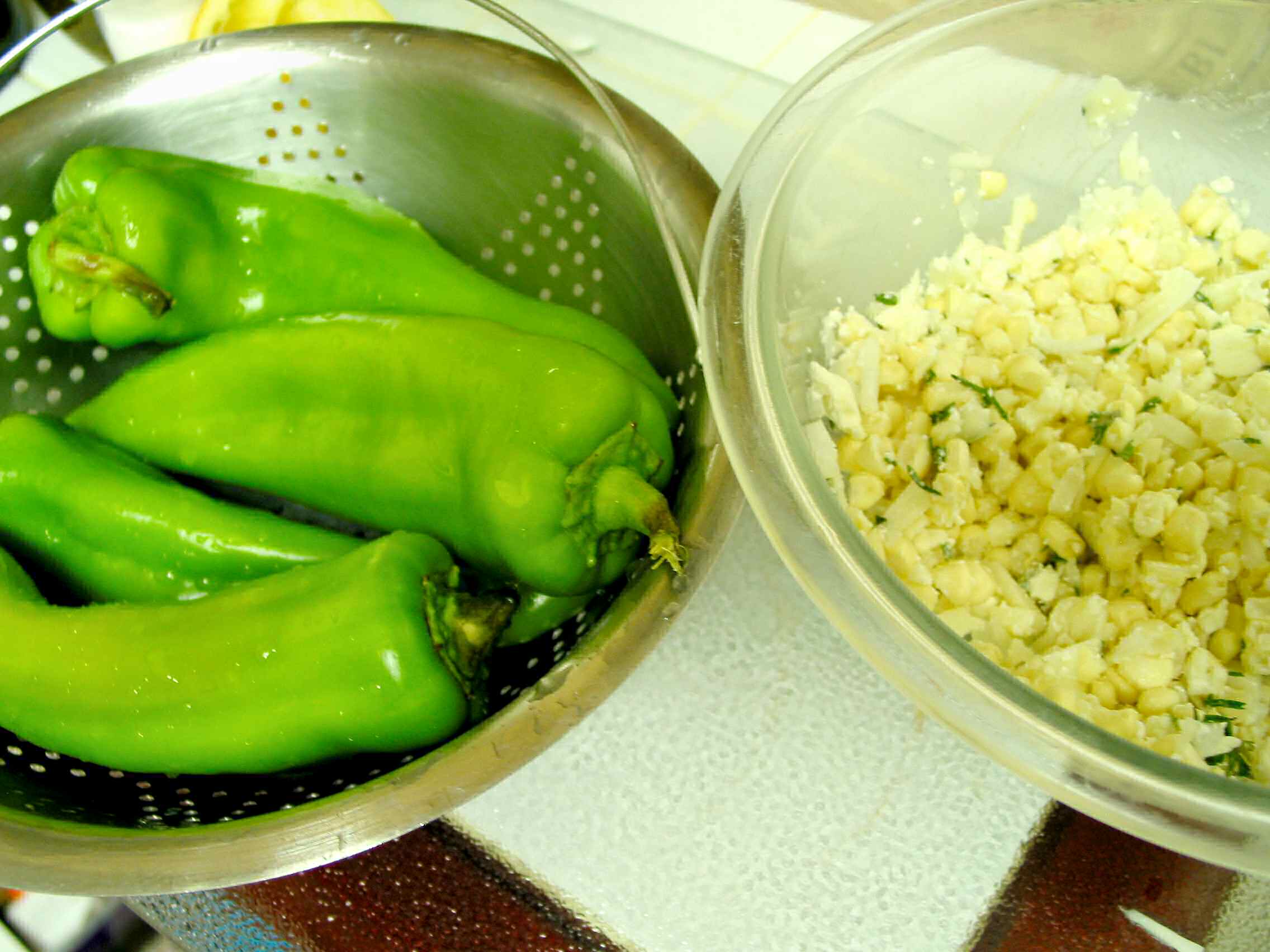
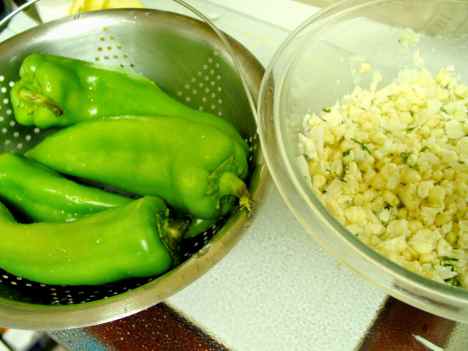
Anaheim chiles with corn and feta for stuffingI know, Diana Kennedy (The Cuisines of Mexico, 1971, and onward) probably wouldn’t do it this way–or maybe she would, at home, for herself? Naaah. She’s still pretty particular. Eighty-seven years old, and doesn’t seem to have slowed down noticeably in her quest to rescue the disappearing dishes of Mexico. Her latest, Oaxaca al Gusto (2010)  is a huge coffee table cookbook, beautiful and unfortunately for me, so full of rare Mexico-only ingredients, not to mention pork and lard, that I don’t know if there’s much I can really cook from it. I’m scouring it now for possibilities, but in the meantime…

Friday afternoon was vegetable-shopping day again, because we go through good tomatoes like a pack of sharks after a swimmer’s leg, and unfortunately our own backyard gardening adventure is turning out to be more like the $50 tomato kind of thing. To make up for packing our daughter out with my husband on his errands all afternoon instead of on mine (because I desperately needed some time off for bad behavior), I decided to do a little better than the usual dinner. Of course, they had a decent time, and so did I. Gotta do that more often.

So while they were gone I stopped at my greengrocer and bought a ton of ripe tomatoes that actually have flavor at 99 cents a pound (we have one left), a couple of eggplants for 65 cents apiece, some tart green plums, and these Anaheim chiles, which were beautiful and at $1.19 a pound, cheaper than the bell peppers this time. If you’re not completely clued into eating with the seasons, sometimes the pricetag gives a gentle hint of how the growers are thinking about any given vegetable that week.

Normally I wouldn’t buy Anaheim chiles–they’re pretty mild, but still hotter than bell peppers, which we usually eat raw, and the chiles are really better cooked. But when I saw them, all I could think about was stuffing them with feta for a quick pick-me-up side dish to go with mahi mahi and rice.

Some stuffed chiles are authentically made with Anaheims, I was encouraged to find (thumbing through one of my two, count ’em, two copies of Kennedy’s first book). But the ones that make good-looking cookbook photos are made with pasilla or poblano chiles–darker green, plumper to hold more stuffing, and with thinner walls. Also a little hotter, and often soaked up from their dried form. Baked in tomato broth or else stuffed with meat picadillo, coated in egg, baked, and dressed with a walnut/sour cream sauce (chiles en nogado) with pomegranate seeds sprinkled on top–a Moroccan-origin dish, maybe, with that egg cloak and the pomegranate seeds?

The other thing Kennedy specifies is to char, bag-steam and peel the peppers before using them, which makes the egg cling a lot better and probably makes them a bit more digestible. Very classic, but let’s face it, with all this stuff, including the sauces: I’m not that good, and I’m kind of impatient. What I really wanted for supper was quick stuffed peppers, gooey on the inside but not so messy outside– so as to avoid wearing it. (A girl’s gotta know her limitations. Maybe next time, if I can find an oilcloth bib my size?)

I’m not so interested in long baking in tomato broth or soaking fresh walnuts in milk for the moment–maybe sometime when I want to get the whole dish together, because I’m sure it’s delicious, especially if someone else is making it and heating up their own kitchen in July. But right now, time is ticking, it’s nearly supper, and Beauty and the Beast are about to show up in the driveway (my husband is beautiful for taking on the Beast, even if he grumbles while doing it.)

So I’m definitely not about to char and peel the peppers–what a pain, plus to me it makes them kind of slimy and slithery and not what I want to eat. Unlike Tom Colicchio, who consistently makes a fuss about it on Top Chef, I don’t mind the fact that pepper skins have a little bitter alkaloid edge to them. It’s part of what makes them peppers, and it helps them keep their crunch.

And, of course, I’ve had the experience of walking into someone’s house when they’d just been charring peppers on the gas burner, and it smelled an awful lot like dope. Not lovely, and not at all like them.

So anyway, these are not proper chiles rellenos by any normal standard. They just taste good, they’re not slimy, and they don’t take more than 15 minutes tops. My kind of dish.

In addition to the usual feta and mozzarella, I still had a few half ears of leftover corn on the cob from my daughter’s birthday party last weekend. They were still good, but there weren’t enough to share out for supper, unless–well, corn and peppers also go together (usually as a soup, but why not here too?)

Aside: That was surprisingly one of the easiest celebration dinners I have ever put together in my life — pan-grilled salmon fillets, tomato/basil salad, raw vegetables with bleu cheese dip, and microwaved corn on the cob. I was going to make a cheesecake but decided at the last to buy a Trader Joe’s frozen one for expedience and served it with strawberries and blueberries. It was surprisingly good, inexpensive, and quite moderate on carbs and calories for commercial cheesecake. Of course, because my daughter’s friends are all about 11-13 years old, at least one couldn’t eat the corn due to braces but didn’t know how to shuck the kernels off with a knife, one immediately declared she wasn’t into vegetables (I was mellow enough to shrug and say it was fine), and one couldn’t hack cheesecake so I scrounged her up an impromptu dessert of chocolate bar and cinnamon grahams because we had literally nothing else in the house dessertwise. Oy. And they all stayed up till 4 am, but at least they were quiet and sneaky about it. My goals for a good sleepover.

So anyway, I had made 6 or 7 ears of corn, broken in halves, and steamed them in the microwave in a big pyrex bowl for about 8 minutes. The leftovers were fine reheated during the week with a drizzle of water on a plate in the microwave for 30 seconds or so. But I still had a couple and decided to use the kernels for the chile stuffing, and they were delicious.

Stuffed Anaheim Chiles with Cheese (specific amounts given for 3 chiles, because that’s what I made for us Friday and again on Sunday with new corn, so this actually works out, but you can and should scale up, obviously, and I wish I had made enough to serve them a second time without starting all over.)

  • Anaheim chiles, 1 or 2 per person
  • corn kernels (1 ear or about 1 c. kernels made enough for 3 chiles, generously stuffed)
  • feta cheese, crumbled (1-2 oz)
  • low-fat mozzarella, chopped fine (1 oz/stick)
  • finely chopped onion (1/4 med yellow onion)
  • garlic clove(s), grated/minced/mashed (1 med clove)
  • za’atar (wild thyme), thyme, oregano or sage, chopped or crumbled in if dry (to taste; I used 1 t. or so chopped fresh za’atar–do what looks and tastes right for your quantities)

Wash the chiles, cut off the cap and remove the seed core as best possible without splitting the flesh (rinse with water to get out the seeds way down inside). It’s not really a disaster if the pepper splits–just wrap it around the stuffing and press it together, more or less, but it looks prettier and handles better if you keep the pepper whole.

Microwave the peppers on an open plate 3-4 minutes to start them cooking. Mix all the other ingredients together well with your hands–it’ll be pretty moist and crumbly, but you want the garlic and onion well distributed. Cool the chiles just enough to handle. Stuff the chiles with the mixture by hand, pressing it in with your thumbs as you go to make sure  some filling reaches the tip end. Microwave again on HIGH on an open plate 3-4 minutes for 3 chiles, arranged with the tips  toward the middle of the plate and the wide stem end toward the outside, or maybe 5-6 minutes for 6, or until the peppers are getting tender and the cheese has melted.

Don’t forget to wash your hands well with soap after handling the chiles–I find that even though the Anaheims are mild-tasting, my fingers still get a little of the classic burning sensation as an aftereffect when I handle them.

Microwave Tricks: Roast Eggplant Salad

Roast Eggplant, Onion and Pepper Salad

Ready for the microwave


This is what I made this afternoon for a potluck (before I realized the hostess meant for us to bring our own suppers to her pool party). Yes it’s easy–barring the onion crying session…I’ve included the recipe way back about 2 years ago in the first eggplant post I ever did, but it’s worth a recap:

Microwaved Roast Eggplant Salad

Slice one or two large firm eggplants into rounds, sit them in a pyrex dish, stuff slivers of bell pepper and onion between them, pour a little olive oil over the whole thing, and nuke 10-12 minutes on high. Then if that doesn’t look roasted (it won’t, but sometimes I just transfer everything to a plastic bag once it’s cool, mash a clove of garlic and toss it in, and stick it in the fridge overnight to marinate), preheat the oven to 350 F. Chop a fat clove or two of garlic and mix with another few tablespoons of oil, rub the mixture onto the eggplant, and put the pan in the hot oven for half an hour. Let it cool and serve it on sandwiches, with hummus or cheese, as an antipasto, etc.

Who’s dissing the lentil?

red lentils

One more point on reactions to the new USDA MyPlate icon, this from foodnavigator.com:

Whether the new food icon was an ‘economic plate’ however, remained to be seen, said Drewnowski. “It’s great that dietary guidelines say we should eat fresh , minimally processed fruits and vegetables, fresh fish and lean meat, but these cost money. Are we asking low income people to adopt a high income diet?

“It’s easy for people to say that people on low incomes should boil up a big lentil and vegetable soup and make it last all week, but who wants to do that?”

Actually, I would. Because it’s really cheap and easy, and you can do it in a microwave, or at least partly. Also because most people used to make some kind of lentil or bean soup on a weekly basis, and in Los Angeles, particularly among the Latino and Armenian communities, a lot of families still do, and do it well. Here are three of my earlier posts, including the first of the infamous “War and Prunes” trilogy (I got a little carried away last summer. What can I say?)