• Enter your email address to subscribe to this blog and receive notifications of new posts by email.

    Join 241 other subscribers
  • Noshing on

    raw blueberry pie with microwaveable filling and graham cracker crust

    This mostly-raw blueberry pie is a snap to make and very versatile--the filling microwaves in a few minutes, and you don't even have to bake the zippy gingered graham cracker crust--perfect for a hot Fourth of July and all summer long.

  • Recent Posts

  • Contents

  • Archives

  • Now Reading

  • See also my Book Reviews

  • Copyright 2008-2024Slow Food Fast. All writing and images on this blog unless otherwise attributed or set in quotes are the sole property of Slow Food Fast. Please contact DebbieN via the comments form for permissions before reprinting or reproducing any of the material on this blog.

  • ADS AND AFFILIATE LINKS

  • I may post affiliate links to books and movies that I personally review and recommend. Currently I favor Alibris and Vroman's, our terrific and venerable (now past the century mark!) independent bookstore in Pasadena. Or go to your local library--and make sure to support them with actual donations, not just overdue fines (ahem!), because your state probably has cut their budget and hours. Again.

  • In keeping with the disclaimer below, I DO NOT endorse, profit from, or recommend any medications, health treatments, commercial diet plans, supplements or any other such products.

  • DISCLAIMER

  • SlowFoodFast sometimes addresses general public health topics related to nutrition, heart disease, blood pressure, and diabetes. Because this is a blog with a personal point of view, my health and food politics entries often include my opinions on the trends I see, and I try to be as blatant as possible about that. None of these articles should be construed as specific medical advice for an individual case. I do try to keep to findings from well-vetted research sources and large, well-controlled studies, and I try not to sensationalize the science (though if they actually come up with a real cure for Type I diabetes in the next couple of years, I'm gonna be dancing in the streets with a hat that would put Carmen Miranda to shame. Consider yourself warned).

Going retro for real croissants

I’m not really a follow-the-recipe-in-the-cookbook kind of person. But I love looking through cookbooks that have interesting techniques. Learning to cook means, for me, being willing to eat your mistakes or half-good attempts and try again with tweaks. It also means playing with your food until it works for you.

So croissants are one of those things I try out again every once in a while, because the dough is really not as much trouble to put together as it sounds. Most of the time is just letting the dough rest in the fridge.

Mostly I keep trying because I’d really like it to work well eventually, as opposed to half-right. It’s something about the baking that’s always giving me trouble–the outside will be hard and the inside will be steamed and still doughy. Or else the things will puff up  enormously but will be more like a popover with absolutely no layering inside because the butter layers melted away into the dough during the long rise. Or if I roll them and bake them right away straight out of the fridge they won’t rise at all in the oven and they’ll be tough. Or they’ll be gummy. Or flat tasting. Or even a little bitter.

None of this would be so bad if it were just my own fault for noodling around with a classic. But the last few times I’ve tried to follow Dorie Greenspan’s instructions from Baking with Julia more dutifully than usual, and it just hasn’t worked out right at all. Worse, in fact, than some of my offhand attempts a couple of years ago when I changed nearly everything there was to change, starting with cutting the fat in half and ending with an almond-flour attempt that actually didn’t come out so far off. Except, of course, for the gummy insides.

Julia Child, "The French Chef" DVD from PBSBut last week I stumbled across the elusive two-part The French Chef series of DVDs from…not PBS, which is probably still out of stock, but…my local library. The disks (2 and 3 disks, respectively) are a bit scratched up and tend to halt at awkward moments unless you fast-forward or skip or rewind or whatever tricks I could come up with.

But there was a croissant episode from the late 1960s in black-and-white, just as I remembered the show from when I was 4 or 5 years old. So I watched it, wondering how dated it was, whether the old recipe was anything like the one she lent her cachet to in the mid-1990s with all her guest expert bakers, and what the results would be like. At the time of this early show, she’d been home in the States less than 10 years, had just delivered Mastering the Art of French Cooking a few years before, and was still extremely rigorous about everything. Or was she?

For the croissant show, she discusses different flours, the toughening effect they might have on the dough and how to counteract it with a bit of salad oil or by mixing 2 parts pastry flour to 1 part all-purpose. But then she includes a frozen commercial bread and pizza dough as a possible alternative to making your own yeast dough. Not the tenderest choice, she says, but for someone who doesn’t yet feel at ease making their own, it’s an encouragement to try making croissants at all, and it works all right. She’s astoundingly practical in these early shows even though some aspects of her cooking aren’t (exaggeratedly rich sauces for sole, for example). And I remember that back in those days, you couldn’t get real croissants in American bakeries. If you wanted them, you had to make them at home.

Dorie Greenspan’s modern, supposedly streamlined, layering process calls for cutting the butter into cubes and mixing them into the dough before rolling out, doing six “turns” with three rests in the fridge, cutting, stretching and rolling the croissant triangles in an elaborate way with some extra scrap dough in the middle for shaping, rising them for 2 1/2 – 3 hours, gilding with egg wash and baking at 350 F for about 20 minutes.

Julia’s 1960s version is somewhat different–more aggressive, and probably much closer to classic boulangerie technique. It’s also simpler. She makes a very simple milk-based yeast dough in a bowl with her hand and kneads it a couple of minutes, picking it up and slapping hard on the work surface, all while talking flour grades (you could talk Yankees versus Red Sox if you want–she probably could have too, come to think of it).

She takes a stick of butter and bashes it into a softened flat mess with a big solid rolling pin, then scrapes it up and flattens it into a square and rechills it. She lets the dough rise until double on a heating pad, then chills the dough. Then she takes the butter and the dough out of the fridge, wraps the square of butter in the larger piece of dough and then rolls and folds and turns and chills for a full 2 hours each time, but only for a total of 4 turns–2 sets of 2–before rolling and cutting out the croissants.

She doesn’t put an extra lump of dough in the middle when she rolls the croissants. She doesn’t stretch them a lot. And she does let them rise in a relatively cool room, but only for an hour or hour and a half until just Continue reading

Somewhat Scary Food

Today’s topic is particularly revolting, because it’s never too late to start considering what lies ahead at the end of this month I mean, tonight–and yes, we’re already late for the door. Yes, buying bags of generically sorta-chocolate Hershey’s and Mars brand mini candies is the accepted, sterile, utterly safe way to go on Halloween. But really, it’s not very interesting. Especially not for kids. And it’s gotten a lot more expensive in the last year, as far as I can tell.

(Though if you’re going that route–or your kid is going out trick-or-treating elsewhere–check out the Buzzle.com comprehensive candy carbs list if you need to know about that kind of thing in detail, or the little rule-of-thumb chart at the bottom of my Carb Counts page. If nothing else, it’ll keep you away from the communal candy dish at work.)

When I was a kid we went out trick-or-treating with the exhortation to touch nothing, TASTE NOTHING, until we got home and my mother could inspect it all for razor blades or dimes or other nasties that might unimaginably (except to my mom; dimes are not something most people will part with these days except for a venti with extra whipped cream and a cherry on top) be stuck in things like apples. It was an annual ritual of paranoia that lent that unnameable something–a hint of danger and excitement–to the otherwise blatantly fake costume horror. Because, of course, we were usually walked strategically to the homes of families our parents knew, just as they walked their kids to ours.

Then there was the time a friend invited me to her church’s haunted house–the activities mostly consisted of blindly sticking our hands in bowls of cold spaghetti or reaching out for something that turned out to be grapes with the skins peeled off. We were getting too old for it, really, and it was more icky than scary. But still. Somehow the innocent days of bobbing for apples and sticking your hand in cold spaghetti have gotten lost in the too-adult fear of sharing germs or getting pneumonia from having to plunge your head into a bowl of cold water.

Kids don’t get to help set up anything but the store-bought decorations anymore, and if they have any say in what treats to hand out, it’s through the universally accepted point-and-whine technique at the supermarket Halloween aisle. Reading the teeny-tiny fine print on the ingredient lists for all those mini candies, spooky and mysterious as the 4-syllable chemical names may be,  just doesn’t cut it for scariness or adventure. Nor do the huge blowup animatronic decorations–the creepy hand, the dancing skeleton, the vampire rising from the coffin to a boogie-woogie soundtrack like so many Halloween versions of the Singing Trout–is this Robert Pattinson’s future?

Most kids can’t even make their own toast these days. How are they supposed to cope with creating pickled porcupine quills or tarred hornet brittle?

Fortunately, a number of cookbooks (from before the sterilized-and-wrapped-for-your-protection era) are available from the ether or at your local library with answers to just these sorts of dilemmas. If you have a stove and a freezer and possibly a food processor or electric mixer, you stand a good chance of rescuing your young innocents from the debilitating descent into middle-aged indifference, incapacity and accountancy.

I refer here, first and foremost, to the slim but venomous contents of Roald Dahl’s culinary imagination (and that of his widow, Felicity Dahl, who unearthed these books and made sure they saw light of day). To be absolutely sure I’m doing it right, I’m starting with Volume II, Roald Dahl’s Even More Revolting Recipes (Penguin Putnam, 2001), because Volume I, Revolting Recipes, clearly wasn’t revolting enough. Only the best for my child!

What could such books possibly contain? Roald Dahl’s Even More Revolting Recipes is a fair mix of candies, sweet drinks, desserts and actual non-sweet food–this last is the real surprise. But no vegetables, unfortunately, other than a bit of decorative tomato and some oddly Martian-looking potatoes (I fervently hope they don’t sing).

In keeping with modern ideas about kids and cooking, a number of the recipes call for prefab products (the one for Tongue Rakers, a kind of onion-and-garlic-laced bread shaped like a pitchfork, calls for a “packet” of your favorite pizza dough mix rather than the basic flour-water-yeast-and-salt), and several involve the strategic use of food coloring (Hornets Stewed in Hot Tar, a black-dyed pumpkin- and other-seed brittle) or fluorescent paint Continue reading

Roden, with Reservations

This week, after reading through Claudia Roden’s The New Book of Middle Eastern Food (Alfred Knopf, 2000) I decided it was so good I wanted to go ahead and buy a copy for myself. Another cookbook? These days I start my searches at the library rather than the bookstore, not only to save money but to save space for the ones I really want to use a lot.

Claudia Roden, "The New Book of Middle Eastern Food" at Amazon.com

Claudia Roden, "The New Book of Middle Eastern Food", Alfred Knopf, 2000

The New Book of Middle Eastern Food by Claudia Roden (Alfred Knopf, 2000)

Claudia Roden’s The New Book of Middle Eastern Food was a big hit in 2000, a major revision and expansion of her first cookbook from 1968. She included new instructions for food processors and quicker and lower-fat cooking methods, and reintroduced the original authentic spices and other specialty ingredients for many dishes where she’d had to list Western substitutes 30 years earlier.

So why review it again? Ten years later, I find myself doing a thing I almost never do: reading the introduction. It’s an amazing piece of writing, and a full chapter in length. Roden combines scholarship and a look back at the history of the Middle East–politically and gastronomically–with personal notes about her Jewish family’s life in pre-revolutionary Cairo and their eventual exile to Europe. She also looks back at the younger, exuberantly naïve 20-something self who sought out authentic recipes for the original edition from relatives, restaurant chefs, farmers’ market vendors, street hawkers and private cooks of all kinds. In honor of her younger spirit, she decides to leave some of the earlier, more emotional writing in the revised edition rather than smoothing it all out.

But as a mature scholar, she delves into cooking techniques for the major classes of Arab, Turkish, Persian and North African food, the medieval sources of dishes that haven’t changed very much in centuries, and the trade routes and Crusader voyages that brought so much of Middle Eastern cooking back to Europe to be integrated into what we think of today as French.

The book itself is beautiful, with good photos but not that distracting excess of tabloid-sized food-glam that dominates today’s coffee table cookbooks. This is a working cookbook, sized right for the kitchen counter, with emphasis on the recipes.

Even though the basics are familiar by now, Roden includes enticing variations I haven’t run across elsewhere, and she makes them accessible and reader-friendly. While authentic technique and ingredients matter to her, Roden focuses on what counts most about these dishes to the people who make and eat them, and on the social experience of hosting guests and eating happily.

The recipes are generally simple, without huge laundry lists of ingredients or elaborate descriptions of technique. Roden groups  similar recipes like fillo appetizers or eggplant salads from different countries so you can see how each has migrated, and for dishes with a wide following (fava purée, grilled meat skewers) she provides regional and national variations on flavorings or dressings at the end of each recipe, where they’re most useful. Roden’s writing really comes through here as she explains the differences in a way that makes me want to run, not walk, to my fridge and then to my greengrocer so I can try out something new.

Folk tales, poems and memories of her childhood in Egypt appear between recipes and three insert sections of color photos are supplemented with black-and-white drawings for specific techniques such as folding fillo triangles. Even though I’ve done more than my share of folding fillo and may not be the right person to judge, I think in comparison with what I’ve seen elsewhere the drawings in Roden’s book manage to look very doable and kind of adventurous rather than intimidating for someone new to these techniques. My only complaint, really, is that she doesn’t use a microwave for any of it.

So I was looking forward to seeing the same generosity of spirit and depth of connection in her encyclopedic-rated The Book of Jewish Food, which came out in 1996, four years earlier. Rosh Hashanah is nearly upon us (Wednesday evening already) and I was eager to see what she had made of her ambition to cover Jewish food styles world-wide.

Roden was born into a wealthy Syrian Jewish merchant family in Cairo. They had servants, cooks, and cordial relations with local shopkeepers, spoke French and Italian in preference to Arabic, were “modern” (secular and didn’t keep kosher) and enjoyed a broad and lavish culinary repertoire. It did not all suddenly come to an end when Nasser threw the Jews out of Egypt in the 1950s–the family maintained its ties to other Egyptian and ex-Ottoman Jewish exiles in Paris and London, and they seemed to thrive.

Eventually, Roden shocked her family by marrying an Ashkenazi Jew, because her well-heeled family had always considered Ashkenazim beneath contempt–provincial, downtrodden, poor, too religious, pathetically lousy cooks, with women who were too loose or who–gasp–worked, and otherwise socially inferior. And that’s where things start to unravel in this book. Continue reading

The Hummus Debate

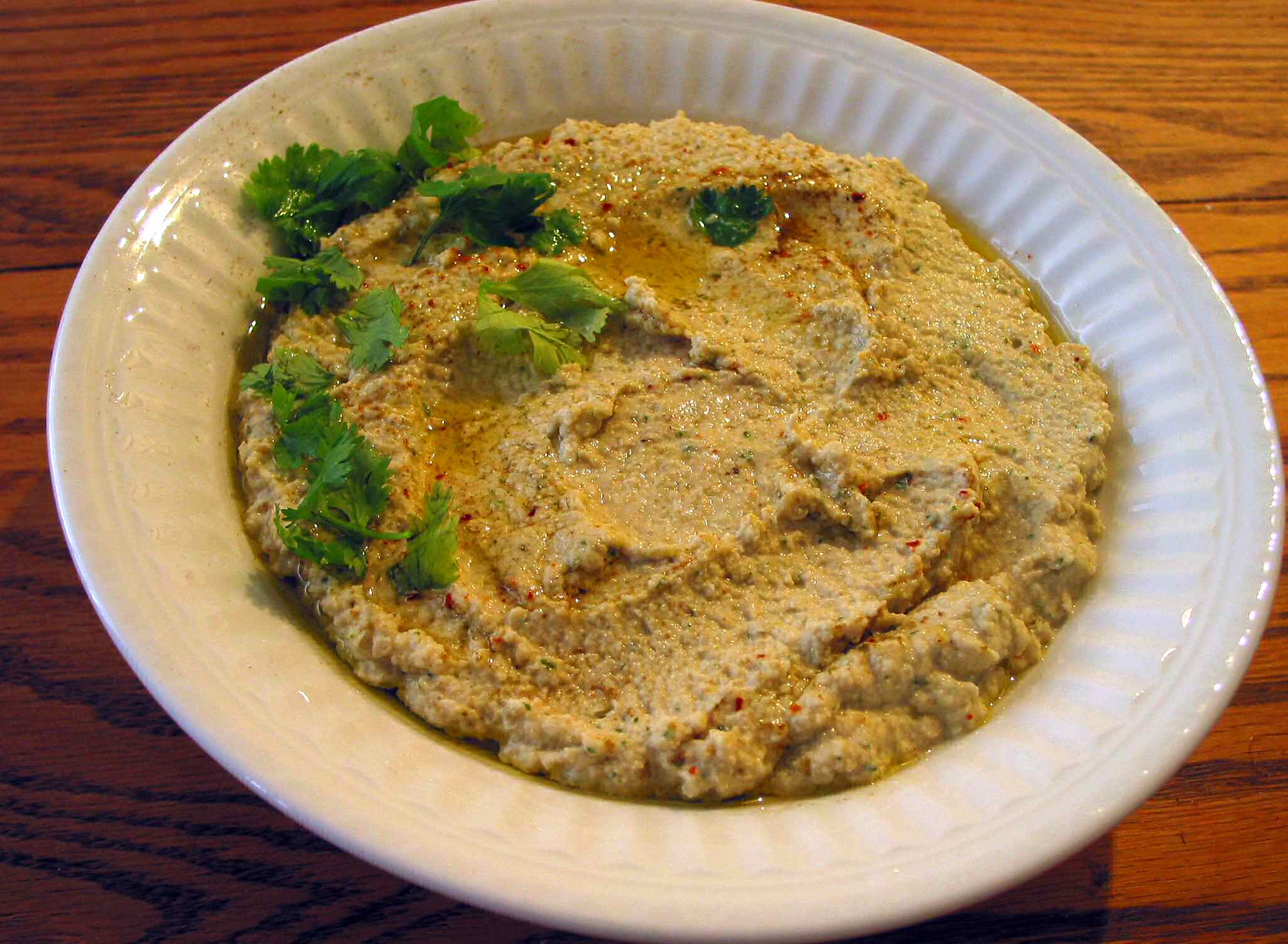
Hummus from scratchHummus is a highly politicized food these days, a situation most eaters outside Lebanon, and at a guess, most inside as well, consider slightly ridiculous. “Owning” hummus has become a point of national pride for a few higher-ups in Lebanon, which has in the past year or two followed Greece’s feta-labeling strategy and tried to appropriate sole credit for authentic hummus. At its more light-hearted, this struggle for hummus supremacy takes the form of an annual stunt in which chefs produce a hummus bowl almost the size of an Olympic swimming pool (or at least an Olympic-sized wading pool) and the triumphal photo makes the international news. But those who really take the Lebanese official origin issue seriously and grimace whenever hummus is served somewhere else are, as far as I can see, only hurting themselves.

The trouble with demanding official status is that both feta and hummus long predate the borders of the countries trying to claim them. Both are simple enough to make and so consistent from batch to batch that they don’t really exhibit much in the way of “terroir” the way aged cheeses, wines, vinegars and so on might. Feta–equally good, equally real, equally part of the native fare–is made in a lot of places neighboring modern-day Greece. Places like Bulgaria, which don’t have as much political clout in either the EU or the Slow Food organizations, and which don’t get half the international tourism. Also places further away, notably Denmark and France, which still have reasonably large sheep’s milk production. Greece may actually have succeeded for the moment in the food labeling tug-of-war, but it’s made the country look somewhat silly and petulant, unwilling to face the fact that they’ve closed the barn door at least a century after the sheep got out. Will they profit from the exclusive labeling? doubtful–and it might have been better ambassadorship to claim credit for spreading feta’s popularity and offer more recipes and products made with it.

Much to the chagrin of whoever decided in the past couple of years that hummus should be exclusively Lebanese, this simple spread is made and eaten in lots of other countries. In Egypt, it’s made with a half-and-half mixture of favas and chickpeas. And Israel, which is probably the “other country” being targeted most directly by the Lebanese hummus campaign, has eaten, breathed, and slept a more or less chickpeas-only version of hummus as an essential food (along with felafel) for longer than the state has been independent.

Unlike the partisanry in Lebanon (not that Israel has no partisanry of its own), when it comes to food, everyone in Israel–Jewish, Muslim, Christian or Druse–gives credit with a certain degree of pride that hummus is Arab food, especially if they’ve made it themselves rather than trotting down to the corner grocery to buy the bland ready-made version from a vat in the deli at the back.

That’s because everyone likes to eat it. It’s also because being a good host is really important and something of a formal habit and a chance to show off just a little–actually, I think that’s still true all throughout the Middle East. Everyone expects friends and neighbors and friends-of-friends to drop by at a moment’s notice, without invitation, especially on the weekend. The least you can do is have a bag of roasted sunflower or pumpkin seeds and a pot of hideously sweet mint tea to bring out if they show up to schmooze after supper, but in the afternoon, better if you can bring out a platter of pita, vegetables, and a bowl of hummus.

Hummus is simple Arab fare at its best–humble, nutritious, appetizing, and (now that we have food processors) easy to make a lot of so you can bring out a wide platter of it for your guests and drizzle a little olive oil and some za’atar or sumac or cumin or paprika over it for the finishing touch–right before everyone tears pita and dips in. The ceremonial thing is what makes it good hosting and is part of the fun.

Here in the US, most people buy their hummus in little plastic containers at the supermarket–not elegant at all, and a lot of money for what you get. Kind of depressing, even. Look at the ingredient list and it’s as long and discouraging as any other processed food–that’s so it can be shipped nationally and stored for a week or two in case it doesn’t all sell out the first day. Look at the nutrition label and you see highish salt, lowish protein and fiber. It’s been fluffed out with canola oil to stretch the expensive ingredient, tehina (sesame paste), and there’s not so much in the way of chickpeas even though they’re supposed to be the base.

While I’m not so much against the fluffy smooth stuff (it tastes ok, if all you’re expecting is a spoonful or two of party dip), I prefer homemade because it’s denser and more nutritious, with more iron and protein from the chickpeas, something you could eat packed in half a pita for lunch and not be starving within an hour. Continue reading

Italian Impromptu: Not Bad for an Actor (and Son)

"Don't Fill up on the Antipasto" by Tony and Marc Danza on Amazon.comDon’t Fill Up On the Antipasto by Tony and Marc Danza (Scribners, 2008)

I wasn’t expecting very much from a celebrity cookbook–mostly schmooze, a few loosely slapped-together recipes. I wasn’t actually wrong, but aside from a little kitsch here and there, and a dopey, gushy foreword from Jackie Collins, Don’t Fill Up On the Antipasto is a better-written, more down-to-earth read than you might think. Instead of a prolonged bout of “Remember me? I used to play —- on Taxi!” drivel (though there is a little; practically obligatory in a celeb cookbook), it’s mostly a Brooklyn childhood memoir with old-style Italian recipes–a throwback to the 1950s and 1960s, but a version that didn’t make it on-air in all those 1970s sitcoms.

Although the book is co-written with his son, with a few asides to Marc for his “modern” Southern California-style recipes and confirmation of one or another family anecdote (and repeat photos and mentions of the all-important toddler grandson), most of the stories and recipes are Tony’s.

Danza’s stories of his childhood in Brooklyn are the real draw for this book. He grew up in the postwar generation, at a time when children were given a lot less privilege and a lot less stuff, spanked a lot more often (and not just by their parents–any family member had authorization), and expected to be much more self-reliant at younger ages than they are today. The uncles and aunts and grandparents all lived close enough to see each other every week, and their personalities (and recipes, and foibles, and jokes, and tempers) feature prominently in the book. The result is a look back into a simpler, more direct, and often warmer way of family life than the one most of us recognize today, even if we’re old enough to remember it.

Danza was not born into a down-and-out family, certainly not for the times right after World War II. His parents were working-class, first-generation American, and when his father came home from the war with a Bronze Star, he went to work as a city garbageman. Unlike today, it was a respected job that could support a family. Instead of jeering, the neighborhood kids envied Danza for getting to ride down the street in his father’s truck. The family sent him to a Catholic parochial school and expected him to work hard at his studies, stay out of fights and gangs, and go into a profession.

It was the typical pattern for immigrant families almost anywhere in New York at that time and very close to my parents’ childhoods. Right down to the Army photo of Danza’s father, which suddenly appeared in the middle of the book and startled the hell out of me. Except for the face and the specifics of his uniform, Matty Iadanza’s official Army portrait with its distinctive Continue reading

Prunes, Lentils, and “Cookin’ Cheap”

When I was a kid, PBS, which had made a gourmet name for itself with The French Chef, decided that if one chef was good, six or seven had to be better. Suddenly the public and cable airwaves were  bursting with the Frugal Gourmet, the Galloping Gourmet, Yan Can Cook, Cookin’ Cajun, various shows with Pierre Franey and Jacques Pépin, and one…ummm…less glamorous show called Cookin’ Cheap.

This was hosted by Larry Bly and Earl “Laban” Johnson, Jr. out of Roanoke, VA–-not too far from where I grew up–and featured two viewer-submitted recipes per episode, which the guys bravely cooked and sampled on the air. At the end of each show, just like Julia Child, they sat down at the table for the tasting… and decided whose recipe had come off worse.

Now, Cookin’ Cheap was not for tenderfoots–if you couldn’t handle ingredient lists that included whole sticks of margarine and self-rising flour, or bring yourself to shop in one of the ordinary supermarket chains that had never heard of organic anything (this was the South in the ’80s), you would have done better not to watch. But if down-home cooking delivered with a touch of schadenfreude was your thing, it was a great little show.

Unfortunately, my favorite early episode doesn’t seem to be available anywhere on the ‘net. But the clip above, the Cookin’ Cheap 2.0 (YouTube) version of about a third of Episode #609, will give you some idea. (see copyright disclaimer below…)

In my actual favorite episode, Bly and Johnson hit their personal limit with a recipe that had them both making faces and apologizing to the audience that “there’s cheap… and then there’s too cheap.”

The dish in question was “Lentils ‘n’ Prunes” (you can guess the entire ingredient list). And it was indeed cheap. Unfortunately lentils, though incredibly cheap and nutritious, cook up kind of gray, especially on a semi-rural public TV station with early-’80s (i.e., yellow-ocher) set lighting. Trust me when I say the addition of mashed prunes did nothing for them aesthetically or otherwise. How on earth could they have put this on the air?

Of course, these guys didn’t have to take the blame for the recipe, and it was great entertainment to see some of the strange things your neighbors might be cooking at home and writing in to the show about with high hopes of being selected. I understand the Food Network is now copying Bly and Johnson’s reality-cooking formula shamelessly for the fall lineup…

[Actually, I didn’t realize the show had such a good run, but it started locally in 1981 and only ended its nationally syndicated run in 2002. Johnson passed away a few years before the end, but he managed to publish the Cookin’ Cheap Cookbook in 1988. Bly kept the show going with Johnson’s friend and successor Doug Patterson and has since made a couple of rescued episodes available on DVD. And the show still has fans on YouTube and — surprisingly just this March–in the New York Times.

Disclaimer: YouTube removed the first clip I linked to for copyright violation–so my apologies to Bly; the intent in linking here isn’t to rip anyone off but to highlight a too-little-known show. Because the original Roanoke station managers were too shortsighted to save the episodes (they apparently trashed them!), Bly was only able to rescue a couple of episodes for the DVD, and I think some of the others posted at this point were recorded at home from TV.]

Ah, well. Times change, horizons broaden, and we aim to challenge our palates in a sophisticated world beat kind of way even with limited cash and ingredients. The wolf may be at the door, we may be on the rice and beans yet again to make up for unreimbursed conference travel, but we are determined to do it in style–that means Indian, Moroccan, Mediterranean–French? Well, at least by not mixing plain lentils and prunes together in a hideous gray mash.

…I’m not actually sure how the French feel about lentils with prunes, or what they’d do about it if you suggested it. But I have a huge bowl of cooked lentils to deal with from a 1-lb. bag at $1.29. And a 1-lb. bag of non-sorbate pitted prunes at $2.99. Less than $5 total. And a number of ideas about how to deal with each of them, separately or together. Enough ideas that I’m probably going to have to split this post so it doesn’t turn into War and Prunes.

This, I think, is going to become my How to Cook a Wolf Challenge, 21st Century Edition.

Because I have fantasies (not many, and relatively tame though entertaining) of the Iron Chef America and Top Chef hosts announcing, for the next quickfire competition, a challenge to find three or four good ways to combine lentils and prunes in dishes where they’re the main ingredients and for which the total bill for the tasting menu comes to something like $10, including spices (prorated as used…) Can’t you just see the contestants’ faces? Take a moment to enjoy their obvious panic. The restaurant industry hasn’t trained them for this.

But seriously. What was actually behind this Cookin’ Cheap dealbreaker, other than the obvious frugality factor plus the even more obvious digestive humor that follows prunes and lentils wherever they roam?

Is there any way on earth that prunes and lentils could really go together?

Well…yes, as a matter of fact. You don’t run across prune and lentil recipes everyday, but good-tasting and intriguing variations, or at least the components of them, exist in a number of respected cuisines around the globe. Even French. For very little more than it cost the Cookin’ Cheap guys, Continue reading

Oranges as a savory

Artichoke-Orange Salad

Oranges in a savory compote with artichoke hearts

A few weeks ago, I ran across a food article by Amanda Hesser, in which she recounted her recent experience of being served a green salad with red onions, Greek olives, and oranges in it. What struck me was the way she fumed at length over having missed out for so long on this simple culinary classic.

I grew up in a Jewish household in the early 1970s, at about the time when felafel and hummus and tabouleh started making their way west into American Jewish cooking. These, along with pita, tomato-cucumber-pepper type salads and eggplant everything, were part of the larger Jewish cultural revival after the Six-Day War. Jewish cookbooks started embracing the Lebanese, Sephardic, North African, and Persian influences on Israeli food as a complement to the more familiar Ashkenazi fare. Orange salads just seemed to fit in.

In any case, orange salads have been published in Jewish and Mediterranean-leaning cookbooks for at least 25 years–notably Paula Wolfert’s Couscous and Other Good Food from Morocco, one of my first cookbook purchases once I came back from my own year as a kibbutz volunteer.
Three orange salads

The simplest orange salad I make is a basic green salad with oranges rather than tomatoes, and it goes well with oil-and-vinegar or mustard vinaigrette. Another, more of a fruit salad, is orange and/or grapefruit segments or slices mixed with a dressing of a cup of yogurt, a spoonful of ordinary red wine vinegar, a spoonful of sugar, and curry powder to taste, maybe half a teaspoon or so, enough to make it yellow-orange and aromatic, not enough to be bitter.

Another more elegant take on the green salad is something I made a few times in my early cooking days for buffet lunches at my synagogue–orange slices sprinkled sparingly with orange blossom water and a grinding of cardamom, laid down in overlapping rows on a bed of vinaigrette-dressed romaine in a tray, and red onion rings, sliced Kalamata olives, red bell pepper rings, crumbled feta, and chopped fresh basil strewn over the oranges. It was a bit much for serving at home, but it made a beautiful buffet dish, and it always got eaten.

So oranges can serve quite nicely in fresh salads, but what about in hot dishes? There’s the rub.

Orange peel I have no trouble imagining in hot savories–a number of Chinese classics use it (beef with orange peel, etc.), and so does duck à l’orange. Cooked oranges, on the other hand, always disappoint me–somehow the structure collapses, the color fades, and so does the bright acidity. They end up pulpy and stringy and less than half as good as fresh raw pieces would have been. But people persist in cooking with them–so I thought I would give a different Paula Wolfert cookbook a try.

The Slow Mediterranean Kitchen: Recipes for the Passionate Cook
(2003) features one really unusual orange-based savory: an Algerian Jewish sweet-and-sour compote of artichoke hearts and orange sections glazed in orange juice. With garlic and olive oil. Hard to imagine–does garlic go with oranges?–but so close to my standard marinated artichoke hearts, at least theoretically, that I decided to chance it and see. Continue reading

Not Gefilte

For most American Jews, gefilte fish is one of the standard, unchanging preludes to the actual dinner part of the Passover seder. And normally I have no problem with that, especially with hrein, or horseradish. By the time the recitation of the Haggadah and the explanation of the items on the seder plate are done, everyone is joking about (or egging on their kids to pipe up and ask) the Fifth Question: When do we EAT??? And gefilte fish is the first answer.

It’s worthwhile to be hungry enough for once to feel, rather than just nodding as someone tells you self-righteously, that such a modest dish, made with fresh fish in the days when most of our grandparents and great-grandparents were too poor to eat it often, can be something to look forward to.

Gefilte fish is basically an oversized quenelle of ground whitefish and pike, filled out with eggs, onion, and matzah meal to stretch it. Simmered in fish stock for a couple of hours with or without added sugar, cooled to let the broth gel, served room temperature or cold, with horseradish as contrast.

But since most of us don’t make our own gefilte fish at home anymore, it’s usually bland, salted (and sometimes sweetened) ovals of stuff pulled from a pricey store-bought jar–no longer what you’d consider fresh, and no longer economical. And it’s usually about twice as big as any normal/sane appetizer for a meal that’s going to include brisket, chopped liver, meatballs, eggs, chicken and/or turkey, and other big proteins.

Can it be made well fresh? Yes, actually, and a number of Jewish cookbooks–Joan Nathan’s among the leaders–tell you how. But do I want to cook it myself, or eat it any other time than at someone else’s seder? No. Flat out, no. Not only is it a two-hour-plus process, it’s a big chore. All for a mediocre, bland kind of fish dumpling.

The other problem this year is that my daughter is now diabetic, and for the first time I’m going to have to help her count carbs so we can give her the right amount of insulin for a seder meal that will probably last over two hours. It’s tricky enough to do that accurately for a restaurant meal–desserts, which come last and for which the menu isn’t usually even presented until you’ve already eaten the meal, are by far the hardest foods to estimate by sight.

But traditional Ashkenazi-style seder dishes like gefilte fish and matzah ball soup are stuffed full of surprise carbs too, and you can’t be sure how much they contain unless you’re the cook. And that’s not counting the mandated matzah and haroset. All you can say is, all that matzah meal really starts to add up. Will my daughter overrun her carb count before she ever gets to the meal itself, with a chance to risk it on (more matzah-filled) desserts?

If I cook some kind of fish during Pesach week, I want it to be fresh and without much in the way of carbs. Most of all, I want it to taste good. Actively good. Continue reading

Getting Sensitive to Snacks

In the past two weeks since my daughter returned to school as a newly diagnosed diabetic, we’ve started finding out just how many times a week students are presented with treat foods as extra snacks, even outside of what they bring from home. Happens at least twice a week. Why? They’re not in kindergarten.

I know I kind of “got into this” in my post two days ago about making hamantaschen lower in carbs. But my lingering amazement at the automatic and frequent food handouts in class, between snack and lunch even, got a boost this morning when I read the New York Times article by Tara Parker-Pope on the big rise in kids’ snacking over the past 30 years.

Barry Popkin, a nutrition researcher at UNC-Chapel Hill, and one of his students have just published an analysis of American kids’ snacking over the past 3o years. They compiled data from four national diet and health surveys and found that kids are now snacking an average of 3 times a day, mostly on cookies, chips, candy, sodas etc., not vegetables or whole fruits. They’re taking in more than a quarter of their daily energy, about 600 calories, from these low-nutrition processed foods. That’s 168 more calories on average than 30 years ago, and kids 2-6 seemed to be in even worse shape.

The percentage of kids who snacked at least once a day in 1977 was about 75%, but now it’s up to about 98%. About half the kids today snack 4 times or more per day. Some snack 10 times a day. What on earth?

This article in the NY Times “The Well” section was quickly followed by another in which Parker-Pope reviews countering arguments about the real harm a single cookie a day may or may not be doing. Studies cited a bit more vaguely than the Popkin study may suggest a lack of consistent benefit to insisting that everyone cut out a cookie a day to lose weight.

Will cutting out a cookie a day help if you’re eating other extras instead or not exercising? Maybe not–in fact, probably not. But I have to wonder why this hedging, wishy-washy kind of article followed so quickly on the heels of the report on the bigger study with hard numbers.  Does Parker-Pope’s second piece negate what Popkin and his student Carmen Pierna have reported on snacking trends? Not legitimately.

My daughter actually needs to eat a snack between meals these days. But she’s an exception, not only for needing it at age 9 but for eating a specific and limited snack with some nutrition to it in a timely, coordinated way rather than grabbing up unlimited treat foods without regard to the regular meal plan.

Automatic, constant, reason-free snacking–now not even limited to snack time!–is just not a necessity. It’s a habit that’s snowballed until it seems so normal people don’t even realize they’re doing it anymore or why it’s not a good idea.

All I can say is, it shouldn’t take having to be diabetic to notice the excess snack habit and steer clear. Is it time for the Great American Snack-Out?

Low-Carb Hamantaschen Without Artificial Sweeteners

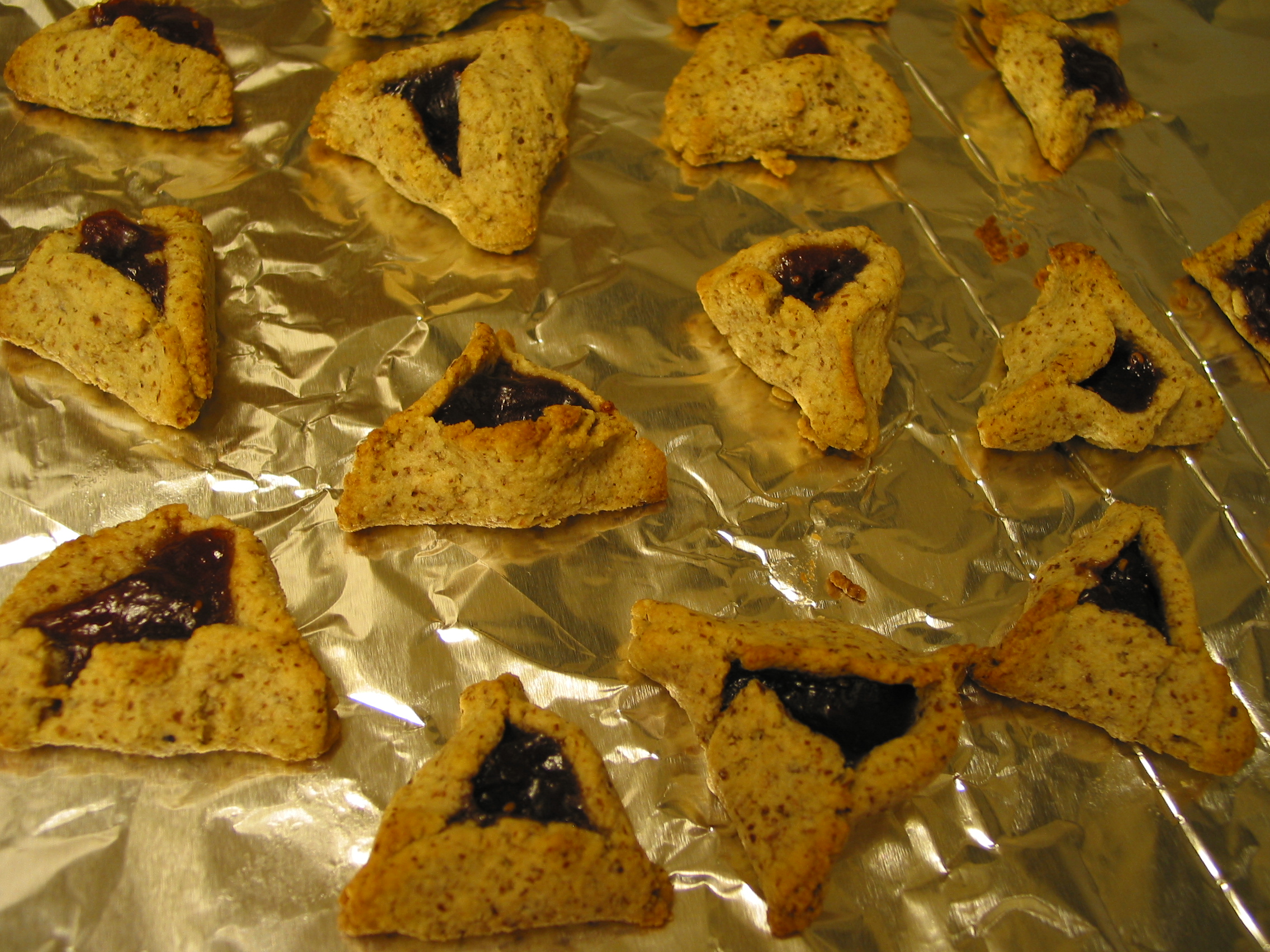
Almond meal-based low-carb hamantaschen

The first batch didn't roll out so easily, but these coin-sized minis tasted pretty good. The next batch rolled out thinner and held together better for a larger cookie with a delicate crust.

Baked goods are a big part of Jewish holidays at this time of year. Purim, being celebrated this weekend, is the last big baking bash before Passover, and hamantaschen (named for the hat, ears or purse of Haman, the villain of the story of Esther) are the cookie of choice. But with a diabetic kid in the house, the usual prospect of baking them takes on a bitter edge.

Hamantaschen–in fact, most cookies–have enough grams of carbohydrate that just two medium-sized cookies contain about half of what she’s supposed to have in any given large meal, twice what’s recommended for a snack, and they don’t have enough fiber or protein to slow down the sugars and avoid a spike in blood glucose. In short, not high-quality nutrition (not that we expect cookies to be). A grownup would have trouble dealing with the prospect of leaving them alone when everyone else gets to have them, but a kid faced with Purim celebrations at school or synagogue is bound for a certain degree of heartbreak.

It’s made me rethink our whole attitude toward things like Girl Scout cookies (this is also the season for that), chips, M&Ms, in fact any casual snack food that gets handed out innocently at school (our current woe–apparently my daughter’s teacher does this kind of thing at least weekly). The snack habit–anytime, anywhere, any or no reason–has become so ingrained in daily life we hardly think about whether it’s appropriate or not. Certainly the handouts are happening more and more frequently in class than I remember when I was a kid–did teachers even hand out treats back then? Not in my elementary school. It’s especially hard for a kid to “just say no” (and we already know how well that advice works in other contexts) when everyone else is taking a cookie or some M&Ms as a reward for answering a question (can they even keep their minds on the subject)? And even worse when it’s the teacher handing them out, because the teacher’s supposed to know whether it’s ok to eat or not.

Maybe we shouldn’t be handing these things out so casually or so often? Because while most people can handle surprise extras like these, they’re probably not all that good for anyone to eat indiscriminately at just any time of day. If they’re spiking a diabetic kid’s blood sugar, you can be sure they’re doing the same thing to your kid’s blood sugar too, only his or her body is responding with extra insulin to cover it. We get to see the results directly every couple of hours with our daughter–complete with sudden attacks of giddiness or tears if things peak and crash too quickly. But the same kind of thing happens to some degree to a lot of kids who aren’t diabetic, and they probably get reprimanded for it. Probably happens to a lot of adults, too.

Still, it’s the holiday, and total deprivation from treats is not really my aim today. So I’ve been trying to figure out a revised recipe for hamantaschen with a more manageable carb count, and preferably one without artificial sweeteners since my kid is still a kid. And neither of us wants it to taste like chalk. Very important.

I start most years with Joan Nathan’s cookie-dough hamantaschen recipe from The Jewish Holiday Kitchen because it’s the best dough I’ve ever tasted for these, even though it’s pareve (non-dairy, non-meat) and doesn’t have butter or cream cheese or the like. It’s not too sweet or too dry, and it doesn’t look or taste chalky or pasty like some of the dead-white offerings at the Purim carnivals. It tastes like a pretty good cookie, and it works really well for rolling out.

Looking at the carb count breakdown for that recipe, at about 12-15 g each, it might not be so bad to do regular hamantaschen, but my daughter would need to eat one or at most two with something protein or fiber, and she’d need insulin for it, so she couldn’t just grab one in between the planned meals. Kind of a pain, no doubt about it.

I was hoping for something closer to carb-free so she could eat hers with impunity when everyone else is eating theirs. This year I scanned the web for low-carb hamantaschen recipes and found only one Continue reading