
• Enter your email address to subscribe to this blog and receive notifications of new posts by email.

    Join 241 other subscribers
  • Noshing on

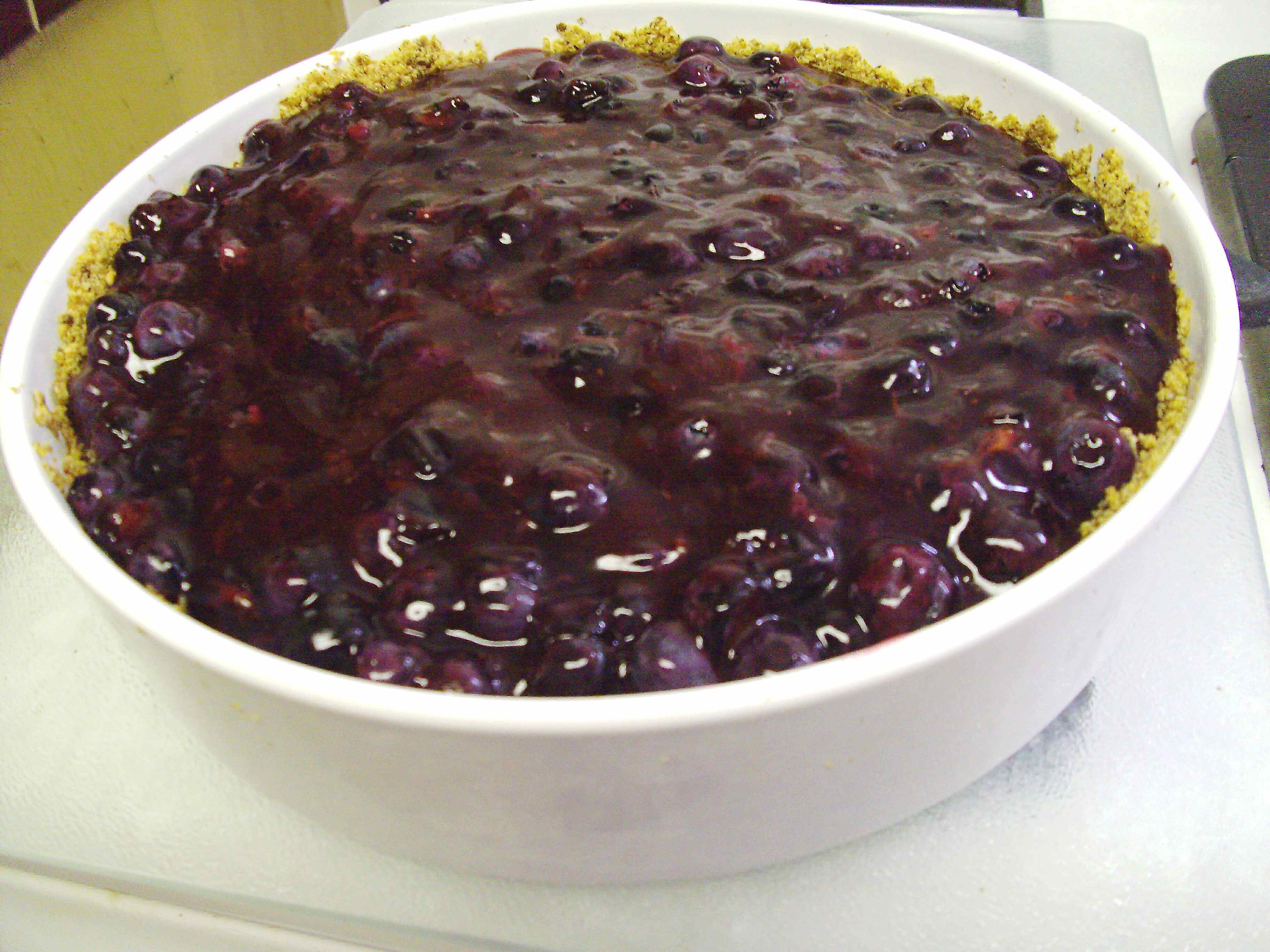
    raw blueberry pie with microwaveable filling and graham cracker crust

    This mostly-raw blueberry pie is a snap to make and very versatile--the filling microwaves in a few minutes, and you don't even have to bake the zippy gingered graham cracker crust--perfect for a hot Fourth of July and all summer long.

  • Recent Posts

  • Contents

  • Archives

  • Now Reading

  • See also my Book Reviews

  • Copyright 2008-2024Slow Food Fast. All writing and images on this blog unless otherwise attributed or set in quotes are the sole property of Slow Food Fast. Please contact DebbieN via the comments form for permissions before reprinting or reproducing any of the material on this blog.

  • ADS AND AFFILIATE LINKS

  • I may post affiliate links to books and movies that I personally review and recommend. Currently I favor Alibris and Vroman's, our terrific and venerable (now past the century mark!) independent bookstore in Pasadena. Or go to your local library--and make sure to support them with actual donations, not just overdue fines (ahem!), because your state probably has cut their budget and hours. Again.

  • In keeping with the disclaimer below, I DO NOT endorse, profit from, or recommend any medications, health treatments, commercial diet plans, supplements or any other such products.

  • DISCLAIMER

  • SlowFoodFast sometimes addresses general public health topics related to nutrition, heart disease, blood pressure, and diabetes. Because this is a blog with a personal point of view, my health and food politics entries often include my opinions on the trends I see, and I try to be as blatant as possible about that. None of these articles should be construed as specific medical advice for an individual case. I do try to keep to findings from well-vetted research sources and large, well-controlled studies, and I try not to sensationalize the science (though if they actually come up with a real cure for Type I diabetes in the next couple of years, I'm gonna be dancing in the streets with a hat that would put Carmen Miranda to shame. Consider yourself warned).

LA County gets school lunch program wrong

The LA Times recently reported that the public school cafeteria revamp the county worked so hard on for this year is a dead flop; kids are dumping whole trays of the healthier dishes they approved of in focus groups over the summer.

But there’s a catch: the dishes, which replace the concession-stand burgers-fries-pizza formula, were prepared well over the summer. The students say a lot of the stuff they’re being served now in the guise of “healthy” whole-grain salads and so on in the actual cafeterias is inedible: undercooked or burnt rice and other grains, undercooked meat, moldy bread, milk and other sealed cartons past their due dates, and so on. And when the students brought it to media attention, some of the cafeterias responded by removing the due dates.

The story was so eye-catching the New York Times picked it up last week to throw the issue to its own readers for comment. (Or you could say it regurgitated it–near the truth; the major newspapers seem to be following each other a little too closely these days. What is this, Reader’s Indigestion? what’s the nation coming to???)

The comments–well, as always for newspaper free-for-alls, they’re not generally on the ball. Most bashed the school board for being too liberal and trying to shove ethnic variety dishes like pad thai down the throats of poor kids trained on burgers and fries and pizzas. A lot of them were bemoaning the complete success of the fast food concessionaires in conditioning our kids not to like or even tolerate real food. A few–those who can read and think?– pointed out the spoiled or miscooked food problems mentioned in the LA Times but not in the NY Times digest version.

They all seem to have missed the most serious point, though: the school district may have retooled the menus, but they haven’t restored proper working kitchens to the school cafeterias. There’s no proper cooking facility behind that wall–certainly not for a thousand or so kids in each school. A lot of the new dishes are still being prepared offsite, just as the pizzas and burgers and fries were. Those prepared onsite are handled by staff used to doing nothing more complicated than heating up a bunch of frozen boxes from a concession company using minimal “kitchen” facilities.

The fault in the LA Unified School District healthy food menu plan lies partly in its complexity and partly in its execution. Upscale restaurant-style dishes might not be the best way to go for a first run at better food, and not just because they might repel students used to commercial stodge. They’re a bad starting choice because they’re more complex than the minimally experienced and underequipped cafeteria workers can handle on site, and the facilities that produce them clearly haven’t got their protocols down for “quinoa salads for 1000”.

The freshness factor is another problem. With “just reheat” trays of frozen pizzas, burgers and fries, no one has to think about sell-by dates. Heck, the sodium level is so high they probably don’t even need to freeze the meals. We’ve all seen the blog post where the woman let a Happy Meal sit on one of her shelves for an entire year…and nothing appeared to have changed in all that time. Real food with expiration dates? The school cafeterias are now out of their depth.

But by the same token, the schools shouldn’t have to throw in the towel so easily and go back to pizza, burgers and fries.

What would have been easier to get right–better balanced, and with better buy-in from the students–might have been “build your own” sandwich and/or salad bars.

You see the complicated versions  at any Whole Foods or Souplantation. But pick one theme per day–brown-bag sandwiches, Italian subs or hoagies, felafel and pita, soft tacos… Offer two or three nutritious and fairly familiar choices for protein fillings, one of them vegetarian. Two or three raw, fresh vegetables as accompaniment and a choice of sauces or toppings, and fairly simple bread. Then you’ve got the makings of something students can deal with and find appetizing as well as nutritious, but without a lot of complicated prep.

You don’t have to provide a zillion choices for lunch every day. You don’t have to salt or bread the dickens out of the fillings, and you don’t have to provide sweetened, oversalted sauces for them. Fewer ingredients and processes are better. Just make sure the food is fresh.

I wish to god the school cafeterias and the board members who debate what they serve would stop trying to imitate the  chain restaurants or the upscale restaurants–or indeed any restaurants. It’s lunch, not a field trip downtown to the California Science Center, where the brand-name burger chain running its concession stand/cafeteria sends the smell of frying grease wafting up to every one of the exhibits to make sure you know what you’re really supposed to be paying attention to.

Why don’t school cafeterias do regular sandwiches anymore?


Pecans, Profits, Poverty: reason to remember the gleaners

From the New York Times today:
In Georgia, Pecan Thieves Find Windfall, at $1.50 a Pound

Now I know stealing is stealing, and scrumping is scrumping, but there’s a decent argument in here somewhere for leaving some of the fallen nuts for the poor to gather–even if it’s to sell to local nut brokers at a dollar-fifty a pound. The farmers claim their losses are growing this year–small wonder!–but one of the biggest growers estimates he’s selling 7 million pounds and the thefts total to about 10,000 pounds. Less than one percent. The article quotes $3 per pound as standard wholesale–all I can say is, out here in California our best local price is $9 per pound for shelled pecans (I don’t bother with the ones still in the shells; I’m not that good).

Some of the thieves are stealing amounts large enough to be serious theft–1400 pounds in one case–and cutting fences to break in. You get no argument from me for calling the sheriff on them. But most are genuinely poor–laid off and out of work, trying to make 15 or 20 bucks with the bit they can gather in a bucket or sack from the edges of the local pecan groves. Yes, that starts to add up if you have 50 people doing it, and yes, it’s more than one person would expect to be able to eat because they were hungry, but perhaps the talk of theft should be reconsidered and turned around to a discussion on gleaning, and not trimming the corners of your fields but rather leaving the last bits of the harvest for the poor to gather. The amount of money these small-scale gatherers can expect to make by selling to the local nut brokers is paltry and nowhere near in competition with the price the growers can get per pound.

Ironically, if the growers let locals pay a significant discount price per pound–50 cents a pound? 75 cents? to gather fallen nuts themselves after the main harvest, as many apple orchards do, they might reduce the incentive for break-ins, reduce their financial losses from theft and security costs, and save themselves some labor and wear-and-tear on their expensive ground harvesters. And they might still be seen as generous.

Stuffed onions in a hurry

Stuffed onions ready for steaming in the microwave

With a microwave and a frying pan, you can make stuffed vegetables like Mehshi Basal quickly, and they taste even better than with long roasting. These are just rolled and ready for a few minutes of steaming in the microwave.

Just after Rosh Hashanah I posted my first-ever attempt at an elaborate Syrian Jewish dish of sweet-and-sour stuffed eggplants with quince, and because I had more stuffing than I needed, I went for seconds with Aromas of Aleppo on the spot and tried out the Mehshi Basal, or stuffed onions with tamarind sauce, which was actually even better. It was easier to put together and I was patting myself on the back when we tasted the results.

Still, given that I was using a lentil stuffing in place of ground beef, I was a little dismayed at how long the traditional braising and roasting took to cook the onions all the way through–an hour and a half at least, and that was after stuffing them. A second attempt in November, this time exclusively with stuffed onions for a congregation brunch, did no better on time, and I came away thinking that roasting was an extremely inefficient way to cook these–might even have toughened them inadvertently.

Why, you have to ask, should I make such a big deal about stuffed onions–they’re a party trick, after all, not standard cooking. But we discovered we really liked them, and they’re a pretty good kind of party trick. They were a surprise hit at the brunch. If I hadn’t snuck myself one while setting up in the kitchen, I’d have missed out altogether.

Actually, I think they fascinated everyone as much for the magic trick as for the flavor. People who’d never tasted them before kept coming up to me–and even my daughter–to ask, “How do you get the filling into the onions???”

If they hadn’t been so time-consuming I could have made double the amount and they’d still have disappeared. Or I could throw them together easily just for us on the odd weeknight as a treat–but one with some iron and fiber in it–instead of the standard pasta or rice.

So in the time since, I’ve finally rethought the process and come up with something that requires no oven time and cuts the actual cooking after stuffing them down to about 20 minutes or so–as long as you already have some cooked lentils (microwaved to perfection in about 10 minutes of cooking time and 30-4o minutes of standing time) and tamarind sauce (or “mock tamarind” sauce, a 5-minute microwave-assisted blend of prunes and/or apricots with water and some lemon juice, plus-or-minus tomato paste, applesauce and other flourishes you don’t really need for this) to hand.

I know, you probably don’t have these things sitting around. But this recipe might change your mind. Lentils are good stuff even on their own, and the stuffing here is a knockout.

Even genuine tamarind sauce isn’t so bad anymore, assuming you don’t or can’t just buy a prepared concentrate. I’ve sped the process up from an hour-plus to a few minutes just by nuking it, pulsing in a food processor, and this time, neither filtering it quite so aggressively as I did back in September NOR bothering to boil the stuff down to a sticky residue. It’s so much less painful, and I think it even tastes better, with more of the fruit character left in. See my notes at the end of the post for how to do it the quickie way (in modest jam-jar quantities, not quarts).

Anyway, back to the stuffed onions. I’m actually proud of myself for this one, and I’ve tried it three times in a row so I can vouch for it–the last time, I put my daughter to work stuffing the onion layers, and she did a great job.

For this method all you need are a microwave oven, a frying pan and a food processor. Instead of boiling the onions for 20 minutes to separate the layers, you microwave them in a drizzle of water for 5. Instead of braising the stuffed Continue reading

DIY Pasta–no chic gadgets needed


handmade pasta, cut for ravioli

A few months ago I was surprised to read an interview with the British actress Emma Thompson–not about her acting, or producing, or screenwriting, or whatever, but about her having acquired a pasta machine so that she and her family could have fresh pasta at home.

What surprised me is that she called it a revelation, or revolutionary, can’t remember which. I think it came up in relation to a short dramatic interpretation of a poem called “Song of the Lunch” that she and Alan Rickman did for the BBC last year. It’s about 20 minutes long, posted on YouTube in sections but in its entirety, and it’s actually not bad, though not as funny about foodieism as “The Trip”. The main thing about it is that it takes place in an Italian restaurant in London. Hence the pasta issue.

Over the course of a misspent youth (which I’m still in, thank you very much) I have tried a number of times to make sheet pasta myself, with varying degrees of success.

  • Buckwheat noodles–grainy and dry. Try this soba recipe instead.
  • Jao tse dough made with flour, salt, and boiling water–a little thick but it worked well enough to boast about
  • Ravioli dough made with half egg, half water (this was a few weeks ago)–grainy, sticky, hard to roll evenly to the right thickness.
  • Yesterday’s classic pasta dough from Marcella Hazan, just flour and eggs–just right. In fact, the only right recipe there is, I’m now convinced.

So of course this post isn’t really revolutionary–I’m about 20 years behind the “Wow, you can make pasta at home” trend. And I refuse to call it “a revelation”, as fresh food that includes actual garlic always seems to be for the British. It’s just that it finally worked, came out pretty well, and wasn’t as hard or as time-consuming as I thought. Take it as read.

I should back up and say I never actually managed to pick up either a proper cranking pasta machine, even though you can sometimes find one at Ross for Less at under $20, or a proper long dowel-style rolling pin, which Hazan deems necessary for hand-rolling. This still worked very well.

Why no pasta crank for the crank? Why no artisan rolling pin? I’m not good about kitchen implements that are hard to store, particularly now that the drawers are out in the garage and the counter space is severely limited. I use an empty wine bottle, the tall hunch-shouldered kind with a long straight barrel and short neck. It stands up in a corner when not in use and doesn’t take up space. I also don’t roll any dough directly, but between two sheets of plastic wrap with a little flour or–my great new discovery, especially for this pasta dough–parchment paper. Works incredibly well, better than the plastic wrap, because it doesn’t wrinkle and stick.

In any case, the one kitchen gadget (other than the microwave, the toaster oven, or the coffee maker) that I’m always willing to give counter space to is my food processor (also not fancy–a $30 Hamilton Beach with a big work bowl, not a $200 Cuisinart).

Because although I’ve watched my share of “Make Your Own Pasta” cooking demos over the years where Mary Ann Esposito or the guest du jour on Julia Child cracks eggs into a well in a bowl of flour and “incorporates them” gradually, I know perfectly well from hard experience that kneading by hand is going to precede rolling out by hand, and that the food processor will make at least one of these ordeals a lot faster and less of a pain. It will also give me a better product. Pasta needs a lot of kneading–8-10 minutes!–to develop the gluten and get it to a smooth uniform texture that will hold when you roll and stretch it very thin.  I’m not that good or that patient. Or at least I wasn’t yesterday.

The rolling is the big thing–you have to get that dough thin enough to the point where you just begin to see through it. You don’t want it breaking, but it really Continue reading

School lunch vs. Congress: Ketchup all over again

The House and Senate’s reconciled spending bill–surprise, surprise–now strips out the new USDA rules on school lunches. You know, the new rules to lower sodium, limit potatoes as in french fries, and debunk the idea that the smear of tomato paste on a commercial frozen pizza slice sold to the school through a fast food concession contract somehow counts as a vegetable. Those rules.

The spending bill is due for a final vote later this week and you won’t be surprised at all to find that the “no new lunch” provisions come primarily from the hands of a number of Republicans in both houses. Worse, one of their chief arguments is that because vegetables other than potatoes, corn and other starches are expensive, the schools shouldn’t have to comply.

But who made–and keeps making, take a look at the other parts of the spending bill–greens so much more expensive to grow than wheat, corn, soy, potatoes…the big heavily-subsidized commodity crops? You got it.

The shamelessness is everywhere though. While trying to verify the details of the bill in the Washington Post article, I looked up “House Budget Committee” (which isn’t exactly it; the official spending bills for the House come from the Appropriations Committee, but I wasn’t thinking official terminology first thing before coffee this morning).

I was disgusted to find an official House committee page apparently dedicated to singing the outsized praises of one party’s platform rather than to presenting actual public business–bill texts and status, committee assignments and mandate–conducted by and representing the work of all the members of the committee, whatever their party affiliations.

The Budget Committee’s chair, Paul Ryan, has commissioned a web site so grossly propagandist and silly it should be a public embarrassment. Go visit it. Am I wrong? Or does almost every single item on the front page mention Paul Ryan prominently in tones that suggest he led the Battle of the Bulge or launched NASA or some equally visionary achievement?

Given his performance in the GOP debates and the many polls that show his true popularity among voters, I shudder to think how much he had to spend out of the committee budget to get someone to put up such a flattering page.

If the House wants budget cuts, maybe this is where the supercommittee (and is that ever an overrating) should start. And then they should get back to work and put some actual food on the tables in public schools. $6.8 billion to improve school lunches and the federal breakfast program for low-income students is a pittance. It’s not enough to do everything students need, but it would do a lot if it weren’t wasted battling the processed food lobbyists over salt, potatoes, pizza, tomato paste and ketchup.

As it is, the food lobbies are likely to win this round in the legislature, or so the newspapers predict.

What power is left? Your purse. Your vote. Your phone calls to your senators and congressional representatives.

Likewise your ability not to pay for garbage. Boycott frozen pizza. Boycott french fries. Boycott soda. Stop buying this stuff for home and tell your kids why. These shameful food substitutes are a lot more expensive than they look. Pack your kids a real lunch–it could be leftovers or a sandwich, but pack something with protein, a little whole-grain starch, and actual vegetables. Maybe a fruit. Keep it cheap and whole–apples/oranges, not passionfruit.

I would also like to see students whose families can afford it to chip in by bringing a bag of apples to school, or a bag of carrot sticks, or a can of tuna, or a pound of cheese or a loaf of bread. Not every day, but every week or month. I have the idea that if all of that donated food went into a kitty for the low-income students, they might eat better than the way they do now.

Tabbouleh vs. me

Exhausted. Yesterday I brought enough lunch food for 65 or so people at services because (get this) my husband signed us up to prepare the kiddush in celebration of our anniversary. Which is coming up in a couple of days. Ok. But I still have a tiny galley kitchen and all the drawers are still out in the garage awaiting some kind of decision on their fate–they have been that way since before we moved in, because they’re so chewed up I didn’t really want them back and haven’t decided what to replace them with yet.

And I think we (meaning I) did pretty well for costs by not doing the usual buy-salad-in-a-bag-for-thirty-bucks  and buy-a-big-commercial-sheet-cake and buy-a-vat-of-decorator-hummus.

But let me explain something I learned the hard way about making things from scratch. There’s a reason the boxes of commercial just-pour-boiling-water-on-it-and-wait tabbouleh are so tiny.

It’s not just all about profiteering–as you’d think I was going to say. Even I thought I was going to say that. But no.

At my local Armenian greengrocer’s I bought a 2.5 lb bag of #2 bulgur (the number denotes size of the cracked wheat grains) for $2.52 and a couple of bunches of parsley and lemons and a bunch of scallions and thought I was clearly way ahead of the Near East and Sadaf-purchasing folks. And yes, bulgur is microwaveable if you have a good-sized container. Just add water to cover by about an inch, put on a lid, and microwave 3-5 minutes, or enough to get the water to about boiling temperature, and let it stand about 15 minutes to absorb the boiling water. Then drain it and add lemon juice, olive oil, chopped parsley and scallion (and mint if you like it) and a bit of salt. More parsley than grain if you’re Lebanese and being authentic. Less green than grain if you’re doing what I grew up with.

What I didn’t take into account was exactly HOW MUCH tabbouleh one innocent-looking little pound of dry bulgur, or about 2 cups, actually makes.

Let’s just quietly admit it was considerably more than a salad bowl’s worth. So the expensive boxes you see in the Whole Foods, the little 4-6 oz. boxes, are probably just right for a family of less than 14.

I ended up freezing half of the grain in bags. I don’t think I’ll bother telling my in-laws before I bring it up for Thanksgiving. Wouldn’t want them to find themselves a pair of plane tickets just in the nick of time…


Artificial sweeteners–false promise for lower carb counts?

Last Saturday night my family visited a couple from our congregation and had dinner in their sukkah. When we broached the question of what there would be for dinner so my daughter could get an idea of how much insulin to take, the husband announced that he too was diabetic–Type II, for several years. What followed was a bit of a culture clash.

I’m sure he meant to be encouraging as he declared that through a combination of self-discipline and exercise and not eating more than a very limited number of carbs per day (and they really were about half of what our daughter is supposed to eat) that his A1C tests were down in the normal range and he only had to test his blood sugar twice a week. Which of course is fine and nearly ideal for a Type II diabetic if it actually works.

I’m not entirely sure how my daughter took all of this, but he went on to dismiss another Type I diabetic we know as “paranoid and overdoing it” because she tests 6 or 7 times a day, which he assumed was unnecessary since he didn’t need to do that.

He had the shining confidence of someone for whom not much had ever gone awry and, having no idea how lucky he was, assumed it was down to his own skill rather than the fact that he had a working pancreas, wasn’t growing anymore, and wasn’t a girl. All big factors for blood glucose control. Clearly he’d never had a bad low with shakes from an overdose or hormonal surge, or a really sharp unexpected high from a shot that just didn’t get where it was supposed to go.

I was more tactful than I’ve ever been in my life when I pointed these things out. You wouldn’t have recognized me, I swear!

Oddest of all was his insistence that the real secret was his use of artificial sweetener, which let him enjoy all kinds of great desserts. I was puzzled–baked apples sprinkled with xylitol? Surely the apples themselves were pretty carby–as well as pretty sweet on their own. The carb difference between using artificial sweetener, a tablespoon–or even two–of table sugar for the pan, or just leaving the apples to bake without sweetener, would be pretty minimal per serving.

And indeed our host only took two wedges for himself.

The other dessert–and it did taste decent–was chocolate ice cream sweetened with xylitol. Given that the ice cream in question was a plain flavor from my usual brand, I was able to compare it with the ordinary version for carb with reasonable confidence.

It was plenty sweet–maybe sweeter than normal, for that matter. But for carbs?

There was no difference. 17 grams per 1/2 cup serving, xylitol or no.

Which brings up a sobering question: why use artificial sweeteners if they don’t lower the carb count significantly? Continue reading

When life hands you sour cherries, pit them!

Sour cherries after microwaving

Vishniak–I’m probably spelling it wrong–is sour cherries turned into a compote, a syrup, a soda (as in, Frank’s Cherry Vishniak from Philadelphia), or a cherry brandy.

How do I know, you ask. Ah–(and with the “Ah” I’m pulling a Dad and giving you the flavor of a particularly smug conversation he had explaining it all to me when I was 15 and had never heard of vishniak either). Because my mother’s father, as it turns out, had made a particularly fine cherry vishniak by accident, about 20 years before this story begins.

My Grandpa Abe came to the States in 1923 as a child from a harsh place whose main compensations were family, music, tea, Bessarabian grapes, and the cherry harvest. His family had survived the pogroms in the Ukraine, his father had survived being drafted into (probably the Tsar’s) army during the Bolshevik Revolution and decided that was enough already, and the family arrived on the last boat allowed to bring Jews into Ellis Island that year–sometime in August.

The family started out dirt-poor, with no English, stripped of everything by the old Russian and new Soviet border guards. And yet Grandpa ended up a doctor, head of internal medicine, energetic and cheerful, unusually beloved by the nurses in the ICU, and an avid world traveler in his later years (my grandmother was a little less thrilled, but a good sport and better at languages than he was).

Some time in the late 1950s, out on Long Island, a friend gave him a gift of sour cherries, which he quickly put up with sugar and vodka in a sterilized glass Mott’s prune juice jug (why, oh why did all four of my grandparents keep prune juice in the house? I never figured it out. They weren’t even out of their 50s when I was little, and I’m almost 50 now myself.)

But in any case Grandpa put the vishniak jug in a dark, quiet corner of the garage to mature for a couple of months and promptly forgot about it.

He and Grandma moved into a New York City apartment sometime in the mid-1960s, and then in the late 1970s, when I was 15, he retired and they moved back out to Long Island. My family came up to help them sort things out–and that’s where my dad started rooting around among the boxes in the garage and found a dust-caked jug with a faded Mott’s label and some dark reddish liquid and cloudy, lumpy slush at the bottom.

“Abe!” he said, horrified. “What are you doing keeping this old jar? And what the hell’s that stuff at the bottom?”

My dad had just spent at least an hour finding similarly dubious-looking treasures of neatly folded foil, rubber bands, wax paper, and other saved-up sundries that my ever-careful grandparents had paid good money to have moved back out of the New York apartment. Was this yet another such item meant to ward off the next Great Depression, or was Grandpa collecting surgical specimens for posterity?

My grandpa took one look at the cloudy jar and beamed–it had all come back. In true shtetl fashion, he uttered the magic word–“Ah!”–and with no further explanation, bustled around in the kitchen to find a couple of sherry glasses that weren’t too dusty. Dad wasn’t looking too thrilled.

In even truer shtetl fashion, Grandpa returned and promptly challenged my dad to a game of chess to celebrate. We kids were left baffled, but not for long–as the game was set out, we each got a tiny sip, and it was incredible.

It turned out that forgetting the cherry vishniak for 20 years or so was the best thing Grandpa could have done to it. When Grandpa opened the jar the vishniak aroma alone was so developed, so rich, that Dad just stopped kibbitzing in his tracks for a minute and inhaled reverently. The liqueur was a clear bright red–astonishing after 20 years–and at the bottom were all the brandied cherries. When it was time for us to leave, Grandpa filled us a little Paul Masson carafe (remember those?) with vishniak to take home.

Now, I don’t have the head for anything more than half an inch of wine–and that’s actually something I inherited from my dad more than my mom–but my local Armenian grocery was selling fresh sour cherries this summer and I managed to snag a box. What to do with them? I washed and stemmed them, then stuck them in the fridge until I figured it out.

This was not really a great move. They sat for at least 3 weeks in there–it’s a miracle more of them didn’t go moldy, but I lost quite a few when I finally opened the container today. The price you pay for dithering. I sorted them, washed the good ones really well and pitted them with a sharp little paring knife. But what now?

I have a bottle of vodka from years ago–still unopened, maybe I’ll use it next summer and put up some vishniak. But there aren’t enough cherries this time around. So I decided to try making a quick preserve the way I do with cranberries.

The raw cherries aren’t really that sour–they’re more bitter with a faint sweetness, like the wild unofficial and unrecognized variety that used to grow at the edges of the woods in the backyard when I was a kid in Virginia. But I decided to try them anyway.

I had a smallish bowlful–maybe a cup, cup and a half, of pitted cherries–and put a couple of tablespoons of sugar on them. Lemon–no lemons in the house. Citric acid “sour salt” I had in a shaker–you can get Rokeach brand in the Jewish section of your supermarket’s International Foods aisle, next to the Telma bouillon cubes and the unsold jars of Manischewitz gefilte fish from last Passover. But a little goes a long way–one modest shake was plenty.

Then–you won’t be entirely surprised at this, but I covered the bowl with a saucer and nuked it for 3 minutes on HIGH. It didn’t gel–I think you need a lot more sugar to make it gel without adding pectin–but it did make some liquid, and the smell–I’d taken all the pits out carefully before microwaving, but there was still a distinctly almondy smell when I moved the lid a little. Powerful stuff.

A tiny taste–heady and bursting with cherries. With more sugar, more cherries, and a bottle of vodka to add it to, in 20 years it might be worth talking about. But in my house it’s not gonna last that long.

I’ve learned my lesson–if you’ve got something rare like fresh sour cherries at a good price, get with it and use them right away. You can freeze them after you pit them, or you can cook them–or put them up with sugar and vodka, though I don’t think Mott’s is still issuing its juices in glass jugs, more’s the pity. The main thing is to act swiftly, and if anyone gives you trouble, threaten them to a game of chess.

Green Lentil Sausages

A month or so ago I had been intrigued with a recipe on “Is This My Bureka?” (see sidebar for link) for Romanian mititei, a spicy cross between meatballs and sausages, and wondered whether I could make a vegetarian version with green lentils. Not because I can’t eat beef–I can if it’s kosher–but because I generally don’t like handling meat. (I don’t mind fish nearly as much; don’t ask about the logic, it’s just a preference.) All my meat dishes are still in storage, four months after the move. That’s not accidental–I hate switching over the dishes even more than I dislike handling meat.

So in any case, I tried it. Green lentils are on my list of easy-to-microwave, ultracheap nutritious staples. I cooked up about half a pound of dried lentils in water to substitute handily for a pound or pound and a half of ground beef. The mixture I made was heavy on garlic, pepper, and a variety of spices ground in the coffee mill. It was a lot lower on salt than BurekaBoy’s because I tasted it with a couple of pinches of salt–between 1/4 and 1/2 teaspoon–in the mix and that was more than plenty. Scared to think what a teaspoon and a half would have done. Maybe ground beef requires more, or maybe the lentils don’t absorb and hide the salt flavor as much.

The green lentil mixture was delicious even before cooking–with vegetarian sausage, burger or meatloaf recipes, unless you have raw eggs or uncooked flour in your mix, you can taste for seasonings pretty safely. If you do have eggs or raw flours in the mix or are making a sausage recipe with meat, poultry or fish, cook a spoonful first in the microwave and then do the taste test.

Unfortunately, though, the paste didn’t hang together as well as I’d hoped–cooking it didn’t help much. It was still delicious and spicy, but it just crumbled. And although I could live with it, I’ve been thinking about it ever since.

So my recent purchase of a bag of vital wheat gluten and my first foray into the mysterious world of seitan set me off. What if I added a little gluten to the lentil mix instead of the other way around? That way it would stick together and still be mostly lentils. The proteins would be balanced better by combining a pulse (lentils) with a grain (wheat). It would have loads of flavor without needing soy sauce or salty broth. It would be microwave-steamable, and probably fryable or grillable too. And I could still taste it safely before cooking to ensure there was the right amount of excessive garlic present.

And–half a cup of gluten wasn’t quite enough for the three or four cups of cooked lentils I used. Still kind of dry and crumbly when I made a few small patties and cooked it two ways (microwave and frying pan). I added a little more gluten to the rest of the uncooked mixture. Three-quarters of a cup of gluten per 3 or so cups of lentils was better–I could see the threads of gluten forming as I kneaded it together in the bowl.

The patties were still dryish and of course lentil gray-green, though this version hung together better when cooked. It still tasted good, very peppery and garlicky, with a hint of the allspice, fennel, coriander seed and other spices I’d put in. But because of the dryish texture I wasn’t sure I could recommend it fully–it was definitely a case of “Dance 10, Looks 3” at that point.

I cooked up the rest of the mix by microwave steaming, followed by a light pan fry in olive oil, and bagged them into the fridge. The next day, there they were–still a bit soft and crumbly, but hanging together better with a little more chewiness to them. Still not pretty but they tasted good. Waste not, want not, I thought. Pretty is for some other day. Continue reading

Microwave tricks: Seitan without Simmering

My sisters-in-law from Oakland were planning a visit to us this summer now that we actually have a house and can host them. It fell through, but the prospect got me thinking about vegan food and what we might serve them. They’re both good cooks, but they eat a lot of commercially-prepared vegan meat substitutes along with their own fresh vegetables and grains and baked goods.

I’m not great on packaged foods in general, and unfortunately, vegan proteins other than plain fresh tofu and dried beans look an awful lot like vegetarian versions of Oscar Meyer sliced bologna and turkey loaf to me. Not just the appearance, but the cost per serving (really high–something like 4-6 bucks for a chic little package that serves two, ostensibly) and the salt (also really high–600 mg and up per serving). And the ingredients lists are always long and kind of mysterious-sounding, either in a surprisingly chemical way or in a Japanese-ingredient-names-as-authenticity way. Not that I’m not working to figure out exactly what kombu and dulse and Job’s tears are. Two seaweeds and a resin? I think, anyway.

There’s also a lot of yeast extract in some of these processed vegan proteins–sounds like between that and the salt, what they really did was dump in Vegemite or Marmite. Bleagh (my husband’s sister is kind of an Anglophile, but that doesn’t excuse either version to me).

On the other hand, some of the vegan cookbooks out now have do-it-yourself recipes for seitan, and so do Ellen’s Kitchen and FatFree Vegan Kitchen.

Seitan is basically wheat gluten dough cooked in stock. If you do it yourself at home, it may take an hour to simmer but really isn’t very expensive compared with the commercially prepared versions. A 5-lb bag of flour at about $2-3 or a few ounces out of a 22-oz bag of vital wheat gluten (about $6-8, depending where you buy it, and worth it for getting 100% gluten out of the bag and not having to wash the starches out of the dough since it’s already done for you) produces something like a pound or two of seitan at a go. That’s enough for a larger meal, maybe even for that elusive home-made vegetarian centerpiece dish

Why is this worth doing if you don’t eat vegan and aren’t actually having vegan guests in the house after all? (and now that I’ve schlepped the last of the moving boxes out of the living room, I’m really wondering).

I think back to my favorite Chinese restaurant back east, the Hunan Manor in Columbia, MD. Every time we fly back east we try to make a stop there.

One of the things that makes the Hunan Manor great is their willingness to experiment and invent. They serve a wide variety of vegetarian versions of standard banquet dishes using “vegetarian chicken”–basically seitan cut and fried as for meat. These dishes complement their masterful use of tofu with textures from nearly silken to deep-fried to pressed and diced for the vegetarian jao tse, which I’ve always thought looked better and probably tasted better than the pork-based meatball filling our nonkosher friends would get (though they raved about them, and I’ll take their word for it).

The last time we came east, the restaurant had added several new dishes using a different form of seitan with very finely layered rolls that were cut in bite sized pieces, coated and fried–a pretty close simulation for the layered flesh of chicken. It was really delicious in their orange “chicken” with perfectly cooked bright green broccoli. It was unexpectedly unsalty as well, so I don’t know whether they made it in-house or had bought the prepared seitan in an unflavored form.

Either way, the dish was a great argument for using seitan creatively, and I don’t think my sisters-in-law, competent cooks though they are, have eaten any seitan dishes that good using anything from a little Gardein package.

So I decided I’d like to try my hand at seitan at home and see if I can’t come up with something flavorful, chewy, satisfying and nutritious, without having it scream salt. After all, once you’ve got the finished loaf or pieces, you’re Continue reading