• Enter your email address to subscribe to this blog and receive notifications of new posts by email.

    Join 241 other subscribers
  • Noshing on

    raw blueberry pie with microwaveable filling and graham cracker crust

    This mostly-raw blueberry pie is a snap to make and very versatile--the filling microwaves in a few minutes, and you don't even have to bake the zippy gingered graham cracker crust--perfect for a hot Fourth of July and all summer long.

  • Recent Posts

  • Contents

  • Archives

  • Now Reading

  • See also my Book Reviews

  • Copyright 2008-2024Slow Food Fast. All writing and images on this blog unless otherwise attributed or set in quotes are the sole property of Slow Food Fast. Please contact DebbieN via the comments form for permissions before reprinting or reproducing any of the material on this blog.

  • ADS AND AFFILIATE LINKS

  • I may post affiliate links to books and movies that I personally review and recommend. Currently I favor Alibris and Vroman's, our terrific and venerable (now past the century mark!) independent bookstore in Pasadena. Or go to your local library--and make sure to support them with actual donations, not just overdue fines (ahem!), because your state probably has cut their budget and hours. Again.

  • In keeping with the disclaimer below, I DO NOT endorse, profit from, or recommend any medications, health treatments, commercial diet plans, supplements or any other such products.

  • DISCLAIMER

  • SlowFoodFast sometimes addresses general public health topics related to nutrition, heart disease, blood pressure, and diabetes. Because this is a blog with a personal point of view, my health and food politics entries often include my opinions on the trends I see, and I try to be as blatant as possible about that. None of these articles should be construed as specific medical advice for an individual case. I do try to keep to findings from well-vetted research sources and large, well-controlled studies, and I try not to sensationalize the science (though if they actually come up with a real cure for Type I diabetes in the next couple of years, I'm gonna be dancing in the streets with a hat that would put Carmen Miranda to shame. Consider yourself warned).

Microwave Tricks: Rapid Red Cabbage

microwave sweet and sour braised red cabbage

When I was almost twelve, the year of All the President’s Men (go rent or borrow it from the library if you’ve never seen it), a classmate of mine came back from the weekend raving about a new restaurant his parents had taken him to.

Now, almost no one in my 7th grade math class, particularly not boys, either knew about or talked much about food above the pizza and burger level.

My friend’s family had spent the previous year in Italy–you could tell whenever he grumbled about real soccer with strategy vs. the weak substitute they were teaching us in PE that he was sorry they’d come back. Clearly it wasn’t the only thing he missed–this was the first “real” restaurant he’d been to in the US, and it was way out in the countryside.

The Bavarian Chef (which after 40 years is still open in Madison, VA, and now in Fredericksburg as well, I’m happy to see), had a menu like no other in the area: fondue, a magic word I’d never heard before and which my friend had trouble describing. One fondue with Emmenthal-type cheese for cubes of toasted bread, the other with a red sauce (tomato? redcurrant?) for spicy meatballs. Veal or maybe chicken Cordon Bleu (their current menu still has veal). The side dishes were distinctive as well, particularly the sweet and sour red cabbage…it was gourmet. European gourmet, the real kind, and possibly the first upscale restaurant in our part of Virginia.

In any case, my friend was enthusiastic enough about this place that (and I don’t remember this bit at all) I came home and said something to my parents, who were friends with his parents. The next thing you know, my folks schlepped me and my younger brother and sister out of town–half an hour’s drive and  into the next county–to try it out for my birthday. And my friend was right about all of it.

The cheese fondue was a completely new experience and a lot of fun. So was a glowing magenta side dish of sweet-and-sour red cabbage–it would have been fun for the color alone. Although that has not held true for me and beets, so maybe I shouldn’t say so. But luckily it, unlike beets, was  delicious. And so different from anything else I’d ever eaten that it impressed me even more than the chicken (or veal) with the ham and cheese in the middle, and I can’t remember anything at all about dessert.

Sweet and sour red cabbage, when you think about it, is completely contrary to American standard tastes, even those of 40 years ago when people still ate vegetables and cooked most dinners at home. If you had to describe it to someone at school–what would you even say? The ingredients–and the flavors–are pretty simple individually but surprising together: red cabbage, vinegar, sugar, cloves, salt, maybe black pepper. Maybe a bit of apple or onion in some versions. How could that go together? But it does, and I’ve loved it ever since.

And yet I never ever make it at home, because it takes up to 2 hours of simmering on the stovetop, depending on the recipe you have. The one time I made it, back in my 20s, when I was trying to recreate the experience, the whole apartment smelled really, really sulfurous. It reeked. Even though the cabbage did come out ok.

Too bad I didn’t even own a microwave until my mid-30s. But I’ve been rethinking it since last week, when I saw a picture of it in a Mario Batali cookbook from about 10 years ago. The combination of a German-style dish in an Italian cookbook reminded me of the whole prealgebra food debate and my friend’s unprecedented idea that good food was worth traveling for.

But you don’t have to travel far for this dish, and you certainly don’t have to spend 2-3 hours on it. There’s got to be a way, I decided (as usual). How hard could it be to microwave it?

Well,  it worked almost perfectly, at least as a test case: Continue reading

2000-calorie meals in pictures

The New York Times has just posted a very clear picture-it chart of how people get to 2000 calories in a single meal, sometimes even a single dish, without realizing it when they eat out. Not just at Burger King, Denny’s or IHOP, either–some of the upscale chains’ ordinary dishes are just as devastating. If you’re having trouble figuring out your own diet, you might take a look and see What 2,000 Calories Looks Like.

One thing I like about the restaurant-by-restaurant feature is the breakdown of calories for each item in the meal, so you can see how you might do better while eating out.

One obvious takeaway–so to speak–is that fries, shakes, full dinner plates of pasta with cream sauce (or any sauce, really), and slices of cake as big as your head–topped with caramel goo!–are a bad deal for excess calories, lack of nutritional value, and are basically not really necessary.

The other obvious takeaway is that for things like sandwiches, burritos, burgers and similar protein-containing main dishes, you probably don’t want to be eating more than about 500 calories at lunch or maybe 600ish at dinner. Preferably 350-450, to give yourself some room for a salad or fruit. So the hoagies and double cheeseburgers at 900-1100 calories should really be split in two–maybe three. Share one with a friend unless you’re actually a linebacker in training. Or else get rid of the cheese, the excess meat, the bacon, the mayo-based sauces. Go back to a single burger with ketchup and mustard and a couple of pickle slices. And maybe you shouldn’t eat anything else with one of those but a plain apple or orange or some tomatoes or carrot sticks.

The other thing I like is the set of pictures at the bottom–whole days’ worth of decent food from home that are worth 2000 calories per day, and they look a whole lot better than what you get at the restaurants. For the same money or less, and with a microwave, maybe even in less time. A lot more vegetables and fruits, a decent amount of meat and fish and dairy, a lot less in the way of french fries, milkshakes, salad dressing, breadings, special sauces, burger buns and unlimited pasta.

What happens when you age champagne?

A couple of weeks ago on a Friday evening, the week before our anniversary, my husband and I were scrambling to find a bottle of kosher wine in the house for the Shabbat blessings and coming up empty. We didn’t even have grape juice. I took one more look in the last-chance box and realized one of the bottles was kosher after all. It was a bottle of Yarden 2000 champagne I’d picked up on an after-Passover sale several years ago (our local Kroger affiliate supermarket has a not-quite-tuned-in approach toward Jewish holiday ordering; sometimes the matzah boxes arrive and disappear a week before Passover; sometimes they hang around for months, and sometimes they sell good wines at a fire-sale bargain because of the kosher label).

I’d saved that bottle for a special kosher-requiring occasion that never quite arrived. Vintage 2000–definitely the oldest bottle I’ve ever opened at home. As old as our daughter. Has it really been that long since 2000???

(OK, given the sorry yet predictable result of the mid-term elections, I have to say it hasn’t been long enough. But still.)

The bottle was QUITE dusty–almost a prerequisite for experimentation.

Neither my husband nor I are usually all that impressed with champagne–even the expensive mid-level ones, at $40-100 a bottle. Not that we’re usually in a position to sample those at home, but sometimes people splurge on them at Thanksgiving, New Year’s, etc., and we wonder why. They’re usually not as good as the cheaper Spanish cavas–if I had to buy champagne-style wine, I’d rather go with something like Freixenet, not to be cheap but because it’s closer to that bone-dry, yeasty, buttered-toast style I prefer to all the more acidic and flat-flavored mid-level champagnes out there. Taittinger and Moët et Chandon both come to mind as severe disappointments at the $45ish level. Their top-level champagnes might be quite different, but these just seem to be trading on the brand name and pricetag for the naive American market.

For that kind of money, I’d rather have a good, deeply-flavored still chardonnay than almost any of the usual fizzy lifting drinks, and you can get a pretty decent bottle of chard for under $20. Actually, most of the time I’d rather have a decent red.

And frankly nothing is as good as the (once-only) bottle of Dom Perignon my husband brought home 17 years ago, when we finally decided to get engaged after all those years of dodging family and friends, celebrating with some couples and outlasting others. After a lackluster and slightly glum Sunday afternoon discussion that ended with, “Well…okay,” we called each other at work the next morning and agreed we should probably do a little better than that. We were getting married, after all. Oy. We clearly needed some bolstering before we broke the news and faced the inevitable hocking from our families.

A really nutritious dinner consisting solely of Dom Perignon and a (smallish) box of Godiva truffles, each of which looked exactly like Miracle Max’s big chocolate pill from The Princess Bride, seemed to do the trick.

Of course, under the influence of the DP and chocolate, we decided we could do the parts of the wedding we liked (huppah, food, klezmer music, line dancing, ketubbah signing, friends and family, more food, more dancing) and just skip the stereotypical parts we found laughable, uncomfortable or downright detestable in other people’s weddings and wedding-themed tv ads (tux, white puffy dress, veil, speeches, first waltz, which neither of us knew how to do, tiered wedding cakes, arguing with either of our mothers over invitation fonts, color-coordination of any sort or description…)

We ended up having fun at our own wedding, which never really seems to be the primary goal somehow, we only decided where to go on our honeymoon the next morning while sitting around in our pjs, and I maintain that we’ve just kept getting weirder ever since.

Which brings us back to the Yarden 2000. To be fair, Yarden has been making some very decent kosher wines the last 10-20 years. But kosher or not, 14 years for any champagne below the DP level?

Champagne is supposed to be the only white wine that can age–maybe it’s all the trapped carbon dioxide fending off oxidation, but I’d never gotten close enough to try it out. The chemist in me has been waiting for another crack at mad scientist status for a couple of years now, so this was it. Plus it was getting after sunset already and we were hungry and there was no regular grape juice in the house.

Well…if we were daring enough risk our stomach linings and our eyesight by trying mead that had been sitting around for more than a year, we could probably risk a 14-year-old bottle of kosher champagne, once I got the major dust coat off it, anyhow. I found a deep enough pot to improvise an ice bucket but didn’t really have enough time or patience to chill the bottle well.

“Do you want a towel for the cork? It’s probably lost all its zuzz, you know,” my husband said.

Just in case it hadn’t, I opened the bottle carefully and with approved champagne-opening technique (the point-away-from-people-and-twist-the-bottle-gently-away-from-the-cork routine, not the find-the-Napoleonic-era-saber-up-in-the-attic version). The cork actually made a proper popping sound and the usual CO2 fumes rose up. It wasn’t dead after all! (“It was only mostly dead,” I hear you chime in. Stop digging around in that Godiva box already, willya? We already took the good ones.)

Then we poured it, and it foamed up–zuzz intact. So we made the blessing over the wine, and my husband very generously said he’d let me take the first sip. Which I did, but…

“You haven’t gone blind yet, have you?”

I glared at him. Or at what I thought was his general direction.

Continue reading

Testing salt reduction on a really large scale

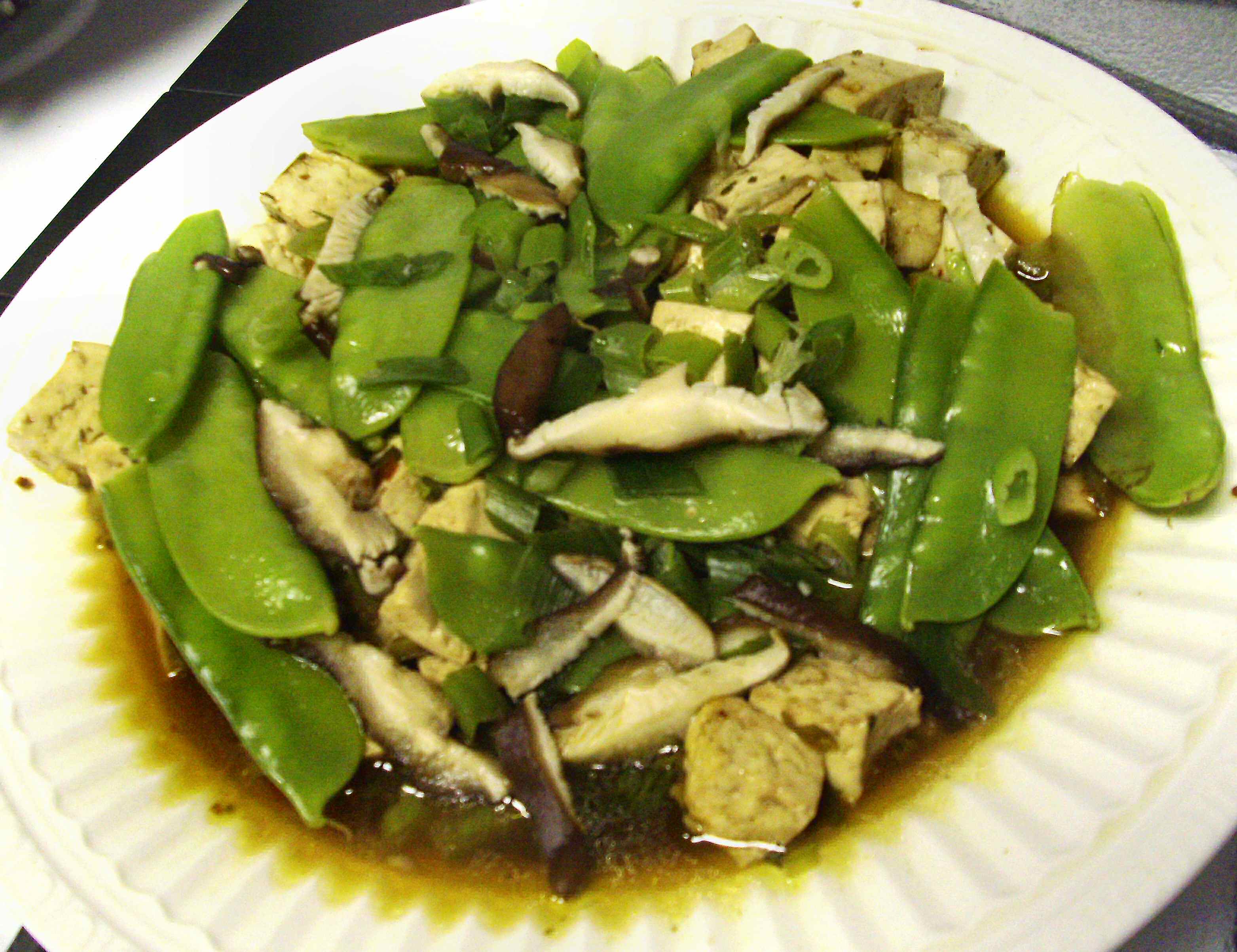
Microwaved platter of low-sodium tofu with snow peas

This tofu dish with snow peas and shiitake mushrooms uses low-sodium dipping sauce ingredients as its base rather than soy sauce or oyster sauce. It’s also microwaveable from start to finish and takes about 10 minutes total.

If you have a big enough–and motivated–study population, even modest reductions in daily sodium intake can make a big difference in preventing strokes and heart attacks. Last month, cardiovascular researchers from Beijing and Sydney announced a new 5-year diet trial in Science to do just that (see the general overview article, “China tries to kick its salt habit”).

China’s northern rural poor eat an estimated 12 grams of salt a day on average, considerably more than Americans’ 9 grams a day (which is still over the top) and more than twice the WHO’s recommended 5 grams or less. An estimated 54%, more than half, of Chinese adults over 45 have high blood pressure these days, and the Chinese government is taking practical steps to provide antihypertensive medications and shift the tide back–but that’s an awful lot of prescriptions.

Given the cost of antihypertensive drugs for such a huge population, and the cost of dealing with side effects and consequences of untreated or undertreated high blood pressure, prevention seems the better way to go. The researchers project that reducing the national average by even 1 gram of salt a day would save 125,000 lives a year in China. So they’ve recruited 21,000 villagers so far in China and Tibet, and plan to provide test groups with nutrition counseling plus a lower-sodium salt substitute for cooking, then compare their sodium intakes and rates of heart attack and stroke with those for a control group.

Most Chinese still do their own cooking at home, especially outside the big cities.  If lowering the sodium content of the salt they use works, it has the potential to get an awful lot of people off daily hypertension medication and reverse a major health threat. But will people do it if they’re not in the trial, or once it ends? Will it catch on? And is it the right answer in the long run?

Salt substitutes, with potassium chloride replacing some of the usual sodium chloride, have been tried by heart patients in the US since the 1970s or so. They’re a little more expensive than table salt or kosher flake salt, at least in the US, but they’re not all that expensive. But they’ve never really caught on here with most consumers.

Similarly, a few decades ago, a big public health campaign in Japan to reduce the high rate of stroke led to the introduction of low-sodium soy sauces, with about half the sodium content per tablespoon of traditional ones.

Not much market research is available on how many people have been buying low-sodium vs. regular soy sauce in Japan since its introduction. From the few current market reports I could find–one of them an executive report from Kikkoman–it looks like low-sodium is still a smaller if steady fraction of their business in Japan, and that it’s more popular in Europe and the US than at home.

It’s important to have a low-sodium line for reasons of corporate responsibility and even prestige, but there was no mention of its percentage of total domestic or worldwide sales. Traditional soy sauces, which can range from 14-18% sodium concentration w/v, are still apparently preferred for taste, and the Kikkoman executives attribute much of their expected taste appeal to salt rather than the other flavors in each one’s profile.

That’s kind of discouraging to me. The Japanese are known for more refined and sensitive palates on average than Americans, and their range of soy sauces and tamaris for specific food combinations is much broader and more sophisticated. The higher-quality low-sodium soy sauces are produced by ion filtration to get sodium out rather than simply diluting them with water, so most of the flavor that’s actually flavor remains. I would have hoped the key flavor signature of each match was the actual flavor of the brewed soy sauces, not the saltiness.

It’s likely, though, that the Japanese are just as susceptible as the rest of the world to the sodium tolerance phenomenon–the more sodium you eat habitually each day, the more you expect and consider normal in your food, and you almost stop even noticing it as a separate flavor.

The overall Chinese market for soy sauce is currently estimated at $20 billion and grew about 23.4 percent over the past 5 years, mostly due to population growth. The stakes are pretty high for China, but the government has tighter control of its salt and soy sauce producers than other countries do, and the will to make a broad change seems to be present, at least at a government level, and if the new study is anything to go by, among ordinary villagers as well. So maybe this time it will catch on once the study’s over.

But obviously, if you’re starting out at a 12-gram-a-day salt habit, the best way to reduce sodium in home-cooked food would be to cut back hard on salt and salted items altogether. That takes time, practice, awareness and deciding that it’s worth going through that first couple of weeks until your palate readjusts to a lower-sodium diet (which it will, but it takes a couple of weeks and a little patience).

Can cutting the salt be done with Chinese food? Not American souped-up chain restaurant caricatures of Chinese dishes, which are hideously over-the-top and greasy as well, but actual home cooking? I’ve done low-sodium Continue reading

Microwave tricks: 5-Minute Plum Jam for Fall

Italian prune or blue plums

These Italian prunes are some of the fresher, better-looking specimens from my greengrocer’s bin this week. But overripe plums work fine too.

Italian blue or prune plums are probably the last round of plums to appear at my local greengrocers for the year (well, until they start getting in carboys of plums and peaches from Chile). Prune plums aren’t much to look at–well, okay, they have a graceful enough elongated shape, but cut into one and you won’t be terribly impressed–the peel is thick and slightly bitter, the flesh is yellow-brownish, not very juicy, and a bit stickier and less brilliantly flavored than the red and black plums of summer, to say nothing of the gorgeous green and mottled dinosaur and Santa Rosa plums we can get here in LA. Many of the fresh prunes end up overripe and still untaken at the end of the day.

Which, I’ve discovered this week, is actually quite a shame. Because if you buy them early and firm, while there’s still a tint of reddish purple about them, they’re closer to regular plums–crisper, juicier and livelier tasting raw. Still not the ideal eating plum, but not bad.

And if you take the ones that are fully ripe and disappointing and bland and not too pretty, cut them up and microwave them, suddenly everything transforms. Italian prune plums make a gorgeous, rose-red, vibrantly flavored low-sugar jam. A lot like cranberry sauce in both color and flavor, but somehow a little mellower, with the bitter edge off, and a hint of spicy perfumed depth.

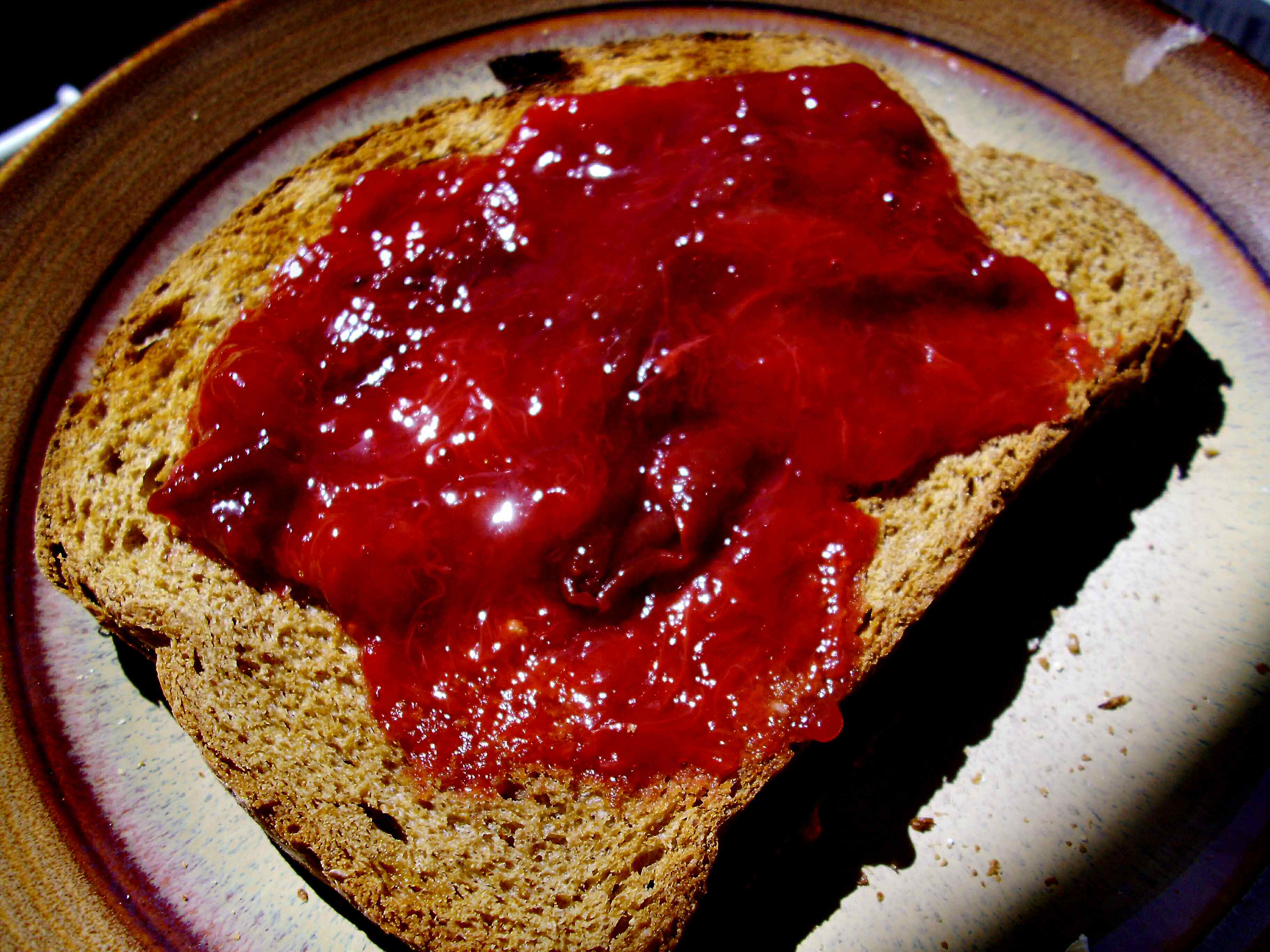
Microwave plum jam on wholewheat toast

Five minutes in the microwave, and everything changes.

Many stone fruits react this way to heat–sometimes sugar too, but mostly it’s the heat. Even very bland, mushy pale apricots seem to bloom into vibrant flavor and acidity when baked or simmered, and sour cherries go from slightly bitter and dull raw to world-famous classic pie filling with a strong almond aroma. I’ve rescued bland, spongy supermarket nectarines and peaches by microwaving them into fruit spreads with real flavor, but obviously good fruit makes even better jams and compotes. It’s just that when the fruit is good raw, I’d usually rather eat it raw, because the season is short.

The prune plums I bought this past week don’t provoke that dilemma of choice; they’re definitely better turned into a quick fruit spread, and maybe I’ll freeze a second batch for later. These plums would also make a great pie filling, like the zwetchgenkuchen that Joan Nathan first published as a traditional German Jewish dessert for Rosh Hashanah in The Jewish Holiday Kitchen. Baked conventionally, the quartered prune plums would probably hold their shape somewhat in the crust and look beautiful.

In the microwave, the plums quickly break down to a bubbling mass and gradually take on color from the peel–at first, bronze with a hint of pink, and after a minute or two the color spreads and deepens to cranberry red (as does the flavor). Sugar just to taste, a tiny squeeze of lemon, and a pinch each of clove and ginger balance out the tartness, and after a day in the fridge, the jam has mellowed and integrated beautifully.

The accents of brandy, cinnamon, nutmeg and lemon peel in Nathan’s recipe make me want to run back to the store and try it this instant, but after a week of baking challah for the high holidays and prospects for 100 degree temperatures yet again, I’m not sure today’s the day. Maybe for Sukkot, which starts later this week.

But the combination of plums with aromatic spices is right on, and if you’re adventurous you could always take this fruit spread one step further and add a small spoonful of brandy, a few shakes of cinnamon and an even tinier hint of nutmeg, even a little grated lemon peel. The simple version below is good on toast, delicious with Greek yogurt and plenty complex enough for me before or after the second cup of coffee.

However, the full-on dressed-up version would probably be a wonderful accent for goat cheese tartlets or a baked brie if you were doing swanky appetizers for a dinner party. I’d test-taste a small batch of the jam first just to make sure it wasn’t too rich with the brandy and nutmeg, because a little goes a long way, but otherwise, let ‘er rip. The plum-jam-with-cheese appetizers would also be an unexpectedly good accompaniment to mead, sherry or other apéritifs for fall.

5-Minute Microwave Plum Fruit Spread (makes about a cup)

  • 5-6 ripe Italian blue or prune plums (or any other plums), washed, pitted and cut up
  • 2-3 T sugar (or more to taste–I like mine less sweet, more fruit)
  • squeeze of lemon juice
  • pinch of cloves (maybe 1/8 t, probably a little less)
  • pinch of powdered ginger (a little less than 1/8 t)

Put all ingredients in a microwaveable ceramic bowl big enough to hold them with a couple of inches to spare, because the plum mixture will bubble up as it cooks. Remember to handle the edges of the bowl with a towel or oven mitt or something (folded paper sandwich bags also work okay in a pinch) because this will heat long enough for the bowl itself to get hot.

Microwave 1-2 minutes on HIGH (I have an 1100 W oven, so adjust times to whatever works for you if yours is older and lower power). The plums should be starting to break down and just starting to color pinkish. Stir the mixture and microwave another minute or so, stir again. If it’s not cooked as much as you think it should be, microwave another minute or so but be prepared to hit the stop button if you see it start to boil over. If it’s fully colored and broken down to a fruit spread, take a small spoonful, let it cool, and taste carefully. It will probably taste a lot like not-very-sweetened cranberry sauce. If it’s not sweet enough for you, add a little more sugar to taste, and maybe another squeeze of lemon, then let it cool all the way covered and refrigerate. It will thicken a little further and mellow overnight and taste more like plums, especially with the clove and ginger notes.

You can, obviously, also boil the ingredients a few minutes in a saucepan on the stovetop if you prefer. If you want it completely smooth, cool it and put it through a food mill or food processor.

This isn’t canned, so store it in the fridge for up to a week or freeze it for later. When you thaw it, taste it again–you might need to add another squeeze of lemon and/or reheat in the microwave just a minute or so to refresh it.

Stuffed cabbage in the microwave

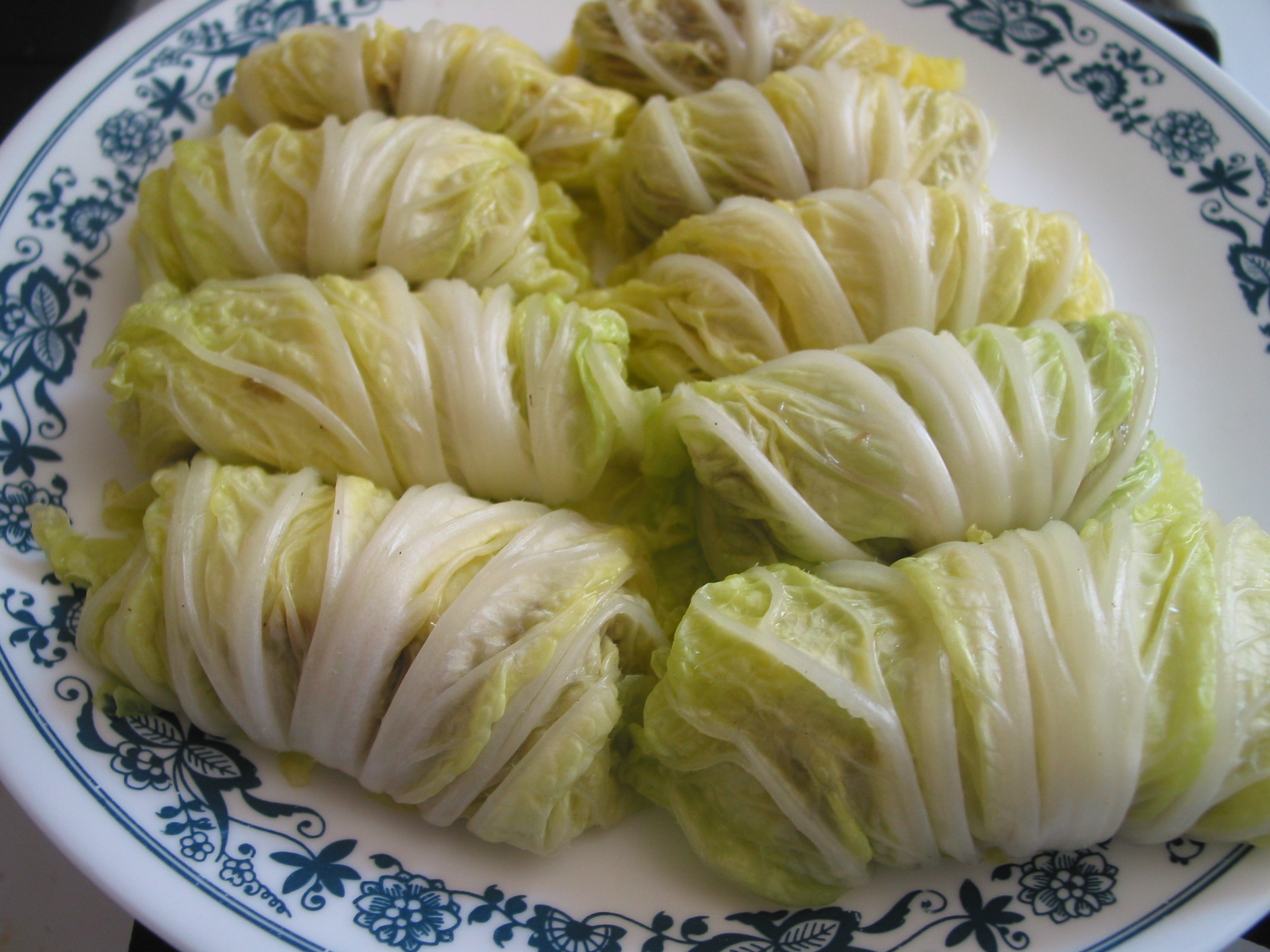
stuffed Nappa cabbage rolls-unsauced

I was originally going to call this post “Nappa 9-1-1” because it’s about salvaging a cabbage quickly and semi-artfully from the back of my fridge, but realized how bad that would be once I read the recent earthquake damage assessments up in the real city of Napa from the 6.0 earthquake a couple of weeks ago. Things are still kind of rough up there. The Napa Valley Vintners association have donated an impressive amount–$10M–and have instructions on how to donate to the local community disaster relief fund. You can find a number of local funds to donate to online at norcalwine.com.

I love bringing home a bag (or more) of produce from my local greengrocer each week–especially in the summer, when Fresno tomatoes are in and brilliant red, green beans are green and snappy, apricots and plums and pluots are spilling ripely out of the bins at under a dollar a pound, and herbs like purple basil and tarragon and mint and za’atar are 75 cents a bunch. You can’t help but feel like you’re going to be a great cook that day, just by cutting up a few vegetables and sprinkling on some oil and vinegar and strewing herbs (and feta or Alfonso olives) on top.

I always mean to use up all my vegetables before they start showing their age, but occasionally I get caught with something unintended at the back of the fridge. This week it was a Nappa cabbage, which is longer and less sulfurous (when lightly cooked) than the more traditional green and Savoy cabbages. A little closer to bok choy. So I peeled back the rusted layers, hoping that some of the inner leaves could be salvaged, at least, and I got fairly lucky.

But what to do with them? Chop and eat raw as a salad? Always an option. But I’d bought the cabbage in the first place to try out a quick microwave version of stuffed cabbage that would fulfill a couple of challenges I’d posed myself:

1. Vegetarian (not a big beef fan, personally)–I’m using the lentil/rice stuffing I developed for stuffed eggplants and onions  three years ago (has it already been that long???), because I actually made stuffed onions again last week and had some leftover stuffing in the fridge.

2. Microwaveable in a few minutes (to combat cooked cabbage stench and do it as more fresh-tasting than long-cooked)

3. Non-stinky, and not drowning in cloying sweet-and-sour tomato sauce (my two overwhelming childhood objections to holishkes)

4. Bridges the cultural/culinary gap between European and Syrian Jewish versions of stuffed cabbage by spicing the filling AND adding garlic and onions. It can be done, and should. And yet, I’m not stewing it to death (actually, that means overturning both Euro and Syrian traditional cooking methods in equal measures).

5. Fulfills the Prunes and Lentils Challenge, or at least hints at what’s possible, since today I had (gasp) no prunes left and had to resort to leftover tamarind sauce from the aforementioned batch of stuffed onions… close enough for folk music.

Stuffed cabbage rolls, as I’ve noted before, are popular throughout at least eastern Europe and Syria. Most versions contain meat–beef for Jews, beef or lamb for Arabs, some mixture of pork and beef for European Christians. But I’ve also seen some really beautiful-looking vegetarian ones in Nur Ilkin’s The Turkish Cookbook, and those were stuffed–of all things–with whole cooked chestnuts.

Cabbage lends itself to enveloping stuffings almost as well as grape leaves, and it’s easier to work with, cheaper, and (big bonus) unbrined.

In addition to meat or lentil fillings, you could try something like curry-spiced or Mexican-style beans and/or vegetables, a mu shu or samosa filling, whole cooked grains like brown rice or bulgur with or without dried cranberries or raisins and sunflower seeds or chopped nuts, maybe even fish (though I’m shying away from Joan Nathan’s recommendation for wrapping up gefilte fish and giving them the stuffed cabbage treatment). Perhaps for fish I’d want smoked (fake or real) whitefish salad. Or sausage–real or vegetarian, smoky and spicy.

It seems to me for sauces you could go well beyond sweet-and-sour traditional: a garlicky tomato sauce, a mustard vinaigrette, a smoky salsa with or without tamarind sauce, a chili-paste or z’khug-laden soy/molasses/vinegar/sesame oil dipping sauce with ginger and scallions, a polished herb and wine-type tomato sauce with prunes or mushrooms and onions, even (maybe definitely?) Korean or Thai peanut dipping sauce, especially if you stuffed your Nappa cabbage leaves with a combination of pressed tofu and/or omelet strips, spinach leaves, maybe some sprouts and shiitake mushrooms.

Whatever version you do, this can either be a quick path to dinner (use the big leaves and more filling per leaf) or to a platter of appetizers (using the small inner leaves).

Microwaving doesn’t develop every possible flavor (in the case of cabbage, I’m childish enough to say that’s a good thing), but it’s a quick way to play around with a classic at least on a trial basis. You could always do the huge foil-covered pan in the oven thing if you decide to scale up and go old-school.

Stuffed Vegetarian Cabbage Rolls

  • 1 head Nappa cabbage, washed and with the core cut out
  • 1 lb (2 cups, more or less) of (in this case) allspice/cinnamon-spiced lentil hashu (made w/cooked rice or bulgur, not uncooked) OR peppery lentil mititei-style sausage filling (substituting 1/3 c. cooked rice for the wheat gluten), or your choice of savory/spicy filling, preferably one that includes some garlic….
  • 1/2 c. sauce–in this case, 1/4 c. tamarind sauce plus a tablespoon of chipotle salsa and a few tablespoons of water. OR–just tamarind sauce, or just smoky salsa, or tamarind with a bit of tomato paste and a spoonful of sugar, or peanut dipping sauce, or dim sum dipping sauce, or Asian-type prune sauce, or prune and wine sauce with some tomato paste mixed in. Or mustard/garlic vinaigrette (as a dipping sauce, not necessarily to cook with)…YEESH! too many choices…


Microwaved cabbage leaves, ready for rolling

Microwaved cabbage leaves, ready for rolling

1. Separate the cabbage leaves, put in a microwave container, drizzle on a quarter-inch of water and put on a lid. Microwave 2-3 minutes until the leaves are just tender enough to roll without snapping the center.

rolling stuffed cabbage

Start the cabbage roll with the filling at the stem end

2. Drain the leaves and lay them out on a plate for stuffing and rolling. Put a tablespoon of fairly stiff filling an inch or so from the stem end of the leaf and pack it into a little sausage shape. Roll the stem end over the filling gently but as tightly as you can manage, then tuck the side frills of the leaf over the ends and continue rolling toward the top of the leaf. Place seam-side down in a microwave container or casserole. Roll up all the leaves and pack them into the container fairly tightly.

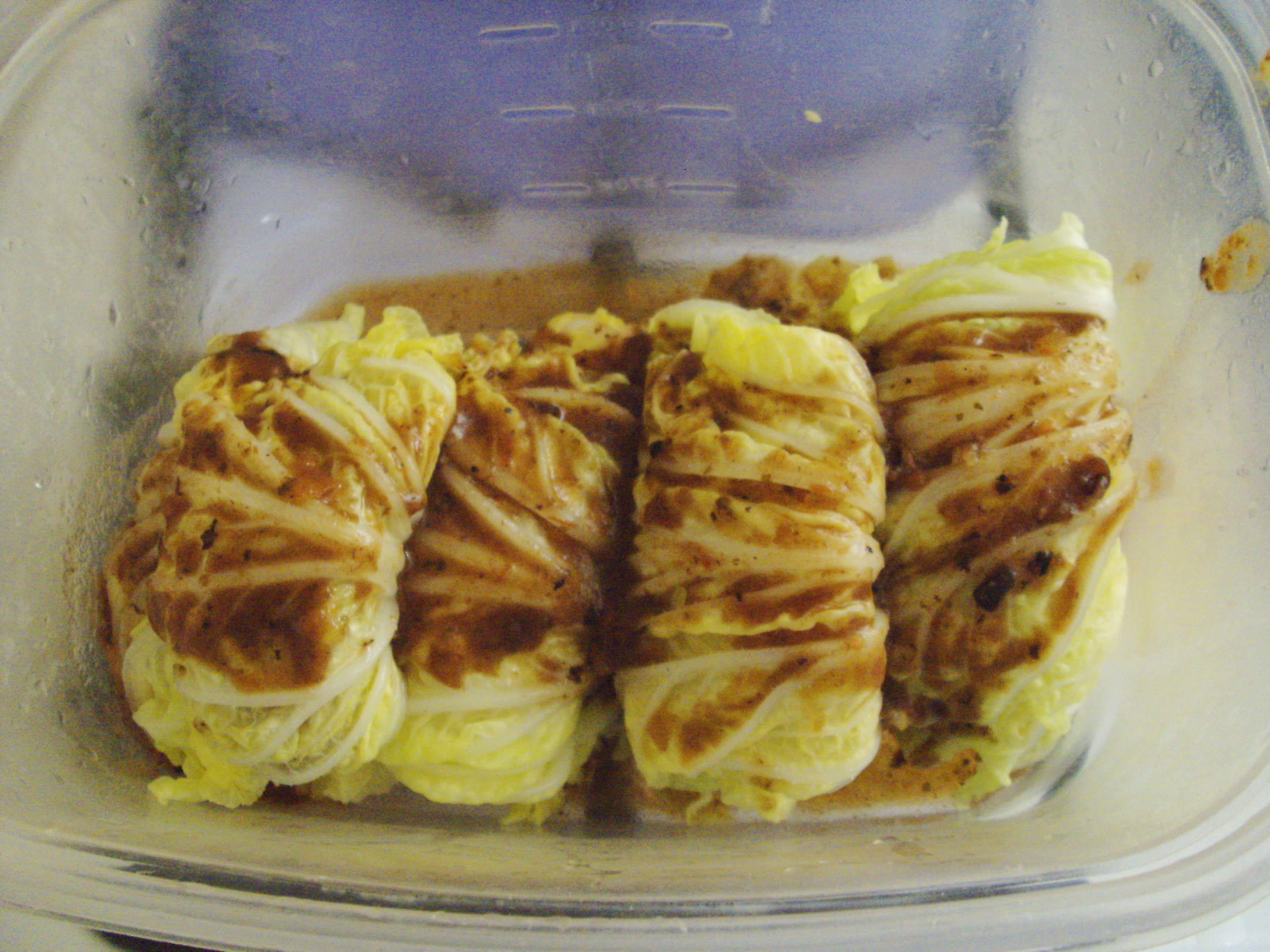
stuffed cabbage rolls with tamarind sauce

3. If the filling is completely cooked already (the rice in the lentil stuffing is not raw or par-cooked), just drizzle a bit of your sauce of choice over the stuffed cabbage rolls, maybe with a tiny drizzle of water in the bottom of the container. Put a lid on and microwave another 2-3 minutes or until just cooked through and steaming hot. If the flavor is still too raw or radishy for you, obviously you can cook it further, going a minute or so at a time, until it smells and tastes right to you.

Drain and serve with a little more sauce on the side.

Tipping the scales at Whole Foods

From The Los Angeles Times today:

Whole Foods paying $800,000 for overcharging in California

Pricing violations included not zeroing out the container weight when weighing prepared items from the food bar, shorting weights on packaged goods, and other problems.

This of course is bad practice toward consumers, but it doesn’t really address the critical issues with Whole Foods.

Yes, Whole Foods has been fined for pricing violations in California. The court injunction will mean five years of oversight and audits. But the real problem is beyond court remedies: everything’s overpriced and the customers seem to like it that way.

Produce prices that can rise to $10/lb for things like cherries when other nearby supermarkets are charging maybe $4-5. Fish prices in the $30/lb range. Whole Foods trades on a reputation for sourcing more variety than the average chain supermarket, and it does achieve that, but not everything it carries is really so exclusive that it justifies a higher price tag.

And in any case, the real money (other than the food bar, which is up to about $8/lb. across the board, whether for roasted eggplant and peppers or for things like canned kidney beans and flaked tuna and cucumber slices) is in cosmetics and pharmaceuticals parading as dietary supplements (and vice versa). Whenever I go into Whole Foods for a small coffee and a roll, the person ahead of me in line is inevitably ringing up more than 100 bucks worth of things like holistic soap bars at $5-10 apiece (compare “Ivory” bath bar 10-pack at about $6 at the local Ralph’s/Kroger’s) and cases of “vitamin waters” at about $4 per bottle, and dietary supplements with a $40-50 fantasy surcharge per bottle. And maybe a scrawny bunch of kale that they’re not sure how to deal with.

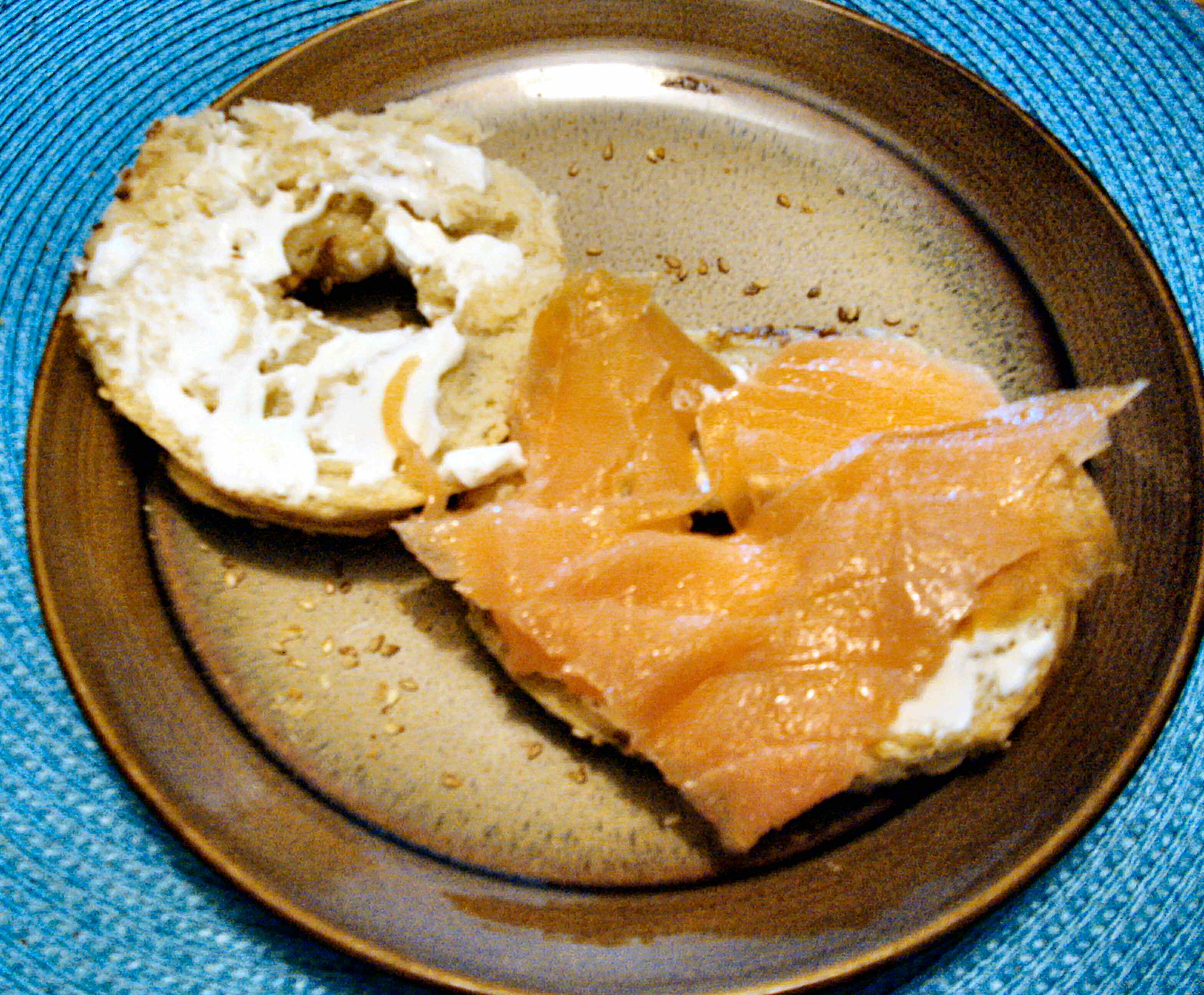
An Appreciation of Lox

bagel with nova lox

Homemade bagel with nova from a local Los Angeles smoked fish company


For its annual Mother’s Day brunch, the Men’s Club at our synagogue always serves a surprisingly lavish spread with the woiks–lox, bagels, fruit salad, eggs and mimosas. Although I’m not a huge fan of big and slightly-kitschy gatherings featuring big and slightly-kitschy piano acts, I really deserved someone else making me a lox-and-eggs Sunday brunch right about then. But at the last minute I had to miss it in order to hock my kid about her last oversized ridiculous semester projects for 8th grade (due the next day, naturally). Better mothers complained to the principal, who just smiled nicely but did nothing useful. I just figured we’d get through it all so my daughter never had to be an 8th grader again. It worked–salutatorian, even–so, moving on but not required to give a speech: win/win.

But the lost lox! and the not having to cook or do dishes for Mother’s Day! Then I agreed to chaperone a school science camping trip the last week before graduation and  ended up with sand, grime, KP duty, outdoor showers, iffy Boy Scout Camp-style food, and not just one but 32 whole teenagers preoccupied with their hair and late to class.

So now that it’s all over I’m in serious need of payback.

My local Armenian greengrocer has locally-smoked nova lox (they have sable, too–I was tempted) and I had a bowl of dough in the fridge just sitting there waiting to be used up–so I made a few impromptu bagels the last Sunday morning of the school year, as soon as I’d gotten all the sand back out of everything and my kid was done with classes for the year. The bagels weren’t quite as dense as they ought to be because I used my standard pizza/pita/calzone dough instead of the genuine classic, but they did well enough because the dough was several days old, cold-proofed and straight from the fridge, and I boiled them before baking. And there was lox. Throw in a few once-over-medium eggs and some shmear and some fruit and hot coffee and you’ve got the ideal late-spring/early-summer breakfast, even if you have to make it yourself.

Now I know lox is a high-salt item–even the Nova. I anticipate it not for the salt, which I always think we could do with a little less of, but because it’s lox. A delicacy. Something to enjoy on the rare occasion when you get to celebrate. Something to treat with respect.

I’m not going to apologize for enjoying it, either. In the modern world of food publishing, people are forgetting how to do that. Even Jews. Maybe especially Jews, some of whom act as though our traditional deli and “appetizing” (bagels, cream cheese and smoked fish of all kinds) is suddenly something to shove under a rug or apologize for liking on the grounds that it’s not organic or locally sourced or Whole Foods or food-mag-trendy enough, and because it doesn’t include bacon or pancetta. Or kale.

The idea that enjoying lox simply because it’s lox isn’t cool enough anymore has gained a lot of traction in the past few years of foodieism. A couple of years ago, Martha Rose Shulman committed a serious travesty in the New York Times with “Lavash Pizza with Smoked Salmon” (she didn’t even call it lox). Toasted lavash is perfectly good for other things, but not for lox. Too fragile, and frankly too flavorless. I mean, why not rice cakes, as long as you’re being tasteless? But it wasn’t just the bread choice.

Somehow Shulman had abandoned the Joy of Lox. Shulman actually called her lox on lavash “a great way to work more salmon, rich in omega-3 fats, into your diet.” I have to ask, are most of us really having that much trouble “working in” more salmon? More to the point, does any lox fanatic really want to be thinking about fatty acids of any kind while eating it?

But at least she wasn’t agonizing over it as too Jewish. Mark Bittman pulled this inexplicable self-flagellation-in-print a few weeks ago in the New York Times, apologizing publicly for eating lox and bagels on a Sunday morning. In New York, yet. (Maybe it’s because he moved to Connecticut?) He’s kvetching about skipping his morning run, his usually-so-virtuous-but-betrayed-just-this-once-by-shameful-genetic-temptation stance on (gasp) farm-raised salmon, his devouring of shmear, which he says is too bland for the calories to like officially. He even had the nerve to blame his decision to eat it all on a sudden mental breakdown. And then he went further and called bagels and lox “comfort food.” As though it were in the same low-grade category as mac and cheese or mashed potatoes from a box.

Vey ist mir! I mean, come on. I’m pretty sure Woody Allen still eats lox without apologizing for it.

Bittman should be apologizing for being ashamed of enjoying lox (all the while glupping it). Along with apologizing for promoting pancetta and guanciale while professing a greener and more affordable diet. And for forgetting to add garlic to his recipes. That’s almost worse than deprecating lox.

More recently, Melissa Clark met with one of the scions of Russ & Daughters, which by now you’d think was the only serious lox and whitefish emporium left–it’s the subject of a documentary I just missed at the last LA Jewish film festival. The two laid out a spread for at least thirty or forty very lucky people, by my standards, but I think they were doing it mostly for a few family and friends–maybe 10-15 people–and posing it all on the table for the camera. It was beautiful but way too much. At least, though, she was both thrilled and nostalgic, the right way to be when faced with a complete beauty pageant of smoked fish.

Altogether, I could only think Shulman, Bittman and Clark all grew up in big cities with too much lox around. Because when I was a kid in the small-town South, we could only get lox twice a year when one or another set of grandparents came down from New York.

Other people’s grandparents bring toys. Ours brought pastrami, corned beef, half-sour kosher dills, pickled green tomatoes, real bagels, serious breads you just couldn’t get down South, and lox. All of them were special, not just to us but to our grandparents–real deli was part nostalgia, part roots, part pride, part simply great eats.

Pastrami and corned beef to go with the pickles and the tough, chewy pumpernickel and rye with the union label pasted on the end (you were supposed to fight for it)–these were the working people’s foods of their youth on the Lower East Side and the Bronx,  and they still loved them. And so did we.

My mother’s parents, born in the shtetls of Poland and Ukraine, came to America as children and, thank G-d [only instance of poverty being worthwhile], couldn’t afford to go back when their parents got homesick.

Fast forward to the ’70s: My Grandma Thel, short, plump but ladylike, coiffed, and wearing those pale oxford pumps I used to think of as librarian shoes, would step off the little regional plane in Charlottesville loaded down with huge grocery bags full of chewy, crackle-crusted bagels, Jewish kornbroyt or “corn bread” (a heavy European wholegrain sourdough; no actual cornmeal except what’s dusted on the baking sheets to keep the loaves from sticking), rye bread laced with bitter caraway seeds, sometimes a babka, and always, a huge half-wheel of her own light chocolate-flecked sponge cake (for which I’ve inherited the recipe but haven’t tried it yet–will post when I get it right). I hope the other passengers were smart enough to be jealous. The aromas alone should have clued them in. Grandpa Abe, of vishniak fame, was a lucky man.

On the drive home from the airport, Grandma Thel would tell me and my sister how she just managed to argue another customer at Andell’s or Goodman’s out of the last loaf of kornbroyt with seeds because she was bringing it down to her very special grandchildren so we would grow up knowing the real thing, and that the other lady Continue reading

Taking the chaos out of batch cooking

When my husband and I were much younger, we stayed a week with the children of some friends who wanted to go off skiing on spring break. In preparation, the mother batch-cooked a huge dutch oven each of chicken breasts and brisket for the week–just for their two young children and us. She left elaborate instructions about how to reheat it (I’m not sure she trusted us to know how to cook anything). I can tell you that even in my 20s I thought that was an awful lot of meat, and by the end of the week we were really, really tired of it. Even the kids.

On the other hand, a friend out here who has something in the range of adult ADD has a hard time cooking anything that takes longer than about 5 minutes because she’s so easily distracted she forgets to eat. Keeping track of multiple cooking steps  is genuinely daunting to her, as it is for many people with ADD and ADHD. She’s taken the expensive brown-rice-bowls and organic-microwaveable-freezer-meals-for-one route (keeping brand names out of it for the moment) but wishes she could find a better and cheaper way to deal with dinner. I suspect she wishes my east coast friend could supply her with a couple of dutch ovens’ worth of meals…

I bring up these two friends because lately I’ve started running across Meals-for-a-Month how-to books. They pop up every once in a while in the cookbook aisles of your favorite bookstore (or the 641 section of your local library). They’ve been reappearing since at least the early 1970s, when a major recession under Nixon led people to rethink their household budgets. Now these books are back in “For Dummies” and “Everything” versions, complete with tie-ins to About.com and other popular web portals.

The basic premise sounds ideal: shop and cook just once a month, the books promise, and you get a month of frozen real-food reheat-and-serve meals at your convenience, and you still save money. I keep hoping there’s some kind of solution in them for people short on time, cash and kitchen tolerance, but so far I’ve been disappointed.

Read one of these books and you quickly realize why almost no one follows them for long. First, if you hate to cook, you’re going to hate cooking marathons even more. Especially if they look like all-kitchen circus-style nightmares of boiling chicken and roasting AND stewing beef and slicing ham and cheese while also cutting vegetables while mixing sauces while separately packaging just enough gingersnaps for each package of the sauerbraten (assuming you even like sauerbraten or know what it is anymore) and finding the right sized bags and labels and and and and….

If you batch-cook the way these books suggest (in the intro section “game plan” complete with NFL-style charts), your once-a-month cooking scheme will probably take you all weekend (shopping alone is a full day) and wear you out from dawn til dusk. One weekend a month. I bet this is where most people flipping through to see if it’s the solution to their dilemma quietly shut the book, put it back on the shelf and edge away as quickly as possible.

These books also seem to replicate the worse aspects of frozen tv dinners, only without the convenience. The food’s too elaborate and long-cooking–mostly heavy meat stews and casseroles taken straight out of the 1950s Americana repertoire, and the scale-ups still only stretch to two or three meals for a family of four. If you go that route, you’d need ten recipes, and a huge freezer.

Also, there are no, and I mean no, shortcuts. I’ve looked. Each main dish is an hour or more by conventional methods. The reheats alone typically take at least half an hour and some extra cooking steps–and this is after having thawed the packages overnight in the fridge. Have the authors never heard of a microwave? Wasn’t avoiding repetitive, excessive cooking the whole point of once-a-month cooking? Do you really want to have to plan so much and follow so many steps–especially if you’re on the ADD end of things? Or even if you aren’t.

It would make so much more sense to simply buy a big resealable bag of frozen chicken parts and some bags of frozen vegetables and large cans of beans and tomatoes and boxes of spaghetti and relearn some cheap, easy and fast-cooking techniques from your college student repertoire. Wouldn’t it?

Needless to say, this is not the way people who traditionally have to cook big on a tight budget cook. Most people don’t have as much money at any one time as they’d need to pay for a month’s worth of food in a lump sum, nor do they generally have a dedicated extra freezer to fit it all in.

But batch cooking itself can work out and still treat you gently on a more modest scale. You just need to choose what makes sense to cook in multi-meal batches, and not do every possible big job all at once.

Unless you hunt and dress venison for the winter or have a garden with enough produce that you need to harvest and put up in bulk at the end of summer to keep it from spoiling, you don’t really need to do marathon-style cooking. Continue reading

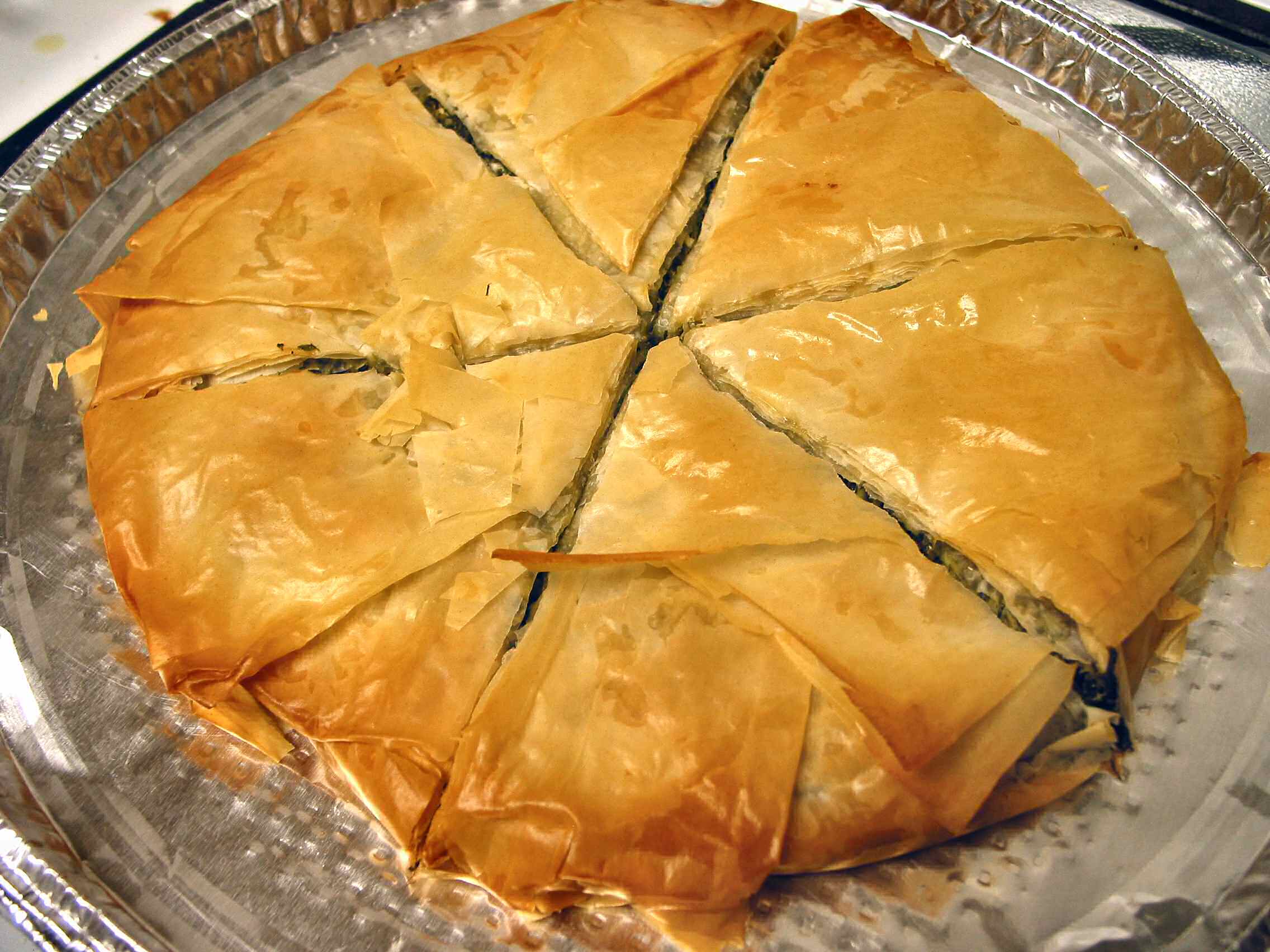
Post-Kiddush: our leftovers are better than yours

Round spare spanakopita just for us after the big kiddush

Round spare pinwheel-style spanakopita just for us at home. The big ones for the brunch had three pounds of spinach apiece (and were cut in small diamonds), but they still went together pretty fast–except for squeezing all that spinach dry…

This weekend I did it again–I made the kiddush, or in common speech a lunch buffet, for my congregation’s Saturday morning service. My husband kind of volunteered us for this week and because he doesn’t cook, most or all of the cooking, shopping, chopping and schlepping landed on my shoulders.

Last time he volunteered us, it was for our anniversary, and  I was ready to skip ahead to the divorce until I got over it, because it’s a lot of work to cook for 60 or so people who like to eat. And kibbitz. Especially when the 60 suddenly turns into 80-plus and having to use the synagogue kitchen with the more complicated and confusing rules on only a week’s notice. As they did this time…..

Soooo….a two-day hell of shopping and then marathon cooking-and-juggling in my little galley kitchen. The microwave got a serious workout. So did the food processor and the oven. Sometimes all at once. And it was raining hard for three days, so bringing things over to the synagogue kitchen as I went got a little tricky. I triple-wrapped the chocolate cake and stuck it in a USPS Priority Mail box so it wouldn’t get left out in the rain. Same idea for the spanakopita trays.

A few hints about cooking big and real for a synagogue brunch, learned the hard way by moi and passed on for your edification and safety (and sanity):

1. You can buy a 6-lb can  of chickpeas for massive half-gallon batches of hummus (Mid-East brand, maybe Goya as well). Cost? about $5. But–as I found out, and I’m glad no one was filming the process–industrial-sized can equals industrial-strength steel. A dinky hand-operated can opener is no match for such an item. I got just far enough to be able to pry open a kind of spout but there were tears and long-fluent-repetitive-all-throughout-the-house swearing sessions involved.

Still….

2. If you have a good corner greengrocer, you can buy quantities of eggplant for cheap–eleven or twelve eggplants made for a large tray of roast eggplant and onion slices (with garlic slivers and za’atar sprigs and olive oil) plus a large vat of baba ghanouj. Only the five eggplants I nuked for the baba ghanouj didn’t feel like cooperating fully when it was time to peel them. Might have been easier to peel first, then nuke, since it was all going into the food processor eventually. Next time…

3. Whole smoked whitefish for whitefish salad comes two ways–cold-smoked or hot-smoked. What’s the difference? I asked the counter guy at my favorite Armenian grocery. “Cold-smoked is a little less hard,” he said. So I bought it, thinking he meant the hot-smoked was tough as shoeleather and twice as chewy. I was wrong. Cold-smoked actually means the fish is smoked raw, like lox, only a little drier and tougher. But you don’t necessarily want to put it in whitefish salad that way. Man, it still had the scales on too. I couldn’t get it off the bones for love or money, and there were a lot of bones.

However, the microwave came to the rescue. I cut the fish in half and Continue reading