• Enter your email address to subscribe to this blog and receive notifications of new posts by email.

    Join 241 other subscribers
  • Noshing on

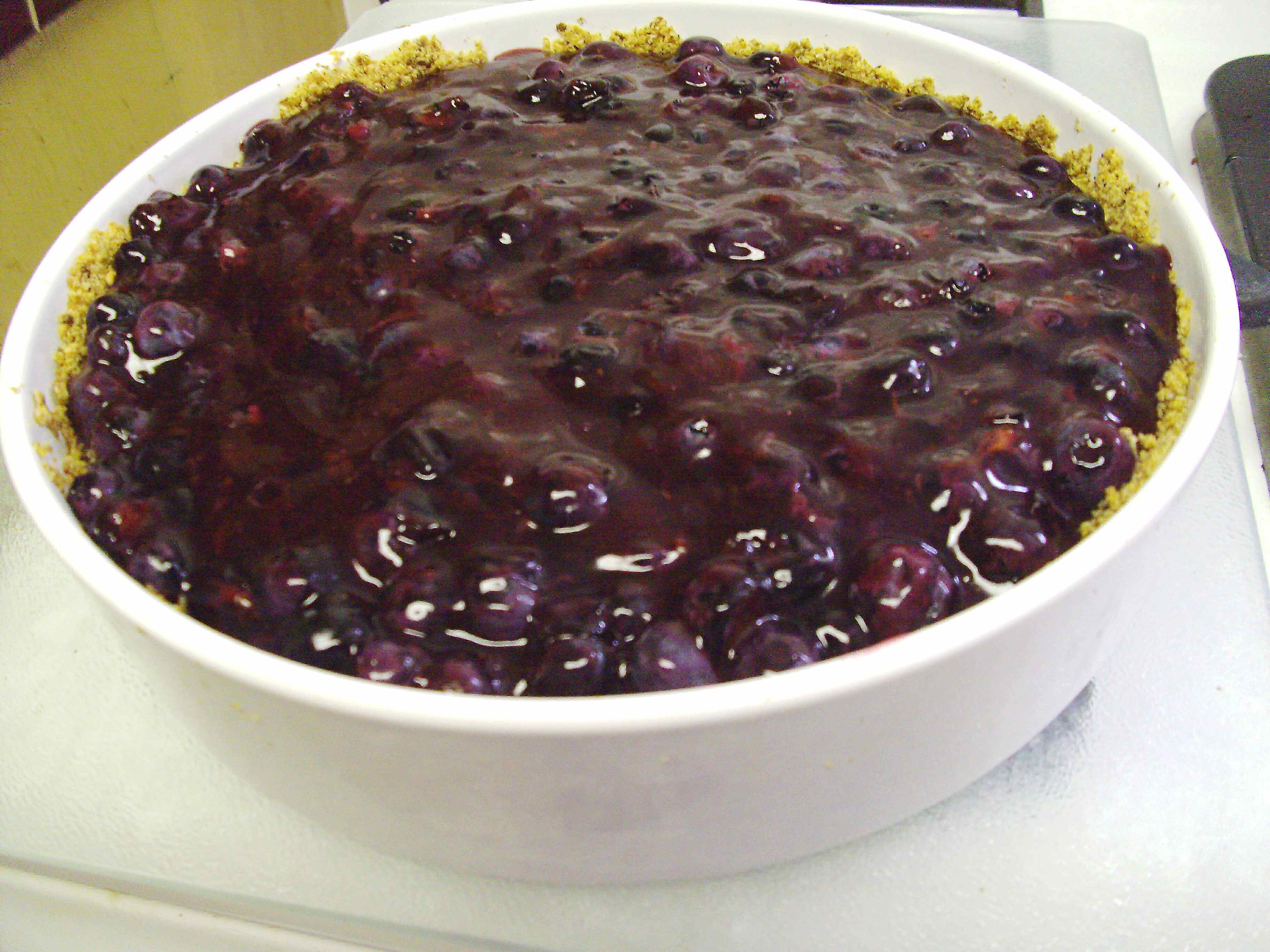
    raw blueberry pie with microwaveable filling and graham cracker crust

    This mostly-raw blueberry pie is a snap to make and very versatile--the filling microwaves in a few minutes, and you don't even have to bake the zippy gingered graham cracker crust--perfect for a hot Fourth of July and all summer long.

  • Recent Posts

  • Contents

  • Archives

  • Now Reading

  • See also my Book Reviews

  • Copyright 2008-2024Slow Food Fast. All writing and images on this blog unless otherwise attributed or set in quotes are the sole property of Slow Food Fast. Please contact DebbieN via the comments form for permissions before reprinting or reproducing any of the material on this blog.

  • ADS AND AFFILIATE LINKS

  • I may post affiliate links to books and movies that I personally review and recommend. Currently I favor Alibris and Vroman's, our terrific and venerable (now past the century mark!) independent bookstore in Pasadena. Or go to your local library--and make sure to support them with actual donations, not just overdue fines (ahem!), because your state probably has cut their budget and hours. Again.

  • In keeping with the disclaimer below, I DO NOT endorse, profit from, or recommend any medications, health treatments, commercial diet plans, supplements or any other such products.

  • DISCLAIMER

  • SlowFoodFast sometimes addresses general public health topics related to nutrition, heart disease, blood pressure, and diabetes. Because this is a blog with a personal point of view, my health and food politics entries often include my opinions on the trends I see, and I try to be as blatant as possible about that. None of these articles should be construed as specific medical advice for an individual case. I do try to keep to findings from well-vetted research sources and large, well-controlled studies, and I try not to sensationalize the science (though if they actually come up with a real cure for Type I diabetes in the next couple of years, I'm gonna be dancing in the streets with a hat that would put Carmen Miranda to shame. Consider yourself warned).

Thanksgiving Vegetariots, or, How Can You Have Any Pudding If You Won’t Eat the Meat?

Newspapers all over the country are sweating to include vegetarian main dishes in their annual Thanksgiving features. But they’re not doing all that well. This week the LA Times food section proudly listed a whole bunch of Thanksgiving vegetable side dishes as if to say, “See how much there is for you vegetarians to eat without your hostess making any changes just for your special status?” Only, as readers quickly pointed out,  1) none of the dishes contained any noticeable protein, 2) most of them were overloaded with butter and salt and 3) two of them contained chicken broth or pancetta. Someone had forgotten to re-edit them for a vegetarian audience.

I pick on my local paper because we’re talking Los Angeles, with great produce available all year round and a very large vegetarian population–and a lot of ethnic groups with significant roles for vegetarian dishes in their traditional cuisines. We have less excuse for this kind of simple ignorance than most cities.

But it isn’t simple ignorance. Running very close to the surface of most food publications’ features on vegetarian fare at the big showdown holidays is a distinct tone of hysteria. How can anyone not want to eat meat? Nothing tastes like turkey, and nothing sells like it either! We don’t know anything about vegetarian proteins! they panic. Do vegetarians eat Durkee Fried Onions or Empress Yams? Do they eat marshmallows? They don’t even like pancetta! What’s wrong with them?

These are home questions for newspapers and food mags, because you know the real survival question is, “How are we going to sell advertising for chickpeas and lentils, for chrissakes?” That probably goes double or more for food shows on tv. If they don’t advertise, they don’t stay on the air.

It’s not like tofu has a big marketing presence in the nation’s newspapers or brand recognition outside of local markets. There are only so many brushed-steel and cherrywood designer kitchens anyone is willing to buy in a down economy, especially once they discover how badly brushed steel shows fingerprints. And cooking mags don’t get a lot of help from PepsiCo and CocaCola, Ralston-Purina or the many cigarette and pharmaceutical companies.

What’s left? Bacon, turkey, and processed food companies featuring starches and microwaveable tv dinners. This might not be such a problem for food pubs if they’d found a way to keep their features a little more independent of their ad base. Bacon is showing up these days as suddenly gourmet in so many inappropriate dishes–ice cream? chocolate bars? popcorn?–precisely because it’s relatively inexpensive, widely available in supermarkets, and sold by a few recognizable national namebrand companies that still advertise reliably in a down market. Young food bloggers who go for it think it’s something new and daring, but you have to wonder whether they realize how hard the commercial food media are pushing it and why.

In any case, the November and December issues or episodes really need to push meat for all they’re worth because American bacon is basically the same everywhere and straight-up turkey isn’t all that popular the rest of the year, and the companies know it. Meanwhile, vegetarianism in all its variations, and with a growing political undercurrent, is gaining ground among younger Americans, or at least those not too obsessed with bacon. What to do?

Apparently the answer is, panic and get mad at the vegetarians for wanting non-meat dishes that are worth something, but try hard not to admit it in front of the camera. Continue reading

Smart Choices Labeling Program Falls Apart

The FDA’s recent and surprisingly bold scrutiny of the Smart Choices food labeling program, coupled with wide public indignation over the program’s obviously inappropriate awards of healthy food status to processed foods without much actual merit, has left the industry-led nutrition rating effort in shreds.  In a recent followup to his initial article in the New York Times, William Neumann reports that the Smart Choices program has been suspended only about two months after going live, and participants like PepsiCo have pulled out altogether.  Kellogg’s, on the other hand, is “phasing out” its green checkmarked cereal boxes and announced that global marketing officer Celeste Clark  is staying on in good standing after what has amounted to a PR fiasco over Froot Loops. Makes you think they were the ones with the highest investment in the program to begin with, or that perhaps they were the company least likely to admit how transparently flimsy the program’s nutrition criteria had become to the rest of the country.

It’s the first time in quite a while that the FDA has taken on a big household-name food industry target in public without a lot of hemming and hawing and backpedaling and dealmaking. It gives me hope that at least some of the federal government is shifting gears to start serving the public again.

The great surprise for me is how little real effort it took to shut down the food industry’s program. Three or four years ago it might well have prevailed, and the processed food industry might have been able to keep inserting its priorities into the debates over nutrition without any effective logical check. But at a time when the nation’s gotten sick of being lied to so brazenly for so long about so many things–many of them more serious–corporate food tampering and misrepresentation of food quality are becoming hair-trigger topics. Not least because food is the easiest  for ordinary people to judge and to protest safely in the streets.

We can’t organize effectively enough to protect ourselves against the invasive, petty and obscene wastefulness of the Patriot Act as it has actually been applied. We can’t organize effectively enough to demand and get a proper, timely accounting of Guantanamo and the government’s use of torture there and abroad.

But we can talk food and nutrition and sustainability and corporate manipulation until the cows come home.

How else to explain the cult status of Michael Pollan? The rise of Fast Food Nation and Food, Inc.? The fights over school cafeteria vending machines and chain restaurant nutritional stats? The Smart Choices checkmark for Froot Loops, which people buy specifically for the artificial colors and know perfectly well is not really food, touched the match to a very big pile of sawdust.

And now the FDA is also on its way to strengthened oversight powers from Congress, including mandatory food recalls, not just recommendations for recall, to go after contamination of the food supply, and with any luck some extra funding to cover the actual field investigations needed.

It’s long overdue, but somehow it seems to me the FDA is being tasked with something the USDA should have been doing all these years and hasn’t. The USDA has more tools and resources at its disposal for doing food safety checks at the agricultural and manufacturing levels but because part of its mission is to boost agriculture, it has often dismissed these checks as unnecessary and even obstructed them, as in the case of routine meat testing for BSE and other infections.

The FDA is still supposed to protect the nation against food and nutritional claims fraud, though some of its targets appear to be of diminishing significance in comparison with preventing widespread salmonella and E. coli in the food supply. Smart Choices is obviously a big and publicly important target, but on the other hand, it seems to have been exposed and skewered satisfactorily already by public reporting of the Froot Loops fiasco. The FDA can ride the crest and put the final, perhaps critical, touch on it, but the agency’s gotten a huge boost this time around from public opinion.

Maybe that’s saved the FDA and the public some time and taxpayer dollars that won’t have to be spent going to court over it. Maybe it’s given them the nerve to work on the public’s behalf more daringly, knowing that the public actually does give a damn about its own well-being? Maybe things are really going to be different enough that they’ll go after the big offenders even when the public isn’t way ahead of them? We can only hope.

But frankly, I still want to see the USDA fulfill its responsibilities to protect the public and the food supply, and not abandon or subvert them in service to big agriculture and processed food firms. The FDA shouldn’t have to pick up after them.

Ag School: the New Farming vs. Big Agro

The LA Times reports today that the chairman of the Harris Ranch Beef Co. has successfully pressured Cal Poly-San Luis Obispo, one of California’s few universities with a strong agriculture program, into converting what was to be an upcoming lecture by Michael Pollan into a panel discussion with a meat science expert and a representative from a large organic grower. How? By threatening to withdraw a $150K pledge for an on-campus meat-packing plant. The chairman’s threat letter to Cal Poly’s president also apparently criticized a professor who called Harris Ranch “unsustainable”.

Harris Ranch itself is more than usually well known to Californians. It’s a huge holding area for thousands upon thousands of cattle as they’re fattened for market. It’s an hour or so south of San Jose, a feedlot acres long, set right along the east side of the I-5, California’s main interior north-south highway between LA and San Francisco.  You can smell it coming a couple of miles before you get there, even with the windows and vents shut and the air conditioning on. And the cattle–herds and herds of them, closely packed. Quite a sight. All kinds, with very little room to wander around, and there’s no grazing to wander to. Elsewhere, on side highways through the hills, you see small herds, calves, occasionally lone cows or bulls meandering along the slopes, picking their way between boulders and foraging for grasses. Once they’re trucked to Harris Ranch, that’s over. It’s Cow City.

The manure piles, as you might imagine, are vast, and provide a valuable sideline business because the rest of the highway, all up the San Joaquin valley, is lined with cotton, orchards, and a variety of other crops, and the land itself is flat, dry, and chalky.

But does that make Harris Ranch Beef Co. sustainable? Probably not. Does  Harris Ranch’s size make it evil or exploitative? Also probably not, or not automatically.  It just makes it big. Really big–and maybe too big to run without depleting or damaging the local environment. Unless, of course, you have a good resource for researching better ways to farm.

But threatening to withdraw a big-ticket donation just because Michael Pollan gives a talk at the university might not be the best way to convince the world of Harris Ranch Beef Co.’s intentions toward the public or of its ethical business practices. More importantly, it might not be the best way to present the beef industry to students at the Ag school.

It is probably too much to ask a big business like Harris Ranch Beef Co. to act intelligently rather than in panic when it comes to criticism over its sustainability. But I wonder what would have happened if the chairman had looked at the university’s sustainability research as an opportunity rather than a threat.

Ironically, big agribusinesses like Harris Ranch probably need the kind of fresh thinking and research on sustainable practices that Cal Poly-SLO and other agriculture schools are starting to produce. The next 20 years are going to see a lot of changes in food production because a lot of resources are either already being depleted or getting more expensive faster than anyone could have predicted 10 years ago. Even the next 5 years are up for grabs. These changes are already hard to miss.

All the big agro and food processing businesses that decry Pollan’s food journalism today are going to be changing something about how they do business. They’ll have to, whether or not he (and other credible researchers) gets to talk freely about the problems of the status quo at the Ag schools they support. The question is whether the Ag schools will have thought about the problems he raises and be prepared with some solutions when agribusiness finally realizes it needs a new approach.

The Case Against Bologna

(Beside the fact that I’ve never actually liked it, not even as a kid. Too flabby and bland.)

It would be so nice if once in a while, just occasionally–every other Thursday would probably be enough–the processed food industry judged nutritional value the way the CDC or NIH public health guidelines do. (The USDA and its Food Pyramid scheme, all versions, are too compromised toward the food industry for me to include.)

Take a small health column in today’s Washington PostJennifer LaRue Huget comments on Oscar Meyer’s claim that a classic peanut butter and jelly sandwich has nothing on a classic bologna sandwich for health. Their contention is that the bologna sandwich is healthier because it has only 4 grams of sugar, and somewhat less total fat than a sandwich’s worth of peanut butter, about 2 tablespoons.

Huget proceeds to tear that argument down with a simple look at the nutrition label stats for both and a smidgen of common sense–why would bologna have sugar in it anyway? The bologna has less total fat but somewhat more saturated fat and cholesterol, and it has only 3 grams of protein for peanut butter’s 8. And what about the salt–800 mg for a sandwich with a single slice of bologna, compared with a PBJ at 490 mg–which is still high by my standards, but I guess it’s salted peanut butter, and quite a bit of the salt is probably in the bread itself (incidentally, did Oscar Meyer include bread in its sodium count for the bologna sandwich? did it use the same kind of bread in the PBJ comparison? Hmmm….)

Well anyway, Huget doesn’t need to work too hard to make her case. Still, there are issues she doesn’t even scratch. Obviously Oscar Meyer is trying to play up its few nutritional points and hide its glaring weaknesses–most of the processed food players have been doing this aggressively for years now. We’re mostly inured to it, and frankly we expect bologna to be high-salt and kind of fatty. No big surprises there.

So let’s get back to the main strangeness of this comparison and ask the key questions: How could peanut butter possibly have more protein than bologna? Isn’t bologna meat? What’s going on?

I headed for the USDA Nutrient Database to find out. As much as I distrust the USDA’s dietary advice and its Food Pyramid, the nutrient database is pretty vast and pretty consistent, and its holdings aren’t branded.

The protein in bologna and most other processed sandwich meats–not just Oscar Meyer brand but others as well–is considerably lower than in the same amount of plain unprocessed cooked meat. We’re talking 3 grams of protein in a 28-gram (1-oz) slice.

Oscar Meyer’s bologna is made in descending order of “mechanically separated” chicken and pork bits and then a variety of corn derivatives, both syrup and starch, plus gelatin and other fillers.

Normally you look at the top two ingredients and think “Meat! That’s the main ingredient! It’s chock-full of protein!” Actual chicken and pork–the solid meat, not the skin or fat of the chicken, and not bacon–contain about 25 grams of protein per 100 grams of meat, according to the USDA nutrient database, or about 7 grams of protein per 28 grams of meat. Not 3 grams per 28. By the time you get to bologna, you’ve got less than half the protein of actual meat.

You have two possibilities here for how that happens:

1. The company’s definition of “chicken” and “pork” includes a hefty proportion of skin and solid fat most people trim away and throw out rather than eat when they buy actual chicken or pork. Fat doesn’t have protein in it but it does weigh something. Should it be allowed to qualify as “meat”?

2. The percentages of the chicken and pork bits in the bologna are just enough higher than those of each of the filler ingredients to qualify as leading ingredients on the label, but the actual proportion of chicken-plus-pork to the total filler is something under half.

So bologna leaves a lot to be desired even compared to an old standard like PBJ, especially today when you can get peanuts-only peanut butter without fillers, and fruit-only fruit spreads without added sugars or corn syrup. And you can look on the nutrition label to find out what’s in it and what it’s worth nutritionally.

But what disturbs me, even more than the clear and present need for Huget’s column to point out Oscar Meyer’s casual sophistry in this over-informed day and age, are some of the comments her column generated. The Washington Post has a pretty liberal comment policy on just about every opinion article.

I expected some type of Food Police accusations to crop up. I’m not sure they didn’t, eventually, but when I read the piece this morning, what struck me was just how many of the commenters waxed nostalgic about how much they loved bologna. How, even with all its and Oscar Meyer’s obvious flaws, they still craved bologna when they saw the word in print. Even when they’d actually read the whole article. Brought them right back to the good old days of the elementary school cafeteria. Worse, it brought them a specific craving for bologna with mayonnaise on white bread. That plus Velveeta to cap things off.  I ask you, is there any hope?

Food as Barometer

The past week has seen a number of shock waves go through the food world.

Gourmet magazine’s announced closing yesterday is the latest and the one with the best PR. Gourmet‘s editor, Ruth Reichl, has turned what was once the flagship publication of foodie-ism into something more like Vogue for food–high-gloss, decorator restaurant food (the focus of her previous career) with recipes that ranged from routine to fanciful, from decadent but enticing to over-the-top, impractical, even wasteful and ridiculous, particularly in the last couple of years. A few memorable examples of the latter–lamb cooked with a stewing sauce that included something like a cup of whole coffee beans in an ingredient list some 20 or so items long, a chicken liver paté with a ton of added butter to simulate foie gras when that dish was outlawed in Chicago, and a chocolate and sesame butter tart with so many elaborate steps and so much extra fat in each layer–with nearly obvious clashes of flavor–you could practically choke.

Reichl, whose memoirs I have nonetheless enjoyed a great deal, seems to have been in on the official food world’s migration to recipe titles–and restaurant menu listings–so long they owe more to Proust, or perhaps Balzac, than to James Beard. Then again, Proust called madeleines madeleines, not “little ridged pure butter genoise microcakes with microplaned lime rind, baked in the shape of elongated shallow clamshells”. Goodness knows what today’s foodie superstar chefs would come up with for a title.

And yet Gourmet, with its glossy ads for show kitchens and olive oils and edible vacations in exotic locales, has tried to broaden readers’ ideas and ideals on occasion, and that’s Reichl’s influence too. If the cover one month showed coveted seating at a prestigious Paris restaurant, the tablecloth and glassware sternly hushed in preparation for the pre-theater crowd, or the cliffside view of an Italian trattoria table with a glass bowl in the foreground brimming voluptuously with prawns, greens, oysters and a coral-hued or purplish octopus, other issues sent staff into the mountainous inner reaches of China to report on the poverty and generosity of villagers there.

It’s hard to imagine how Reichl and her staff pictured reconciling the ultra-affluent with the world-conscious, and perhaps their attempts failed to convince either luxe advertisers or Condé Nast this year in particular. But I can see how Gourmet‘s underlying spirit of foodie-ism has led to the explosion of adventurous, hands-on food blogs of a younger working generation as they discover both real food and the desire to learn to cook it.

But Gourmet isn’t the most important food barometer, particularly because it represents a shrinking target audience at the top of the food chain, as it were. Rumbles farther down the scale have been quieter but with any luck perhaps one hopeful sign will be more lasting and more influential.

Last Thursday, the L.A. Times reported that the federal WIC  (Women, Infants and Children) food supplement program will now allow participants to spend their vouchers on fresh produce and whole grains. The allowance isn’t really big– $6/month per eligible child, $8 per pregnant woman or mother of a child under 5, and $10 per nursing mother, or about $14/month on average for a typical family, but it’s a start.

More promising is that the changes would push stores that want to accept WIC vouchers to stock fresh produce and whole grains. That might put at least modest quantities of decent foods within reach in lots of inner city neighborhoods, and it means farmers’ markets can also start qualifying to accept vouchers.

In the Los Angeles area and Orange County, the WIC program is especially important–out of more than 12 million people, something like 316,000 low-income people are enrolled in WIC. More than 8 million people are enrolled nationwide at a cost of slightly under $7 billion per year, with vouchers of about $60 total per family per month. Less than $1000 per family per year even counting the administrative costs of the program. It makes the Food Stamp program seem generous by comparison.

The new shift toward allowing fruits, vegetables, and whole grains under WIC isn’t adding anything to the total Congress allots–the cost for these vouchers has been taken from some of the dairy and juice allowance. But local WIC officers are still grateful and think it’ll make a big difference to their clients, some of whose children have never tasted fresh broccoli.

It’s a far cry from the fuss over the blight on homegrown heirloom tomatoes in the northeastern states this summer.

Can Better Nutrition Curb Violence?

In the news section of the journal Science this week comes word of a new UK diet study that may have significance for the general population. Researchers have set up a large double-blind study at a prison in Scotland to test the possible effect of nutritional supplementation — vitamins, minerals, and essential fatty acids — on lowering the frequency of violence. Listen to Science news correspondent John Bohannon’s podcast.

It’s not the first study of its kind–about 30 years of studies in both prisons and schools suggest that diet can affect antisocial behavior–but it’s the biggest and best-designed one to date. Because the study is double-blind, neither the researchers nor the prisoners participating know which ones are getting vitamin supplements and which are getting placebos.  The researchers are also conducting cognitive and behavioral tests and taking blood samples in the subjects both before and after the study so they can try to trace which of 12 essential vitamins, minerals, and essential fatty acids make some kind of a difference to behavior.

The researchers say that, at least anecdotally, incidents at the prison seem to have dropped from two per day to one per day in the few months since the study began, but it’s too soon to tell why or whether the new nutritional supplementation or the study as a whole has anything to do with it. Solid results from the study itself won’t be in until 2012.

If the study does show a real connection between malnutrition and violence in prisons, it may also have implications for school cafeteria food offerings and the fate of American civility under a massively processed diet (or am I reading in based on last week’s live and unscripted entertainments, all three or so, on national television?). It could also bolster current efforts to attract grocery stores to poor urban neighborhoods where fresh foods are scarce–such as the municipal zoning and tax incentives approved yesterday in New York City.

And that brings me to my reservation about this study–the researchers are studying improved nutrition, but they’re attempting to improve the prisoners’ nutrition with supplements–vitamin pills–and not with a better integrated diet.

The prison study is kind of bare-bones in that the outcome they’re looking to measure  is a drop in violent behavior. Certainly using vitamin supplements and placebo pills is a neat, controllable way to study nutritional supplementation–neater and more precise than testing whole-foods kinds of diets. I’m not saying it’s the wrong way to design this particular study, and if it’s a real improvement in nutrition over the usual prison diet, then it may actually work well enough. But it’s something that’s just begging for exploitation if it does work, because magic bullet-style remedies are so popular in the world of Big Food, government, and even the general public.

In poor neighborhoods, prisons, and other places where malnutrition is common, vitamin and other nutritional supplements may be the fastest, most efficient and inexpensive way to remedy the severe shortages of fresh unprocessed food. That’s what those pills were designed to do, back in the days when there wasn’t much junk food or fast food, and malnutrition walked with starvation, not obesity. And I would never begrudge anyone who needs them. But they shouldn’t become the end of the road.

I reject the idea that you can feed people any kind of processed slop, and as long as you dose it or them with vitamin pills, everything will be great. I know, I know, that’s partly because I like to cook actual food and think processed stuff tastes a lot more like the cardboard and styrofoam packaging it came in than the packaging itself.

I also know I’m out of step. The fact is that people have been eating this way for a generation or more. Vitamin pills have been around in both adult and children’s versions, heavily advertised on TV, since I was a kid. And they’re really cheap–cheaper than fresh food. And even so they’re very high-profit margin items.

In the larger context I would hope that for most people, the big take-home message from the study (if it proves a connection) doesn’t become, “Just add more processed vitamins to processed food–that’s eating twice as healthy!”

Outside of prison walls, I want to see vulnerable neighborhoods get grocery stores that sell fresh produce at affordable prices. Ironically, up to now, the only major grocery chain willing to take on America’s inner city neighborhoods (before the offer of zoning and tax incentives as far as I know) has been the UK’s Tesco, not an American chain.

Tesco has been trying to get its small-scale Fresh&Easy markets up to speed now for two years. In April, news tickers reported shortfalls for the Fresh&Easy stores, some of which were built, stocked, and then left shuttered–they’d expanded too quickly and US pundits at the time thought they hadn’t really tested their markets well enough ahead of opening.

But in fact since that time, most of the open ones have stayed open, and few have actually failed–maybe 15 percent. The new incentives should help attract American supermarkets, but so should the relative success of Tesco’s model in what everyone expects to be a high-fail zone. If they can hang on they might change the game and make inner city life more civilized and more livable. Who knows? Now Whole Foods is mulling it over.

The Meaning of “Tasty”

One very strange description crops up in nearly every expert’s take on processed food and the way it’s overtaken fresh and whole foods in the American diet. Everyone from food industry veteran Hank Cardello (see the Stuffed book review) to NYU nutrition professor Marion Nestle in What to Eat talks about fast food and junk food as “tasty”. David Kessler goes even further: in The End of Overeating, he adds “irresistible,” which he says is the problem he faced most of his life.

Moreover, “tasty” has become the important word in processed food advertising. Driving home from the post office today I even saw it on a billboard for Vitaminwater10, with the tagline:  “10 CALORIES. 4 NEW FLAVORS. TASTIER THAN EVER.”

Tasty. It’s the word of champions, the key, the adword to beat.

And for the life of me, I’m not sure why. Because the words I would have chosen for most of it include stodgy, greasy, cardboardy, screamingly salty, day-glo ™ orange, and “a lot like airplane food, only on the ground.” Am I the only one?

But “tasty”–specifically that word–is clearly the accepted description, even among these food experts, and that points to a host of disturbing assumptions. Either they mean they find processed food tasty or they mean they think everyone else finds it tasty and irresistible–even if there’s something better to eat. That’s kind of defeatist, isn’t it? If everyone “knows” fast food is tastier than fresh produce, what hope is there for mainstream Americans to eat healthier than they do today?

What do they actually mean by “tasty” in the case of processed food? They don’t mean fresh, as in fresh produce. They don’t mean tangy, as in yogurt or a tangerine, or sharp as in horseradish or cheddar. Certainly not aromatic, like dill or fennel or rosemary or sage. Or rich and funky and thought-provoking, like aged camembert or shiitakes or asparagus or toasted sesame oil. And they don’t mean complex and savory and surprising, as in a palak paneer punctuated by smoky black cardamom pods, Armenian string cheese with nigella seed, or a long-cooked carbonnade or daube of beef with some cloves thrown in on a whim.

They can’t possibly, honestly, mean “these fresh hazelnuts are so sweet you’ll plotz” or “one bite and you’d better take this nectarine somewhere private.”

Most of the food experts who’ve posited that processed food is “tasty” in their books and articles are older than I am by about 10 years, old enough to remember eating late-July nectarines that devastatingly fragrant, backyard tomatoes earthily ripe and pungent, foods utterly unlike what’s available even in the produce section of most chain supermarkets today.

So I can’t help thinking that their casual use of the word “tasty” reflects and even perpetuates the hopelessly tattered, stunted and inexperienced taste imagination of the masses of people who don’t cook for themselves anymore and have given over completely to packaged food, with its excesses of salt and its bland, stale cardboardy background flavor. The ugly assumption they’ve bought into is that people who eat mostly processed food can’t change, won’t change, and most importantly, wouldn’t like fresh food if they tasted it.

Can the surge of food blogs with their encouragement to try something new, visit local farmers’ markets, maybe even take a share in a community garden plot, change this trend? I hope so, even though I know the open air markets are not often very available in poor neighborhoods and they tend to be as expensive as supermarkets. But when they are made available in urban areas, all kinds of people from the neighborhood suddenly come flocking to them, Continue reading

You want fries with that?

You have no idea how much I’m looking forward to tomorrow at 8:35 a.m. That will be a good five minutes after the start of the parental summer relief program known best as Back to School. I’m counting down the minutes as we speak.

With the return to school, public debates over what children should eat and how parents should or shouldn’t step in have intensified. Obesity, the selling out of school cafeterias, new restrictions on sodas and junk food in said cafeterias, and the diet of choice at home are the topics of the day–all underlined with a sense of rising panic.

This year more than any other I can remember, reporters, bloggers, doctors, models, political figures, and just about everyone else has jumped on the bandwagon to report the ugly facts that were excused for years.

All the statistics are in–or pretty much so, and they boil down to this: We’re facing a tidal wave of blubber.

With it comes a tidal wave of early heart disease, diabetes, kidney disease, and more. How early? Physicians are seeing a rise in the diseases of middle age–something that, 20 years ago, had been successfully pushed back by an average of 10 years, from age 50 or so to age 60 and up for a first heart attack. We thought we were making progress. But for the past 10 to 15 years,  these diseases have started popping up in school children–Type II diabetes, kidney stones, high blood cholesterol and high blood pressure. No way should a 10-year-old be facing these threats.   No wonder parents and everyone else are panicked–the studies we have aren’t giving us a single, easy-to-deal-with  definitive  guide on how to stop the juggernaut. They mostly tell us that it keeps on rolling.

But the mystery of what to do really isn’t that mysterious. Take for example the responses to Frank Bruni’s recent article in the New York Times on feeding children. Some come from doctors on the front lines, others from nutritionists and fresh-food-in-schools activists, discussing different facets of the problem, but they come to a number of sensible recommendations you could probably have named yourself without much struggle.

The conclusions?

Sodas should be cut out altogether from children’s (and probably everyone’s) daily diet. Not just for calories (250ish for a 20-oz bottle–and why is it 20 0z these days? used to be 12 was the standard) but for sodium (about 100 mg per 12-oz can, whether full-cal or diet, 200+ for the 20-oz).

Fruit juices with a pretty picture on the box are nowhere near qualifying as actual fruit. Not even with added vitamin C.

And exercise time, including outdoor recess–something most schools have cut back in the past decades–makes a big difference that’s generally overlooked in the school lunch debates.

So far, no great surprises. But they do mention one more item, also no great surprise–fast food in the school cafeterias.  Nobody seems to have trouble zeroing in on french fries as the worst offender. Are they right or is this a replay of the cupcake wars? Is the french fry being unjustly accused, as the vendors claim?

Continue reading

Smart Choices Checkmarks–Corrupt Before They Ever Hit the Cereal Box?

William Neumann of the New York Times takes a hard look at “Smart Choices”, the new food industry-sponsored common nutrition labeling program, which makes its debut in supermarket packaged food aisles. The coveted green checkmark comes with a hefty license fee–toward the $100,000 mark per item–for food companies that want to qualify, but apparently qualifying is a little easier than you might expect. The new program, headed by a nutritionist with impressive enough credentials,  has awarded healthy choice status to heavily sugared cereals like Froot Loops because, as she explains, they’re a better breakfast choice than, say, doughnuts. For sure.

How could any reputable nutritionist blurt something like that out to a New York Times reporter? Does she really use doughnuts as a benchmark for comparison when the question is “what should I feed my kid for breakfast?”

More to the point, how could items like Froot Loops end up qualifying as a smart choice? Apparently, the FDA is wondering the same thing.

Take a look at the Smart Choices program nutrition criteria. Under the program, a given processed food product qualifies as a “smart choice” if:

1. Its nutrition stats fall within consensus-defined limits for carbs, added sugars, fats, cholesterol, and sodium. But the criteria are not particularly consistent about whether these nutrition stats count for a single serving or a meal, or perhaps multiple servings throughout the day, and the upper limits shift between categories of foods. And some of the criteria have been muted, dropped, or subordinated according to the preferences of food industry members over the protests of the nutrition scientists.

2. It contains at least one positive nutrient from an industry-accepted list of vitamins, minerals, fiber, and protein. The positive nutrient can be an additive, and it can be added to an otherwise nutritionally useless food product.

3. Alternatively to the positive nutrient criterion, the product can contain or represent some aspect of the category “food groups to encourage”: fruits, vegetables, whole grains and low fat or non-fat milk. How much of any of these ingredients must be present, what their original source is, and whether the final food product retains any reasonable or comparable amount of the nutrition found in an unprocessed fruit, vegetable, grain, or dairy item which it claims to include are all a bit vague. Processed cheese is technically considered dairy, for example, even though it may contain mostly vegetable oils, starches, and emulsifiers, not milk.

Not all food categories seem to require both nutrient-of-concern limits and positive characteristics.

Finally, the instructions to companies wishing to qualify a given food product state: “Qualifying your products for the Smart Choices Program is quick and simple. Product review is typically completed in 24 – 48 hours.”

Pretty much says it all. And doesn’t really support the “science-based, consistent, reliable” claims the program presents to consumers and the media.

For further mirth and bemusement, check out Marion Nestle’s account of her discussions with Neumann and with the Kellogg’s VP for global nutrition on her blog.

Stuffed: A Food Industry Insider Attempts Moderation

It’s taken me over a week to read and figure out what I wanted to say about Stuffed: An Insider’s Look at Who’s [Really] Making America Fat. As usual, I’m about 6 or 7 months late to be the very first reviewer—I waited until my library acquired it. But having read it, I’m astonished that none of the bloggers, pro- or con-, have picked up on the fascination of reading a food politics book for its entertainment value as it unfolds and reveals its eccentricities. Because this is one strange concoction.

Hank Cardello, who spent most of his career as a marketing exec for General Mills, Coca Cola and other giants of the branded food world, is not the kind of player you’d expect to enter the current obesity debate, certainly not as a champion for health. His current organization is “a consulting firm that helps businesses take the lead on solving social issues.” Does that mean he’s pro-processed? Anti-processed? Well, not exactly.

Stuffed is neither a counterattack from the food industry nor the next go-green manifesto. It’s Cardello’s attempt to mediate between restaurant chains, supermarkets, Big Food manufacturers, Big Agro, the government, public schools, and pretty much every other player in food politics. It does pack some original insights about the interlock between food industry, government, and consumer behavior and a few genuine surprises among his recommendations—some reasonable, some so strange it’s worth reading just to find out how Big Food envisions its future.

Cardello spends the first part of his book dissecting the ways processed food companies, supermarkets and restaurants make decisions about the food they sell, and how they market it to consumers. Although some of it’s been done before–-usually with more indignation–-Cardello takes full advantage of his inside experience to shed light on the large web of influences surrounding profit, the bottom line, and manipulation of consumer perception and demand.

Why is a muffin or bagel twice as big as it was 30 years ago? How did Swanson’s TV dinners steer American expectations toward convenience over quality? Who decides what goes on the supermarket shelves? How did Pizza Hut get the cafeteria concession at your child’s school? How come the price of fruits and vegetables rose by 40% in a decade while the price of sodas and snacks fell?

His answers reveal the fundamental gridlock of businesses that have grown so successful that they can’t change easily without shutting down. Without exactly letting anyone off the hook for clinging to damaging business practices, Cardello contends that not only basic business constraints but government and consumer expectations are making it difficult to shift the system enough to improve the overall health of processed food. Continue reading