• Enter your email address to subscribe to this blog and receive notifications of new posts by email.

    Join 241 other subscribers
  • Noshing on

    raw blueberry pie with microwaveable filling and graham cracker crust

    This mostly-raw blueberry pie is a snap to make and very versatile--the filling microwaves in a few minutes, and you don't even have to bake the zippy gingered graham cracker crust--perfect for a hot Fourth of July and all summer long.

  • Recent Posts

  • Contents

  • Archives

  • Now Reading

  • See also my Book Reviews

  • Copyright 2008-2024Slow Food Fast. All writing and images on this blog unless otherwise attributed or set in quotes are the sole property of Slow Food Fast. Please contact DebbieN via the comments form for permissions before reprinting or reproducing any of the material on this blog.

  • ADS AND AFFILIATE LINKS

  • I may post affiliate links to books and movies that I personally review and recommend. Currently I favor Alibris and Vroman's, our terrific and venerable (now past the century mark!) independent bookstore in Pasadena. Or go to your local library--and make sure to support them with actual donations, not just overdue fines (ahem!), because your state probably has cut their budget and hours. Again.

  • In keeping with the disclaimer below, I DO NOT endorse, profit from, or recommend any medications, health treatments, commercial diet plans, supplements or any other such products.

  • DISCLAIMER

  • SlowFoodFast sometimes addresses general public health topics related to nutrition, heart disease, blood pressure, and diabetes. Because this is a blog with a personal point of view, my health and food politics entries often include my opinions on the trends I see, and I try to be as blatant as possible about that. None of these articles should be construed as specific medical advice for an individual case. I do try to keep to findings from well-vetted research sources and large, well-controlled studies, and I try not to sensationalize the science (though if they actually come up with a real cure for Type I diabetes in the next couple of years, I'm gonna be dancing in the streets with a hat that would put Carmen Miranda to shame. Consider yourself warned).

Weighing in on kitchen scales

Digital kitchen scale

Farhad Manjoo, better known for his columns on computer and phone technology, has now tackled kitchen tech for the New York Times in his  ode to the electronic kitchen scale.

And while I applaud the general idea that it’s a valuable tool–after all, we use ours daily–I’m both stunned and unsurprised at the same time at the limited perspective he shows [chorus, because he’s a boy]. For Manjoo, as for the food bloggers he quotes (J. Kenji Lopez-Alt of Serious Eats, Deb Perelman of Smitten Kitchen), using a kitchen scale is about cooking more precisely and with fewer measuring cups, spoons, bowls, etc. Which is fair enough, I suppose, if you’re really worried about whether you already cook well, or if you have ambitions for exactitude.

But why do most Americans who actually have a kitchen scale get one in the first place? The fact that our kitchen scale came with a “The Biggest Loser” sticker on it might give you a solid clue.

We got our scale because our daughter developed Type I diabetes at age nine. Although we started out with half- and third-cup measures for simple foods like beans or plain pasta, we really needed to be able to calculate how much carbohydrate was in more complex or variable-density foods like breads and baked goods so we could give her the right amount of insulin for them.

Our school office manager said she’d gotten one on doctor’s orders after suffering a stroke in her early 40s, and she swore by it to help her cut back significantly on carbs and get her portions right.

Health concerns, not haute cuisine, are the most urgent reason to learn to use a kitchen scale. Not that better-tasting food isn’t important, but learning how to eat more moderately by measuring and knowing what’s in a serving would help at least two-thirds of Americans back themselves down off the high-BMI, pre-diabetic ledge. Especially since an international diabetes conference just reported something like 350 million people worldwide now have diabetes, double the number from 20 years ago.

Digital scales seem to do the most good, for us at least, in preparing homemade pastries or complex dishes (such as quiches or filled pastas). Our other best use is weighing out complex high-carb foods like pastries and candies that we’ve bought elsewhere, since they can be so variable in density or sugar content.

Unfortunately, weighing out treats is usually a big eye-opener for us as well as our daughter. That blackberry pie my husband lugged home from a specialty bakery run is worth a meal and a half of carbs if you do the picture-perfect wedge. We’ve started to cut our pieces a little thinner not just so our daughter doesn’t feel shortchanged but so we don’t get slapped when we step on the big scales the next morning.

Along the way the scale has helped us learn carb fractions for different foods and figure portions for them so it’s easier to estimate when we eat out.

It’s not so tempting to eat a whole doughnut for Sunday breakfast from the surprisingly good and inexpensive bakery three blocks away when you discover that even the relatively modest sugar twist (a real doughnut utterly unlike Starbucks’) represents 60 grams of carb, worth a whole meal without even accounting for a glass of milk, and the jelly doughnut is something like double that. And once you’ve eaten it, you won’t really feel full. Dangerous goods. Better to split the doughnuts and eat something more substantive with them.

Bonus points for my daughter’s practical algebra skills here: she’s figured out how to calculate carb fractions based on the nutrition labels for her own custom blend of low-carb, high-fiber cereal and ultra-carby granola on regular mornings, and she’s pretty fast by now. The extra flourish on the calculator may make me roll my eyes (and yes, at a certain point I’m always thinking, “Just pour it, already!”) but she’s having fun showing off. Even though she’s done the measurements and calculations often enough to be able to eyeball the amounts in a cup if she wanted to.

Because of course, it can be taken too far…

After all, you can’t lug a kitchen scale to school with you in your backpack every day. Most diabetics of longer experience count by eyeballing and estimating when they eat out rather than agonizing over every gram. You can get a little too involved and dependent on the precision a scale offers and forget how to trust–and train–your innate abilities.

Which brings me back to Farhad Manjoo’s column. There’s nothing actively wrong with the way he’s using his scale, I suppose–except for his exuberance about pouring flour straight from the bag into the mixing bowl, then pouring sugar straight on top of that. If you overpour, you should be taking some back out, but then what? Discard the excess sugar now that it’s contaminated with flour? Ignore the contamination and scoop it back into the sugar sack? Take it from a former lab rat, you’d have done better in the waste-not sense as well as the food safety sense to weigh each separately into a paper cup or onto a plate and then pour it in the bowl.

But that’s for things that really benefit from weighing. Manjoo’s using the scale to figure the exact portion of coffee beans to use each day. One of his interviewees is using the scale to weigh out the exact amount of sugar for his iced tea. These things would do fine by eyeballing–or just using a spoon like a normal person.

Do you really need a kitchen scale to figure out how much grated cheese you want in your mac and cheese? Wouldn’t grating it until it looks and tastes good to you work at least as well?

These guys have lost their trust in their ability to eyeball or cook by feel as they check and recheck their precision on the digital scale. Couple that with the cachet of doing as the French do (that is, when they bother to weigh ingredients instead of cooking by instinct, which they’re inordinately proud of) and you have a new American tech obsession parading itself as competence chic.

It’s like checking your e-mail every 20 minutes. Or bringing your new iPhone to the dinner table and looking up instant info on the Web every time your wife brings up a topic to which neither of you knows the answer. (AHEM!!!) Not that I’ve ever met (or acknowledged meeting) any certain husbands who got that obsessive over their apps. Trust me, it does NOT make them more competent or enjoyable conversationalists…even if they do occasionally bring home some serious pie.

Green Lentil Sausages

A month or so ago I had been intrigued with a recipe on “Is This My Bureka?” (see sidebar for link) for Romanian mititei, a spicy cross between meatballs and sausages, and wondered whether I could make a vegetarian version with green lentils. Not because I can’t eat beef–I can if it’s kosher–but because I generally don’t like handling meat. (I don’t mind fish nearly as much; don’t ask about the logic, it’s just a preference.) All my meat dishes are still in storage, four months after the move. That’s not accidental–I hate switching over the dishes even more than I dislike handling meat.

So in any case, I tried it. Green lentils are on my list of easy-to-microwave, ultracheap nutritious staples. I cooked up about half a pound of dried lentils in water to substitute handily for a pound or pound and a half of ground beef. The mixture I made was heavy on garlic, pepper, and a variety of spices ground in the coffee mill. It was a lot lower on salt than BurekaBoy’s because I tasted it with a couple of pinches of salt–between 1/4 and 1/2 teaspoon–in the mix and that was more than plenty. Scared to think what a teaspoon and a half would have done. Maybe ground beef requires more, or maybe the lentils don’t absorb and hide the salt flavor as much.

The green lentil mixture was delicious even before cooking–with vegetarian sausage, burger or meatloaf recipes, unless you have raw eggs or uncooked flour in your mix, you can taste for seasonings pretty safely. If you do have eggs or raw flours in the mix or are making a sausage recipe with meat, poultry or fish, cook a spoonful first in the microwave and then do the taste test.

Unfortunately, though, the paste didn’t hang together as well as I’d hoped–cooking it didn’t help much. It was still delicious and spicy, but it just crumbled. And although I could live with it, I’ve been thinking about it ever since.

So my recent purchase of a bag of vital wheat gluten and my first foray into the mysterious world of seitan set me off. What if I added a little gluten to the lentil mix instead of the other way around? That way it would stick together and still be mostly lentils. The proteins would be balanced better by combining a pulse (lentils) with a grain (wheat). It would have loads of flavor without needing soy sauce or salty broth. It would be microwave-steamable, and probably fryable or grillable too. And I could still taste it safely before cooking to ensure there was the right amount of excessive garlic present.

And–half a cup of gluten wasn’t quite enough for the three or four cups of cooked lentils I used. Still kind of dry and crumbly when I made a few small patties and cooked it two ways (microwave and frying pan). I added a little more gluten to the rest of the uncooked mixture. Three-quarters of a cup of gluten per 3 or so cups of lentils was better–I could see the threads of gluten forming as I kneaded it together in the bowl.

The patties were still dryish and of course lentil gray-green, though this version hung together better when cooked. It still tasted good, very peppery and garlicky, with a hint of the allspice, fennel, coriander seed and other spices I’d put in. But because of the dryish texture I wasn’t sure I could recommend it fully–it was definitely a case of “Dance 10, Looks 3” at that point.

I cooked up the rest of the mix by microwave steaming, followed by a light pan fry in olive oil, and bagged them into the fridge. The next day, there they were–still a bit soft and crumbly, but hanging together better with a little more chewiness to them. Still not pretty but they tasted good. Waste not, want not, I thought. Pretty is for some other day. Continue reading

Microwave tricks: Seitan without Simmering

My sisters-in-law from Oakland were planning a visit to us this summer now that we actually have a house and can host them. It fell through, but the prospect got me thinking about vegan food and what we might serve them. They’re both good cooks, but they eat a lot of commercially-prepared vegan meat substitutes along with their own fresh vegetables and grains and baked goods.

I’m not great on packaged foods in general, and unfortunately, vegan proteins other than plain fresh tofu and dried beans look an awful lot like vegetarian versions of Oscar Meyer sliced bologna and turkey loaf to me. Not just the appearance, but the cost per serving (really high–something like 4-6 bucks for a chic little package that serves two, ostensibly) and the salt (also really high–600 mg and up per serving). And the ingredients lists are always long and kind of mysterious-sounding, either in a surprisingly chemical way or in a Japanese-ingredient-names-as-authenticity way. Not that I’m not working to figure out exactly what kombu and dulse and Job’s tears are. Two seaweeds and a resin? I think, anyway.

There’s also a lot of yeast extract in some of these processed vegan proteins–sounds like between that and the salt, what they really did was dump in Vegemite or Marmite. Bleagh (my husband’s sister is kind of an Anglophile, but that doesn’t excuse either version to me).

On the other hand, some of the vegan cookbooks out now have do-it-yourself recipes for seitan, and so do Ellen’s Kitchen and FatFree Vegan Kitchen.

Seitan is basically wheat gluten dough cooked in stock. If you do it yourself at home, it may take an hour to simmer but really isn’t very expensive compared with the commercially prepared versions. A 5-lb bag of flour at about $2-3 or a few ounces out of a 22-oz bag of vital wheat gluten (about $6-8, depending where you buy it, and worth it for getting 100% gluten out of the bag and not having to wash the starches out of the dough since it’s already done for you) produces something like a pound or two of seitan at a go. That’s enough for a larger meal, maybe even for that elusive home-made vegetarian centerpiece dish

Why is this worth doing if you don’t eat vegan and aren’t actually having vegan guests in the house after all? (and now that I’ve schlepped the last of the moving boxes out of the living room, I’m really wondering).

I think back to my favorite Chinese restaurant back east, the Hunan Manor in Columbia, MD. Every time we fly back east we try to make a stop there.

One of the things that makes the Hunan Manor great is their willingness to experiment and invent. They serve a wide variety of vegetarian versions of standard banquet dishes using “vegetarian chicken”–basically seitan cut and fried as for meat. These dishes complement their masterful use of tofu with textures from nearly silken to deep-fried to pressed and diced for the vegetarian jao tse, which I’ve always thought looked better and probably tasted better than the pork-based meatball filling our nonkosher friends would get (though they raved about them, and I’ll take their word for it).

The last time we came east, the restaurant had added several new dishes using a different form of seitan with very finely layered rolls that were cut in bite sized pieces, coated and fried–a pretty close simulation for the layered flesh of chicken. It was really delicious in their orange “chicken” with perfectly cooked bright green broccoli. It was unexpectedly unsalty as well, so I don’t know whether they made it in-house or had bought the prepared seitan in an unflavored form.

Either way, the dish was a great argument for using seitan creatively, and I don’t think my sisters-in-law, competent cooks though they are, have eaten any seitan dishes that good using anything from a little Gardein package.

So I decided I’d like to try my hand at seitan at home and see if I can’t come up with something flavorful, chewy, satisfying and nutritious, without having it scream salt. After all, once you’ve got the finished loaf or pieces, you’re Continue reading

Who’s dissing the lentil?

red lentils

One more point on reactions to the new USDA MyPlate icon, this from foodnavigator.com:

Whether the new food icon was an ‘economic plate’ however, remained to be seen, said Drewnowski. “It’s great that dietary guidelines say we should eat fresh , minimally processed fruits and vegetables, fresh fish and lean meat, but these cost money. Are we asking low income people to adopt a high income diet?

“It’s easy for people to say that people on low incomes should boil up a big lentil and vegetable soup and make it last all week, but who wants to do that?”

Actually, I would. Because it’s really cheap and easy, and you can do it in a microwave, or at least partly. Also because most people used to make some kind of lentil or bean soup on a weekly basis, and in Los Angeles, particularly among the Latino and Armenian communities, a lot of families still do, and do it well. Here are three of my earlier posts, including the first of the infamous “War and Prunes” trilogy (I got a little carried away last summer. What can I say?)


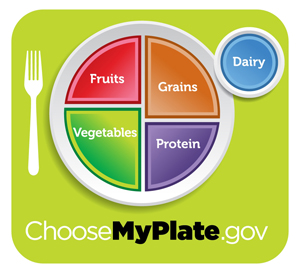
The new MyPlate icon–fantastic or plastic?

Everyone in the food press seems to be weighing in on the new replacement for the much-cursed USDA Food Pyramid in all (both?) its glorious confusion and obfuscation of real nutritional goals that might have (and should have) undermined the beef, corn, pork, corn, sugar, corn, and soy industries if they’d ever been presented honestly.

So where does that leave us? With ears of fresh corn that are more than 50 cents apiece in Los Angeles supermarkets, and the new…

USDA MyPlate logo

Already, the USDA’s MyPlate web site is in a certain amount of branding trouble (and of course, that’s what counts most in America): the Texas DMV had already bagged “MyPlates.com” for its vanity license plate division (highly unappetizing), and Livestrong.com already has its own well-established “MyPlate” food calculator and fan base. And those items come up first on Google searches. As in, the whole first page or more. The government site ranks way down the list and had to water down the impact of its original name choice with “choose” just to get a URL. Can it elbow out the competition just by bolding the “MyPlate” part?

What really counts are the food and nutrition opinion maker comments, though. And a lot of those are detracting in a nitpicking way that I think kind of misses the point.

The first thing they all have to say is that the plate looks dumbed down. Forgive me, but wasn’t the Food Pyramid’s unreadable and unusable design a large part of the problem? The MyPlate icon is simpler and more direct, and it names real food groups, not “Big Mac” or, on the haute side of things, any of Ferran Adrià’s foams. No wonder foodies and populists alike are wondering what it has to do with them.

A small sampling of the main arguments:

MyPlate: The Food Pyramid for dummies? (LA Times): Dr. Andrew Weil and others discuss what’s still wrong with the new icon. Weil says “fruits” could still include fruit juice, which is usually a useless sugar bomb in comparison with whole fruit, and he worries that the protein section, which comes with a guideline to eat 8 oz. of fish per week, might encourage unthinking people to increase their mercury intake since swordfish is on the guideline menu, as are some of the generally overfished popular species of fish. Weil’s not wrong about the fruit juice vs. actual fruit, but his hand-wringing about fish is really geared for well-off readers who can afford to eat much of it. All the fishes he names are Continue reading

Age, salt and the new USDA dietary guidelines

Last Monday the USDA released its latest version of the Dietary Guidelines for Americans (nominally dated “2010”). I was driving home and NPR carried USDA Secretary Tom Vilsack’s speech, in which he listed a few of the new highlights: eat less, eat less food with solid fats, eat less processed food, eat more vegetables and fruits, eat less sodium.

How much less sodium? About 2300 mg or 6 grams (1 teaspoon) of table salt per day, he said, is the recommended maximum for healthy adults, in line with the long-standing National High Blood Pressure Education Program’s guidelines, which are shared by the American Heart Association and many other professional medical groups.

There’s a second lower-sodium recommendation for anyone overweight, African-American, with heart or kidney disease or high blood pressure or diabetes, and anyone middle-aged or older. This year, as the more specifically heart-health-oriented professional organizations already recommend, the USDA guidelines set the lower maximum at 1500 mg per day, or about 3 grams of table salt.

And you’d think that was great, and I do, that the USDA guidelines have finally caught up with what the medical associations have been demanding based on the overwhelming weight of studies on dietary sodium intake as it affects blood pressure, cardiovascular disease including stroke, and kidney disease.

But there are two catches hidden in the midst of all this, and I’m not even sure Vilsack was aware of it. Smaller one first: Middle-aged? How old is middle-aged?

“Fifty-one and older,” Vilsack said. Whew, I thought. Four more years before I have to start thinking of myself as middle-aged. By the time I get there, I’m hoping the standard will have gotten fudged upward by at least another decade or so.

Because, you know, if you’re not 50 yet, 51 sounds reasonable–and comfortably remote for a lot of younger adults. Which I am, thank you very much. Don’t look at me like that.

So here’s Catch-51: When I was working at the National Heart, Lung and Blood Institute back in the mid-’90s, the general working recommendation for lowering sodium to 1500 mg/day was all the other high-risk groups Vilsack mentioned…and healthy adults 40 and up. Not 51 and up.

The choice of a cutpoint at age 40 for otherwise healthy people was based on the risk data from the first three National Health and Nutrition Education Surveys, which began collecting data across the nation starting in the 1970s. The latest version collected data around 2006 and its findings were just released last spring by the Centers for Disease Control. All the NHANES studies correlate  in-depth interviews about diet, exercise and lifestyle patterns, and cardiovascular history along with clinical health measurements (height and weight, blood pressure, cholesterol, urinary sodium excretion, blood iron, etc.) from thousands of ordinary Americans. Even early on, there appeared to be an independent higher risk and a greater need to lower sodium at 40 and older, all other health risk factors being equal.

But of course 40 seems too young to be middle-aged. And the USDA, which issues the Dietary Guidelines for Americans, tends to downplay certain elements of the risk statements so that no one, or at least not the agency’s chief constituents, gets upset. The no one in this case might easily be the Continue reading

The Minimalist Makes His Exit – NYTimes.com

You’ve probably already seen this–Mark Bittman is stepping out of his role as The Minimalist at the New York Times.

The Minimalist Makes His Exit

I don’t agree with some of his recipes. Desserts with more butter than they really require to be good, expensive Italian hazerai (Yiddish for “that greasy pig stuff”) in a lot of the food, and too much reliance on salt as a flavoring, though he’s nowhere near restaurant-standard. To my mind, these could use a remake. I also don’t think Bittman always walks the walk when it comes to touting nonmeat meals and affordable, commonsense ingredients.

But you can’t fault his enthusiasm and you definitely can’t fault his sense of fun on video. I don’t really think he’ll be able to parlay his next NY Times gig, on food politics and the like, into personal parodies of Blue Man Group, The Thin Man’s Return (He Couldn’t Resist the Spaghetti), or Legend of the [you-name-it Kung Fu] Master.

But I could always be wrong. In the meantime, he’s given us more loose-jointed “101 variations” kinds of roundups for summer salads, Thanksgiving side dishes, etc. than almost anyone else and has written two gigantic tomes on How to Cook Everything –even though I’m not sure I’d really want to cook everything. I mean, everything? Too many dishes to wash. Makes me tired just thinking about it.

Local, organic and forgotten field hands

Darra Goldstein’s editorial in the Fall 2010 issue of Gastronomica calls out the schism between the “local, organic” righteousness of wineries and customers and the forgotten field workers they still exploit in the process. Worth a read, even though Goldstein doesn’t get quite far enough to suggest a solution or call for renewed political attention.

Gastronomica | Fall 2010 | Volume 10 Number 4.

Play with your food…

In a season of too many boring holiday cookies, this take on playing with your food, from artist/New York Times blogger Christoff Niemann, caught my eye…

Let It Dough! – NYTimes.com

No idea how they taste when baked, but I suspect that’s not really the point, and anyway, reading Niemann’s column is a calorie-free splurge on a rainy Monday. Printed out, it could make a tasty impromptu greeting card (or several) as well, as long as you give copyright credit and a link so your friends can find the whole article easily.

I can’t wait ’til he takes on gingerbread. Gehry or Gaudì?


More things to fry in olive oil

Thanksgiving has barely ended and Hanukkah is already upon us–which means more food! This time with olive oil to commemorate the rededication of the Temple in Jerusalem after a war in which the Assyrian Greeks trashed and piggified it in hopes that we’d be so abashed we’d immediately convert and become a convenient tribute-paying way station for their marches around the edge of the Mediterranean to Carthage.

I know the official story credits Judah Maccabee, but really, it happened like this:

The Assyrian Greeks thought we’d be too frightened to complain when they marched through Israel, taking what they wanted and getting their muddy footprints everywhere. They hadn’t yet heard of chutzpah. They also hadn’t reckoned with a little-known secret force:  Jewish grandmothers. These bubbies could out-argue G-d. Weekly. And the lectures? …

“Carthage, schmarthage!” the grandma said. “Wipe your feet already, what are you, a Hannibal?”

Then she hefted a mighty frying pan at the intruders and that’s all she wrote.

So the real hero of this geschichte is clearly not Judah Maccabee, aka “The Hammer” — but Judith ha-Machvat, or “Judy with the Frying Pan Handy” — a woman who could really scare off the goniffs! And so in her memory, we fry up all kinds of goodies for Hanukkah and none of the calories stick to our hips at all. Really. It’s a miracle.

So…enough bubbe meises. Back to the present day.

Last night I made latkes without benefit of a food processor–after a slight kitchen drawer reorganization last spring, I forgot where I put the shredder disk. But for a smallish batch for the three of us–only two spuds and half an onion–it’s not so difficult to grate them by hand, as long as you use a fork to hold the stubs (of the potatoes, not your fingers, I hope) to avoid getting extra “proteins” in there…

The Obligatory Latkes (very basic, but tasty in a good way)–about 12 or so 2-3-inch latkes, enough for 3 people for supper, so scale up as needed

Carbs: 2 big potatoes weighed 480 g total on the food scale before peeling. An estimated 1/6th of the weight of nonsweet potatoes is carb–so about 80 g carb total for this recipe. A 4-latke serving would be about 20-25 g carb.

  • 2 big russet potatoes, scrubbed, peeled, shredded on large holes of grater/food processor blade
  • 1/2 medium onion, grated on fine holes into the same bowl OR chopped finely in the food processor BEFORE changing to the shredder blade and doing the potatoes on top of the onion
  • 2 eggs
  • spoonful of olive oil
  • 1-2 t. flour
  • pinch of salt
  • pinch of baking soda (which I completely forgot last night, so it’s optional)
  • olive or vegetable oil for frying

Grate the potatoes and onions by hand or food processor into a big bowl. The grated onions will help prevent discoloration in the potatoes. Take handfuls of the mixture and squeeze them nearly dry, and pour off most or all of the liquid that collected in the bottom of the bowl. Return the potatoes to the bowl, add the eggs, spoonful of olive oil, flour, salt and baking soda and stir until evenly mixed.

Heat several tablespoons of oil in a nonstick pan until shimmering and dollop soupspoonfuls of the latke mixture in, flattening them as they start to fry. Swirl the pan a little to get the oil touching each latke and maybe keep them from sticking to the pan. Wait until you see brown edges at the bottom of the latkes, then flip and fry the other side, swirling the oil a little or adding another spoonful in droplets where the pan seems to need it. You want these really brown and crisp on the outside, not pale yellow.

Drain on napkins or paper towels on a plate, and at the end, if no one’s snatched them as they cooked, you might want to reheat them all together in the pan or microwave them on the plate for half a minute on HIGH. Serve with applesauce and sour cream or labaneh or plain yogurt.

–  –  –  –  –

That’s the only recipe I’m giving here with set quantities–latkes are more like pancakes, everything below is like a stir-fry.

Non-Latke Options

Even with mechanical assistance in the form of a food processor, I’m a one-latke-night-per-year-is-enough kind of person. I want something other than potatoes if I’m going to be frying stuff in more than a spoonful or so of olive oil. Therefore I look for other maybe less starchy and more flavorful (one can always hope) things to fry:

Pre-nuked (microwaved) eggplant slices, fried in a couple of spoonfuls of olive oil after heating a little garlic and curry powder, maybe a dab of z’khug, for a few seconds first. Onion and red bell pepper are good in this mix too.

Marinated artichoke hearts, perhaps drained slightly and shaken in a plastic bag with a spoonful or so of flour or almond meal or chickpea flour and a little grated cheese and/or some oregano or thyme–no extra salt needed

Pre-nuked cauliflower, breaded as for the artichoke hearts

or–pre-nuked cauliflower, stirfried in a spoonful or so of olive oil with a dab of z’khug if you like things hot, with red bell peppers, onions, and another Continue reading