
• Enter your email address to subscribe to this blog and receive notifications of new posts by email.

    Join 241 other subscribers
  • Noshing on

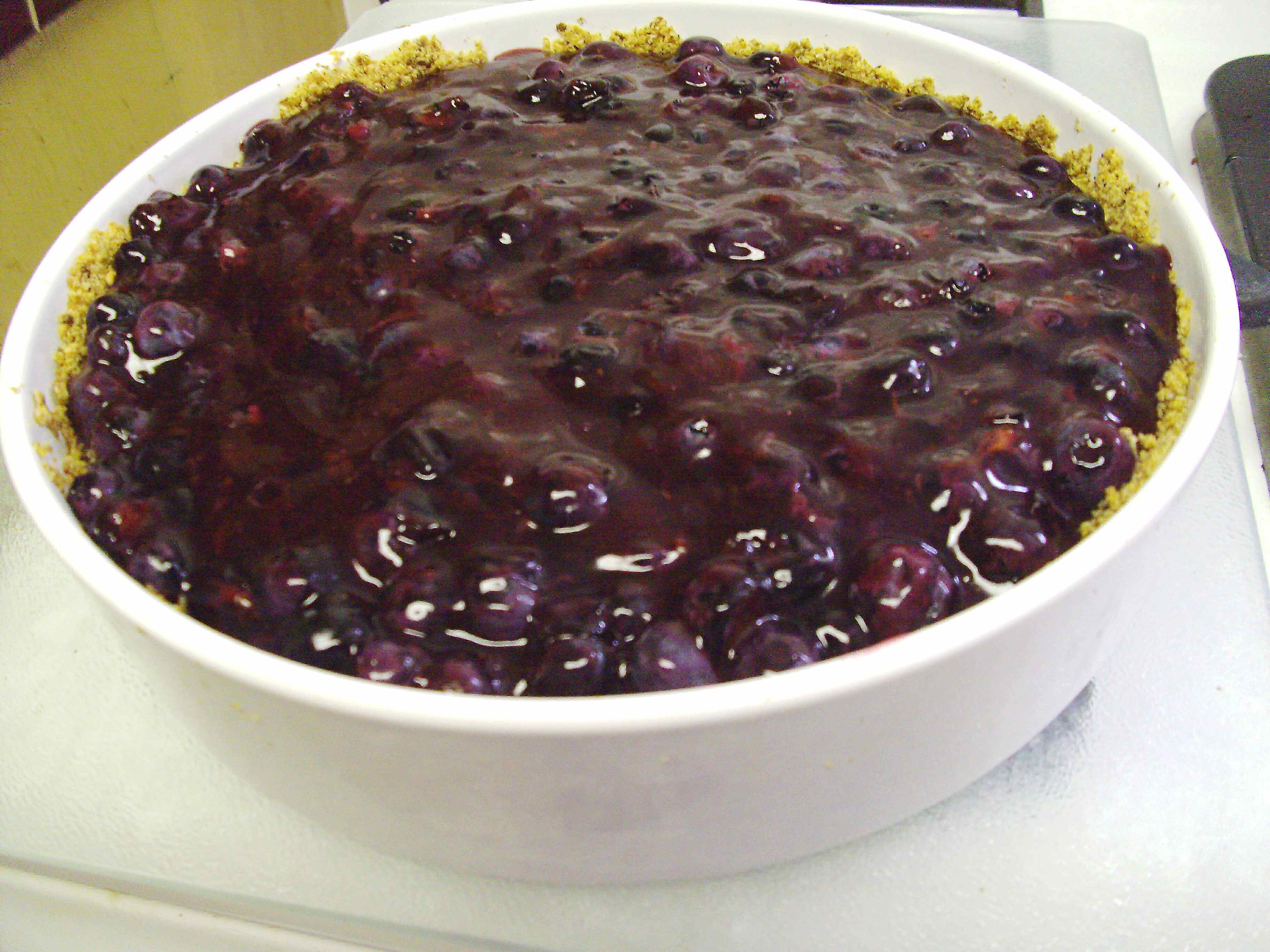
    raw blueberry pie with microwaveable filling and graham cracker crust

    This mostly-raw blueberry pie is a snap to make and very versatile--the filling microwaves in a few minutes, and you don't even have to bake the zippy gingered graham cracker crust--perfect for a hot Fourth of July and all summer long.

  • Recent Posts

  • Contents

  • Archives

  • Now Reading

  • See also my Book Reviews

  • Copyright 2008-2024Slow Food Fast. All writing and images on this blog unless otherwise attributed or set in quotes are the sole property of Slow Food Fast. Please contact DebbieN via the comments form for permissions before reprinting or reproducing any of the material on this blog.

  • ADS AND AFFILIATE LINKS

  • I may post affiliate links to books and movies that I personally review and recommend. Currently I favor Alibris and Vroman's, our terrific and venerable (now past the century mark!) independent bookstore in Pasadena. Or go to your local library--and make sure to support them with actual donations, not just overdue fines (ahem!), because your state probably has cut their budget and hours. Again.

  • In keeping with the disclaimer below, I DO NOT endorse, profit from, or recommend any medications, health treatments, commercial diet plans, supplements or any other such products.

  • DISCLAIMER

  • SlowFoodFast sometimes addresses general public health topics related to nutrition, heart disease, blood pressure, and diabetes. Because this is a blog with a personal point of view, my health and food politics entries often include my opinions on the trends I see, and I try to be as blatant as possible about that. None of these articles should be construed as specific medical advice for an individual case. I do try to keep to findings from well-vetted research sources and large, well-controlled studies, and I try not to sensationalize the science (though if they actually come up with a real cure for Type I diabetes in the next couple of years, I'm gonna be dancing in the streets with a hat that would put Carmen Miranda to shame. Consider yourself warned).

Artificial sweeteners causing glucose intolerance

A new study on artificial sweeteners published in Nature goes a long way toward explaining one of the most puzzling findings about sweetened drinks in recent years: that regular consumption of even diet sodas is associated with an increased incidence of obesity and Type II diabetes. Surely, if the sweeteners have no calories and negligible carbohydrate, this shouldn’t be happening? Surely people should be losing weight? But the national statistics have shown that it is, and they’re not.

According to a news summary in The Scientist (Sugar Substitutes, Gut Bacteria, and Glucose Intolerance), researchers at the Weizmann Institute of Science in Rehovot, Israel, demonstrated that repeatedly consuming zero-calorie sweeteners like saccharin, sucralose and aspartame (e.g., Sweet ‘N’ Low, Splenda, and NutraSweet) increases a person’s glucose intolerance by causing changes to his or her gut bacteria.

The researchers did extensive testing on mice first–fed them artificially sweetened water for several weeks and compared glucose tolerance and gut flora with those of control groups that received either glucose solution or plain water. The experimental mice had much higher rates of glucose intolerance than either of the control groups, including the one that was fed glucose solution.

They also had very different gut bacteria composition, which the researchers thought might be causing the changes in glucose tolerance. Wiping out the gut bacteria of control mice with antibiotics and then repopulating with the gut bacteria from sweetener-fed mice caused glucose intolerance in the normally fed mice.

The researchers repeated their experiments on healthy human subjects, and they got the same dramatic results. The timeframe for measurable changes in glucose tolerance was within as little as six days for one of the tests.

Admittedly, the researchers were dosing their subjects with sweetener concentrations at the highest levels currently deemed safe by the FDA. So if you only consume these sweeteners occasionally and in small quantity–say, chewing sugarless gum once in a while–you might not be causing a drastic change in your gut bacteria or glucose tolerance.

But so many people in the US consume diet sodas and artificially sweetened teas and so on in large quantity on a daily basis that it’s possible they’re coming close to the levels used in these experiments. If you consume even half the maximum defined “safe” daily level, you might well be impairing your glucose tolerance significantly. But there may not be a safe level. There’s no saying what level–if any–of sweetener per day is low enough not to change gut bacteria and raise glucose intolerance–it may be a matter of dose or it may be a matter of how long and how regularly people consume these sweeteners.

Glucose tolerance is a measure of your body’s ability to supply insulin quickly and at the right level whenever you eat or drink something with starches or sugars. Part of the gut’s function is to release glucose into the bloodstream, but Continue reading

Tipping the scales at Whole Foods

From The Los Angeles Times today:

Whole Foods paying $800,000 for overcharging in California

Pricing violations included not zeroing out the container weight when weighing prepared items from the food bar, shorting weights on packaged goods, and other problems.

This of course is bad practice toward consumers, but it doesn’t really address the critical issues with Whole Foods.

Yes, Whole Foods has been fined for pricing violations in California. The court injunction will mean five years of oversight and audits. But the real problem is beyond court remedies: everything’s overpriced and the customers seem to like it that way.

Produce prices that can rise to $10/lb for things like cherries when other nearby supermarkets are charging maybe $4-5. Fish prices in the $30/lb range. Whole Foods trades on a reputation for sourcing more variety than the average chain supermarket, and it does achieve that, but not everything it carries is really so exclusive that it justifies a higher price tag.

And in any case, the real money (other than the food bar, which is up to about $8/lb. across the board, whether for roasted eggplant and peppers or for things like canned kidney beans and flaked tuna and cucumber slices) is in cosmetics and pharmaceuticals parading as dietary supplements (and vice versa). Whenever I go into Whole Foods for a small coffee and a roll, the person ahead of me in line is inevitably ringing up more than 100 bucks worth of things like holistic soap bars at $5-10 apiece (compare “Ivory” bath bar 10-pack at about $6 at the local Ralph’s/Kroger’s) and cases of “vitamin waters” at about $4 per bottle, and dietary supplements with a $40-50 fantasy surcharge per bottle. And maybe a scrawny bunch of kale that they’re not sure how to deal with.

10 (or so) Warning Signs of a Half-Baked Diabetes Cookbook

For the past two months I’ve been scouring the library and bookstore shelves in search of practical guidelines for preventing and managing Type II diabetes with  diabetes-careful meal plans.

I have two goals for myself:

1. Get down to a healthier weight by eating less and exercising more–this is the big one with the best correlation to reversing prediabetes. And it’s going okay but slowly.

2. Eat balanced meals with somewhat less carb per meal, fewer free sugars and fewer calories overall than usual. This is the easier one generally…as long as I keep a food diary. Luckily, I know how to cook and I’ve been doing meal planning for a Type I diabetic child for four years now, so I know how to count carbs. And when I don’t, I have a copy of the American Dietetic Association’s handy, simple and cheap $3 or so guide on the shelf. And a link to the USDA nutrition database for the exotic occasional items like chestnuts in the shell (note to self, about 5 grams apiece).

But I still wondered if the diabetes and weight loss cookbooks I see around are solid and I’ve just been too lazy, arrogant or impatient to take them seriously all these years. Hence the trips to the library.

Because no doubt about it, the diabetes cookbook scene is burgeoning. There are loads of good-looking cookbooks out with pretty, gourmet-looking recipe photos and promises of perfect blood sugar management amid the desserts on the cover.

Here’s the short version of this post: a read through most of these books is NOT encouraging. All the popular diet book gimmickry of the past 40 years seems to have been transferred to a lucrative new target (read: gullible victim) market, complete with bright, shiny new drug company advertising and sponsorship potential on the coordinating web sites.

Considering that there’s no precise required diet for diabetes, just guidelines for budgeting meal carb totals and keeping some kind of commonsense balance between starches, fiber and sugars, even the premise of prescriptive diabetic cooking guides is a little shaky to start with. But what’s actually being presented as guidance in these popular books is far from that approach.

Even cookbooks affiliated with or endorsed by organizations like the American Diabetes Association and so on fail some pretty simple commonsense tests for honesty, accuracy, consistency, or relevance to standard public health guidance on preventing, managing and reversing Type II diabetes by way of diet. And if you don’t already know your way around carb counting and portion size measurement, they’re extremely confusing. Sometimes even on purpose.

So here are the main common flaws I’ve discovered in most of these books, with a few books singled out for personal ire and bemusement. You might want to consider these as warning signs if you’re looking for actual guidance to get you through.

10 Warning Signs that Your Diabetes Guide Cookbook is Half-Baked

1. The Dessert First approach to diabetes management. Telltale sign: does it show cake or ice cream on the cover? About half the books I scanned do. They treat desserts and snacks as a top priority, as though that were what diabetes control is all about. As though sweets were somehow necessary at every meal, or even every week. None of them ever say, “just stick with a small apple or orange most days. No recipe required.” Actual endocrinologists recommend keeping desserts occasional and snacks un-glamorous and limited in carb.

1b. Aside: Many of the dessert-first books show cheesecake on the cover, usually a 1/8 to 1/10 cake portion–a pretty hefty wedge by any standards. This is a come-on–cheesecake is usually high in fat calories, so it’s rarely a good pick for anyone attempting to lose weight (the main strategy for Continue reading

Say “Celà n’est sûre[-gelée-]ment pas le cas”

Following on reports this spring that Polish (and probably other-sourced) horsemeat made it through France and into British frozen supermarket lasagne, now we get word of even more devious (and frankly depressing) culinary misdeeds in today’s Washington Post online:

French restaurants acknowledge serving factory-frozen food

A surprising number of cafés are apparently serving up microwaved meals instead of cooking them in-house. Even the éclair, which doesn’t take a lot of time to cobble together, even for an amateur like me, is no longer safe. The profit margin is too high on these items, and the savings in cooking staff are phenomenal. In a down market, what else would you expect?

But it’s a big embarrassment for a country that’s traded primarily on its gastronomic leadership for decades since WWII. No, WWI. No, wait–probably since the Napoleonic era. Or before the Revolution. Cyrano de Bergerac does a soliloquy based on cream horns and other such items, if I recall.

Well, to tell you the truth, though, I’m not sure whether I’m shocked or relieved. Judging from what my family and I were able to eat in 2006 in Paris, I’d say that in a few cases (cafés within walking distance of museum exits, chosen in part for meltdown-avoidance) frozen might even be a step up from one or two of the overpriced restaurant meals we had (a horrid, horrid “salade niçoise” featuring canned green beans comes to mind). Those few meals were, and I can be generous when I have to, mediocre in a way that would be excusable in suburban America on travel but which were much less than okay given that it was Paris.

Mostly we ate food that wasn’t (comparatively, anyhow) too expensive (we skipped the meat dishes, since we keep kosher) and couldn’t be frozen well enough to fool customers who know how to cook. So omelets cooked where we could see them, felafel served with freshly chopped red cabbage, open-faced sandwiches, breads from a bakery that smelled like yeast and flour, not like plastic bags, and so on. The frozen items tended to be ice cream, which is supposed to be frozen. But that was a year or so before the big bank crashes, the collapse of the housing bubble in America and “too big to fail” and even the Madoff scandal. And even then things weren’t quite as glam, at the moderate end, as we’d been primed for.

And on the other other hand, what does it mean that so many French restaurants have resorted to this kind of tactic, microwaving (and charging for) tuna steaks with ratatouille accompaniment, as in the article? What, other than money of course, and the effects of a deep recession that’s hit France pretty hard this past year.

What it means, in part, is that (also according to the article) flash-freezing techniques are now at a point, at least in France, where they can keep the food acceptable in quality and that the suburban factories where these dishes are put together and frozen are doing a pretty fair job, fair enough to fool even moderately experienced diners (not just tourists). And that the “restaurants”–who knows if they’ll get to keep that title now that they’ve been exposed–have figured out how to be at least marginally competent at microwaving so they don’t just ruin the food.

Better if they were cooking fresh. Or, from the perspective of an avid microwaver, better if they were using their microwaves for something more sophisticated than defrost-and-warm. Better, since so many of the younger working French no longer cook for themselves very much, if the restaurants, cafés and bistros took their role as gastronomic role-model and rallying point a little more to heart. Certainly they shouldn’t be pretending to cook from scratch and charging commensurate prices.

But I wonder–is the food they’re serving significantly better in quality than America’s mass-produced frozen meals-for-one? It might just be, since it’s a more recently introduced phenomenon in France, and it’s been designed to pass muster as though it were cooked fresh. For such a fraud to be successful, the flash-frozen food cannot be like American tv dinners. It just can’t. It might be that many of these factory-produced dishes are still a lot less processed than the miseries perpetrated by Swanson, Kraft, Stouffer’s and so on over here. So maybe we need to take another look at their techniques and demand better quality in the frozen food section here, foods that don’t have aroma of oversalted wet cardboard clinging to them once thawed.

Emergency eclairs

Note: this is not my photo–I have not been to the balcony of Notre Dame lately. I merely share their dismay. [Source: Brittanica Online, with gentle modifications for parody purposes]

You may be wondering what to do if you drop half your éclair over the balcony of the Eiffel Tower, or worse yet, Notre Dame, while pondering your options for the afternoon’s conquest…YSL first, or peut-être Dior?…ooh-la-la-oops!

AAAAAGGGGHHHH!

Screaming will not get your éclair back, though it is a good start. You need to get down to ground level and purchase another tout de suite!

No, this is not really me channeling Miss Piggy at her “Who, Moi?” finest. I don’t have the lavender satin opera-length gloves for it, for one thing. I’ve just been watching too many of the various Muppet movies with my daughter lately.

Plus, and let’s be honest about it, the one time I ever tried on a long blonde wig (for a college skit), I took one look in the mirror and fell down on the costume department floor laughing until my ribs hurt. It was 20 minutes until I could breathe again. Picture Danny deVito (his eyebrows, anyway) peering out from under that wig, hoping to stand in for La Porcette,  and you understand why Frank Oz can never, ever go on vacation.

I have not been to Paris in seven years, and when we were there (for an engineering conference, with our then-kindergartner) we did not actually eat any éclairs. We also did not shop at Pierre Hermé, nor at Hermès, nor anyplace that wasn’t either a museum, an RER or métro stop,  a café or a tchotchke booth along the Seine. Other than for food, if it cost more than 15 bucks (or 11 euros, as for example, the tiny 3-inch-long stuffed unicorn at the Musée du Moyen Age, which we paid for hastily during a shall-we-say-jetlag-inspired meltdown), it was out of the question. I actually spent two full hours–ON VACATION IN PARIS–sitting forlornly in a coin-op laundromat down the alley from our hotel, hoping I had enough change to get all the horrible perfumed detergent back out of our clothes, while my husband and daughter went to the park. Not exactly the Paris experience I’d imagined way back in my high school French class.

So what am I doing imagining that I could climb up OR down the Eiffel Tower in chic heels (instead of the more believable sneakers and backpack with the entire belongings of my family plus bandaids and extra sandwiches…), waving an éclair around with incredible nonchalance and somehow not lose it (which I’ve never actually done; I’m a fervent believer in pastry) or break an ankle (which I have actually done, wearing flats), or both, with loads of people looking on?

Who knows–daydreams like these are the kind of thing mentioning Paris does to one when one blogs about food or fashion. Practically obligatory. It’s fun to imagine a life where such trivial matters can leaven, not to say inflate, my expectations. And, of course, where I’m not the one who has to schlep all the emergency supplies up however many flights of stairs. And back down.

Let’s face it, I’m a natural pessimist and (therefore) fan of both the Muppets and Matt Groening. Tell me true, now, doesn’t the gargoyle on the right look like the original inspiration for that sad shrimpy one-horned character in Life is Hell? He’s even wearing my backpack.

Real life is hard, gritty for more serious reasons than high-heeled éclair mishaps, and it’s filled with nagging of the now-ex-7th-grader. Ahem! These are things we just have to get through because there’s no great alternative (…yet. I’m working on it, believe me.)

Eclairs, on the other hand, are not actually difficult to make. And eating them makes one feel a lot less like life is hell, particularly if one skips the high heels and eats them barefoot.

And on the other other hand, baking anything in Los Angeles, even in winter, may well make one feel that one is actually living in hell, at least while the oven’s on. And right now it’s June.

How to cope? Toaster oven? Microwave?! The eagle squawking in shock above left may not approve of my methods, but he’d find it hard to argue with the results. Especially if you’re in the mood for just a couple of éclairs Right Now, and you have ice cream on hand so you can skip the custard chilling and filling bit and go right to profiterole heaven.

The pastry for éclairs, called pâte à choux, or choux paste (shoe paste! I knew there was a connection to the sudden appearance of high heels in my daydream), takes only a couple of ingredients: flour, water, butter, sugar, eggs. Maybe a pinch of salt too, okay.

Everyone and their uncle (or aunt) who’s ever written a Frenchy kind of cookbook has a recipe for éclairs, but who do you know anymore who’s ever actually made them? Right.

But actually, they’re pretty easy to make. At least as easy as brownies from a mix, and they seem fancier. You boil the butter, sugar and salt with the water, dump in the flour and stir until it looks like stiff mashed potatoes, then take it off the heat and beat in the eggs one at a time and voilà, there you have the dough–shiny yellow stuff to pipe out or dollop out onto a greased and floured baking pan and bake at high temperature for about 30 minutes until they’re really puffed and brown and don’t collapse anymore when you let them cool.

David Lebovitz has the classic recipe on his web site — a cup each of flour and water, 6 T butter, 2 t sugar, 1/2 t salt, and 4 large eggs. Pierre Hermé of exotically-flavored-macaron fame has a richer one with more butter and 6 eggs for the same amount of flour. And I’m sure they’re wonderful. But I can’t help messing around.

First off, I want fewer than 24 éclairs–what do you do with the rest of the dough? (turns out you can pipe it and freeze it, then bake straight from frozen sometime later, or else freeze the baked shells. OK. But still.) So I cut David’s basic proportions in half. Limit the damage to the avoirdupois, I always say. Fewer situps required.

Second, the butter. I know éclairs are the ultimate Unalterable Classic French Recipe but…here starteth the messing around. Like I say, I can’t help it. Continue reading

What she said

I’m shocked, shocked I tell you. I’m about to admire and recommend an article by LV Anderson of Slate.com.

Against foodies: Alison Pearlman’s Smart Casual reviewed

Yes. LV Anderson, the Slate columnist/editor of “You’re Doing It Wrong” infamy, the one who so often makes unnecessary, fussy, time-consuming and sometimes even adverse recommendations for how to “fix” some fairly common and popular foods like chili or muffins. Or guacamole. I’ve disrespected quite a number of her columns over the past year or two, and so have many Slate readers.

But her review of local (LAish) professor Alison Pearlman’s new book on the shallowness of foodieism is really good. It’s thoughtful, sharp and thorough without being annoying.

Anderson has clearly been stuck in an awkward niche for a year or more; her cooking tips are not much to write home about but her book review is, so I’m doing it.

You must read this. Take an hour if you have to.

Today’s New York Times has an excerpt from investigative reporter Michael Moss’s forthcoming book on the processed food industry’s push to engineer addictive foods. It’s a long article, more than 12 pages, but well worth the read.

The Extraordinary Science of Addictive Junk Food – NYTimes.com.

More “breathable foods” weirdness

A couple of days ago, Entertainment Tonight posted a new video tidbit on “breathable” food  from the same Harvard professor, David Edwards, who invented the AeroShot “breathable caffeine” cartridge that has drawn some serious FDA attention of the negative sort.

ET’s anchor breathlessly posed the  question, could this become The Next New Diet Fad in Southern California, when what the LeWhaf vaporizer was invented for was the “aesthetic experience” of breathing food flavors. This according to Edwards, whose Paris-based design lab, Le Laboratoire (names aren’t really his thing?) offers a number of vaporized cocktails at a small sit-down bar.

When I wrote about the first set of inventions, I said I thought it might be an interesting molecular gastronomy-style taste experiment (at least if the flavors were something more sophisticated than “lime,” the flavoring in the AeroShot cartridge), depending on what was being used to create and propel the vapor.

The ET video presents an interview with a young up-and-coming chef who’s offering cocktails of various kinds served in the Le Whaf vaporizers–to be inhaled through a special straw. The accompanying visual looks, frankly, like someone about to use a bong or snort a line of coke, but that could just be the way ET’s camera crew are used to shooting bar scenes…

The chef they interviewed doesn’t serve these vaporized cocktails, not all of which are standard drinks in the daily repertoire (some of them look like beef broth) as a low-cal diet offering but rather as a sideline to enhance some other dish. Very molecular gastronomy. Still he concedes, when pushed, that he can’t see how it would have calories.

(From his doubtful expression, they must have edited out the part where the Barbie Doll reporter shoved a mike in his face repeatedly and insisted with desperation that the vapor must make it calorie-free, it just MUST. She’s the one who tried the AeroShot caffeine spritzer on-camera in the studio to demonstrate the concept, and quickly uttered the dutiful “Mmmm”,  but the video jumped at that point, so I wonder if she really sampled it or not. At least she didn’t start coughing…unless they cut that part too…)

And yet I wonder if ET hasn’t hit on something here–no, not the diet fad. One can’t live on pâté-flavored air alone. One must also vaporize some champagne to go with it, preferably Krug. Could possibly clog the nozzles otherwise.

No. In the frenzy to discover the new French technology that magically removes all calories, ET seems to have let the chef describe the mechanism at the bottom of the vaporizer. Here you are, at a cocktail bar, leaning over the open mouth of a carafe, straw in mouth, ready to inhale cocktail-flavored vapor…produced, about 12 inches from your face, by three ultrasound probes at the bottom of the carafe. Continue reading

Government nutritional estimates for “mixed dishes”–where do they come from?

The federal “MyPlate” program has expanded its consumer information on dietary guidelines but some of it looks suspiciously old-hat and soft on nutritional crime, very much in keeping with the USDA’s traditional approach of pandering to the processed food industry. I stumbled across it while helping my daughter find school lunch nutrition information for her latest science project, which was to analyze her new public school’s lunch program.

Of course, my 7th grade daughter’s reaction to her first day in a real live public school cafeteria last month was shock. Because she’s diabetic and vegetarian, we agreed the best strategy for her would be to bring her standard lunch from home–PBJ on whole wheat with an apple. She had trouble the first day with the routine–shove through the cafeteria line, squeeze in at a table, shovel down food, run for the bell.

What did the other kids eat? I asked. “They ate crap,” she answered without so much as a pause. “Pizza and french fries, stuff they can eat in about five minutes while gossiping with their friends. They hardly even notice.”

Now–as I’ve said before–peanut butter and jam on whole wheat is not gourmet, but it’s fairly nutritious (beats Oscar Meyer bologna for protein, believe it or not) and with a small apple, it’s reasonably worthwhile and you can eat it fairly quickly–certainly within 15 minutes, if you can shove through the cafeteria line and find a seat. If you make friends, as my daughter quickly did, you can even find some time for gossiping and having fun. And it costs less than a dollar and takes less than 5 minutes to pack at home. The school lunch is $2.35, and yes they do offer apples and some sort of packaged salad stuff and skim milk, but as my daughter noticed, few of the kids actually eat those items. Maybe the milk–well, at least offering the fresher food is a start.

Still–“crap” is not that far off. Pizza AND fries? A tough act to follow with anything but gallbladder surgery at 40.

And as she looks at the school menus online for September–they declare that they follow the USDA school nutrition guidelines–we notice a lot of things that aren’t really sound thinking from a diabetic’s point of view. A lot of menus that don’t come close to matching the ChooseMyPlate.gov guidelines, which call for half the plate to be vegetables and fruits (in that descending order of quantity), a quarter of the plate protein, a quarter complex carbohydrate.

“There’s a lot more meat,” she says. “Actually, my friend had the chicken patty today and spat it out. She said it wasn’t chicken. My other friend said it was, it was just cafeteria chicken.” Sounds like some of her new friends have a better take on the school food than the government does. My bet–the chicken patty is like standard bologna, only about half is anything that actually came from a chicken–including fat and skin–and the rest is probably starchy and high-salt fillers.

So, speaking of food that really isn’t as good as it seems…

The ChooseMyPlate.gov brochure on “mixed foods”, which is what I promised up at the top, might be part of the same sad thing. Here’s the sample chart they offer for things like pizza, lasagne, double cheeseburgers, burritos…that are supposedly hard to judge on nutrition.

MixedDishes.pdf 

Any takers on this one? My first impression is that the calorie counts are probably low–maybe as little as half–for a standard chain restaurant or frozen-entree serving of any of these items. Probably because a USDA recommended standardized “portion” for nutrition labeling purposes is very small compared with what people are actually eating and what companies are serving.

My second impression is–fruit servings? for pizza? who are they kidding, and why is this column even in here? Fruit is optional–it’s a carb. Nonstarchy vegetables with some actual vitamins and fiber are required eating. It’s pretty obvious from the table that the vegetables are pretty scant in this list of “mixed foods” too–mixed in this case seems to mean starches and fats plus some form of meat.

And what isn’t listed–the salt and fat and total carb. The fiber, vitamins and minerals. Most of this food is high in stuff that should be low, and low in stuff that should be high.

On second thought, maybe we should just read down this table for suggestions on what not to serve.

Montreal

We are back from Montreal, a city which reportedly has more restaurants per capita than anywhere else in the world–does this include Paris? Most of the food we had was very good. Even the dreary-looking and overpriced breakfast bar in the convention center where my husband was attending the IEEE conference had excellent, crisp croissants and thick serious coffee to go with the boring-standard scrambled eggs and dry cereals. I never got a chance to try out the Montreal bagels because we found such good food within walking distance downtown.

The Vieux Port area of downtown has streets full of bistros and is lively to walk through, admiring the art galleries, tchotchke shops, accents (French with a distinctive Western Hemisphere twang) and people (a lot of younger women were sporting platform wedgies in improbable colors like Day-glo orange or pink, and almost all the natives were more fashion-conscious than we were).

On one of the piers we discovered the Centre du Science had a special exhibition of costumes, ship and creature models, and the original concept drawings from the Star Wars movies. We had to see it, even though it meant paying extra and wearing a rubber bracelet with an RFID chip in it so we could pick our species, planet, job description and personality traits as we walked through the stations with film clips illustrative of influences and stages of personal development. I mean, Luke’s upbringing contrasted with Anakin’s? Did I need to see the blame laid on Anakin’s mother’s permissive parenting style for Anakin’s tendency to be drawn to the Dark Side? Mothers get blamed for everything. As for the Dark Side, well, they get all the cool costumes–red leather, black leather, horns, masks, capes, shiny streamlined samurai helmets, wrestler belts with electronic gizmos built in…compare that with the monklike dun-colored burlap and linen outfits for Obi-Wan and Qui-Gon. Of COURSE Anakin would get with the Dark Side. Proof? Darth Vader ends up with the coolest costume of all…apart from that pesky touch of asthma.

On a brighter note, did you know Yoda was originally supposed to look something closer to a European-style elf or garden gnome? Glad they went Japanese.

Another pier–the entire pier–housed the blue and gold striped tents where Cirque du Soleil holds its home court performances nearly every afternoon.

But the weather was unusually hot, in the 90s, and so humid that we didn’t feel like eating much until sundown, when it was finally cool enough to venture out and explore all the sights within walking distance.

I was also under a time sentence–start statins as soon as I got home, test again in six weeks and see if they’re working. So I was doubly uncomfortable eating out all the time, thinking twice about eggs or butter or cheese in anything that was served, wondering if this was the last grapefruit I was going to be able to eat and maybe I’d better have only one small serving of that in the Indian restaurant we went to with our friends, because it was cooked with ghee (there were 25 Indian restaurants in town! crowed our friend’s 9-year-old daughter. She wanted to try them all.)

And why were the only vegetables in the other restaurants buttered (which I’ve never liked; my cholesterol-packin’ genes are more to blame than my actual diet and the doctor’s office pamphlets nearly always say to “cut down” to more saturated fat than I actually eat) or else a tiny salad? Just like the French. Just like the Americans.

And yet…the best place we ate–we went back twice that week–was a small undecorated restaurant in Chinatown around the corner from our hotel, which was across the street from the convention center. When we arrived from the airport at 11 pm, Restaurant Beijing was the only place still open for dinner, and we weren’t expecting much when the concierge recommended it. We trudged around the corner anyway, past the hotel’s dumpsters, around to rue Gauchetière,  and took a peek through the window.

Plain cafeteria-style tables, brightly-lit but plain strip-mall sort of space, chalkboard specials on each wall, no decorations at all other than a few bamboo plants in the window, not even old-style kitsch, and…absolutely packed at that hour of the night. Continue reading