• Enter your email address to subscribe to this blog and receive notifications of new posts by email.

    Join 241 other subscribers
  • Noshing on

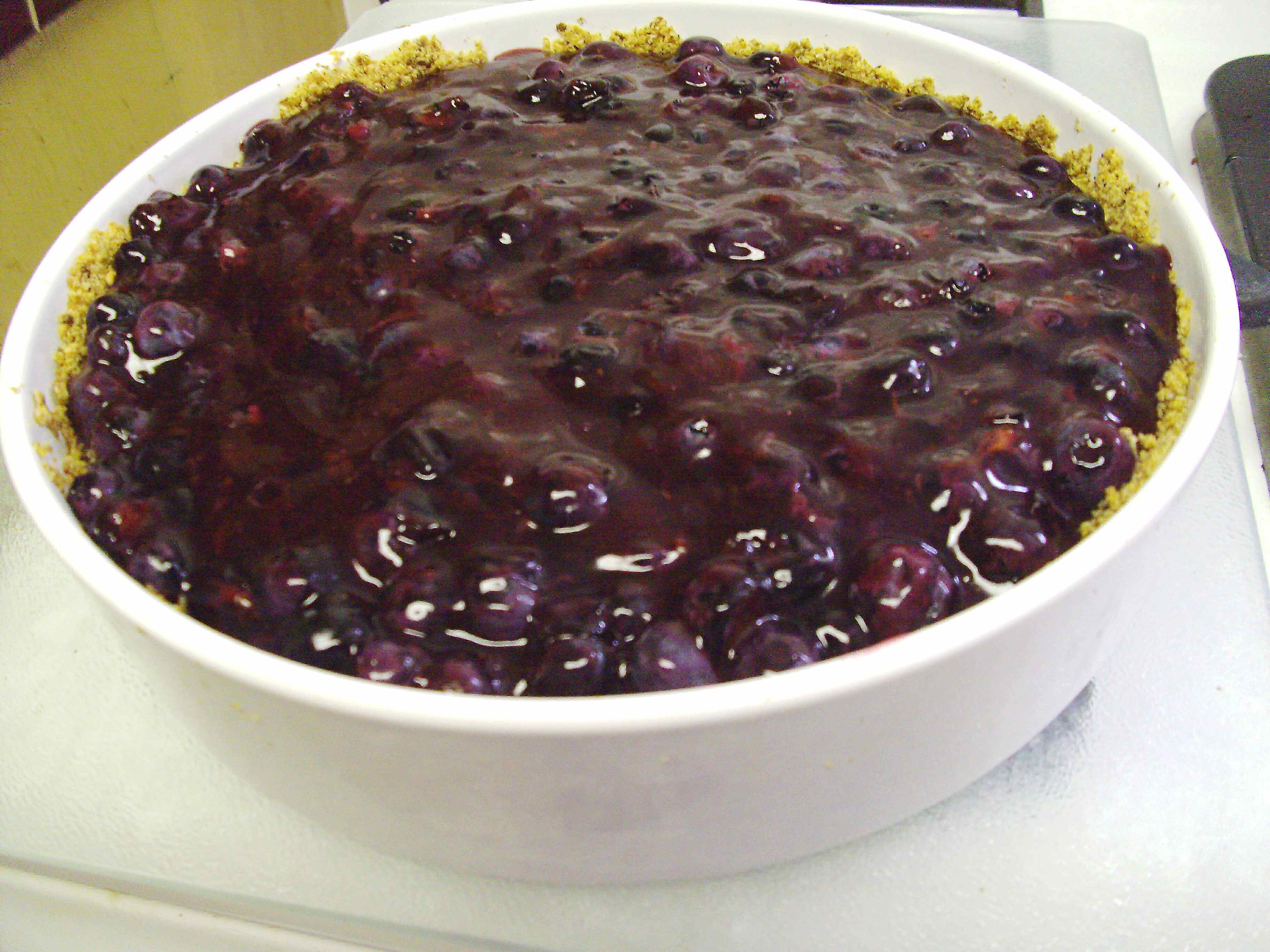
    raw blueberry pie with microwaveable filling and graham cracker crust

    This mostly-raw blueberry pie is a snap to make and very versatile--the filling microwaves in a few minutes, and you don't even have to bake the zippy gingered graham cracker crust--perfect for a hot Fourth of July and all summer long.

  • Recent Posts

  • Contents

  • Archives

  • Now Reading

  • See also my Book Reviews

  • Copyright 2008-2024Slow Food Fast. All writing and images on this blog unless otherwise attributed or set in quotes are the sole property of Slow Food Fast. Please contact DebbieN via the comments form for permissions before reprinting or reproducing any of the material on this blog.

  • ADS AND AFFILIATE LINKS

  • I may post affiliate links to books and movies that I personally review and recommend. Currently I favor Alibris and Vroman's, our terrific and venerable (now past the century mark!) independent bookstore in Pasadena. Or go to your local library--and make sure to support them with actual donations, not just overdue fines (ahem!), because your state probably has cut their budget and hours. Again.

  • In keeping with the disclaimer below, I DO NOT endorse, profit from, or recommend any medications, health treatments, commercial diet plans, supplements or any other such products.

  • DISCLAIMER

  • SlowFoodFast sometimes addresses general public health topics related to nutrition, heart disease, blood pressure, and diabetes. Because this is a blog with a personal point of view, my health and food politics entries often include my opinions on the trends I see, and I try to be as blatant as possible about that. None of these articles should be construed as specific medical advice for an individual case. I do try to keep to findings from well-vetted research sources and large, well-controlled studies, and I try not to sensationalize the science (though if they actually come up with a real cure for Type I diabetes in the next couple of years, I'm gonna be dancing in the streets with a hat that would put Carmen Miranda to shame. Consider yourself warned).

For recipe sodium counts, better do your own math

Another Martha Rose Shulman recipe for a peanut sauce to go with soba and other noodles appears in today’s NY Times “Recipes for Health” column. Which would be fine but the nutrition counts below it don’t add up–at least for sodium. She’s specified unsalted peanut butter–but has 1 or 2 tablespoons of regular, not low-sodium, soy sauce at 1200-2400 mg sodium, and not low-sodium but regular or unspecified vegetable or chicken broth, both of which are pretty loaded, so anything from 150-750 mg per cup. If you look down to the nutrition counts, though, each of 4-6 servings is supposed to be 150 mg of sodium. How? In my daughter’s 4th grade math text, ~3000 mg for the total recipe at the higher options (650-750 mg broth, 2400 for 2 T soy sauce)  would give you 500 mg for 6 servings. For 4 servings, it would be 750. The best you could do would be the lower-sodium options for 1350ish in the total recipe, so about 350 mg. per serving.

On her own web site, Shulman claims not to care about sodium counts when she creates new recipes or adapts old ones (not clear how she can claim that makes them recipes for health), so perhaps this is one column to take with(out) a grain of salt.

Another Reason to Make Your Own Salad Dressings

My husband came home this weekend loaded down with leftovers from a brunch he’d helped set up. Among the cartons of pasta salad and regular salad and dubious mass-market hummus and two–two? really?–homemade onion pies was a jug of something reddish. It turned out to be more than a quart of prepared raspberry vinaigrette, the kind of thing a caterer would pick up at a bulk commodities store. More than we would ever use in a year, but let it pass. He meant well.

So we found space for most of the stuff in the fridge, threw out the hummus because we didn’t know if it had been dipped into or not, and then there was this jug of vinaigrette hanging out on the counter. I took a look at the ingredients. Canola oil (boring but expected), sugar (enhhh–not a fan of sweet salad dressings, personally), salt, distilled vinegar, raspberry extract was somewhere down in the lower middle, more for color than flavor no doubt, paprika extractives (so much easier than actual paprika?)…yada yada yada…some kind of starch and emulsifiers to keep the oil and vinegar more or less together…polyethylene glycol…

Bleagggh. PEG? As my college lab partner once remarked, in a toney City Line (Philadelphia) accent, “It smells so….bio-laahhhgical.” And it does.

Not to mention the “nutrition” counts–and here I mean the sodium count per serving, which alone, minus any actual salad fixings, comes to 240 mg. It’s not so hard to see why chain restaurant salads typically hover above 500 mg sodium and frequently up to 900 mg.

So a couple of suggestions:

1. Make your own salad dressings–it’s quick and they’ll be fresher. You don’t need exact recipes, do you? Try a few of these.

2. Don’t automatically add salt–get the majority of your dressing flavors from the real ingredients. The satisfaction of a salad dressing comes from a combination of tart and savory ingredients to startle and intrigue the palate and make the freshness of the salad itself more apparent, so start with that. Flavor your dressing with garlic or shallots, lemon juice or vinegar, mustard or sharp cheese, olive or walnut oil, maybe yogurt or buttermilk, herbs, etc., but flavor it, don’t salt it. Real ingredients are also less likely to suffer flavor fatigue–salt’s a moving target that most people stop being able to taste when they eat a lot of it habitually (see the Salt Rant).

2b. If you’re following a recent cookbook or food magazine recipe, there’s sure to be a routine, unthinkingly added teaspoon of salt called for in just about every recipe. That’s much more than you really need to enhance a salad or make the dressing piquant. But those recipes are based on restaurant think, where salt is the cheap substitute for the expensive ingredients that need to be stretched. You don’t have that problem–you’re not making vats of bleu cheese dressing on a shoestring budget, you’re making dinner.

So leave out the salt, mix everything else together, and taste.

3. Time is your friend. You can make a basic vinaigrette right at the table–a dollop of mustard, a few spoonfuls of red wine vinegar or lemon juice, a pinch of salt if you must, and a couple or so spoonfuls of olive oil whisked in. Maybe a few herbs or a clove of garlic to boost it, and cracked black peppercorns over the top. Or nasturtiums.

But if the dressing–a yogurt or buttermilk-based one, say– is mostly about herbs, garlic, onion, shallot, scallions, bleu cheese or the like, let the dressing sit awhile to develop. If you make a yogurt/buttermilk/herb and garlic ranch-style dressing a day ahead, it’ll be much stronger and also more integrated after a night in the fridge. Right before serving, taste a bit of lettuce in the dressing and see what you think. If you still feel like salt is genuinely missing after you taste it in action, add a pinch or two. Not more. You can always add more to your own serving at the table if you’re craving salt for its own sake, and you’ll have the advantage of being able to taste it because the crystals will be on the surface of the food, where your tastebuds can get to them easily.

4. Unless it’s just olive oil and red wine vinegar, don’t toss the dressing in before serving, let people dress their own. Not everybody likes or can tolerate every dressing, and everyone’s got their own right amount. If you have to dress the salad ahead for a banquet setup, do it lightly. Less is more.

Yogurt in the microwave

Back in the early 1970s, when yogurt first started to become popular in the U.S. but wasn’t yet widely available in supermarkets, manufacturers like Salton started selling home yogurt machines that would run overnight with a temperature-controlled water bath and six or so individual-sized covered containers. Those machines are hard to find today but you don’t really need them to make your own yogurt.

You can make very good yogurt in the microwave without any special equipment, and it’s very easy. But although a few older, less fashionable shared recipe sources on the web still mention it, none of the current slow food mavens ever seem to go this route. I’m not sure why–microwaving works beautifully.

Traditional instructions have you heat up the milk to something under a boil and let it cool to just a little hotter than lukewarm–measured either by thermometer at about 118 degrees F, or by testing with a finger before you can stir in the yogurt. That takes a fair amount of time on the stove top, and you have to stand there and stir or risk scorching the bottom of the pan (which you have to scrub).  It’s probably a half hour of preparation just to get it going. Then you have to  insulate or keep it heating very slightly for 6-12 hours. The most common insulation schemes from the new-slow-food crowd involve all-night ovens kept at 100 degrees F, towels or blankets wrapped around the yogurt pot, hot water jugs surrounding multiple small yogurt pots in a beer chest, crockpots, and other hard-to-believe and hard-to-clean setups.

Just reading about it all–the jumble-sale setups, the 24-step “guides”, the incredible number of pots and things that need washing before, during and after–makes you want to run to the store and buy a tub of ready-made.

Microwaving is a much easier and dare I say better method. It requires a grand total of a microwave oven, a large pyrex bowl, a pyrex or ceramic pie or dinner plate, and a spoon. The milk heats in just a few minutes with no need for stirring and doesn’t scorch at all. Once you stir in the cultures, you let the yogurt sit covered in the microwave with the power off and the door shut. The oven’s a very good insulator, especially in combination with the pyrex bowl and lid. You already have it on your counter–no need to dig weird items out of closets or the garage. The yogurt stays warm for hours with no cockeyed, jury-rigged insulation schemes, and the washing up is, unsurprisingly, simple.

Unlike most microwaving, this is still a slow business–as in, overnight–because it’s the real thing. No matter how you set it up, it takes between 6 and 12 hours for a couple of quarts of warm-to-hot milk with a few spoonfuls of yogurt stirred in to sit and culture undisturbed in the microwave, minding their own business, before the new batch of yogurt is ready to eat.

So it’s not fast, per se, but it’s a perfect thing to set up after supper and revisit the next morning. When you open the microwave door at the end, you can jiggle the bowl gently and see that the milk has set as yogurt. Continue reading

How to Eat Vegetables and Lose Weight and Save the Planet (Without Really Trying)

One of my favorite stops at the New York Times online is Mark Bittman’s “The Minimalist” column, a series of 5-minute videos in which he demonstrates simple but pretty good cooking with clear and manageable directions and an easy close-up view of the pots and pans in action.

I’d say he takes a no-nonsense approach to cooking, but that would be misleading. He takes a full-nonsense, marble rye approach to the patter while doing some very basic common sense things like cutting up, mixing, and sauteing. And he features vegetables prominently.

Bittman,  recently seen schmoozing around Spain in a top-down convertible,on PBS yet, with Gwyneth Paltrow and Michael Stipe and occasionally Mario Batali and trying to look interested in the food (which somehow got upstaged, can’t imagine how), is the author of several big yellow cookbooks, notably How to Cook Everything in both meat-eater and vegetarian editions.

This year he’s come out with a new, slimmer volume called Food Matters: A Guide to Conscious Eating* (and the asterisk leads to: *With More than 75 Recipes).

Unfortunately, we have to disregard the fact that Bittman’s title manages to evoke both Phil McGraw’s Self Matters and David Reuben, M.D.’s 1970s classic romp, Everything You Always Wanted to Know About Sex* … *But Were Afraid to Ask (or, more happily, Woody Allen’s movie send-up of same). This is a Serious Book. And like many Serious Books today (and anything at all with a “go green” theme), it’s a hybrid vehicle.

Between the asterisks on the cover sits a Granny Smith apple photoshopped with a map of the world and a red label, “Lose Weight, Heal the Planet.” The back blurb reads, “…the same lifestyle choice could help you lose weight, reduce your risk of many long-term or chronic diseases, save you real money, and help stop global warming…”

Food Matters is Bittman’s argument for getting the lard out and the greens in, for the sake of health, looks, and planet (quick, look holistic and place your hands reverently over your heart, if you can find it). The first half of the book is a set of essays reporting on the state of Big Food in the U.S., the state of obesity, the state of greenhouse gases and the global cost of raising a serving of beef as opposed to a serving of broccoli or tomatoes or whole grains.

Following Michael Pollan’s now-famous dictum “Eat food. Not too much. Mostly plants,” and citing him heavily, Bittman sets out to encourage readers to replace at least some of the earth-taxing meat and dairy in their daily eating with…plants. Which makes sense, of course.

The second half is a primer, with recipes, on how to eat more vegetation. Given that his pitch is geared at least partly to a male audience (he also writes a food column for Men’s Health, and the tone here is similar), you’d think his advice on the quickest route to getting vegetables into one’s diet would involve the least fuss: just wash and nosh. But no.

Bittman used to edit Cook’s magazine and the cookbooks he writes today do tend to feature recipes. It’s a common downfall, but what can you do? Continue reading

Z’khug Basic

Z'khug (hot pepper-garlic-cilantro paste) in the food processor

Grinding the cilantro with reconstituted hot pepper flakes and garlic in the food processor


Z’khug is a Yemenite condiment, something like pesto but much, much hotter. It’s made of garlic, cilantro leaves, and chile peppers, usually with some mix of cumin/caraway/etc powder and maybe a little salt and olive oil. It’s the kind of thing you use sparingly to give a kick to hummus, spaghetti with ricotta, fish, potatoes, tomato sauce, peanut sauce, sweet potatoes–anything but chocolate mousse, basically.

It’s easy to make and worth keeping in the freezer, patted into a thin layer in a sandwich-sized ziplock bag so you can break little raisin-sized pieces off as needed to flavor a dish so it’s not boring but won’t take people’s scalps off when they taste it.

Fancier versions with added spices are available on the web, but my basic (maybe too basic for authenticity, but do I care?) version is:

Z’khug

  • large bunch of washed and picked-over cilantro, lower inch of stems removed
  • 3-5 fat cloves or 12 or so medium-thin cloves of garlic, mashed or grated
  • ~1/4 c. red hot pepper flakes
  • 1/4-1/2 c. boiling water
  • drizzle of olive oil
  • pinch of salt
  • optional spices: caraway, cumin, fresh-ground black pepper, allspice and or coriander (small, small amounts of an even blend, to taste; not entirely recommended except maybe for the caraway)

In the bowl of a food processor, pour 1/4 c. boiling water or a little more on the hot pepper flakes and let sit 15 minutes or so, until the water is soaked up and the red flakes have softened and swollen (the seeds won’t look very different from dried). Add the cilantro  and garlic and grind until chopped fine to a rough paste. When the mixture looks about like pesto, drizzle a little olive oil on it and mix it in. Pat the z’khug into a sandwich bag in a layer less than 1/4 inch thick, squeeze out as much air as possible, seal and freeze it flat.

To use, saw off small chunks to add to hot foods or let a bigger chunk thaw for serving as a condiment (with a VERY small spoon) alongside hummus and pita.