• Enter your email address to subscribe to this blog and receive notifications of new posts by email.

    Join 241 other subscribers
  • Noshing on

    raw blueberry pie with microwaveable filling and graham cracker crust

    This mostly-raw blueberry pie is a snap to make and very versatile--the filling microwaves in a few minutes, and you don't even have to bake the zippy gingered graham cracker crust--perfect for a hot Fourth of July and all summer long.

  • Recent Posts

  • Contents

  • Archives

  • Now Reading

  • See also my Book Reviews

  • Copyright 2008-2024Slow Food Fast. All writing and images on this blog unless otherwise attributed or set in quotes are the sole property of Slow Food Fast. Please contact DebbieN via the comments form for permissions before reprinting or reproducing any of the material on this blog.

  • ADS AND AFFILIATE LINKS

  • I may post affiliate links to books and movies that I personally review and recommend. Currently I favor Alibris and Vroman's, our terrific and venerable (now past the century mark!) independent bookstore in Pasadena. Or go to your local library--and make sure to support them with actual donations, not just overdue fines (ahem!), because your state probably has cut their budget and hours. Again.

  • In keeping with the disclaimer below, I DO NOT endorse, profit from, or recommend any medications, health treatments, commercial diet plans, supplements or any other such products.

  • DISCLAIMER

  • SlowFoodFast sometimes addresses general public health topics related to nutrition, heart disease, blood pressure, and diabetes. Because this is a blog with a personal point of view, my health and food politics entries often include my opinions on the trends I see, and I try to be as blatant as possible about that. None of these articles should be construed as specific medical advice for an individual case. I do try to keep to findings from well-vetted research sources and large, well-controlled studies, and I try not to sensationalize the science (though if they actually come up with a real cure for Type I diabetes in the next couple of years, I'm gonna be dancing in the streets with a hat that would put Carmen Miranda to shame. Consider yourself warned).

Fruitcake and the Jews

A week or so ago, just before the Chanukah madness, my husband brought home what he assumed were The Goods from the local Vons (Safeway chain affiliate on the west coast)–a classic fruitcake, green and red candied citron glowing evilly amid chunks of walnut and raisins and other less identifiable bits and topped with syrupy pecans and glacéed cherries. Tacky as hell, we know. We love fruitcake anyway.

Why do Jews like fruitcake more than Christians do? You know, the kind of indestructible fruitcake everyone jokes about passing off to some unsuspecting cousin after having received it 20 years earlier and having kept the tin in the closet all that time underneath some shoes. The kind the British refer to as “doorstop”. The kind all modern cake blogs decry when they present their own lighter, cakier, less fruity and less chewy version as “fruitcake you’ll actually like.” THAT fruitcake.

Well. Private Selection or not, the cake from Vons was…I don’t know if there are new legal restrictions on using rum or bourbon or other booze as a baking ingredient these days (or ice cream flavor; hard to find Rum Raisin anymore). Maybe it’s a California-does-rehab thing, or just a huge downgrading of quality, but it. Was. Awful.

No rum. No bourbon or other appropriate flavoring. Instead, the loaf was permeated with an aggressively soapy flavor/odor (we couldn’t even tell which), horridly artificial and perfumy like fruit-scented liquid hand soap. Or that overpowering Dove soap I always hated as a kid. You couldn’t even taste the raisins or walnuts, which by all accounts, including visual inspection, were present.

We were, perhaps for the first time ever, not tempted to eat any more, not even to try a tiny second taste the next day to see if it was really as bad as we thought the first time. Just passing the open packet on the table was enough to convince us the bar of Dove that must have fallen into the batter was still giving that loaf its younger-looking complexion. After several days of forlorn looks in its direction, we actually threw it out.

In any case, I’ve been looking for a trustworthy recipe for fruitcake ever since and not succeeding much. In a place where there is no fruitcake, strive thou to make taka a fruitcake. (Not exactly sure what the “taka” part means in Yiddish; the way my mother says it, it means something like “especially” or “such a”, but less polite and more ironic, as you might use it when pointing out how incredibly garish and over-the-top the neighbor’s Christmas lights are with the Continue reading

Medieval in LA: Sweet Spinach Tart

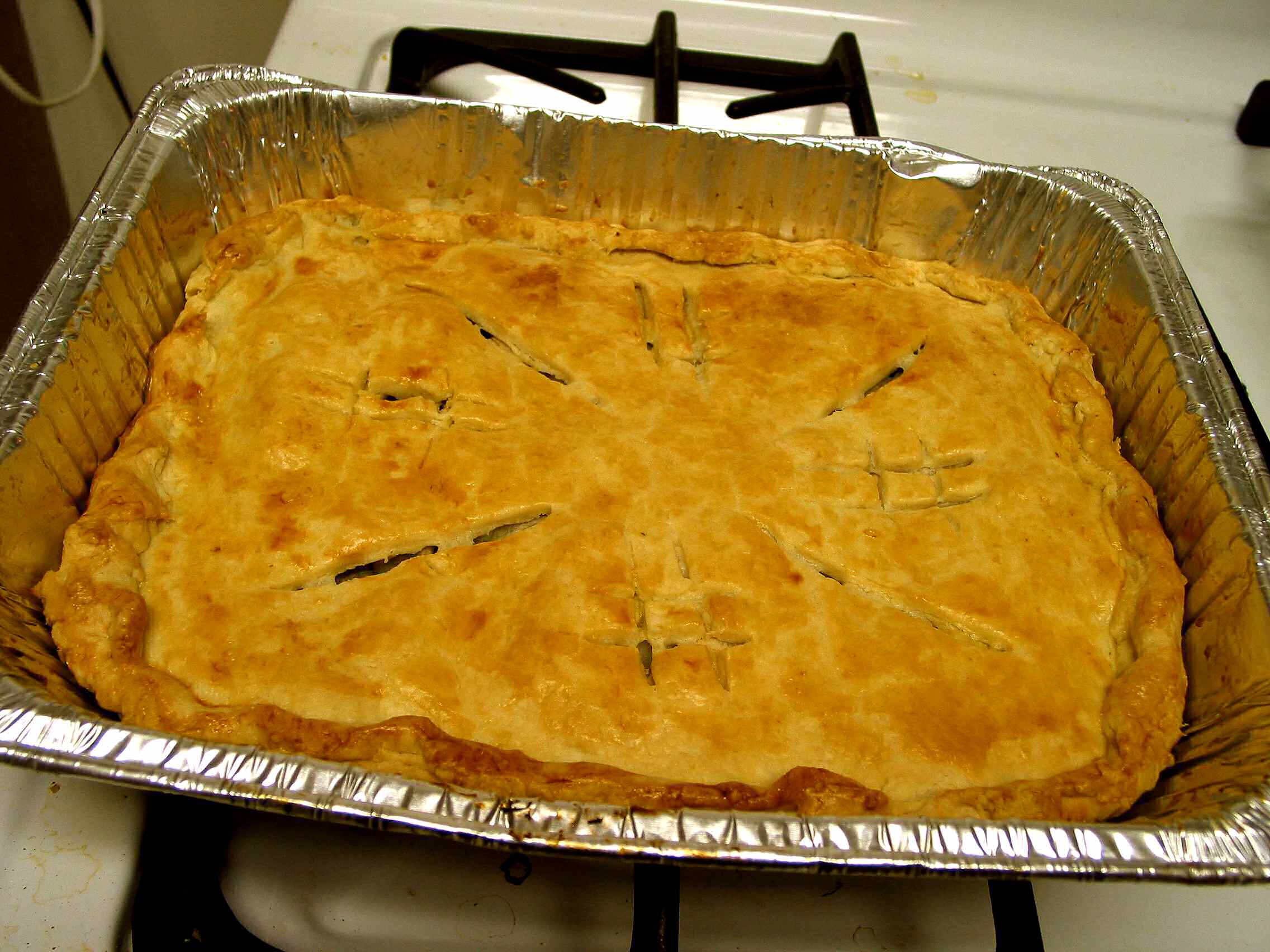
sweetened spinach tart for medieval feast

My daughter’s middle school social studies class has been preparing for this all month: today was the Medieval Feast. Lords, ladies, jesters, knights–and she chose to be the master chef. Others brought bags of apples and peas.

We baked a big Tart of Spinnage (courtesy of The English Huswife, 1615, by Gervase Markham) with adaptations. 1615–that’s Shakespeare and Elizabeth I, the early modern era, not the medieval. Still, some of the recipes were probably conserved, and some of the styles of flavoring as well. The fact that sugar is added to this one is reminiscent of Elizabeth I’s infamous sweet tooth, but it also makes the normally savory spinach a dish more in keeping with the earlier recipe collections so favored by Renaissance Faire participants.

Medieval recipes from the 1300s and 1400s indicate heavy use of cinnamon, ginger, mustard, pepper, galingale, and grains of paradise for the aristocratic classes, at least for their feast dishes. Fruits were routinely added to both meat and fish “Parma” tarts–those tarts, full of eggs, were probably much like today’s quiches.

But the recipe my daughter’s teacher e-mailed me had no eggs. The binder, an interesting choice, was “cast cream” or sour cream. Sour cream bakes up well in cheesecakes–labaneh, a Middle Eastern/Near Eastern version, is a lot thicker and bakes up even more nicely. I’ve made mini-cheesecakes from nothing but labaneh, sugar and lemon rind stirred together and baked in cookie crusts, and they came out beautifully. So I wasn’t too worried about the tart filling firming up enough.

The original recipe also contained no spices other than sugar (maybe I mean “flavorings” rather than “spices”), pepper and salt. Spinach, sour cream, sugar, pepper, salt…bland? Odd? Would the signature combination of vegetable and sweet get lost in the mix? No knowing. But for a medieval version, especially for a classroom tasting, we were going to have to do something slightly different, more purposeful.

A spinach tart with sugar? It was going to be a gustatory challenge for the class and its guests, a flavor combination we no longer encounter very much. Might as well make it interesting, and preferably good.

Which is why I adapted it to a sweetened tart of greens like Swiss chard. Versions of this are still served today in Nice (tourte de blettes or Swiss chard tart) and parts of Italy (torta di verdura or tart of greens) as a dessert. The filling often contains raisins and pine nuts as well as Parmesan cheese, and the pastry is often sweet and dusted with confectioner’s sugar before serving.  If it were awful, surely people like David Lebovitz wouldn’t be putting versions of it on their blogs. Novelty value can take you only so far. And his version contains a layer of apples on top of the chard…

The last thing I thought about was the learning experience for my daughter, the nascent (though not Re-nascent) master chef. The recipe her teacher sent home indicated “pastry shells”. As though you could go to the store and buy them.

No baking powder or soda allowed in the medieval era. No food processor. So my daughter cut up the butter and cut it into the flour with a pastry blender–once she realized the blades weren’t actually sharp–and then mashed it together with her hands, which was a lot more efficient. She made the spinach filling we decided on–very close to the assigned recipe, but with a bit of cinnamon and nutmeg, and a grating of lemon peel. In place of raisins, she put the extra bits of apple in the filling.

patting out the filling

She fit the pastry to the pan, pricked it out, filled it, and topped the spinach with a layer of finely sliced Granny Smith apples–most apples were probably tarter in those days than they are now.

slicing apples for the spinach tart

Dame Felidae demonstrates her knife skills

Then she placed the top layer of dough onto the tart, pinched it shut, slashed it in her own design and “endored” or gilded it with egg yolk/water glaze. We baked it in a (horrors! modern!) oven and thawed the “spinnage” out in the microwave before squeezing it, but other than that I think we were pretty much in the spirit. Continue reading

A Slow Food Fast Thanksgiving

Pumpkin pie in the microwave

I’m not sure how to take all the following good news–it’s been such a strained year that the sudden release of pressure is going to make me zip around the room, once the coffee kicks in.

1. My mother-in-law has threatened to favor the brand-new kosher butcher in her town this holiday season so that we can eat the turkey too this year (and maybe not fight about it). She promised not to smear said turkey with butter. We’ll cross our fingers. But at least we won’t have to cook. I’m keeping that firmly in mind.

2. As of this week, my daughter’s finally on an insulin pump and fairly thrilled about it, so she can navigate dinner AND dessert at my in-laws’ without breaking down and crying that she only gets two tablespoons of pie for a reasonable serving. We are still encouraging her to count carbs and not go hog-wild or she’ll be zipping around the room until midnight.

3. The school concert’s in less than two hours. Is that really enough time to do everything, or at least something? Naaaah. Well, maybe coffee and something other than the news.

4. We still have to schlep up Interstate 5 for about 6 hours tomorrow, starting “early” (i.e., an hour and a half after the time my husband announces this evening as the absolute latest), passing the Harris Ranch and its attendant aromas, which can be more than slightly offputting if you’re not an avid horticulturist. But at least when we get to my in-laws’ we don’t have to cook. As I said, I’m keeping that firmly in mind. I know I already said it, but it’s so important I figured it was worth saying twice.

Despite my firm resolve after last week’s marathon kiddush that I will strive Not To Cook (could I possibly be Peg Bracken’s unacknowledged lovechild? Unfortunately, no. However, my mother was a devotee of the Don’t Cook Too Much school of thought, and I’m starting to appreciate that. Really I am.)…where was I? Oh yeah…I will probably bring at least two lemons, some thyme and rosemary, a head of garlic and a couple of bags of fresh cranberries with us on the road. Call it flavor insurance. For whatever reason, my in-laws, who have developed what can only be called fanatical devotion to Italian food of every possible kind (having both grown up in white bread country), always run out of these basic essentials about halfway through, and my mother-in-law tends to tell my father-in-law to go back out and pick up extras just as the stores are closing…

The cranberries, I’m well aware, aren’t Italian. They’re for making 5-minute microwave cranberry sauce with about half the sugar of regular. My mother-in-law tends to try out her fancier cranberry chutneys and relishes every year, and every year they contain things like chardonnay–which is fine for the grownups but I’m no grownup. Her chutneys have more than 10 ingredients and sit stirring on the stovetop for at least 45 minutes. I don’t know how she does it–I’d go stir-crazy. I’m just not that good.

So anyway–I wish you all a great Thanksgiving at somebody else’s house, so you don’t have to cook or do the dishes. My idea of heaven.

But if you absolutely have to cook, here are a couple of posts for speeding up a few of the obligatory or not-so-obligatory Thanksgiving items–most can go in a microwave (I always, always think that’s worthwhile. Well, usually). A few of these are dairy, so use your discretion.

5-Minute Cranberry Sauce

Microwave Pumpkin Pie

Basic instructions for microwaving green beans, brussels sprouts and other vegetables

Creamed Spinach Variations

“Marbella”-style cooked vegetable relish with artichoke hearts, olives, tomatoes and prunes

Turkey Breast with Ta’am (flavor) –not microwaved, not a whole bird, but it is a lot quicker and tastes unusually good if you have a small crowd. DO keep it covered in the oven to prevent it drying out.

Some options for vegetarian centerpiece dishes… (ideas more than recipes)

Spice mixes because sometimes you want to liven up the party…

Syrian Jewish stuffed vegetables (baby eggplants and onions) with an incredible lentil filling (NOTE–this one is “not exactly quick”; well, maybe for the eggplants microwaving would be enough, but the onions still take some serious roasting even after microwave assistance.  However, it is delicious and impressive.)

Microwave gingerbread and microwave flan (and a recommendation for mead…)


Microwave Tricks: Getting more chocolate power from cocoa

Chocolate pot from the movie "Chocolat"

The infamous chocolate cauldron, image © Miramax

In the movie Chocolat, the riverboat captain tells the chocolatier that his favorite of all her confections is none other than the prosaic cauldron of hot chocolate she keeps on the hob to thaw out her customers. When she pours out a cup, it’s so thick it’s like hot molten chocolate bars. Hard to imagine how anyone could swallow more than a spoonful of it in reality, but you immediately believe it’s superior to the thin, miserly stuff that’s been passed off as hot chocolate in your childhood. And you’re right.

And on the other hand, how could anyone in their right mind want to down a cup of melted chocolate bars? Too rich, and for me, much too fatty. And with much too much cleanup–the last image that stuck in my mind from Chocolat was actually not the hot chocolate Juliette Binoche handed Johnny Depp and Judi Dench but the thickly encrusted cauldron that had been cooking chocolate all day long. Scary, and what a waste of chocolate for one scene!

So I don’t go for that myself, or at least not on such a grand scale. Though if you want that kind of recipe–go to David Lebovitz’s blog and look for Parisian (or worse yet, with even more chocolate, Belgian) hot chocolate. He’s got two kinds of Mexican hot chocolate drinks too.

Cocoa powder, the ordinary day-to-day stuff of American hot chocolate mixes, seems so much less potent and chocolaty than all the fancy recherché chocolate bars with the cocoa solids percentages, the exotic Latin American or African source names, the single-source, fair-trade, wine-label-styled descriptions. Cocoa powder is so prosaic (unless it’s Scharffen-Berger or Valrhona or another premium brand). How could it possibly be good enough for a high-class, French-style cup of hot chocolate?

Granted, cocoa powder–dutched, natural, either way–it’s pure cocoa solids. But it doesn’t really give you the full chocolate experience if you just mix it into things. Something’s missing.

Most professional chefs and chocolatiers will probably tell you it’s the cocoa butter that’s missing. And they’re not entirely wrong–fat does carry flavor and keeps the more volatile, delicate aromas in the chocolate from evaporating off too quickly or breaking down under heat.

But if that were the entire reason, cocoa powder, stripped of all its fat and stored in warehouses and supermarket shelves for months at a time, would be flavorless and dead by the time you got it home from the store, and we know that’s not the case.

When you make brownies or chocolate cake with cocoa powder, there comes a point in the baking when you suddenly smell the chocolate wherever you are in the house at that moment. Before you even realize you’re smelling it, before any Continue reading

Artificial sweeteners–false promise for lower carb counts?

Last Saturday night my family visited a couple from our congregation and had dinner in their sukkah. When we broached the question of what there would be for dinner so my daughter could get an idea of how much insulin to take, the husband announced that he too was diabetic–Type II, for several years. What followed was a bit of a culture clash.

I’m sure he meant to be encouraging as he declared that through a combination of self-discipline and exercise and not eating more than a very limited number of carbs per day (and they really were about half of what our daughter is supposed to eat) that his A1C tests were down in the normal range and he only had to test his blood sugar twice a week. Which of course is fine and nearly ideal for a Type II diabetic if it actually works.

I’m not entirely sure how my daughter took all of this, but he went on to dismiss another Type I diabetic we know as “paranoid and overdoing it” because she tests 6 or 7 times a day, which he assumed was unnecessary since he didn’t need to do that.

He had the shining confidence of someone for whom not much had ever gone awry and, having no idea how lucky he was, assumed it was down to his own skill rather than the fact that he had a working pancreas, wasn’t growing anymore, and wasn’t a girl. All big factors for blood glucose control. Clearly he’d never had a bad low with shakes from an overdose or hormonal surge, or a really sharp unexpected high from a shot that just didn’t get where it was supposed to go.

I was more tactful than I’ve ever been in my life when I pointed these things out. You wouldn’t have recognized me, I swear!

Oddest of all was his insistence that the real secret was his use of artificial sweetener, which let him enjoy all kinds of great desserts. I was puzzled–baked apples sprinkled with xylitol? Surely the apples themselves were pretty carby–as well as pretty sweet on their own. The carb difference between using artificial sweetener, a tablespoon–or even two–of table sugar for the pan, or just leaving the apples to bake without sweetener, would be pretty minimal per serving.

And indeed our host only took two wedges for himself.

The other dessert–and it did taste decent–was chocolate ice cream sweetened with xylitol. Given that the ice cream in question was a plain flavor from my usual brand, I was able to compare it with the ordinary version for carb with reasonable confidence.

It was plenty sweet–maybe sweeter than normal, for that matter. But for carbs?

There was no difference. 17 grams per 1/2 cup serving, xylitol or no.

Which brings up a sobering question: why use artificial sweeteners if they don’t lower the carb count significantly? Continue reading

Weighing in on kitchen scales

Digital kitchen scale

Farhad Manjoo, better known for his columns on computer and phone technology, has now tackled kitchen tech for the New York Times in his  ode to the electronic kitchen scale.

And while I applaud the general idea that it’s a valuable tool–after all, we use ours daily–I’m both stunned and unsurprised at the same time at the limited perspective he shows [chorus, because he’s a boy]. For Manjoo, as for the food bloggers he quotes (J. Kenji Lopez-Alt of Serious Eats, Deb Perelman of Smitten Kitchen), using a kitchen scale is about cooking more precisely and with fewer measuring cups, spoons, bowls, etc. Which is fair enough, I suppose, if you’re really worried about whether you already cook well, or if you have ambitions for exactitude.

But why do most Americans who actually have a kitchen scale get one in the first place? The fact that our kitchen scale came with a “The Biggest Loser” sticker on it might give you a solid clue.

We got our scale because our daughter developed Type I diabetes at age nine. Although we started out with half- and third-cup measures for simple foods like beans or plain pasta, we really needed to be able to calculate how much carbohydrate was in more complex or variable-density foods like breads and baked goods so we could give her the right amount of insulin for them.

Our school office manager said she’d gotten one on doctor’s orders after suffering a stroke in her early 40s, and she swore by it to help her cut back significantly on carbs and get her portions right.

Health concerns, not haute cuisine, are the most urgent reason to learn to use a kitchen scale. Not that better-tasting food isn’t important, but learning how to eat more moderately by measuring and knowing what’s in a serving would help at least two-thirds of Americans back themselves down off the high-BMI, pre-diabetic ledge. Especially since an international diabetes conference just reported something like 350 million people worldwide now have diabetes, double the number from 20 years ago.

Digital scales seem to do the most good, for us at least, in preparing homemade pastries or complex dishes (such as quiches or filled pastas). Our other best use is weighing out complex high-carb foods like pastries and candies that we’ve bought elsewhere, since they can be so variable in density or sugar content.

Unfortunately, weighing out treats is usually a big eye-opener for us as well as our daughter. That blackberry pie my husband lugged home from a specialty bakery run is worth a meal and a half of carbs if you do the picture-perfect wedge. We’ve started to cut our pieces a little thinner not just so our daughter doesn’t feel shortchanged but so we don’t get slapped when we step on the big scales the next morning.

Along the way the scale has helped us learn carb fractions for different foods and figure portions for them so it’s easier to estimate when we eat out.

It’s not so tempting to eat a whole doughnut for Sunday breakfast from the surprisingly good and inexpensive bakery three blocks away when you discover that even the relatively modest sugar twist (a real doughnut utterly unlike Starbucks’) represents 60 grams of carb, worth a whole meal without even accounting for a glass of milk, and the jelly doughnut is something like double that. And once you’ve eaten it, you won’t really feel full. Dangerous goods. Better to split the doughnuts and eat something more substantive with them.

Bonus points for my daughter’s practical algebra skills here: she’s figured out how to calculate carb fractions based on the nutrition labels for her own custom blend of low-carb, high-fiber cereal and ultra-carby granola on regular mornings, and she’s pretty fast by now. The extra flourish on the calculator may make me roll my eyes (and yes, at a certain point I’m always thinking, “Just pour it, already!”) but she’s having fun showing off. Even though she’s done the measurements and calculations often enough to be able to eyeball the amounts in a cup if she wanted to.

Because of course, it can be taken too far…

After all, you can’t lug a kitchen scale to school with you in your backpack every day. Most diabetics of longer experience count by eyeballing and estimating when they eat out rather than agonizing over every gram. You can get a little too involved and dependent on the precision a scale offers and forget how to trust–and train–your innate abilities.

Which brings me back to Farhad Manjoo’s column. There’s nothing actively wrong with the way he’s using his scale, I suppose–except for his exuberance about pouring flour straight from the bag into the mixing bowl, then pouring sugar straight on top of that. If you overpour, you should be taking some back out, but then what? Discard the excess sugar now that it’s contaminated with flour? Ignore the contamination and scoop it back into the sugar sack? Take it from a former lab rat, you’d have done better in the waste-not sense as well as the food safety sense to weigh each separately into a paper cup or onto a plate and then pour it in the bowl.

But that’s for things that really benefit from weighing. Manjoo’s using the scale to figure the exact portion of coffee beans to use each day. One of his interviewees is using the scale to weigh out the exact amount of sugar for his iced tea. These things would do fine by eyeballing–or just using a spoon like a normal person.

Do you really need a kitchen scale to figure out how much grated cheese you want in your mac and cheese? Wouldn’t grating it until it looks and tastes good to you work at least as well?

These guys have lost their trust in their ability to eyeball or cook by feel as they check and recheck their precision on the digital scale. Couple that with the cachet of doing as the French do (that is, when they bother to weigh ingredients instead of cooking by instinct, which they’re inordinately proud of) and you have a new American tech obsession parading itself as competence chic.

It’s like checking your e-mail every 20 minutes. Or bringing your new iPhone to the dinner table and looking up instant info on the Web every time your wife brings up a topic to which neither of you knows the answer. (AHEM!!!) Not that I’ve ever met (or acknowledged meeting) any certain husbands who got that obsessive over their apps. Trust me, it does NOT make them more competent or enjoyable conversationalists…even if they do occasionally bring home some serious pie.

Ice cream, enhanced

Sometimes your kid sees a new flavor of Dreyer’s ice cream at the store and decides she has to try it because “It’s Black Raspberry, Mom!” and it’s on sale. But mostly because it’s a trendy light purple (“Orchid or thistle?” I asked, calling on my distant memories of the Binney & Smith guide to the universe.  “Lavender” she retorted. I caved to her superior fashion sense.) It was made with real raspberries–that’s a plus, I suppose. And it came in a “half-the-fat” version, and it was enough on sale that I could get a safety flavor as well.

It’s been over 100 degrees here in Pasadena this week, so ice cream is practically a medical supply.

When we got it home though, it tasted sweet and kind of dull. The fruit flavor was there but not particularly strong, and the overall effect–particularly the smell, for some reason–reminded me suddenly of those horrible “berry-flavored” motion sickness lozenges my mother used to foist on us just before long car trips. Bonamine? I’m still shuddering forty years later.

My daughter, blissfully free of Bonamine-induced associations, still thought it had merit, though, so we kept the lavender-tinted ice cream and I wondered whether anyone else would eat it without having to be threatened. What was wrong with it and could it possibly be fixed?
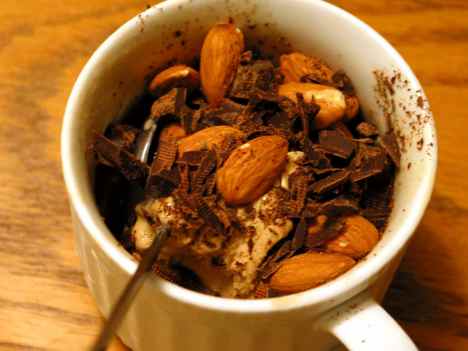
I’ve been potschkying around with store bought ice cream pretty much ever since I was old enough to buy it for myself–adding extra cocoa powder and some mint or almond extract to chocolate, leftover coffee and cinnamon to vanilla, and on and on. Not many people do this, or do this enough, I’ve discovered. You have to wonder why not, because most non-super premium ice cream in America is a little, or a lot, bland.

In fact, the only flavor I never messed with was Ben & Jerry’s Coffee Heath Bar Crunch, which was perfect and sublime and needed no help ever, other than a spoon. My husband and I were such devotees that when we had a chance to spend a late-summer week in Vermont and New Hampshire one year (way back when, in our 20s), we made sure to stop in at the factory in Stowe for a tour. CHBC was such a supreme flavor that I only gave it up when Ben and Jerry both retired and a new CEO took over. Somehow, the next pint I bought tasted a little off–weak on coffee flavor or something, hmmm…I looked at the ingredients and sure enough, they’d changed the formula and flavorings. It had also been monoglycerided down, even though the fat count was still in the stratosphere. I’m sure my ice cream snobbery saved me from a decade of extra arterial damage, but I’ve been sullen and resentful ever since (or at least that’s the explanation this week).

So anyway–back to the prosaic purple ice cream. It needed something–tartness–to liven it up, and probably would have been better as a frozen yogurt. Come to think of it, would yogurt work? Naah. Messy. Plus refreezing time. Lemon? Maybe, maybe not–it might end up seeming too sweet. Then I found a lime in the fridge–from who knows how many weeks ago; it had already lost its green, but it was still fine inside. Sometimes where lemon’s pure acidity underscores the sweetness and makes it more apparent, lime’s aromatic edge undercuts it and makes the flavor seem fresher. Works for ginger ale, works for blueberry jam…

A squeeze, a stir–from lavender to…raspberry pink (what else?) and I have to say, a BIG improvement in flavor. Much more like actual black raspberry. That’s all it took? Why couldn’t they have done that at the ice cream factory? But they didn’t.

I have another reason for punching up my storebought ice creams, and it’s not just boredom or fidgetiness (though those are obviously tops).

A long-ago-and-far-away gelato-eating expedition in Florence (it didn’t start out that way, but it’s the fulltime occupation in the summer–even more of a medical necessity when you’re wandering outside all day as a tourist) taught me the difference between Italian and American standards for ice creams: Americans expect big portions and don’t really pay attention to the flavor. Bland and sweet is acceptable. Italians are happy enough with small 1/3 cup portions as long as the flavors are wild and adventurous and vivid. If you can taste it well with one of those tiny gelato spoons, a gram at a time, it’ll last you.

Makes you wonder whether the lack of flavor punch in American ice cream (and maybe our other food as well) is the reason we typically eat biggish portions at a sitting, or seek out seconds. If it doesn’t taste like much, you eat it without paying attention, and end up not feeling like you’ve really eaten it. Interesting and vivid flavor seems like a good idea for health and portion control as well as pleasure–if you’re going to have ice cream, after all, you may as well taste it. Otherwise you could just suck on ice cubes.

So–a few suggestions for upping the flavor of store bought ice creams.

Go for plain flavors as your base

Try to find ones that are relatively low in carb and fat for a half-cup serving. Low here means about 15 grams of carb per half-cup, and maybe 2-3 grams of saturated fat.

Not only don’t the dressed-up flavors with loads of mix-ins need (or take well to) further tinkering at home, they’re not always as high in quality. Dreyer’s (Edy’s on the east coast), seems to try to keep the nutrition stats consistent across the line–ice creams with lots of mix-ins and/or caramel-type ribbon swirl are a bit higher in carb, up to maybe 22 grams per serving.

To keep things consistently low, though, the components or the ice cream itself have to compensate–so Reese’s Cup-style peanut butter and chocolate chip swirl has iffy peanut butter and iffier quality chocolate chips (well, so do the real Reese’s ™–don’t know whether authenticity is such a good thing in this case), plus the ice cream’s a bit icy, maybe even a little stale-tasting on occasion. You’d get more intense flavor from vanilla bean ice cream with a few squares of good dark chocolate chopped in and some peanuts or a bit of peanuts-only peanut butter.

Make flavors you can’t buy

Sometimes these are ones you grew up with, like Rum Raisin–I think only Haagen Daz still makes this. People got kind of prissy about feeding ice cream with rum flavoring in it to kids, I guess. Or raisins got too expensive.  So did pistachios, except in super premium ice creams.

No one makes ginger, or lemon-ginger, even though I’m pretty sure those were two of Bon Appétit‘s and Gourmet‘s big summer standbys for at least a decade (and I know because I once bought a decade’s worth of each magazine from my friends-of-the-library auxiliary at about a dime an issue. The seasons change, the same 10 recipes repeat…)

And no one makes Sabra (chocolate orange), or fig, or liquorice, or marzipan, or rose. Or pear. Or chocolate hazelnut with sour cherries.  Or even just plain bittersweet chocolate. There are home recipes for all of Continue reading

Cannoli that won’t bust the carb count

Cannoli paste my way

This is a story about frugality–of the serendipitous sort.

The other week my daughter was with me at the supermarket (sometimes a mistake, sometimes an inspiration), and asked if we could get a packet of sugar cones to go with a drum of Dreyer’s ice cream. This was a trade-off for forfeiting Baskin-Robbins, whose ice cream is consistently higher in fat and carb than Dreyer’s or Breyer’s.

(Shakespearean aside #1) The B-R nutrition brochure is worth a pretty serious look for calories, fat, carbs, the total picture. You can definitely eat a days’ worth of calories–upward of 1500–in a single sitting if you order one of the fancier items. Skip the soft serve and stick to the single cone, for sure.

Not that we never stop in for a cone, but we never knew what the sugar cones were worth carbwise so Abby was limited to a paper cup or a cake cone. And of course for the price of two modest single cones at B-R, you could buy a 1.5 qt. carton at the store and scoop about 10 servings out of it yourself.

In the supermarket, the box with the sugar cones says 10 grams for Keebler and 11 grams for the Ralph’s (Kroger-affiliated) store brand, which is on sale, and about 50 calories per cone. The sugar cones have surprisingly simple ingredient lists for a processed food–wheat, brown sugar, vegetable oil, oat fiber (Ralph’s version) and a bit of salt (though not much–20 mg/cone) and maybe a little caramel coloring and malt flavoring.

But of course the ice cream tends to run out a bit sooner than the cones. And then what? Here’s where the “frugality” comes into it again (okay, I’m sort of rolling my eyes too, but still.)

I had about half a quart of ricotta left over from manicotti (same idea as for the microwaved stuffed shells, only using a plastic baggie with a corner torn out to pipe the spinach and cheese filling into both sides of the parcooked pasta tubes–worked pretty well actually). And ricotta, even on sale, is kind of expensive if you just let half of it sit in the fridge until it goes bad because there isn’t quite enough for another batch of pasta and you don’t know what else to do with it.

So anyway, the availability of leftover ricotta (I’m too cheap to do it with a brand new carton) plus the leftover cones added up in my head the other night to “Hey! Impromptu cannoli! Right now! And I don’t even have to go back to the store!”

I should probably explain.

The first cannoli I ever had were also the best. The parents of one of my sister’s high school friends ran a tiny Italian deli and specialty shop way out near the airport of our town, and what can I say–it was worth the schlep. In addition to imported pastas and olives and pickled peppers and salami and so on, you could buy a tub of their own fresh cannoli paste and a box of carefully packed pastry tubes so you could assemble the cannoli yourself at home and not risk sogginess or breakage on the way.

The D’Elicios’ cannoli paste contained ricotta, of course, sugar, and something else that I finally pinned down as lemon (and possibly orange) rind. And it was heaven on a spoon. So good I asked my mom to bring a box of their cannoli instead of a birthday cake to my college dorm  for my 18th birthday.

How was I to know that would be the last of the really great cannoli for decades? Continue reading

Truth in restaurant menus, one way or another

The LA Times has this to say about restaurant nutrition today–seems like restaurant chains are starting to wake up to the embarrassment of their menu offerings now that California, New York City, Philadelphia and a few other governments have made nutrition info mandatory. The FDA is slated to make restaurant nutrition labeling and disclosure apply across the nation sometime in the coming months–the proposed regulation was released for public comment in April and the comment period has been extended to July 5th, and the finalized regulation is supposed to take effect 6 months after publication.

So chains like Panera, Applebee’s, California Pizza Kitchen and IHOP are hustling to look a little less awful before the big wave hits.

About time, too: the other night my husband rented “Super Size Me” (we’re always more than a little behind the times) and I could only stand to watch about five minutes of it. Somehow, between putting the dishes away and getting a few of my own chores done, I managed to catch the movie’s key scenes–I see a glimpse of director Morgan Spurlock doing pushups and then getting his abdominal fat measured at the doctor’s with a caliper before launching the month of MacDonald’s. A minute or so later I see him eating the first of many supersized burger-and-fries meals while narrating the experience from the driver’s seat of his parked car. He’s burping and starting to sweat about a third of the way through. I was horrified–Spurlock is obviously suffering but he keeps pushing himself anyway (chorus: because he’s a boy). Back to the kitchen and my husband is laughing uncontrollably (chorus: because he’s also a boy). Suddenly the inevitable (and highly appropriate) happens–Spurlock excuses himself, opens the door just in time, and starts vomiting onto the pavement. I just left my husband to it at that point. I think he was starting to weep.

The next day, though, he gave me the upshot of what I’d missed. Despite the hilarity of it all, the outcome was pretty sobering–in about 3 weeks of the Mac-only diet, Spurlock has gained 24 pounds that will take him months to work back off with 4 pounds extra that just don’t want to come off at all, and his cholesterol has shot up from enviable (<180 mg/dL, I think) to borderline high. Do the MacDiet for more than a month–for a whole year, say–and you might be looking at the crossover from fit to overweight to actually obese. So, as much as I make fun of them, sometimes boys can pay attention once they get over the thrill of a good grossout.

But back to the restaurant menu scramble.

Some of the chains’ solutions look reasonable–offering half-sandwiches with a salad or soup, paring down the calories and fat in the salads and soups, for that matter, and–gee, how ever did they come up with this miracle answer?–taking some of the cheese (or “cheez”, depending on the caliber of restaurant) back off everything, or at least going to part-skim.

The half-sandwich thing is a bit of a cop-out, but given how big standard sandwich portions have gotten over the past twenty years, it’s definitely a step back from linebacker troughing.

On the other hand, some of the chains really aren’t working hard enough to make a real change. Personally, I hate any form of plopped scoops of straight grease added purposely as a garnish and I always have, so the move to lower-cal mayo doesn’t impress me, nor does the new-improved strategy of not dolloping whipped cream onto every dessert. Ditto the menu recommendation at IHOP that you don’t have to add pats of butter to your stack of pancakes if you don’t want to. (Whew! Finally!)

I know that in fact these are going to be important steps back to sanity for some people, but tell me the truth, here: does a 120-calorie tablespoon serving of fat make the real difference in an 1100-calorie supersized sandwich with a deep-fried filling and cheese on top? Or a stack of pancakes the size of your plate and the height of your head and loaded with enough gooey canned topping to frost a cake?

For chain restaurants, the real problem here is the serving size–they’ve been working way too hard to keep up with the Joneses because serving bigger is impressive, you can charge more, and it’s almost as cheap wholesale as a proper-sized serving. P.F. Chang’s pasta dishes also currently run something like 1100 calories a plate, and no wonder–each of the bowls holds enough pasta to feed three or four normal adults if they were eating at home and had a salad to go with it.

These restaurants are at least doing something in the right direction (or stopping doing everything in the wrong direction, anyway). But upscale restaurants don’t have the government pressure to change and they’re less likely to look–at first glance–as though they’re overfeeding you for the money. Tiny chic portions, right? Check again, because here’s the other kicker in the LA Times this morning:

Pizzeria Ortica’s budino di cioccolato

This one is actually in the Food section, a “Culinary SOS” request for a layered chocolate and caramel pudding. I’m only linking to the 2nd page of the recipe–so scroll down to the bottom and check out the nutrition on it. If the poor lady who requested the recipe has already seen it, she’s probably cringeing.

Each—that’s EACH–small, elegantly served glass of pudding Continue reading

Fruit Rescue Redux: Re-tanging the “Cutie” Tangerine

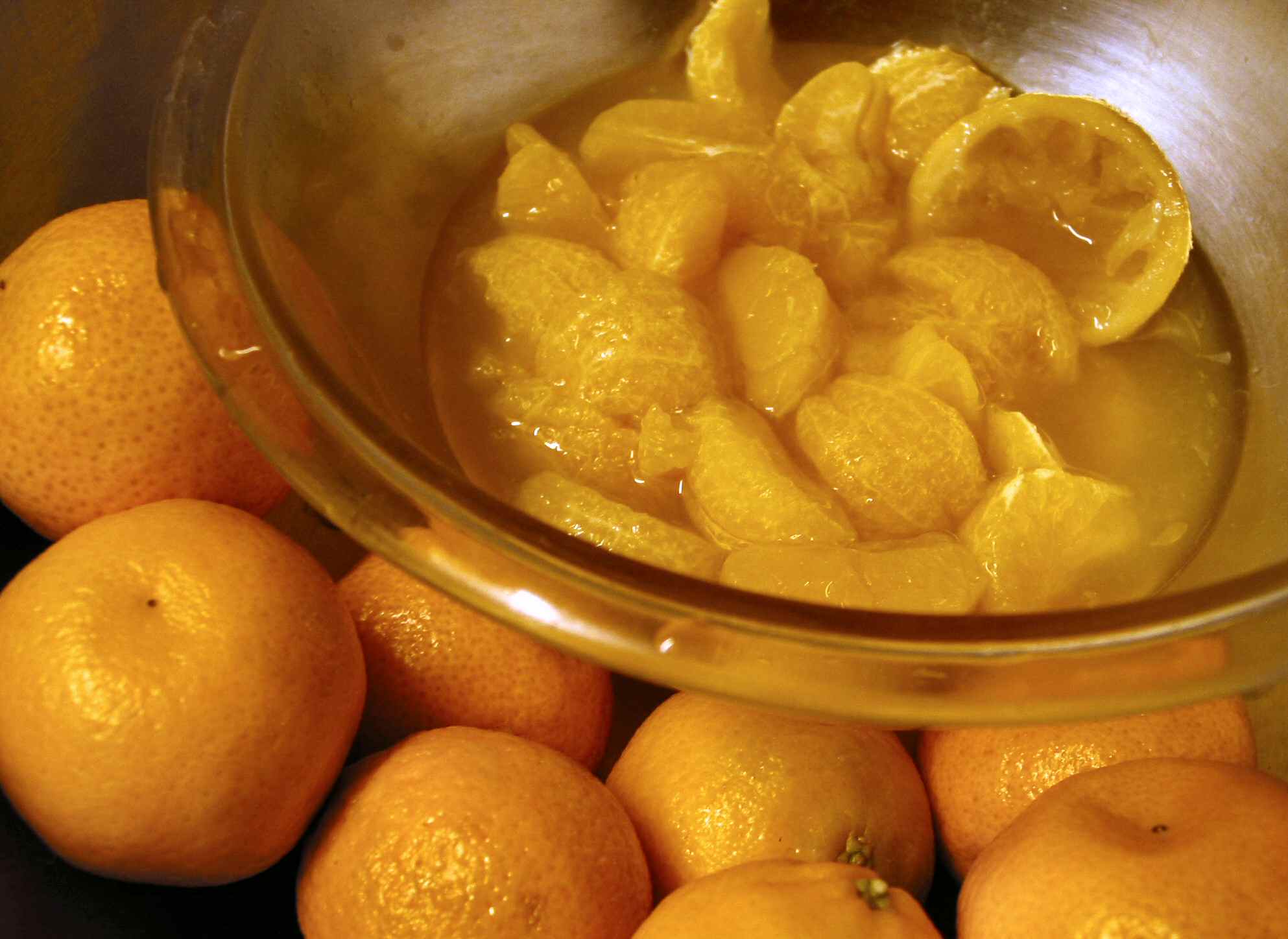
Putting the tang back in Cutie tangerines

Farmers’ markets aside, an awful lot of produce isn’t what it used to be–either for vitamins or flavor. Anytime you get to major mass production and long storage times, you know the result is going to be a product that looks like fresh fruit or vegetables but the smell, taste and texture are really missing. Kind of like the long-stemmed red roses bred to last for the Valentine’s Day bouquets–pretty, hardy as hell, but with almost no perfume at all.

Case in point: the Cutie ™ seedless tangerine. About two weeks ago I bought a 3-lb. bag of these things for a congregational hike and Tu Bi’Shevat ceremony in honor of the New Year of Trees, usually in January around the time when almond trees are in blossom in Israel (and California, though that’s a little less official).

The ceremony, other than the basic blessings for the gift of trees and their fruit, is kabbalistic in origin and involves celebrating the different kinds of fruit and tree nuts as a metaphor for different levels of openness and freedom in the soul. Some fruits have a hard stone at their core, others an inedible peel or shell, and the most open and enlightened are fully edible. A full-out Tu Bi’Shevat seder includes a selection of these fruits and nuts in progression from least to most edible, along with four cups of wine or grape juice mixed in four combinations from white to red (or is it the other way around?) to symbolize the approach of spring among other things. I’m not a kabbalist (my family were always “misnageders” or skeptics/rationalists rather than Hasidim) but I can appreciate the poetry of the Tu Bi’Shvat seder.

My family, skeptical or not, also always appreciated a good geschichte (shaggy dog story, preferably minus the actual dog and its hair). So I’m painfully aware you may not think you’ve been hearing enough about Cuties for the past few minutes to make this worth your while. I’m trying here.

My husband came back from the hike with at least half the bag of Cuties uneaten, so I put them in a bowl on the counter and started serving them, hoping to use them up before they went rotten. Because I’m not sure a seedless rotten tangerine is an improvement on the regular kind. Also because our neighbors with a satsuma tree (seeded) had just gifted my daughter with a bag of those. Out here in LA, tangerines are the winter version of zucchini.

Cuties are little and orange and shiny and really easy to peel. Perfect, right? The trouble was, the Cuties had almost no taste. At all. Continue reading