
• Enter your email address to subscribe to this blog and receive notifications of new posts by email.

    Join 241 other subscribers
  • Noshing on

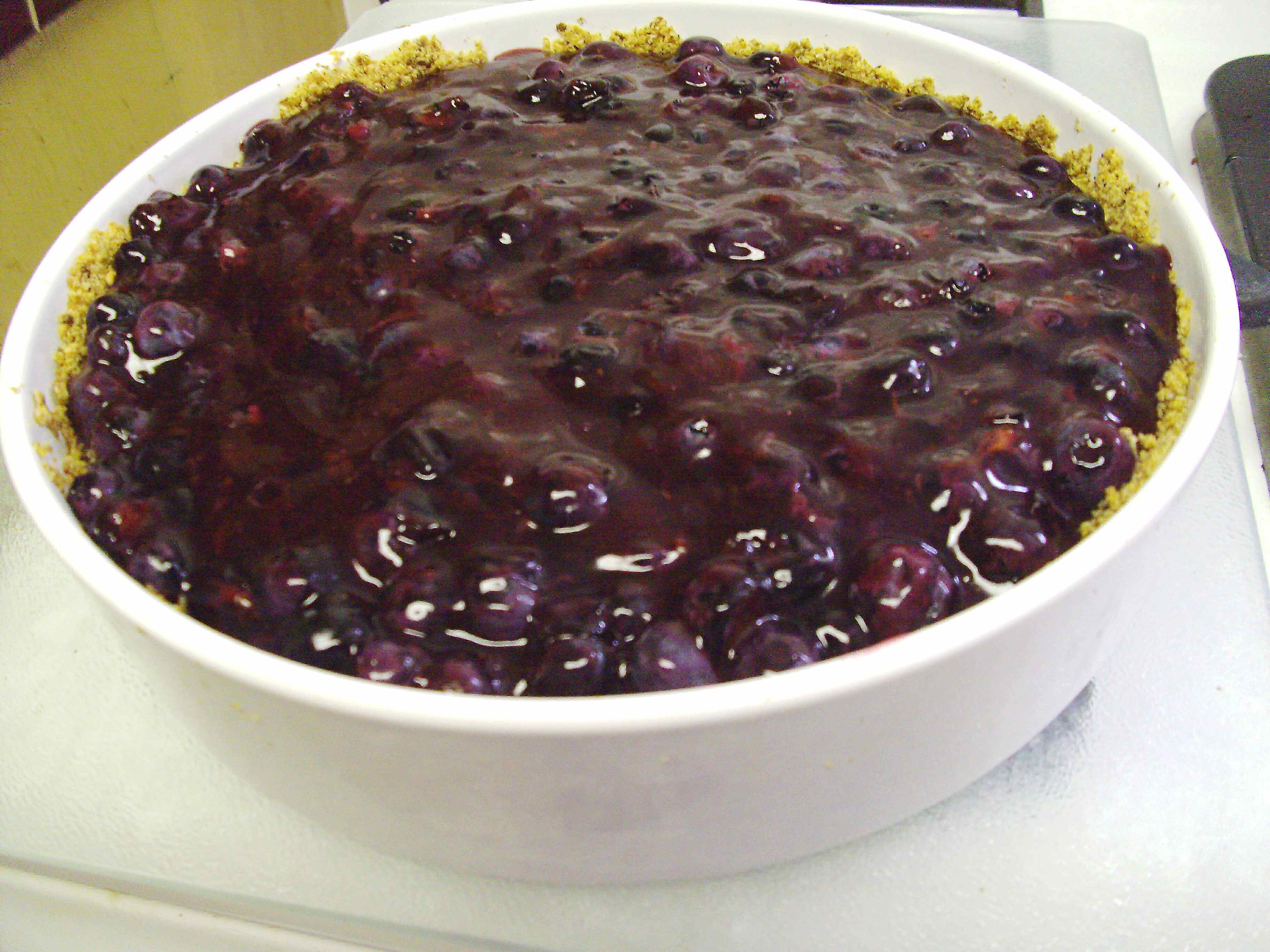
    raw blueberry pie with microwaveable filling and graham cracker crust

    This mostly-raw blueberry pie is a snap to make and very versatile--the filling microwaves in a few minutes, and you don't even have to bake the zippy gingered graham cracker crust--perfect for a hot Fourth of July and all summer long.

  • Recent Posts

  • Contents

  • Archives

  • Now Reading

  • See also my Book Reviews

  • Copyright 2008-2024Slow Food Fast. All writing and images on this blog unless otherwise attributed or set in quotes are the sole property of Slow Food Fast. Please contact DebbieN via the comments form for permissions before reprinting or reproducing any of the material on this blog.

  • ADS AND AFFILIATE LINKS

  • I may post affiliate links to books and movies that I personally review and recommend. Currently I favor Alibris and Vroman's, our terrific and venerable (now past the century mark!) independent bookstore in Pasadena. Or go to your local library--and make sure to support them with actual donations, not just overdue fines (ahem!), because your state probably has cut their budget and hours. Again.

  • In keeping with the disclaimer below, I DO NOT endorse, profit from, or recommend any medications, health treatments, commercial diet plans, supplements or any other such products.

  • DISCLAIMER

  • SlowFoodFast sometimes addresses general public health topics related to nutrition, heart disease, blood pressure, and diabetes. Because this is a blog with a personal point of view, my health and food politics entries often include my opinions on the trends I see, and I try to be as blatant as possible about that. None of these articles should be construed as specific medical advice for an individual case. I do try to keep to findings from well-vetted research sources and large, well-controlled studies, and I try not to sensationalize the science (though if they actually come up with a real cure for Type I diabetes in the next couple of years, I'm gonna be dancing in the streets with a hat that would put Carmen Miranda to shame. Consider yourself warned).

Purim options

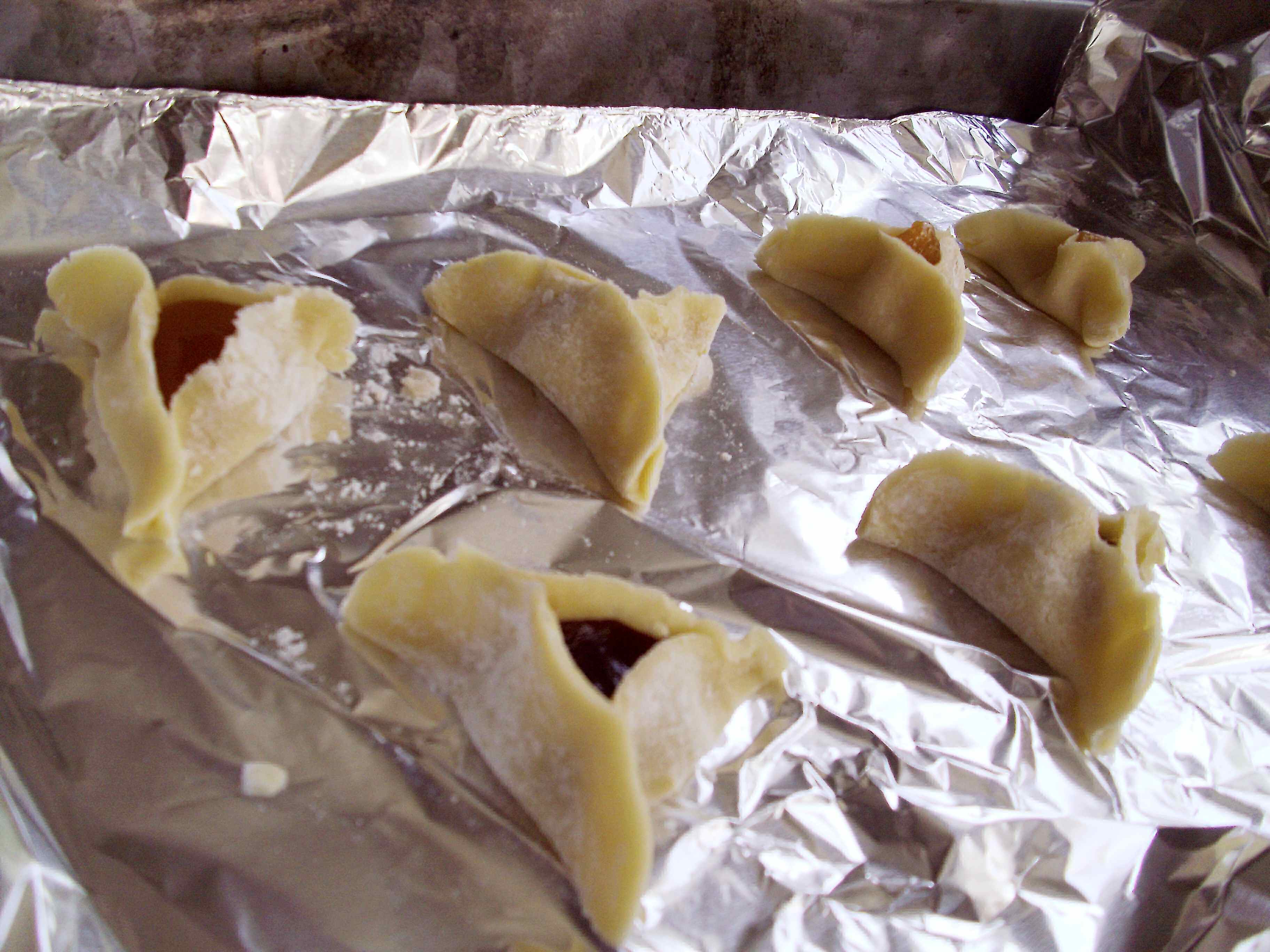
standard cookie-dough hamantaschen

Regular hamantaschen with prune lekvar
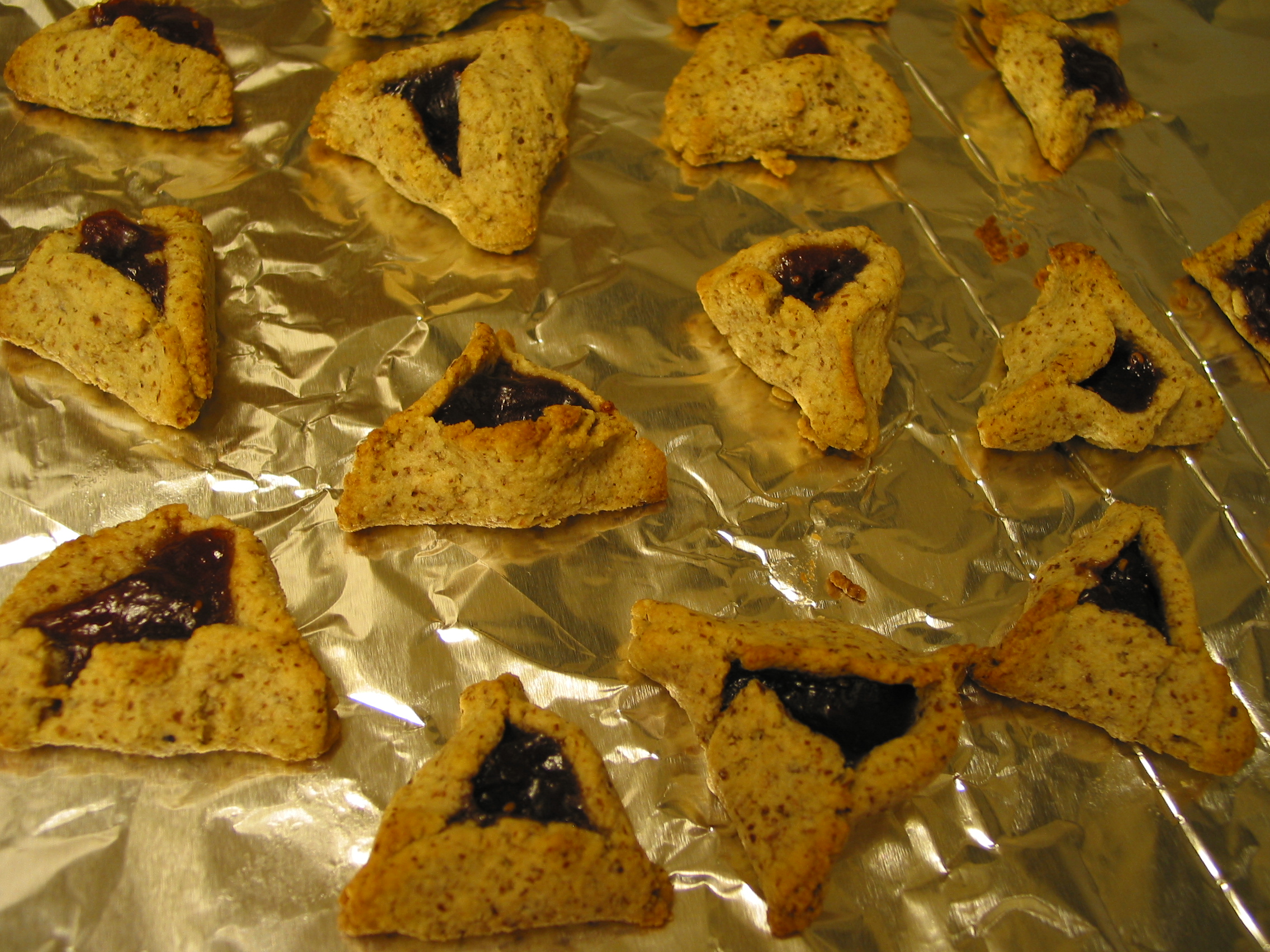
Almond meal-based low-carb hamantaschen

Almond meal-based low-carb hamantaschen

Purim is here tonight, a little late thanks to the “leap month” this year (drawbacks to a lunar holiday calendar) but none the worse for it–it’s over 80 degrees here, which means it’s almost time for Purim. Los Angeles is the only place I’ve ever been, including Israel, where people were slathering sunblock on their kids and gasping for water bottles at a Purim carnival well ahead of lining up for hamantaschen and games. It was 94 degrees that year. Fifteen years of this and I’m still not used to it.

Purim, of course, means manic baking, heat wave or no, because the adults’ reading of the Megillah (the Book of Esther) had…ummmm….last-minute planning and no one thought about hamantaschen as part of the refreshments until midweek. I think I’m the only one left in our  shul who still doesn’t care about having a fabulously original themed cocktail party for the adults afterward. Any kind of cocktail party is more drinking than I want to do, and I’m damned if I wanna dress up in full office battle array again after so many years sidestepping all the suits in my closet, just so I can fit in with the Mad Men theme. I’ve never even seen the show.

But I actually make hamantaschen at home once in a blue moon instead of schlepping over to the Valley to buy them from a kosher bakery.

So I did the stupid, crazy thing and volunteered. How many people? I asked–maybe 60. So I have SIX batches of dough sitting in my freezer relaxing. It took about half an hour, about 5 minutes apiece,  to do all the batches in the food processor, one after another and weighing out the ingredients so they’d be consistent. And yet…after all the excitement from two weeks ago, I’m just not all that geared up to roll it all out and bake it just this minute. Maybe when things cool down slightly–half an hour? Maybe?

Friday happens to have been Pi Day as well–and to my daughter, who was supposed to be my second-in-command for this delicate operation, and to her algebra teacher this morning, that meant Pie Day. They had about four different kinds of pie for all the math classes, and none of them had to calculate the areas or volumes of the wedges they sampled. My daughter, of course, was so elated that she ate two entire meals’ worth of carbohydrate in about fifteen minutes, and still came out with a pretty good blood glucose number an hour later–good on the calculated guesses, there–but at the cost of running through insulin that could have lasted her three or four more hours if she’d eaten an ordinary lunch. Teenagers! Mothers of teenagers!

Still, not to lose the spirit of things too much. It occurs to me that hamantaschen qualify as very small pies, only triangular. So we eventually started the process of inscribing a triangle inside a circle–240 times, if we can get through all the batches before showtime. Me, I’d settle for 3 or 4 batches and call it a week.

The raspberry jam filling–all that hard work for the first batch of rolling and filling–leaked all over the place. Too bad there isn’t still a vogue for vampire-everything; the first batch would have qualified! Too thin. You need a thick serious filling to stay in place during the baking.

So–time to nuke the prunes for lekvar and the figs for the heck of it (plus toast a small sampling of the poppyseeds in my freezer to see if they’re still okay to use for a filling, and to make sure I don’t pour in the bag of nigella seeds instead by mistake!). I rarely see these anymore, but I still believe in doing traditional fillings alongside the modern, newfangled apricot-jam-and-chocolate-chip ones. It’s true that if we keep skipping the prune filling, we might not turn into our own grandparents, and if we miss out on the poppy seed filling (known in Yiddish as mohn) we might pass the all-critical drug tests (à la Seinfeld) with no interferences, but then again we’d miss the ta’am, and what’s the joy of hamantaschen without a taste of the past?

Hamantaschen Recipes

Low-Carb Almond Meal-Based Hamantaschen

My version of Joan Nathan’s Hamantaschen, with four fillings: poppyseed, prune, apricot/chocolate, labaneh/cheesecake

Microwaveable dried fig and dried apricot fillings (originally for fillo pastries, but still good for this, and a lot less drippy than jam)

However–if you are feeling “Mad Men”, you might think of reconfiguring the hamantaschen motif for cocktail party fare instead. I was thinking about this Thursday but figured it would be too weird. Then I saw an article about it yesterday in one of the big three newspaper cooking sections–dammit! scooped again! In any case, if you’re feeling a little avantgarde, you could do a batch of savory hamantaschen if you feel like it. Use rugelach, bureka or olive oil tart dough instead of the standard sweet dough. Roll it out fairly thin, and fill with feta or bleu cheese mixed with labne or very thick sour cream, plus a little onion and some thyme, maybe a pecan or two. Or something with very cooked-down mushrooms and onions (so they don’t get soggy). Or pesto and cheese. Or spinach with cheese and nutmeg and lemon rind. Or tapenade. Etc.

Chickpeas of all sorts and descriptions

Since Esther supposedly refused meat and ate only chickpeas, chickpea recipes are also more or less relevant to Purim. Mine are not particularly traditional–look up Iranian Jewish recipes elsewhere on the web.

Chickpea crêpes  These can be savory or sweet, and they don’t require eggs or milk

The “other” moussaka–eggplant and chickpea stew

Hummus from scratch (aka how to nuke dried chickpeas)

Fast Hummus made with chickpea flour (microwaved)

There’s also the possible “nahit”–fry chickpeas in olive oil, drain and sprinkle with salt and pepper.

Or a cold chickpea salad with mint, scallion, garlic, olive oil and lemon juice or vinegar.

Or channa masala dal, something like the red lentil dal but with chickpeas (and not mashed)

Post-Kiddush: our leftovers are better than yours

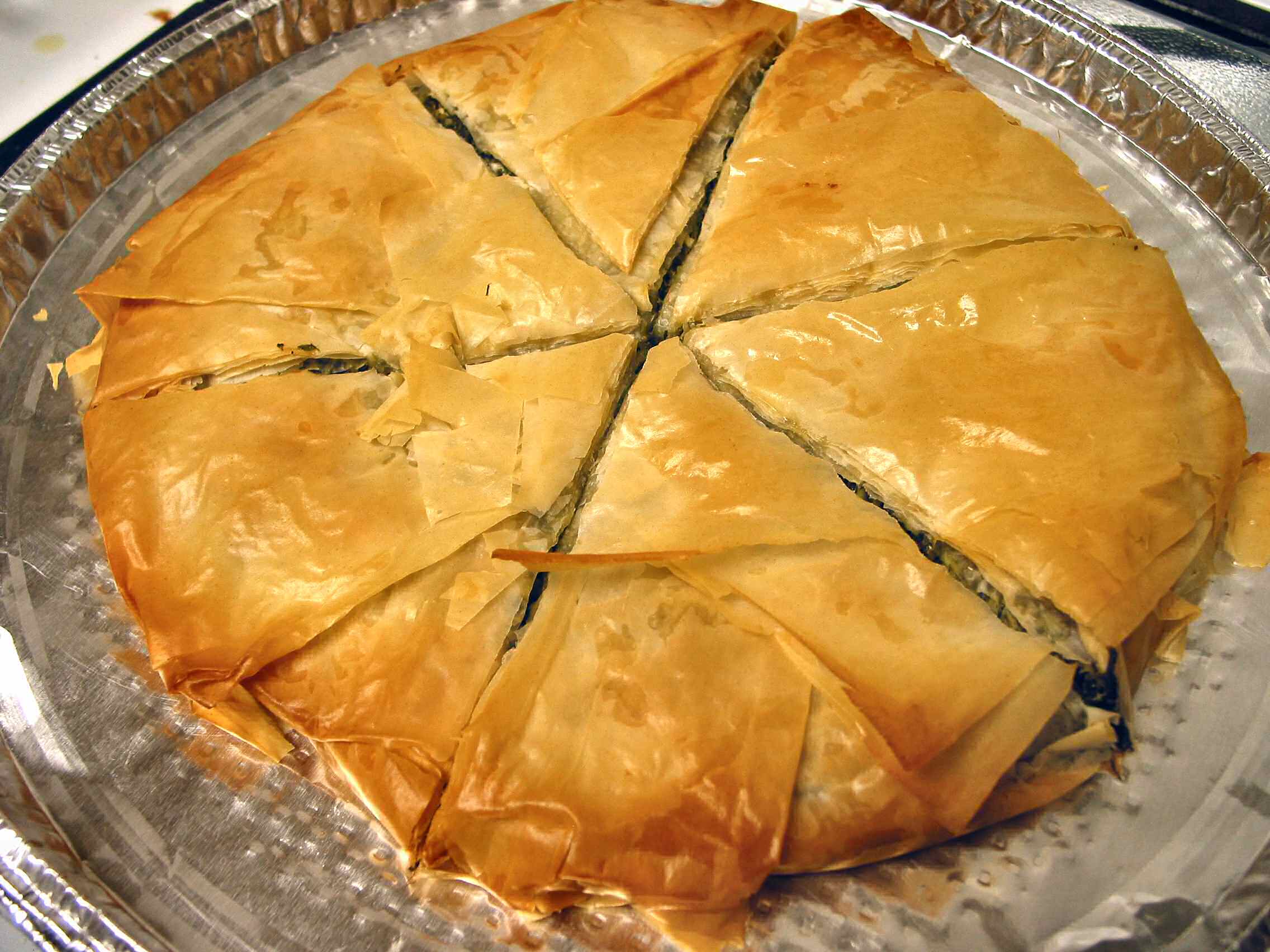
Round spare spanakopita just for us after the big kiddush

Round spare pinwheel-style spanakopita just for us at home. The big ones for the brunch had three pounds of spinach apiece (and were cut in small diamonds), but they still went together pretty fast–except for squeezing all that spinach dry…

This weekend I did it again–I made the kiddush, or in common speech a lunch buffet, for my congregation’s Saturday morning service. My husband kind of volunteered us for this week and because he doesn’t cook, most or all of the cooking, shopping, chopping and schlepping landed on my shoulders.

Last time he volunteered us, it was for our anniversary, and  I was ready to skip ahead to the divorce until I got over it, because it’s a lot of work to cook for 60 or so people who like to eat. And kibbitz. Especially when the 60 suddenly turns into 80-plus and having to use the synagogue kitchen with the more complicated and confusing rules on only a week’s notice. As they did this time…..

Soooo….a two-day hell of shopping and then marathon cooking-and-juggling in my little galley kitchen. The microwave got a serious workout. So did the food processor and the oven. Sometimes all at once. And it was raining hard for three days, so bringing things over to the synagogue kitchen as I went got a little tricky. I triple-wrapped the chocolate cake and stuck it in a USPS Priority Mail box so it wouldn’t get left out in the rain. Same idea for the spanakopita trays.

A few hints about cooking big and real for a synagogue brunch, learned the hard way by moi and passed on for your edification and safety (and sanity):

1. You can buy a 6-lb can  of chickpeas for massive half-gallon batches of hummus (Mid-East brand, maybe Goya as well). Cost? about $5. But–as I found out, and I’m glad no one was filming the process–industrial-sized can equals industrial-strength steel. A dinky hand-operated can opener is no match for such an item. I got just far enough to be able to pry open a kind of spout but there were tears and long-fluent-repetitive-all-throughout-the-house swearing sessions involved.

Still….

2. If you have a good corner greengrocer, you can buy quantities of eggplant for cheap–eleven or twelve eggplants made for a large tray of roast eggplant and onion slices (with garlic slivers and za’atar sprigs and olive oil) plus a large vat of baba ghanouj. Only the five eggplants I nuked for the baba ghanouj didn’t feel like cooperating fully when it was time to peel them. Might have been easier to peel first, then nuke, since it was all going into the food processor eventually. Next time…

3. Whole smoked whitefish for whitefish salad comes two ways–cold-smoked or hot-smoked. What’s the difference? I asked the counter guy at my favorite Armenian grocery. “Cold-smoked is a little less hard,” he said. So I bought it, thinking he meant the hot-smoked was tough as shoeleather and twice as chewy. I was wrong. Cold-smoked actually means the fish is smoked raw, like lox, only a little drier and tougher. But you don’t necessarily want to put it in whitefish salad that way. Man, it still had the scales on too. I couldn’t get it off the bones for love or money, and there were a lot of bones.

However, the microwave came to the rescue. I cut the fish in half and Continue reading

Ganache

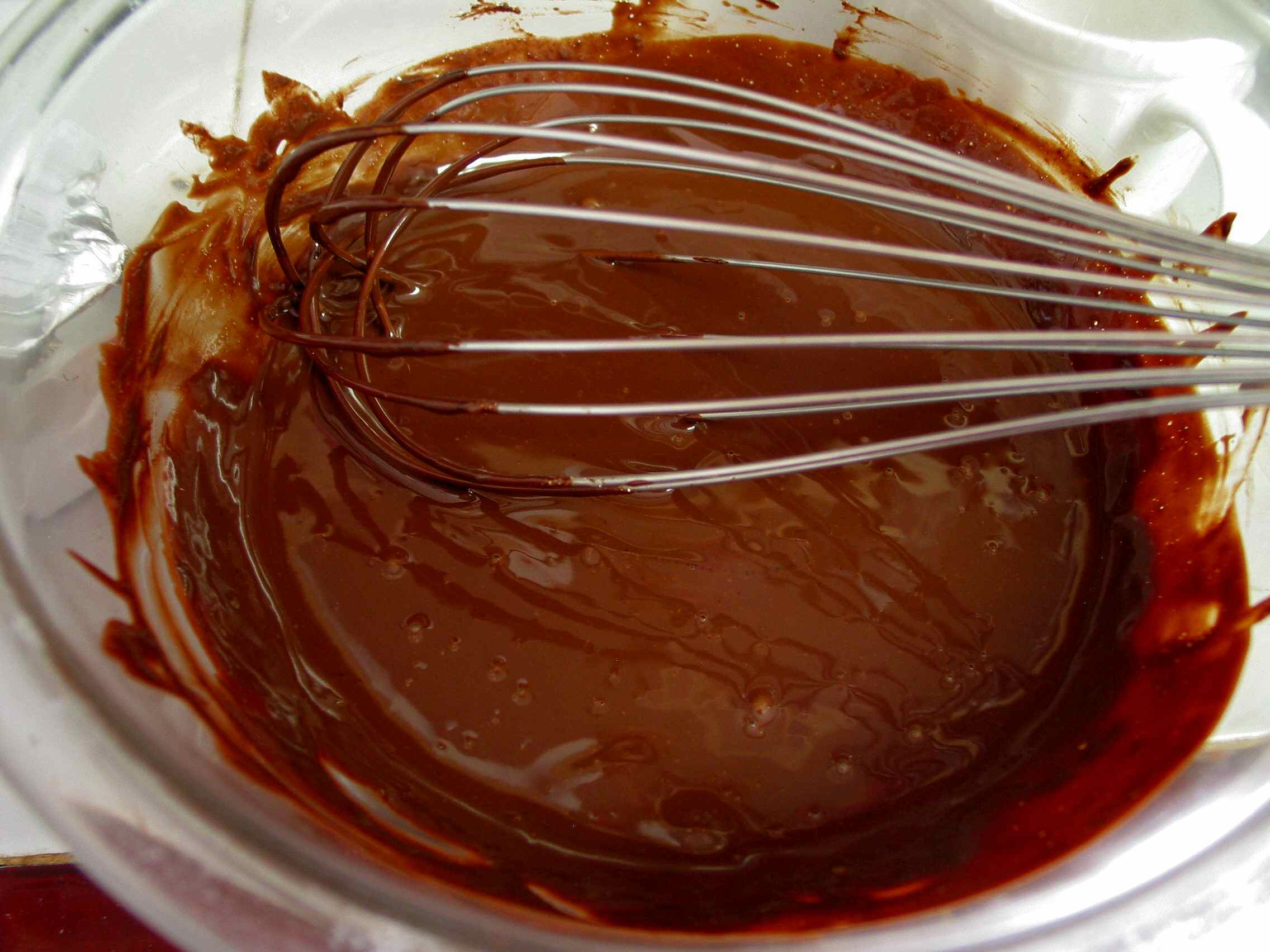
chocolate ganache

Ganache–the most versatile Valentine’s Day dessert in the world–takes about 5 minutes to make. If that.

This post started out being about Valentine’s Day 2013, if you can believe it,  and all the lame, anemic, inferior, chocolate-free pastries being touted in last year’s February food mags–Thomas Keller’s very, very plain beige custard tart without any decoration on it comes to mind as one of the worst offenders. He named it–get this–“Pomme d’Amour”. If you served me that as a Valentine’s date dessert, without so much as a raspberry or a mint leaf on the side, much less a caramelized-sugar top as for crème brulée, I’d be very unimpressed with it and probably with you. Especially at French Laundry prices. I’m not giving the link for it. If you’re genuinely hung up on Keller’s recipes, go away and don’t come back until you’ve convinced yourself that I’m right–a lot of fuss for so much bland. Because…..

Valentine’s was meant to be about chocolate. Or, if you’re very lucky, chocolate sauce. I don’t hear any dissent out there–except perhaps among the lovers of beige food. Takes all kinds…

So anyway, it should surprise no one that I’m late for this by an entire year. And dinner is tonight. In any case, you should know this post has morphed, thanks to time, tide, procrastination that knows no bounds, and my deep, deep love of chocolate ganache (because it is bitter and because it is my heart? Hell no: because it is unbelievably simple and quick and fun to play with and tastes damn good and impresses people who don’t know any better. Why else?)–Ahem! This post has morphed into a couple of ways to impress people who no longer cook. Including yourself if you’re one of those most of the time, and even if you’re not, because tonight you don’t want to spend a lot of time fussing over the food, you want to be taken out to dinner or else, if you’re snowed in, you want something delicious and very quick that takes only very simple, not too expensive ingredients you probably (hopefully) already have on hand somewhere at the back of the cupboard.

As I think I discussed in my post over the summer about the dangers of baking for one’s kid’s bat mitzvah (or other big celebration), many of these lost souls who never cook at all, to my great chagrin, can be counted among my close friends. To the point where making a cake of any kind, even from a box mix, is impressive.

Anyway, irritated by the selections I’d seen in all of last year’s February foodie magazines, I realized that most of my ideal recommendations, that is, the ones that I wasn’t seeing but wanted to, all relied on some form of chocolate ganache or fudge sauce–variants on a shockingly simple recipe. Even the French expert versions are just about this simple–mine’s better because I use a microwave and save washing a saucepan (always key), but the rest is history either way.

If you’re ready to mess around with the proportions until they feel and taste right, you’re my kinda cook. If you’re not, well, just consider that it’s “holiday season” (well, President’s Day, anyway, on Monday) and this is almost a free gift. Seriously, a five-minute (plus a little cooling time) recipe with two or at most five (fanciest variation) ingredients can win you a lot of unearned praise and maybe even a hot date.

All this is merely to point out that, if, like me, you have been tasked with dessert on short notice, you can skip the supermarket frosting horrors if you feel like it (and if your intended audience deserves it) and be amazed (and disturbed) as you flaunt instant and completely fictitious pastry “skills” that–and you don’t have to tell your heart’s desire or any of your friends this–rely almost entirely on some half-and-half and some dark chocolate chips or bars and a microwave. In short, I give you: Ganache.

. . .There is never a completely wrong time for chocolate ganache, except perhaps in the middle of a corned beef on rye with half-sour dills. OK, sorry I mentioned that. . .back to that romantic “cooking” thing. . .  Continue reading

Pastry again: vinegar adds the tender touch

Most people, if faced with a quick baking dilemma, probably go to the supermarket and buy cookies or brownie bites or something.  And it makes sense, kind of, although with a food processor, you can make pretty good cookies and brownies in less time than it would take you to fight over holiday parking, much less elbow your way through the store.

The corresponding shortcut for most people who do bake would probably have to be pie crust–to say nothing of puff pastry dough. For years I’ve been looking for ways to make a pastry dough that is close to puff pastry–flaky and light and puffy–without being as heavy on saturated fats and calories. Not the easiest combination.

Fillo (purchased, I’m not enough of a DIYer to make my own yet and my kitchen’s too tiny for rolling and tossing a huge thin sail of dough the right way)–fillo is good for a lot of things, but it’s so obviously itself and not pie dough, tart dough or puff pastry. It’s also pretty salted–I always have to comparison-shop to remember which commercial version has the least sodium per ounce (they vary within brands, because some are intended for savories and the others for sweet pastries. I think the savory ones are much too salty and use the less-salted ones for spanakopita and so on as well as for baklava).

After having made a variety of pie doughs–standard flour-butter-salt-water, olive oil tart dough, rugelach butter-cream-cheese dough, and even a puff pastry recipe with about half the fat called for in the classics–plus croissants that I finally got right–I can say my latest experiment is something of an eye-opener for me.

All of these worked okay as doughs, but except for the olive oil tart dough, which I use routinely for quiche, none are really all that light-tasting or actually light in terms of fat content and overall calories. And rolling them thinner than the standard 3/8 inch (thinner equals less dough and fewer calories per serving…) sometimes leads to a tough pastry. The fact that I tend to use bread flour instead of all-purpose or cake flour is probably at fault as well, I’m sure, but I’m mostly a bread baker and not exactly a perfectionist, so how many different sacks of flour do I really want hanging around my cramped galley kitchen at any given time?

A week or two ago I checked out an older cookbook (late ’80s) on Armenian food and tried to puzzle out the Armenian, Lebanese, Turkish and Russian influences–it’s a real mix. I was looking for a recipe for bureka dough, and this book had one.

The recipe for spinach burekas had an accompanying (and aging, over-tinted ’80s-style) photo of a browned and flaky dough wrapped around a log of improbably-green spinach filling on a platter lined with too-green lettuce and too-orange tomato slices underneath. But other than the color enhancements, the spinach log, kind of like a spinach Wellington, looked pretty nice.

To my great surprise, the dough was quite similar to some of the ones Joan Nathan had in The Jewish Holiday Kitchen.  The key ingredient differences from my standard pie doughs are:

1. slightly more butter for the amount of flour than for standard pastry dough (to be expected–you want it flakier, you probably need more fat in the dough) though a lot less than for rugelach or puff pastry

2. a little vegetable oil as well

3. an egg. Nathan’s “muerbeteig” egg dough for a plum pie calls for a hard boiled egg yolk, of all things, but the one here is raw. I’m not sure what it’s for, exactly. Perhaps for leavening or some other structural purpose–maybe it helps the dough puff into layers and hold them better with less hard fat than puff pastry requires?

4. a quarter-cup of dry white wine–which I didn’t have, only red, which would have turned the dough gray…so I substituted half apple cider vinegar and half water–the vinegar because Nathan had used it in a dough with egg. Why wine or vinegar? I think–don’t quote me–it’s the acidity, which breaks down gluten a little and tenderizes the dough. Certainly it did in this case compared to my usual experience.

So anyway–this dough came out surprisingly well. It doesn’t puff anywhere near as much as puff pastry–at least not while rolled out as thin as possible, and I haven’t tried it thicker–but it’s light, crisp and tender at the same time and not heavy or greasy. It’s unsweetened and mostly unsalted and would be equally good for savory pastries, Wellingtons and other encased main-dish things (like pot pies, coulibiac of salmon, and spinach-type fillings) where it’s the top layer or a wraparound, and for sweet ones like the impromptu almond paste and apple tartlet at the bottom of this post. Continue reading

10 (or so) Warning Signs of a Half-Baked Diabetes Cookbook

For the past two months I’ve been scouring the library and bookstore shelves in search of practical guidelines for preventing and managing Type II diabetes with  diabetes-careful meal plans.

I have two goals for myself:

1. Get down to a healthier weight by eating less and exercising more–this is the big one with the best correlation to reversing prediabetes. And it’s going okay but slowly.

2. Eat balanced meals with somewhat less carb per meal, fewer free sugars and fewer calories overall than usual. This is the easier one generally…as long as I keep a food diary. Luckily, I know how to cook and I’ve been doing meal planning for a Type I diabetic child for four years now, so I know how to count carbs. And when I don’t, I have a copy of the American Dietetic Association’s handy, simple and cheap $3 or so guide on the shelf. And a link to the USDA nutrition database for the exotic occasional items like chestnuts in the shell (note to self, about 5 grams apiece).

But I still wondered if the diabetes and weight loss cookbooks I see around are solid and I’ve just been too lazy, arrogant or impatient to take them seriously all these years. Hence the trips to the library.

Because no doubt about it, the diabetes cookbook scene is burgeoning. There are loads of good-looking cookbooks out with pretty, gourmet-looking recipe photos and promises of perfect blood sugar management amid the desserts on the cover.

Here’s the short version of this post: a read through most of these books is NOT encouraging. All the popular diet book gimmickry of the past 40 years seems to have been transferred to a lucrative new target (read: gullible victim) market, complete with bright, shiny new drug company advertising and sponsorship potential on the coordinating web sites.

Considering that there’s no precise required diet for diabetes, just guidelines for budgeting meal carb totals and keeping some kind of commonsense balance between starches, fiber and sugars, even the premise of prescriptive diabetic cooking guides is a little shaky to start with. But what’s actually being presented as guidance in these popular books is far from that approach.

Even cookbooks affiliated with or endorsed by organizations like the American Diabetes Association and so on fail some pretty simple commonsense tests for honesty, accuracy, consistency, or relevance to standard public health guidance on preventing, managing and reversing Type II diabetes by way of diet. And if you don’t already know your way around carb counting and portion size measurement, they’re extremely confusing. Sometimes even on purpose.

So here are the main common flaws I’ve discovered in most of these books, with a few books singled out for personal ire and bemusement. You might want to consider these as warning signs if you’re looking for actual guidance to get you through.

10 Warning Signs that Your Diabetes Guide Cookbook is Half-Baked

1. The Dessert First approach to diabetes management. Telltale sign: does it show cake or ice cream on the cover? About half the books I scanned do. They treat desserts and snacks as a top priority, as though that were what diabetes control is all about. As though sweets were somehow necessary at every meal, or even every week. None of them ever say, “just stick with a small apple or orange most days. No recipe required.” Actual endocrinologists recommend keeping desserts occasional and snacks un-glamorous and limited in carb.

1b. Aside: Many of the dessert-first books show cheesecake on the cover, usually a 1/8 to 1/10 cake portion–a pretty hefty wedge by any standards. This is a come-on–cheesecake is usually high in fat calories, so it’s rarely a good pick for anyone attempting to lose weight (the main strategy for Continue reading

Beating sugar shock

A new dietary sugar intake study from the University of Utah shows what happens when mice eat the kind of diet many Americans now eat:  25% of total calories in added sugars and high-fructose corn syrup (HFCS). The results were chilling: females died at twice the rate of controls, while males lost fertility and territorial instinct. And as the researchers pointed out when the corn and sugar associations tried to downplay the significance and shuffle blame, city mice tend to eat what humans near them eat. Yeah.

So of course, as the mother of a diabetic kid with a known and prominent sweet tooth (that goes for both of us, but we also love vegetables, or we’d never survive), I have to ask, how do you keep your added sugar calories under maybe 13% instead of 25%?

I don’t have a simple answer to this, particularly as I’ve discovered that most of my friends don’t cook anymore, if they ever did. Most of them think making soup means opening a can and dinner means ordering pizza. Snack, and occasionally breakfast too, is a power bar (shudder). All vegetables are precut, and many die in the fridge of sad neglect. They have good intentions; Whole Foods rubs its hands with glee when they see them wander in.

And although they’re smart, they have a very hard time wrapping their heads around the differences between added sugar, “naturally”-sourced or “unprocessed” brown sugar, sugars naturally present in whole unprocessed foods…agave syrup, power bars, “sugar-free” cookies…blah blah blah…all the gimmicks, in other words.

They don’t really understand the noncommercial measure that counts most for actual diabetics: total grams of carbohydrate in the current meal. Because that’s what you have to calculate and dose insulin for. Not just the sugars.

But even then, you don’t calculate for the whole day’s eating and just give one big dose based on a guess of what you might eat later. You calculate meal by meal and give a dose of short-acting insulin for that meal.

Calculating added sugar calories against total calories in a day is really difficult when you’re the mouse, so to speak. That’s the way nutrition researchers think about measuring the effects of your diet. It’s not the way people think as they’re getting ready to eat.

Especially if you’re eating out or you don’t have every food label right in front of you or you don’t walk around every minute with a meticulous food diary.  It’s like doing taxes when all you want to do is choose and eat a decent lunch.

WHAT DOES WORK?

I’d say, thinking like a diabetic. Or rather, in this case, like a diabetic’s mom.

  • First, definitely go meal-by-meal. Be sane.
  • Second, in any given meal–or snack–estimate the sugar grams as a fraction of the total carb grams, not the total calories, which can come from fat as well as carb. Too confusing.
  • Third, just count all the sweet stuff together. The whole idea of comparing added sugar vs. total consumed sugar is a pain in the tush to figure out. Once it’s in your system, it’s all sugar, and popular New Age-y fantasies about agave syrup and Hawaiian brown sugar and palm sugar being “natural” and “healthier” tend to fog things even worse.
  • Count fresh fruit, plain milk and yogurt-these are also in the form of sugar, not starch–and just figure that fresh fruit, milk and yogurt are the best choices (duh) per serving because they’re less concentrated in sugars than candy, pies, cakes, cookies, snack bars, power bars and …. syrup.
  • And then really look at the nutrition labels for anything packaged or processed. Including vegetables. If nothing else, it’ll be obvious why I rant against carrot juice instead of whole carrots, for example…

The first step for any of this, though is to know how much carb you’re actually eating.

Step 0. Know thou thy carbs. Continue reading

Emergency eclairs

Note: this is not my photo–I have not been to the balcony of Notre Dame lately. I merely share their dismay. [Source: Brittanica Online, with gentle modifications for parody purposes]

You may be wondering what to do if you drop half your éclair over the balcony of the Eiffel Tower, or worse yet, Notre Dame, while pondering your options for the afternoon’s conquest…YSL first, or peut-être Dior?…ooh-la-la-oops!

AAAAAGGGGHHHH!

Screaming will not get your éclair back, though it is a good start. You need to get down to ground level and purchase another tout de suite!

No, this is not really me channeling Miss Piggy at her “Who, Moi?” finest. I don’t have the lavender satin opera-length gloves for it, for one thing. I’ve just been watching too many of the various Muppet movies with my daughter lately.

Plus, and let’s be honest about it, the one time I ever tried on a long blonde wig (for a college skit), I took one look in the mirror and fell down on the costume department floor laughing until my ribs hurt. It was 20 minutes until I could breathe again. Picture Danny deVito (his eyebrows, anyway) peering out from under that wig, hoping to stand in for La Porcette,  and you understand why Frank Oz can never, ever go on vacation.

I have not been to Paris in seven years, and when we were there (for an engineering conference, with our then-kindergartner) we did not actually eat any éclairs. We also did not shop at Pierre Hermé, nor at Hermès, nor anyplace that wasn’t either a museum, an RER or métro stop,  a café or a tchotchke booth along the Seine. Other than for food, if it cost more than 15 bucks (or 11 euros, as for example, the tiny 3-inch-long stuffed unicorn at the Musée du Moyen Age, which we paid for hastily during a shall-we-say-jetlag-inspired meltdown), it was out of the question. I actually spent two full hours–ON VACATION IN PARIS–sitting forlornly in a coin-op laundromat down the alley from our hotel, hoping I had enough change to get all the horrible perfumed detergent back out of our clothes, while my husband and daughter went to the park. Not exactly the Paris experience I’d imagined way back in my high school French class.

So what am I doing imagining that I could climb up OR down the Eiffel Tower in chic heels (instead of the more believable sneakers and backpack with the entire belongings of my family plus bandaids and extra sandwiches…), waving an éclair around with incredible nonchalance and somehow not lose it (which I’ve never actually done; I’m a fervent believer in pastry) or break an ankle (which I have actually done, wearing flats), or both, with loads of people looking on?

Who knows–daydreams like these are the kind of thing mentioning Paris does to one when one blogs about food or fashion. Practically obligatory. It’s fun to imagine a life where such trivial matters can leaven, not to say inflate, my expectations. And, of course, where I’m not the one who has to schlep all the emergency supplies up however many flights of stairs. And back down.

Let’s face it, I’m a natural pessimist and (therefore) fan of both the Muppets and Matt Groening. Tell me true, now, doesn’t the gargoyle on the right look like the original inspiration for that sad shrimpy one-horned character in Life is Hell? He’s even wearing my backpack.

Real life is hard, gritty for more serious reasons than high-heeled éclair mishaps, and it’s filled with nagging of the now-ex-7th-grader. Ahem! These are things we just have to get through because there’s no great alternative (…yet. I’m working on it, believe me.)

Eclairs, on the other hand, are not actually difficult to make. And eating them makes one feel a lot less like life is hell, particularly if one skips the high heels and eats them barefoot.

And on the other other hand, baking anything in Los Angeles, even in winter, may well make one feel that one is actually living in hell, at least while the oven’s on. And right now it’s June.

How to cope? Toaster oven? Microwave?! The eagle squawking in shock above left may not approve of my methods, but he’d find it hard to argue with the results. Especially if you’re in the mood for just a couple of éclairs Right Now, and you have ice cream on hand so you can skip the custard chilling and filling bit and go right to profiterole heaven.

The pastry for éclairs, called pâte à choux, or choux paste (shoe paste! I knew there was a connection to the sudden appearance of high heels in my daydream), takes only a couple of ingredients: flour, water, butter, sugar, eggs. Maybe a pinch of salt too, okay.

Everyone and their uncle (or aunt) who’s ever written a Frenchy kind of cookbook has a recipe for éclairs, but who do you know anymore who’s ever actually made them? Right.

But actually, they’re pretty easy to make. At least as easy as brownies from a mix, and they seem fancier. You boil the butter, sugar and salt with the water, dump in the flour and stir until it looks like stiff mashed potatoes, then take it off the heat and beat in the eggs one at a time and voilà, there you have the dough–shiny yellow stuff to pipe out or dollop out onto a greased and floured baking pan and bake at high temperature for about 30 minutes until they’re really puffed and brown and don’t collapse anymore when you let them cool.

David Lebovitz has the classic recipe on his web site — a cup each of flour and water, 6 T butter, 2 t sugar, 1/2 t salt, and 4 large eggs. Pierre Hermé of exotically-flavored-macaron fame has a richer one with more butter and 6 eggs for the same amount of flour. And I’m sure they’re wonderful. But I can’t help messing around.

First off, I want fewer than 24 éclairs–what do you do with the rest of the dough? (turns out you can pipe it and freeze it, then bake straight from frozen sometime later, or else freeze the baked shells. OK. But still.) So I cut David’s basic proportions in half. Limit the damage to the avoirdupois, I always say. Fewer situps required.

Second, the butter. I know éclairs are the ultimate Unalterable Classic French Recipe but…here starteth the messing around. Like I say, I can’t help it. Continue reading

Little Green Footballs

…and Other Lessons from the Fillo Stratum

cheese and pesto triangles

Two or three weeks ago I got a frantic email from the assistant at my daughter’s Hebrew school: could I lead a cooking session for the 8th graders for an hour that Sunday?

Teens and preteens are not my specialty–I have a friend who’s really terrific with them; she’s an 8th grade and high school teacher and would rather deal with kids than write. I’m the other way around, and my own kid’s turning 13 very soon. Very soon.

Suffice it to say, my answer probably should have been, “Who me? Are you off your nut? Cook with preteens in only an hour?”

And then I thought–but wait. Fillo. It’s inexpensive (a big plus), it’s  easy enough to fold, it’s almost (if you squint) kind of a craft.  Like origami. Make some tasty and quick fillings for it (though no nuts–schools have gotten annoyingly leary of anything with nuts. How are you supposed to teach baklava? Eh? Eh???) and let the kids go to town, a couple of sheets of fillo apiece in the synagogue kitchen. An hour should do it, and it’s a cool, sophisticated food to know how to make–very different from the standard summer camp challah with blue or green food coloring.

So…I bought a couple of packets of fillo (about $2.69 for a roll of 20-24 sheets), a couple of pounds of loose-frozen spinach, an onion, some garlic, a bottle of olive oil and another bottle of canola oil (for the sweet fillings), a packet of dried apricots, a packet of dried figs, some farmer cheese (mistake, doesn’t taste that good; stick with ricotta) and some feta. And some dill and scallions I had at home. Also a lemon or two. I left the fillo in the fridge overnight to thaw slowly the way you’re supposed to, and not the way I usually do (i.e., take the thing out of the wrapper and let it sit an hour on the counter and then wonder why it cracks when I rush to unroll it).

I made the fillings the Sunday morning in a microwaver’s frenzy of immense efficiency:

  1.  Nuke a stick of unsalted butter in a bowl, pour it into a snaplock container.
  2. Thaw the spinach on a plate–4 minutes on HIGH. Take it out.
  3. Dump the dried apricots in a bowl with water to cover and a saucer on top–3 minutes. Meanwhile, start squeezing the spinach dry, and I mean dry, in handfuls over the sink. Nothing worse than soggy spanakopita. Except maybe soggy pizza.
  4. Take the apricots out, put in the bowl of figs with the stems cut off, some water and a lid, 3 minutes for them.
  5. Blend the apricots with a little sugar and water and lemon juice to make a thick paste. Get it out of the food processor and pack it in a disposable container with a lid.
  6. Do the same thing for the figs, only no sugar necessary.
  7. Rinse out the food processor, stick the scallions, wild thyme, fresh dill and basil in and chop them fine, drop in the spinach, a fat clove of minced garlic, and the feta. Pack that too.
  8. Grab all the bags with the goods and don’t forget the oils and the butter and the fillings and the extra feta and farmer’s cheese just in case there’s time to make some cheese-only filling there and somebody wants it. …

I hustled, I got to the synagogue kitchen on time, I set up stations around a stainless steel work table–foil sheets at each place, paper bowls with a dab of melted butter and a pour of oil, plastic baggies to go over everyone’s hands instead of pastry brushes, the carefully unrolled fillo under plastic wrap. The oven–on. The fillings–ready to rock. And then I waited. And waited.

An hour really would have been enough time for that class. But none of the kids showed up for the first 20 minutes because it was also the day the photographers were herding all the classes out into the basketball court area for graduation photos. So when they finally straggled in, all eight–and surprisingly, three of them were boys–I made them wash their hands and then set them to work.

The first thing I did was hand out individual sheets of fillo and pointed out that they were nearly as thin and tearable as tissue paper. They were all surprised when they saw it. None of the kids, who’d been cooking all year and who had attended a lot of bar and bat mitzvah celebrations, had seen fillo “in the raw”.

I got them started on spanakopita triangles–also known sometimes as bulemas (Greek root found here; you’ve heard of bulimia, right? Didn’t mention that connection, of course. You would never want to get into that with a batch of preteens. Don’t get too disturbed, though. The rough translation as used in Hebrew is “appetizers” or “things to gobble”. Of course, in Israel “bulmus” is also what they call anything like the American after-Thanksgiving shoppers’ frenzy or otherwise a run on the stock market…so much for appetites gone hog wild…)

I naturally thought fillo triangles would be a cinch for the boys especially–you do it the same way you fold a paper football and try not to get caught in class. Only with a little more butter and olive oil involved, and hopefully no punting in the kitchen, because I wasn’t gonna clean it up for them when the spanakopita went flying.

Here came the second generational surprise, though: none of the kids, not even the boys, had any idea how to fold a basic paper football! They’d never done it. Paper airplane? I asked desperately.  Continue reading

Post-Passover and the Unholy Host(ess)

gratinghorseradish

Grating horseradish (at least for a small quantity) is not really the big deal I once thought because I saw a superhostess friend of mine struggle with it every year. While you’re admiring my diligence and handmade everything, just like my friend but slightly saner, please go ahead and dig the groovy paper plates. The only way to do Passover, or any obligatory celebration, in my humble opinion.

Last week a friend at shul asked me, tongue in cheek, whether we could use an extra couple of boxes of leftover matzah. What can you say to an offer like that?

I asked him if he wanted to trade with us–we both seemed to have the same amount and brand.  He sighed and said that even his chickens, which eat almost any kind of scraps, are still sick of matzah at this point. So’s our cat (do not ask why cats think matzah is interesting. It makes no more sense than why they go after taco chips).

This is all by way of explaining why I haven’t been blogging so much lately. Is there still something new to discover about Passover cooking? Other, I mean, than the tentative trend to re-include legumes and rice. This year, unpleasantly, the bag of rice I bought turned out to be rancid (you don’t need me to explain this. The sour or barny smell will clue you in if you ever get a bag that’s off, and no it won’t rinse or cook out. Take it back to the store).  Was it a Message from the Almighty ™ or just a bad bag of rice? Only the potato knows. In any case…

The week before Passover, I tend to feel a lot more like Bart Simpson than usual. Even my hair gets spikier (though not blond, never blond). I envision Bart standing before the chalkboard at Pesach, having committed yet another farfetched classroom sin. Only my litany goes something like this:

  1. I will eat mostly vegetables.
  2. I will not eat any foods containing hidden matzah after the seder.
  3. I will not eat foods adding up in practice to six eggs a day OR anything made mostly of potato–except for an actual  plain steamed potato.
  4. I will not just scarf canned coconut macaroons when I don’t know what I really need to be eating or am too lazy to find it.
  5. I will not let my husband buy fake Passover cheerios for a zillion bucks a box when five full boxes of whole wheat matzah are staring at me, I have sliced almonds AND steam-defatted organic coconut shreds in the freezer, AND brown sugar and cinnamon, and that’s all you need to make matzahnola from scratch in five seconds flat. Or we can just eat plain yogurt with a spoonful of jam or some berries.
  6. I will eat yogurt.
  7. I will make soup.
  8. I will resist the temptation to buy yet another fresh unopened can of potato starch. I still have 95 percent of last year’s.
  9. Next year I am launching the Paschal answer to the Washington Post‘s Peeps Competition. I think I’ll call it The ‘Roon Run. Dioramas made from canned macaroons in any configuration, with or without goggle-eyes, toothpicks, pipe cleaners, construction paper in many forms  and (of course) glitter. Almost like the real thing, only not purple, pink or yellow…

Sigh. Now that Pesach is over, except for the three boxes of matzah we still have and which we are supposedly allowed to eat any time of the year….I can add one or two more items to my chalkboard manifesto.

Number one, I will not cook seventy-two times a day. For anyone. Which is what it often feels like when your husband and child are both at home the whole week, or nearly.

And really, what great things was I making? Mostly the same stuff I always make, only with potatoes instead of pasta or rice.

Well, there were a few improvements this year:

Zucchini latkes–Grate a zucchini or two and about a quarter of an onion or just add a couple of chopped scallions into a bowl, then a clove of garlic, then crumble some feta and add chopped basil or a bit of thyme, stir in an egg and a spoonful of matzah meal, and fry in patties in olive oil. Quantities? Quantities are for finicky people who actually follow recipes. I’m not sure I qualify anymore.

More refined whole-wheat Passover blintzes: Whole wheat matzah cake meal still tends to be a bit gritty if you use it straight, and it doesn’t have as much cohesiveness as you’d like for crêpes. I found I could grind it finer successfully by dumping half a cup at a time in my poor abused coffee grinder and whizzing it a few seconds.

Crêpes for 10 blintzes should be about half a cup of “Turkish grind” whole wheat matzah cake meal, a spoonful of potato starch, a cup of milk and two eggs mixed in. Then you have to let the batter sit because matzah meal is so much drier than regular flour that it will thicken much further than you expected. Add more milk to thin it out to a drizzle, about the texture of cream. A spoonful of sugar and a small shake or pinch of nutmeg will give it that French flair.

What else? Oh yeah:

Hrein. Horseradish. I’ve never made it by hand before, and whenever we go over to a super-cook friend’s house for Passover, she makes a blenderful of excessively potent horseradish and says how tough it was to grind up, so I always figured it was more trouble than it was worth. The fresh roots always look awful and muddy, too. But this year there wasn’t any horseradish in the supermarket without either dairy or odd ingredients. So I bought one of the huge foul-looking muddy roots on sale in the produce section.

I have a very sharp paring knife, and the peeling went much easier than advertised. I cut a two-inch chunk of the peeled root and grated it on the small holes of my trusty cheap plane grater (note, not “microplane”, which might not hold up under the pressure)  by hand over a plate. It took only a minute or so. I piled the shavings into a cup, poured just as much apple cider vinegar over them as they could absorb, added a pinch of salt (Joan Nathan and most others say add a pinch of sugar and some black pepper as well, but I didn’t bother), and stir and cover and chill.

Verdict: pretty good!

–  –  –  –  –

But back to the chalkboard litany. My second hard-won lesson, which I assure you I will exercise much past the final sundown of Passover, is to pick my guests carefully. 

I got an eye-opener as to why hostesses with the mostess use white tablecloths and cloth napkins and those awful cut-glass olive dishes when they have people over. Turns out it’s not just to be fussy. No. All that formal crap I always hated is very important protective armor to keep the guests in line via mild intimidation and prevent them from taking advantage of you. Same strategy as used by all the major French restaurants.  To wit:

We had friends over for the 7th night. Stressful enough without it also being a seder they had suggested–and somehow it ended up being at our house! Which meant I had to do the cleaning and yelling at my nearest and dearest to help get the bathrooms and living room cleaned up somewhat in advance of the guests’ arrival…and it meant doing most of the cooking! How did I let this happen?!

It would never have worked at all if our friends hadn’t been reasonably unpicky, and to be honest in the aftermath, it mostly turned out okay. It was still stressful in unpredictable ways, though, ways I am planning to learn from for my daughter’s bat mitzvah celebrations in a couple of months.

What exactly went wrong? Despite a simple but pretty decent menu for 6 Continue reading

Pinned for Purim!

Thanks to Yael Shuval for choosing my Low-Carb Hamantaschen for her board at Pinterest.com.

Three years ago I developed almond-meal based hamantaschen for my daughter, who had been diagnosed with Type I diabetes only a couple of weeks earlier and needed something that was low enough in carb that (at the time, anyway) she could actually have one or two when all the other kids were having theirs and without having to get an extra shot of insulin.

Almond meal has only about one-fourth as much carbohydrate per cup  as wheat flour, so it seemed like a good substitute. To our surprise, although the dough was a little finicky to work with, the hamantaschen came out tasting pretty good, and they were indeed pretty low carb, about 4-5 grams per mini-hamantaschen. Granted, they were also pretty small, but it was a symbolic triumph in the first few weeks and made us all feel like being diabetic wasn’t going to be the end of having fun.

Now that my daughter is on an insulin pump, getting an extra shot is no big deal, though in our experience the pitfall is that it’s now just a little too easy, especially for a preteen, to “eat anything you want, at any time, without thinking about it, as long as you program the insulin for it” which is one of the less responsible marketing messages in Medtronic’s brochure for teenagers (note: the pump itself is pretty good, but it still doesn’t mean you don’t have to be careful about what you’re eating). Those sour gummy heart candies the teacher handed out for snack earlier this week and left on my daughter’s desk, for instance….well, candy never seems like as much food as it really is, and I think my daughter gained a valuable lesson when she added up what she’d really eaten…she wouldn’t be the first one.

It’s always good to have a general plan in place for holiday eating so you don’t overdo the treats or eat an entire meal’s worth of carb in just a few cookies or candies or whatever…what can I say, we’re working on it.

Still. In the last year or two I’ve mostly gone back to making standard hamantaschen based on Joan Nathan’s classic cookie-dough recipe, which I like a lot and which looks and tastes much, much better than the dry, pasty-white horrors at the annual Purim carnival.

hamantaschen1

What I like about the standard flour-based recipe, other than that it tastes and looks good and is easy to work with, is that I can roll the dough out very thin and get crisp, delicate hamantaschen that are a decent cookie size but still hold together nicely and are not extravagantly carb-laden, particularly if the fillings are reasonable and you don’t eat ten at a time (the big challenge). They’re not as low-carb as the almond meal ones, but they still work out okay–about 7 grams apiece for a 1.5-2″ cookie. They taste good even made with pareve (nondairy) margarine instead of butter.

The LA-area idea of hamantaschen usually involves M&Ms, colored sprinkles, anything completely artificial. I bet gummy sour hearts (this afternoon’s culprit) would be a huge hit too. I don’t think they’ve heard of either prune or poppyseed out here in at least a generation.

Traditional fruit or nut fillings are a much more decent bet for carb, and they taste better (and look nicer too, because I’m not 6 years old and don’t insist on rainbow colors anymore). They’re also easy to make from scratch in a microwave or on the stove top so that you can decide how much sugar to put in them. Continue reading