
• Enter your email address to subscribe to this blog and receive notifications of new posts by email.

    Join 241 other subscribers
  • Noshing on

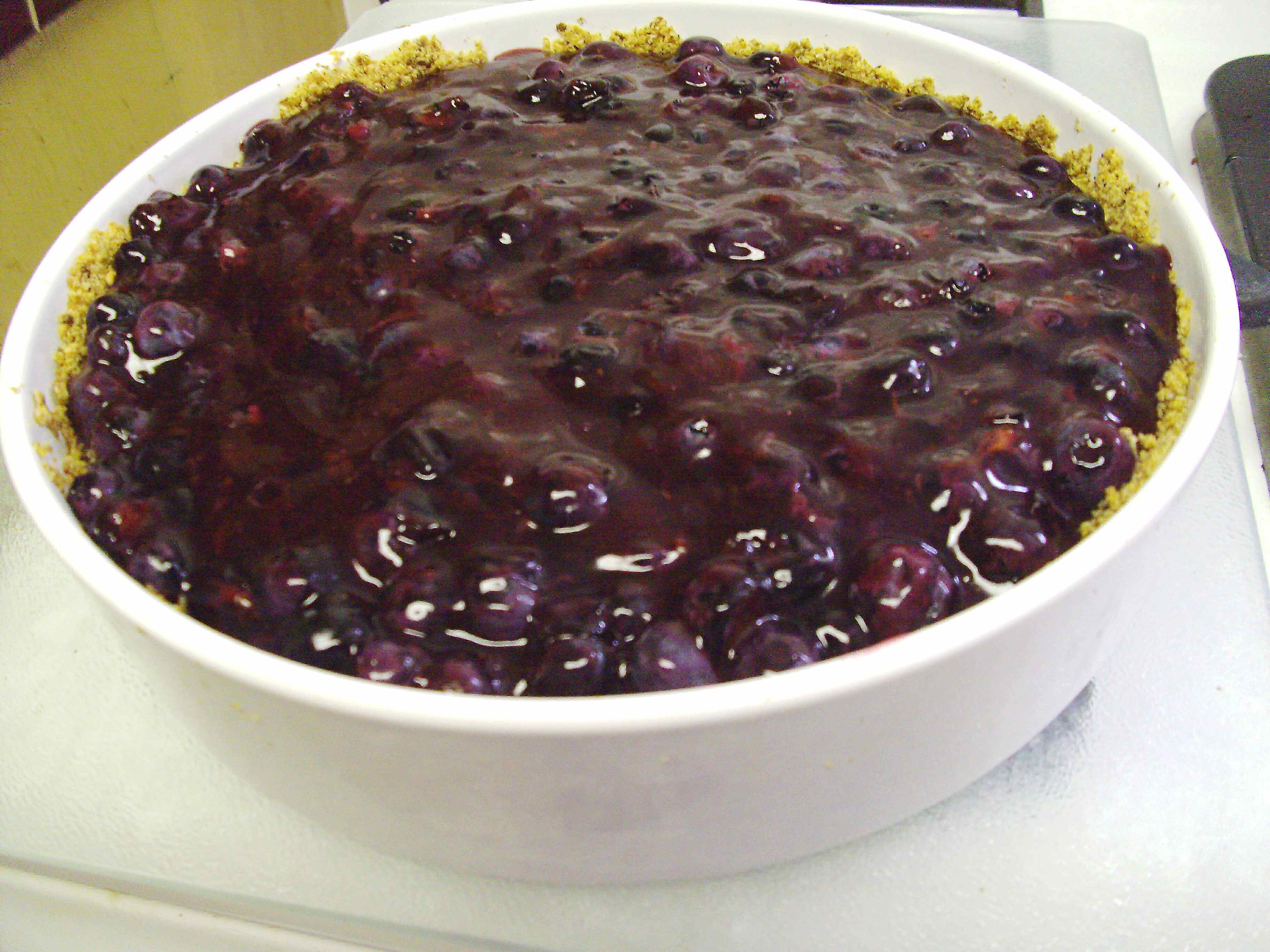
    raw blueberry pie with microwaveable filling and graham cracker crust

    This mostly-raw blueberry pie is a snap to make and very versatile--the filling microwaves in a few minutes, and you don't even have to bake the zippy gingered graham cracker crust--perfect for a hot Fourth of July and all summer long.

  • Recent Posts

  • Contents

  • Archives

  • Now Reading

  • See also my Book Reviews

  • Copyright 2008-2024Slow Food Fast. All writing and images on this blog unless otherwise attributed or set in quotes are the sole property of Slow Food Fast. Please contact DebbieN via the comments form for permissions before reprinting or reproducing any of the material on this blog.

  • ADS AND AFFILIATE LINKS

  • I may post affiliate links to books and movies that I personally review and recommend. Currently I favor Alibris and Vroman's, our terrific and venerable (now past the century mark!) independent bookstore in Pasadena. Or go to your local library--and make sure to support them with actual donations, not just overdue fines (ahem!), because your state probably has cut their budget and hours. Again.

  • In keeping with the disclaimer below, I DO NOT endorse, profit from, or recommend any medications, health treatments, commercial diet plans, supplements or any other such products.

  • DISCLAIMER

  • SlowFoodFast sometimes addresses general public health topics related to nutrition, heart disease, blood pressure, and diabetes. Because this is a blog with a personal point of view, my health and food politics entries often include my opinions on the trends I see, and I try to be as blatant as possible about that. None of these articles should be construed as specific medical advice for an individual case. I do try to keep to findings from well-vetted research sources and large, well-controlled studies, and I try not to sensationalize the science (though if they actually come up with a real cure for Type I diabetes in the next couple of years, I'm gonna be dancing in the streets with a hat that would put Carmen Miranda to shame. Consider yourself warned).

Adventures with Cheese, Part II: Paneer in the Microwave

Paneer is the fresh white curd cheese used in Indian dishes like saag or palak paneer, aloo mattar paneer, and so on. Panela or queso fresco are okay substitutes, if you can get them, and they taste a lot better than tofu.

But you can also make paneer very easily (if a bit messily) at home in a few minutes, if you have a pyrex bowl, a microwave, and a colander. If milk is going cheap in your neighborhood market this week or you have half a gallon that you really need to use up quickly before you go on vacation, making paneer isn’t a bad way to do it.

You’ll get about 5 oz fairly dry curd for a quart of milk, so not a great yield, but it’s pretty versatile. Whole milk makes a richer cheese than skim, obviously, but both work okay. Press the curd hard when you drain it and it’s sliceable. Press lightly and it’s spreadable. If you use a quart of buttermilk on its own rather than mostly milk, you can blend in a little garlic and some herbs and a drop of olive oil to the drained curd, and you’ve got something close to Rondelé cheese spread.

And don’t just toss out the whey–it still has a lot of soluble smaller proteins and calcium in it, so it’s worth keeping if you can use it within a day or so. You can use some of the warm whey instead of water to make a moist, chewy-textured Italian-type yeast bread (whey is extremely good for rosemary focaccia). Or puree the whey with some lightly cooked broccoli or cauliflower or canned pumpkin, a bit of onion or garlic, and some marjoram and/or thyme for a quick fresh cream-of-vegetable soup.

Paneer from scratch (makes about 5 oz, can scale up if you prefer)

  • A quart of milk
  • 1 cup of buttermilk if you have it
  • juice of a lemon

1. Pour everything into a 2.5 qt. pyrex mixing bowl, mix, and microwave on HIGH about 5 minutes, until the milk solids separate from the clear yellow whey. The solids should float in a mass and be pulling away from the sides of the bowl.

2. Take a colander or strainer over another large bowl, line it with a couple of layers of cheesecloth or 3-4 overlapping round paper coffee filters, whatever works for you. Carefully pour the whey over first, keeping the curd back in the bowl with a serving spoon or spatula for as long as possible, until you’ve poured most of the whey through (otherwise it takes forever to drain…). Then drain the curd on the filters and press it until it’s fairly firm and could be cut into cubes without crumbling apart.

Measuring when you have to be right

I’ve been cooking by hand for most of my adult life, and I cook by eye as well. This mostly comes out in the form of measuring by pouring things like baking soda or ginger into the palm of my hand rather than fishing around in the silverware drawer for a quarter-teaspoon or tablespoon. Too much fuss, I always thought, and it was a point of pride to be able to do without it.

It turns out a lot of people think measuring by hand is the mark of a chef: almost every one of the rising food stars who’ve broken into print insists in their “restaurant hints for home cooks” that you should measure salt “by feel” or the like while seasoning food in several stages during cooking.

But suddenly having to calculate in grams of carbohydrate per serving for my daughter has meant buying a new set of cup and spoon measures as well as an electronic food scale and really measuring, the official kind of measuring, instead of just eyeballing.

In making the comparison, I’ve discovered a number of unpleasant truths about the by-hand method. Most of which boil down to IT’S NOT ACCURATE. AT ALL. And I’m not talking a little 20 percent error here.

Try the following:

Cup your hand and pour a pre-measured level quarter-teaspoon of table salt into it. Go on and look hard, try to memorize how high it rises on your palm, what a quarter-teaspoon of salt looks like. Now dump it, wipe off your hand, Continue reading

Salt reduction vs. hypertension meds–which would you choose?

One of the big complaints processed food companies, physicians in clinical practice, and the great gourmet media all have in common is that cutting back on salt would make food taste flat, and you as an individual wouldn’t necessarily get a big drop in your personal blood pressure from doing it. They argue that only “salt-sensitive” people have to worry about their intake, and anyway, a few points lower, they all say, isn’t really impressive enough to give up your 300-mg serving of sodium in a bowl of Kellogg’s raisin bran or 390 in a slice of La Brea sourdough. And don’t, for g-d’s sake, ask your favorite name brand celebrity chefs to stop salting early and often in each dish!

A big statistical modeling study in the New England Journal of Medicine this week knocks all this wishful thinking on the head, and does it very nicely. The study looked not at individual blood pressure drops but the health and cost benefit of dropping average salt intake by 3 grams a day over the entire U.S. population.

The researchers found that if everyone drops their salt intake back down, the benefits start to look like the ones from quitting smoking, cutting cholesterol and saturated fat, and losing weight to get to a normal BMI.

That’s because even when individual blood pressures drop by only a few points, they’re not going up (as they are today), and when a small average drop happens in a very large group, the big bell curve of disease shifts toward lower risk of consequences and later starts for developing heart disease and high blood pressure. After the first national cholesterol lowering guidelines were issued in the late 1960s, the nation’s heart disease and stroke risk dropped by about a third, and at least until obesity and blood pressure started to cause a back-reaction, the average age for a first heart attack went from 50 to 60 in men. That’s a huge kind of benefit.

The combined drop in heart disease and stroke deaths from cutting salt would be something like 200-400,000 people per year, a lot more than can be saved by simply putting everyone on blood pressure medications–the study made that comparison directly.

Altogether, a solid recommendation for dropping sodium levels in processed and restaurant foods, which make up about 80% of today’s sodium intake. And for not imitating processed food and chain restaurant thinking in your professional or home cooking, as Francis Lam seems to in his Salon.com commentary on the new NYC Department of Health initiative. And if there was any doubt that the Culinary Institute of America has been training Continue reading

Putting Pie Crust on a Diet

From a recent LA Times special on savory pies comes a classic calorie-bomb–only, it’s not even the pie. It’s the pie dough itself:

Basic savory pie dough No. 2 (cream cheese)

Servings: 1 double-crust (9-inch) pie or 6 individual hand pies

  • 1 (8-ounce) container cream cheese, at room temperature
  • 1 cup (2 sticks) butter, at room temperature
  • 1/4 cup cream
  • 1 teaspoon salt
  • 2 2/3 cups (11 1/2 ounces) flour

Each of 6 servings: 638 calories; 9 grams protein; 44 grams carbohydrates; 2 grams fiber; 48 grams fat; 29 grams saturated fat; 137 mg. cholesterol; 1 gram sugar; 518 mg. sodium.

Now come on. 638 calories before you ever get to the filling? Who wants to eat that much pie dough at a time, especially one so rich? OK, don’t answer that, but really. Gag.

Except for the extra cream and the teaspoon of added salt (and why do you even need those with a cream cheese dough anyway?) this is really just a classic rugelach dough–you mix the fats together and then stir in the flour a little at a time by hand. Only, rugelach dough is meant to be rolled out as thin as physically possible–1/16 inch thick or even less–before spreading with jam and nuts and chocolate and cinnamon and so on and rolling it up into a crescent shape. And a good thing too, because cream cheese doughs are notoriously rich. More dough per rugelach and you’d soon feel like you’d eaten an airline Danish–it would sit like lead in your stomach for hours.

I compared the recipe above with the one in my much-used spiral-bound 1984 edition of Joan Nathan’s The Jewish Holiday Kitchen (thank you, Hadassah rummage sale!) It was probably the one cookbook that influenced me most as a college student, and I still use it for the classics, especially baked things like rugelach and hamantaschen that I can’t just wing (note–her cookie-style hamantaschen recipe is the best I’ve ever tasted, a far cry from the usual chalky white horrors on the Purim carnival bake sale table).

Based on Nathan’s rugelach recipe, which is the same recipe everyone everywhere seems to use, the quantities in the LA Times recipe above should make something like 40 rugelach, so figure about 15-20 realistic servings, not six. The cooks at the LA Times must be rolling the dough out the standard 3/8 inch thick for their pies, but it seems like a complete waste of this dough’s particular talents. Continue reading

Getting the Salt Out: NSRI and Voluntary Compliance, Again

In the wake of its city-wide diabetes reduction and restaurant nutrition labeling initiatives, the New York City Department of Health is leading yet another dietary health campaign, this time one that involves a national coalition of cities, states, and medical organizations. My hat’s off to them, even though I think the demands they intend to make of the food industry are much too light and much too toothless.

The National Salt Reduction Initiative, announced on Monday, will  encourage “voluntary compliance” from the processed food and restaurant industries to lower their sodium content by about 20% over the next 5 years. That’s pretty modest considering that both industries have doubled the standard sodium content of many common foods in the past 20-30 years, and that the national obesity epidemic seems to have coincided pretty nearly with that trend.

The UK’s national salt reduction campaign, which started in 2003 and serves as a model for NSRI, has government backing and its goal is 40% reduction of sodium in processed foods within 5 years, not 20%. They seem to be getting there, too.

NSRI’s coalition includes the Los Angeles Department of Health and a variety of medical organizations like the American Heart Association and the American College of Cardiology. What it doesn’t include this year, to my surprise–and, frankly, dismay–is involvement, funding or guidance from the National Heart, Lung and Blood Institute at NIH.

Ten years ago the NHLBI would have participated one way or another in encouraging this sort of initiative, but that was before the Bush years. NHLBI has been reorganized several times in the last decade. Two of its key diet-related outreach and education programs–the National Cholesterol Education Program and the National High Blood Pressure Education Program, which would have been the leading outreach proponent for NSRI–have receded from view, with perfunctory descriptions on the agency web site, no functioning links to current activities if there are any or to updated program pages, and no clear leadership or place in the agency’s organizational chart. But the need for them certainly hasn’t ended.

Voluntary compliance programs don’t have a great track record in the processed food industry. Look at the recent Smart Choices nutrition labeling program fiasco (see under, Froot Loops) from October.

Starting a national  program like this with voluntary compliance as a key component means the designers don’t think there’s much way to enforce the changes other than persuasion. It also means the government doesn’t have the tools, the money, or–and here is the crux of it–the will to enforce even modest limits on sodium content. Both the AHA and the AMA have been working on the FDA for years to get salt off the “generally harmless Continue reading

A Year of Artichoke Hearts

“Top 10 Recipes” lists are a big thing at the new year, a way to look back and figure out which dishes made a hit and which ones were just so-so. But sometimes, after an entire year, the top-10 judging criteria can get a little distorted. How do dining section editors compare five quasi-Asian stir-fried noodle-and-greens dishes, most of them mysteriously pumped up with bacon crumbles (2009’s star ingredient), and decide all five really belong in the top 10 for the year?

In one of my early posts, I was thinking about toasted cheese sandwiches (grilled cheese, hard to believe, was a Top 100 Dishes entry for Bon Appétit at that point). At the end, I threw in a quick little recipe for marinated artichoke hearts done in a microwave as an antidote to all the middle-American boredom. Yesterday I ran across an artichoke and potato salad from the LA Times‘s 2009 top-10 list and realized my artichoke hearts would probably make it better. Because they make everything better, or almost.

Marinating your own artichoke hearts takes five minutes, is less expensive than buying a jar of prepared ones, tastes fresher, and has a short list of real ingredients. A ~12-oz batch lasts more than a week in the fridge, where it’s  ready to serve as a pick-me-up for sandwiches, pasta, fish, omelets, salads, and hot vegetable dishes. I use these artichoke hearts so often that whenever I get to my Trader Joe’s and they’ve run completely out of bags of plain frozen artichoke hearts in the freezer and won’t get any in for weeks, I feel horrible and deprived, like someone who’s just been told not to talk with her hands.

That puts it in MY top 10.

You don’t need more than a dash of salt in this recipe to make the artichoke hearts taste intense and bright. The fresh lemon juice and garlic do it for you, and something about the artichokes themselves makes the combination work. Continue reading

Real Soba

Happy New Year! The LA Times just published a feature on New Year celebrations in Japan. The  December 30th article on making your own soba or buckwheat noodles has instructions and demo pictures from a professional soba chef–and the traditional recipe contains…no salt. At all. Contrast that with any of the store-bought brands here in the U.S. It also has a lot more buckwheat than the store-bought types, using a ni-hachi (2:8) proportion of wheat to buckwheat, so it probably has a lot more buckwheat flavor. Worth a try, and if you’re not sure you know how to knead to the right texture by hand, you might be able to knead the dough in a food processor to get it very smooth and elastic before rolling it out.  Traditional Soba from the LA Times

The dipping sauce recipes that accompany the soba article are no bargain sodium-wise, and they contain a lot of sugar as well as a lot of soy sauce mixed in with the dashi stock, but at least the noodles themselves aren’t adding to the problem. You could use low-sodium soy sauce and less of it; you could also decide not to follow tradition and use a different dipping sauce with more substance and less reliance on salt and sugar for flavor. Here are two possibilities (quantities are loosely something like half a cup to a cup). Neither is Japanese but they both taste good with soba.

Dipping Sauce for Jao Tze (why not, it’s good with soba too)

  • 1/4 c. low-sodium soy sauce
  • 1/4 c. vinegar–red wine, apple cider, or rice vinegar
  • dollop (~1-2 T.) dark molasses–this takes some stirring to mix with the thinner liquids
  • ~1/2 t. grated ginger
  • 1 scallion fairly finely chopped
  • few drops toasted sesame oil
  • 1/4 t. dab of z’khug or a bit of minced garlic, some hot pepper flakes to taste, and a bit of chopped cilantro if you have it

Peanut Curry Sauce

Serve this sauce cold or at room temperature to avoid the yogurt breaking down. If you add some lightly nuked or steamed fresh brussels sprouts (they look nice cut in halves) or other cruciferous vegetables and some hard-boiled eggs or tofu on the side, you have a pretty substantial lunch or a light supper.

  • 1-2 T. chunky unsalted natural peanut butter (peanuts only)
  • 1/2-1 c. plain nonfat yogurt (milk and cultures only)
  • 1 t. curry powder (unsalted)
  • 1 clove garlic, mashed/grated/minced
  • 1/2 t. mashed or grated ginger
  • 1-2 T. low-sodium soy sauce
  • juice of half a lime (best), lemon (ok), or 1-2 T. vinegar to taste
  • hot pepper flakes to taste
  • optional additions: scallion, finely chopped; few drops toasted sesame oil; pinch or so of sugar

Cutting the salt in Indian cuisine

India with Passion by Manju Malhi

Last week I got a Chanukah package in the mail from my sister. In it was India with Passion: Modern Regional Home Food by Manju Malhi, a British food writer with a popular UK cooking show, Simply Indian, on home-style cooking. One of my sister’s food-savvy friends had tried out the recipes and raved about it.

Indian food is becoming more popular in America and non-Indians like me are finally getting to taste a broader variety of regional cuisines (though I’ve yet to get down to Artesia, the “Little India” section of west LA, and really dig in). But learning to cook these dishes at home is another matter.

Yamuna Devi, Maddhur Jaffrey, and Julie Sahni were the first major Indian cookbook authors in the U.S. But their classic books and most of the ones published since then don’t give you a way to make sense of the laundry lists of spices given for each recipe. They give a rote answer as to why Indian cooks don’t use the standard yellow jar of generic curry powder that the supermarkets stock, but there’s no serious discussion on the balance of flavorings and how to vary it within a meal for any one particular regional cuisine. And perhaps there really is no great way to explain it. You really have to read through the book and see how the spices  and proportions change from one dish to another–something most Western readers aren’t used to noticing.

If I had my wish, I’d want general notes like “red lentil dal is better with twice as much cumin as coriander seed and a fair amount of both–we’re talking teaspoons to a tablespoon for 6 portions–but palak paneer should have much less of both–half-teaspoons– in equal amounts and include cardamom–preferably the black smoky kind–as the signature ingredient.” I want to know why you have onions cooked down to a paste in one dish but no garlic, and in another use fennel instead of cumin. What’s essential and what can I leave out if I don’t have it in the house? How can I vary the dish with the vegetables or beans that I have on hand at the moment and still have it come out tasting good? And what’s authentic and what’s modern?

A crop of recent cookbooks published in the US and UK attempt to deal with these problems a little more systematically–sometimes more for recent Indian emigrés and students than for the larger non-Indian community. Monica Bhide has simplified the spice lists in her recipes–sometimes to the point where you wonder if the food bears any resemblance to the original. Suvir Saran, lauded by Mark Bittman and the first Indian restaurant chef to join the American name-brand-chef pantheon, has also simplified ingredients lists and incorporated some American ingredients–like ketchup–with reasonable reasons (ketchup’s origins lie in British-controlled India of a century or so ago). And cooking teacher Raghavan Iyer has just come out this year with a big, bright paperback tome, 660 Curries, which logically ought to be more than you could or would want to cook in a couple of years.

One new trend is an attempt to make Indian food heart-healthier by cutting down on saturated fats,  substituting unsaturated vegetable oil for ghee and tofu for paneer cheese. What they haven’t yet done, and probably should, is cut back the salt as well. (So should everybody else, of course.)

Nearly every Indian cookbook I’ve ever seen uses screamingly high salt–rarely less than a teaspoon for a dish that serves 4-6, often a tablespoon or even more. Continue reading

Lentil Stew with…Pineapple?

Fresh pineapples are just coming on the market at a good price this week or so–$2 or $3 apiece. Meanwhile, tomatoes are…well, let’s say they’re not at their finest in December. So, some added incentive for trying something new.

Pineapple is the last thing that belongs in anything subtle or savory–or is it? Hawaiian pizza is practically a classic by now, despite the culinary clash of a pineapple-ham topping on the one hand and garlicky tomato sauce, mozzarella and oregano on the other. Of course, that (and all other glazed pineapple/pork product classics) seems more brash than subtle.

Given the usual culinary partners–ham, chicken, cottage cheese, spam and more spam–you’d think the rule for making pineapple work in something savory would be that the other main item has to be pretty salty to stand up to all that acidic tropical sweetness. But that’s not the only way to deal with it. Good thing too, since ham, ham, spam and ham are off my grocery list. (So’s spam.)

This curried lentil and vegetable stew, which I’ve based on a dish from my much-missed Lebanese former-restaurant-turned-lunch-spot, takes advantage of pineapple’s tang while mellowing out its jarring sweetness. It took me a couple of tries to achieve the taste I remembered from the restaurant, but I think this version works pretty well, even though it contains no salt at all.

Depending on the sweetness of your pineapple, you may need more or less to balance the flavors. The pineapple should be a subtle but surprising bite among the other vegetables and the rich lentil base. Don’t be afraid to tinker with the (rather loose) amounts of the various ingredients and taste as you go.

Curried Lentil Stew with Pineapple

  • 3-4 c. fully cooked green/brown lentils or half a pound dry (see step 1)
  • 1 T. curry powder
  • 1/2 t. ground cumin
  • 1/2 t. ground coriander seed if you have it
  • 1/2 t. brown mustard seeds if you have them
  • 2 medium onions, chopped
  • 1-2 medium tomatoes if you have them
  • juice of a lemon–plus another half to adjust taste as needed
  • 2  large or one really fat clove garlic, minced/mashed/grated
  • 2-3 half-inch rounds of fresh unsweetened pineapple in smallish chunks
  • 2-3 big carrots, peeled and chopped
  • 2-3 stalks celery, chopped
  • a good glug of dry red wine, cheap but decent, about 1/4 c.
  • olive oil

1. To cook the lentils in case you haven’t, wash and pick over half a pound of green/brown lentils and put them in a big pyrex bowl (2.5 qt/l) with enough water to cover by 2 inches. Put a microwaveable lid or dinner plate on top and microwave on HIGH for 7-8 minutes. Let sit in the closed oven another 20-30 minutes to soak up, add more water if there’s less than an inch above the lentils, then microwave again for another 7-8 minutes. Wait another 10-15 minutes and test for doneness. The lentils should be soft.

2. Meanwhile, sauté one of the onions with the spices in a little olive oil for a few minutes, add the chopped tomato and half the garlic and cook a few minutes, adding a drizzle of water if it starts to dry out.

3. When the lentils are done, pour them in with some of the cooking water, stir up, heat, and add the lemon juice and the pineapple. Cook a few more minutes until it starts to thicken.

3. Put the cooked lentils back into the pyrex bowl, add the remaining vegetables and the rest of the garlic, a little water, maybe a little more lemon juice, the wine, and a drizzle of olive oil. Cover at least partway (maybe with a small gap to let alcohol from the wine boil off) and microwave 5 minutes more or until the vegetables are tender.

Jazzing up Creamed Spinach

Passing by the refrigerated prepared-foods shelves in the produce section of my local Whole Foods a few days ago, I couldn’t help noticing a 24-oz tub of creamed spinach…for $8.99. Six dollars a pound. Given that most of their deli and salad bar foods are about $8/lb., maybe that’s a comparative bargain, but still. You could buy six 1-lb. bags of frozen spinach from the Trader Joe’s for that. At my local Latino supermarket, you could get at least six and maybe twelve bunches of spinach, turnip greens, mustard greens, kale, maybe chard or beet greens too. Of course then you’d have to wash it all. And chop it, and cook it. But you’d also get to decide how.

Standard creamed spinach is one of the easier and frankly quicker side dishes to put together. If you want the plain-o, Norman Rockwell version, go to an older American cookbook such as Joy of Cooking or even the Victory Garden Cookbook. Basically you sauté fresh chopped or thawed frozen spinach in a little butter, stir in a spoonful or so of flour until the white flecks disappear, add cream or milk and heat it up until the flour thickens it. Sprinkle salt and pepper and maybe grate some nutmeg over it.

But gawd, is it bland. Rich maybe, but bland.

I’m not a huge butter-and-cream fan, more because I can’t really stomach large amounts of it personally than for any particular virtues of character. If I’m going to have calories, I want them to come from a knockout dessert, not the spinach. So rich isn’t enough. I want it to taste like something.

Of course, I’m also speaking from the perspective of someone who grew up wondering “If there’s no garlic, is it really food?” No, don’t just laugh at me–think about it: most of Nigella Lawson’s recipes work precisely because she adds a clove of garlic to old-standard British stodge. You know–garlic smashed potatoes. Magic! If just adding a clove of garlic to a batch of boiled potatoes was such a big revelation, it’s no wonder the Brits fell so hard for Indian food. And Italian. And Greek. Of course, I’ve fallen hard for them too.

So of course the first thing to add to spinach is garlic. To my mind the second necessity is lemon, and the third is herbs or spices. And possibly some kind of white fresh cheese. Here are a couple of possibilities that taste satisfying without relying on heavy cream or butter, and they can be done either on the stove or in a microwave. Continue reading