
• Enter your email address to subscribe to this blog and receive notifications of new posts by email.

    Join 241 other subscribers
  • Noshing on

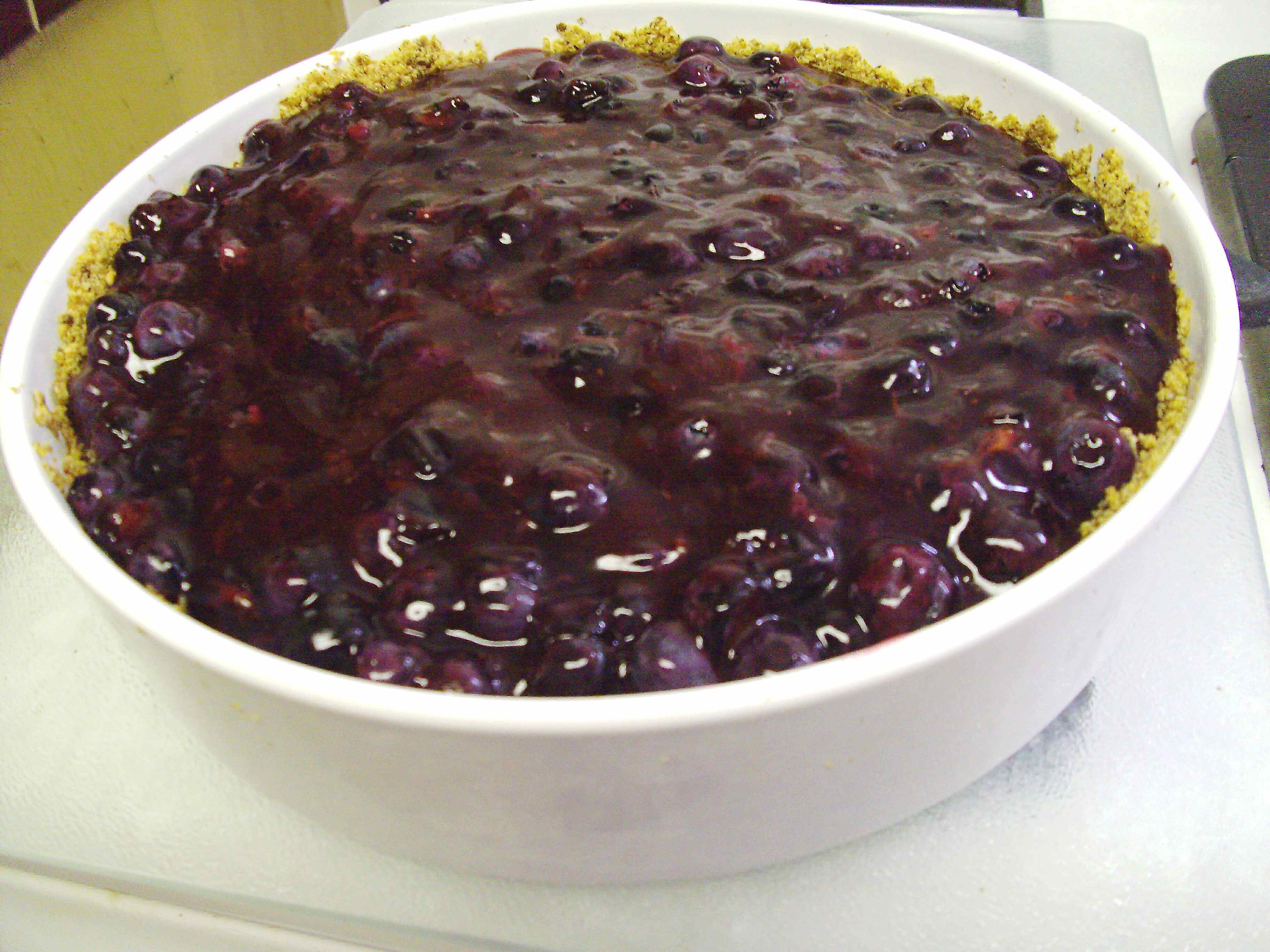
    raw blueberry pie with microwaveable filling and graham cracker crust

    This mostly-raw blueberry pie is a snap to make and very versatile--the filling microwaves in a few minutes, and you don't even have to bake the zippy gingered graham cracker crust--perfect for a hot Fourth of July and all summer long.

  • Recent Posts

  • Contents

  • Archives

  • Now Reading

  • See also my Book Reviews

  • Copyright 2008-2024Slow Food Fast. All writing and images on this blog unless otherwise attributed or set in quotes are the sole property of Slow Food Fast. Please contact DebbieN via the comments form for permissions before reprinting or reproducing any of the material on this blog.

  • ADS AND AFFILIATE LINKS

  • I may post affiliate links to books and movies that I personally review and recommend. Currently I favor Alibris and Vroman's, our terrific and venerable (now past the century mark!) independent bookstore in Pasadena. Or go to your local library--and make sure to support them with actual donations, not just overdue fines (ahem!), because your state probably has cut their budget and hours. Again.

  • In keeping with the disclaimer below, I DO NOT endorse, profit from, or recommend any medications, health treatments, commercial diet plans, supplements or any other such products.

  • DISCLAIMER

  • SlowFoodFast sometimes addresses general public health topics related to nutrition, heart disease, blood pressure, and diabetes. Because this is a blog with a personal point of view, my health and food politics entries often include my opinions on the trends I see, and I try to be as blatant as possible about that. None of these articles should be construed as specific medical advice for an individual case. I do try to keep to findings from well-vetted research sources and large, well-controlled studies, and I try not to sensationalize the science (though if they actually come up with a real cure for Type I diabetes in the next couple of years, I'm gonna be dancing in the streets with a hat that would put Carmen Miranda to shame. Consider yourself warned).

Saving Summer, 2020-style: Peaches and Pasta Yet Again

While I was stuck for what to post this summer without ranting too badly, I noticed readers are still searching for some of my inexplicably most popular older posts–how to ripen uncooperative peaches, and how to cook pasta in the microwave. I’m grateful you all are still out there, and I hope some of this helps or at the very least piques your imagination for what’s possible.

Usually I think these unconventional methods are mostly my own odd, quirky ideas about how to cook without turning on a hot stove in 100-degree heat and how not to throw out fresh produce if you can rescue it somehow.

These are no longer fringe questions now that the pandemic has hit so hard. We don’t want to waste money and food or make more shopping trips than we have to. And of course, the 100+ degree weather has suddenly hit hard in the West.  So for the first time in a while, I find I actually have a few new things to say about both pasta and peaches, before I move on to some slightly more warped but fun ideas in the next overdue post…

peaches ripening on counter


Peaches first (since it seems like the more upsetting food for most of us):

Well, I really thought I was going to post here that I have finally come up with a fast and easy way to “ripen” uncooperative, spongy or bland peaches to edibility without cooking them, but it turns out I already did it 3 years ago. Sometimes I post improvements to older posts and assume people can find them easily and tell that the revisions are better, but obviously not, so I’m going to have to go back to the original peach post from about 10 years ago, which suggested ways to cook peaches in a microwave, and point people forward to the method I use now, which sometimes improves blah peaches enough to be able to eat them raw and like them. It also works well for other kinds of mediocre fruit (see under, strawberries) that need a boost to taste like better versions of themselves.

For those of you who don’t want to poke around, this is basically it:

Peach fix 3.0

Wash, pit and cut up the peaches. Sprinkle on a spoonful of sugar and a small pinch or two (a little goes a long way) of citric acid powder and maybe a spoonful drizzle of water, stir a bit and let it sit for several minutes. They should taste better and be at least somewhat juicy and tart, and maybe start taking some rosy color and flavor from the skin as well.

Notes:

  • Citric acid is also called “sour salt” or “limon con sal” or “rock lemon” even though it’s not actually made from lemons, just tastes a little like them, and it doesn’t contain any salt. My Armenian corner grocery sells it along with other bags of bulk spices, and Rokeach brand citric acid shakers used to be available in the kosher food aisle of the supermarket. Don’t pay a lot for it, wherever you buy it–citric acid should be inexpensive and an ounce or two will go a pretty long way.
  • Lemon juice should also work if you can’t find citric acid powder locally or online.  But if you have it, citric acid keeps the peaches tasting like peaches, not like peaches with lemon added.
  • If you have a whole bag of such flavorless peaches to rescue, more than you can actually eat in one go once they’ve sat and macerated a while (“macerating” is just the sweet version of marinating), you can keep them in the fridge in a snaplock container for several days without worrying about spoilage because the citric acid is also a preservative.

Of course, while I was still dawdling over this post last month, wondering if this was more important than my other overdue ideas, the FDA suddenly issued a recall of bagged yellow peaches in at least 12 states for salmonella contamination, and I even got a robocall from the Ralph’s/Kroger supermarket chain offering a full refund if I’d bought their peaches lately (I hadn’t). So I don’t know if this is going to help a lot right now, but maybe the next time you’re in a quandary about bland, spongy peaches and they’re not under a recall, you’ll have at least one more trick up your sleeve. Might work for reviving frozen peaches too.

OK, now the pasta:

microwaving lasagne noodles  

Pasta 2020: Lasagne noodles in the microwave

Yes, I know. This is exactly what it looks like. But I finally figured this one out after how many years? too many. You can boil lasagne noodles in the microwave and keep them from sticking together horribly with a fairly simple trick–well, two. And incidentally, I also learned that lasagne, which is plural, refers to the noodles themselves, lasagna is singular and means the whole layered casserole…I’m still going to mix them up, I’m pretty sure of it. Continue reading

Color and Taste

We have a week and a half before Passover, and I’ve been experimenting a little with the foods I have to use up before then–flours, beans, lentils and spices.

I also–help! got “gifted” an awful lot of leftover vegetabalia from my daughter’s youth group director after last week’s major fundraiser, a huge Harry Potter-themed congregational dinner (Fantastic Feasts and Where to Find Them, still quite a popular title) that brought in nearly 200 diners and was frankly amazing.

bulk sacks of celery and onions

This is just the smaller bag of onions, along with way too much celery…

I managed to donate an entire 25-pound sack of onions to a local food pantry, but got another 10 pounds as a reward, along with two caterer’s packs of organic celery–that’s six full-sized heads–a huge box of organic mesclun that leaked horrible brown liquid in the shopping bag, so I composted it rather than trying to use any.

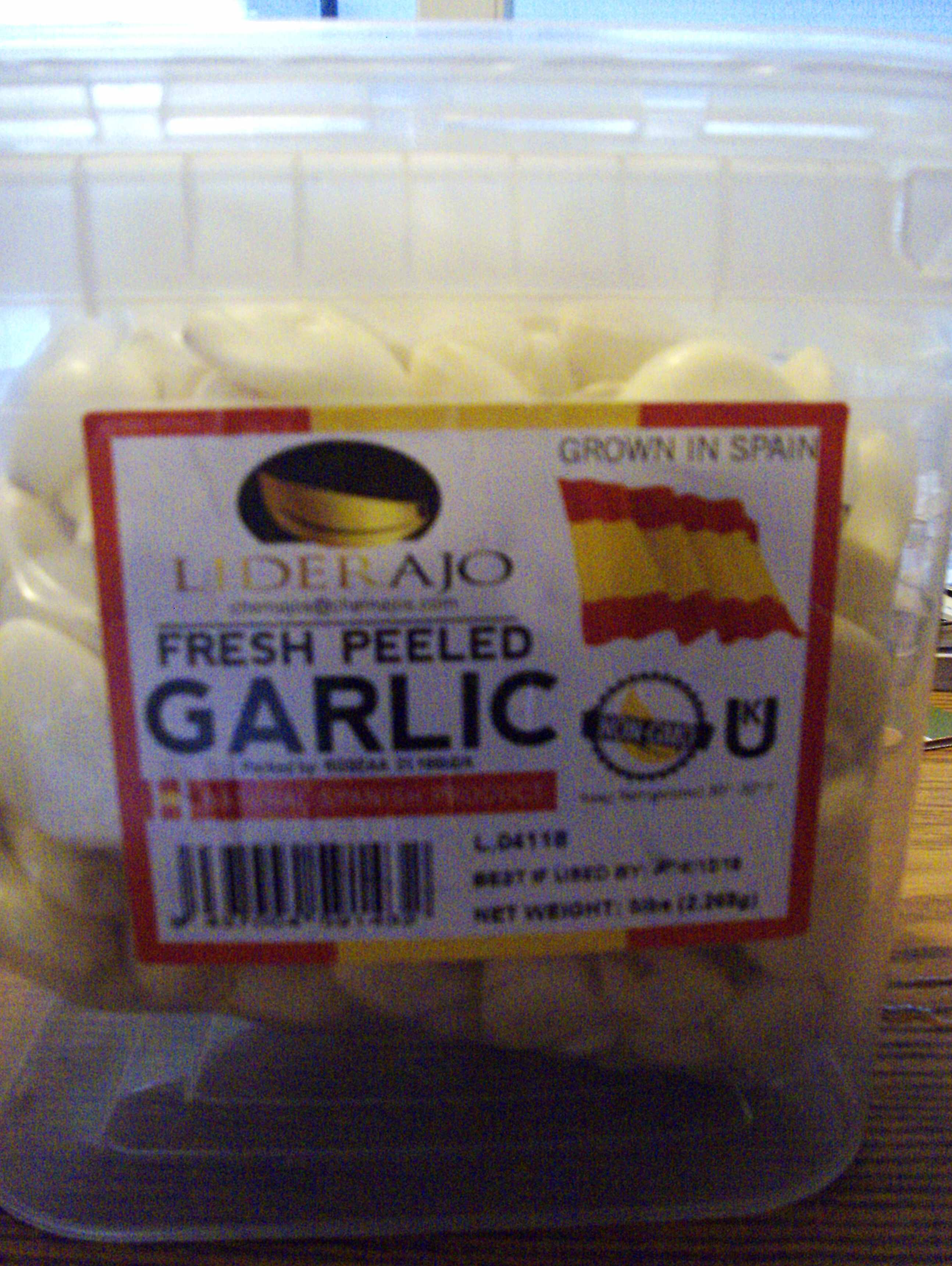
too much garlic

Worst of all….a 5-pound box of peeled garlic cloves. Which looked well-sealed and fine if ridiculous.

I looked squint-eyed at the youth director, who had such a hopeful wheedling expression on her face:  You like vegetables, you believe in garlic, could you please, please take it? Please?

Oy. By the end of a 10-minute ride home it was definitely reeking up my car. Why? Because the garlic cloves themselves were prepeeled, which always seems like such a bright idea to caterers and those who aspire to buy big. They were also machine-peeled, so some were cut into, hence the reek. And I mean, 5 pounds? I grabbed a modest handful of uncut cloves, rinsed them carefully, stuck them in a baggie and froze them. I had to toss out the rest of the box immediately. In the outside trash bin. Well wrapped.

In using the few cloves I kept, I’ve discovered I’m not wrong–looks really aren’t everything. The garlic itself, fresh or frozen, is impressive in size but very different from the usual small tight heads of garlic I buy for myself–harsher and yet less intense, lacking the warm flavors that make garlic garlic to me. So I’m going back to the real thing, peels and all.

In the meantime, I’ve been practicing my microwave not-chicken soup skills, along with testing the microwaveability of matzah balls–yes, you kind of can, they just won’t be spherical–which means we may all be sick of soup by the actual seder. Oh, no!

And while distracting myself from doing taxes, I’ve been looking for inspiration on another library cookbook binge. I drift by the New Books section and get caught by the new cookbooks with all the pretty colors–purple soup? red and yellow nasturtium blossoms on a salad? Bright green or pink or charcoal-gray (literally, as it turns out, using bamboo charcoal powder) shu mei wrappers?

As with the caterer’s box of garlic, though, looks can be deceiving.

I snatch up the books; I check them out, I lug them home and marvel at all the photographic bravura on my desk. Most of them are unexecutable in my kitchen because I don’t have a stick blender or enough counter space to do the fancy dim sum wraps justice. And some of them feature pork belly or crabmeat or other unkosher items.

Mostly, I look through the ingredients list and wonder mightily if they actually taste as impressive as the colors suggest, or if it’s all just for Instagram-worthy photos.

Love Italian Food (Maddalena Caruso, 2014) is a good case in point. Gorgeous photo of three technicolor puréed soups–cauliflower, broccoli, red cabbage with purple potato. I’m stunned by the purple velouté. But reading through I get cautious and skeptical. I want cream of red cabbage soup to taste amazing if it’s going to be that color and topped with a pale-jade romanesco floret. Caruso says it tastes peppery from the red cabbage; she adds purple potatoes for body and further color, some chicken broth, salt and pepper. She simmers the cabbage only 10 minutes or so before blending–hopefully that keeps it from going sulfurous. It might be good. It might be too subtle for me. I might have expected some lemon for the mild acidity that will keep the cabbage pigments from turning blueish-green. Or basil and garlic pesto. Maybe something smoky–smoked paprika? Or hot peppers and toasted sesame oil? Something.

I nuked a wedge of chopped red cabbage one recent afternoon to test the concept. It wouldn’t really blend smoothly in my food processor, and on its own, the purple mash smelled distinctly sour and a bit dank, lightly cooked as it was. It might combine well with other ingredients, but it wasn’t obvious that it would. Continue reading

Taking the chaos out of batch cooking

When my husband and I were much younger, we stayed a week with the children of some friends who wanted to go off skiing on spring break. In preparation, the mother batch-cooked a huge dutch oven each of chicken breasts and brisket for the week–just for their two young children and us. She left elaborate instructions about how to reheat it (I’m not sure she trusted us to know how to cook anything). I can tell you that even in my 20s I thought that was an awful lot of meat, and by the end of the week we were really, really tired of it. Even the kids.

On the other hand, a friend out here who has something in the range of adult ADD has a hard time cooking anything that takes longer than about 5 minutes because she’s so easily distracted she forgets to eat. Keeping track of multiple cooking steps  is genuinely daunting to her, as it is for many people with ADD and ADHD. She’s taken the expensive brown-rice-bowls and organic-microwaveable-freezer-meals-for-one route (keeping brand names out of it for the moment) but wishes she could find a better and cheaper way to deal with dinner. I suspect she wishes my east coast friend could supply her with a couple of dutch ovens’ worth of meals…

I bring up these two friends because lately I’ve started running across Meals-for-a-Month how-to books. They pop up every once in a while in the cookbook aisles of your favorite bookstore (or the 641 section of your local library). They’ve been reappearing since at least the early 1970s, when a major recession under Nixon led people to rethink their household budgets. Now these books are back in “For Dummies” and “Everything” versions, complete with tie-ins to About.com and other popular web portals.

The basic premise sounds ideal: shop and cook just once a month, the books promise, and you get a month of frozen real-food reheat-and-serve meals at your convenience, and you still save money. I keep hoping there’s some kind of solution in them for people short on time, cash and kitchen tolerance, but so far I’ve been disappointed.

Read one of these books and you quickly realize why almost no one follows them for long. First, if you hate to cook, you’re going to hate cooking marathons even more. Especially if they look like all-kitchen circus-style nightmares of boiling chicken and roasting AND stewing beef and slicing ham and cheese while also cutting vegetables while mixing sauces while separately packaging just enough gingersnaps for each package of the sauerbraten (assuming you even like sauerbraten or know what it is anymore) and finding the right sized bags and labels and and and and….

If you batch-cook the way these books suggest (in the intro section “game plan” complete with NFL-style charts), your once-a-month cooking scheme will probably take you all weekend (shopping alone is a full day) and wear you out from dawn til dusk. One weekend a month. I bet this is where most people flipping through to see if it’s the solution to their dilemma quietly shut the book, put it back on the shelf and edge away as quickly as possible.

These books also seem to replicate the worse aspects of frozen tv dinners, only without the convenience. The food’s too elaborate and long-cooking–mostly heavy meat stews and casseroles taken straight out of the 1950s Americana repertoire, and the scale-ups still only stretch to two or three meals for a family of four. If you go that route, you’d need ten recipes, and a huge freezer.

Also, there are no, and I mean no, shortcuts. I’ve looked. Each main dish is an hour or more by conventional methods. The reheats alone typically take at least half an hour and some extra cooking steps–and this is after having thawed the packages overnight in the fridge. Have the authors never heard of a microwave? Wasn’t avoiding repetitive, excessive cooking the whole point of once-a-month cooking? Do you really want to have to plan so much and follow so many steps–especially if you’re on the ADD end of things? Or even if you aren’t.

It would make so much more sense to simply buy a big resealable bag of frozen chicken parts and some bags of frozen vegetables and large cans of beans and tomatoes and boxes of spaghetti and relearn some cheap, easy and fast-cooking techniques from your college student repertoire. Wouldn’t it?

Needless to say, this is not the way people who traditionally have to cook big on a tight budget cook. Most people don’t have as much money at any one time as they’d need to pay for a month’s worth of food in a lump sum, nor do they generally have a dedicated extra freezer to fit it all in.

But batch cooking itself can work out and still treat you gently on a more modest scale. You just need to choose what makes sense to cook in multi-meal batches, and not do every possible big job all at once.

Unless you hunt and dress venison for the winter or have a garden with enough produce that you need to harvest and put up in bulk at the end of summer to keep it from spoiling, you don’t really need to do marathon-style cooking. Continue reading

Government nutritional estimates for “mixed dishes”–where do they come from?

The federal “MyPlate” program has expanded its consumer information on dietary guidelines but some of it looks suspiciously old-hat and soft on nutritional crime, very much in keeping with the USDA’s traditional approach of pandering to the processed food industry. I stumbled across it while helping my daughter find school lunch nutrition information for her latest science project, which was to analyze her new public school’s lunch program.

Of course, my 7th grade daughter’s reaction to her first day in a real live public school cafeteria last month was shock. Because she’s diabetic and vegetarian, we agreed the best strategy for her would be to bring her standard lunch from home–PBJ on whole wheat with an apple. She had trouble the first day with the routine–shove through the cafeteria line, squeeze in at a table, shovel down food, run for the bell.

What did the other kids eat? I asked. “They ate crap,” she answered without so much as a pause. “Pizza and french fries, stuff they can eat in about five minutes while gossiping with their friends. They hardly even notice.”

Now–as I’ve said before–peanut butter and jam on whole wheat is not gourmet, but it’s fairly nutritious (beats Oscar Meyer bologna for protein, believe it or not) and with a small apple, it’s reasonably worthwhile and you can eat it fairly quickly–certainly within 15 minutes, if you can shove through the cafeteria line and find a seat. If you make friends, as my daughter quickly did, you can even find some time for gossiping and having fun. And it costs less than a dollar and takes less than 5 minutes to pack at home. The school lunch is $2.35, and yes they do offer apples and some sort of packaged salad stuff and skim milk, but as my daughter noticed, few of the kids actually eat those items. Maybe the milk–well, at least offering the fresher food is a start.

Still–“crap” is not that far off. Pizza AND fries? A tough act to follow with anything but gallbladder surgery at 40.

And as she looks at the school menus online for September–they declare that they follow the USDA school nutrition guidelines–we notice a lot of things that aren’t really sound thinking from a diabetic’s point of view. A lot of menus that don’t come close to matching the ChooseMyPlate.gov guidelines, which call for half the plate to be vegetables and fruits (in that descending order of quantity), a quarter of the plate protein, a quarter complex carbohydrate.

“There’s a lot more meat,” she says. “Actually, my friend had the chicken patty today and spat it out. She said it wasn’t chicken. My other friend said it was, it was just cafeteria chicken.” Sounds like some of her new friends have a better take on the school food than the government does. My bet–the chicken patty is like standard bologna, only about half is anything that actually came from a chicken–including fat and skin–and the rest is probably starchy and high-salt fillers.

So, speaking of food that really isn’t as good as it seems…

The ChooseMyPlate.gov brochure on “mixed foods”, which is what I promised up at the top, might be part of the same sad thing. Here’s the sample chart they offer for things like pizza, lasagne, double cheeseburgers, burritos…that are supposedly hard to judge on nutrition.

MixedDishes.pdf 

Any takers on this one? My first impression is that the calorie counts are probably low–maybe as little as half–for a standard chain restaurant or frozen-entree serving of any of these items. Probably because a USDA recommended standardized “portion” for nutrition labeling purposes is very small compared with what people are actually eating and what companies are serving.

My second impression is–fruit servings? for pizza? who are they kidding, and why is this column even in here? Fruit is optional–it’s a carb. Nonstarchy vegetables with some actual vitamins and fiber are required eating. It’s pretty obvious from the table that the vegetables are pretty scant in this list of “mixed foods” too–mixed in this case seems to mean starches and fats plus some form of meat.

And what isn’t listed–the salt and fat and total carb. The fiber, vitamins and minerals. Most of this food is high in stuff that should be low, and low in stuff that should be high.

On second thought, maybe we should just read down this table for suggestions on what not to serve.

DIY Pasta–no chic gadgets needed


handmade pasta, cut for ravioli

A few months ago I was surprised to read an interview with the British actress Emma Thompson–not about her acting, or producing, or screenwriting, or whatever, but about her having acquired a pasta machine so that she and her family could have fresh pasta at home.

What surprised me is that she called it a revelation, or revolutionary, can’t remember which. I think it came up in relation to a short dramatic interpretation of a poem called “Song of the Lunch” that she and Alan Rickman did for the BBC last year. It’s about 20 minutes long, posted on YouTube in sections but in its entirety, and it’s actually not bad, though not as funny about foodieism as “The Trip”. The main thing about it is that it takes place in an Italian restaurant in London. Hence the pasta issue.

Over the course of a misspent youth (which I’m still in, thank you very much) I have tried a number of times to make sheet pasta myself, with varying degrees of success.

  • Buckwheat noodles–grainy and dry. Try this soba recipe instead.
  • Jao tse dough made with flour, salt, and boiling water–a little thick but it worked well enough to boast about
  • Ravioli dough made with half egg, half water (this was a few weeks ago)–grainy, sticky, hard to roll evenly to the right thickness.
  • Yesterday’s classic pasta dough from Marcella Hazan, just flour and eggs–just right. In fact, the only right recipe there is, I’m now convinced.

So of course this post isn’t really revolutionary–I’m about 20 years behind the “Wow, you can make pasta at home” trend. And I refuse to call it “a revelation”, as fresh food that includes actual garlic always seems to be for the British. It’s just that it finally worked, came out pretty well, and wasn’t as hard or as time-consuming as I thought. Take it as read.

I should back up and say I never actually managed to pick up either a proper cranking pasta machine, even though you can sometimes find one at Ross for Less at under $20, or a proper long dowel-style rolling pin, which Hazan deems necessary for hand-rolling. This still worked very well.

Why no pasta crank for the crank? Why no artisan rolling pin? I’m not good about kitchen implements that are hard to store, particularly now that the drawers are out in the garage and the counter space is severely limited. I use an empty wine bottle, the tall hunch-shouldered kind with a long straight barrel and short neck. It stands up in a corner when not in use and doesn’t take up space. I also don’t roll any dough directly, but between two sheets of plastic wrap with a little flour or–my great new discovery, especially for this pasta dough–parchment paper. Works incredibly well, better than the plastic wrap, because it doesn’t wrinkle and stick.

In any case, the one kitchen gadget (other than the microwave, the toaster oven, or the coffee maker) that I’m always willing to give counter space to is my food processor (also not fancy–a $30 Hamilton Beach with a big work bowl, not a $200 Cuisinart).

Because although I’ve watched my share of “Make Your Own Pasta” cooking demos over the years where Mary Ann Esposito or the guest du jour on Julia Child cracks eggs into a well in a bowl of flour and “incorporates them” gradually, I know perfectly well from hard experience that kneading by hand is going to precede rolling out by hand, and that the food processor will make at least one of these ordeals a lot faster and less of a pain. It will also give me a better product. Pasta needs a lot of kneading–8-10 minutes!–to develop the gluten and get it to a smooth uniform texture that will hold when you roll and stretch it very thin.  I’m not that good or that patient. Or at least I wasn’t yesterday.

The rolling is the big thing–you have to get that dough thin enough to the point where you just begin to see through it. You don’t want it breaking, but it really Continue reading

Tabbouleh vs. me

Exhausted. Yesterday I brought enough lunch food for 65 or so people at services because (get this) my husband signed us up to prepare the kiddush in celebration of our anniversary. Which is coming up in a couple of days. Ok. But I still have a tiny galley kitchen and all the drawers are still out in the garage awaiting some kind of decision on their fate–they have been that way since before we moved in, because they’re so chewed up I didn’t really want them back and haven’t decided what to replace them with yet.

And I think we (meaning I) did pretty well for costs by not doing the usual buy-salad-in-a-bag-for-thirty-bucks  and buy-a-big-commercial-sheet-cake and buy-a-vat-of-decorator-hummus.

But let me explain something I learned the hard way about making things from scratch. There’s a reason the boxes of commercial just-pour-boiling-water-on-it-and-wait tabbouleh are so tiny.

It’s not just all about profiteering–as you’d think I was going to say. Even I thought I was going to say that. But no.

At my local Armenian greengrocer’s I bought a 2.5 lb bag of #2 bulgur (the number denotes size of the cracked wheat grains) for $2.52 and a couple of bunches of parsley and lemons and a bunch of scallions and thought I was clearly way ahead of the Near East and Sadaf-purchasing folks. And yes, bulgur is microwaveable if you have a good-sized container. Just add water to cover by about an inch, put on a lid, and microwave 3-5 minutes, or enough to get the water to about boiling temperature, and let it stand about 15 minutes to absorb the boiling water. Then drain it and add lemon juice, olive oil, chopped parsley and scallion (and mint if you like it) and a bit of salt. More parsley than grain if you’re Lebanese and being authentic. Less green than grain if you’re doing what I grew up with.

What I didn’t take into account was exactly HOW MUCH tabbouleh one innocent-looking little pound of dry bulgur, or about 2 cups, actually makes.

Let’s just quietly admit it was considerably more than a salad bowl’s worth. So the expensive boxes you see in the Whole Foods, the little 4-6 oz. boxes, are probably just right for a family of less than 14.

I ended up freezing half of the grain in bags. I don’t think I’ll bother telling my in-laws before I bring it up for Thanksgiving. Wouldn’t want them to find themselves a pair of plane tickets just in the nick of time…


Microwave Tricks: Make-Ahead Stuffed Shells

Stuffed shells in the microwave

Stuffed shells (shown here with plastic wrap for the fridge) cook up really quickly and easily in a microwave

This was the second try at a quick supper while juggling too many other things at once. The first half box of pasta shells I cooked in the microwave as I usually do but they ended up staying in the water much too long while I was busy elsewhere (lecturing my kid about waltzing out of the house without letting us know–Oy! I thought we had this down by now, but 10 is 10, with a lot of eye-rolling and forgetfulness and sudden impatience for all the ordinary rules).

When I returned to the kitchen, the bowl of shells had long since cooked, softened, soaked and turned to pasty shell-shaped mush–too far gone to rescue. Bleagghhh…I threw them out and started over. Luckily, a microwave cuts the time it costs to boil the water for a new batch, and I’d already made the stuffing and had some tomato sauce ready. This time, I decided to pay attention, and it came out fine.

If you have fewer distractions or better time sense than I do so you can catch your pasta before it falls apart, you can put together a number of good filled pasta casseroles like this one all (or at least mostly) by using your microwave, and they might take less than half an hour from start to finish. Two other examples–the very similar spinach lasagne I make with eggroll wrappers (same spinach/ricotta/feta filling, same microwave marinara but don’t cook the eggroll wrappers before layering them, and use two wrappers at a time, since they’re so thin), or even butternut squash or sweet potato ravioli with wonton or gyoza wrappers and a mozzarella-based cheese sauce. Once the shells are cooked al dente (still a little chewy, but not hard), the dish goes together in about 5 minutes and cooks just to heat it through.

Stuffed Shells in the Microwave

  • 1/2 lb or so dried large pasta shells for stuffing (about 20 shells or 1/2 box)
  • 1 recipe Microwave Marinara or about 1 c. of your preferred tomato sauce
  • pinches of fennel seed, dried or fresh thyme or oregano, and/or hot pepper flakes
  • shredded mozzarella for topping (optional)

Filling:

  • 2 c. low-fat or skim ricotta
  • 2 oz. or so crumbled feta
  • 1/2 lb defrosted/cooked spinach
  • 1/4 onion
  • 1 fat clove garlic, grated, minced or mashed
  • a few leaves shredded basil and/or thyme or marjoram
  • pinch or grating of nutmeg
  • 6-8 microwave-marinated artichoke hearts, optional

Put the shells in a big pyrex mixing bowl (2.5 qt or liter), fill with water to about 2 inches above the shells, cover with a microwaveable plate and microwave on HIGH about 9 minutes, or until the water is bubbling but not boiling over. Leave the shells in the microwave another 5 minutes to absorb and check for doneness–you may need another 2 minutes or so. When they’re just cooked through but still firm, drain them gently so they don’t tear apart.

In the bottom of a microwaveable casserole (in my case, a pyrex deep dish pie plate), spoon about 1/4 c. tomato sauce and spread it around. Sprinkle on the fennel seed, oregano and/or hot pepper flakes if using, or just mix them into the sauce before you start.

Mix all the filling ingredients together by hand. Stuff each shell with a soup spoonful of the filling and set it in the casserole–you can fit about 20 stuffed shells into a deep dish pie plate, maybe more if you pack them tighter than I did. Carefully spoon the rest of the sauce between the shells and if it seems too dry on top or your shells are parcooked and kind of stiff, drizzle a few spoonfuls of water, maybe 1/4 c. total, on the sauce but not on the shells themselves. If you’re using mozzarella to top the shells, sprinkle it on now and add a pinch of oregano if you like it. Cover the casserole with a microwaveable plate or lid and microwave 7-8 minutes on HIGH or until heated through. The cheese should be melted on top and the shells should be tender.

You can reheat the casserole the next day very easily–check to see if it feels dried out at all, and drizzle in a tiny amount of water (spoonful or so) if it does, then cover with a microwaveable plate and heat for 5 minutes on HIGH.

DIABETIC/CARB COUNT NOTES:

Barilla says their shells are 37 grams of carbohydrate per 5 shells, or about 7 grams apiece. Ricotta has about 3-4 g. carb per 1/4 c. serving (about 2-3 shells’ worth), so for 5 shells maybe 5-7 g. carb. If you use my microwave marinara, it has just tomatoes and a bit of onion, none of the commercial added sugars or starch thickeners, so negligible carb count per serving.

Total: about 45 g. per 5 shells, or about 8-9 g/shell.

Couscous, its own fine self

Fine-grained couscous made directly from farina

When I’d just come back from a year in Israel after college, I read through Paula Wolfert’s Couscous and Other Good Food from Morocco several times. Her descriptions of the market stalls, the kitchens of the aristocrats, and the very down-to-earth cooks making tricky components like warka leaves for bistilla or rolling and sieving different sizes of couscous from farina and flour fascinated me. They filled in parts of the culture I hadn’t understood in the Moroccan Jewish community I’d just left.

Two of the dishes in the book, two only, have I actually made in all the time since. But if you get the right two, two is enough.

I first ate couscous in Ma’alot, up in the north of Israel in the western Galilee. On my first night in the volunteer program, my new roommates brought me to a tiny 4-table restaurant in the town center after a very miserable and cold trudge up to the top of the hill in a January downpour. The restaurant would have been a real hole-in-the-wall anywhere else, and even here it seemed to cater to the few single men who had neither hope nor prospect of a girlfriend, and whose mothers had finally nudged them out the door. Israel’s amenities–grocery stores and the like–are still often a grade or so down in appearance from what we’re used to in the US, and I’d been there half a year already, so I was used to ignoring it and discovering what was good. Still, even 25 years ago, most restaurants in the larger towns were not this dowdy. This was card tables and folding chairs. My heart sank. Where had I come to?

Not 5 minutes after we’d been seated, however, the lady who ran the kitchen fetched us out a huge platter mounded with couscous and chicken legs and vegetables, steaming hot and smelling incredible. The chicken was delicious (everybody sing; I’ve just been subjected to another showing of Sherlock Holmes’s Smarter Brother at our in-laws’ over Thanksgiving weekend) but the couscous itself was so light and fine it was like eating hot curried snowflakes. What was it? How do you do that? And in half a year of eating at Continue reading

New Page Up: Carb Counts and Ratios

I’ve just uploaded a new page (see the top menu tabs) with a couple of tables of the most useful rules of thumb I’ve found for carb counting. Since my daughter became a Type I (insulin-dependent) diabetic back in February, we’ve both had to become pretty familiar with the amounts of carbohydrate in a given amount of different foods.

Although the American Dietetic Association’s “Choose Your Foods” carb count guide for diabetics is pretty helpful (and pretty inexpensive, about $3 per copy if you order from them direct on www.eatright.org), it’s written from the perspective of the eater, not the cook.

So (as the cook in the family) I’ve worked out the approximate ratios of carb grams per total weight of some common foods I serve routinely. Rice and beans are easy enough to remember. But when I want to know how much of a given potato my daughter can eat as one carb serving (15 g), it helps to be able to know that a regular potato is about 1/6th carbohydrate. Then all I have to do is weigh it on the food scale in grams and divide by 6.

The 2/3 carb ratio for moderately sweet baked goods like pie, scones, cookies and muffins is also pretty helpful if we’re home and can weigh a portion for my daughter. Sweets are one of the hardest things to guess right consistently by eye, even when you’ve made them yourself. If there’s a nutrition label, by all means go with it; if not, weighing a portion and figuring 2/3 has been a pretty good approximation so far.

Ice cream is its own thing–again, hard to figure. Dreyer’s 1/2-the-Fat is our standard home brand, and hovers around 15-18 grams per half-cup (small scoop). But Baskin Robbins 31 Flavors are all over the map–when you go in for a cone, you really need to ask them to look it up for whatever size scoop, then figure the cone separately. A junior scoop in a cake cone for pistachio almond turned out to be something like 25 grams, plus 4 grams for the cone. Almost double what a plain scoop would have been at home.

Over-the-top caramel-syrup-fudge-frosting types of confections are a little out of my league, closer to candy bars than cakes, and would probably be more like 80-90% carb by weight (or mass, if you’re being excessively metric about the properties of grams).  I haven’t listed them because they’re so laden it’s hard to think of serving them very often, but I do have a basic rule-of-thumb candy list at the bottom of the carb counts page (saving the best for last) and a link to a much better, more comprehensive one so kids don’t have to feel completely shut out at Halloween or Valentine’s Day. Or birthdays.

I also have a short (for me) bit of hard-won advice on how to strategize with a (school-aged) diabetic kid before they have to face candy-prone situations where their friends are free to eat right away and they aren’t. Good for braces-wearers too…actually maybe we should all take the hint.

In any case, I hope you find this new page helpful whether you’ve got diabetics in the family or you just want to know what you’re eating.

Let me know what you think!

Italian Impromptu: Not Bad for an Actor (and Son)

"Don't Fill up on the Antipasto" by Tony and Marc Danza on Amazon.comDon’t Fill Up On the Antipasto by Tony and Marc Danza (Scribners, 2008)

I wasn’t expecting very much from a celebrity cookbook–mostly schmooze, a few loosely slapped-together recipes. I wasn’t actually wrong, but aside from a little kitsch here and there, and a dopey, gushy foreword from Jackie Collins, Don’t Fill Up On the Antipasto is a better-written, more down-to-earth read than you might think. Instead of a prolonged bout of “Remember me? I used to play —- on Taxi!” drivel (though there is a little; practically obligatory in a celeb cookbook), it’s mostly a Brooklyn childhood memoir with old-style Italian recipes–a throwback to the 1950s and 1960s, but a version that didn’t make it on-air in all those 1970s sitcoms.

Although the book is co-written with his son, with a few asides to Marc for his “modern” Southern California-style recipes and confirmation of one or another family anecdote (and repeat photos and mentions of the all-important toddler grandson), most of the stories and recipes are Tony’s.

Danza’s stories of his childhood in Brooklyn are the real draw for this book. He grew up in the postwar generation, at a time when children were given a lot less privilege and a lot less stuff, spanked a lot more often (and not just by their parents–any family member had authorization), and expected to be much more self-reliant at younger ages than they are today. The uncles and aunts and grandparents all lived close enough to see each other every week, and their personalities (and recipes, and foibles, and jokes, and tempers) feature prominently in the book. The result is a look back into a simpler, more direct, and often warmer way of family life than the one most of us recognize today, even if we’re old enough to remember it.

Danza was not born into a down-and-out family, certainly not for the times right after World War II. His parents were working-class, first-generation American, and when his father came home from the war with a Bronze Star, he went to work as a city garbageman. Unlike today, it was a respected job that could support a family. Instead of jeering, the neighborhood kids envied Danza for getting to ride down the street in his father’s truck. The family sent him to a Catholic parochial school and expected him to work hard at his studies, stay out of fights and gangs, and go into a profession.

It was the typical pattern for immigrant families almost anywhere in New York at that time and very close to my parents’ childhoods. Right down to the Army photo of Danza’s father, which suddenly appeared in the middle of the book and startled the hell out of me. Except for the face and the specifics of his uniform, Matty Iadanza’s official Army portrait with its distinctive Continue reading