• Enter your email address to subscribe to this blog and receive notifications of new posts by email.

    Join 241 other subscribers
  • Noshing on

    raw blueberry pie with microwaveable filling and graham cracker crust

    This mostly-raw blueberry pie is a snap to make and very versatile--the filling microwaves in a few minutes, and you don't even have to bake the zippy gingered graham cracker crust--perfect for a hot Fourth of July and all summer long.

  • Recent Posts

  • Contents

  • Archives

  • Now Reading

  • See also my Book Reviews

  • Copyright 2008-2024Slow Food Fast. All writing and images on this blog unless otherwise attributed or set in quotes are the sole property of Slow Food Fast. Please contact DebbieN via the comments form for permissions before reprinting or reproducing any of the material on this blog.

  • ADS AND AFFILIATE LINKS

  • I may post affiliate links to books and movies that I personally review and recommend. Currently I favor Alibris and Vroman's, our terrific and venerable (now past the century mark!) independent bookstore in Pasadena. Or go to your local library--and make sure to support them with actual donations, not just overdue fines (ahem!), because your state probably has cut their budget and hours. Again.

  • In keeping with the disclaimer below, I DO NOT endorse, profit from, or recommend any medications, health treatments, commercial diet plans, supplements or any other such products.

  • DISCLAIMER

  • SlowFoodFast sometimes addresses general public health topics related to nutrition, heart disease, blood pressure, and diabetes. Because this is a blog with a personal point of view, my health and food politics entries often include my opinions on the trends I see, and I try to be as blatant as possible about that. None of these articles should be construed as specific medical advice for an individual case. I do try to keep to findings from well-vetted research sources and large, well-controlled studies, and I try not to sensationalize the science (though if they actually come up with a real cure for Type I diabetes in the next couple of years, I'm gonna be dancing in the streets with a hat that would put Carmen Miranda to shame. Consider yourself warned).

Raw Dough Carbs: Playing for Pizza, Calculating for Calzone

calzone

Calzone–one of my favorite Italian dishes–is extremely easy to make once you’ve got some basic pizza or bread dough risen and ready to shape. Flatten out individual rounds of dough, mix up a ricotta-based or roasted vegetable filling, fill and fold the dough over into half-moons, crimp the edges, brush with olive oil, and bake on a sheet in a hot oven until they’re puffed and golden. A satisfying but fairly light supper dish, especially if you have a good thick spicy tomato sauce to go with it and a salad on the side.

But even if you don’t, they’re a good consolation on a Sunday night for a kid with frustratingly advanced math homework the teacher didn’t quite prepare himself or the class for (11th-grade precalculus techniques popping up in a sheet of homework for 11-year-olds? The dangers of pulling your homework handouts from a math site on the internet. I keep reminding myself that he’s young yet). All I can say is, you know you’re in trouble when the heartburn is coming from the homework and not the food.

Grrrr. I’m almost over it. Anyway, here’s a much easier calculation trick that doesn’t require factorials…

The trick about making dinner from homemade dough is that the kid in question is diabetic and needs to know how many grams of carb she’s going to get in her calzone. Pizza, calzone, any kind of handmade entrée with dough plus noncarb ingredients, is tricky to calculate carbs for because you can’t easily tell by eye how much bread you’re getting in a serving. Check out any of the commercial pizza companies’ nutrition stats per slice–they’ll often state carbs as a range rather than a set value. How thick the dough is, how large the slice, etc, can really throw things off. Most people don’t need to know more precisely than “35-50 grams per slice”, but diabetics really do. Fifteen grams is a pretty big variation.

So how do you deal with it at home? If you’re making lasagne or stuffed shells or spanakopita, you can calculate the carb by counting the noodles or sheets of fillo dough you use and looking on the package nutrition label, then figuring a total carb count for the tray and dividing by the number of portions. A little tedious, but manageable.

Bread that’s already baked is also easy enough to calculate for–just weigh it out on a food scale in grams and figure 50 percent carb by weight. Most nonsweetened bread is pretty consistent, whatever density its texture. Weigh out a 70-gram piece of bread, and you’re usually looking at 35 grams of carb.

But for calzone or pizza you’re dealing with a bowl of wet dough to start, and once the dish is baked, it’s got lots of other stuff on or in it so you won’t be able to weigh it cooked and really know what carbs you’ve got. You need to test a portion of your raw dough, only raw dough is heavier than it will be once baked. Depending how wet the dough is, the proportion of carb could vary from a little less than half to a lot less.

Weighing a sample of raw dough to figure carbs after baking

Weighing a sample of raw dough to figure carbs after baking

The only thing to do is test a bit of dough by weighing it out raw, then reweighing it once it’s baked. Doing this in a conventional oven just for a single test ball of dough can be time-consuming unless you’re already heating it for the main event. Still, you want to get ahead with making the actual calzone so dinner will be sometime before midnight.

Enter the microwave. Yes, really. A nectarine-sized ball of dough, say 100 grams raw weight, will cook through lightly in 40-50 seconds in the microwave if you put it on a saucer and punch the “nuke” button. It’ll still be white and pale, but it’ll have risen fairly well to the size of a large dinner roll and won’t have gooey raw spots (you can check by breaking it open, just watch out for steam). Then just pop it in the toaster oven for about 5 minutes and it’s browned and baked through. When you reweigh it, you’ll know how much a 100-gram ball of your dough weighs cooked, and then figure 50 percent of that weight for carbs.

Aside: This nuke-and-toast scheme works pretty well for making a fast sandwich roll from a bowl of dough in the fridge. When I first came up with the idea, it was with great reluctance, because my only previous experience with microwaving bread had been the horrible, horrible mistake of Continue reading

Medieval in LA: Sweet Spinach Tart

sweetened spinach tart for medieval feast

My daughter’s middle school social studies class has been preparing for this all month: today was the Medieval Feast. Lords, ladies, jesters, knights–and she chose to be the master chef. Others brought bags of apples and peas.

We baked a big Tart of Spinnage (courtesy of The English Huswife, 1615, by Gervase Markham) with adaptations. 1615–that’s Shakespeare and Elizabeth I, the early modern era, not the medieval. Still, some of the recipes were probably conserved, and some of the styles of flavoring as well. The fact that sugar is added to this one is reminiscent of Elizabeth I’s infamous sweet tooth, but it also makes the normally savory spinach a dish more in keeping with the earlier recipe collections so favored by Renaissance Faire participants.

Medieval recipes from the 1300s and 1400s indicate heavy use of cinnamon, ginger, mustard, pepper, galingale, and grains of paradise for the aristocratic classes, at least for their feast dishes. Fruits were routinely added to both meat and fish “Parma” tarts–those tarts, full of eggs, were probably much like today’s quiches.

But the recipe my daughter’s teacher e-mailed me had no eggs. The binder, an interesting choice, was “cast cream” or sour cream. Sour cream bakes up well in cheesecakes–labaneh, a Middle Eastern/Near Eastern version, is a lot thicker and bakes up even more nicely. I’ve made mini-cheesecakes from nothing but labaneh, sugar and lemon rind stirred together and baked in cookie crusts, and they came out beautifully. So I wasn’t too worried about the tart filling firming up enough.

The original recipe also contained no spices other than sugar (maybe I mean “flavorings” rather than “spices”), pepper and salt. Spinach, sour cream, sugar, pepper, salt…bland? Odd? Would the signature combination of vegetable and sweet get lost in the mix? No knowing. But for a medieval version, especially for a classroom tasting, we were going to have to do something slightly different, more purposeful.

A spinach tart with sugar? It was going to be a gustatory challenge for the class and its guests, a flavor combination we no longer encounter very much. Might as well make it interesting, and preferably good.

Which is why I adapted it to a sweetened tart of greens like Swiss chard. Versions of this are still served today in Nice (tourte de blettes or Swiss chard tart) and parts of Italy (torta di verdura or tart of greens) as a dessert. The filling often contains raisins and pine nuts as well as Parmesan cheese, and the pastry is often sweet and dusted with confectioner’s sugar before serving.  If it were awful, surely people like David Lebovitz wouldn’t be putting versions of it on their blogs. Novelty value can take you only so far. And his version contains a layer of apples on top of the chard…

The last thing I thought about was the learning experience for my daughter, the nascent (though not Re-nascent) master chef. The recipe her teacher sent home indicated “pastry shells”. As though you could go to the store and buy them.

No baking powder or soda allowed in the medieval era. No food processor. So my daughter cut up the butter and cut it into the flour with a pastry blender–once she realized the blades weren’t actually sharp–and then mashed it together with her hands, which was a lot more efficient. She made the spinach filling we decided on–very close to the assigned recipe, but with a bit of cinnamon and nutmeg, and a grating of lemon peel. In place of raisins, she put the extra bits of apple in the filling.

patting out the filling

She fit the pastry to the pan, pricked it out, filled it, and topped the spinach with a layer of finely sliced Granny Smith apples–most apples were probably tarter in those days than they are now.

slicing apples for the spinach tart

Dame Felidae demonstrates her knife skills

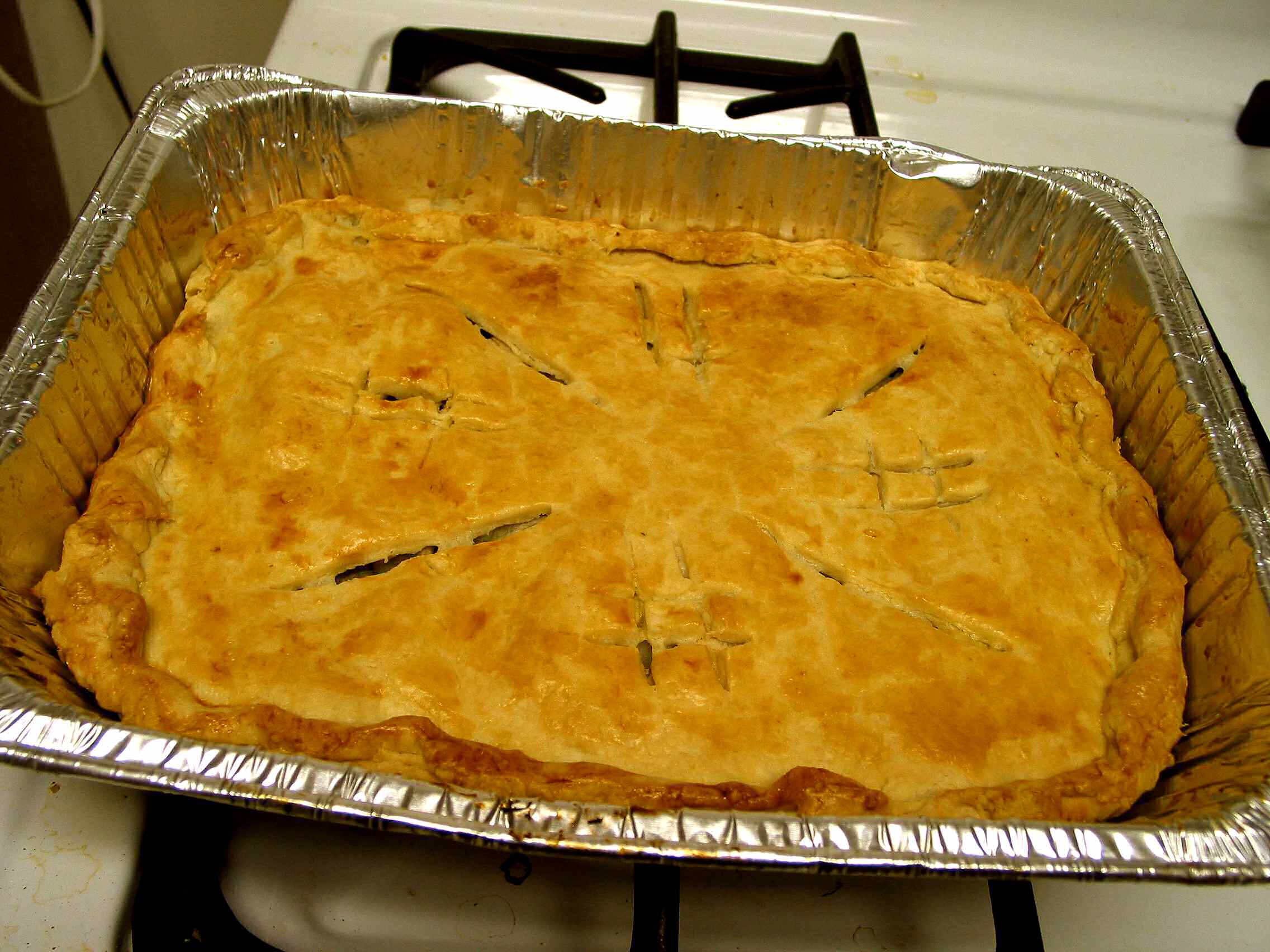
Then she placed the top layer of dough onto the tart, pinched it shut, slashed it in her own design and “endored” or gilded it with egg yolk/water glaze. We baked it in a (horrors! modern!) oven and thawed the “spinnage” out in the microwave before squeezing it, but other than that I think we were pretty much in the spirit. Continue reading

Ice cream, enhanced

Sometimes your kid sees a new flavor of Dreyer’s ice cream at the store and decides she has to try it because “It’s Black Raspberry, Mom!” and it’s on sale. But mostly because it’s a trendy light purple (“Orchid or thistle?” I asked, calling on my distant memories of the Binney & Smith guide to the universe.  “Lavender” she retorted. I caved to her superior fashion sense.) It was made with real raspberries–that’s a plus, I suppose. And it came in a “half-the-fat” version, and it was enough on sale that I could get a safety flavor as well.

It’s been over 100 degrees here in Pasadena this week, so ice cream is practically a medical supply.

When we got it home though, it tasted sweet and kind of dull. The fruit flavor was there but not particularly strong, and the overall effect–particularly the smell, for some reason–reminded me suddenly of those horrible “berry-flavored” motion sickness lozenges my mother used to foist on us just before long car trips. Bonamine? I’m still shuddering forty years later.

My daughter, blissfully free of Bonamine-induced associations, still thought it had merit, though, so we kept the lavender-tinted ice cream and I wondered whether anyone else would eat it without having to be threatened. What was wrong with it and could it possibly be fixed?

I’ve been potschkying around with store bought ice cream pretty much ever since I was old enough to buy it for myself–adding extra cocoa powder and some mint or almond extract to chocolate, leftover coffee and cinnamon to vanilla, and on and on. Not many people do this, or do this enough, I’ve discovered. You have to wonder why not, because most non-super premium ice cream in America is a little, or a lot, bland.

In fact, the only flavor I never messed with was Ben & Jerry’s Coffee Heath Bar Crunch, which was perfect and sublime and needed no help ever, other than a spoon. My husband and I were such devotees that when we had a chance to spend a late-summer week in Vermont and New Hampshire one year (way back when, in our 20s), we made sure to stop in at the factory in Stowe for a tour. CHBC was such a supreme flavor that I only gave it up when Ben and Jerry both retired and a new CEO took over. Somehow, the next pint I bought tasted a little off–weak on coffee flavor or something, hmmm…I looked at the ingredients and sure enough, they’d changed the formula and flavorings. It had also been monoglycerided down, even though the fat count was still in the stratosphere. I’m sure my ice cream snobbery saved me from a decade of extra arterial damage, but I’ve been sullen and resentful ever since (or at least that’s the explanation this week).

So anyway–back to the prosaic purple ice cream. It needed something–tartness–to liven it up, and probably would have been better as a frozen yogurt. Come to think of it, would yogurt work? Naah. Messy. Plus refreezing time. Lemon? Maybe, maybe not–it might end up seeming too sweet. Then I found a lime in the fridge–from who knows how many weeks ago; it had already lost its green, but it was still fine inside. Sometimes where lemon’s pure acidity underscores the sweetness and makes it more apparent, lime’s aromatic edge undercuts it and makes the flavor seem fresher. Works for ginger ale, works for blueberry jam…

A squeeze, a stir–from lavender to…raspberry pink (what else?) and I have to say, a BIG improvement in flavor. Much more like actual black raspberry. That’s all it took? Why couldn’t they have done that at the ice cream factory? But they didn’t.

I have another reason for punching up my storebought ice creams, and it’s not just boredom or fidgetiness (though those are obviously tops).

A long-ago-and-far-away gelato-eating expedition in Florence (it didn’t start out that way, but it’s the fulltime occupation in the summer–even more of a medical necessity when you’re wandering outside all day as a tourist) taught me the difference between Italian and American standards for ice creams: Americans expect big portions and don’t really pay attention to the flavor. Bland and sweet is acceptable. Italians are happy enough with small 1/3 cup portions as long as the flavors are wild and adventurous and vivid. If you can taste it well with one of those tiny gelato spoons, a gram at a time, it’ll last you.

Makes you wonder whether the lack of flavor punch in American ice cream (and maybe our other food as well) is the reason we typically eat biggish portions at a sitting, or seek out seconds. If it doesn’t taste like much, you eat it without paying attention, and end up not feeling like you’ve really eaten it. Interesting and vivid flavor seems like a good idea for health and portion control as well as pleasure–if you’re going to have ice cream, after all, you may as well taste it. Otherwise you could just suck on ice cubes.

So–a few suggestions for upping the flavor of store bought ice creams.

Go for plain flavors as your base

Try to find ones that are relatively low in carb and fat for a half-cup serving. Low here means about 15 grams of carb per half-cup, and maybe 2-3 grams of saturated fat.

Not only don’t the dressed-up flavors with loads of mix-ins need (or take well to) further tinkering at home, they’re not always as high in quality. Dreyer’s (Edy’s on the east coast), seems to try to keep the nutrition stats consistent across the line–ice creams with lots of mix-ins and/or caramel-type ribbon swirl are a bit higher in carb, up to maybe 22 grams per serving.

To keep things consistently low, though, the components or the ice cream itself have to compensate–so Reese’s Cup-style peanut butter and chocolate chip swirl has iffy peanut butter and iffier quality chocolate chips (well, so do the real Reese’s ™–don’t know whether authenticity is such a good thing in this case), plus the ice cream’s a bit icy, maybe even a little stale-tasting on occasion. You’d get more intense flavor from vanilla bean ice cream with a few squares of good dark chocolate chopped in and some peanuts or a bit of peanuts-only peanut butter.

Make flavors you can’t buy

Sometimes these are ones you grew up with, like Rum Raisin–I think only Haagen Daz still makes this. People got kind of prissy about feeding ice cream with rum flavoring in it to kids, I guess. Or raisins got too expensive.  So did pistachios, except in super premium ice creams.

No one makes ginger, or lemon-ginger, even though I’m pretty sure those were two of Bon Appétit‘s and Gourmet‘s big summer standbys for at least a decade (and I know because I once bought a decade’s worth of each magazine from my friends-of-the-library auxiliary at about a dime an issue. The seasons change, the same 10 recipes repeat…)

And no one makes Sabra (chocolate orange), or fig, or liquorice, or marzipan, or rose. Or pear. Or chocolate hazelnut with sour cherries.  Or even just plain bittersweet chocolate. There are home recipes for all of Continue reading

Microwave Tricks: Stripped-Down Chiles Rellenos

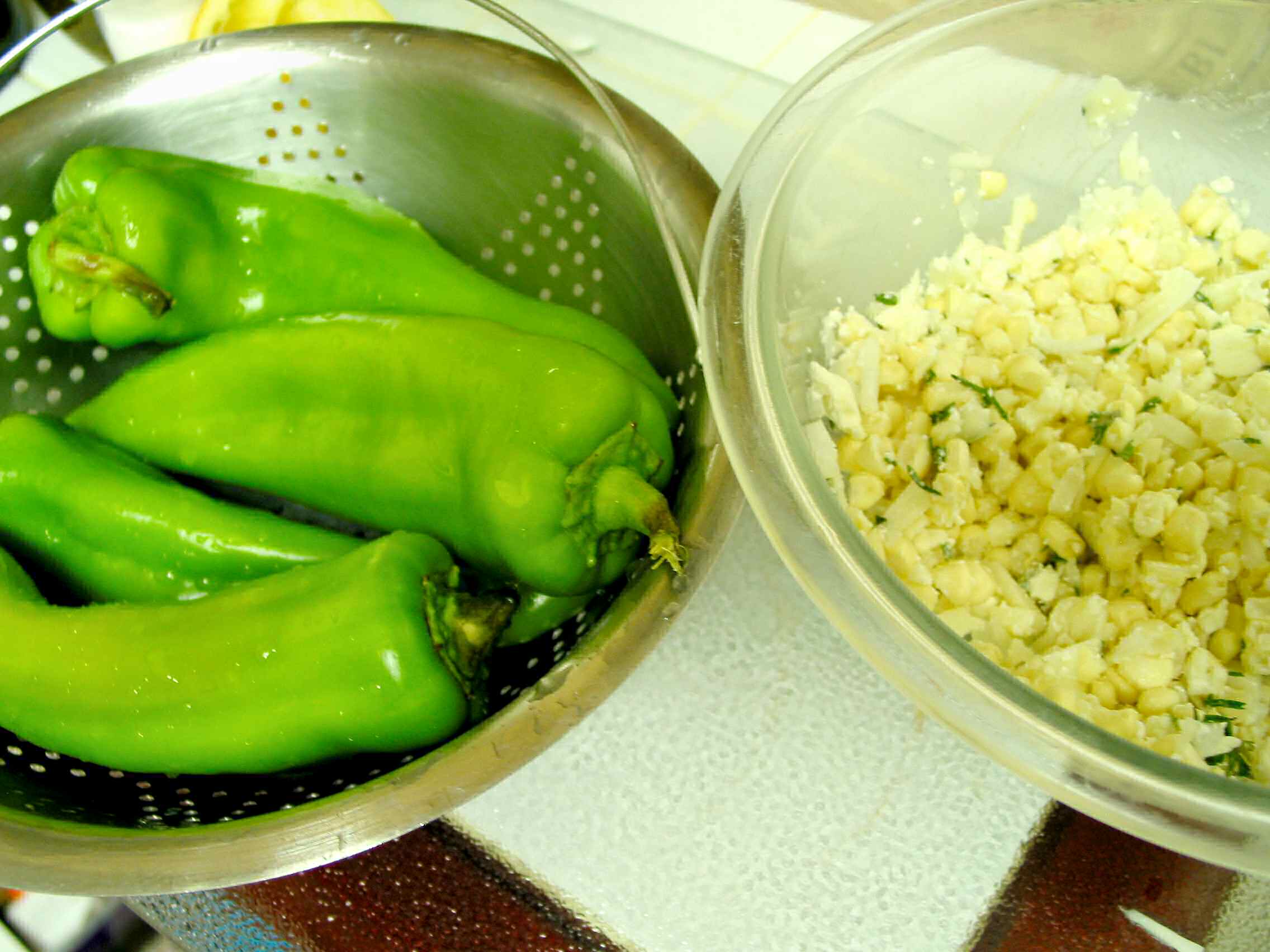
Anaheim chiles with corn and feta for stuffingI know, Diana Kennedy (The Cuisines of Mexico, 1971, and onward) probably wouldn’t do it this way–or maybe she would, at home, for herself? Naaah. She’s still pretty particular. Eighty-seven years old, and doesn’t seem to have slowed down noticeably in her quest to rescue the disappearing dishes of Mexico. Her latest, Oaxaca al Gusto (2010)  is a huge coffee table cookbook, beautiful and unfortunately for me, so full of rare Mexico-only ingredients, not to mention pork and lard, that I don’t know if there’s much I can really cook from it. I’m scouring it now for possibilities, but in the meantime…

Friday afternoon was vegetable-shopping day again, because we go through good tomatoes like a pack of sharks after a swimmer’s leg, and unfortunately our own backyard gardening adventure is turning out to be more like the $50 tomato kind of thing. To make up for packing our daughter out with my husband on his errands all afternoon instead of on mine (because I desperately needed some time off for bad behavior), I decided to do a little better than the usual dinner. Of course, they had a decent time, and so did I. Gotta do that more often.

So while they were gone I stopped at my greengrocer and bought a ton of ripe tomatoes that actually have flavor at 99 cents a pound (we have one left), a couple of eggplants for 65 cents apiece, some tart green plums, and these Anaheim chiles, which were beautiful and at $1.19 a pound, cheaper than the bell peppers this time. If you’re not completely clued into eating with the seasons, sometimes the pricetag gives a gentle hint of how the growers are thinking about any given vegetable that week.

Normally I wouldn’t buy Anaheim chiles–they’re pretty mild, but still hotter than bell peppers, which we usually eat raw, and the chiles are really better cooked. But when I saw them, all I could think about was stuffing them with feta for a quick pick-me-up side dish to go with mahi mahi and rice.

Some stuffed chiles are authentically made with Anaheims, I was encouraged to find (thumbing through one of my two, count ’em, two copies of Kennedy’s first book). But the ones that make good-looking cookbook photos are made with pasilla or poblano chiles–darker green, plumper to hold more stuffing, and with thinner walls. Also a little hotter, and often soaked up from their dried form. Baked in tomato broth or else stuffed with meat picadillo, coated in egg, baked, and dressed with a walnut/sour cream sauce (chiles en nogado) with pomegranate seeds sprinkled on top–a Moroccan-origin dish, maybe, with that egg cloak and the pomegranate seeds?

The other thing Kennedy specifies is to char, bag-steam and peel the peppers before using them, which makes the egg cling a lot better and probably makes them a bit more digestible. Very classic, but let’s face it, with all this stuff, including the sauces: I’m not that good, and I’m kind of impatient. What I really wanted for supper was quick stuffed peppers, gooey on the inside but not so messy outside– so as to avoid wearing it. (A girl’s gotta know her limitations. Maybe next time, if I can find an oilcloth bib my size?)

I’m not so interested in long baking in tomato broth or soaking fresh walnuts in milk for the moment–maybe sometime when I want to get the whole dish together, because I’m sure it’s delicious, especially if someone else is making it and heating up their own kitchen in July. But right now, time is ticking, it’s nearly supper, and Beauty and the Beast are about to show up in the driveway (my husband is beautiful for taking on the Beast, even if he grumbles while doing it.)

So I’m definitely not about to char and peel the peppers–what a pain, plus to me it makes them kind of slimy and slithery and not what I want to eat. Unlike Tom Colicchio, who consistently makes a fuss about it on Top Chef, I don’t mind the fact that pepper skins have a little bitter alkaloid edge to them. It’s part of what makes them peppers, and it helps them keep their crunch.

And, of course, I’ve had the experience of walking into someone’s house when they’d just been charring peppers on the gas burner, and it smelled an awful lot like dope. Not lovely, and not at all like them.

So anyway, these are not proper chiles rellenos by any normal standard. They just taste good, they’re not slimy, and they don’t take more than 15 minutes tops. My kind of dish.

In addition to the usual feta and mozzarella, I still had a few half ears of leftover corn on the cob from my daughter’s birthday party last weekend. They were still good, but there weren’t enough to share out for supper, unless–well, corn and peppers also go together (usually as a soup, but why not here too?)

Aside: That was surprisingly one of the easiest celebration dinners I have ever put together in my life — pan-grilled salmon fillets, tomato/basil salad, raw vegetables with bleu cheese dip, and microwaved corn on the cob. I was going to make a cheesecake but decided at the last to buy a Trader Joe’s frozen one for expedience and served it with strawberries and blueberries. It was surprisingly good, inexpensive, and quite moderate on carbs and calories for commercial cheesecake. Of course, because my daughter’s friends are all about 11-13 years old, at least one couldn’t eat the corn due to braces but didn’t know how to shuck the kernels off with a knife, one immediately declared she wasn’t into vegetables (I was mellow enough to shrug and say it was fine), and one couldn’t hack cheesecake so I scrounged her up an impromptu dessert of chocolate bar and cinnamon grahams because we had literally nothing else in the house dessertwise. Oy. And they all stayed up till 4 am, but at least they were quiet and sneaky about it. My goals for a good sleepover.

So anyway, I had made 6 or 7 ears of corn, broken in halves, and steamed them in the microwave in a big pyrex bowl for about 8 minutes. The leftovers were fine reheated during the week with a drizzle of water on a plate in the microwave for 30 seconds or so. But I still had a couple and decided to use the kernels for the chile stuffing, and they were delicious.

Stuffed Anaheim Chiles with Cheese (specific amounts given for 3 chiles, because that’s what I made for us Friday and again on Sunday with new corn, so this actually works out, but you can and should scale up, obviously, and I wish I had made enough to serve them a second time without starting all over.)

  • Anaheim chiles, 1 or 2 per person
  • corn kernels (1 ear or about 1 c. kernels made enough for 3 chiles, generously stuffed)
  • feta cheese, crumbled (1-2 oz)
  • low-fat mozzarella, chopped fine (1 oz/stick)
  • finely chopped onion (1/4 med yellow onion)
  • garlic clove(s), grated/minced/mashed (1 med clove)
  • za’atar (wild thyme), thyme, oregano or sage, chopped or crumbled in if dry (to taste; I used 1 t. or so chopped fresh za’atar–do what looks and tastes right for your quantities)

Wash the chiles, cut off the cap and remove the seed core as best possible without splitting the flesh (rinse with water to get out the seeds way down inside). It’s not really a disaster if the pepper splits–just wrap it around the stuffing and press it together, more or less, but it looks prettier and handles better if you keep the pepper whole.

Microwave the peppers on an open plate 3-4 minutes to start them cooking. Mix all the other ingredients together well with your hands–it’ll be pretty moist and crumbly, but you want the garlic and onion well distributed. Cool the chiles just enough to handle. Stuff the chiles with the mixture by hand, pressing it in with your thumbs as you go to make sure  some filling reaches the tip end. Microwave again on HIGH on an open plate 3-4 minutes for 3 chiles, arranged with the tips  toward the middle of the plate and the wide stem end toward the outside, or maybe 5-6 minutes for 6, or until the peppers are getting tender and the cheese has melted.

Don’t forget to wash your hands well with soap after handling the chiles–I find that even though the Anaheims are mild-tasting, my fingers still get a little of the classic burning sensation as an aftereffect when I handle them.

Cannoli that won’t bust the carb count

Cannoli paste my way

This is a story about frugality–of the serendipitous sort.

The other week my daughter was with me at the supermarket (sometimes a mistake, sometimes an inspiration), and asked if we could get a packet of sugar cones to go with a drum of Dreyer’s ice cream. This was a trade-off for forfeiting Baskin-Robbins, whose ice cream is consistently higher in fat and carb than Dreyer’s or Breyer’s.

(Shakespearean aside #1) The B-R nutrition brochure is worth a pretty serious look for calories, fat, carbs, the total picture. You can definitely eat a days’ worth of calories–upward of 1500–in a single sitting if you order one of the fancier items. Skip the soft serve and stick to the single cone, for sure.

Not that we never stop in for a cone, but we never knew what the sugar cones were worth carbwise so Abby was limited to a paper cup or a cake cone. And of course for the price of two modest single cones at B-R, you could buy a 1.5 qt. carton at the store and scoop about 10 servings out of it yourself.

In the supermarket, the box with the sugar cones says 10 grams for Keebler and 11 grams for the Ralph’s (Kroger-affiliated) store brand, which is on sale, and about 50 calories per cone. The sugar cones have surprisingly simple ingredient lists for a processed food–wheat, brown sugar, vegetable oil, oat fiber (Ralph’s version) and a bit of salt (though not much–20 mg/cone) and maybe a little caramel coloring and malt flavoring.

But of course the ice cream tends to run out a bit sooner than the cones. And then what? Here’s where the “frugality” comes into it again (okay, I’m sort of rolling my eyes too, but still.)

I had about half a quart of ricotta left over from manicotti (same idea as for the microwaved stuffed shells, only using a plastic baggie with a corner torn out to pipe the spinach and cheese filling into both sides of the parcooked pasta tubes–worked pretty well actually). And ricotta, even on sale, is kind of expensive if you just let half of it sit in the fridge until it goes bad because there isn’t quite enough for another batch of pasta and you don’t know what else to do with it.

So anyway, the availability of leftover ricotta (I’m too cheap to do it with a brand new carton) plus the leftover cones added up in my head the other night to “Hey! Impromptu cannoli! Right now! And I don’t even have to go back to the store!”

I should probably explain.

The first cannoli I ever had were also the best. The parents of one of my sister’s high school friends ran a tiny Italian deli and specialty shop way out near the airport of our town, and what can I say–it was worth the schlep. In addition to imported pastas and olives and pickled peppers and salami and so on, you could buy a tub of their own fresh cannoli paste and a box of carefully packed pastry tubes so you could assemble the cannoli yourself at home and not risk sogginess or breakage on the way.

The D’Elicios’ cannoli paste contained ricotta, of course, sugar, and something else that I finally pinned down as lemon (and possibly orange) rind. And it was heaven on a spoon. So good I asked my mom to bring a box of their cannoli instead of a birthday cake to my college dorm  for my 18th birthday.

How was I to know that would be the last of the really great cannoli for decades? Continue reading

Bravo to LAUSD

Some actual good news on the school lunch front appeared in the LA Times  yesterday:

L.A. Unified removes flavored milk from menu

The Los Angeles public school district, one of the largest in the nation, had to vote its bigger contracts for things like milk early, so they made the announcement yesterday. They’ve also announced they’re going to drop breaded, fried wastes of space like chicken nuggets and offer more vegetarian options, more farm-to-school contracts for actual fresh produce, all the good things we’ve been waiting decades to see again.

This is all in deep contrast with the frosty reception Jamie Oliver’s “Food Revolution” show has received from actual LA schools in the past few months. And there’s a reason for it that you don’t have to dig too deep to get to. A lot of the fine upstanding revisions to the LAUSD school lunch menus and cafeteria revamps have not actually gone through for budget-crunch reasons. Some of the salad bars were never installed and implemented. As with many pieces of legislation, the intentions were good, or sounded good, but the money never showed up. Benefit: zero.

And a friend of ours who’s a school principal says the federal food subsidy program for poor students–there are an awful lot of them in his school, as in many of the LA area schools–is woefully underserving those kids. Some wouldn’t get a meal at all if they didn’t eat at school, and the food they get today is barely worth the name.

If the LAUSD can actually manage this year’s resolutions right, it’ll be a big step forward. The chocolate milk wars in the city board offices have been surprisingly intense–proponents of keeping the sugared chocolate and strawberry-flavored drinks argued that if they were pulled, most kids wouldn’t drink milk at all, 60 percent drink the flavored milks when available and that there’d be a big drop in milk consumption.

Proponents of going to plain (and Lactaid, and soy, to accommodate everyone, this is California after all) countered with the ugly fact that  the amount of sugar in the flavored milks puts them just about in the range of Coke, and argued that if fast food choices weren’t waved so constantly in the kids’ faces and the cafeterias offered real food instead, rather than alongside, the kids would eat more real food. And they’d get used to plain milk quickly enough.

I can attest to this phenomenon. We don’t keep fast food or junk food in the house, and I’ve been serving fresh vegetables and whole foods rather than prepared or processed things out of a box most of my adult life. I don’t get too many complaints, not only because my husband’s no cook, but because that’s what there is to eat and it’s the way we grew up eating at home.

Our daughter came along and started out with plain unsweetened yogurt, vegetables, bread and plain oatmeal or the lower-salt store brand versions of Cheerios. Also, for reasons that aren’t particularly clear even now, she had a thing for Indian food, spices and all. The maitre d’ at our favorite restaurant laughed when he saw this two-year-old kid tucking into a hot cauliflower dish and saag paneer. He remembered me coming in for a serious feast with my husband when I was very, very pregnant and hoping it would either induce labor or at least last me until I was in shape to come back. I’d never considered that she’d like to eat what I ate while pregnant–I’m still not sure it’s true, but I figure Indian families would have more experience with seeing how their kids develop a taste for vegetables and varied spices. Even now, she likes a wider variety of non-sweet flavors than her friends. I like to think it’s because she’s gotten to taste them, and because we like to experiment.

Part of the comparatively low-sugar diet for her was self defense–she was an up-like-the-rocket, down-like-the-stick kind of toddler if she ate many sweets at a time, even then. Years before, my sister’s older son had gotten stuck in a serious chocolate milk habit at that age, because my sister had given it first as a treat, then as a regular drink, then for comforting him or to appease temper tantrums, then to get him to do the things he should have been doing with or without milk. She had a hell of a time getting them both back out of the vicious cycle. I’m not as organized and can’t fool myself, so I took it as a warning.

My daughter got sweets occasionally, but mostly she was eating the kinds of foods we ate and now that she’s diabetic AND eleven at the same time (pity me!), I’m extremely grateful that she got the taste for nonsweet foods early in life. She only really wants junk foods if they’re right in front of her, or hungers out loud for what she knows are exaggeratedly high-carb items if her blood glucose is a bit high. When she’s in good shape, she goes for vegetables and fruits and cheese and Continue reading

Microwave Tricks: Make-Ahead Stuffed Shells

Stuffed shells in the microwave

Stuffed shells (shown here with plastic wrap for the fridge) cook up really quickly and easily in a microwave

This was the second try at a quick supper while juggling too many other things at once. The first half box of pasta shells I cooked in the microwave as I usually do but they ended up staying in the water much too long while I was busy elsewhere (lecturing my kid about waltzing out of the house without letting us know–Oy! I thought we had this down by now, but 10 is 10, with a lot of eye-rolling and forgetfulness and sudden impatience for all the ordinary rules).

When I returned to the kitchen, the bowl of shells had long since cooked, softened, soaked and turned to pasty shell-shaped mush–too far gone to rescue. Bleagghhh…I threw them out and started over. Luckily, a microwave cuts the time it costs to boil the water for a new batch, and I’d already made the stuffing and had some tomato sauce ready. This time, I decided to pay attention, and it came out fine.

If you have fewer distractions or better time sense than I do so you can catch your pasta before it falls apart, you can put together a number of good filled pasta casseroles like this one all (or at least mostly) by using your microwave, and they might take less than half an hour from start to finish. Two other examples–the very similar spinach lasagne I make with eggroll wrappers (same spinach/ricotta/feta filling, same microwave marinara but don’t cook the eggroll wrappers before layering them, and use two wrappers at a time, since they’re so thin), or even butternut squash or sweet potato ravioli with wonton or gyoza wrappers and a mozzarella-based cheese sauce. Once the shells are cooked al dente (still a little chewy, but not hard), the dish goes together in about 5 minutes and cooks just to heat it through.

Stuffed Shells in the Microwave

  • 1/2 lb or so dried large pasta shells for stuffing (about 20 shells or 1/2 box)
  • 1 recipe Microwave Marinara or about 1 c. of your preferred tomato sauce
  • pinches of fennel seed, dried or fresh thyme or oregano, and/or hot pepper flakes
  • shredded mozzarella for topping (optional)

Filling:

  • 2 c. low-fat or skim ricotta
  • 2 oz. or so crumbled feta
  • 1/2 lb defrosted/cooked spinach
  • 1/4 onion
  • 1 fat clove garlic, grated, minced or mashed
  • a few leaves shredded basil and/or thyme or marjoram
  • pinch or grating of nutmeg
  • 6-8 microwave-marinated artichoke hearts, optional

Put the shells in a big pyrex mixing bowl (2.5 qt or liter), fill with water to about 2 inches above the shells, cover with a microwaveable plate and microwave on HIGH about 9 minutes, or until the water is bubbling but not boiling over. Leave the shells in the microwave another 5 minutes to absorb and check for doneness–you may need another 2 minutes or so. When they’re just cooked through but still firm, drain them gently so they don’t tear apart.

In the bottom of a microwaveable casserole (in my case, a pyrex deep dish pie plate), spoon about 1/4 c. tomato sauce and spread it around. Sprinkle on the fennel seed, oregano and/or hot pepper flakes if using, or just mix them into the sauce before you start.

Mix all the filling ingredients together by hand. Stuff each shell with a soup spoonful of the filling and set it in the casserole–you can fit about 20 stuffed shells into a deep dish pie plate, maybe more if you pack them tighter than I did. Carefully spoon the rest of the sauce between the shells and if it seems too dry on top or your shells are parcooked and kind of stiff, drizzle a few spoonfuls of water, maybe 1/4 c. total, on the sauce but not on the shells themselves. If you’re using mozzarella to top the shells, sprinkle it on now and add a pinch of oregano if you like it. Cover the casserole with a microwaveable plate or lid and microwave 7-8 minutes on HIGH or until heated through. The cheese should be melted on top and the shells should be tender.

You can reheat the casserole the next day very easily–check to see if it feels dried out at all, and drizzle in a tiny amount of water (spoonful or so) if it does, then cover with a microwaveable plate and heat for 5 minutes on HIGH.

DIABETIC/CARB COUNT NOTES:

Barilla says their shells are 37 grams of carbohydrate per 5 shells, or about 7 grams apiece. Ricotta has about 3-4 g. carb per 1/4 c. serving (about 2-3 shells’ worth), so for 5 shells maybe 5-7 g. carb. If you use my microwave marinara, it has just tomatoes and a bit of onion, none of the commercial added sugars or starch thickeners, so negligible carb count per serving.

Total: about 45 g. per 5 shells, or about 8-9 g/shell.

The Altered Cheese Project

I know. It sounds like the name of a really, really bad ’80s art rock tribute band. Not that there’s anything wrong with that. (Well, actually there is; I survived the ’80s by stubbornly ignoring everything from the Talking Heads onward, especially after I went to one of their concerts and heard the drummer. Maybe it was just a bad night, but I thought only David Byrne was allowed to be that far off.)

Altering cheese also sounds like the ultimate DIY, grow-your-own, cure-your-own, grind-your-own, fill-in-the-blank foodie optimism project. Weird, more work than it’s worth, but a good experiment to try once (if you’re under 30) so you’ll appreciate the effort that goes into it all when you go back to buying the professionally made version.

You might have noticed that all the nicer cheeses that get newspaper and food magazine reviews cost upwards of $15/lb and even though I’m a cheese freak, I’m just not in that league more than once a year, perhaps on my birthday. I deserve nicer cheese than I can get at the supermarket, I just know I do.

So let me just say it: I’m nobody’s idea of a dedicated cheesemaker or affineur. Mostly because I can’t stand heating and clabbering and then pressing large amounts of milk just to get the starting curd. I also hate scrubbing everything to death before and after, and the idea of cleaning scorched milk off the bottom of a soup pot is my idea of wrong. I’m not authentic. And I don’t wanna be. Even clabbering by microwave is probably not my idea of a good time when it comes to anything more complicated than paneer or yogurt–I’m not sure it wouldn’t destroy the cultures for hard cheeses.

Last year I got the idea to start with something already in cheese form–a lot less waste of both milk and time. After all, standard bland goat cheese is pretty inexpensive–an 11-oz log is about $5, about a quarter of the price of the goats’ milk you’d need to produce it (4-5 quarts at about $4 each). So are other fresh white cheeses. And you can get inexpensive domestic brie and bleu cheeses in supermarkets and–my preference–Trader Joe’s. They’re not bad, they’re just bland compared with the European originals. But they have the requisite blue or white mold cultures you need to add flavor to other cheeses, if the cultures will take.

Last year’s achievements may give you some idea of where I’m going with this:

  • Bucheron (fresh chèvre log, bit of white mold rind from inexpensive, bland Trader Joe’s Canadian brie, sealed in a sandwich baggie with some air for about 2 months in the fridge until it ripened)
  • Bleu de chèvre or Goatgonzola (another fresh chèvre log, this time with some crumbled cheap gorgonzola in the baggie, also about 1-2 months in the fridge)

and the accidental but serendipitous

  • Marbled Feta (the byproduct of storing above-mentioned source gorgonzola next to ziplock bag containing a block of feta cheese)

But ever since I posted these first attempts at turning boring American supermarket cheese into something more flavorful and interesting, I’ve been haunted by the thought that I’d only scratched the creative surface of cheap cheese transmogrification. So I’ve been cheating with cheese yet again.

A Fungus Among Us

Goat cheese and feta are both fairly wet fresh cheeses that take mold pretty well if you do it on purpose. What about drier standard American varieties–cheddar, for instance, or brick mozzarella? These are bound to be more difficult to persuade, but if you have a bit of patience, it might be worth a try.


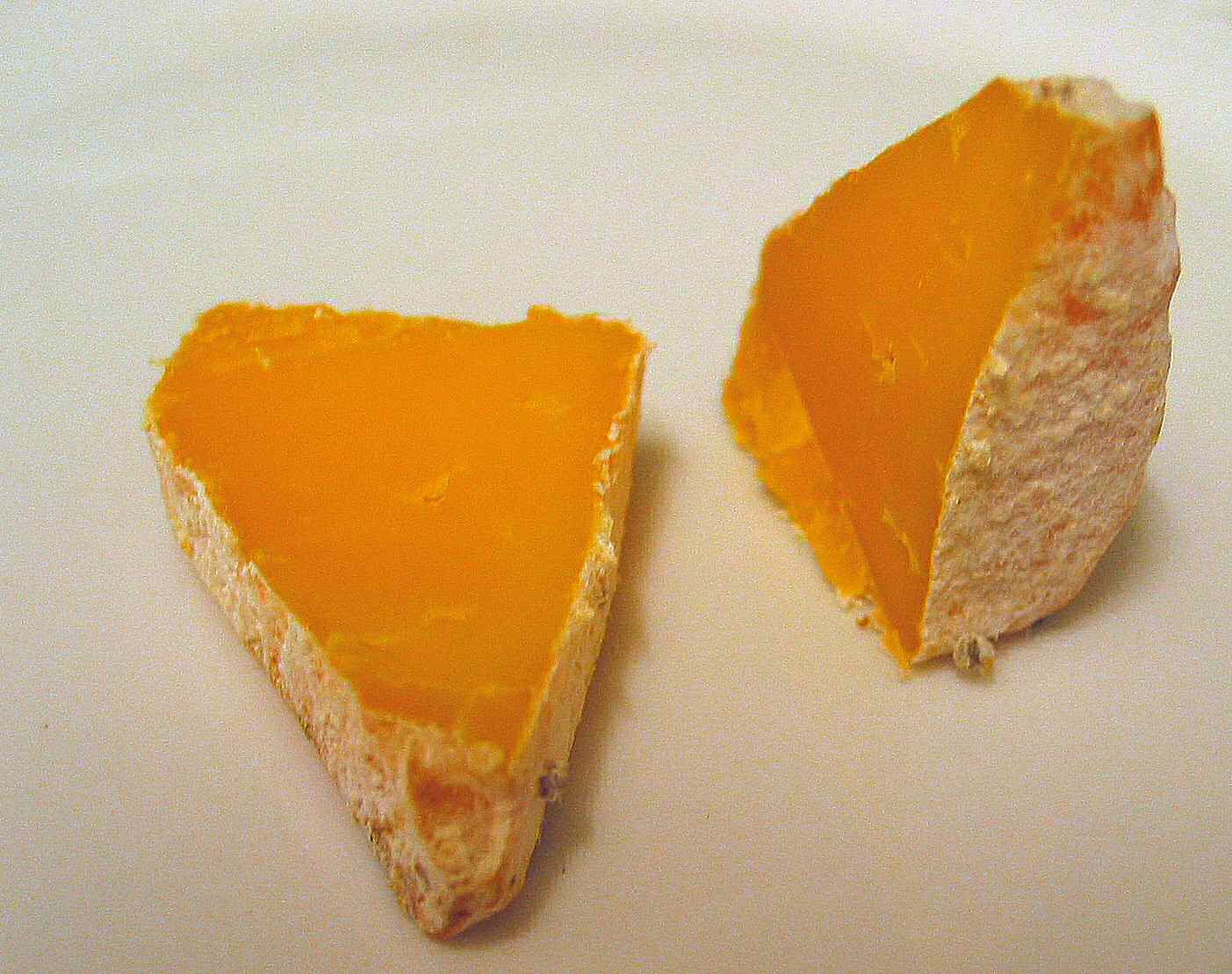
Cheddar after aging with bleu cheese mold

Cheddar after aging with gorgonzola starter


Now I know, normally you look to cut any developing mold spots off your cheddar–it’s what we’ve all been taught for decades. But the blue and white mold cultures are key to developing flavor and–I shouldn’t even be spelling this out–when it comes to flavor, America’s standard supermarket cheeses are in dire need of help.

Four or five weeks ago, I put a small end piece of Bel Gioioso gorgonzola in a ziplock bag with a couple of ounces from a brick of ordinary Trader Joe’s extra-sharp yellow Wisconsin cheddar and some air and kept it in an isolated part of the fridge to see what would happen. I’d actually diced the cheddar into bite-sized pieces to increase the surface area and maybe decrease the culturing time if the bleu mold managed to take.

Nothing much seemed to have happened except that the cheese looked a bit drier. No visible culturing going on at the surface. The gorgonzola crumbs had shrunk and dried out as well. But I took a cube out and cut into it with a knife, and the flavor had stopped being tangy standard cheddar and was moving toward Morbier or Emmenthal–something nuttier and more subtle. All I could think was that the cheddar was aging without actually culturing and growing the blue mold. But because the mold is a penicillium strain, what there was of it might have inhibited unwanted bacterial intrusion and helped steer the cheese toward a more nicely controlled aging process.

And then again, a week later, the mold had taken on the remaining cheddar cubes, and the taste, once I cut into it, was like a mild cheddar heading toward blue. Still not very potent, but encouraging. Continue reading

New Page Up: Carb Counts and Ratios

I’ve just uploaded a new page (see the top menu tabs) with a couple of tables of the most useful rules of thumb I’ve found for carb counting. Since my daughter became a Type I (insulin-dependent) diabetic back in February, we’ve both had to become pretty familiar with the amounts of carbohydrate in a given amount of different foods.

Although the American Dietetic Association’s “Choose Your Foods” carb count guide for diabetics is pretty helpful (and pretty inexpensive, about $3 per copy if you order from them direct on www.eatright.org), it’s written from the perspective of the eater, not the cook.

So (as the cook in the family) I’ve worked out the approximate ratios of carb grams per total weight of some common foods I serve routinely. Rice and beans are easy enough to remember. But when I want to know how much of a given potato my daughter can eat as one carb serving (15 g), it helps to be able to know that a regular potato is about 1/6th carbohydrate. Then all I have to do is weigh it on the food scale in grams and divide by 6.

The 2/3 carb ratio for moderately sweet baked goods like pie, scones, cookies and muffins is also pretty helpful if we’re home and can weigh a portion for my daughter. Sweets are one of the hardest things to guess right consistently by eye, even when you’ve made them yourself. If there’s a nutrition label, by all means go with it; if not, weighing a portion and figuring 2/3 has been a pretty good approximation so far.

Ice cream is its own thing–again, hard to figure. Dreyer’s 1/2-the-Fat is our standard home brand, and hovers around 15-18 grams per half-cup (small scoop). But Baskin Robbins 31 Flavors are all over the map–when you go in for a cone, you really need to ask them to look it up for whatever size scoop, then figure the cone separately. A junior scoop in a cake cone for pistachio almond turned out to be something like 25 grams, plus 4 grams for the cone. Almost double what a plain scoop would have been at home.

Over-the-top caramel-syrup-fudge-frosting types of confections are a little out of my league, closer to candy bars than cakes, and would probably be more like 80-90% carb by weight (or mass, if you’re being excessively metric about the properties of grams).  I haven’t listed them because they’re so laden it’s hard to think of serving them very often, but I do have a basic rule-of-thumb candy list at the bottom of the carb counts page (saving the best for last) and a link to a much better, more comprehensive one so kids don’t have to feel completely shut out at Halloween or Valentine’s Day. Or birthdays.

I also have a short (for me) bit of hard-won advice on how to strategize with a (school-aged) diabetic kid before they have to face candy-prone situations where their friends are free to eat right away and they aren’t. Good for braces-wearers too…actually maybe we should all take the hint.

In any case, I hope you find this new page helpful whether you’ve got diabetics in the family or you just want to know what you’re eating.

Let me know what you think!

Sweet Potato Ice Cream

Some time back I was bemoaning the lack of reasonably priced butternut squash at the height of the season in my local markets–I was clearly spoiled by last year’s bargains, or so I figured. So when I tried making pumpkin ravioli at home, I substituted yams, which were a lot more plentiful and much less expensive per pound.

But as it turns out, there’s more to the missing squash mystery than I realized. Just before Thanksgiving last year, Libby’s sent out a public warning that they were facing deep shortages due to heavy rains during harvest in central Illinois, where most of their pumpkins are grown. Heavy rains and soggy fields meant harvesters couldn’t get out every day to pick, and a lot of pumpkins mildewed on the vine and had to be plowed under. Oregon’s organic pumpkin growers, who had an unusually good crop, were able to  step in as an alternate source for buyers running short, but organic pumpkins are still only a few percent of the national consumption each year.

Following on a short crop in 2008, the Midwest is looking for a better harvest this fall, but right now the shortage is pretty noticeable on store shelves. A global produce outlook web site even posted a recent factoid that, at the moment, Libby’s remaining inventory of 100% packed pumpkin stands at something like six cans. Six.

According to the article, people have been bidding up to $30 a can on eBay for those extras you probably squirreled away in the corners of your pantry and never got around to making.

But it still doesn’t explain why winter squash was so scarce and expensive in California this past year–unless our supermarkets were importing all the way from Illinois as well. Hmmmph.

Where’s the Charlie Brown Theme Song when you really need it?

In any case, yams and sweet potatoes nearly the size of footballs have been pretty plentiful in Southern California, and cheap with it. There’s very little waste on a sweet potato–just the peel, usually (or buy organic, if you can find them, and scrub them well before cooking so you can eat the peel too).

So I’ve been finding a place in my refrigerator for them and microwaving them in a lidded pyrex bowl or casserole with a little water in the bottom for about 8-10 minutes (for a big one). Because I don’t like the prospect of nasty kitchen accidents, if I can’t cut into them easily right away I wait to split these monsters in halves or quarters about 6 minutes into the cooking time, when they may not be fully cooked yet but at least they no longer require an axe.

Sweet potatoes and yams substitute pretty well in standard pumpkin pie recipes, but you generally have to bake twice as long as for the canned pumpkin, which has had a lot of the water cooked out before it was packed. They also make  good fillings for large ravioli–pretty easy with wonton or gyoza wrappers, and microwaveable too.

But…it’s now June in Los Angeles, which means “June Gloom” overcast cool weather in the morning, burning off to the mid-90s by lunchtime. And my daughter looks at the huge quarters of yam cooling on the counter and says, suddenly, “I wish we could have pumpkin ice cream instead.” I think about it and decide I wish that too.

I have buttermilk, regular milk, sugar and a variety of pumpkin pie-type spices on hand. I don’t think I’ll need eggs because the sweet potato has so Continue reading