• Enter your email address to subscribe to this blog and receive notifications of new posts by email.

    Join 241 other subscribers
  • Noshing on

    raw blueberry pie with microwaveable filling and graham cracker crust

    This mostly-raw blueberry pie is a snap to make and very versatile--the filling microwaves in a few minutes, and you don't even have to bake the zippy gingered graham cracker crust--perfect for a hot Fourth of July and all summer long.

  • Recent Posts

  • Contents

  • Archives

  • Now Reading

  • See also my Book Reviews

  • Copyright 2008-2024Slow Food Fast. All writing and images on this blog unless otherwise attributed or set in quotes are the sole property of Slow Food Fast. Please contact DebbieN via the comments form for permissions before reprinting or reproducing any of the material on this blog.

  • ADS AND AFFILIATE LINKS

  • I may post affiliate links to books and movies that I personally review and recommend. Currently I favor Alibris and Vroman's, our terrific and venerable (now past the century mark!) independent bookstore in Pasadena. Or go to your local library--and make sure to support them with actual donations, not just overdue fines (ahem!), because your state probably has cut their budget and hours. Again.

  • In keeping with the disclaimer below, I DO NOT endorse, profit from, or recommend any medications, health treatments, commercial diet plans, supplements or any other such products.

  • DISCLAIMER

  • SlowFoodFast sometimes addresses general public health topics related to nutrition, heart disease, blood pressure, and diabetes. Because this is a blog with a personal point of view, my health and food politics entries often include my opinions on the trends I see, and I try to be as blatant as possible about that. None of these articles should be construed as specific medical advice for an individual case. I do try to keep to findings from well-vetted research sources and large, well-controlled studies, and I try not to sensationalize the science (though if they actually come up with a real cure for Type I diabetes in the next couple of years, I'm gonna be dancing in the streets with a hat that would put Carmen Miranda to shame. Consider yourself warned).

Quiche x Fillo = Yeah!

(…plus a few more cheap cheese tricks)

Cauliflower mushroom quiche wrapped in fillo pastry is crispy, elegant and light.

I had bought a packet of fillo dough a while back, in the thought that by now I’d have a couple of fun party-food ideas to suggest. But this week I’ve been feeling like I’d rather make and serve something nonsweet, nonfussy and not heavy–an easy main dish for summer, lighter and more serious at the same time, and something that could last more than one meal and reheat quickly.

This vegetable-filled quiche is a flexible dairy main dish with a Mediterranean vibe thanks to its fillo crust. It looks a little fancier than an ordinary quiche, but it’s not actually difficult to put together, and it’s also not a heart attack on a plate.

The only trick, other than needing to bake it in a conventional oven rather than attempting the microwave (so don’t do it during the heat of the day), is to control the temperature and moisture so you get the egg and cheese filling to cook through without letting the fillo casing scorch or, possibly worse, get soggy. It stores well in the fridge for next-day dinners, and you can reheat and recrisp individual pieces quickly in the toaster oven, especially if you microwave first for half a minute on an open plate just to warm them through, then slide onto foil and toast a few minutes at a baking temperature slightly below full-stun toasting so you don’t scorch the tops.

I’ve made two versions of this by winging it, essentially, and it’s worked nicely both times. The first was an open-faced spinach and ricotta fillo tart that went well at a Chanukah party back in December, and it led me to this second riff, a cauliflower-mushroom-smoked cheese filling, this time sandwiched between top and bottom fillo layers.

Before I get into the recipe and tips for working with fillo specifically, let’s talk a little about flexibility by highlighting one of my hobbies, getting cheap with cheese:

Continue reading

Last-minute Thanksgiving 2021

Good reasonably fast bread makes for a better cheese plate–so I tell myself…

I’m always, always late to the table, I know it. Yes, it is sort of too late to do much more than give you the link to my Slow Food Fast Thanksgiving guide from a few years ago plus the few new ones from last year, and recommend “Thanksgiving” in the search box if you’re stuck for microwaveable but good ideas.

Last year was the first on-our-own-but-Zooming-it Thanksgiving and this is our second, and Chanukah starts Sunday evening. Maybe I’ll have something exciting and original by then.

Despite all that, I do have a few things I’ve been meaning to share but haven’t had time to post. The past few months seem to have sped up on me because my daughter’s aiming to graduate early this year, and because I’ve been helping host the still mostly-online Jewish Book Festival for our region and that means interviewing authors–some really eminent ones–for our local Federation magazine and moderating online for two of the events. So my “skill set,” both technical and staging, has had to rev up in a big way…

But Thanksgiving…I am doing most or at least some of the same menu I put together for “just us” last year–artichokes in the microwave, wild rice pilaf, salmon, broccoli, salad, pumpkin pie, cranberry sauce, and maybe some mushroom caps. All of it is good and almost all, everything but the salad, is microwaveable at least for part of it, and there will be good leftovers for lunch this weekend. So–not much new.

The things I did last year that I didn’t manage to post include a relatively quick whole wheat olive-rosemary faux-sourdough bread, which came out really well and I’m doing again, and the cheese plate à deux that manages to be interesting without breaking the bank…

These things may not come in time for today, depending where you are and how impatient or well-stocked, but they could come in handy in the next few weeks.

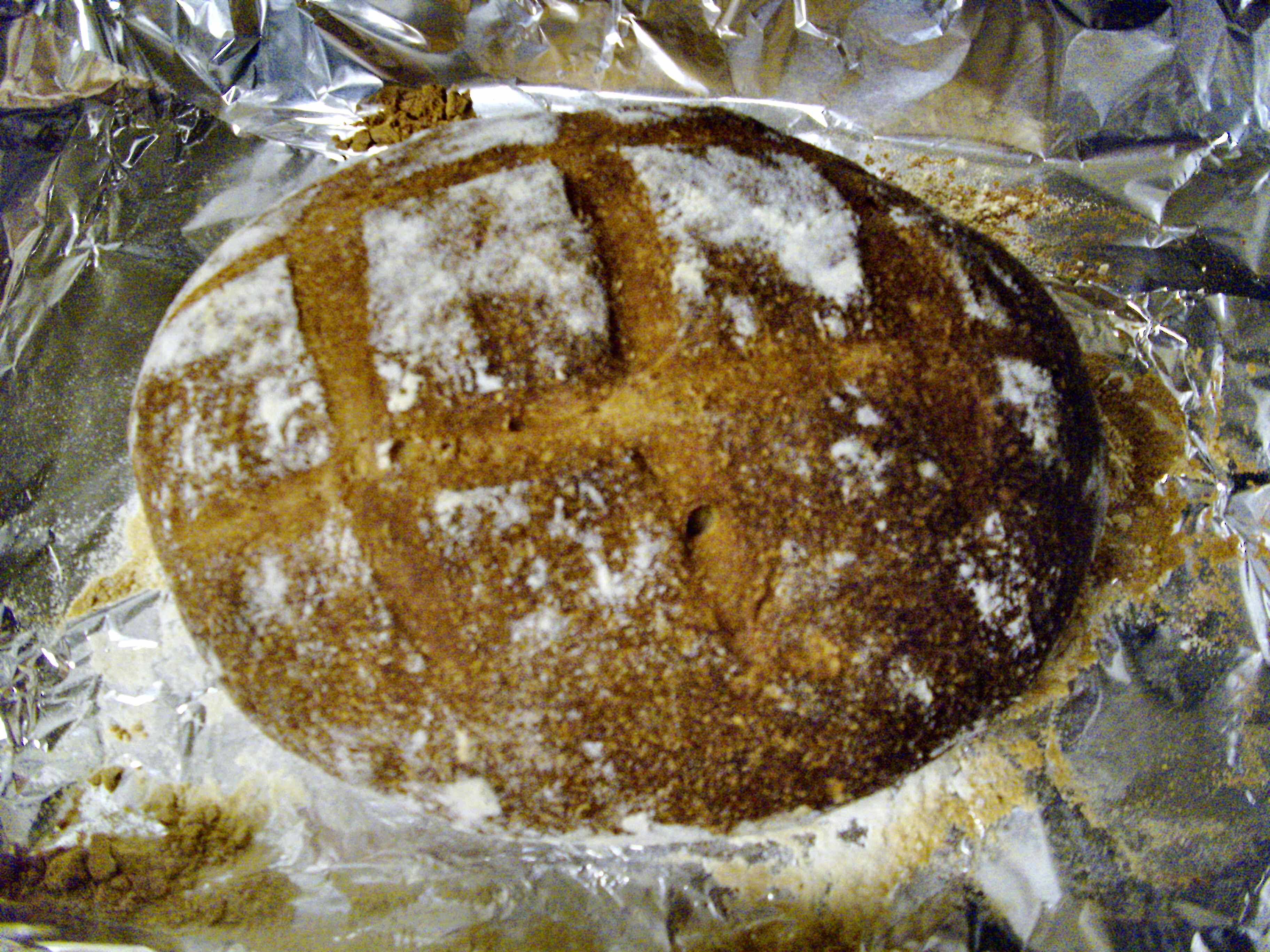
Whole wheat rapid faux sourdough with mix-ins

I usually keep a bowl of dough in the fridge for things like pita and calzone and it lasts me about a week. I’ve done proper sourdough rye and kornbroyt with medium success, and a yogurt-based 3-hour “faux” sourdough that wasn’t too bad, but lately I’ve decided that I can get a decent mildly sourdough flavor simpler and nondairy by just stirring a capful of apple cider vinegar into the flour as I’m making a regular yeast dough.

For this whole wheat bread, I’m doing a smaller ball of dough than my usual salad bowl worth–I want it quicker and it’s really just for this, so. I took a chunk of the regular dough since I had some in the fridge, maybe a heaping tablespoon or so, softened and pulled it apart with a fork in half a cup of warm water, sprinkled on about a cup each of whole wheat and regular bread/AP flour, less than half a teaspoon of salt, and a small capful of cider vinegar, and started stirring. I heated up another half a coffee mug of water a few seconds in the microwave, just to “finger-warm,” and added just enough to the bowl to get it to make a reasonable dough, kneaded it until smooth, drizzled on olive oil, covered the bowl and set it in a colander over a stockpot filled with hot tap water–and put a lid over it to shut out light. Hopefully it’s rising as we speak.

Olive rosemary bread in progress, as of Thanksgiving 2020–from the outcome, I’d say at least double the olives and throw in some chopped walnuts as well to get a more generous, nicer-looking distribution.

You can go a couple of different ways with mix-ins. Last year I chopped some Greek olives and minced a sprig or two of rosemary from the bush in the backyard, and when the dough was risen, I rolled it out into a rectangle and sprinkled everything on, rolled it up, let it rise again covered for 40 minutes or so while I heated the oven to 420F, and then threw a mugful of water into the oven and baked the bread for about an hour–it was a bigger loaf than I’m doing today, so I expect this one to take less time.

This year I’ll probably do the same but throw in a few chopped walnuts and maybe hot-soaked raisins as well. You could do raisins instead of olives if you prefer, nuts or no nuts, or just rosemary and thyme or sage if you want an herb bread.

Cheese plate with slight microwave assist (because, of course…)

The Ralph’s/Kroger in my neighborhood put in a fancy cheese counter two years ago, trying to rival Whole Foods and more or less doing a decent job of it. The Ralph’s cheeses are all stocked by Murray’s, which is headquartered in (I think?) the Hudson Valley in New York.

Now, that of course doesn’t sound incredibly affordable and the regular prices aren’t terrible but they’re still $10-25 a pound, which is a lot. However, the cheese counter always has a few “under $5” baskets out to attract those of us who don’t have champagne budgets or big parties to stock but are still sort of cheese freakish.

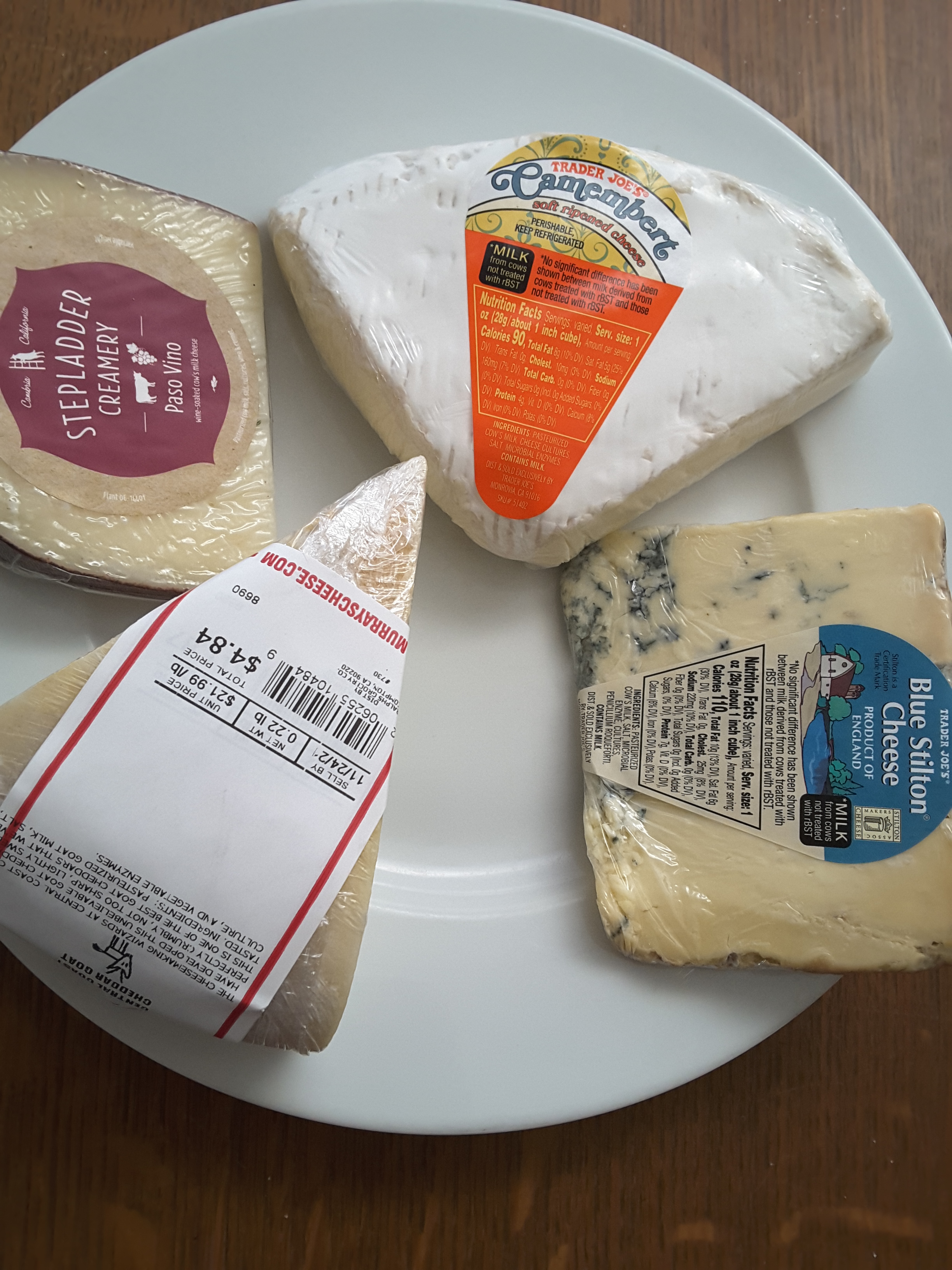
$20 cheese plate! Notes: 1. The Stepladder Creamery wedge, at $7, is the most expensive one here and full price; it’s still relatively inexpensive, wonderful and flavorful even in slivers, and produced by the dairy where my niece is a goat herd manager up near San Simeon. The other wedges are all over 5 ounces–the Ralph’s/Kroger/Murray’s Cheeses goat cheddar with vegetarian rennet at the lower left, contrary to what the upside down label says, is actually over 9 ounces, not the “0.22 lb” (3.5 oz) on the label. The full prices for the other two from Trader Joe’s: 3.60 for 5 ounces of stilton; 4.66 for 8 ounces of camembert, both vegetarian rennet.

And sometimes they’re actually big wedges, 6-8 ounces, that are nearing their sell-by date, or maybe they’re just not moving, so they discount and you can get a major bargain on things like Humboldt Fog or Cambozola, a stilton, or an aged goatsmilk cheddar or asiago-style cheese like Ewephoria. (Of course, occasionally you can find seriously discounted Limburger going for 75 cents a tightly-wrapped chunk, because they really, really want you to take it off their hands).

Continue reading

No, I don’t know what I’m making for Thanksgiving either

–And it’s already after noon! So it’s going to have to be quick. I did manage to figure out a Zoom meeting for later with my family on both coasts–I have the odd feeling of joining the 21st century a beat or so late while they all roll their eyes, but still. They’re used to me being late to the table, and always last-minute. If you are too, I have some reasonable (and a few not-so-reasonable) microwaveable options below.

This year, we’ve watched the spectacle of the election and its many, many, many entertaining lawsuits attempt to distract us from the huge, unfortunately predictable third spike in pandemic numbers all across the nation, and we’re facing facts: our kid is not coming home until finals, our parents on both coasts are being cautious and hunkering down as are we. The upside–we’re not traveling for Thanksgiving, or being required to smile and praise anyone’s turkey or attempt the groaning board. The obvious downside is what the heck do you make when it’s just you?

It’s just me, my husband and the cat, plus all of our family expecting to hear from us remotely so we don’t all feel as isolated as we feel. Which means mostly that we’re going to have to figure out how to Zoom everyone and not get cranberry sauce stuck in the laptop keyboard. And, of course, not reveal the exact state of our livingroom if we can help it.

This is going to require reserves of stagecraft, because when you’re stuck home with your husband and the cat instead of getting to dress up, sip champagne and hug all the people you haven’t seen in a year, the last thing you really want to have to do, besides cook all day, is straighten the livingroom for company.

The most important things, the essential things about Thanksgiving that I actually look forward to have nothing to do with the menu and everything to do with the experience (once we’ve recovered from schlepping halfway up California anyhow).

First is the getting together with family and friends–we’re Zooming and calling today and tomorrow, best we can.

Second is the sense of celebration–but how do you do that for yourself at home? My favorite part of Thanksgiving at my in-laws’, who are great hosts and savvy party people, is the way they welcome everyone into the house mid-afternoon, a couple of hours before the late-afternoon dinner. They set out cheeses, crackers, olives and nuts, raw vegetables with dip, and glasses–and break open a bottle of champagne for toasting. Sparkling apple juice for the kids, if they’re not already running through the house to the backyard for games.

I do have a frozen kosher turkey breast somewhere at the back of the freezer, but for just us, without our daughter home, it’s going to be microwave-assisted pan-grilled salmon, which I admit is kind of prosaic but still, after much testing, clearly the best indoor way to make it.

On the other hand, having fish rather than meat allows me to think, I can haz cheese platter? (the cat approves).

We never really do appetizers or cheese boards just for ourselves at home; that would probably be a good way to feel like it’s at least slightly partyish and worth celebrating something. Get out a nice bottle of wine and some glasses–I think I actually have a decent under-$20 bottle of Piper Sonoma champagne somewhere in the wilds, good enough for toasting, even though I still usually prefer reds and still whites.

Actually, if you’re home alone or with just your immediate family, that’s probably going to be a better way to make it feel like Thanksgiving than all the huge big-cooking thing. And put some sunshine on the plate too–good green (and/or purple) salads, a bowl of tangerines and apples that people can snag, something fresh.

In any case, if you’re really stuck for ideas, check out my mostly-microwaveable Slow Food Fast Thanksgiving Guide.

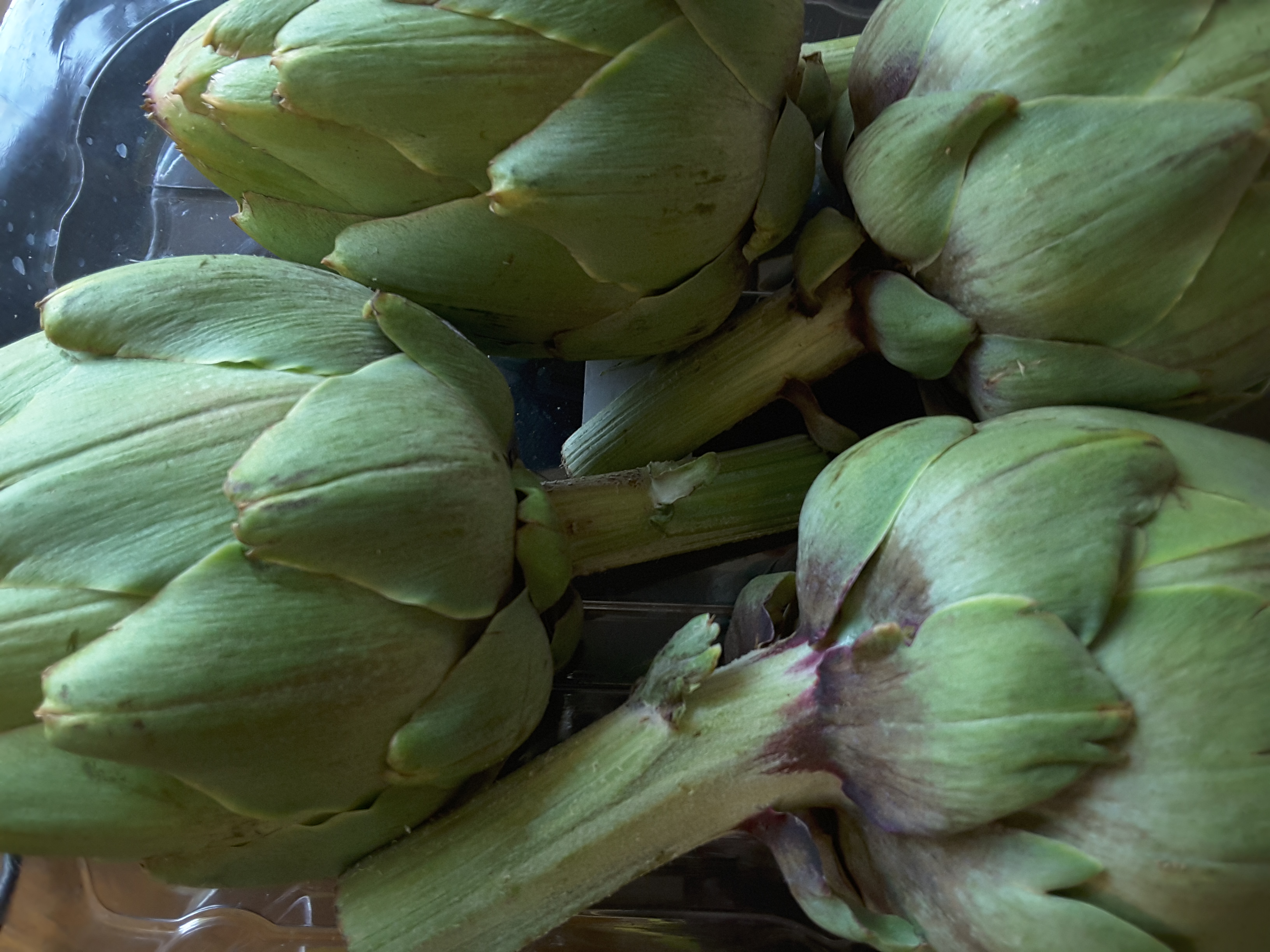
And I’d like to add two more mostly-microwaveable items to that list, because for just us, I’ve decided to snag a box of globe artichokes at my local Trader Joe’s and also a bag of wild rice for a pilaf with some chopped apple, onion, mushrooms and pecans or walnuts, and raisins or other dried fruit.

Artichokes I’ve already steamed successfully in the microwave in years past, but I don’t think I’ve ever posted the method here. It’s pretty straightforward and similar to my usual method for steaming broccoli or brussels sprouts or other cruciferous greens, just a few minutes longer per pound because they’re whole, they’re tough, and they contain less of their own water.

The wild rice I’m trying in a microwave for the first time–going by my brown rice experiments, I’m going to hot-soak it for a bit to crack the outer husks, then microwave it in earnest for a few minutes at a time, letting it sit and soak up the hot water for a while undisturbed before stirring and testing and deciding if it needs more time. Hopefully it won’t get mushy. It’s already after 1 pm so I’m going to break off with just this and then go microwave some cranberries, wash a few glasses, clean off the table (got to look better than it really is), and get dressed for company, at least sort of–I have a family to Zoom!

A toast to all of you–Happy Thanksgiving, make sure to give to your local food bank and homeless shelter this season, because even small amounts help, and may we all have a safe and better year.

Whole Artichokes in the Microwave

  1. Trim the thorny, tough outer leaves and the stems off a couple of large or a bowlful of baby whole artichokes. Open the centers carefully–there may still be a few thorns inside–and use a spoon to scoop out and discard all the dandelion-like fuzz and trim off any thorns at the top of the soft inner “heart” leaves.
  2. Squeeze some lemon juice on and inside, plop the artichokes in a microwaveable container with about 1/4-1/2 inch (~1 cm.) of water in the bottom, add the lemon half if it’s washed and organic, or just squeeze a little more juice into the water. Put on a lid and microwave on HIGH for about 7 minutes, then let sit a few minutes. 
  3. Test for doneness by pulling off one base leaf (should come away very easily) and/or poking gently through the bottom of one of them with a sharp knife to test if it’s tender enough. Add another minute or so if they’re not there yet.
  4. If you have more than one layer of artichokes in the bowl or container, the ones at the bottom may be less cooked than those at the top, so you may want to bring those up before adding any additional cooking time, or remove the fully cooked ones and then microwave the less-done ones a minute or so more with the lid on.

Serve with basic lemon-butter sauce that my husband prefers because his mother made it that way (melt a little butter, squeeze in some lemon juice, scoop out any seeds that fall in) or the more exciting tzatziki-type sauce I like better with artichokes: nonfat plain Greek yogurt, a dab of garlic, a drizzle of olive oil plus a squeeze of lemon juice, and a little thyme, dill and mint or basil chopped and mixed in, cracked black pepper optional.

The Afikomen Conundrum, plus a quiche for our times

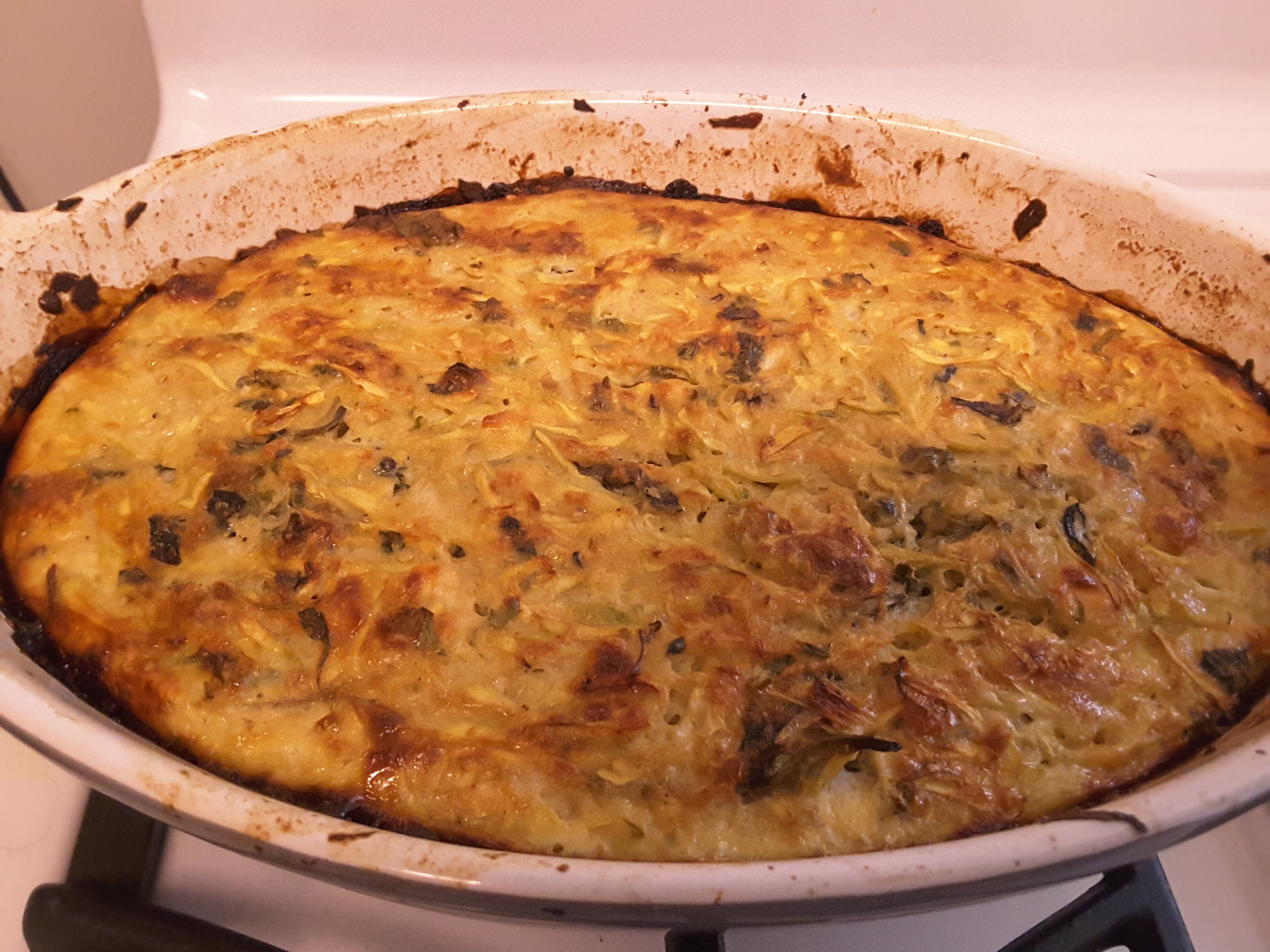
zucchini crustless quiche

On the lighter side of Passover, now that it’s the last day for anyone outside Israel, I did catch Terry Gross’s wonderful Fresh Air interview with Adam Sandler and the Safdie brothers on NPR back in December and was delighted to hear that the brothers included the first-ever mention of the afikomen in an English-language film. It’s about time! I mean, bagel and chopped liver references can only take you so far with Jewish culture. Afikomen is the real insider stuff.

Then, of course, Terry realized that all four of them, herself included, were talking inside matzah-ball or at least Aramaic amongst themselves on-air, and the uninitiated radio listenership who had never even been to a Passover seder might need some enlightenment on the subject of afikomen. Yes, it was exactly like having to explain a joke, and no, the great mass of society probably still didn’t get why a broken matzah is more important than a whole one, or why you’d bribe the kids to give the other half back once you’ve hidden it somewhere cleverly during the meal.

But Sandler and the Safdies ran with it and tried not to make it any more like explaining a joke than they had to. At least Terry didn’t pick the Hillel sandwich to riff on. (Partly because no matter what the Haggadah says about it, there really is no good logical or culinary explanation for eating a combination of apples, nuts and horseradish all together on matzah. It just is, you know? Tradition!)

Anyway, the interview was actually enlightening and smart, and the link is still up online, so go listen to it and donate to your local NPR station while you are wondering, as I am, where we go from here.

I look back to where we were only a month ago and realize that I am thankful my daughter is with us, that my mother and sister and their families and my in-laws are all well if a bit frustrated at home, especially the younger generations with young kids. Back then I  was starting to wonder if there was actually going to be matzah in the stores by the time we needed it or whether I would have to enlist my daughter for some not-quite-kosher-but-best-we-can-do homemade matzah from the leftover bag of flour that I couldn’t bring myself to throw away this year–it seems like more than a sin to throw away anything you could use later, anything you might need, or that someone else could use now.

I mentioned this to a friend back east when Governor Hogan of Maryland decided to declare a statewide a lockdown a week or so after California’s, and we were comparing notes about having college-age kids stuck at home for the duration. It was about a week before Passover started, and a few days later not only was there finally some matzah available at the store, just in the nick of time, but a big mystery box arrived at our door later the same day. When we opened it, we discovered she’d sent us two boxes of Streit’s matzah, just in case. She’s really something else!

As mentioned above, today is the last day of Pesach (Passover in English) if you live outside Israel. My husband is hoping for pizza tonight but since  the stores are closing before sundown, I somehow doubt it’s going to happen tonight. Plus we have two whole boxes of matzah left and a bunch of rice, which I cooked starting with the second night. Turns out many, many American Jews other than us have also decided this year to expand their Passover cooking options to Sefardic traditions that include rice.

I even have most of a packet of quinoa, which is so recent in the Jewish world that rabbis everywhere have declared it kosher for Passover. Somehow that declaration annoys me. Quinoa’s an expensive grain compared to rice and the major importers and cultivators probably paid someone off under the table to get this vegan-trendy chic grain declared ritually different from all other grains, cereals and seeds including rice. Call it Dizengoffia or Beverly Hills Syndrome, and yes, I’m really that much of a cynic, but put it this way–nobody’s bribing anyone about rice as far as I know. Rice is common, inexpensive and traditional, and it’s already approved for Sefardim and most Mizrahi Jews as well.

Small wonder a lot of us have decided to go Sefardi this year, and possibly every year from now on.

Anyway, since this is me, I made some of the quinoa last night in the microwave just to see how it would go–answer, not bad, and pleased my daughter, who along with her college housemates is more conversant with quinoa than I am. I think it’s twice or three times as expensive as rice; they’re still young and excited and into brandname olive oil, gourmet coffee, designer vinegars and  and vegan-chic ingredients because they’re all so new to cooking on their own and still a bit gullible.

It takes time, practice and ruining a few expensive buys on your own dime to realize that fancy-label ingredients won’t make you a great cook automatically. You can go online all you want–even here, if you have the patience to read through all my grumbling and occasional bouts of wild enthusiasm. The fact is there’s no substitute for trying it yourself and being willing to eat your mistakes as far as they’re edible and figure out from them how to fix them up now and do better next time.

But in any case, the quinoa, microwaved or not, is still quinoa, with an earthy, bitter edge similar to buckwheat (kasha).  So definitely squeeze on some lemon or mix in some vinaigrette; instant improvement. My kid agrees–there’s vegan chic and then there’s too chic. And if you’re going to buy it and try it anyhow, you need to be willing to work with it and make it good or else. At least not waste it.

More to the point of frugality, I have been trying mostly to practice what I preach and buy and use cheap vegetables plentifully this week instead of reaching for yet more matzah and cheese at every turn, or using up more eggs at once than is wise in a time when you’re limited to two cartons a customer when you can even get them, and where a lot of supermarkets are now stocking medium-sized eggs when they can’t get enough large ones.

My standard Israeli-style spinach and feta flan for Passover (or any other time) calls for 6 large eggs for a pound of squeezed-out spinach, but you can reduce the eggs to 3-4 and increase the milk to 1.5 c and/or add a bit of bread or flour (if you’re not cooking for Passover), rice, matzah meal, grated or mashed cooked potato etc. –the starch absorbs some of the excess liquid and acts as a binder. And you can use a different vegetable as the main ingredient.

Zucchini are some of the common inexpensive fresh vegetables being neglected most often at the Ralph’s (Kroger affiliate here in the west). I bought a bargain bag for a dollar on my last shop (still doing that where possible) and washed them carefully à la COVID-19 precautions (spritz with dilute dish soap along with all the other groceries, rinse well, airdry, hope for the best). Today I decided it was time to use them for the last Pesach lunch and that they were better to use up now for a crustless quiche than the bags of frozen spinach which cost twice to four times as much and can stay in the freezer. Continue reading

Ice Cream Therapy

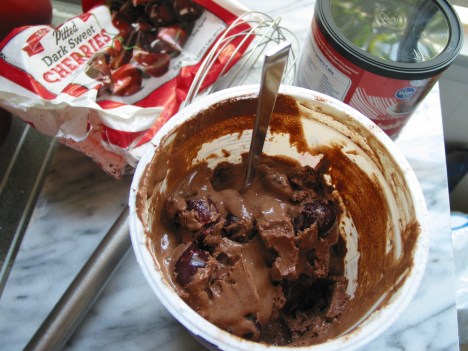
Chocolate Cherry frozen yogurt

Just in time for my daughter’s return last week from college in a part of the northeast where it was still snowing in May, Pasadena entered its first major heat wave of the year–and our AC broke down in honor of the occasion. Fun times!

Today’s topic, as last year and the year before, when I first started this post (and then got side-tracked with all the college application stuff and the very unpleasantly named FAFSA)… and every year at this time, once the heat starts hitting town, is ice cream. Well, ice cream and a couple of lighter, more flavorful and frugal home-brew variations because that’s what’s uppermost on my wishlist, other than cooler air here and cooler heads everywhere. So anyway, imagine it’s two summers ago, not now, for at least the next two parts of this adventure…

Gelato

It started with gelato.

Right before the fourth of July two years ago, I found out that I could take my daughter’s sharps containers to a local sheriff’s office for disposal instead of having to drive to the CleanLA site in west Glendale (not a nice area, and the guys in white hazmat suits make you stay in your car and pop the trunk. They’re not mean about it but it’s still unnerving). When I looked up the Altadena sheriff’s office online, the map showed an unexpected gem across the main street: Bulgarini Gelato, which in 12 or so years of operation and despite its tiny size has become nationally known in the food world.

A friend has been after me for years to visit and try their pistachio gelato, insisting that it’s the real thing because they use Sicilian pistachios and it’s all natural (you know the kind of friend who speaks in italics). Despite or possibly because of how holistic she made it sound, I’d never gotten over there.

It’s a shame, in a way, because Bulgarini is the living result of a rescue operation–the owners did an apprenticeship in Italy to learn the old-style from-scratch processes for making real gelato, just as all the old guys were retiring and all the gelato shops were going to factory-made, synthetically flavored powdered mixes.

My husband and I had been to Italy… 25? can it be? years ago for a conference (the only way we could have afforded it then), when real gelato was still available. We quickly figured out how to order anything at one of the bustling gelaterie in Florence: sharpen your elbows and your tongue, know which of the 30 or 40–or more–flavors you want (spinach? avocado? rose? fior di latte? kiwi? cassata?), get to the front of the throng and have your money ready, because it’s gonna cost you. But a tiny cup–at an outrageous 3000 lire (right before the Euro took over)–held two or three distinctive flavors you ate with a tiny spoon and that didn’t melt as fast as ice cream, so you had more time to keep tasting as you wandered around the city, taking in the sights.

Bulgarini was almost the opposite experience. At mid-afternoon on a hot July day, the whole shopping plaza was silent and dusty and it took some time to locate the gelato shop in a group of new indie businesses off to the side of the deserted RiteAid. The gelateria was dead quiet, just a few customers trickling in at a time, though steadily. No need for elbows or decisiveness. Leo Bulgarini, the owner and artisan gelato maker, stood to the side with his arms folded, not saying anything as he supervised the girl behind the counter, who spoke a tiny amount of English and was obviously pretty new. There were only ten or twelve flavors in the case, reasonable for handmade in such a small shop, and none of them spinach or avocado–also reasonable, since most customers here probably wouldn’t be ready to chance them.

As in Florence, the prices on the chalkboard were authentically astronomical–the smallest cup was $7 for up to two flavors, plus an extra dollar for the Sicilian pistachio. Which I got anyway because that was the mission, even though I kind of gulped as I forked over a twenty, and asked that the second flavor be nocciola–hazelnut. I figured the super-dark chocolate and the fruit flavors were things I already knew I liked, and they might clash or overwhelm the subtleties of pistachio. The hazelnut would be just different enough to be interesting as well as a test of truth in flavor, because chocolate and fruit are easier to be convincing about and because commercial hazelnut flavoring tends to be disappointing–oversweetened and often synthetic.

In any case, I tasted and was floored. Really floored, but too shy in that environment to say anything.

When the silence threatened to become extra-awkward, I ducked out into the shaded courtyard and tasted it again. The Oregon hazelnut was so clean, so crisp, so exactly and precisely hazelnut and nothing else–not faint, not sweet or faked with extracts or overdressed in any way–that it was actually more impressive and possibly more Italian than the Sicilian pistachio that followed. The texture was right too–slightly stretchy, not super-rich, and it didn’t melt right away, so there was time to eat it in small experimental tastes.

Was it worth seven or eight bucks for a 3-4-ounce serving? There’s no way I could make a habit of it–it really is too expensive for a snack. But for a special occasion, the real thing is worth a try. My husband was overscheduled for his birthday that year, and we were away the next, but he’s just going to have to clear his slate so I can drag him back before his next birthday. Maybe tomorrow, actually.

Ice cream parlor ice cream

A few weeks after the Bulgarini experience, we flew east to see my mom and do college tours in Boston and then hung out with my sister in Maine. After a day or so of dank heat we finally admitted it was more than we could handle–what can I say, we’ve gone soft since moving to the land of 10% humidity or less. We gave in to temptation that afternoon and sampled hand-cranked ice cream at a local ’50s-style ice cream parlor. There was an impressive list of flavors on the chalkboard–easily more than 40, including licorice, various berries and several different variations on chocolate, caramel and coffee. We all liked it well enough, but I was the only one who got something other than your basic oversized milk-chocolate-caramel-cappuccino.

I came away with an important realization: Ginger just isn’t as common as it should be, it’s a great flavor that really deserves a comeback. But it shouldn’t be stuck in sweet, bland basic vanilla superpremium ice cream that’s starting to drip before you even get out the door. Even after I told the girl at the counter to give me only half the softball-sized scoop she was aiming at my cone, and she complied, puzzled that anyone would ask for less instead of more, it was just way too much. My husband went for two flavors, two full scoops. I’m still not sure how he possibly managed it, and I was watching (queasily). Oy. Boys are just into stunt portions is how I explain it.

When we got back home to California, our cat was fine, the kitchen hadn’t crawled away, and reality sat waiting on the doorstep: school was only a couple of weeks down the road and it was hot here too–though not as humid, at least. I suggested ice cream (light, not Haagen-Daz)–and my daughter glared; after the excess version from Maine, she was trying not to, which was probably smart for all of us.

The skinny versions

If you can’t get to Altadena or Maine, and you’re not sure a $5+ pint of ersatz supermarket gelato is the real experience (it isn’t) or you want a flavor that’s not so predictable, you can make gelato yourself for not very much money. Cookbooks from the 1990s abound with recipes (though probably not the spinach or rose flavors), and you might be able to find a Brazilian recipe for avocado ice cream online.

The basic idea for gelato is to make an egg and milk custard and blend it with fruit, nut pastes or other flavorings before freezing. Some use cornstarch in addition to or as a substitute for some of the eggs, and that’s as traditional as all-eggs in some parts of Italy. The base ingredients are inexpensive either way. Continue reading

Three-Hour Sourdough

Three Hour Sourdough

I love sourdough–eating it, anyway. Baking? That’s enough of a challenge that I’m elated when it turns out relatively edible. Because even with my standards, which are a bit loose, there are times when the outcome is decidedly not up to expectations. I have trouble getting the dough risen well enough and into the oven before the acid chews up all the gluten. In other words, it tends to overproof and then flop. Few of my loaves–I can face it–have ended up risen enough to consider serving other people, and most of them are a bit coarse inside–partly because I want rye or whole wheat rather than just white bread.

The other challenge is the perennial one for sourdough cultures–it takes several days to build a decent-tasting and stable mix of flour, water, wild yeast and lactobacillus culture with no undesirable bugs or off-flavors and odors. And in the meantime most instructions tell you to take a small bit of the mixture, feed it fresh water and flour, and toss the majority. Wasteful–both of ingredients and time.

So for the past year or so I’ve wondered whether I couldn’t somehow just get a running start past all that by using commercial yeast (a big no-no according to sourdough experts) with some commercial lactobacillus culture–yogurt, maybe?–and flat-out cheating. As in, faux dough. Well, more precisely, perfectly real dough, with a real-enough sourdough taste and texture, only about 4 2/3 days faster. At least. Without just caving and paying 6 bucks at Whole Foods for a small decorator loaf.

Yesterday I wondered it strongly enough to hunt around online and see if the yogurt idea had occurred to anyone else–and it had.

Ladyandpups.com is the food blog of a sometimes cranky, sometimes poetic, impressively prolific and creative baker named Mandy Lee. She has a “fraudulent easy sourdough” recipe that uses more than a cup of plain yogurt with a small amount of yeast and 3.5 cups of bread flour–no added water, apparently–and some salt for a firm dough that rises either 18 hours at room temperature (1/4 t active dry yeast) or 6 hours (3/4 t. yeast) and comes out tasting right and looking beautiful and crackle-crusted via the Jim Lahey no-knead-but-preheat-the-dutch-oven method.

And that’s all to the good.

But I’m even more impatient than that, and most of my sourdough faux pas have to do with letting the dough sit too long before baking. Even a 6-hour rise seems like too much. I also wanted a whole-wheat sourdough (so half whole wheat, half bread flour), which means it’s already comparatively gluten-challenged. So I wanted a really short, sharp rise that would get the dough puffed up and bakeable before the acid got to the gluten too badly. With luck, the yeast would win out just enough to outpace the acid buildup and resulting hopeless flop, but still allow enough to develop a good tang, which is the whole point of sourdough in the first place.

That meant changing things a bit:

1. Less yogurt, only about half what Lee calls for–half would still have plenty of lactobacillus culture to reproduce, but wouldn’t contribute as much acid right up front.

2. Some water to dilute the initial acidity further to delay the inevitable gluten-chewing effect. More water also gets the dough smoother and the gluten developing more quickly even when there’s no acid-producing bacteria to worry about. That’s an added benefit since I was going whole-wheat.

3. Not too much yeast either. Normally, adding more yeast means getting a faster rise. But even 1/4 t. is about what I usually go with for a slower-rising dough with 5-6 cups of flour, and that only takes 3-4 hours to more than double in my kitchen, at least with a hot rise. I didn’t want so much extra yeast at the start that it outcompeted and inhibited the lactobacilli from the yogurt altogether, because no sour culture equals no sour flavor. Continue reading

Chocolate Quickie: Unromantic but Reliable

It’s Valentine’s Day again–midweek, busy, too many items still on the list from last week to want a lot of fuss–or even be able to guarantee that my husband and I will both get home a reasonable time for dinner in a reasonable frame of mind to celebrate romance by cooking, or eating, something fancy. Last night I spied way too many people at the Trader Joe’s heaving large bars of chocolate and multiple bouquets of hothouse roses toward the cash registers. That’s okay–I’m not raining on anyone’s actual romance, but I have to admit I’m not feelin’ the official holiday symbols this week. Chocolate is good, don’t get me wrong. Flowers are pretty but require a vase and a pair of shears–usually right when I’m trying to cook dinner.

Last year we actually managed éclairs, and it was fun if a bit much–even though I managed to strip it down considerably with the microwave. Microwaveable ganache truffles are also easy, quick and fun if you’ve got the time to feed them to someone you love.

But with a kid who’s now waiting for college acceptances (and us parents anxiously figuring out both taxes and how to get around the outrageous Estimated Family Contribution)–well, we could all use a smallish midweek-style treat that doesn’t involve even that much effort to make–or work off afterward.

Lately I’ve been digging around in my cooking “blank books” from the last couple of decades. Part diary, part notes to self with or without illustrations in scratchy pen and occasional bragging, political satire, or outright swearing as the situation demands–when you’re writing cooking instructions for yourself, why not? I started these books long before the era of the blog, and hunting through them takes me back to what I was doing at the time.

Half the recipes I came up with are from before I figured out how to work a microwave, but I seem to have gone overboard as soon as I got enough of an introduction. One of the more unusual finds that worked really well a couple of years ago in a birthday dessert emergency (why do I tend to have these?) was a small but rich-tasting dessert halfway between cheesecake and flourless chocolate cake. The best parts:

  1. A limited and very simple ingredient list and
  2. You microwave it in 3 minutes. Seriously. Also,
  3. It’s small, and there are no leftovers. Sometimes that’s a plus.

This would probably be a decent rescue option if you had to make dessert with whatever’s in the cupboard and the fridge, and you’d left things till the last minute…or even a little later than that. As slapdash as this quickie is, it’s got big, big advantages over anything storebought–time, taste AND chocolate. Also, modest calorie and carb counts.

Not everyone has a grocery that carries labaneh, which is kind of a Middle Eastern cross between sour cream and yogurt cheese. Nowadays, though, a lot of mainstream supermarkets are carrying plain Greek yogurt, which also works pretty well, even nonfat. And not every doctor approves of cheesecake in any quantity, much less huge. Damn, as I’ve said before, my cholesterol-packin’ genes (also jeans, but that’s another matter). The completely nonfat version of this dessert works fine and tastes good too, now that I’ve retried it, and all the ingredients are real.

So–whomp the ingredients together in a bowl, nuke it about 3 minutes, cool it, stick it in the fridge. Serve it with raspberries, peaches, cherries, whatever goes with chocolate in your book. Or jam (raspberry, apricot or sour cherry would be great on this, and so would marmalade…).

Chocolate Quickie

Serves 3-4 in smallish wedges if you don’t care how it looks–otherwise (probably smarter) pour it into small single-serving ceramic cups before microwaving. If you double the ingredients, it’ll need another minute or so in the microwave. Definitely serve with fruit.

  • 4 T cocoa powder (20 g by weight; 8 g carb)
  • 4 T sugar (60 g, all of it carb)
  • 1 lg egg
  • 1/2 c. (112 g by weight) labaneh, preferably 1/2 the fat, or else fat-free or 2% plain Greek yogurt. (about 3-5 g carb for any of them; about 7 g saturated fat and 10 g total fat for the full-fat labaneh, much less for the yogurt)
  • 1/4 c. water (yes, really. It’s 60 grams or mL if you’re weighing it out)

Whisk everything together until smooth in a microwaveable ceramic dish (big soupbowl is fine), or else mix and then pour into small microwaveable coffee or flan cups for individual servings (more attractive and probably less prone to serving mishaps where it falls apart when you cut it and lift it out). Microwave uncovered on HIGH 3 minutes for the big bowl, maybe 2 minutes for the individual cups, checking progress and adding extra time in 20-second increments just as needed so you don’t overdo it. When it’s done it’ll be a little dry around the edges and just pulling away from the bowl or edges of the cups. Cool to room temperature, cover and chill until it’s time to serve. Cut in wedges with a sharp knife if you went with the single bowl version. A pie server would probably help it keep its shape long enough to dish up.

Variations–add some grated orange peel or marmalade to the mixture; add a spoonful of almond extract, vanilla, amaretto, or hazelnut liqueur; add espresso instead of water…?

Carb counts: about 17 g apiece for 4 servings, 23 g each for 3 servings, all of it in the form of sugars.

Hot Air

The last two or three months of school seems to be getting more and more fraught every year–for parents, certainly. I’ve just woken up to the fact that I’ve been offline for something like three months now–March! yeesh! Not because I had nothing new to say about food, exactly, but because I had three or four competing ideas and no time to figure out pictures for the posts. And as everybody knows, if you didn’t take a picture of it, it practically didn’t happen. Just like all those tourists who used go to the Grand Canyon and (back in the day of actual film) had to wait for their pictures to be developed to see what it looked like…

And now that school’s out, it’s hot. 107 degrees twice this week in Pasadena, smoke in the air from the San Gabriel fire not too far away, and no desire to cook, walk during the day, or listen to anything resembling hot air.

Because the recent spate of presidential campaigning has become poised to take away almost any American’s appetite for a while.  Just read a newspaper online and look at the prominent photos and bombastic quotations and examples of rank cowardice.

I mean, yeah, I voted in the California primary two weeks ago, and I even researched all the local judges and assemblypeople for my district this time, hoping to make something count or at least not to commit any hideous mistakes.

Contrary to what you might think, reading the candidates’ own statements will actually give you a feel for what kind of people they are, whether they give a flying leap about their prospective constituents and whether they know how to tie their own shoes. Reading through about fifteen last-minute write-in candidate statements for various assembly-and-county-supervisor-type posts was pretty entertaining, actually–most of the hopefuls (you could guess which parties) stated their qualifications as “I believe in God.” Seriously. Sum total.

Nationalistic and bigoted fervor seem to be going around, though. To wit, “Brexit”, which actually won the vote today. Not that I don’t understand Britain’s–and everyone else’s–frustration with the EU administration, but the vote results and the resulting–utterly predictable–mess announced this morning are really disheartening.

Some are calling it a shot in the dark; to me it looks like a solid a shoot-yourself-in-the-foot-why-don’t-you move. It’ll take at least two years to execute, cost an immediate fortune in lost business and one-downmanship, and probably cost a lot more time, money and headache than previously suspected to resolve with the EU countries. Let’s face it; if Trump (king of the gold-tone hot air vent) thinks that it’s a great idea, you know you’ve gone wrong somewhere. Scotland, where his fabled floundering golf courses are located, went solidly for “remain,” by the way…

So is it any wonder I feel like taking a major break from my computer, my kitchen, and possibly your kitchen as well? If only to soothe your eyeballs and your rapidly developing ulcer, for which I apologize profoundly. Oy.

Now that that’s over, I guess I have no more excuses. What was I going to post all this time, anyway?

Harking back to early April, it looks like I made a couple of tries at something about microwaveable side dishes for Passover seders. Yes, it’s now too late to care where I hid the afikoman, but I maintain that the ability to microwave greens like asparagus or broccoli to perfection in a couple of minutes at the drop of a hat can save a meal–Passover or not–and some heat in the kitchen. If you’re vegetarian or leaning toward it, some of the not-chicken microwaveable soups can also be kind of handy and quick to nuke and store in those big snaplock containers in the fridge and free up your stove.

I didn’t go so far as to try any microwave matzah balls. No idea whether that would be a great idea or a terrible one, I was too not-chicken to try it. What can I say–be relieved. Be very relieved.

However, a crustless Israeli-style spinach and feta casserole, basically a quiche but more rustic in texture, was a hit both conventionally baked and browned for a Saturday congregation lunch during Passover and later for us at home via the quickie microwave method (minus the crust, so you don’t need the oven at all). It’s less glamorous-looking, more get-it-on-the-table-and-don’t-heat-up-the-house.

Israeli-style spinach, feta and egg casserole

Unfortunately for the spinach and feta thing, it turns out there are a gazillion of these posts all over the web, especially on low-carber fitness sites. Which takes away some of the charm of posting about it. But it’s still a good and very simple dish.

Israeli Spinach and Feta Crustless Quiche

Per casserole dish:

  • 6 eggs
  • 1 c. milk (skim is fine)
  • 1 lb. thawed and squeezed-out frozen spinach
  • 1 lg clove garlic, minced/mashed/grated
  • 2-3 chopped scallions
  • handful of chopped dill or 1-2 T dried
  • 6-8 oz. crumbled feta

Toss the spinach, herbs and feta lightly in the casserole dish so there are visible clumps of cheese (i.e., don’t blend it too fine), mix the eggs and milk together and pour them over. Optional–grate or sprinkle a pinch of nutmeg on top. Either bake about 35-45 minutes at 350F, which makes it all pretty, puffed and browned on top, or (as I see it, the better option for Pasadena weather), just nuke it covered in a microwaveable stoneware casserole for about 7-8 minutes until puffed and cooked through to keep your kitchen from sweltering.

…Are we sensing a theme here? I hope so–because yes, it’s actually been 107 degrees this week in Pasadena. I’m not that good at keeping my cool or not cooking at all (don’t ask about the sourdough I “rescued” by baking around midnight with all the doors and windows open when the temperature dropped below 90…) But I’m trying hard not to cook.

When it’s this hot, dinner becomes a pastiche of sort-of-niçoise salads with beans or canned tuna added, maybe some cold hard-boiled or medium-boiled eggs. I’m also not above making a dinner of wedges of leftover cauliflower omelet reheated (or not) in the microwave, and either tomato-cucumber salad or some sliced tomatoes with vinegar, olive oil, maybe basil flowers from the struggling plant outside.

box of winter salad

The big box of grab-and-go salad vegetables is still looking like a good strategy too–veg that doesn’t wilt in an instant is as valuable in summer as in winter. As is shredded Greek cabbage salad. Cold raw or microwave-blanched green beans, romano beans, cauliflower or broccoli with mustard dressing, Italian-type vinaigrette, or a yogurt-based dip is also a relief.

Here are a few other hot weather ideas dragged from the depths of my blank-book cookbooks, which I now realize I’ve been keeping more than half my life.

Cold marinated tofu

Tofu is actually pretty handy to have in hot weather–either nuked with vegetables instead of stir-frying if you can stand to eat it hot, or else sliced cold and marinated for ~ half an hour with jao tze dipping sauce ingredients poured over it. Continue reading

This always happens right before vacation…

Finally, finally, we are going to the East Coast. We’ve had to put off seeing my mom and my sister (and assorted boys) twice since December due to incessant snow, none of which hit Los Angeles in the slightest. So as soon as school lets out, we’re packing for an ungodly wake-up call the next morning and getting out of SoCal for a bit more than a week. The cat gets a hotel/spa vacation without all the schlepping around between Bahston and New Yawk. We get the do-we-have-enough-clean-undies-to-make-it version.

So good, already. But as in many of my tangled big-event preparation schemes, I have a slight problem with the fridge:

Stuffed fridge right before traveling

The problem, part I…Note the tomatoes: 10+, excessively ripe, and the invisible 6 or so red peppers behind them. Not to mention the huge bag with 7-8 bunches of fresh herbs…

fridgedoor

Part II, the door…Note the huge bag of nectarines, lower left, the chiles just behind the mushrooms and two bags of apricots at right, just because…

AAAgh…just a little insane. Suffice it to say, it’s been an enthusiastic week or so vegetable-shopping-wise because the Fresno tomatoes are back in my local greengrocer’s, along with a lot of other produce, and I’ve gone overboard on a number of items, not least of which are lemon basil, mint, dill and tarragon (which I haven’t even decided if I like). The market beckons, the low prices for herbs and vegetables even more so, and the sun’s finally come out again after a month of gray days. And I’m a purple thumb as a gardener, so the greengrocer’s wares beckon even more strongly. How could I not want it all? But a little thought for the calendar might not have gone amiss.

So I’m in trouble again. We leave in 4 days. There are a maximum of three humans in the house (depends how we’re behaving at any given moment). Nobody but me really gets into gazpacho the way they should–though they will go with salads (the coarse-cut version of gazpacho). And it’s a sorry day when you have to threaten people with apricots and nectarines three meals a day. We should be reveling in the produce section, not roiling in it. If we were staying here, this would be an ideal scenario for the next week and a half, Continue reading

Chickpea Crêpes, Masala Dosa style

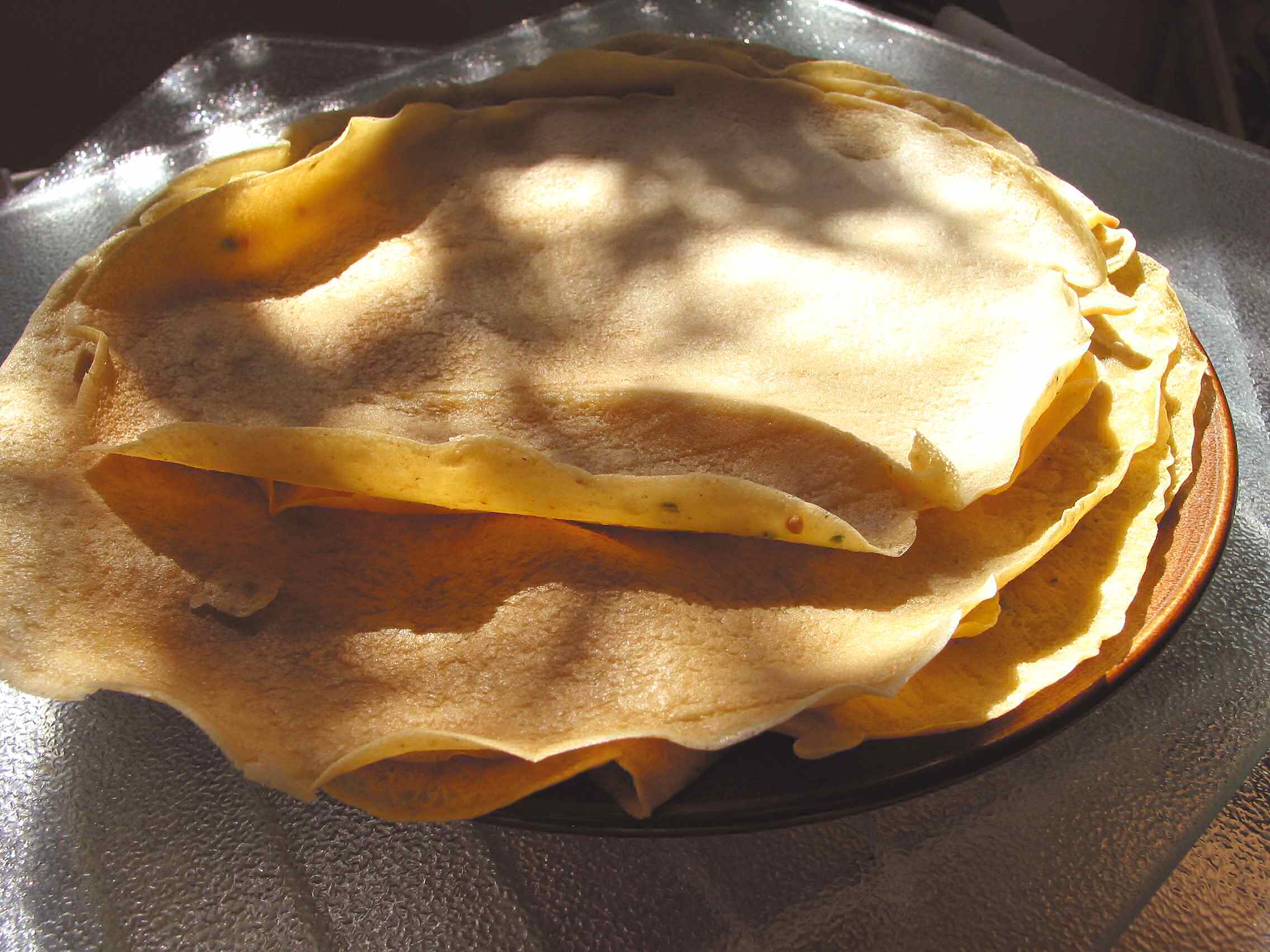
instant dosas with chickpea flour, ground rice and yogurt

Project 1 of Panic Week: “instant” dosas made with chickpea flour, rice and yogurt. The heavy dose of mustard seed and black pepper is surprisingly good.

Planning the cooking for Passover usually means thinking about the week itself, buying matzah and gefilte fish and horseradish and so on. But for me, it also means using up the open bags of flour, beans, rice and pasta, plus whatever yogurt, cheese and milk I have left, and yet not overdosing on starches. And I’ve just gotten the taxes done, so it’s time to look in the fridge and panic.

We’ve got just over a week to go before Passover, and there’s still a lot of chametz in the house…a pack of fillo (luckily only one), a pound each of dried chickpeas and red lentils, a bag of mung beans I don’t really know how to use, some rice, a bowl of dough…wonton wrappers. Chickpea flour! Rye flour! Why did I leave it all this long [breaks down and bangs head against wall for a second]?

I don’t usually want to cook or serve that much starch in a single week, but at least most of it is legumes with some fiber and protein. So I’ve been thinking about foods–both chametz and not-chametz–that don’t have to be devastating dietwise or empty your wallet or take forever and a half to cook.

Because even with snow on the ground all over the east coast, where my mom and my sister and most of my old friends are still shoveling it out of their driveways this late in March, Pesach is coming. And then maybe an actual spring with shorts weather? We can only hope! Time to lighten up in anticipation.

This week I’ve decided to post the chametz countdown (aka, “Panic Week”), and the next week or so, a couple of attempts at a Pesach week with mostly fresh, simple foods and a lot more vegetables, and without the usual total matzah-on-eggs-on-more-starch-and-potatoes-and-choke-cake-and-too-many-canned-macaroons kind of meal plan…can it be done? I think so. As long as I don’t let my husband do the shopping. Can it be done in a microwave? I’m counting on it.

Anyway–back to the Panic Week Project. First up, the chickpea flour and rice…as a batter for on-the-spot masala dosas. Continue reading