
• Enter your email address to subscribe to this blog and receive notifications of new posts by email.

    Join 241 other subscribers
  • Noshing on

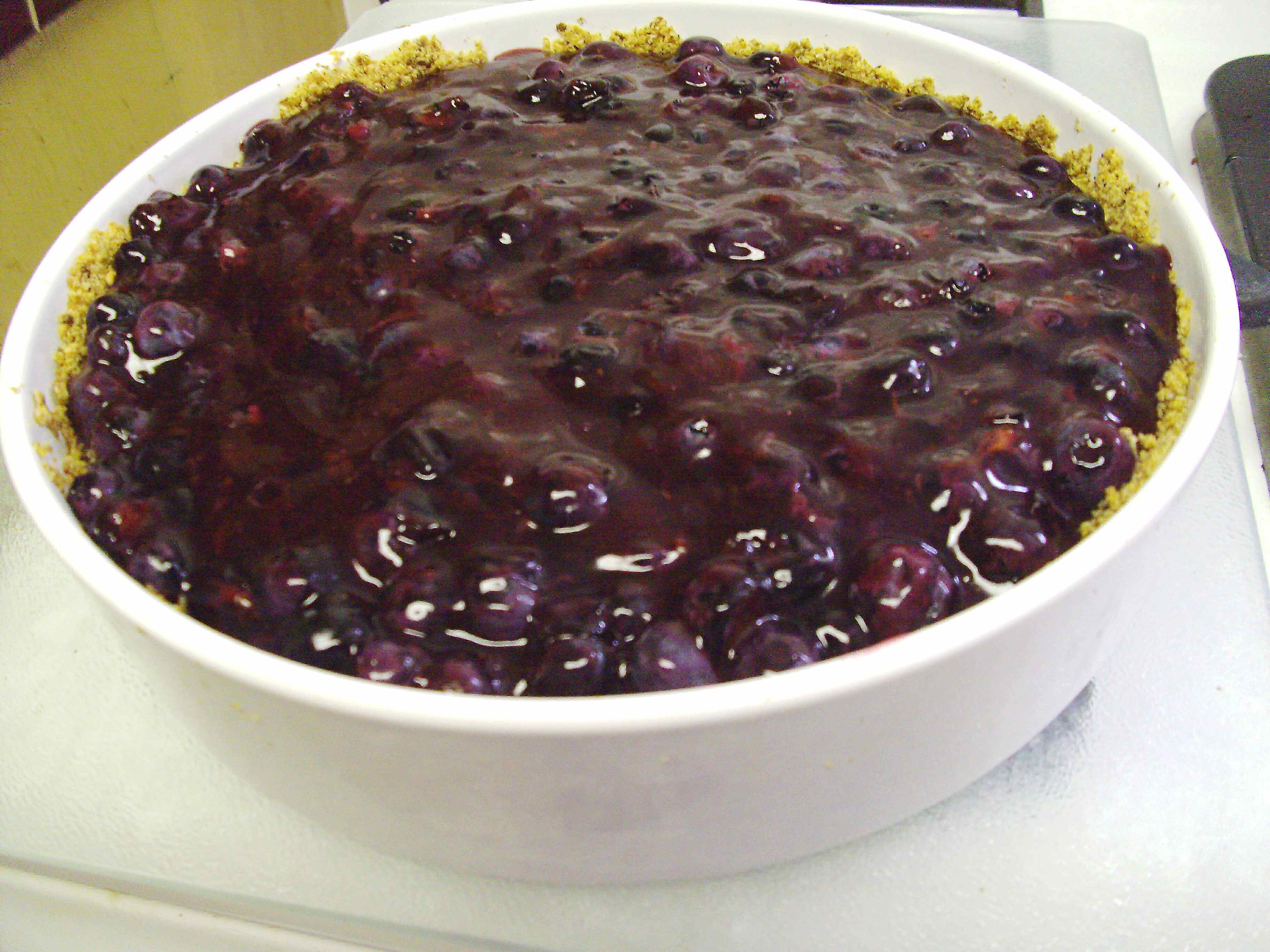
    raw blueberry pie with microwaveable filling and graham cracker crust

    This mostly-raw blueberry pie is a snap to make and very versatile--the filling microwaves in a few minutes, and you don't even have to bake the zippy gingered graham cracker crust--perfect for a hot Fourth of July and all summer long.

  • Recent Posts

  • Contents

  • Archives

  • Now Reading

  • See also my Book Reviews

  • Copyright 2008-2024Slow Food Fast. All writing and images on this blog unless otherwise attributed or set in quotes are the sole property of Slow Food Fast. Please contact DebbieN via the comments form for permissions before reprinting or reproducing any of the material on this blog.

  • ADS AND AFFILIATE LINKS

  • I may post affiliate links to books and movies that I personally review and recommend. Currently I favor Alibris and Vroman's, our terrific and venerable (now past the century mark!) independent bookstore in Pasadena. Or go to your local library--and make sure to support them with actual donations, not just overdue fines (ahem!), because your state probably has cut their budget and hours. Again.

  • In keeping with the disclaimer below, I DO NOT endorse, profit from, or recommend any medications, health treatments, commercial diet plans, supplements or any other such products.

  • DISCLAIMER

  • SlowFoodFast sometimes addresses general public health topics related to nutrition, heart disease, blood pressure, and diabetes. Because this is a blog with a personal point of view, my health and food politics entries often include my opinions on the trends I see, and I try to be as blatant as possible about that. None of these articles should be construed as specific medical advice for an individual case. I do try to keep to findings from well-vetted research sources and large, well-controlled studies, and I try not to sensationalize the science (though if they actually come up with a real cure for Type I diabetes in the next couple of years, I'm gonna be dancing in the streets with a hat that would put Carmen Miranda to shame. Consider yourself warned).

Saving summer

Between the continuous stream of political, humanitarian, economic and diplomatic firestorms set by the Trump administration and the actual forest fires here, it’s been a long, hard, hot summer in California and much more stressful than summer should be. I water cautiously, keep moving forward, and try to keep my family healthy and myself from letting it take over.

I’m also looking for an effective civil rights and humanitarian aid group to contribute to–the Southern Poverty Law Center is one; there are also several mothers’ groups raising funds for legal representation for immigrants separated from their children. As I discovered last year during hurricanes Harvey and Maria, making donations for humanitarian aid is an important way to help yourself as well–it’s something concrete you can do that will actually make a difference, and it makes you feel less overwhelmed and powerless as an individual.

Whenever I step back from the newspapers for a bit, though, I look around me and see the brighter side. I consider that my daughter has finished high school with both honors and friends, and for a change doesn’t have summer homework. She’s working in a job she loves, is learning to drive and is nearly on her way to college, which we are all looking forward to. She’s ready and I’m proud of her (although I’m still not quite ready to see Ladybird).

I’m working for a community book festival this fall that promises some fun and challenging authors, I have some interesting new freelance assignments, and my first e-book project is nearly ready for publication. And I’ve started experimenting again in the kitchen–something I really didn’t have the time or concentration for during graduation and its immediate aftermath.

The heat wave is a big factor in my cooking; Pasadena tends to get over 90 F most days of summer (and plenty of times from September to April too), and the past few weeks have seen temperatures in the 100s midday. So the freezer and microwave are essentials in my book. So is eating or preserving enough of the bounty of summer produce while it’s at its best to keep it from going to waste even in the fridge. Because I always tend to go overboard at the greengrocer’s–last year or the year before it was nectarines (this year too). This year it’s plums, strawberries, any other berries I can get at a good price.

Instant Frozen Yogurt

Most berries are good if you just wash and freeze them while they’re still in decent shape. Mix three or so ounces of frozen blueberries or blackberries with a 4-ounce/half-cup dollop of plain nonfat Greek yogurt and a teaspoon of sugar in a small plastic cup or snaplock container (the plastic is a better insulator than ceramic cups or glass) and you have nearly instant all-real and nicely purple frogurt–the small berries get the yogurt freezing the right way, right in the cup, within about 30 seconds as you stir.

But what if the berries are going a bit ugly and soft–like strawberries?

There’s nearly no point in trying for homemade strawberry frogurt or ice cream unless you really personally like it. Sorbet, I can definitely see, but for my money, strawberry ice cream is generally an insultingly pale pink, not terribly fresh, and tastes duller than plain vanilla. It would be a lot better to stick some actual fresh strawberries or a not-too-sweet fresh strawberry purée on the side of some good-quality plain vanilla because you’d have a real contrast between two actual flavors, not one mediocre pink in-between.

Well, what about jam?

Strawberries are one of my favorite fruits—fresh and raw or else frozen, unsweetened. But I actively dislike most strawberry jam—the cooked, oversweetened blandness bears no resemblance to the fresh, tart wild-tasting fruit I love.

Commercial strawberry jam is not only unbearably sticky-sweet and gluey but the fruit itself, when you encounter it, is usually a slimy dull gray lumpette with five o’clock shadow, something to pick out cautiously rather than savor. It’s not the best of the fruit to start with, and it’s now overcooked and showing it.

But there are still some really heavenly strawberries out there going overripe on the market produce shelves, and I had about half a pound left just a little too long in my fridge after a party. I discovered by fooling around that strawberry jam or at least compote that still tastes like strawberries is  possible to do at home if you microwave it lightly instead of cooking it to death. And I even liked it.


microwave fresh strawberry jam


Could I keep the tartness intact? Could I keep it lightly cooked enough to still taste fresh and like strawberries to me? Could I keep it from being slimy?

Based on a few of my other impromptu microwave fruit spreads (peach, plum, apricot, kumquat) and fruit-rescue attempts (faux sour cherry, nectarine sorbet) I decided I’d give it a quick try in the microwave Continue reading

“Healthy” breakfast muffins? Miscalculated.

Julia Moskin’s latest “Recipe Lab” in the New York Times food section revisits one of my (cranky, irascible) pet peeves: the “healthy” muffin. She claims her version, filled with an expensive and lengthy list of the latest buzzword ingredients and yet supposedly lighter-textured than most bakery offerings, is healthy, always a warning sign, especially when paired with the instruction to make sure it’s well-leavened and to use “unprocessed” oils. These are code words for a heavy dose of baking soda and baking powder on the one hand and coconut oil, the newest darling of the hipster food world, on the other.

But–benefit of the doubt–I looked at the recipe and scrolled down to mouse over the nutrition stats. They’re provided in a popup link you can’t copy, with a very faint “i-in-a-circle” watermarked icon below the ingredient list. Not a good sign, generally: hiding the nutrition stats signals that they’re kinda suspish, or at least unflattering. But okay, at least they’re posted here.

Edamam provides the analysis–and per average muffin, 20 to the batch, claims the following stats:

318 cal, 16 g total fat, 1 g saturated fat, 0 trans, 9 g monounsaturated, 4 g polyunsaturated, 39 g carbohydrate, 2 g fiber, 19 g sugars, 4 g protein, 38 mg cholesterol,260 mg sodium

Something didn’t sit quite right with that. I looked up at the ingredient list.

Sure enough, the fat was provided by 1 1/3 cup of coconut oil. Yick. But never mind. The point here is that Edamam lists the saturated fat at a very improbable 1 gram per muffin.

There is–being kind about it–no way this is correct. The only thing I can think of is that Edamam used the soybean or canola oil option for the calculation, but why would that be? Coconut oil is listed as the much-preferred fat. And it’s got more saturated fat per gram than lard. About 82% saturated fat by weight, if you check the most reliable lab analysis at the USDA National Agricultural Library’s nutrient database. And actually, the mono and poly stats suggest something closer to olive oil than soybean or canola.

The correct calculation for 315 ml of coconut oil is 260 grams of saturated fat for the recipe. For 20 muffins, that’s almost 14 grams of saturated fat per muffin, not 1. And 14 grams is pushing the recommended daily max of 20 grams of sat fat for a 2000 calorie-per-day diet. Just for a muffin.

Given the nice way the New York Times provided the grams as well as cups and spoons measures in the recipe, here’s what I came up with, direct from the USDA NAL database and averaging a bit for the different options between apples and carrots and between walnuts and pecans.

  • Total calories for the recipe: 7213, per 1/20th (1 muffin): 361
  • Total saturated fat: 273 g,  per muffin: 13.7 g
  • Total monounsaturated fat: ~50 g, per muffin: 2.5 g
  • Total polyunsaturated fat: ~50 g, per muffin: 2.5 g
  • Total cholesterol: 744 mg, per muffin: 37 mg
  • Total carb for the recipe: 699 g, per muffin: 35 g
  • Total sugars: 390 g, per muffin: 19.5 g
  • Total fiber: 49 g, per muffin, 2.5 g
  • Total sodium: ~4670 mg, per muffin, 234 mg.

And yes, it’s kind of a pain to navigate all the USDA data chart by chart, ingredient by ingredient, put in the actual amounts in grams, have it recalculate the whole chart, add the totals up nutrient by nutrient, and then divide by 20. It would be so nice to find an accurate and complete free recipe-style app to pull all the relevant data and stick it in a single spreadsheet. The myfitnesspal.com recipe calculator is about the best I’ve found so far, but it’s not as complete, and neither unfortunately is the USDA’s Supertracker calculator, as far as I can tell.

How did Edamam and the New York Times Food Section do? The sodium, though a bit much for a single bready item (4 t. baking powder, 1 t baking soda and half a teaspoon of salt on top of that, plus whatever’s in the buttermilk), came out about right at 260 mg (I got 234 per muffin). The carbs are about right too, if kind of a lot. Sugar at 19 grams is about half the total carb and makes it no great bargain (not to mention, brown sugar plus maple syrup? cha-ching, and the maple flavor probably disappears with all the other stuff. Kind of a waste.). This is still a pretty cakey item, despite Moskin’s protestations to the contrary and all the grated carrot and blueberries and multigrain ethos. Edamam’s calorie estimate is a bit low by 40 cal per muffin. You could probably live with that.

But you shouldn’t. Because with the trendy, expensive coconut oil option, the published saturated fat estimate is way, way, way off. Way off. Bizarrely off.

I visited Edamam’s web site to see if I could figure out how they calculated this–whether their own calculator would give me the right result if I input “315 ml. coconut oil,” or whether their API, which features natural language processing, somehow makes  errors this big when it parses a recipe and does the lookup in the USDA database. Did it pull the wrong ingredient, or did the NY Times staff type the wrong thing into their recipe submission? Or what? Continue reading

Microwave Tricks: Shakshouka

IMG_0458

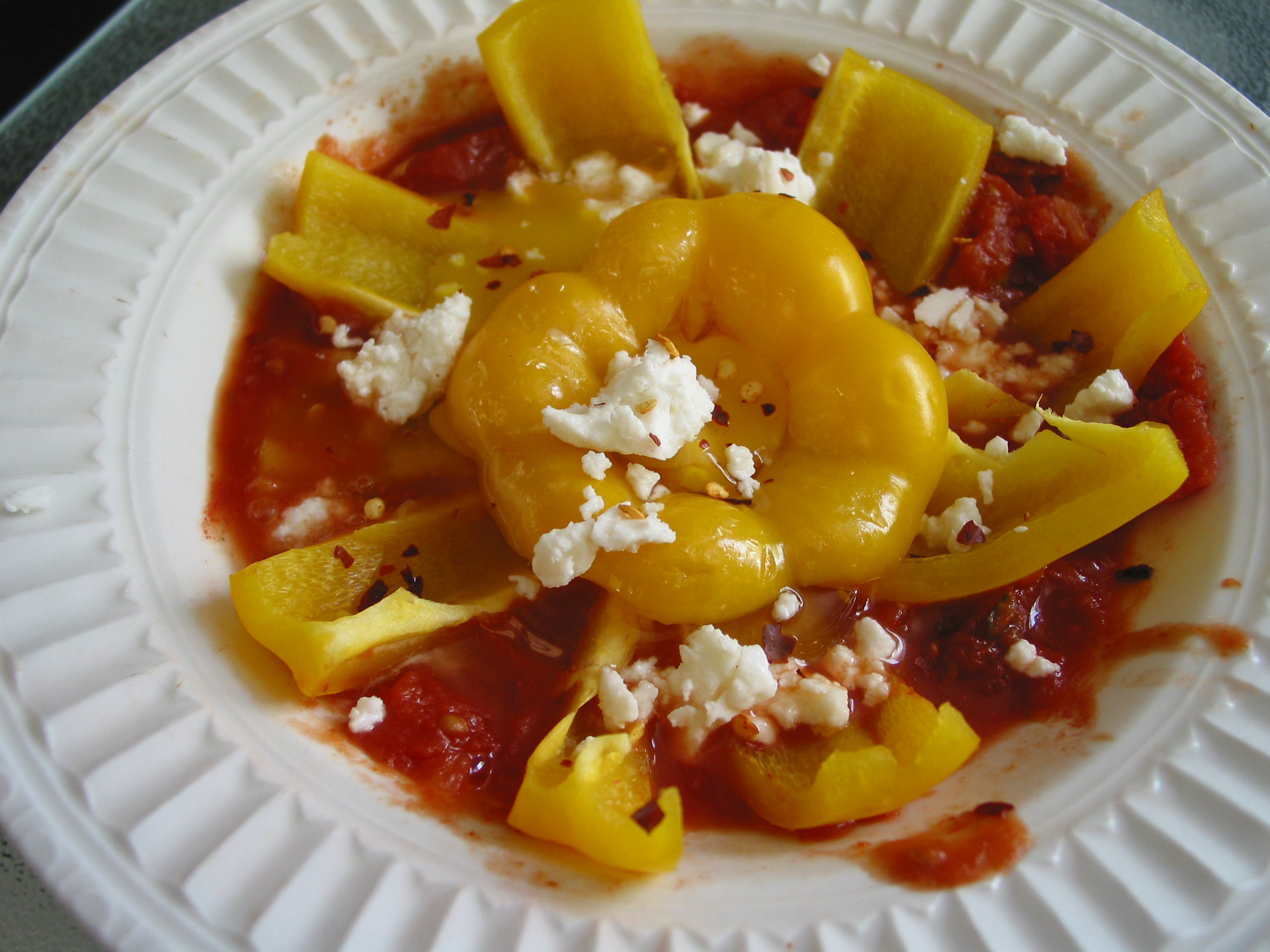
Marinara plus a pepper makes a good start.

Sometimes during Passover you just can’t take any more matzahnola. Or matzah with jam, or matzah brei. Or cake. Or macaroons. Anything for breakfast that doesn’t involve at least one vegetable (other than yourself, before coffee). Your tolerance for sweet stuff has been exhausted, and as for the leftover gefilte fish and hrein…no. We are not going there. No matter how much my husband insists it’s “perfectly good” (and I notice he hasn’t schlepped the rest of the jar with him to the office!)

Forget all that. There’s a pretty good cure for the Pesach blahs–you need some chile peppers and you need them now. Not in 20 minutes, no major cooking involved. You have a microwave, some cheap microwaveable soup bowls or the like, and you’re not afraid to use ’em for an increasingly popular Israeli brunch dish–shakshouka. Which is basically the Jewish version of huevos rancheros, only without beans or potatoes. Or lard.

Yotam Ottolenghi has made shakshouka popular and photogenic in at least one of his famous cookbooks, probably prettier than what I’ve got here. But it takes longer too, and I’m impatient.

To make shakshouka, you usually need a frying pan, olive oil, some tomatoes, peppers and onions, plus garlic, cumin, chile peppers, maybe a couple of oregano-or-thyme-and/or-cilantro-type herbs–sounds like the makings of salsa, no?–and some fresh eggs to crack into the resulting sauce. The sauce takes some 20-30 minutes to cook down, the eggs another 5-7 to cook more or less sunny-side-up in the middle of the sauce. That’s a lot of time for breakfast. I wanted a shortcut this morning.

Most jarred salsas are not kosher for Passover–it’s the distilled vinegar thing. That’s okay, because yesterday in a fit of domestic planning (uncharacteristic, I swear) I decided to make a batch of microwave marinara from some unsalted canned tomatoes. I don’t have a kosher-for-Passover food processor this year, though, so I decided, after trying to chop up some pretty tough Roma tomatoes (even with the skins off!) that I should just do as the Sicilians do and break them up with my hands as Tony Danza advises. A little chunkier than usual, but just fine. And actually ideal as a base for shakshouka–both its readiness for a mid-morning fridge scrounge and its rusticity made for a good start. A good dollop in a microwaveable soup bowl.

What else do you need? Maybe a bell or Anaheim-type pepper that needs to get used up. Cut it up (I got whimsical, you don’t have to potschky around with flower shapes). Add more onion if you feel like it; I didn’t. Stick it in the microwave for a minute or two to wilt the pepper and possible onion pieces.

IMG_0461

Then crack an egg or two into it, sprinkle on a bit of feta or panela or queso fresco as desired, maybe a pinch or so of chile pepper flakes or z’khug (I’d run out) and/or chopped cilantro as desired.

IMG_0463

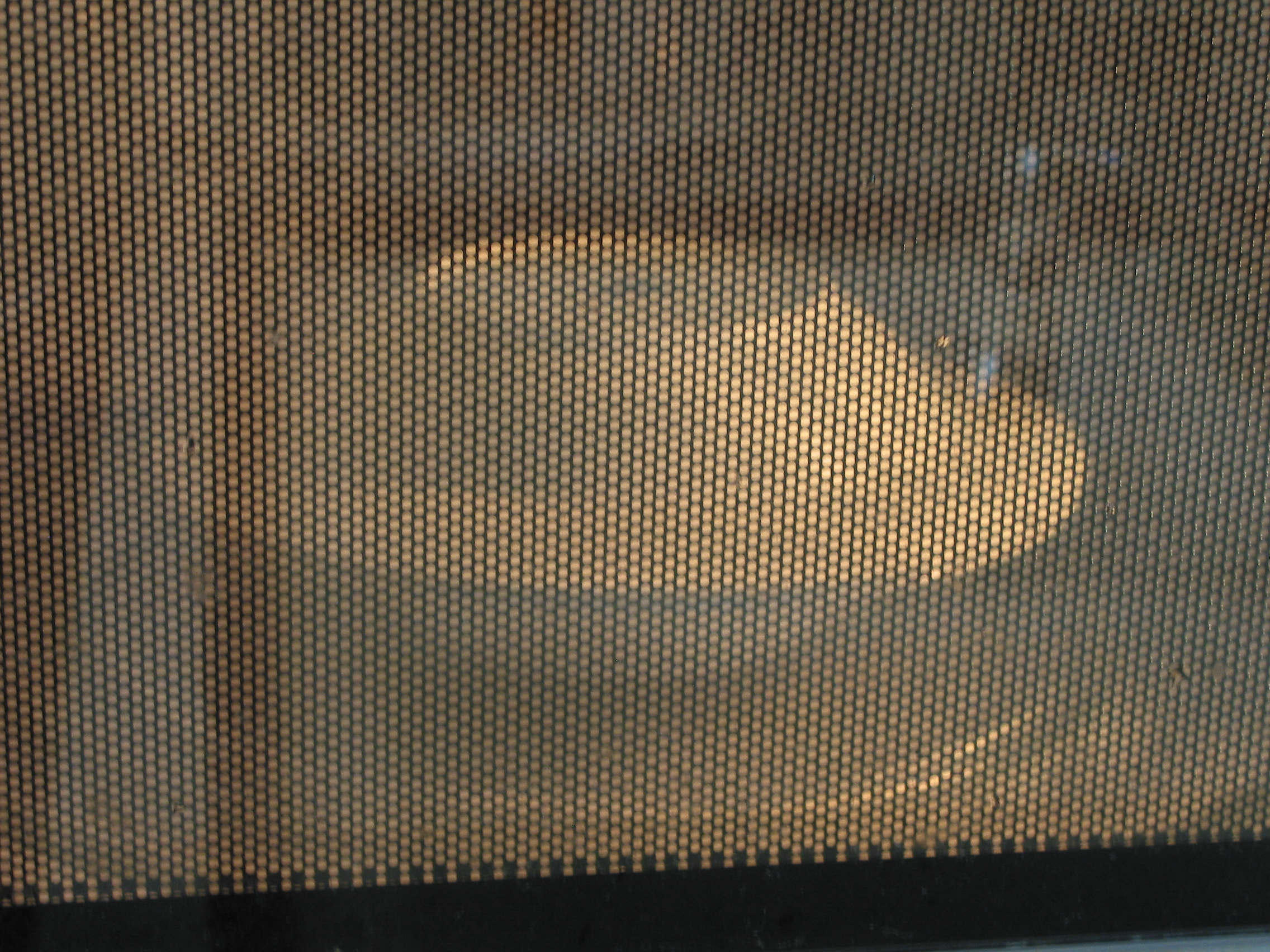
Put another soup bowl on top as a lid, and microwave another minute or two until the eggs are cooked to your liking–check and add 30 seconds if you think it’s still got a raw spot somewhere, and/or leave the lid on for a few minutes and let it finish cooking in the residual heat of the sauce.

Obviously if you’re having people over for brunch, the standard frying pan method is better and quicker–more eggs and salsa means more time in the microwave, and no one wants to sit around as you microwave individual portions. But if it’s just you, or you and your partner, the microwave method works pretty well. Just add a little time (maybe another minute or so in 30-second increments) for four eggs as opposed to two.

IMG_0464

Hafla! (celebratory remark when there’s something good on the table and you didn’t have to wait an hour for it) Grab some matzah and a cup of hot coffee and b’te’avon (mangia bene/bon appétit/eat nice)!

Microwave tricks: 5-Minute Plum Jam for Fall

Italian prune or blue plums

These Italian prunes are some of the fresher, better-looking specimens from my greengrocer’s bin this week. But overripe plums work fine too.

Italian blue or prune plums are probably the last round of plums to appear at my local greengrocers for the year (well, until they start getting in carboys of plums and peaches from Chile). Prune plums aren’t much to look at–well, okay, they have a graceful enough elongated shape, but cut into one and you won’t be terribly impressed–the peel is thick and slightly bitter, the flesh is yellow-brownish, not very juicy, and a bit stickier and less brilliantly flavored than the red and black plums of summer, to say nothing of the gorgeous green and mottled dinosaur and Santa Rosa plums we can get here in LA. Many of the fresh prunes end up overripe and still untaken at the end of the day.

Which, I’ve discovered this week, is actually quite a shame. Because if you buy them early and firm, while there’s still a tint of reddish purple about them, they’re closer to regular plums–crisper, juicier and livelier tasting raw. Still not the ideal eating plum, but not bad.

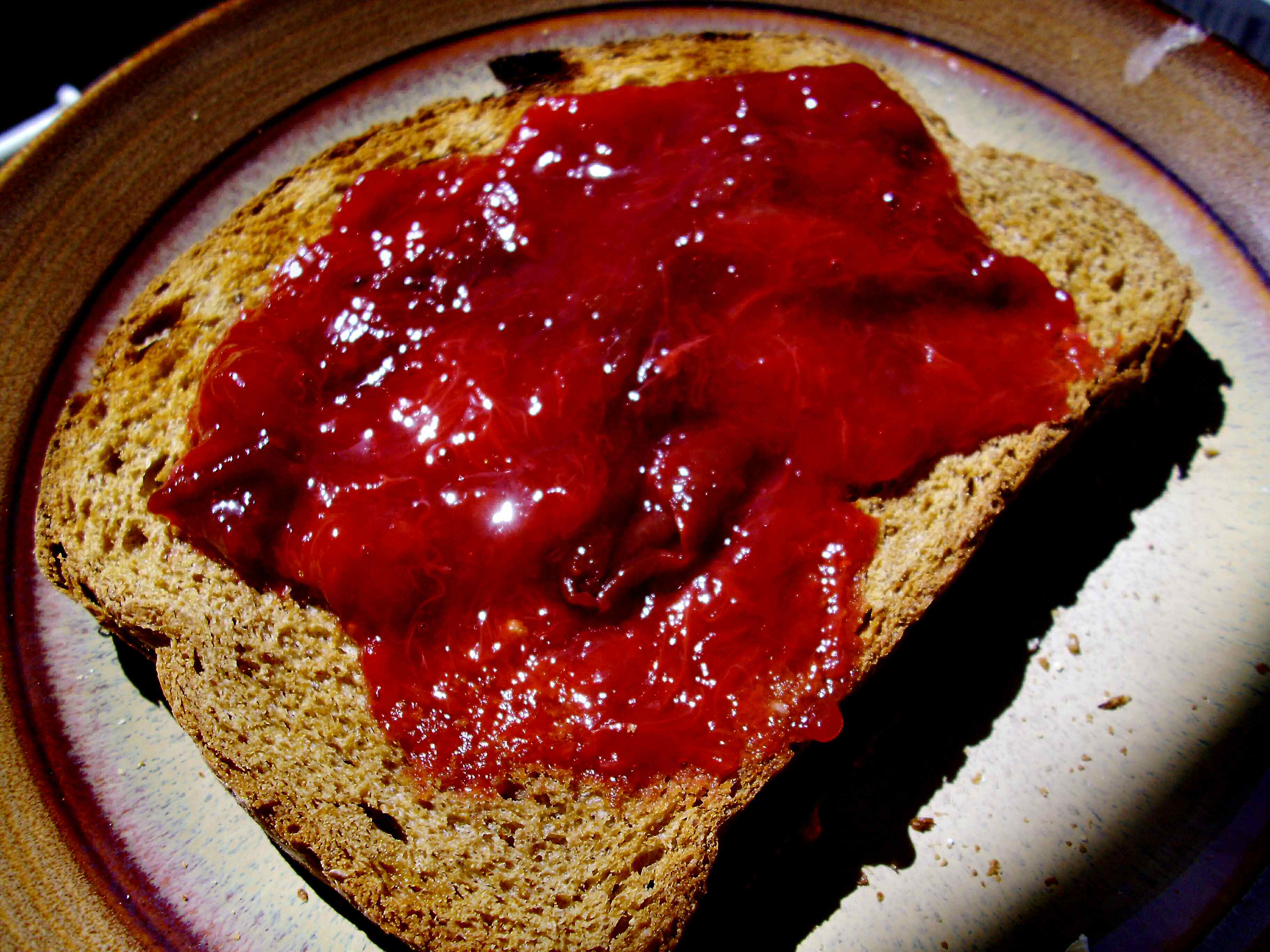
And if you take the ones that are fully ripe and disappointing and bland and not too pretty, cut them up and microwave them, suddenly everything transforms. Italian prune plums make a gorgeous, rose-red, vibrantly flavored low-sugar jam. A lot like cranberry sauce in both color and flavor, but somehow a little mellower, with the bitter edge off, and a hint of spicy perfumed depth.

Microwave plum jam on wholewheat toast

Five minutes in the microwave, and everything changes.

Many stone fruits react this way to heat–sometimes sugar too, but mostly it’s the heat. Even very bland, mushy pale apricots seem to bloom into vibrant flavor and acidity when baked or simmered, and sour cherries go from slightly bitter and dull raw to world-famous classic pie filling with a strong almond aroma. I’ve rescued bland, spongy supermarket nectarines and peaches by microwaving them into fruit spreads with real flavor, but obviously good fruit makes even better jams and compotes. It’s just that when the fruit is good raw, I’d usually rather eat it raw, because the season is short.

The prune plums I bought this past week don’t provoke that dilemma of choice; they’re definitely better turned into a quick fruit spread, and maybe I’ll freeze a second batch for later. These plums would also make a great pie filling, like the zwetchgenkuchen that Joan Nathan first published as a traditional German Jewish dessert for Rosh Hashanah in The Jewish Holiday Kitchen. Baked conventionally, the quartered prune plums would probably hold their shape somewhat in the crust and look beautiful.

In the microwave, the plums quickly break down to a bubbling mass and gradually take on color from the peel–at first, bronze with a hint of pink, and after a minute or two the color spreads and deepens to cranberry red (as does the flavor). Sugar just to taste, a tiny squeeze of lemon, and a pinch each of clove and ginger balance out the tartness, and after a day in the fridge, the jam has mellowed and integrated beautifully.

The accents of brandy, cinnamon, nutmeg and lemon peel in Nathan’s recipe make me want to run back to the store and try it this instant, but after a week of baking challah for the high holidays and prospects for 100 degree temperatures yet again, I’m not sure today’s the day. Maybe for Sukkot, which starts later this week.

But the combination of plums with aromatic spices is right on, and if you’re adventurous you could always take this fruit spread one step further and add a small spoonful of brandy, a few shakes of cinnamon and an even tinier hint of nutmeg, even a little grated lemon peel. The simple version below is good on toast, delicious with Greek yogurt and plenty complex enough for me before or after the second cup of coffee.

However, the full-on dressed-up version would probably be a wonderful accent for goat cheese tartlets or a baked brie if you were doing swanky appetizers for a dinner party. I’d test-taste a small batch of the jam first just to make sure it wasn’t too rich with the brandy and nutmeg, because a little goes a long way, but otherwise, let ‘er rip. The plum-jam-with-cheese appetizers would also be an unexpectedly good accompaniment to mead, sherry or other apéritifs for fall.

5-Minute Microwave Plum Fruit Spread (makes about a cup)

  • 5-6 ripe Italian blue or prune plums (or any other plums), washed, pitted and cut up
  • 2-3 T sugar (or more to taste–I like mine less sweet, more fruit)
  • squeeze of lemon juice
  • pinch of cloves (maybe 1/8 t, probably a little less)
  • pinch of powdered ginger (a little less than 1/8 t)

Put all ingredients in a microwaveable ceramic bowl big enough to hold them with a couple of inches to spare, because the plum mixture will bubble up as it cooks. Remember to handle the edges of the bowl with a towel or oven mitt or something (folded paper sandwich bags also work okay in a pinch) because this will heat long enough for the bowl itself to get hot.

Microwave 1-2 minutes on HIGH (I have an 1100 W oven, so adjust times to whatever works for you if yours is older and lower power). The plums should be starting to break down and just starting to color pinkish. Stir the mixture and microwave another minute or so, stir again. If it’s not cooked as much as you think it should be, microwave another minute or so but be prepared to hit the stop button if you see it start to boil over. If it’s fully colored and broken down to a fruit spread, take a small spoonful, let it cool, and taste carefully. It will probably taste a lot like not-very-sweetened cranberry sauce. If it’s not sweet enough for you, add a little more sugar to taste, and maybe another squeeze of lemon, then let it cool all the way covered and refrigerate. It will thicken a little further and mellow overnight and taste more like plums, especially with the clove and ginger notes.

You can, obviously, also boil the ingredients a few minutes in a saucepan on the stovetop if you prefer. If you want it completely smooth, cool it and put it through a food mill or food processor.

This isn’t canned, so store it in the fridge for up to a week or freeze it for later. When you thaw it, taste it again–you might need to add another squeeze of lemon and/or reheat in the microwave just a minute or so to refresh it.

FDA warning on powdered caffeine

The Washington Post carried a story yesterday on a new FDA warning about powdered caffeine’s potential for a lethal overdose. Caffeine is relatively unregulated as a dietary supplement and companies have been selling it mixed into “energy” drinks and “shots”, inhalers and other forms, including pure powder, through Amazon.com and other internet venues.

Most of the stupids (I mean, more politely, naive consumers) who buy caffeine-laced “energy” products are teenage boys and young men–no great surprise. Guys in that age range tend to have trouble getting up in the morning and being alert for class. The proliferation of the iPad, the smart phone, and game apps isn’t helping. A cheap, legal and potent stimulant seems like just the thing to counteract the effect of late nights and early exams. Combine that with a pitch about “energy” and fitness–mostly in the form of weightlifting and bodybuilding, a sector rife with dietary supplement abuse marketing, and wishful thinking about instant “buffness”, as my now-teenage daughter scoffs–and you’ve got a really bad deal.

But it doesn’t take much of the purified caffeine powder to overdose and the difference between stimulated and dead can be as little as a few milligrams–much too hard to measure accurately with a teaspoon or even most kitchen scales.

Caffeine is far from harmless even in limited doses (otherwise, why would we bother to drink coffee?) And it’s definitely a drug–I had to work with it in the lab way back in my radioactive youth. And it’s really inexpensive.

Why the “dietary supplement” label is still allowed to cloak quasi-drug and drug products from FDA control is a mystery to me. It’s a bad deal for everyone eventually, because as more of the supplement compounds are discovered to have harmful effects–think anabolic steroids or some of the “smart” drinks and relaxants added to “energy” drinks over the past decade–Congress ends up having to legislate against them one by one, and the FDA has to go through a torturous combination of warning letters and negotiations with the companies involved and attempt to draw up new regulations–a very expensive and drawn-out process. And it’s usually piecemeal and illogical–caffeine levels in soda are regulated, pure powdered caffeine is not.

In the meantime, hospitalizations from caffeinated energy drinks and other easily abused products have doubled since 2007, and there have been a number of deaths from caffeine overdose, including the Indiana teenager whose parents had no idea he was buying and consuming powdered caffeine when he died at the end of May, and whose case spurred the FDA’s attention this time. The state of Oregon is also currently going after 5-Hour Energy in a lawsuit over false advertising claims about ingredients that actually do nothing much, when the real stimulant effect is due to a dose of caffeine.

But even if you’re not a naive teenage boy, the whole caffeine-laden environment has expanded beyond anything that makes sense. More and more people are finding themselves overdosed (not lethally, usually) but with the shakes or dizziness. Between the Starbucks venti and proliferation of 20-ounce sodas as the new normal serving size, there’s a new source of trouble, because caffeine is showing up in foods we don’t expect to contain it.

Food companies are adding caffeine to candy and snacks these days as never before–even in oatmeal and pancake syrup. The FDA is taking the “negotiate with the companies and hope they back down” approach, as they did with Wrigley for its Alert caffeinated chewing gum a year ago. They don’t currently have the impetus to forbid adding caffeine to foods as they did with alcoholic caffeinated beverages a couple of years ago–the “blackout in a can” as Charles Schumer put it–but they’re at least making noises about getting it back out of foods that children and teenagers are likely to eat. I like the coffee cup graphic up on their Q&A page about it, but will it really change anyone’s mind or make them look harder at the ingredient lists if they’re already buying these products?

Why put caffeine powder in non-coffee foods in the first place? It doesn’t taste like much or stimulate the tastebuds, exactly. But the combination of mental stimulation via caffeine with eating a particular snack food is probably intended to make lackluster processed foods more attractive and even addictive in either the literal or marketing sense. Given the price of caffeine powder compared with almost anything else the companies could add, I’d be willing to lay odds on who’s going to be even more addicted to caffeine than the consumers. Cue the Pavlov effect.

Post-Kiddush: our leftovers are better than yours

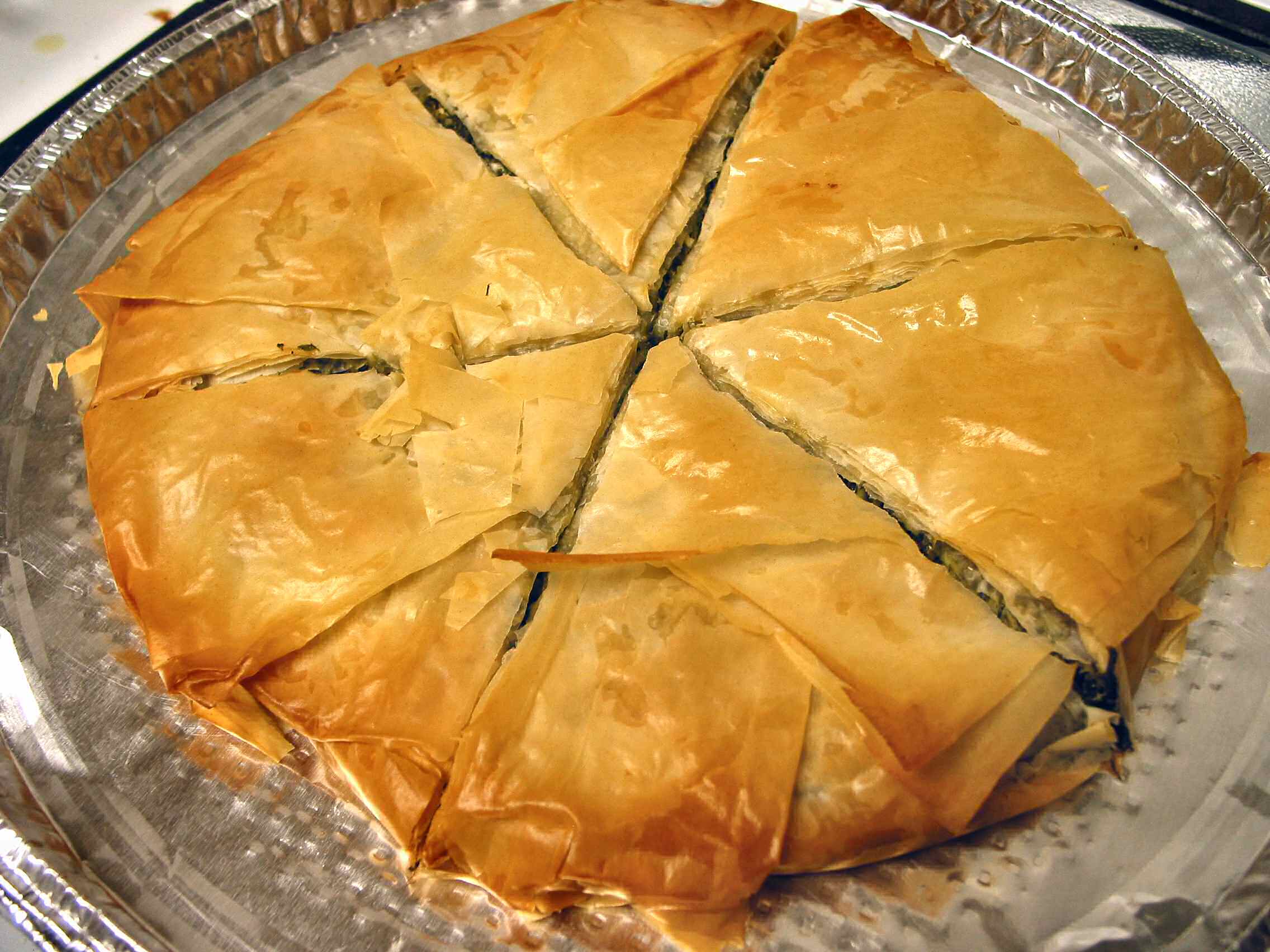
Round spare spanakopita just for us after the big kiddush

Round spare pinwheel-style spanakopita just for us at home. The big ones for the brunch had three pounds of spinach apiece (and were cut in small diamonds), but they still went together pretty fast–except for squeezing all that spinach dry…

This weekend I did it again–I made the kiddush, or in common speech a lunch buffet, for my congregation’s Saturday morning service. My husband kind of volunteered us for this week and because he doesn’t cook, most or all of the cooking, shopping, chopping and schlepping landed on my shoulders.

Last time he volunteered us, it was for our anniversary, and  I was ready to skip ahead to the divorce until I got over it, because it’s a lot of work to cook for 60 or so people who like to eat. And kibbitz. Especially when the 60 suddenly turns into 80-plus and having to use the synagogue kitchen with the more complicated and confusing rules on only a week’s notice. As they did this time…..

Soooo….a two-day hell of shopping and then marathon cooking-and-juggling in my little galley kitchen. The microwave got a serious workout. So did the food processor and the oven. Sometimes all at once. And it was raining hard for three days, so bringing things over to the synagogue kitchen as I went got a little tricky. I triple-wrapped the chocolate cake and stuck it in a USPS Priority Mail box so it wouldn’t get left out in the rain. Same idea for the spanakopita trays.

A few hints about cooking big and real for a synagogue brunch, learned the hard way by moi and passed on for your edification and safety (and sanity):

1. You can buy a 6-lb can  of chickpeas for massive half-gallon batches of hummus (Mid-East brand, maybe Goya as well). Cost? about $5. But–as I found out, and I’m glad no one was filming the process–industrial-sized can equals industrial-strength steel. A dinky hand-operated can opener is no match for such an item. I got just far enough to be able to pry open a kind of spout but there were tears and long-fluent-repetitive-all-throughout-the-house swearing sessions involved.

Still….

2. If you have a good corner greengrocer, you can buy quantities of eggplant for cheap–eleven or twelve eggplants made for a large tray of roast eggplant and onion slices (with garlic slivers and za’atar sprigs and olive oil) plus a large vat of baba ghanouj. Only the five eggplants I nuked for the baba ghanouj didn’t feel like cooperating fully when it was time to peel them. Might have been easier to peel first, then nuke, since it was all going into the food processor eventually. Next time…

3. Whole smoked whitefish for whitefish salad comes two ways–cold-smoked or hot-smoked. What’s the difference? I asked the counter guy at my favorite Armenian grocery. “Cold-smoked is a little less hard,” he said. So I bought it, thinking he meant the hot-smoked was tough as shoeleather and twice as chewy. I was wrong. Cold-smoked actually means the fish is smoked raw, like lox, only a little drier and tougher. But you don’t necessarily want to put it in whitefish salad that way. Man, it still had the scales on too. I couldn’t get it off the bones for love or money, and there were a lot of bones.

However, the microwave came to the rescue. I cut the fish in half and Continue reading

Starting with Breakfast

“The Well” blog at the New York Times has posted a new interview with pediatric endocrinologist Dr. Robert Lustig about his new book, the Fat Chance Cookbook, and about the possibilities for treating obesity in children with a better, less processed diet.

Two or three takeaways from the interview surprised me by echoing things I’ve either thought or written about here since my daughter became a Type I diabetic four years ago.

Almost always, we see an obese kid come in with an obese parent. And when the kid loses weight, the parent loses weight, because the parent actually changed what’s going on in the home.

We do something called “the teaching breakfast.” Every kid comes in fasting because we’re drawing blood. So they’re all hungry. They go to the teaching breakfast with their parents – it’s six families all at a communal table – and our dietitian spends an hour with them. The dietitian narrates exactly what’s on the table and teaches the parent and the kid at the same time….We make sure four things happen. No. 1, we show the parent the kid will eat the food. No. 2, we show the parent that they will eat the food. No. 3, we show the parent that other kids will eat the food, because they have other kids at home and they have to be able to buy stuff that they know other kids will eat. And No. 4, we show them the grocery bill, so they see that they can afford the food. If you don’t do all four of those, they won’t change.

Also, and I think this is my favorite:

…my wife is Norwegian… When she’s mad at me, she bakes…My wife has learned by experimenting that she can take any cookie recipe, any cake recipe, and reduce the amount of sugar by one third, and it actually tastes better…. And you can taste the chocolate, the nuts, the oatmeal, the macadamia – whatever is in it.

Right on!

Back to the top, though, I’ve got to say I love the idea of the teaching breakfast. My one concern is the reality of time cost for families with school-aged children, because eggs and vegetables, two of the (sometimes) inexpensive staples of the UCSF clinic’s teaching breakfast, take more time to prepare than a bowl of cereal, and require more cleanup. On weekdays, that might be a real challenge, especially for families with two working parents and/or long drives to school. A lot of the families I know in this situation (long drives and no school buses being a common problem in Southern California) are used to tossing their kids in the car with some kind of makeshift breakfast to eat on the way–often resorting to bagels, pop tarts, or bananas, none of which are great choices.

Perhaps if the dietician showed some simple microwaveable 5-minute meals like oatmeal or an easy vegetable-filled frittata (with some of the yolks left out) that can be made the night before and refrigerated? The plain yogurt with fresh fruit idea is also quick and simple but not especially cheap–these days a quart of plain non-Greek yogurt goes for $2.50 at Trader Joe’s, almost the same as a gallon of milk, and costs even more at the local Ralph’s (west coast Kroger affiliate), but it serves only 4 if each serving is a whole cup. Cereal with milk is a lot cheaper–but it could certainly be better cereal, high in fiber and low in sugar and salt, and measured by the cup or on a scale before pouring it into the bowl to make sure you don’t get more than you think you’re getting.

Cutting up fruit and vegetables takes time that parents usually feel they don’t have. And berries, which don’t need cutting up, are relatively expensive fruits, even when frozen. So showing parents a couple of “instantly grabbable” ways to serve the less expensive fresh (or fresh-frozen) fruits and vegetables instead of Froot Loops might be key.

A simple “just wash and nosh” approach would probably be a good start. I know I generally rail against buying precut, expensive little baggies of manicured (and dried out) vegetables in the supermarket, but the big bags of “baby carrots” that don’t require peeling and are finger-food size would be an okay starting point to get kids and parents to think about vegetables as a good snack or even breakfast choice. My daughter lived on them for lunches (along with a PBJ on whole wheat and an apple) for most of her grade school years, and even though she has (and will probably always have) a mean sweet tooth, she still seeks out raw green beans, wedges of red cabbage, roma tomatoes and broccoli or cauliflower branches to break off, rinse under the tap and nosh on after school.

Lightening up homemade scones

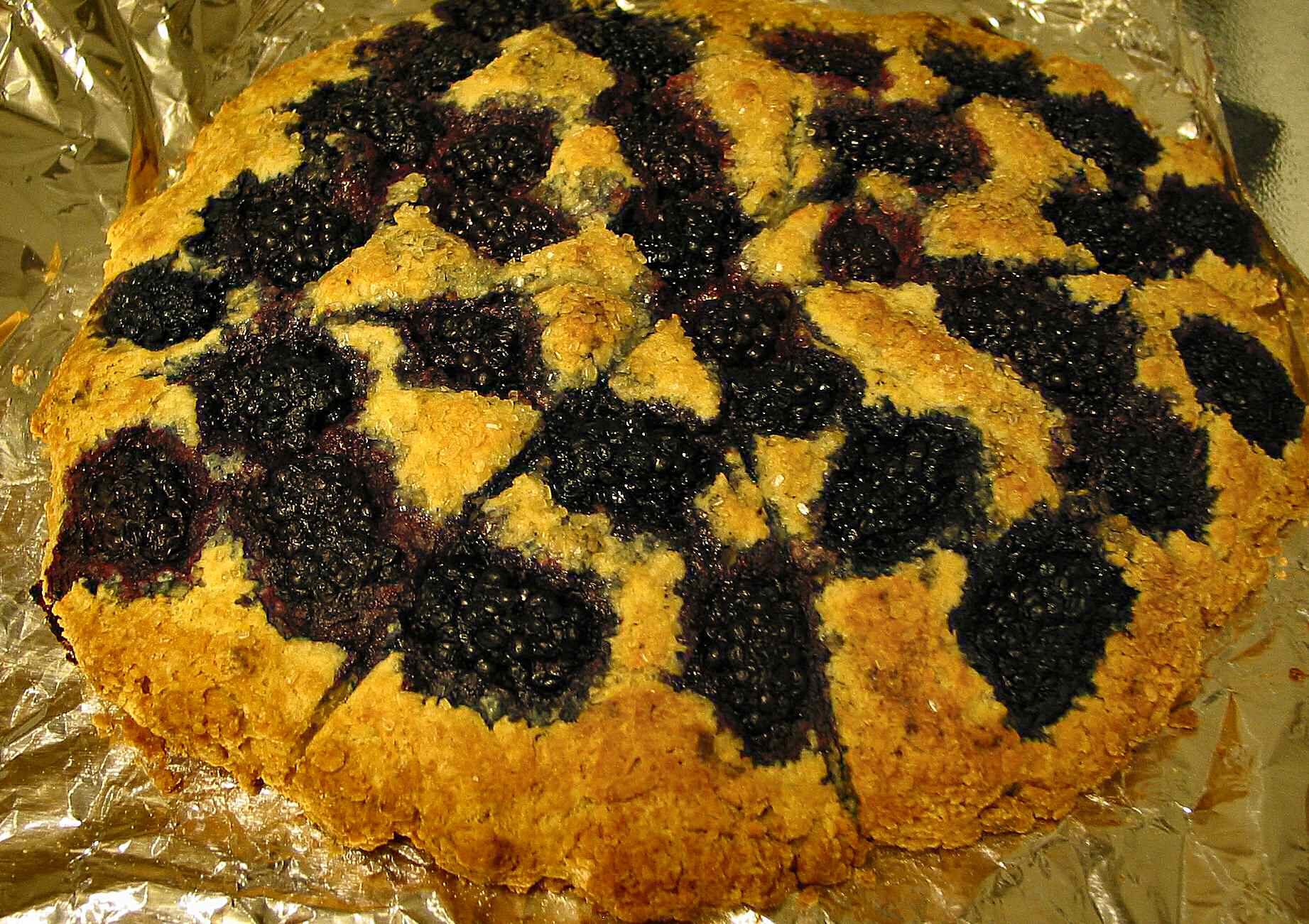
Blackberry scones for brunch

I’ve been wanting to post my favorite scone recipe for some time, but it seems to me that most food blogs start out with good intentions and end up maxing out on the desserts-and-starches end of the food spectrum.

The reason is pretty simple: if you’re a food blogger,  a baking recipe and a pretty picture (or any picture of an aggressively-frosted cupcake) will never put you wrong, even if the real result tastes kind of blah. I mean, cupcakes? Isn’t that what Duncan Hines is for? But if you do feature cupcakes, somebody’s sure to repost it or call it awesome, particularly if you figure out how to add bacon to it. Somehow people just don’t flock to posts about green beans in droves unless you’re redoing the Thanksgiving-straight-from-the-can classic, complete with canned fried onions.

There are way too many variations for every kind of baked good, none with a clear and permanent advantage, and people take them all literally (see under, my New Year’s apple pie insecurities).

So as I say, I’ve been reluctant to put up too many baking posts. Scones, though they’re not exactly the staff of life, are very easy to make and actually taste best when you make them from scratch–much better than buying them in a store and definitely not at your local Starbucks. The question I have is whether it’s a good idea to do it very often–I usually don’t, even on the weekend, but partly that’s because I live in southern California and heating the oven for more than five minutes in my little galley kitchen is often a Very Bad Idea. The other reason is that I keep remembering something Valerie Harper once said (maybe in the role of Rhoda Morgenstern; can’t remember): “I don’t know why I bother to eat this piece of chocolate cake. I should just apply it directly to my hips.”

Most quick breads (i.e., raised with baking soda or powder, or beaten egg whites, not yeast) do fine in a microwave as long as you don’t need them to brown. So lemon-poppyseed cake is okay, as is gingerbread. Scones, which to my mind require a deep and crunchy crust, need a regular oven to do well, but I make the sacrifice (90-degree weather makes it a genuine sacrifice) once in a while on Sunday mornings, because they taste terrific and they’re not exactly rocket science to make.

So if they’re that easy, should I really be posting about them–haven’t you already seen too many wide-eyed, “Look, Ma, I made SCONES!” kinds of posts?

Let’s face it. You can make great scones in a food processor from a very short list of ingredients for cheap, in about half an hour including baking time, and flavor them simply or exotically. Fruit or chocolate chips or chiles and herbs and cheese–all optional. I stick with berries and turbinado sugar, which makes the crust crunchy and glittery. Continue reading

Big Food mobilizes against child marketing guidelines

This Washington Post article isn’t the absolute clearest–looks like it was written as a last-minute rush piece, actually, but it’s worth getting to the end.

The basic idea is that in 2009 Congress demanded the CDC, FDA, USDA and FTC come up with a coherent set of voluntary nutrition guidelines for what the food industry can market directly to kids.

I’m not a big fan of voluntary nutrition or safety compliance guidelines for the food industry–mostly because industry players generally feel free to ignore or toy with them and then claim some kind of advertising advantage they haven’t earned. Voluntary guidelines also come with all kinds of soft landings and easy outs, and the proposed guidelines here are no great exception.

But in any case, now the four agencies have done it, and the food and restaurant industry is doing the predictable–throwing big lobbying bucks into a disinformation campaign-slash-tantrum.

How big? The campaign manager won’t say, but the preliminary guidelines report that US food industry marketing to kids 2-17 years old is currently something over $1 billion in three key categories (breakfast foods, restaurant chain food, and snacks).

So it probably won’t surprise you that companies like General Mills, Kellogg, and Pepsico have teamed up with ad-carrying media partners like Viacom (read: Nickelodeon) and Time Warner to try and quash the voluntary industry guidelines. Figure on the campaign to be spending in the mid-millions or more. They’d rather “salt and burn” instead of “cut the salt and learn.” And what a waste.

What will probably surprise you is just who this coalition–calling itself the “Sensible Food Policy Coalition”–?!!–hired to handle the campaign: Anita Dunn, a former Obama communications director whose husband, Robert Bauer, is  still White House counsel. Not a really lovely mashup, there.

Why she’s taking on the food industry campaign so they can keep protecting their ability to market garbage to the young and vulnerable is one question. Why the FDA and FTC, which have the power to decide what nutritional and medical claims, among other criteria, are valid and can be used in advertisements to adults, let alone kids and teens, are bothering with a voluntary measure instead of doing a proposed regulation to limit such marketing to youth is another.

In both cases, the answer is almost certainly money. The food and media industries have it, the federal agencies don’t.

[As it turns out, the FDA and FTC don’t have power to restrict Big Fo0d’s marketing to the under-17 crowd after all. They lost that specific ability in 1981–start of the Reagan administration… Reagan’s “ketchup is a vegetable” declaration was the beginning for drastically lowered nutritional standards and branded fast food concession contracts for public school lunches.]

So the right question under these circumstances is, where do you want to put YOUR money? How about this, if the federal agencies can’t get a decent result and the lobbies are buying off everyone else:

Boycott the Boxes. Hit ’em where it hurts.

Box 1–TV: If you have kids, limit their access to TV, and teach them to turn off the sound during the ads. Do it yourself. Treat the ads like the silly nuisance they are from the minute your kids are old enough to watch. Tell your kids the truth: most of the products advertised on kids’ shows are too shoddy–and overpriced–to market to grownups. The companies make them bright and loud and cheesy because they think kids can be fooled easier (your kids should be beautifully insulted at that if they’re about six or seven years old).  Go with PBS and videos you approve rather than commercial TV as much as you can.

Box 2–Packaged stuff parading as food: Skip almost everything that comes in a cardboard box or a plastic overwrap, or in a can. You can do this. You’ll save an awful lot of money by buying store brands only and cutting out the most pernicious items–sugared and high-salt packaged breakfast cereals, bags of starchy snack extras, and sodas, at least on an everyday basis. Save sodas and chips for parties, not for school lunch or part of dinner.

You’d do even better to go with fresh vegetables and whole fruits for most snacks and make a good habit for relatively cheap. They taste pretty good, don’t take long to fix, last at least a week in the fridge, and your kids won’t get sick overeating them.

There’s a reason the Pringle’s slogan is the very smug  “Betcha can’t eat just one.” No one says that about carrots or broccoli, or even about apples. Ever eaten too many of those in one sitting? Didn’t think so. Vegetables and whole fruits keep you satisfied longer, don’t hyperstimulate your appetite for snacks, and they don’t put on pounds that take a long time to work back off. They don’t promote cavities, either. Even nonsweet junk foods do–all that processed starchy stuff sticks to your molars like glue.

Political Pancakes, or, Why is Borders flogging so much lard?

Why Borders is not getting my business this week

Why Borders is not getting my business this week

I know–highly unappetizing. I don’t think even a full teaspoon of salt would help here. And I’m getting back to actual food as of today, I promise.

But I just had to “share” my inbox this morning before I get started. Borders has now closed its Pasadena store but keeps sending me these fabulous discounts in the pretty hope that I’ll schlep to Arcadia to check them out. What does it say when a huge business that’s trying to stay afloat after two decades of leading the field misses so blatantly in its one-to-one personalized marketing?

For that matter, what does it say (reading the tea leaves here) when Newt Gingrich looks like the most coherent and readable (and properly-dressed) selection? I mean, I was there–in 1995 I started working at NIH and promptly got caught in the federal furloughs when he lost his budget armtwisting attempt on Bill Clinton.

What does it say when the Gritch is allegedly trying to run for president and his soon-to-be-available tome is grouped with those of three other deeply discounted “authors” who have no actual public service background, just a penchant for loud titles and  army drag (of various centuries)? Where the hell did Laura Ingraham get that hat? No wonder she’s not keeping up with Patt Morrison. And I thought French food was a no-no for today’s discerning ultraconservative trougher?

I do also wonder at the significance of Ann Coulter’s latest effort being discounted just that six percent more than everyone else’s…maybe it’s the fact that she’s jumped (appropriately) on the vampire-empire bandwagon? Too bad there are no handsome devils on the cover (almost guaranteed there are none inside either). I’m sure they’d sell like hotcakes. Maybe she’s included an actual recipe for hotcakes (with blood sauce or fava beans or something)?–You never know.  Can she actually cook? Without fatback?

Given the deep and undoubtedly thorough marketing research Borders has done (by sending me of all people this fabulous selection of deals), I’m sure they’ve already figured out which way the wind is blowing. I can smell it from here.

In honor of this great selection, I’ve decided to pull out the stops and dig into the older of my cookbooks for an appropriate response.

Semi-Patriotic Pancakes–No Lard AND No Blood (well, at least no added salt)!

Makes about 16 3-4″ diameter pancakes, enough for 3-4 people

  • about 1 c. bread flour, whole wheat flour, matzah cake meal, buckwheat flour, or any mix of these as desired (to preserve our individual freedoms. Put that gun down, Jeb! We’re talking first amendment, not second!) Generally if you’re using buckwheat or whole wheat, it’s better to go half-and-half with regular flour so the pancakes aren’t too heavy or grainy
  • 2 large eggs, separated–I usually toss one of the yolks but keep both whites
  • dollop of plain milk-and-cultures-only yogurt (for that Mediterranean touch)
  • milk or buttermilk (depending how sour you are, and if you use buttermilk skip the yogurt)–about a cup, but might be more to make the batter consistency come out right
  • 1 T sugar (any color, even green if that’s all you’ve got and can stomach the results)
  • 1 capful vanilla extract AND/OR a shake or two of cinnamon (keep it small)
  • oil or butter –1 T for the batter, the rest for frying

Optional mix-ins: blueberries or raspberries (fresh are good, but if you have frozen ones leave them frozen to add when you fry the pancakes; otherwise make a sauce of defrosted ones to serve at the table instead), chopped peeled apples, pecans, chocolate chips, etc. etc. NO: liver, fava beans, or blood-anything!

1. In a large bowl mix the the flour, sugar, flavoring(s), egg yolks, the tablespoon of oil or butter, the dollop of yogurt if using,  and enough milk or buttermilk to make a thick but just-pourable batter. If you’ve got chopped apples, nuts or chocolate chips, you can mix them in now.

2. In a second bowl beat the egg whites to reasonably stiff peaks, then fold them gently into the batter to lighten it. Start frying as soon as you’ve got this done.

3. Fry 3-4″ dollops (about 2-3T each) of the batter in a large (preferably nonstick) frying pan over medium to medium-high heat. If you’re adding berries, add a few to each pancake as soon as you’ve spooned the batter into the pan, and let the pancake batter rise around and over the berries a bit before flipping to the other side.  You’ll know to start flipping the pancakes when you see the bottom edge start to look solid and a ring of small bubbles appears just above it–but I sometimes go a little longer to make sure because the leavening is egg whites-only, which makes a pretty delicate batter. You don’t want the pancakes to collapse completely.

4. “Stick a fork in ’em, they’re done.”–The late, great governor of Texas, Ann Richards, July 15, 1992, in an interview with David Letterman about the Republicans’ chances, and quoted on page 61 of my swiss-dot cookbook… Incidentally, she was wearing an outfit that puts any of Ann Coulter’s to shame–she had her very, very white hair up in a classic Texas beehive and she was wearing a hot pink miniskirt that she actually had the legs for. I miss her still.