

• Enter your email address to subscribe to this blog and receive notifications of new posts by email.

    Join 241 other subscribers
  • Noshing on

    raw blueberry pie with microwaveable filling and graham cracker crust

    This mostly-raw blueberry pie is a snap to make and very versatile--the filling microwaves in a few minutes, and you don't even have to bake the zippy gingered graham cracker crust--perfect for a hot Fourth of July and all summer long.

  • Recent Posts

  • Contents

  • Archives

  • Now Reading

  • See also my Book Reviews

  • Copyright 2008-2024Slow Food Fast. All writing and images on this blog unless otherwise attributed or set in quotes are the sole property of Slow Food Fast. Please contact DebbieN via the comments form for permissions before reprinting or reproducing any of the material on this blog.

  • ADS AND AFFILIATE LINKS

  • I may post affiliate links to books and movies that I personally review and recommend. Currently I favor Alibris and Vroman's, our terrific and venerable (now past the century mark!) independent bookstore in Pasadena. Or go to your local library--and make sure to support them with actual donations, not just overdue fines (ahem!), because your state probably has cut their budget and hours. Again.

  • In keeping with the disclaimer below, I DO NOT endorse, profit from, or recommend any medications, health treatments, commercial diet plans, supplements or any other such products.

  • DISCLAIMER

  • SlowFoodFast sometimes addresses general public health topics related to nutrition, heart disease, blood pressure, and diabetes. Because this is a blog with a personal point of view, my health and food politics entries often include my opinions on the trends I see, and I try to be as blatant as possible about that. None of these articles should be construed as specific medical advice for an individual case. I do try to keep to findings from well-vetted research sources and large, well-controlled studies, and I try not to sensationalize the science (though if they actually come up with a real cure for Type I diabetes in the next couple of years, I'm gonna be dancing in the streets with a hat that would put Carmen Miranda to shame. Consider yourself warned).

Post-Kiddush: our leftovers are better than yours

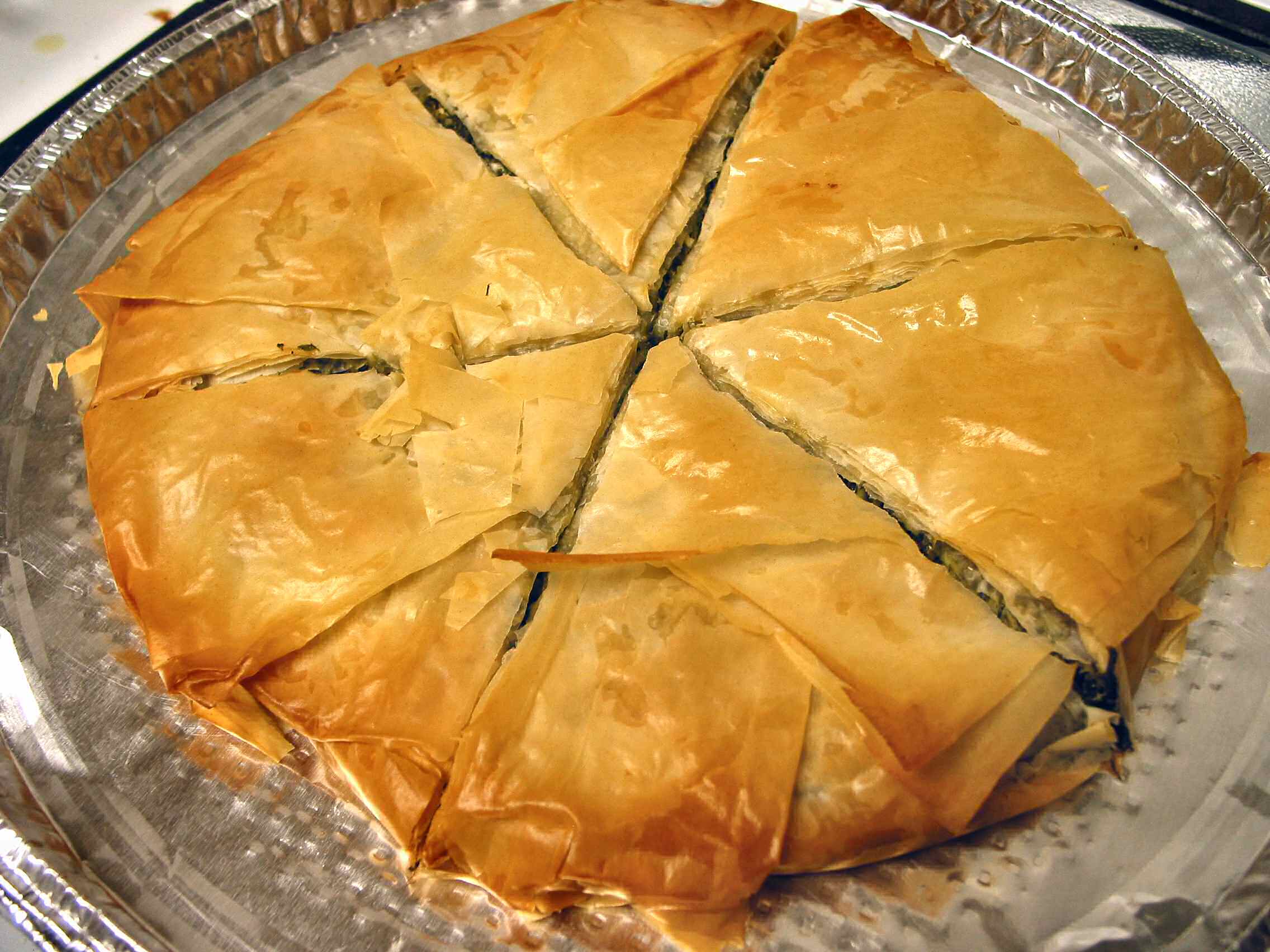
Round spare spanakopita just for us after the big kiddush

Round spare pinwheel-style spanakopita just for us at home. The big ones for the brunch had three pounds of spinach apiece (and were cut in small diamonds), but they still went together pretty fast–except for squeezing all that spinach dry…

This weekend I did it again–I made the kiddush, or in common speech a lunch buffet, for my congregation’s Saturday morning service. My husband kind of volunteered us for this week and because he doesn’t cook, most or all of the cooking, shopping, chopping and schlepping landed on my shoulders.

Last time he volunteered us, it was for our anniversary, and  I was ready to skip ahead to the divorce until I got over it, because it’s a lot of work to cook for 60 or so people who like to eat. And kibbitz. Especially when the 60 suddenly turns into 80-plus and having to use the synagogue kitchen with the more complicated and confusing rules on only a week’s notice. As they did this time…..

Soooo….a two-day hell of shopping and then marathon cooking-and-juggling in my little galley kitchen. The microwave got a serious workout. So did the food processor and the oven. Sometimes all at once. And it was raining hard for three days, so bringing things over to the synagogue kitchen as I went got a little tricky. I triple-wrapped the chocolate cake and stuck it in a USPS Priority Mail box so it wouldn’t get left out in the rain. Same idea for the spanakopita trays.

A few hints about cooking big and real for a synagogue brunch, learned the hard way by moi and passed on for your edification and safety (and sanity):

1. You can buy a 6-lb can  of chickpeas for massive half-gallon batches of hummus (Mid-East brand, maybe Goya as well). Cost? about $5. But–as I found out, and I’m glad no one was filming the process–industrial-sized can equals industrial-strength steel. A dinky hand-operated can opener is no match for such an item. I got just far enough to be able to pry open a kind of spout but there were tears and long-fluent-repetitive-all-throughout-the-house swearing sessions involved.

Still….

2. If you have a good corner greengrocer, you can buy quantities of eggplant for cheap–eleven or twelve eggplants made for a large tray of roast eggplant and onion slices (with garlic slivers and za’atar sprigs and olive oil) plus a large vat of baba ghanouj. Only the five eggplants I nuked for the baba ghanouj didn’t feel like cooperating fully when it was time to peel them. Might have been easier to peel first, then nuke, since it was all going into the food processor eventually. Next time…

3. Whole smoked whitefish for whitefish salad comes two ways–cold-smoked or hot-smoked. What’s the difference? I asked the counter guy at my favorite Armenian grocery. “Cold-smoked is a little less hard,” he said. So I bought it, thinking he meant the hot-smoked was tough as shoeleather and twice as chewy. I was wrong. Cold-smoked actually means the fish is smoked raw, like lox, only a little drier and tougher. But you don’t necessarily want to put it in whitefish salad that way. Man, it still had the scales on too. I couldn’t get it off the bones for love or money, and there were a lot of bones.

However, the microwave came to the rescue. I cut the fish in half and Continue reading

The “other” moussaka–eggplant and chickpea stew

It’s been a fuller month than I expected, with a lot of travel and the unlooked-for complications of Thanksgiving and Chanukah falling on the same week. Supposedly we don’t get to do that again for another 77,000 years or so.

Most of the food features about the “Thanksgivukkah” mashup this year have been bemused, amused, and imaginative only in the sense of suggesting (always) latkes and sufganiyot (doughnuts) for the Thanksgiving menu. Not in replacement of any other starches or desserts, you understand. They mean in addition to. Forgive me if I can’t dig it, but I don’t think either holiday really benefits from the “double your starches, double your fun” idea.

We had a great long weekend up with my in-laws and family in San Jose; and what was on the table? A pretty decent meal by any standards, traditional or California modern.

Thanksgiving 2013-Northern California style

At my in-laws’, 5 minutes before showtime. A lot more green on this table than I remember as a kid. It could only be an improvement, and believe it or not, most of the broccoli got snapped up with the fabulous mustard garlic dressing (not yet on the table)

Turkey (kosher, and cooked by accident upside down because my in-laws stuck it in three entire shopping bags and couldn’t tell which end was up–but it came out better than most of their other attempts, so they’re doing it again next year on purpose–I highly recommend it). A little stuffing and mashed potatoes and gravy for those who insisted, which wasn’t us; cranberry orange sauce, a stellar Georgia pecan pie among the desserts. But the rest of it was California-conscious; farro salad with chestnuts and mushrooms, a roasted red-squash-and-onion platter with whole cloves of roasted garlic strewn around, a big green spinach and fennel salad with endive and pomegranate seeds, and my contribution, an impressively large platter of very green, just-steamed broccoli with a spicy mustard garlic dressing that, and I may say so, rocked the Casbah and provided the necessary Jewish influence.

Not just because of the olive oil-at-Chanukah factor–which would have been enough for me and was plenty symbolic–but for the balance of a big blob of sharp spicy brown mustard with a big fat clove of garlic. Plus red wine vinegar, olive oil, and a little white wine. . . whisk and taste, whisk and taste. When it’s just sharp enough, still thick but can be drizzled, tastes good and has just the right degree of excessive garlic without going to Gilroy (which, btw, is only about half an hour outside of San Jose and holds a surprisingly popular garlic festival every summer), you know it’s done.

The broccoli itself was a little undercooked for me but others insisted it had to be still crunchy to avoid killing the little green vitamins–a new trend in Califoodian philosophy, at least northern Califoodia. It was in the San Jose Mercury News that week or something. But the garlic mustard dressing made up for all that nutritional selfrighteousness and helped the turkey no end as well. Cranberries are well and good and I love them, but they’re no substitute. I maintain [talmudically, in question form]: if there’s no garlic, is it really food?

But with a week of too much food and travel and lectures on nutritional trendiness aside, I find myself thinking, do I really need to be thinking so much about food? Southern California makes it easy to eat well with very little effort–even with very little money, as long as you shop at the local Armenian or Latino markets for vegetables and stick to the unbranded or store-brand and whole foods only.

However…although it was about 85 degrees out when we came home to Pasadena, the temps quickly dropped and have been in the 50s all week, with and without drizzle (yes, you can pity us sarcastically if you want to. They don’t sell coats of any worth better than a sweatshirt here, so to us it’s cold). I realized it was time for a stew. With, obviously, garlic.

Most people think of moussaka as the Greek eggplant-lamb casserole with béchamel topping. But a much simpler vegetarian eggplant stew with chickpeas, onion and tomatoes is also called moussaka (also found on the web as “musakk’ah”). It stems from Lebanon and is popular throughout the Middle East. Continue reading

Frankenbeanies: Gigantes, take II

Giant favas or gigantes are really as big as they look

Giant favas or gigantes really are as big as they look.

No kidding. That’s a soup spoon on the right, up there in the photo. These giant fava beans are huge–which is part of the fun of cooking them.

Because I had so much trouble getting the nice-looking pre-peeled dried giant favas to cook last week (and the time before), I went and got the bulk giant favas with the brownish-greenish-pinkish peels left on this time. And I was right. Buying the ones with the peels still on means that the dried beans stay relatively fresh and cook up a lot better–and faster–than the pre-peeled ones.

To peel them, dump the washed and sorted beans into a big bowl of very hot-to-boiling water and let them sit about an hour. The peels will start to wrinkle around the edges and turn leathery-soft. A sharp little paring knife makes it easy to crack into them and pop them off. Then soak them overnight in cold water. (Or soak the beans first and then take the peels off. Whatever’s easier.)

These beans were clearly fresher than the pre-peeled ones–in the morning, the bean water smelled almost like fresh apple juice. Bizarre. Anyway.

Rinse and cover with fresh cold water. And then you can actually microwave them 10 minutes (for a pound of peeled gigantes in a bowl with water to cover by about an inch and a lid on top) and let sit half an hour and they’ll be about halfway there, then nuke again for 5-7 minutes once or maybe twice, with 20 minutes in between. Or you could simmer them on the stove about an hour.

Or of course you could buy them in cans, but where’s the fun in that?

Giant favas

Fresh fava beans are the province of spring. Dried ones–the ultra-large size favas–are pale gigantic beans with a flavor like roast chestnuts, only without the sweet. These are the ones for Greek-style winter stews (gigantes plaki) or, as a friend in Jerusalem makes on cold and rainy December weekends, a very slow-braised stew of giant favas with chicken and vegetables.

Here in Pasadena it’s still hovering in the 90s midday, long after Yom Kippur has come and gone. So there’s no incentive to cook anything for more than 15 minutes at a time if you can possibly help it. And gigantes or giant favas (I’m not absolutely sure they’re the same bean, so for reference–what I’m using are the peeled giant favas, about an inch across) take a very long time to cook through to tenderness, even after soaking overnight.  The challenge, actually, is to cook them enough without having them fall apart like overcooked potatoes. Oven-baking or crockpotting would probably work, but it’s hours of time.

So most of the dried-fava recipes I can find are for favas that have crumbled and been puréed for soup or hummus or paté. But the stewed favas–that’s what I wanted. Only I wanted them on their own, meatless, tomato-less, pure, as it were, because I had an idea of marinating them a little for a side dish and serving them room-temperature. Something like marinated artichoke hearts, but subtler.

There are few “slow food fast” shortcuts for this, unless a pressure cooker would work well enough without blasting them to bits. I might have to get one and try it–when everyone’s out of the house, just in case my purple thumb tendencies kick in.

You still need to soak them very thoroughly overnight, a minimum of 12 hours and maybe better, 24 hours (in the fridge) before starting to cook them, because at least two batches of Sadaf peeled giant favas have shown a distinct reluctance to take up water the way most reasonably fresh dried beans do, even though a lot of the beans were split in half. Were these two bags of favas just incredibly old and dried out? Are giant favas just naturally tough? I don’t know.  I don’t know. Maybe I have to go with the bags of unpeeled favas instead?–maybe those dry out a little less inside and cook up more tender once you get the peels off (after cold-soaking and before boiling). One can only hope.

And substituting giant lima beans that a lot of Greek cookbooks recommend as a substitute in plaki would obviously give more tender results, plus they don’t require laborious peeling, but the flavor would be pretty different. The giant favas are what I want, and no other.

Nevertheless–once the favas were soaked as best possible and rinsed again, I cooked them partially by microwaving 10 minutes in water to cover by an inch and letting them sit. I didn’t want to do it a second round, as I would for chickpeas, because they had the kind of tough obstinacy that reminded me that microwaving can actually make some cooked beans tougher–black beans in particular. At least the raw bean taste was gone, but they still required 2 hours of simmering gently and partially covered on the stovetop, to become something approaching tender. Frustrating.

Some of them broke up. I think it’s practically inevitable. But some of them were huge and very impressive. Once they were as done as they were going to be, I drained them most of the way.

The marinade I use for microwaved artichoke hearts is just lemon juice, garlic, salt and olive oil–the artichoke hearts donate enough juice as they cook to mellow out everything else a little. Favas–no. Plus I wanted something richer and less strident for the flavoring.

So I pulled a bottle of cheap but dry rosé (for want of chardonnay or the like, and rejecting the ever-present reds so as not to stain the beans) out of the fridge and poured some of it into a frying pan to boil off a little of the alcohol and pick up some of the other marinade flavors: a fat clove of garlic, the juice of a lemon, olive oil and a couple of sprigs of rosemary off the bush I’ve managed not to kill this year. I let this simmer together a few minutes to take the edge off the raw garlic and wine flavors and steep the rosemary a little, and then poured in the boiled-up fava beans and just a little of their broth to simmer a few more minutes before pouring the whole thing out to cool.

A little more olive oil would have been good if I’d had it (the bottle ran out after about a tablespoon)–I was actually hoping it would help soften the beans further but I didn’t really have enough for oil-stewing (the Greek cookbooks I have all recommend about half a cup in a batch of about a pound of dried beans) and I’d have had to stew the thing a lot longer to get anything resembling a silky texture, I suspect. But the flavors permeated the beans very nicely–rosemary has an irreplaceable perfume that even wild thyme doesn’t reach even though that would be pretty good too. Together, the rosemary and wine balance the surface brashness of garlic and lemon and bring out the unusual flavor of the giant favas without the need for salt. It’s good hot, but it’s even better the second day, hot or cooled.

Montreal

We are back from Montreal, a city which reportedly has more restaurants per capita than anywhere else in the world–does this include Paris? Most of the food we had was very good. Even the dreary-looking and overpriced breakfast bar in the convention center where my husband was attending the IEEE conference had excellent, crisp croissants and thick serious coffee to go with the boring-standard scrambled eggs and dry cereals. I never got a chance to try out the Montreal bagels because we found such good food within walking distance downtown.

The Vieux Port area of downtown has streets full of bistros and is lively to walk through, admiring the art galleries, tchotchke shops, accents (French with a distinctive Western Hemisphere twang) and people (a lot of younger women were sporting platform wedgies in improbable colors like Day-glo orange or pink, and almost all the natives were more fashion-conscious than we were).

On one of the piers we discovered the Centre du Science had a special exhibition of costumes, ship and creature models, and the original concept drawings from the Star Wars movies. We had to see it, even though it meant paying extra and wearing a rubber bracelet with an RFID chip in it so we could pick our species, planet, job description and personality traits as we walked through the stations with film clips illustrative of influences and stages of personal development. I mean, Luke’s upbringing contrasted with Anakin’s? Did I need to see the blame laid on Anakin’s mother’s permissive parenting style for Anakin’s tendency to be drawn to the Dark Side? Mothers get blamed for everything. As for the Dark Side, well, they get all the cool costumes–red leather, black leather, horns, masks, capes, shiny streamlined samurai helmets, wrestler belts with electronic gizmos built in…compare that with the monklike dun-colored burlap and linen outfits for Obi-Wan and Qui-Gon. Of COURSE Anakin would get with the Dark Side. Proof? Darth Vader ends up with the coolest costume of all…apart from that pesky touch of asthma.

On a brighter note, did you know Yoda was originally supposed to look something closer to a European-style elf or garden gnome? Glad they went Japanese.

Another pier–the entire pier–housed the blue and gold striped tents where Cirque du Soleil holds its home court performances nearly every afternoon.

But the weather was unusually hot, in the 90s, and so humid that we didn’t feel like eating much until sundown, when it was finally cool enough to venture out and explore all the sights within walking distance.

I was also under a time sentence–start statins as soon as I got home, test again in six weeks and see if they’re working. So I was doubly uncomfortable eating out all the time, thinking twice about eggs or butter or cheese in anything that was served, wondering if this was the last grapefruit I was going to be able to eat and maybe I’d better have only one small serving of that in the Indian restaurant we went to with our friends, because it was cooked with ghee (there were 25 Indian restaurants in town! crowed our friend’s 9-year-old daughter. She wanted to try them all.)

And why were the only vegetables in the other restaurants buttered (which I’ve never liked; my cholesterol-packin’ genes are more to blame than my actual diet and the doctor’s office pamphlets nearly always say to “cut down” to more saturated fat than I actually eat) or else a tiny salad? Just like the French. Just like the Americans.

And yet…the best place we ate–we went back twice that week–was a small undecorated restaurant in Chinatown around the corner from our hotel, which was across the street from the convention center. When we arrived from the airport at 11 pm, Restaurant Beijing was the only place still open for dinner, and we weren’t expecting much when the concierge recommended it. We trudged around the corner anyway, past the hotel’s dumpsters, around to rue Gauchetière,  and took a peek through the window.

Plain cafeteria-style tables, brightly-lit but plain strip-mall sort of space, chalkboard specials on each wall, no decorations at all other than a few bamboo plants in the window, not even old-style kitsch, and…absolutely packed at that hour of the night. Continue reading

Coconut, minus the hype

dried coconut shreds

Palm and coconut oils have made a huge comeback in the last few years. Both are very high in saturated fats, which promote high blood cholesterol and heart disease, but the vegan community has embraced them as “natural” and they’re turning up in all kinds of baked goods and sweets these days at Whole Foods. Which also sells big mayo jars full of coconut butter. Looks like Crisco, scoops like Crisco, costs 10 times as much.

A lot of the newer vegan recipes and packaged foods are direct mimics of things that used to include lard, beef tallow and suet at the lower end of the classiness scale, or butter at the high end. My local Whole Foods’ pastry case features a lot of croissant and baklava variations these days, all now made with palm oil, as are many of the muffins. Starbucks’ “old-fashioned kettle” doughnuts feature palm oil in two places, both the dough and the icing.

Why are these fats getting so popular? Why all the wishful thinking that a plant source automatically makes them healthy to eat in quantity? Why are all the nutrition advice columnists in the major newspapers and health magazines suddenly “holistic coaches” who graduated college with psych majors and the like rather than board-licensed nutritionists and registered dieticians?

The truth of the matter is that your body doesn’t care so much whether a saturated fat came from lard, a coconut, or a chemical vat–regardless of the source, the fat molecules are shaped the same and your digestive and metabolic enzymes process them all the same way.

Palm and coconut oil? The hip vegan crowd, who consider themselves really indie, would be surprised to learn how thoroughly they’ve been manipulated by a very big industry. In the past 10 years, these oils have suddenly ramped up production wherever palm trees can be grown, mostly in Malaysia and Indonesia, where producers started by stripping the jungles to plant a single crop (though some of the main palm oil traders, like Lever–yes, the soap manufacturer–have made statements that they’re working to reverse some of the damage and buy only from those who “plant sustainably”). The other main centers of palm and coconut oil growers are Africa, India and Latin America.

Palm and coconut oils have taken off not because they’re vegan (outside of India, there just aren’t enough to support the industry boom) but because they’re such a cheap source of fat. Well, cheap everywhere but the Whole Foods shelves. They are indeed useful to the processed baked-goods industry for lending that heavy grease “satisfaction” factor to things that used to be made with butter, suet or lard. And they’re much less heavily regulated in the US by the agricultural inspectors because they don’t trigger all those livestock rules.

But should you be eating them? Buying jars of coco butter for your home cooking? Something tells me you’d be better off eating less of anything that requires cooking in heavy fats as opposed to regular polyunsaturated vegetable oil. And cutting down on all fats unless you’ve actually been diagnosed by an MD, not a holistic coach, as underweight.

Because even the unsaturated fats have a lot of calories. Rip Esselstyn’s “Fire Engine 2 Diet” specifically cut out all oils because the people he was training to eat better really needed to lose weight, and the bottom line is that the 120 calories in a tablespoon of ordinary unsaturated vegetable oil are still extras. There’s no real way around that. Not even if you’re vegan.

And wasn’t the point of nonstick pans supposed to be so you could cut down on cooking fats? (ok, it was really so the pans would be easier to wash, but why not take advantage while you’re at it?)

I’m not saying you shouldn’t ever use coconut itself in cooking–I’ve been a Mounds fan from way back, and please just don’t ask about those poufy huge coconut-sprinked, bright pink marshmallow things we used to clamor for as kids (“Snowballs”? I think it was a half-dome of marshmallow that sat on a cookie…almost as bad as Moon Pies.) These days I try to eat it sparingly, because it’s still fatty, and because most of my coconut exposure now takes place in the form of macaroons at Passover, when I’m already feeling like if I see another can or box of something packaged I’ll pass out.

But seriously–and more sophisticatedly–coconut itself is a worthwhile cooking ingredient in some savory dishes, and it has a subtle, penetrating flavor that means you don’t have to use a ton. You can also find good steam-defatted versions of shredded coconut that have about half the fat of regular, and look for partially decreamed canned coconut milk as well (I think Trader Joe’s sells it, maybe Whole Foods as well). Unfortunately, half the fat for coconut is still pretty fatty, but it’s an improvement.

Even a spoonful of unsweetened shreds can give a curry or aviyal (i.e., coconut-based “dry curry” class of dishes) a satisfying suggestion of richness without adding loads of fat. Maybe a gram or two per serving, and it can help even out jagged edges in the spicing.

To get the most flavor out of a small amount of coconut, I do one of two things. In the aviyal of cowpeas below, I toast a spoonful of dried shreds Continue reading

Hunan Tofu, spare the salt (spoil the child)

tofu with broccoli

Last year my daughter kept hocking me that I never made enough meat. This year she’s going on twelve and decided, about a month before Passover, that she needed to be vegetarian because she has ambitions of becoming a veterinarian. Hard enough for anyone to deal with, but for a diabetic, it’s an added challenge, especially at Passover, which we got through with a lot of vegetables and a dispensation for tofu (though without soy sauce, which contains wheat) so she wouldn’t be stuck with only eggs and cheese and yogurt and nuts for protein. Next year, rice and beans are going back on the menu–I’m not stuck in Ashkenazi-think, and a lot of synagogues in the US are starting to reconsider the role of legumes, pulses and non-wheatlike grains at Passover. I’m all for it.

Still, we’re well past Passover now, and the issue today is tofu; see under: how to feed a vegetarian preteen some protein without overdosing her on sodium. One of our favorite Chinese restaurant dishes is tofu in black bean sauce, but no doubt about it, it’s loaded.

[Update Note, cue theme “Do the Math Yourself”: Check out the recent LA Times’ version of Hunan Tofu with Black Bean Sauce–looks wonderful, right? but the sodium stats at the bottom of the recipe are WAY off, even if Andrea Nguyen, the food writer, had been using low-sodium soy sauce. Perhaps the editors forgot to count the salt in the fermented black beans–which on its own is something like 850 mg per tablespoon, as far as I could find (it’s not listed in the USDA nutrient database). You really can’t rinse that kind of salt out, especially not if you’re using the rinse as a broth and adding it back into the dish. That plus 1/4 t. salt “or more” at 560 or so mg. and a couple of tablespoons of soy sauce–you’re looking at 750-1000 mg for each of 4 servings, or 1500-2000 each as “dinner for two”, or about an entire day’s worth of salt in a single dish–definitely not the 350 or so as stated in the article!]

Cooking at home is a lot cheaper in a number of ways (a 14-oz pack of firm tofu runs about $1.50 where we live), and we can figure out what to do about the sauce if we really want it. Invariably, the restaurant container is always swimming in sauce with a layer of oil on top, so I think just not doing that would be enough to improve the nutrition stats considerably.

Frying tofu at home won’t usually get you that crispy outside texture that you get in the Hunan tofu dishes from the restaurant–mostly, they’re shallow- or deep-frying the cubes or triangles in a lot more fat than you’d want to use at home for an ordinary dinner. A little less than that level of crispy is still okay by me. Getting any kind of brown on the outside would be a step up from the pale, flabby results I was used to achieving in the trusty nonstick pan.

So I started actually paying attention to the cookbooks I have on the shelf and to the techniques I invented for pan-browning things like salmon without salting the dickens out of them. I needed a (small amount of) sauce that tasted okay but wasn’t swamped with sodium. That means a little low-sodium soy sauce and a lot of ginger, garlic, maybe a bit of vinegar and sesame oil–and a surprise ingredient for browning and flavor depth: molasses.

Most syrups (agave included) run about 16 g. carb per tablespoon, a whisker more than a tablespoon of ordinary granulated sugar. Blackstrap molasses runs a bit less, at 11 g. per tablespoon. And it’s really thick, really strong-flavored, and really brownish-black. Also relatively inexpensive. Half a teaspoon will darken and thicken an ounce of sauce for frying tofu. It helps “stretch” the soy sauce–for looks as much as flavor and volume–without adding much sodium or carb to the dish. Even stranger (and better), molasses is a powerhouse source of potassium at 600 mg and iron at 20% of the RDA per tablespoon (not that we’re adding that much here, more like 1/6th tablespoon). The vinegar and sesame oil lend rich pungent flavor that doesn’t depend solely on the saltiness of the soy sauce, and ginger and garlic round out the combination.

So that’s the sauce. To get the tofu to brown in the frying pan, you have to get some of the extra water out of it first. There’s always the press-it-with-a-weighted-plate-on-top-for-30-minutes scheme, which always seems more of a pain than it’s worth. But I’m impatient.

There are two decent ways to press tofu other than the weighted plate setup. One requires thinking ahead (not my forte): slice the tofu and freeze the slices, then thaw them. The other–are you surprised yet?–is to slice and microwave the tofu on an open plate for a couple of minutes, say 4 minutes for a whole 14-oz. pad of firm tofu, or 2 minutes for half a pad. Then drain off the watery stuff that’s come out of the tofu (let it sit another few minutes and redrain), and pat the tofu dry.

To fry, heat a bit of olive or other vegetable oil in a nonstick pan. Brown some onion or scallion a few minutes. Make a frying sauce: 1-3 teaspoons of low-sodium soy sauce, depending on how much tofu you’re making, a minced clove of garlic, a teaspoon of fresh grated ginger, a few drops of sesame oil, a dash of vinegar and a pinch of brown sugar or better, a half-teaspoon of molasses. Hot pepper flakes or z’khug optional.

Pour the sauce into the hot pan and let bubble up a second or two. Then add the tofu cubes or triangles and toss a couple of times in the sauce. The sauce will be just enough to color the surfaces a little and get them started.  It’ll take another 5-10 minutes of stir-frying to get the tofu surfaces to brown nicely, but it does work. Serve atop microwaved broccoli and/or bok choy. Garnish at will with some chopped scallion, toasted almonds, fried mushrooms or slices of red bell pepper (or hot peppers and roasted peanuts for kung pao, if that’s your thing).

Sodium counts for this version:

If you figure the dish serves 3 people a decent meal-sized portion of protein, and the sodium is coming exclusively from the low-sodium soy sauce, a full tablespoon of soy sauce would be about 450-600 mg, so each serving is about 200 mg at the higher end. I don’t think I usually use quite that much for us, but even so it’s pretty reasonable. If you don’t mind doubling the sodium to about 400 mg per serving, you could make another dose of the frying sauce to drizzle the dish with at the last minute.

There’s something wrong when a veggie burger is worse for you than cheesecake

Recently spotted in the Los Angeles Times Food Section “Dear SOS”

Veggie burgers from North Peak

Dear SOS: My family and I just got back from a trip to Traverse City, Mich., where I had the absolute best veggie burger I’ve ever had. Is there any way you could coax North Peak Brewery Co. to give up its recipe for its Black Bean and Portobello Mushroom Burger?

Dear —–: This burger even had some non-vegetarians going for it. The restaurant also sometimes serves it with provolone cheese and sliced avocado along with a dab of basil pesto aioli on toasted ciabatta rolls.

Total time: 1½ hours, plus cooling time Servings: 8

The recipe starts out with a 9-ingredient pico de gallo homework item–let’s just agree it’s basically salsa, and it gets mixed into the beans and other stuff at midpoint in the cooking process–which is long. One and a half hours? Yikes. But then check out the rest of the ingredients for the veggie burger itself:
Veggie burgers and assembly
  • 4 cups cooked black beans, from about 2½ (15-ounce) cans (drained)
  • 1/4 cup honey
  • 1/4 cup molasses
  • 2 teaspoons salt, more to taste
  • 1 tablespoon cumin, more to taste
  • 1/4 cup plus 1 tablespoon olive oil, plus more for sautéing the burgers
  • 1/2 cup finely diced onion
  • 9 ounces portobello mushrooms, cut into ¼-inch pieces (about 4 cups)
  • 1 cup pico de gallo
  • 3 cups panko bread crumbs
  • Semolina flour for dusting
  • Sliced cheese, if desired
  • Sliced toasted ciabatta rolls

And then — guess the nutrition stats?

Each burger (without cheese or garnishes): 604 calories; 21 grams protein; 103 grams carbohydrates; 11 grams fiber; 13 grams fat; 1 gram saturated fat; 0 cholesterol; 16 grams sugar; 1,227 mg sodium.

Whoa. 604 calories for a single veggie burger. 103 grams of carbohydrate–more than a meal’s worth just by itself. Honey, molasses and panko turn what might have been a reasonable amount of carb from a serving of black beans into something that reminds me of the old sketch from Garrison Keillor’s A Prairie Home Companion on NPR: “Here’s my secret. I just add sugar to the same tired dinner and wow! suddenly everyone loves it!” … or words to that effect.

No doubt the honey and molasses also go a long way toward disguising the fact that each burger contains more than 1200 milligrams of sodium. Where’s that coming from, anyway? the canned beans–400  mg or so per serving. The added salt–a quarter-teaspoon or about 560 per serving. Breadcrumbs–more salt. Add a ciabatta roll and cheese and you’d be above 1500 mg easily.

At this point, despite their long laundry list of ingredients, the MorningStar Griller’s Vegan burgers I used to eat are looking a little more decent nutritionally–about 300 calories apiece and 280 or so mg. sodium. So if they could do it, why couldn’t you?

In theory, at least, you could make veggie burgers a little less dangerous and cheesecake-like if you just skipped the added syrups and salt, and cut the large excess of frying oil for the mushrooms and other sundries by simply microwaving them to precook. That is, choose a sensible recipe instead of something ridiculous.

Oh yeah. But then it would just be, you know, veggie burgers. Not keeping-up-with-the-chain-restaurants versions with the pumped-up sugar-salt-and-fat formulas. I ask again, is there any hope?

Stuffed onions in a hurry

Stuffed onions ready for steaming in the microwave

With a microwave and a frying pan, you can make stuffed vegetables like Mehshi Basal quickly, and they taste even better than with long roasting. These are just rolled and ready for a few minutes of steaming in the microwave.

Just after Rosh Hashanah I posted my first-ever attempt at an elaborate Syrian Jewish dish of sweet-and-sour stuffed eggplants with quince, and because I had more stuffing than I needed, I went for seconds with Aromas of Aleppo on the spot and tried out the Mehshi Basal, or stuffed onions with tamarind sauce, which was actually even better. It was easier to put together and I was patting myself on the back when we tasted the results.

Still, given that I was using a lentil stuffing in place of ground beef, I was a little dismayed at how long the traditional braising and roasting took to cook the onions all the way through–an hour and a half at least, and that was after stuffing them. A second attempt in November, this time exclusively with stuffed onions for a congregation brunch, did no better on time, and I came away thinking that roasting was an extremely inefficient way to cook these–might even have toughened them inadvertently.

Why, you have to ask, should I make such a big deal about stuffed onions–they’re a party trick, after all, not standard cooking. But we discovered we really liked them, and they’re a pretty good kind of party trick. They were a surprise hit at the brunch. If I hadn’t snuck myself one while setting up in the kitchen, I’d have missed out altogether.

Actually, I think they fascinated everyone as much for the magic trick as for the flavor. People who’d never tasted them before kept coming up to me–and even my daughter–to ask, “How do you get the filling into the onions???”

If they hadn’t been so time-consuming I could have made double the amount and they’d still have disappeared. Or I could throw them together easily just for us on the odd weeknight as a treat–but one with some iron and fiber in it–instead of the standard pasta or rice.

So in the time since, I’ve finally rethought the process and come up with something that requires no oven time and cuts the actual cooking after stuffing them down to about 20 minutes or so–as long as you already have some cooked lentils (microwaved to perfection in about 10 minutes of cooking time and 30-4o minutes of standing time) and tamarind sauce (or “mock tamarind” sauce, a 5-minute microwave-assisted blend of prunes and/or apricots with water and some lemon juice, plus-or-minus tomato paste, applesauce and other flourishes you don’t really need for this) to hand.

I know, you probably don’t have these things sitting around. But this recipe might change your mind. Lentils are good stuff even on their own, and the stuffing here is a knockout.

Even genuine tamarind sauce isn’t so bad anymore, assuming you don’t or can’t just buy a prepared concentrate. I’ve sped the process up from an hour-plus to a few minutes just by nuking it, pulsing in a food processor, and this time, neither filtering it quite so aggressively as I did back in September NOR bothering to boil the stuff down to a sticky residue. It’s so much less painful, and I think it even tastes better, with more of the fruit character left in. See my notes at the end of the post for how to do it the quickie way (in modest jam-jar quantities, not quarts).

Anyway, back to the stuffed onions. I’m actually proud of myself for this one, and I’ve tried it three times in a row so I can vouch for it–the last time, I put my daughter to work stuffing the onion layers, and she did a great job.

For this method all you need are a microwave oven, a frying pan and a food processor. Instead of boiling the onions for 20 minutes to separate the layers, you microwave them in a drizzle of water for 5. Instead of braising the stuffed Continue reading

A Slow Food Fast Thanksgiving

Pumpkin pie in the microwave

I’m not sure how to take all the following good news–it’s been such a strained year that the sudden release of pressure is going to make me zip around the room, once the coffee kicks in.

1. My mother-in-law has threatened to favor the brand-new kosher butcher in her town this holiday season so that we can eat the turkey too this year (and maybe not fight about it). She promised not to smear said turkey with butter. We’ll cross our fingers. But at least we won’t have to cook. I’m keeping that firmly in mind.

2. As of this week, my daughter’s finally on an insulin pump and fairly thrilled about it, so she can navigate dinner AND dessert at my in-laws’ without breaking down and crying that she only gets two tablespoons of pie for a reasonable serving. We are still encouraging her to count carbs and not go hog-wild or she’ll be zipping around the room until midnight.

3. The school concert’s in less than two hours. Is that really enough time to do everything, or at least something? Naaaah. Well, maybe coffee and something other than the news.

4. We still have to schlep up Interstate 5 for about 6 hours tomorrow, starting “early” (i.e., an hour and a half after the time my husband announces this evening as the absolute latest), passing the Harris Ranch and its attendant aromas, which can be more than slightly offputting if you’re not an avid horticulturist. But at least when we get to my in-laws’ we don’t have to cook. As I said, I’m keeping that firmly in mind. I know I already said it, but it’s so important I figured it was worth saying twice.

Despite my firm resolve after last week’s marathon kiddush that I will strive Not To Cook (could I possibly be Peg Bracken’s unacknowledged lovechild? Unfortunately, no. However, my mother was a devotee of the Don’t Cook Too Much school of thought, and I’m starting to appreciate that. Really I am.)…where was I? Oh yeah…I will probably bring at least two lemons, some thyme and rosemary, a head of garlic and a couple of bags of fresh cranberries with us on the road. Call it flavor insurance. For whatever reason, my in-laws, who have developed what can only be called fanatical devotion to Italian food of every possible kind (having both grown up in white bread country), always run out of these basic essentials about halfway through, and my mother-in-law tends to tell my father-in-law to go back out and pick up extras just as the stores are closing…

The cranberries, I’m well aware, aren’t Italian. They’re for making 5-minute microwave cranberry sauce with about half the sugar of regular. My mother-in-law tends to try out her fancier cranberry chutneys and relishes every year, and every year they contain things like chardonnay–which is fine for the grownups but I’m no grownup. Her chutneys have more than 10 ingredients and sit stirring on the stovetop for at least 45 minutes. I don’t know how she does it–I’d go stir-crazy. I’m just not that good.

So anyway–I wish you all a great Thanksgiving at somebody else’s house, so you don’t have to cook or do the dishes. My idea of heaven.

But if you absolutely have to cook, here are a couple of posts for speeding up a few of the obligatory or not-so-obligatory Thanksgiving items–most can go in a microwave (I always, always think that’s worthwhile. Well, usually). A few of these are dairy, so use your discretion.

5-Minute Cranberry Sauce

Microwave Pumpkin Pie

Basic instructions for microwaving green beans, brussels sprouts and other vegetables

Creamed Spinach Variations

“Marbella”-style cooked vegetable relish with artichoke hearts, olives, tomatoes and prunes

Turkey Breast with Ta’am (flavor) –not microwaved, not a whole bird, but it is a lot quicker and tastes unusually good if you have a small crowd. DO keep it covered in the oven to prevent it drying out.

Some options for vegetarian centerpiece dishes… (ideas more than recipes)

Spice mixes because sometimes you want to liven up the party…

Syrian Jewish stuffed vegetables (baby eggplants and onions) with an incredible lentil filling (NOTE–this one is “not exactly quick”; well, maybe for the eggplants microwaving would be enough, but the onions still take some serious roasting even after microwave assistance.  However, it is delicious and impressive.)

Microwave gingerbread and microwave flan (and a recommendation for mead…)