• Enter your email address to subscribe to this blog and receive notifications of new posts by email.

    Join 241 other subscribers
  • Noshing on

    raw blueberry pie with microwaveable filling and graham cracker crust

    This mostly-raw blueberry pie is a snap to make and very versatile--the filling microwaves in a few minutes, and you don't even have to bake the zippy gingered graham cracker crust--perfect for a hot Fourth of July and all summer long.

  • Recent Posts

  • Contents

  • Archives

  • Now Reading

  • See also my Book Reviews

  • Copyright 2008-2024Slow Food Fast. All writing and images on this blog unless otherwise attributed or set in quotes are the sole property of Slow Food Fast. Please contact DebbieN via the comments form for permissions before reprinting or reproducing any of the material on this blog.

  • ADS AND AFFILIATE LINKS

  • I may post affiliate links to books and movies that I personally review and recommend. Currently I favor Alibris and Vroman's, our terrific and venerable (now past the century mark!) independent bookstore in Pasadena. Or go to your local library--and make sure to support them with actual donations, not just overdue fines (ahem!), because your state probably has cut their budget and hours. Again.

  • In keeping with the disclaimer below, I DO NOT endorse, profit from, or recommend any medications, health treatments, commercial diet plans, supplements or any other such products.

  • DISCLAIMER

  • SlowFoodFast sometimes addresses general public health topics related to nutrition, heart disease, blood pressure, and diabetes. Because this is a blog with a personal point of view, my health and food politics entries often include my opinions on the trends I see, and I try to be as blatant as possible about that. None of these articles should be construed as specific medical advice for an individual case. I do try to keep to findings from well-vetted research sources and large, well-controlled studies, and I try not to sensationalize the science (though if they actually come up with a real cure for Type I diabetes in the next couple of years, I'm gonna be dancing in the streets with a hat that would put Carmen Miranda to shame. Consider yourself warned).

Resolution 18–eat more fun vegetables

Raw fennel bulb

I dream of going, but this is for now

Fennel’s in season here and makes a great crunchy salad vegetable. Or just a great raw vegetable for noshing, period.

Cooking (and other important) Resolutions

(Of course)–I couldn’t leave 2010 on such a bitter note as the one in my last post, even though I think bitterness is a good, energizing, creative thing. Or as the great Eric Burdon once–or actually, quite any number of times–told an interviewer about his ordeal with getting paid for House of the Rising Sun, “I’m not bi’eh. I’m bi’ehsweet.” I have a thing for Burdon’s early stuff–voice like a hammer, great blues timing, pure nerve with a sense of humor, and clearly, a good appetite.

So I wish you all a Happy New Year, good eating, good cooking, good reading and good company, and thank everyone who’s visited and especially those who have taken the time to subscribe to Slow Food Fast. For myself, I’ve come up with about 11 new resolutions for 2011 (but as usual for me, it may will definitely run longer, since I’m terrible about following directions, even my own, whether cooking or resolving):

1. Learn the Dirty Dozen a little better and plan the weekly budget (see #3) to include buying these vegetables and fruits organic only. (I’ve got celery, potatoes, pears and strawberries down so far, but I know there’s gotta be at least 8 more, right?) Find places to buy them cheaper than Whole Foods.

1a. Learn to garden? Umm. Learn to schnorr backyard fruit from friends? More likely, ain’t it? Ok, ok, make more friends, schnorr backyard fruit and veg. And rosemary, which some people grow as a hedge here in Pasadena. Envy, envy, envy–turn it to a good purpose and offer to take some of the excess off their hands.

1b. Exercise basic civility towards other people’s food choices–your eat local is my eat kosher is his eat organic is her eat affordably. Everyone’s got different priorities, and you don’t know who is eating a particular way because they feel like it and who really needs to so they don’t end up in the hospital. Food shouldn’t be too huge a source of personal arguments. I mean, really, people, save some energy for the real issue–dark or milk chocolate?

2. Get the weekly food budget back down under $100 a week (holidays take it outta me). Make a list and (I cannot believe I’m saying this) check it twice. With a calculator. Include toilet paper and napkins and so on.

3. Use all the vegetables I buy sometime in the same week I buy them. This goes triple for any herbs. No brown broccoli (not usually a big problem in my house, actually) or rubbery carrots (didn’t mean to confess that). And NO cilantro or fresh dill left until it turns slimy while I dither over what to use it in… when in doubt, make soup (see #4), or with herbs, wash and freeze in baggies.

4. Make one big batch of soup each week (see #3 if necessary for motivation) and eat it.

5. Make one pound of beans each week and eat it in fabulously creative ways, or at least edible ones. Eat them as a substitute for, not addition to, fish or meat at least one dinner per week.

6. I’m stumped. Maybe I should make each of the previous resolutions count twice? Naaah. Put on some blues and think again.

The real #6: Eat vegetables at breakfast, Israeli-style.

7. Wash fewer dishes–make my kid do them! (oh, yeah, I’m rollin’ now!)

8. Reduce my dependence on oil–starting by using cocoa powder instead of a full-cocoa-butter chocolate fix…damn those holiday gift boxes. Hate See’s, hate it with a passion (unfortunately, not really)…

9. In the same vein–cut down to half-caf this week, decaf in two or three weeks. Start today. Too much hoppin’ around after midnight (or maybe just too much listening to Eric Burdon on YouTube–wait. Is there such a thing as too much, at least of his early stuff?).

10. Shop my neighborhood greengrocer’s first instead of the big box market. Buy and try a small amount of one new Silk Road ingredient each month (red pepper paste? knoug resin? green almonds? sea buckthorn nectar?)

11. Get a few new implements as long as they have a real multifarious use and a small kitchen footprint: stick blender? I hear it calling my name. Pasta machine? not so much–the box instructions say not to immerse in water. How are you supposed to wash it then? (see #7)

12. Make bread at home again.

13. Revamp a classic every so often, preferably with the intelligent use of a microwave to help speed things up where it will actually help. Like choux paste (at least for heating the liquid ingredients before adding the flour and eggs–that’s actually been done before, and not by me) or pretty-good fake-smoked whitefish salad (which is mine, see the end of this post). Continue reading

The Altered Cheese Project

I know. It sounds like the name of a really, really bad ’80s art rock tribute band. Not that there’s anything wrong with that. (Well, actually there is; I survived the ’80s by stubbornly ignoring everything from the Talking Heads onward, especially after I went to one of their concerts and heard the drummer. Maybe it was just a bad night, but I thought only David Byrne was allowed to be that far off.)

Altering cheese also sounds like the ultimate DIY, grow-your-own, cure-your-own, grind-your-own, fill-in-the-blank foodie optimism project. Weird, more work than it’s worth, but a good experiment to try once (if you’re under 30) so you’ll appreciate the effort that goes into it all when you go back to buying the professionally made version.

You might have noticed that all the nicer cheeses that get newspaper and food magazine reviews cost upwards of $15/lb and even though I’m a cheese freak, I’m just not in that league more than once a year, perhaps on my birthday. I deserve nicer cheese than I can get at the supermarket, I just know I do.

So let me just say it: I’m nobody’s idea of a dedicated cheesemaker or affineur. Mostly because I can’t stand heating and clabbering and then pressing large amounts of milk just to get the starting curd. I also hate scrubbing everything to death before and after, and the idea of cleaning scorched milk off the bottom of a soup pot is my idea of wrong. I’m not authentic. And I don’t wanna be. Even clabbering by microwave is probably not my idea of a good time when it comes to anything more complicated than paneer or yogurt–I’m not sure it wouldn’t destroy the cultures for hard cheeses.

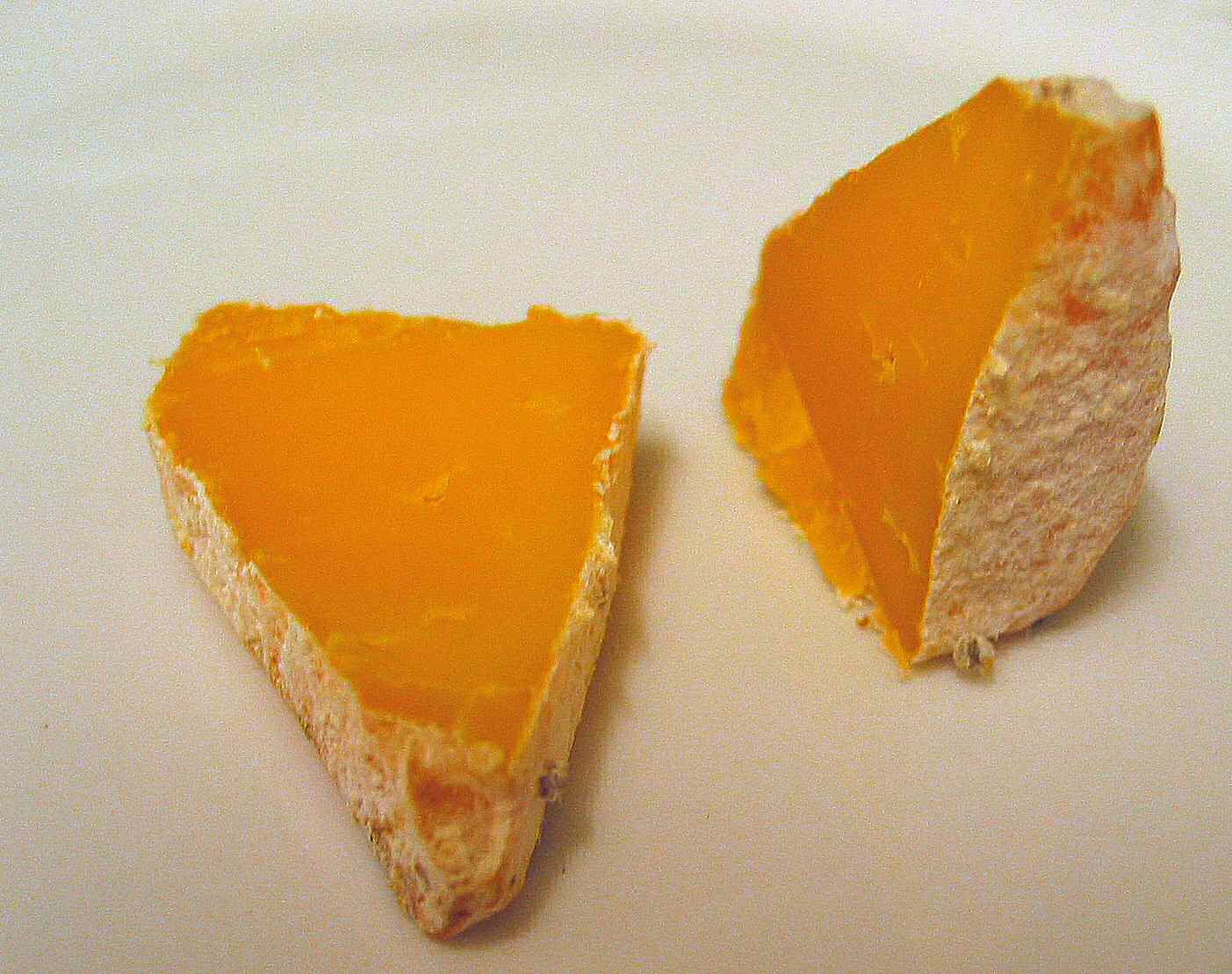
Last year I got the idea to start with something already in cheese form–a lot less waste of both milk and time. After all, standard bland goat cheese is pretty inexpensive–an 11-oz log is about $5, about a quarter of the price of the goats’ milk you’d need to produce it (4-5 quarts at about $4 each). So are other fresh white cheeses. And you can get inexpensive domestic brie and bleu cheeses in supermarkets and–my preference–Trader Joe’s. They’re not bad, they’re just bland compared with the European originals. But they have the requisite blue or white mold cultures you need to add flavor to other cheeses, if the cultures will take.

Last year’s achievements may give you some idea of where I’m going with this:

  • Bucheron (fresh chèvre log, bit of white mold rind from inexpensive, bland Trader Joe’s Canadian brie, sealed in a sandwich baggie with some air for about 2 months in the fridge until it ripened)
  • Bleu de chèvre or Goatgonzola (another fresh chèvre log, this time with some crumbled cheap gorgonzola in the baggie, also about 1-2 months in the fridge)

and the accidental but serendipitous

  • Marbled Feta (the byproduct of storing above-mentioned source gorgonzola next to ziplock bag containing a block of feta cheese)

But ever since I posted these first attempts at turning boring American supermarket cheese into something more flavorful and interesting, I’ve been haunted by the thought that I’d only scratched the creative surface of cheap cheese transmogrification. So I’ve been cheating with cheese yet again.

A Fungus Among Us

Goat cheese and feta are both fairly wet fresh cheeses that take mold pretty well if you do it on purpose. What about drier standard American varieties–cheddar, for instance, or brick mozzarella? These are bound to be more difficult to persuade, but if you have a bit of patience, it might be worth a try.


Cheddar after aging with bleu cheese mold

Cheddar after aging with gorgonzola starter


Now I know, normally you look to cut any developing mold spots off your cheddar–it’s what we’ve all been taught for decades. But the blue and white mold cultures are key to developing flavor and–I shouldn’t even be spelling this out–when it comes to flavor, America’s standard supermarket cheeses are in dire need of help.

Four or five weeks ago, I put a small end piece of Bel Gioioso gorgonzola in a ziplock bag with a couple of ounces from a brick of ordinary Trader Joe’s extra-sharp yellow Wisconsin cheddar and some air and kept it in an isolated part of the fridge to see what would happen. I’d actually diced the cheddar into bite-sized pieces to increase the surface area and maybe decrease the culturing time if the bleu mold managed to take.

Nothing much seemed to have happened except that the cheese looked a bit drier. No visible culturing going on at the surface. The gorgonzola crumbs had shrunk and dried out as well. But I took a cube out and cut into it with a knife, and the flavor had stopped being tangy standard cheddar and was moving toward Morbier or Emmenthal–something nuttier and more subtle. All I could think was that the cheddar was aging without actually culturing and growing the blue mold. But because the mold is a penicillium strain, what there was of it might have inhibited unwanted bacterial intrusion and helped steer the cheese toward a more nicely controlled aging process.

And then again, a week later, the mold had taken on the remaining cheddar cubes, and the taste, once I cut into it, was like a mild cheddar heading toward blue. Still not very potent, but encouraging. Continue reading

Portobello season–so good it’s a shame

Portobello mushrooms ready to broil with herbs, garlic and mozzarella

Giant portobello mushrooms ready to broil with herbs, garlic and mozzarella

My local supermarket surprised me this week with a half-price deal on giant portobello mushrooms–4 huge caps for $3, so of course I decided to get double that and just find odd spaces to tuck them all into the fridge. I love mushrooms but I haven’t bought them much in the past few years because they’ve gotten pricey and because my daughter didn’t start liking them until this year. Why make the kid the arbiter? No great reason, really, but it seems like a waste to make an expensive but not particularly nutritious treat as part of dinner and then have your kid turn her nose up at it. If I had to choose, broccoli or cauliflower or tomatoes were usually going to win out.

But this year my daughter’s finally old enough to appreciate mushrooms (and of course, so’s my husband). So when they came home for dinner after sunset at the end of Yom Kippur services, I took a pair of these hubcaps and threw together a quick appetizer–something I almost never bother with just for us, but I might be tempted to do it more often now, because it’s too simple to be so good.

Half a giant portobello cap should be a decent appetizer serving if you have to split, or serve a whole one per person as a side dish if you have enough. Smaller mushrooms would work too, but the big ones are meaty and impressive-looking. The grater gets a workout on this one unless you already have some pesto handy, but it’s still only about a minute’s worth of work.

Broiled Portobello Caps

  • 2-3 giant (or any sized) portobello mushroom caps, stem end trimmed, rinsed lightly all over to get any dirt off without peeling the skin or losing any gills
  • clove  of garlic (or more, if you need to scale up)
  • 1/8 or so red or yellow onion
  • ~1 t. butter
  • pinches of shredded fresh or crumbled dry Italian herbs–basil or thyme for preference, dill or marjoram or sage are ok too
  • ~1 oz. mozzarella or baby swiss cheese
  • grating or pinch of nutmeg

EASY OPTION: the mushrooms plus pesto plus the cheese and nutmeg

Wash and trim the mushroom caps and place them gill-side up on foil-lined tray (toaster oven works for this if you have only 2-3 caps). If you have the stems and want to do something with them, trim a thin slice off the cut end and either broil them alongside or chop them with some of the onion, then fry or nuke the mixture half a minute and add it to the caps before the cheese.

In a small bowl or saucer grate the garlic and about a spoonful of onion on the fine holes of a grater. Grate a spoonful or so of butter on top, add the herbs and mash together. Smear some of the mixture (or the pesto, if you’re using that) on the gills of each mushroom cap, then grate the cheese over each and finally sprinkle or grate a little pinch of nutmeg on each one (don’t overdo this, but a little is really good). Broil in a toaster oven or bake in a regular oven at about 350 for 10-15 minutes or until the caps are cooked through and rendering liquid.

*  *  *  *  *

There’s one other incredibly quick and simple thing to do with a big portobello mushroom–it makes a surprisingly good microwave soup-for-one with nothing but the sliced-up mushroom nuked for a minute in a bowl or mug to catch the juices, then some milk added to it and heated again. A scraping of nutmeg and garlic is worthwhile, so’s a tiny crumble of sage or marjoram.

But the mushrooms and milk are flavorful enough on their own, too, especially when it’s just you and you’re in the mood for simplicity and have decided you’ve earned it. It’s been a week like that, so I can only hope the supermarket special is still on.