• Enter your email address to subscribe to this blog and receive notifications of new posts by email.

    Join 241 other subscribers
  • Noshing on

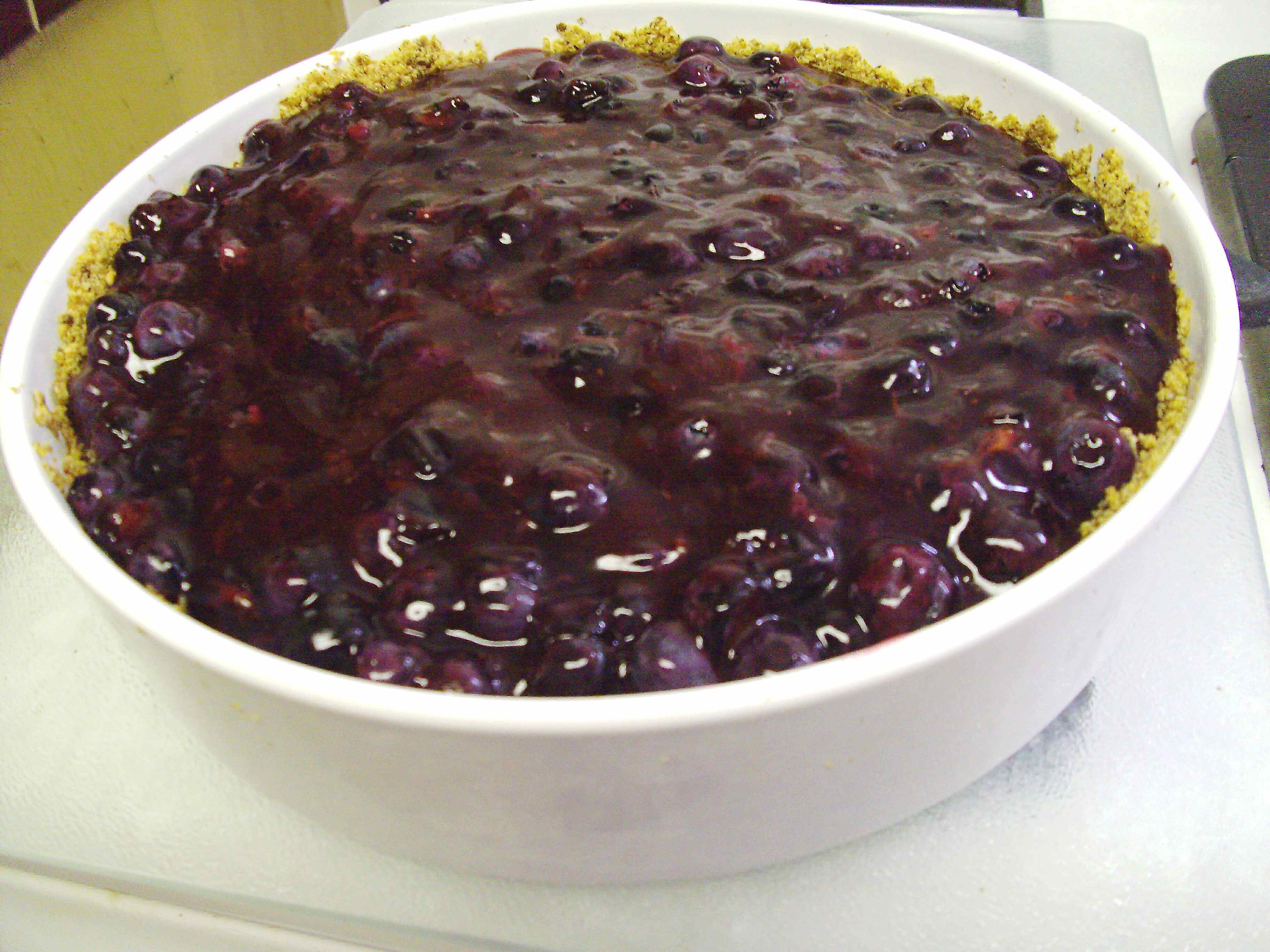
    raw blueberry pie with microwaveable filling and graham cracker crust

    This mostly-raw blueberry pie is a snap to make and very versatile--the filling microwaves in a few minutes, and you don't even have to bake the zippy gingered graham cracker crust--perfect for a hot Fourth of July and all summer long.

  • Recent Posts

  • Contents

  • Archives

  • Now Reading

  • See also my Book Reviews

  • Copyright 2008-2024Slow Food Fast. All writing and images on this blog unless otherwise attributed or set in quotes are the sole property of Slow Food Fast. Please contact DebbieN via the comments form for permissions before reprinting or reproducing any of the material on this blog.

  • ADS AND AFFILIATE LINKS

  • I may post affiliate links to books and movies that I personally review and recommend. Currently I favor Alibris and Vroman's, our terrific and venerable (now past the century mark!) independent bookstore in Pasadena. Or go to your local library--and make sure to support them with actual donations, not just overdue fines (ahem!), because your state probably has cut their budget and hours. Again.

  • In keeping with the disclaimer below, I DO NOT endorse, profit from, or recommend any medications, health treatments, commercial diet plans, supplements or any other such products.

  • DISCLAIMER

  • SlowFoodFast sometimes addresses general public health topics related to nutrition, heart disease, blood pressure, and diabetes. Because this is a blog with a personal point of view, my health and food politics entries often include my opinions on the trends I see, and I try to be as blatant as possible about that. None of these articles should be construed as specific medical advice for an individual case. I do try to keep to findings from well-vetted research sources and large, well-controlled studies, and I try not to sensationalize the science (though if they actually come up with a real cure for Type I diabetes in the next couple of years, I'm gonna be dancing in the streets with a hat that would put Carmen Miranda to shame. Consider yourself warned).

Fruit + Herbs = ?

Along the lines of my taste experiments in the last post, I wanted to share a couple of fruit-and-herb combinations I’ve come up with over the years. I hesitate to call them recipes, but they’re good, fast, and unusual. They make refreshing side dishes, especially for a light meal, because they’re not too sweet and they play the sweetness and sometimes tartness of the fruit against something woody, green, spicy or aromatic.

Food glam mags show a host of grilled peaches and nectarines, ditto salsas, and sometimes include thyme and fresh black pepper and sage and other herbs.

I should also mention I just finished drooling my way through David Tanis’s A Platter of Figs, which has a lot of very simple, good-looking fruit desserts and accompaniments (including roasted fresh figs with thyme). I didn’t lick any of the pictures (it was a library book, after all) but it’s really the recipe instructions that appeal to me–simple and informal, with interesting and helpful notes on what seem to be missing steps in other chefs’ cookbooks. My favorite example: steam or parcook fennel bulb slices before you grill them. Makes perfect sense and explains why so many upscale restaurants serve grilled fennel that’s tough and stringy and hard to get through without landing it on your blouse.

But to get to the point–fruit+herbs=intrigue.

So why not? Here are a few of mine.

Mango with Fresh Basil

I hate to say it, but that’s about it. Seriously.

I cut a large mango in half, run a paring knife CAREFULLY as close as possible to one side of the big flat hairy pit (yes you will feel cheated unless you buy at a good price in a Latino market), take the cut half of the mango and score the flesh into a tic-tac-toe pattern, and flip the peel inside-out to pop out the cubes (slicing close to the peel). I try my best with the other half, the half with the pit stuck to it–mostly it works. Sometimes I count to make sure I still have ten fingers afterward… Combine the cubes with torn or julienned fresh basil leaves and serve with grilled white fish or the like and a green salad with vinaigrette. Purple basil looks dramatic, and you can dress this up a bit more with a few dice of red onion and a squeeze of lime juice but you don’t have to.

Canteloupe with Rosemary

Canteloupe is cheap and nutritious and complex, but usually too funky and tropical for me to eat straight up. I always want lime juice or something. Even as a grownup, more’s the pity. One night I was wondering if there were anything that would possibly make me like canteloupe better–I had a canteloupe with best intentions lingering unused in my fridge as I got less and less enthusiastic about it–and something about rosemary clicked in my head. Mint and lime juice are the classics, but I like rosemary because it’s piney and aromatic without being bitter, and something about it undercuts the unctuousness of the canteloupe and makes it taste fresher to me. You wouldn’t believe how triumphant I was when I found out this actually worked. So I ground the whole thing up (well, minus the peel) and squeezed in some lime juice and froze it for a sorbet. Also good.

Prunes or Dried Figs with Anise or Fennel Seed

I tend to eat a few of these out of hand as a snack with a little of the anise or fennel sprinkled over the top for contrast, but I’ve also chopped dried figs with a couple of chopped dried apricots, microwaved them in a little bit of water to soften to a chunky paste, then mixed in a sprinkle of anise and maybe a bit of cinnamon and used it to fill filo pastry cigares. A similar idea…

Prune Log with Pistachios and Cardamom

There’s also a very nice Moroccan-Jewish High Holiday sweet–good for this time of year–that’s a lot like the fancy pressed date/walnut or fig/Marcona almond wheels from Spain–a small wedge from the Whole Foods cheese counter can run you $5 or more, but they’re delicious  sliced very thin. Anyway, this one’s a prune log with pistachios, and it’s a little more complex than the others but easy enough to make.

Simmer about a pound of pitted prunes in a little water or orange juice (you can nuke a few minutes if you prefer) and process to a very thick paste. Mix in freshly toasted pistachios and either aniseed or a good grinding of cardamom (the seeds inside, not the pods) or both, perhaps. Pack tight onto a length of plastic wrap and roll into a log, cool, and roll to coat in toasted sesame seeds. When cool and firm, slice the log very thin into rounds (it’ll be like pistachio-studded fruit leather, but a bit softer) and served on a doily-covered brass tray along with dried apricots stuffed with marzipan or walnuts and other delicacies. Mint tea, lots of it, goes with. B’te’avon! (good appetite!)

The Meaning of “Tasty”

One very strange description crops up in nearly every expert’s take on processed food and the way it’s overtaken fresh and whole foods in the American diet. Everyone from food industry veteran Hank Cardello (see the Stuffed book review) to NYU nutrition professor Marion Nestle in What to Eat talks about fast food and junk food as “tasty”. David Kessler goes even further: in The End of Overeating, he adds “irresistible,” which he says is the problem he faced most of his life.

Moreover, “tasty” has become the important word in processed food advertising. Driving home from the post office today I even saw it on a billboard for Vitaminwater10, with the tagline:  “10 CALORIES. 4 NEW FLAVORS. TASTIER THAN EVER.”

Tasty. It’s the word of champions, the key, the adword to beat.

And for the life of me, I’m not sure why. Because the words I would have chosen for most of it include stodgy, greasy, cardboardy, screamingly salty, day-glo ™ orange, and “a lot like airplane food, only on the ground.” Am I the only one?

But “tasty”–specifically that word–is clearly the accepted description, even among these food experts, and that points to a host of disturbing assumptions. Either they mean they find processed food tasty or they mean they think everyone else finds it tasty and irresistible–even if there’s something better to eat. That’s kind of defeatist, isn’t it? If everyone “knows” fast food is tastier than fresh produce, what hope is there for mainstream Americans to eat healthier than they do today?

What do they actually mean by “tasty” in the case of processed food? They don’t mean fresh, as in fresh produce. They don’t mean tangy, as in yogurt or a tangerine, or sharp as in horseradish or cheddar. Certainly not aromatic, like dill or fennel or rosemary or sage. Or rich and funky and thought-provoking, like aged camembert or shiitakes or asparagus or toasted sesame oil. And they don’t mean complex and savory and surprising, as in a palak paneer punctuated by smoky black cardamom pods, Armenian string cheese with nigella seed, or a long-cooked carbonnade or daube of beef with some cloves thrown in on a whim.

They can’t possibly, honestly, mean “these fresh hazelnuts are so sweet you’ll plotz” or “one bite and you’d better take this nectarine somewhere private.”

Most of the food experts who’ve posited that processed food is “tasty” in their books and articles are older than I am by about 10 years, old enough to remember eating late-July nectarines that devastatingly fragrant, backyard tomatoes earthily ripe and pungent, foods utterly unlike what’s available even in the produce section of most chain supermarkets today.

So I can’t help thinking that their casual use of the word “tasty” reflects and even perpetuates the hopelessly tattered, stunted and inexperienced taste imagination of the masses of people who don’t cook for themselves anymore and have given over completely to packaged food, with its excesses of salt and its bland, stale cardboardy background flavor. The ugly assumption they’ve bought into is that people who eat mostly processed food can’t change, won’t change, and most importantly, wouldn’t like fresh food if they tasted it.

Can the surge of food blogs with their encouragement to try something new, visit local farmers’ markets, maybe even take a share in a community garden plot, change this trend? I hope so, even though I know the open air markets are not often very available in poor neighborhoods and they tend to be as expensive as supermarkets. But when they are made available in urban areas, all kinds of people from the neighborhood suddenly come flocking to them, Continue reading

Stuffed: A Food Industry Insider Attempts Moderation

It’s taken me over a week to read and figure out what I wanted to say about Stuffed: An Insider’s Look at Who’s [Really] Making America Fat. As usual, I’m about 6 or 7 months late to be the very first reviewer—I waited until my library acquired it. But having read it, I’m astonished that none of the bloggers, pro- or con-, have picked up on the fascination of reading a food politics book for its entertainment value as it unfolds and reveals its eccentricities. Because this is one strange concoction.

Hank Cardello, who spent most of his career as a marketing exec for General Mills, Coca Cola and other giants of the branded food world, is not the kind of player you’d expect to enter the current obesity debate, certainly not as a champion for health. His current organization is “a consulting firm that helps businesses take the lead on solving social issues.” Does that mean he’s pro-processed? Anti-processed? Well, not exactly.

Stuffed is neither a counterattack from the food industry nor the next go-green manifesto. It’s Cardello’s attempt to mediate between restaurant chains, supermarkets, Big Food manufacturers, Big Agro, the government, public schools, and pretty much every other player in food politics. It does pack some original insights about the interlock between food industry, government, and consumer behavior and a few genuine surprises among his recommendations—some reasonable, some so strange it’s worth reading just to find out how Big Food envisions its future.

Cardello spends the first part of his book dissecting the ways processed food companies, supermarkets and restaurants make decisions about the food they sell, and how they market it to consumers. Although some of it’s been done before–-usually with more indignation–-Cardello takes full advantage of his inside experience to shed light on the large web of influences surrounding profit, the bottom line, and manipulation of consumer perception and demand.

Why is a muffin or bagel twice as big as it was 30 years ago? How did Swanson’s TV dinners steer American expectations toward convenience over quality? Who decides what goes on the supermarket shelves? How did Pizza Hut get the cafeteria concession at your child’s school? How come the price of fruits and vegetables rose by 40% in a decade while the price of sodas and snacks fell?

His answers reveal the fundamental gridlock of businesses that have grown so successful that they can’t change easily without shutting down. Without exactly letting anyone off the hook for clinging to damaging business practices, Cardello contends that not only basic business constraints but government and consumer expectations are making it difficult to shift the system enough to improve the overall health of processed food. Continue reading

How to Eat Vegetables and Lose Weight and Save the Planet (Without Really Trying)

One of my favorite stops at the New York Times online is Mark Bittman’s “The Minimalist” column, a series of 5-minute videos in which he demonstrates simple but pretty good cooking with clear and manageable directions and an easy close-up view of the pots and pans in action.

I’d say he takes a no-nonsense approach to cooking, but that would be misleading. He takes a full-nonsense, marble rye approach to the patter while doing some very basic common sense things like cutting up, mixing, and sauteing. And he features vegetables prominently.

Bittman,  recently seen schmoozing around Spain in a top-down convertible,on PBS yet, with Gwyneth Paltrow and Michael Stipe and occasionally Mario Batali and trying to look interested in the food (which somehow got upstaged, can’t imagine how), is the author of several big yellow cookbooks, notably How to Cook Everything in both meat-eater and vegetarian editions.

This year he’s come out with a new, slimmer volume called Food Matters: A Guide to Conscious Eating* (and the asterisk leads to: *With More than 75 Recipes).

Unfortunately, we have to disregard the fact that Bittman’s title manages to evoke both Phil McGraw’s Self Matters and David Reuben, M.D.’s 1970s classic romp, Everything You Always Wanted to Know About Sex* … *But Were Afraid to Ask (or, more happily, Woody Allen’s movie send-up of same). This is a Serious Book. And like many Serious Books today (and anything at all with a “go green” theme), it’s a hybrid vehicle.

Between the asterisks on the cover sits a Granny Smith apple photoshopped with a map of the world and a red label, “Lose Weight, Heal the Planet.” The back blurb reads, “…the same lifestyle choice could help you lose weight, reduce your risk of many long-term or chronic diseases, save you real money, and help stop global warming…”

Food Matters is Bittman’s argument for getting the lard out and the greens in, for the sake of health, looks, and planet (quick, look holistic and place your hands reverently over your heart, if you can find it). The first half of the book is a set of essays reporting on the state of Big Food in the U.S., the state of obesity, the state of greenhouse gases and the global cost of raising a serving of beef as opposed to a serving of broccoli or tomatoes or whole grains.

Following Michael Pollan’s now-famous dictum “Eat food. Not too much. Mostly plants,” and citing him heavily, Bittman sets out to encourage readers to replace at least some of the earth-taxing meat and dairy in their daily eating with…plants. Which makes sense, of course.

The second half is a primer, with recipes, on how to eat more vegetation. Given that his pitch is geared at least partly to a male audience (he also writes a food column for Men’s Health, and the tone here is similar), you’d think his advice on the quickest route to getting vegetables into one’s diet would involve the least fuss: just wash and nosh. But no.

Bittman used to edit Cook’s magazine and the cookbooks he writes today do tend to feature recipes. It’s a common downfall, but what can you do? Continue reading

Uneasy fusion: cooking, then and now

I don’t know if I’m looking forward to this Friday’s release of the movie Julie & Julia or not. I’ve read both of the books it’s based on and liked them both, and I’ve been an avid fan of Julia Child as a person if not as a chef since I was four years old (this was 1968 or so) and the only one in my family to watch her show to see her cook rather than to laugh at her voice. Even then I recognized how sure-handed and direct she was. When she cooked, cooking was a skill, an honorable and challenging form of work. There was nothing domestic or dopey about it.

Julie Powell, in her recent blog-based book on taking Mastering the Art of French Cooking as a personal mission, rediscovered how serious Child was. As she found out the hard way, learning to cook as thoroughly as Child did is like learning to be a Zen master or a swordsmith. And yet it’s not beyond you to do, as long as you’re willing to do the hard work.

I also, oddly enough, read one of Nora Ephron’s early books, Crazy Salad–-this was back in the early 1970s, the days of the ERA and Billie Jean King–-from the far corner of my parents’ bookshelves, and unbeknownst to them. The essays in it, which skewered everything misogynistic in society from porn to politics (and memorably specified the difference between liberal and libertine) were particularly inspiring to a word-hungry 10-year-old looking toward feminism from the sidelines of childhood. The attitude, if not the material, seems to fit both of Ephron’s ambitious subjects in Julie & Julia, the movie.

I’m just not sure it all belongs in a movie, particularly not one that boils two gritty memoirs down into something of a chick flick, as this is being advertised. Or one with a movie star like Meryl Streep, whose undoubted talent is, as with most female movie stars, still forced to subordinate to her looks. Wig or no wig, when it’s her on the screen, you never completely forget you’re watching Meryl Streep. It’s not her fault, but I don’t know if I want to see her standing in for someone as vivid as the real Julia Child.

Amy Adams is almost certainly going to be cuter, younger and a lot simpler than the real Powell, who is currently working on a book about a 6-month stint she did learning the butcher’s trade in the wake of her first book’s success. Julie Powell is young but older-–we hope also somewhat wiser–-than when she started her blog. She can represent herself–-very interestingly, in a longish interview on Borders Media and elsewhere–-in contrast to the movie adaptation of her, which she seems not to mind.

Both Child’s book and Powell’s are now being reissued with covers showing scenes from the movie with pictures of Streep and Amy Adams as Child and Powell, rather than Child and Powell themselves. It’s what all the major publishers do when they ink a movie deal. I don’t know why it bothers me so much, but it seems fundamentally creepy for autobiographical works to supplant the author–the actual author–with an actor.

Beyond the chick-flick reservations, I wonder how the two memoirs are likely to mesh onscreen. My Life in France is ultimately a more important book than Julie & Julia. It’s centered less on food–-and “food porn”–-than on history, and less centered on self than on the outside world. And Child was eminent even before her cooking career in ways that Powell probably won’t get to be, if she’s lucky.

Julia Child, who belonged to my grandparents’ generation, describes day-to-day life in Paris right after World War II in a way American generations since have not  experienced. It’s an unsentimental and un-chickish view of how things really were on the ground before Europe had a chance to rebuild. Child calls up a memory of ordinary people–not fashionable, not attractive, just neighborhood people–who simply got used to passing piles of rubble that only a year or so before had been familiar buildings, and she observes the grinding postwar poverty in the city that she, like us, probably grew up romanticizing in her mind. It’s a fascinating context in which to discover a love of good food and the tenacity to learn everything about it.

Child’s sometimes raw sense of humor and her frankness about the conditions of postwar Europe are backed by years of experience working in the intelligence service during the war. It’s something she doesn’t really discuss in the book, but which was detailed at some length in an earlier authorized biography, Appetite for Life, by Noel Riley Fitch. She and Paul met while working for the OSS in Ceylon, where she developed a complex, database-like filing system for cross-referencing intelligence reports. The couple were transferred, flown over the hump (the Himalayas), to Kunming, China, where they became part of a field intelligence team that advised against the U.S. hastening to take sides between Mao Tse Tung and Chiang Kai Shek, both of whom were essentially regional warlords. That advice was disregarded by the hawks advising Truman, and many OSS members, Paul among them, were later persecuted and blacklisted under McCarthyism as the new rival CIA sought to supplant and discredit them.

Child, whose more public masterwork remains on a lot of kitchen shelves but largely untested because it does call for actual work, was not a glamorous person like Streep has to be. She was a roll-up-your-sleeves-and-speak-your-mind kind of person, and looks were not the point. Read My Life in France and you’ll find a sharp and demanding intelligence, curiosity about everyone around her, frustration at ineptitude–her own or others’–a lively sense of humor, a bone-deep but realistic regard for her husband, and something else that just transcends the physical impression she made on television audiences in America.

I hope Streep can do it–has done it. I really hope I forget it’s her when I see the movie. I really hope Ephron has done it as well, and that the movie trailers that smell of chick flick cha-ching aren’t the best scenes. I want the movie to live up to both of the books, and I’m afraid of seeing too little of either.

What’s in YOUR restaurant’s dumpster? David Kessler uncovers the addictive side of chain restaurant eating

David Kessler, the FDA commissioner who fought to bring the cigarette and tobacco companies to heel in the 1990s–has taken on the next big fight by doing something you wouldn’t think a man that eminent needs to do: he’s gone dumpster diving in the parking lots behind the fast-food chain restaurants in California. In a suit, according to his wife.

What’s in the dumpsters? Kessler’s new book, The End of Overeating: Taking Control of the Insatiable American Appetite, reveals a dirty secret. Kessler went in search of the nutrition labels on the boxes of food shipped to individual chain restaurants like Chili’s to find out what’s really in the food they serve and why people have so much trouble stopping at a normal portion and normal calorie intake when they make fast food a part of their lives.

He found the labels. Even ordinary-sounding foods were pumped abnormally, exaggeratedly, unconscionably high with fat, salt, and sugar. One appetizer–the Southwest Eggrolls–contained 910 calories, 57 grams of fat and 1,960 milligrams of sodium. Basically half a day’s calories for a normal healthy woman’s diet, about twice the recommended amount of fat if most of it was saturated, and nearly all of the recommended maximum for sodium.

Not really a big surprise–fat, salt and sugar are the three things most likely to provide a “quick hit” of satisfaction when you eat them, and all of them are cheap substitutes for actual flavor or (dare we dream) fresh ingredients you might otherwise expect in food. Most packaged snacks rely on at least one and usually all three–think Snickers; think Chees-Its; think just about any kind of vending machine item–fat, salt, sugar. It’s a hit.

But we know packaged snacks are junk food. We thought dinner at Chili’s — or Bennigan’s — or TGI Fridays — was an actual meal. It LOOKS like a meal. It looks like meat and vegetables and rice or potato. What Kessler discovered on the nutrition labels makes them seem more like giant-sized, glorified, salted, sugar-coated, oiled-up snack foods parading as meals.

That’s not a shocking kind of report anymore–the Center for Science in the Public Interest has been putting out shocker nutritional reports on all kinds of popular foods since it blasted into the headlines by calling fettucini Alfredo “a heart attack on a plate”. But since the CSPI Alfredo debacle, Americans have been swarming to fast food restaurants and sit-down chains in record numbers–not as a weekend jaunt but as a staple of their diet, reportedly eating out an average of 6 times a week.

Kessler ties these trends together with recent physiological research on fat, salt, and sugar consumption. Instead of satisfying hunger, the fat-salt-sugar combo acts as a stimulant, hitting up the dopamine receptors in the brain and triggering release of opiates as a “quick relief” response to eating the first bite of a fast food. Followed shortly, we would guess, by a let-down. And then a vicious cycle as the body suffers rapid hunger for more, even though you’ve just eaten.

So fat-salt-sugar really is a drug. Something we already knew,  but not in such detail. The fact that it’s being exploited not just in vending machine snack packs but in what we thought was real food, just restaurant-prepared, goes some way to explain why reports in the past year have clocked Americans eating 3800 calories a day.

The fact that that mass-prepared food has been manipulated to exaggerate the fat-salt-sugar content and encourage people to eat more than is reasonable in a chain restaurant sitting is even more insidious. The fact that high-class restaurants with big-name chefs are resorting to similar tactics–often unwittingly–to “boost flavor” and compete with chain food is just depressing.

Or in other words: Restaurant food is the new tobacco.