

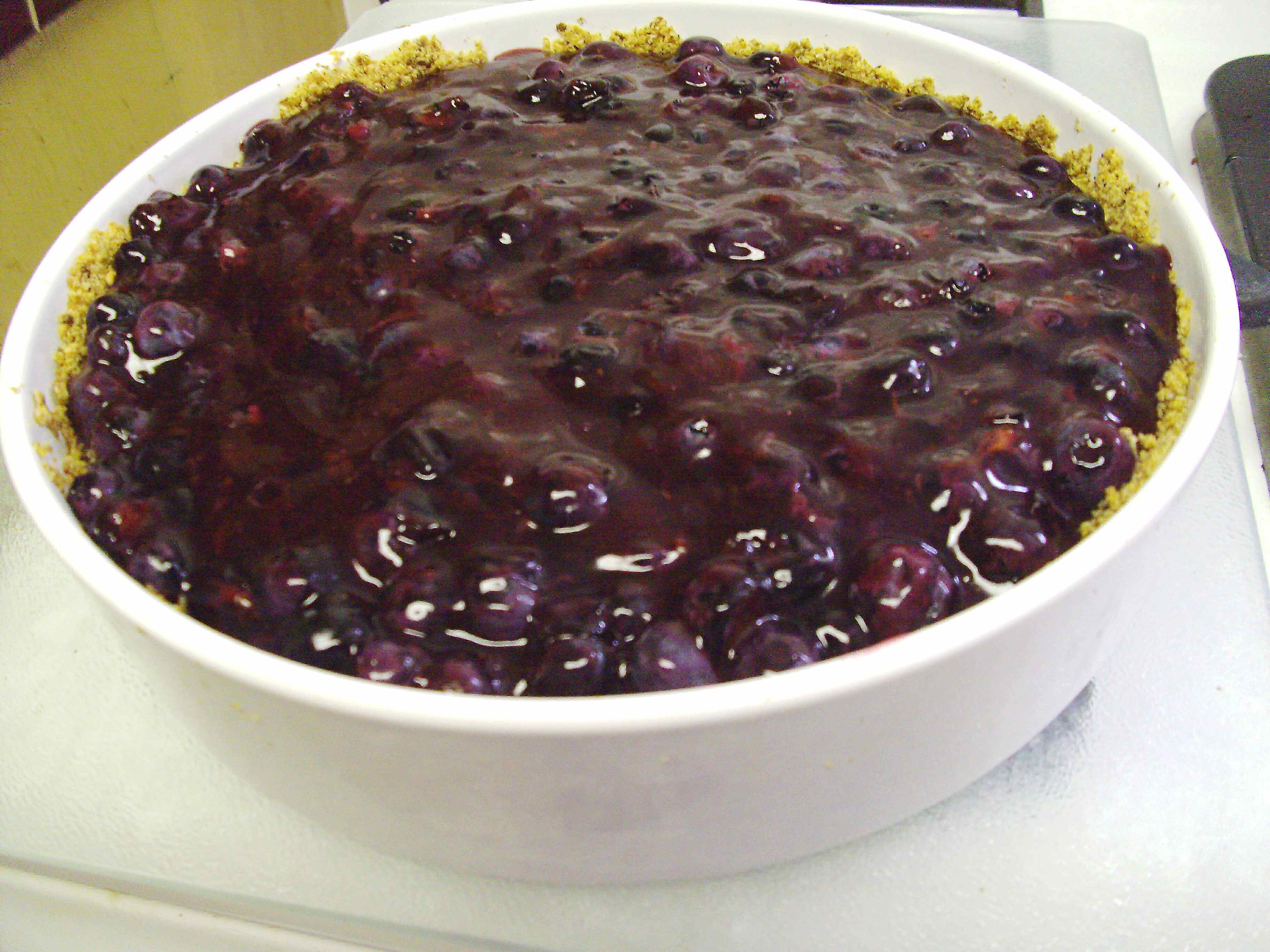

While I was stuck for what to post this summer without ranting too badly, I noticed readers are still searching for some of my inexplicably most popular older posts–how to ripen uncooperative peaches, and how to cook pasta in the microwave. I’m grateful you all are still out there, and I hope some of this helps or at the very least piques your imagination for what’s possible.
Usually I think these unconventional methods are mostly my own odd, quirky ideas about how to cook without turning on a hot stove in 100-degree heat and how not to throw out fresh produce if you can rescue it somehow.
These are no longer fringe questions now that the pandemic has hit so hard. We don’t want to waste money and food or make more shopping trips than we have to. And of course, the 100+ degree weather has suddenly hit hard in the West. So for the first time in a while, I find I actually have a few new things to say about both pasta and peaches, before I move on to some slightly more warped but fun ideas in the next overdue post…

Peaches first (since it seems like the more upsetting food for most of us):
Well, I really thought I was going to post here that I have finally come up with a fast and easy way to “ripen” uncooperative, spongy or bland peaches to edibility without cooking them, but it turns out I already did it 3 years ago. Sometimes I post improvements to older posts and assume people can find them easily and tell that the revisions are better, but obviously not, so I’m going to have to go back to the original peach post from about 10 years ago, which suggested ways to cook peaches in a microwave, and point people forward to the method I use now, which sometimes improves blah peaches enough to be able to eat them raw and like them. It also works well for other kinds of mediocre fruit (see under, strawberries) that need a boost to taste like better versions of themselves.
For those of you who don’t want to poke around, this is basically it:
Peach fix 3.0
Wash, pit and cut up the peaches. Sprinkle on a spoonful of sugar and a small pinch or two (a little goes a long way) of citric acid powder and maybe a spoonful drizzle of water, stir a bit and let it sit for several minutes. They should taste better and be at least somewhat juicy and tart, and maybe start taking some rosy color and flavor from the skin as well.
Notes:
- Citric acid is also called “sour salt” or “limon con sal” or “rock lemon” even though it’s not actually made from lemons, just tastes a little like them, and it doesn’t contain any salt. My Armenian corner grocery sells it along with other bags of bulk spices, and Rokeach brand citric acid shakers used to be available in the kosher food aisle of the supermarket. Don’t pay a lot for it, wherever you buy it–citric acid should be inexpensive and an ounce or two will go a pretty long way.
- Lemon juice should also work if you can’t find citric acid powder locally or online. But if you have it, citric acid keeps the peaches tasting like peaches, not like peaches with lemon added.
- If you have a whole bag of such flavorless peaches to rescue, more than you can actually eat in one go once they’ve sat and macerated a while (“macerating” is just the sweet version of marinating), you can keep them in the fridge in a snaplock container for several days without worrying about spoilage because the citric acid is also a preservative.
Of course, while I was still dawdling over this post last month, wondering if this was more important than my other overdue ideas, the FDA suddenly issued a recall of bagged yellow peaches in at least 12 states for salmonella contamination, and I even got a robocall from the Ralph’s/Kroger supermarket chain offering a full refund if I’d bought their peaches lately (I hadn’t). So I don’t know if this is going to help a lot right now, but maybe the next time you’re in a quandary about bland, spongy peaches and they’re not under a recall, you’ll have at least one more trick up your sleeve. Might work for reviving frozen peaches too.
OK, now the pasta:

Pasta 2020: Lasagne noodles in the microwave
Yes, I know. This is exactly what it looks like. But I finally figured this one out after how many years? too many. You can boil lasagne noodles in the microwave and keep them from sticking together horribly with a fairly simple trick–well, two. And incidentally, I also learned that lasagne, which is plural, refers to the noodles themselves, lasagna is singular and means the whole layered casserole…I’m still going to mix them up, I’m pretty sure of it.
I’m using a 2.5 qt./l rectangular snaplock container, the size you’d need for half a 1-lb. box of lasagne noodles, or about 9 full-length noodles, which is about how much I need for an 8-serving casserole. I snap the dry noodles in halves as best possible to fit my snaplock container and my oval ceramic casserole dish, but you don’t have to.
Here are the two tricks for boiling the lasagne in the microwave.
- Stand the noodle halves up on edge in the container of water and stagger them so they’re not all completely lined up in a tight block but alternating–see the photo. Fill the container with water an inch above the pasta.
- Add a capful of olive or vegetable oil to the container. Lift the noodles gently with a fork or spatula and lower them again so a little of the oil coats them. This is so traditional for regular stovetop boiling I’m ashamed to say it took me this many years to try it for microwaving, but it really helps. And it works well for spaghetti too.
So then all you have to do is cook. Put a lid on and microwave 7-8 minutes on HIGH or until the water starts bubbling up toward the lid and is obviously simmering–add a minute or so extra if you need to, or hit STOP if you see it start to boil over. Keep the lid on and let it sit in the microwave another 5-10 minutes with the power off, to absorb the hot water.
Check in–the noodles should look bigger and be slightly flexible at least, even if they’re not completely cooked yet. Remove the lid carefully away from your face and carefully slide the tines of a fork between several of the noodles to help separate any that have stuck together at the ends. It shouldn’t be too bad given the little bit of oil, but it’s good to try and free them gently at this point so all of the noodles are fully separate and in contact with the water. That way there won’t be any major undercooked spots when you’re done. Once the noodles are separated, put the lid back on and microwave them another 2 minutes or so to get the noodles fully cooked and al dente, and maybe let them sit in the hot water another 5 minutes to absorb further. Then drain and rinse very gently under cool water.
Making lighter lasagna in the microwave
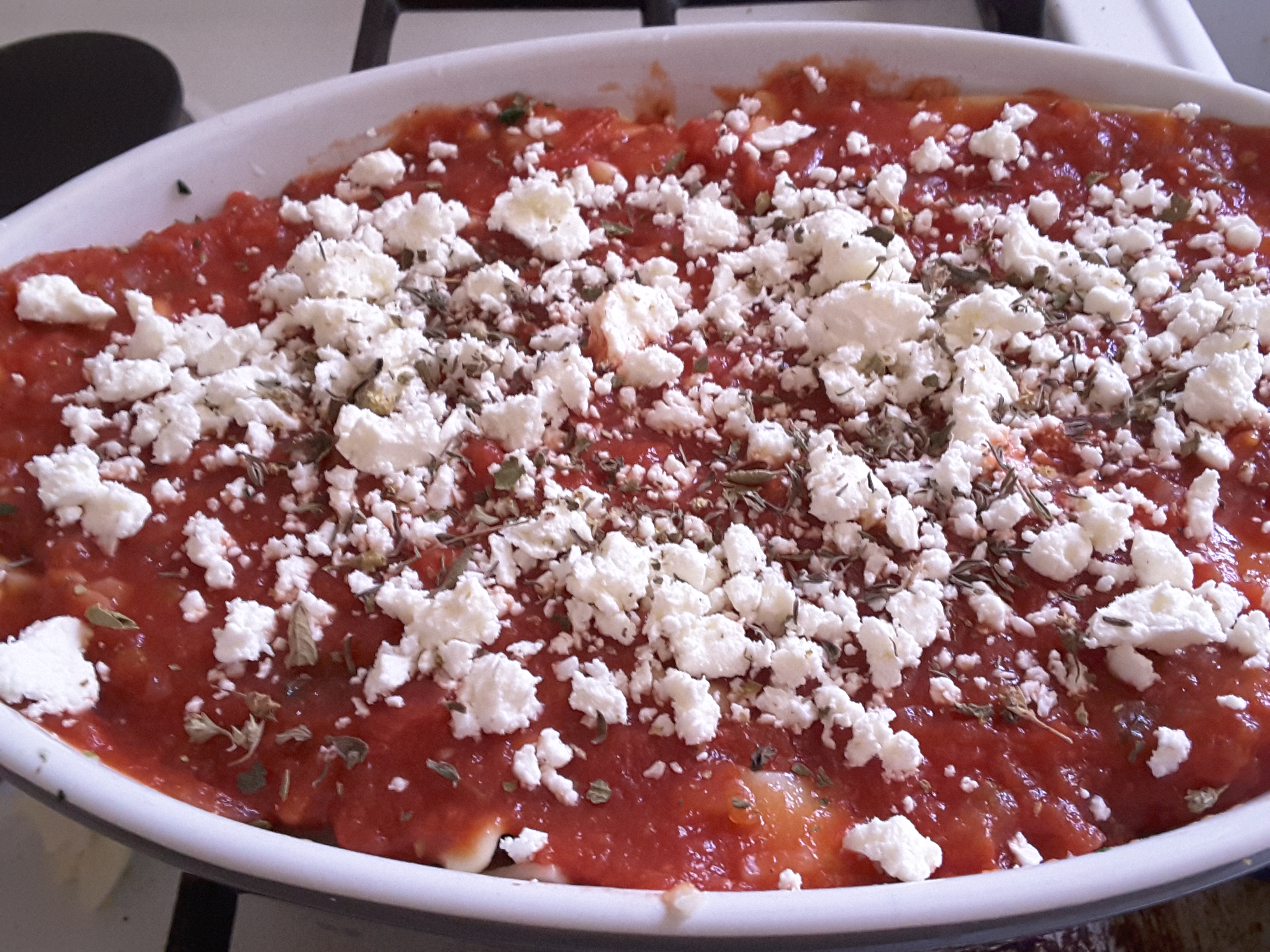
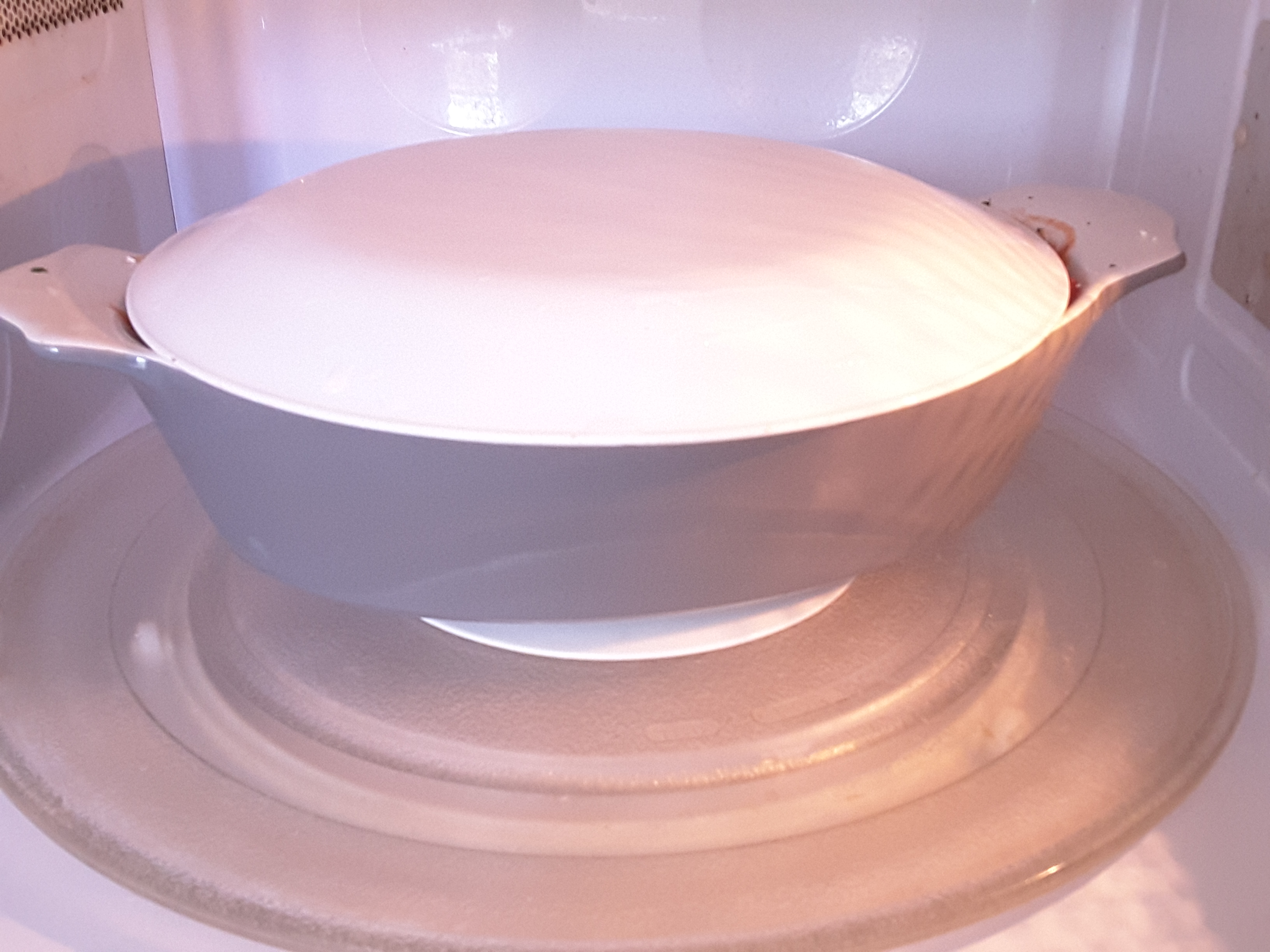
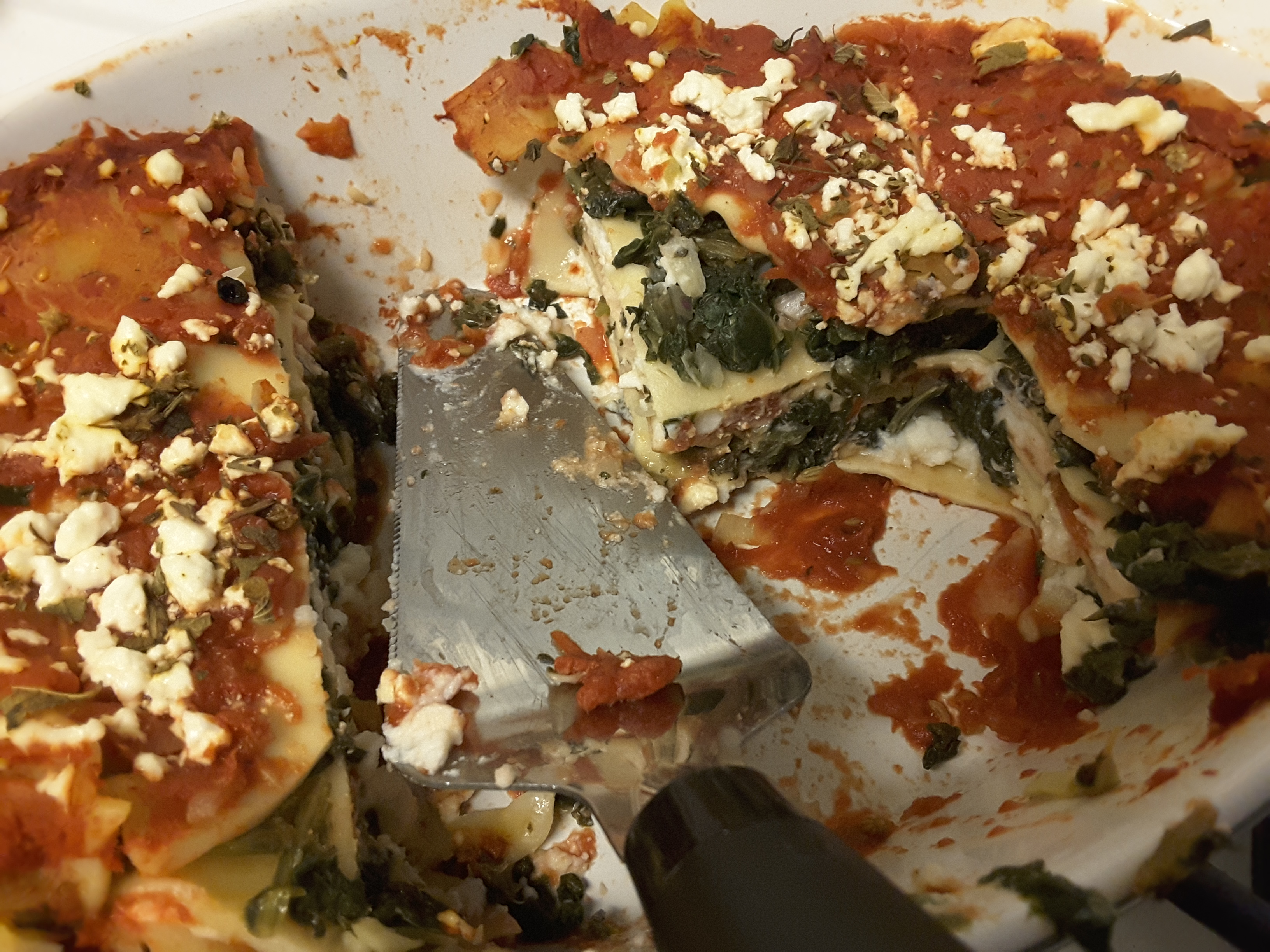

Spoon a little jarred or better, microwaved, chunky marinara in the bottom of a microwaveable ceramic casserole (“vitrefied stoneware” is usually good, or Corelle French White) and sprinkle on a few fennel seeds or hot pepper flakes if you like them.
If you boiled half a standard box of lasagne noodles, that’s about 8-9 whole noodles or 16-18 halves, so figure 3-4 layers of noodles with other stuff in between, depending on the layout of your casserole dish. Layer the noodles in, alternating with layers of cooked and squeezed-out spinach with garlic and herbs mixed in and layers of low-fat ricotta, maybe with a little crumbled feta or chopped onion in it, and more spoonfuls of marinara.
Skip the usual slabs of mozzarella altogether. Top the last layer of noodles with more marinara and a sprinkling of feta and oregano and a few optional fennel seeds and/or hot pepper flakes.
You can bake the lasagne conventionally at 350F for half an hour or so in a foil-covered pan according to the pasta package directions. However:
In Southern California or anywhere else you want to keep cool and cook fast, cover the casserole with a microwave-safe dinner plate (I use Corelle plates), center it on top of an overturned saucer or small plate on the microwave turntable to raise it up a little, and microwave 7-9 minutes on HIGH as for stuffed shells until heated through and smelling good. Serve hot for dinner, and cold the next day for lunch; it’s good either way.
Mangia bene, b’te’avon, bon appétit!
Filed under: cooking, frugality, fruits, Grains, Microwave tricks, Pasta | Tagged: food, microwave cooking, recipes |
 Slow Food Fast