• Enter your email address to subscribe to this blog and receive notifications of new posts by email.

    Join 241 other subscribers
  • Noshing on

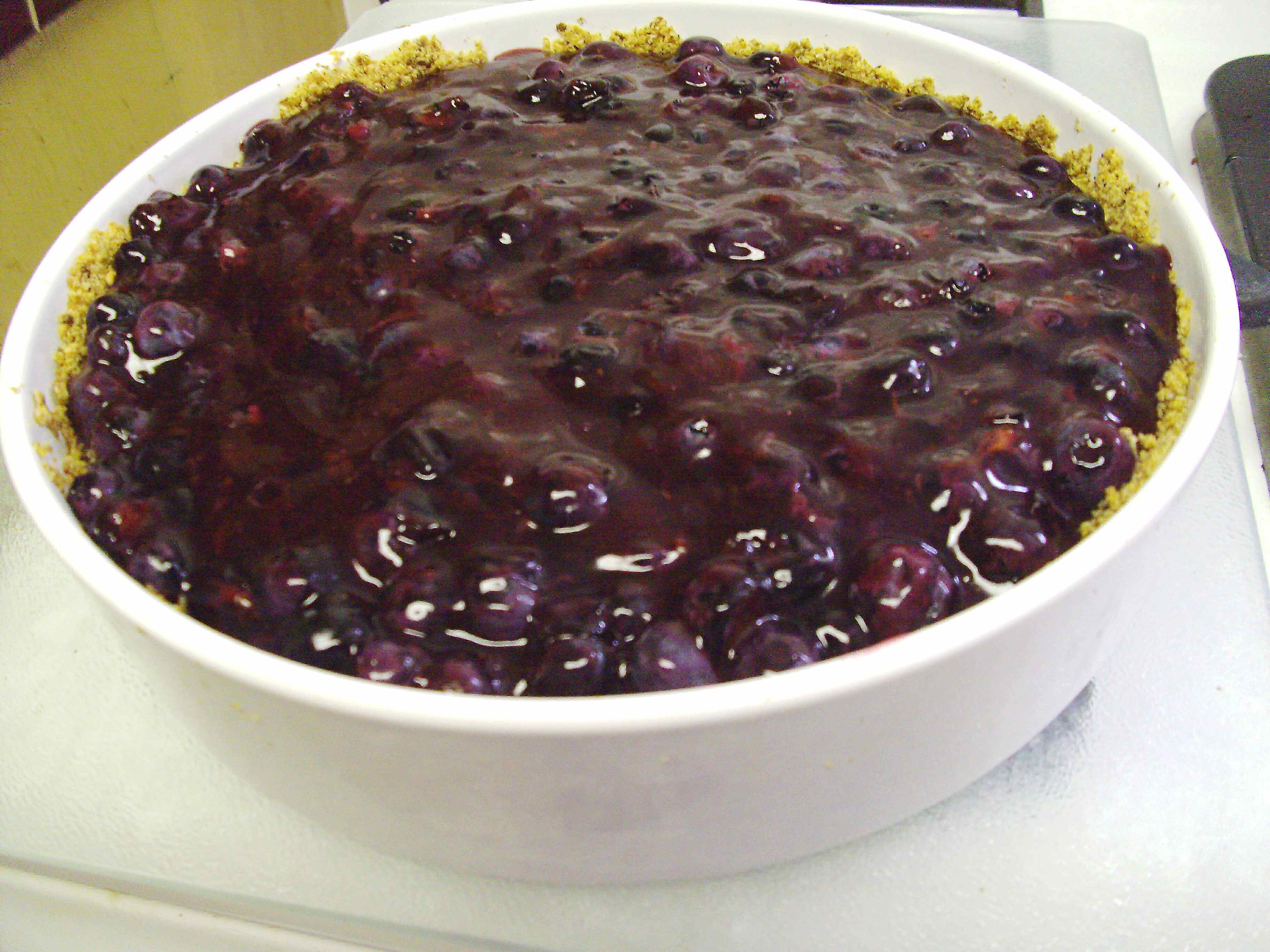
    raw blueberry pie with microwaveable filling and graham cracker crust

    This mostly-raw blueberry pie is a snap to make and very versatile--the filling microwaves in a few minutes, and you don't even have to bake the zippy gingered graham cracker crust--perfect for a hot Fourth of July and all summer long.

  • Recent Posts

  • Contents

  • Archives

  • Now Reading

  • See also my Book Reviews

  • Copyright 2008-2024Slow Food Fast. All writing and images on this blog unless otherwise attributed or set in quotes are the sole property of Slow Food Fast. Please contact DebbieN via the comments form for permissions before reprinting or reproducing any of the material on this blog.

  • ADS AND AFFILIATE LINKS

  • I may post affiliate links to books and movies that I personally review and recommend. Currently I favor Alibris and Vroman's, our terrific and venerable (now past the century mark!) independent bookstore in Pasadena. Or go to your local library--and make sure to support them with actual donations, not just overdue fines (ahem!), because your state probably has cut their budget and hours. Again.

  • In keeping with the disclaimer below, I DO NOT endorse, profit from, or recommend any medications, health treatments, commercial diet plans, supplements or any other such products.

  • DISCLAIMER

  • SlowFoodFast sometimes addresses general public health topics related to nutrition, heart disease, blood pressure, and diabetes. Because this is a blog with a personal point of view, my health and food politics entries often include my opinions on the trends I see, and I try to be as blatant as possible about that. None of these articles should be construed as specific medical advice for an individual case. I do try to keep to findings from well-vetted research sources and large, well-controlled studies, and I try not to sensationalize the science (though if they actually come up with a real cure for Type I diabetes in the next couple of years, I'm gonna be dancing in the streets with a hat that would put Carmen Miranda to shame. Consider yourself warned).

A Quick Wish for a Better 5781

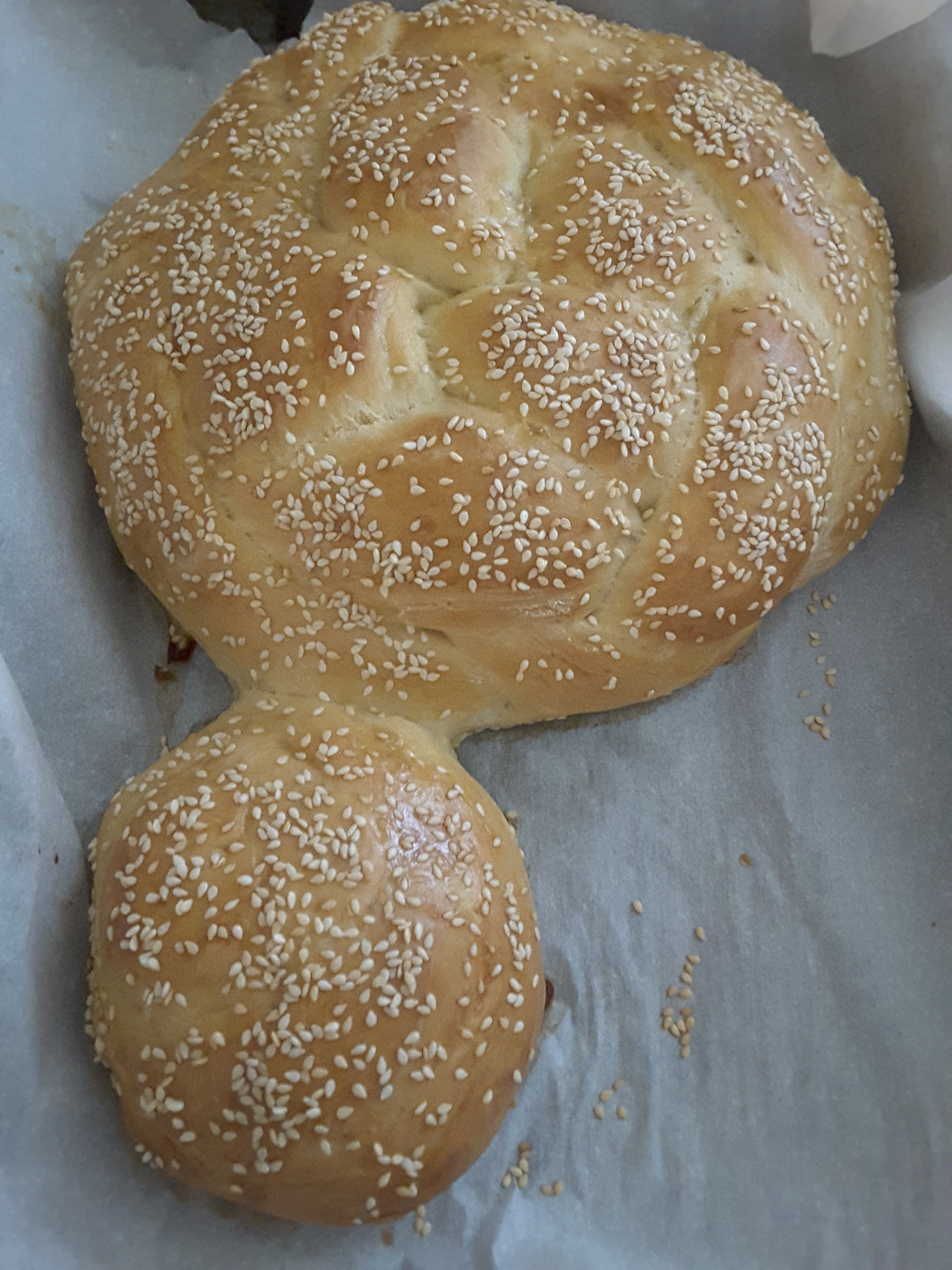
Round challahs, one large, one small 

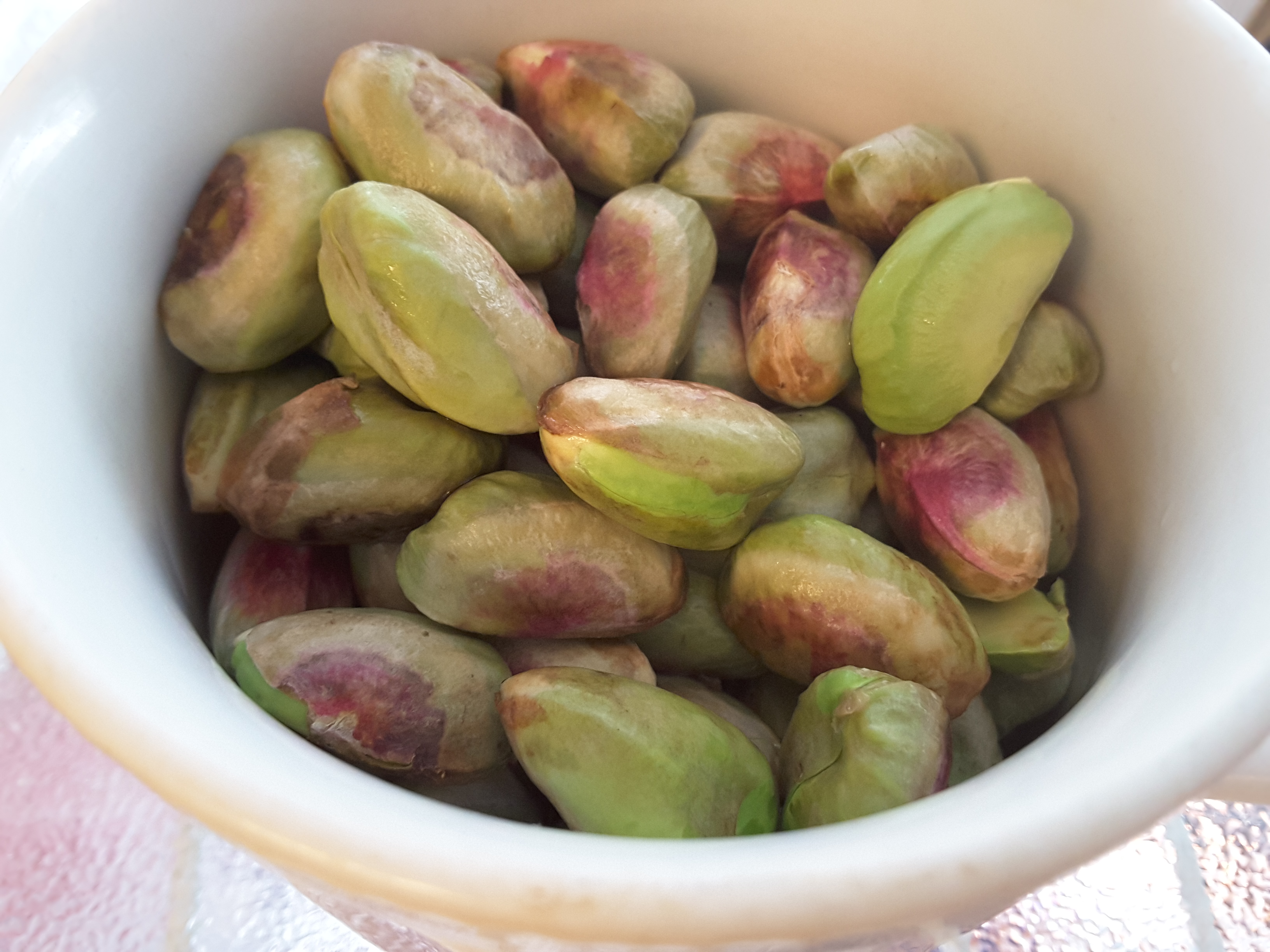
Most of the US is already at or past sunset for Yom Kippur, but it is still late afternoon here on the west coast. This morning I got up, fed the cat, made coffee, set up challah dough, watered the plants, and discovered that the two fresh pistachios I decided to try and root, after trying out a handful of these recently picked nuts with their soft green outer coat at my local Armenian corner grocery a week or so ago, had both sprouted over a couple of days in a bag with a damp paper towel, so I planted them. It was an immense joy.


Yesterday evening, out on a walk, I realized that the mystery plant that seems to be doing well among my peppers is in fact the product of one of the pomegranate seeds I tossed into some dirt in an empty yogurt container a few months ago and kept watering, even though I’d assumed nothing would germinate.

All these small things–when I look at them they offset a little of the hard uncertainties of daily life this year. At least for a moment or two at a time. It’s odd to think that if I take care of them I could end up with a pomegranate tree and a couple of pistachio trees.

Likewise with people.

Wednesday was my birthday, and I talked to four people I expected to–my family–and one person I didn’t expect to hear from, a friend from our congregation, who called to wish me happy, and we talked, and I asked her how she was doing. It would have been normal in a conversation with anyone else, but not with her.

She’s a care coordinator for other people, which often means “how are you doing?” is her question, not something other people ask her. “Really stressed out,” she told me. She, like me, has been reading the appalling headlines too often and is too worried about the upcoming election to be able to relax.

And we commiserated a little, and hopefully felt better and stronger afterward.

And we’re going to observe Yom Kippur in an hour or so, and we’re going to breathe in as much calm and remembrance as we can that our community is still here, in large part thanks to her work, and we’re going to put one foot in front of the other and take the chances we can to do better.

Take a moment and take a chance where you can on a small act of planting and growing generosity, kindness, optimism. It will sweeten the new year for at least moments at a time, and you never know but it may work better than you hope.

To a better 5781, with better health, peace, love, prosperity, justice and compassion for all of us who are feeling more than a little nuts at the moment.

cup of pistachios

Saving Summer, 2020-style: Peaches and Pasta Yet Again

While I was stuck for what to post this summer without ranting too badly, I noticed readers are still searching for some of my inexplicably most popular older posts–how to ripen uncooperative peaches, and how to cook pasta in the microwave. I’m grateful you all are still out there, and I hope some of this helps or at the very least piques your imagination for what’s possible.

Usually I think these unconventional methods are mostly my own odd, quirky ideas about how to cook without turning on a hot stove in 100-degree heat and how not to throw out fresh produce if you can rescue it somehow.

These are no longer fringe questions now that the pandemic has hit so hard. We don’t want to waste money and food or make more shopping trips than we have to. And of course, the 100+ degree weather has suddenly hit hard in the West.  So for the first time in a while, I find I actually have a few new things to say about both pasta and peaches, before I move on to some slightly more warped but fun ideas in the next overdue post…

peaches ripening on counter


Peaches first (since it seems like the more upsetting food for most of us):

Well, I really thought I was going to post here that I have finally come up with a fast and easy way to “ripen” uncooperative, spongy or bland peaches to edibility without cooking them, but it turns out I already did it 3 years ago. Sometimes I post improvements to older posts and assume people can find them easily and tell that the revisions are better, but obviously not, so I’m going to have to go back to the original peach post from about 10 years ago, which suggested ways to cook peaches in a microwave, and point people forward to the method I use now, which sometimes improves blah peaches enough to be able to eat them raw and like them. It also works well for other kinds of mediocre fruit (see under, strawberries) that need a boost to taste like better versions of themselves.

For those of you who don’t want to poke around, this is basically it:

Peach fix 3.0

Wash, pit and cut up the peaches. Sprinkle on a spoonful of sugar and a small pinch or two (a little goes a long way) of citric acid powder and maybe a spoonful drizzle of water, stir a bit and let it sit for several minutes. They should taste better and be at least somewhat juicy and tart, and maybe start taking some rosy color and flavor from the skin as well.

Notes:

  • Citric acid is also called “sour salt” or “limon con sal” or “rock lemon” even though it’s not actually made from lemons, just tastes a little like them, and it doesn’t contain any salt. My Armenian corner grocery sells it along with other bags of bulk spices, and Rokeach brand citric acid shakers used to be available in the kosher food aisle of the supermarket. Don’t pay a lot for it, wherever you buy it–citric acid should be inexpensive and an ounce or two will go a pretty long way.
  • Lemon juice should also work if you can’t find citric acid powder locally or online.  But if you have it, citric acid keeps the peaches tasting like peaches, not like peaches with lemon added.
  • If you have a whole bag of such flavorless peaches to rescue, more than you can actually eat in one go once they’ve sat and macerated a while (“macerating” is just the sweet version of marinating), you can keep them in the fridge in a snaplock container for several days without worrying about spoilage because the citric acid is also a preservative.

Of course, while I was still dawdling over this post last month, wondering if this was more important than my other overdue ideas, the FDA suddenly issued a recall of bagged yellow peaches in at least 12 states for salmonella contamination, and I even got a robocall from the Ralph’s/Kroger supermarket chain offering a full refund if I’d bought their peaches lately (I hadn’t). So I don’t know if this is going to help a lot right now, but maybe the next time you’re in a quandary about bland, spongy peaches and they’re not under a recall, you’ll have at least one more trick up your sleeve. Might work for reviving frozen peaches too.

OK, now the pasta:

microwaving lasagne noodles  

Pasta 2020: Lasagne noodles in the microwave

Yes, I know. This is exactly what it looks like. But I finally figured this one out after how many years? too many. You can boil lasagne noodles in the microwave and keep them from sticking together horribly with a fairly simple trick–well, two. And incidentally, I also learned that lasagne, which is plural, refers to the noodles themselves, lasagna is singular and means the whole layered casserole…I’m still going to mix them up, I’m pretty sure of it. Continue reading

Wanted: cooler heads, warmer hearts

…and less inflammatory bloat.

Warning: This is kind of a long make-up post with 3-4 related recipes out of my experiments since April. They’ve been helpful and fairly fast for coping with hot weather and hot tempers, mostly my own.

It’s been a long spring and summer not posting and just trying to get through, and wondering what kind of food post could possibly make up for the mess we’ve seen unfolding in this country.

So my thinking has kept roiling around in the manner of the following rant (much cleaned up):

We have to do better. As a nation, as a people, as individuals and members of our communities, as responsible and worthwhile human beings.

The proof is in the pudding, they say. This is true of both government and cooking. Right now we’re learning the hard way that you get out of it what you put into it. So watch what you put into it, and don’t treat yourself or your country like a garbage can. Prepare to vote like it matters, and in the meantime contribute as best you can to your local public schools’ support organizations to get students in low-income families the food and tech they need during distance learning.

— — —

I can’t help but cook, and usually I like to experiment, but with my husband and daughter suddenly home 24/7 for the past half year (my kid just went back to university across the country), and with temperatures getting up to 100+ some days here, staying creative about food without a lot of excess shopping trips or extensive cooking has meant staying fairly simple and more about fresh produce than about artiness in the kitchen, and maybe just using more herbs–one of the few things I seem to be growing successfully in the backyard. We all could use some shoring up healthwise and flavorwise, with some trimming back after a stressful winter and spring. So I’ve been trying hard to make the veg and fresh fruit more prominent and easier to grab-and-go for self-made lunches, without any of us having to work too hard.

But I have been cooking, and some of it has been good, and a lot of it has been anti-bloat AND good, surprisingly enough.

And it has in fact worked, most impressively for our daughter before she went back east.

So this is worth passing on, especially now: forget the “stress-baking.” Go for basic vegetables and fruit. Seriously. It makes a difference, and it might help lower your health risk, and possibly your food expenses, as well. Maybe even help de-stress.

My daughter came home from university in March seriously stressed out from the shift to online and upended plans. She’d been suffering acid reflux badly enough to be on daily medication, and had to ask me for mild zucchini-type vegetables only for the first couple of weeks home, because tomatoes were too much, and so were the hot peppers she loves.

Being home with us during the shutdowns meant a lot less “student” food, aka greasy takeout with its oversized portions. More beans and lentils and fresh veg and fruit every day. More sleep, more water, more hanging out with friends online or by phone, more socially distanced walks to get a break from us parental units (yay!). By June, she was already in visibly better shape, needing less insulin per day to stay in range, had lost the “freshman 10” from last year without major effort, and possibly (probably?) as a result, she was able to stop taking the acid reflux meds. Just in time for Anaheim peppers and Fresno tomatoes. And Indian food.

(okay, back to food):

For my husband’s birthday this summer, I took requests and ordered celebratory takeout from our favorite restaurant, which has been in Pasadena for over 20 years and just keeps getting better. We’ve only done takeout anywhere a total of three times since the shutdowns, partly because it’s a splurge and partly because the logistics are more nerve-wracking now (were they wearing gloves? were you? do you wipe down the containers? should you nuke them?) You don’t want to know how it went on our first try back in April when the bad news was first ratcheting up. Not at all fun. I vowed to my still-beloveds afterward that we’d do it again and this time I’d be calmer, and just decide ahead how to handle the containers safely.

In any case, by my husband’s birthday, we’d finally got the hang of it enough for us, and there’s no denying that it was delicious. It also inspired a couple of microwave-friendly dishes I plan to pass on to my kid now that she’s back and cooking for herself. Two (well, three) of these dishes are hot, the other frozen, and all are cheap, fast, surprisingly easy and pretty good–they’re even fairly close to the dishes I was trying to imitate, but a bit lighter fat- and calorie-wise.

Which is good because today we’re in a massive heatwave in Southern California, and it’s so hot I decided to try hanging wet sheets out on an old clothesline I’ve never used. I think they were dry by the time I finished pinning them up 5 minutes later. I know I was.

Lightening up Makhni Paneer

Makhni paneer-style tofu with pumpkin sauce, plus added green beans and cooked chickpeas for a microwaveable next-day lunch. Or in this weather, just eat it cold.

One of the dishes we ordered from the All India was makhni paneer, which is cubes of fresh-pressed cheese submerged in a very rich tomato cream sauce. I’ve looked in a number of cookbooks and online–could be ghee and cream or full-fat yogurt in the sauce, could be coconut milk. Tasty but way, way, way too rich for my blood (cholesterol, that is). Way.

Still–the ideas started churning. The makhni paneer had a slight tang and a suggestion of sweet under all the obvious richness, and showcased the spices in a completely different way from the other dishes at the table.

How do you do that, but lighter, and possibly a little faster?

I love paneer but my daughter prefers tofu, at least for my home renditions of saag paneer. That actually fits a recent wave in US Indian communities of making heart-healthier substitutions–unsaturated vegetable oil for ghee, tofu instead of paneer, lower-fat yogurt where possible, and hopefully backing down a little on salt. Even the All India offers tofu as an alternative. So we obviously start there.

But the cream sauce is really the main challenge. The bhuna (browned-onion/spice flavor base) works fine with unsaturated vegetable oil instead of ghee. You can precook the chopped onion in the microwave for a minute or so to get it going a little faster when it hits the frying pan without the need for salt. But for the bulk of the sauce?

A large can of pumpkin sitting on the shelf for one of those just-in-case moments (why do we always seem to have them?) caught my eye, and it suddenly seemed right.

Pumpkin? right color, right substantial thickness, smooth, decent taste, likely to go well with everything else, easy to thin out just enough with milk or soymilk to get it a little more like the sauce I was going for, only without fat and with lots of vitamin A and fiber. Use enough of it to make a difference and it counts as a vegetable. Check.

Plus, I’d once used it successfully as the base for a fat- and egg-free eggnog back in my 20s, the early days of cooking for myself. Squashnog? That’s what I’d put in my little blank-book cookbook. Maybe it would work here too. Continue reading