
• Enter your email address to subscribe to this blog and receive notifications of new posts by email.

    Join 241 other subscribers
  • Noshing on

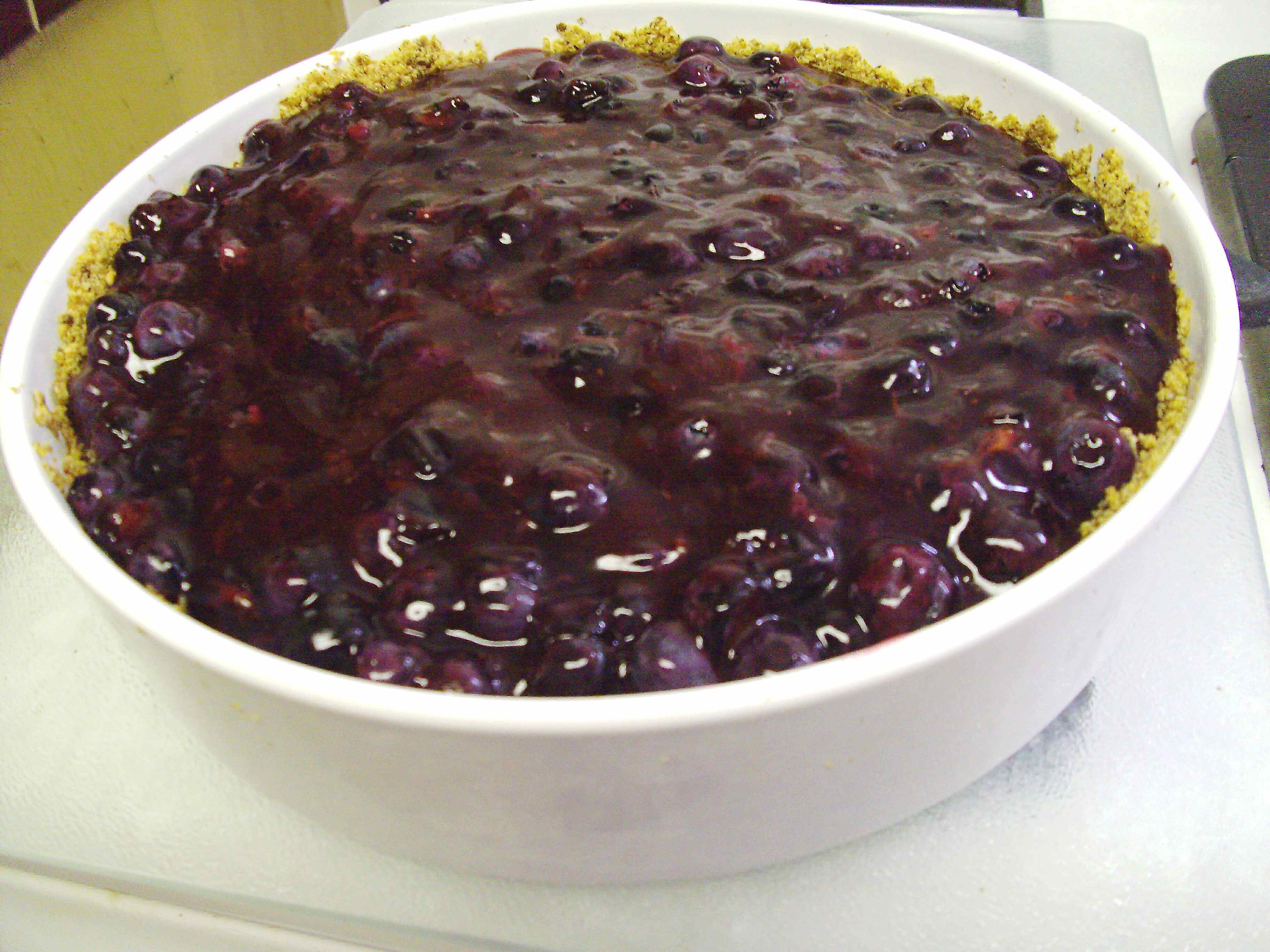
    raw blueberry pie with microwaveable filling and graham cracker crust

    This mostly-raw blueberry pie is a snap to make and very versatile--the filling microwaves in a few minutes, and you don't even have to bake the zippy gingered graham cracker crust--perfect for a hot Fourth of July and all summer long.

  • Recent Posts

  • Contents

  • Archives

  • Now Reading

  • See also my Book Reviews

  • Copyright 2008-2024Slow Food Fast. All writing and images on this blog unless otherwise attributed or set in quotes are the sole property of Slow Food Fast. Please contact DebbieN via the comments form for permissions before reprinting or reproducing any of the material on this blog.

  • ADS AND AFFILIATE LINKS

  • I may post affiliate links to books and movies that I personally review and recommend. Currently I favor Alibris and Vroman's, our terrific and venerable (now past the century mark!) independent bookstore in Pasadena. Or go to your local library--and make sure to support them with actual donations, not just overdue fines (ahem!), because your state probably has cut their budget and hours. Again.

  • In keeping with the disclaimer below, I DO NOT endorse, profit from, or recommend any medications, health treatments, commercial diet plans, supplements or any other such products.

  • DISCLAIMER

  • SlowFoodFast sometimes addresses general public health topics related to nutrition, heart disease, blood pressure, and diabetes. Because this is a blog with a personal point of view, my health and food politics entries often include my opinions on the trends I see, and I try to be as blatant as possible about that. None of these articles should be construed as specific medical advice for an individual case. I do try to keep to findings from well-vetted research sources and large, well-controlled studies, and I try not to sensationalize the science (though if they actually come up with a real cure for Type I diabetes in the next couple of years, I'm gonna be dancing in the streets with a hat that would put Carmen Miranda to shame. Consider yourself warned).

LA County gets school lunch program wrong

The LA Times recently reported that the public school cafeteria revamp the county worked so hard on for this year is a dead flop; kids are dumping whole trays of the healthier dishes they approved of in focus groups over the summer.

But there’s a catch: the dishes, which replace the concession-stand burgers-fries-pizza formula, were prepared well over the summer. The students say a lot of the stuff they’re being served now in the guise of “healthy” whole-grain salads and so on in the actual cafeterias is inedible: undercooked or burnt rice and other grains, undercooked meat, moldy bread, milk and other sealed cartons past their due dates, and so on. And when the students brought it to media attention, some of the cafeterias responded by removing the due dates.

The story was so eye-catching the New York Times picked it up last week to throw the issue to its own readers for comment. (Or you could say it regurgitated it–near the truth; the major newspapers seem to be following each other a little too closely these days. What is this, Reader’s Indigestion? what’s the nation coming to???)

The comments–well, as always for newspaper free-for-alls, they’re not generally on the ball. Most bashed the school board for being too liberal and trying to shove ethnic variety dishes like pad thai down the throats of poor kids trained on burgers and fries and pizzas. A lot of them were bemoaning the complete success of the fast food concessionaires in conditioning our kids not to like or even tolerate real food. A few–those who can read and think?– pointed out the spoiled or miscooked food problems mentioned in the LA Times but not in the NY Times digest version.

They all seem to have missed the most serious point, though: the school district may have retooled the menus, but they haven’t restored proper working kitchens to the school cafeterias. There’s no proper cooking facility behind that wall–certainly not for a thousand or so kids in each school. A lot of the new dishes are still being prepared offsite, just as the pizzas and burgers and fries were. Those prepared onsite are handled by staff used to doing nothing more complicated than heating up a bunch of frozen boxes from a concession company using minimal “kitchen” facilities.

The fault in the LA Unified School District healthy food menu plan lies partly in its complexity and partly in its execution. Upscale restaurant-style dishes might not be the best way to go for a first run at better food, and not just because they might repel students used to commercial stodge. They’re a bad starting choice because they’re more complex than the minimally experienced and underequipped cafeteria workers can handle on site, and the facilities that produce them clearly haven’t got their protocols down for “quinoa salads for 1000”.

The freshness factor is another problem. With “just reheat” trays of frozen pizzas, burgers and fries, no one has to think about sell-by dates. Heck, the sodium level is so high they probably don’t even need to freeze the meals. We’ve all seen the blog post where the woman let a Happy Meal sit on one of her shelves for an entire year…and nothing appeared to have changed in all that time. Real food with expiration dates? The school cafeterias are now out of their depth.

But by the same token, the schools shouldn’t have to throw in the towel so easily and go back to pizza, burgers and fries.

What would have been easier to get right–better balanced, and with better buy-in from the students–might have been “build your own” sandwich and/or salad bars.

You see the complicated versions  at any Whole Foods or Souplantation. But pick one theme per day–brown-bag sandwiches, Italian subs or hoagies, felafel and pita, soft tacos… Offer two or three nutritious and fairly familiar choices for protein fillings, one of them vegetarian. Two or three raw, fresh vegetables as accompaniment and a choice of sauces or toppings, and fairly simple bread. Then you’ve got the makings of something students can deal with and find appetizing as well as nutritious, but without a lot of complicated prep.

You don’t have to provide a zillion choices for lunch every day. You don’t have to salt or bread the dickens out of the fillings, and you don’t have to provide sweetened, oversalted sauces for them. Fewer ingredients and processes are better. Just make sure the food is fresh.

I wish to god the school cafeterias and the board members who debate what they serve would stop trying to imitate the  chain restaurants or the upscale restaurants–or indeed any restaurants. It’s lunch, not a field trip downtown to the California Science Center, where the brand-name burger chain running its concession stand/cafeteria sends the smell of frying grease wafting up to every one of the exhibits to make sure you know what you’re really supposed to be paying attention to.

Why don’t school cafeterias do regular sandwiches anymore?


Fruitcake and the Jews

A week or so ago, just before the Chanukah madness, my husband brought home what he assumed were The Goods from the local Vons (Safeway chain affiliate on the west coast)–a classic fruitcake, green and red candied citron glowing evilly amid chunks of walnut and raisins and other less identifiable bits and topped with syrupy pecans and glacéed cherries. Tacky as hell, we know. We love fruitcake anyway.

Why do Jews like fruitcake more than Christians do? You know, the kind of indestructible fruitcake everyone jokes about passing off to some unsuspecting cousin after having received it 20 years earlier and having kept the tin in the closet all that time underneath some shoes. The kind the British refer to as “doorstop”. The kind all modern cake blogs decry when they present their own lighter, cakier, less fruity and less chewy version as “fruitcake you’ll actually like.” THAT fruitcake.

Well. Private Selection or not, the cake from Vons was…I don’t know if there are new legal restrictions on using rum or bourbon or other booze as a baking ingredient these days (or ice cream flavor; hard to find Rum Raisin anymore). Maybe it’s a California-does-rehab thing, or just a huge downgrading of quality, but it. Was. Awful.

No rum. No bourbon or other appropriate flavoring. Instead, the loaf was permeated with an aggressively soapy flavor/odor (we couldn’t even tell which), horridly artificial and perfumy like fruit-scented liquid hand soap. Or that overpowering Dove soap I always hated as a kid. You couldn’t even taste the raisins or walnuts, which by all accounts, including visual inspection, were present.

We were, perhaps for the first time ever, not tempted to eat any more, not even to try a tiny second taste the next day to see if it was really as bad as we thought the first time. Just passing the open packet on the table was enough to convince us the bar of Dove that must have fallen into the batter was still giving that loaf its younger-looking complexion. After several days of forlorn looks in its direction, we actually threw it out.

In any case, I’ve been looking for a trustworthy recipe for fruitcake ever since and not succeeding much. In a place where there is no fruitcake, strive thou to make taka a fruitcake. (Not exactly sure what the “taka” part means in Yiddish; the way my mother says it, it means something like “especially” or “such a”, but less polite and more ironic, as you might use it when pointing out how incredibly garish and over-the-top the neighbor’s Christmas lights are with the Continue reading

Pecans, Profits, Poverty: reason to remember the gleaners

From the New York Times today:
In Georgia, Pecan Thieves Find Windfall, at $1.50 a Pound

Now I know stealing is stealing, and scrumping is scrumping, but there’s a decent argument in here somewhere for leaving some of the fallen nuts for the poor to gather–even if it’s to sell to local nut brokers at a dollar-fifty a pound. The farmers claim their losses are growing this year–small wonder!–but one of the biggest growers estimates he’s selling 7 million pounds and the thefts total to about 10,000 pounds. Less than one percent. The article quotes $3 per pound as standard wholesale–all I can say is, out here in California our best local price is $9 per pound for shelled pecans (I don’t bother with the ones still in the shells; I’m not that good).

Some of the thieves are stealing amounts large enough to be serious theft–1400 pounds in one case–and cutting fences to break in. You get no argument from me for calling the sheriff on them. But most are genuinely poor–laid off and out of work, trying to make 15 or 20 bucks with the bit they can gather in a bucket or sack from the edges of the local pecan groves. Yes, that starts to add up if you have 50 people doing it, and yes, it’s more than one person would expect to be able to eat because they were hungry, but perhaps the talk of theft should be reconsidered and turned around to a discussion on gleaning, and not trimming the corners of your fields but rather leaving the last bits of the harvest for the poor to gather. The amount of money these small-scale gatherers can expect to make by selling to the local nut brokers is paltry and nowhere near in competition with the price the growers can get per pound.

Ironically, if the growers let locals pay a significant discount price per pound–50 cents a pound? 75 cents? to gather fallen nuts themselves after the main harvest, as many apple orchards do, they might reduce the incentive for break-ins, reduce their financial losses from theft and security costs, and save themselves some labor and wear-and-tear on their expensive ground harvesters. And they might still be seen as generous.

Stuffed onions in a hurry

Stuffed onions ready for steaming in the microwave

With a microwave and a frying pan, you can make stuffed vegetables like Mehshi Basal quickly, and they taste even better than with long roasting. These are just rolled and ready for a few minutes of steaming in the microwave.

Just after Rosh Hashanah I posted my first-ever attempt at an elaborate Syrian Jewish dish of sweet-and-sour stuffed eggplants with quince, and because I had more stuffing than I needed, I went for seconds with Aromas of Aleppo on the spot and tried out the Mehshi Basal, or stuffed onions with tamarind sauce, which was actually even better. It was easier to put together and I was patting myself on the back when we tasted the results.

Still, given that I was using a lentil stuffing in place of ground beef, I was a little dismayed at how long the traditional braising and roasting took to cook the onions all the way through–an hour and a half at least, and that was after stuffing them. A second attempt in November, this time exclusively with stuffed onions for a congregation brunch, did no better on time, and I came away thinking that roasting was an extremely inefficient way to cook these–might even have toughened them inadvertently.

Why, you have to ask, should I make such a big deal about stuffed onions–they’re a party trick, after all, not standard cooking. But we discovered we really liked them, and they’re a pretty good kind of party trick. They were a surprise hit at the brunch. If I hadn’t snuck myself one while setting up in the kitchen, I’d have missed out altogether.

Actually, I think they fascinated everyone as much for the magic trick as for the flavor. People who’d never tasted them before kept coming up to me–and even my daughter–to ask, “How do you get the filling into the onions???”

If they hadn’t been so time-consuming I could have made double the amount and they’d still have disappeared. Or I could throw them together easily just for us on the odd weeknight as a treat–but one with some iron and fiber in it–instead of the standard pasta or rice.

So in the time since, I’ve finally rethought the process and come up with something that requires no oven time and cuts the actual cooking after stuffing them down to about 20 minutes or so–as long as you already have some cooked lentils (microwaved to perfection in about 10 minutes of cooking time and 30-4o minutes of standing time) and tamarind sauce (or “mock tamarind” sauce, a 5-minute microwave-assisted blend of prunes and/or apricots with water and some lemon juice, plus-or-minus tomato paste, applesauce and other flourishes you don’t really need for this) to hand.

I know, you probably don’t have these things sitting around. But this recipe might change your mind. Lentils are good stuff even on their own, and the stuffing here is a knockout.

Even genuine tamarind sauce isn’t so bad anymore, assuming you don’t or can’t just buy a prepared concentrate. I’ve sped the process up from an hour-plus to a few minutes just by nuking it, pulsing in a food processor, and this time, neither filtering it quite so aggressively as I did back in September NOR bothering to boil the stuff down to a sticky residue. It’s so much less painful, and I think it even tastes better, with more of the fruit character left in. See my notes at the end of the post for how to do it the quickie way (in modest jam-jar quantities, not quarts).

Anyway, back to the stuffed onions. I’m actually proud of myself for this one, and I’ve tried it three times in a row so I can vouch for it–the last time, I put my daughter to work stuffing the onion layers, and she did a great job.

For this method all you need are a microwave oven, a frying pan and a food processor. Instead of boiling the onions for 20 minutes to separate the layers, you microwave them in a drizzle of water for 5. Instead of braising the stuffed Continue reading

Medieval in LA: Sweet Spinach Tart

sweetened spinach tart for medieval feast

My daughter’s middle school social studies class has been preparing for this all month: today was the Medieval Feast. Lords, ladies, jesters, knights–and she chose to be the master chef. Others brought bags of apples and peas.

We baked a big Tart of Spinnage (courtesy of The English Huswife, 1615, by Gervase Markham) with adaptations. 1615–that’s Shakespeare and Elizabeth I, the early modern era, not the medieval. Still, some of the recipes were probably conserved, and some of the styles of flavoring as well. The fact that sugar is added to this one is reminiscent of Elizabeth I’s infamous sweet tooth, but it also makes the normally savory spinach a dish more in keeping with the earlier recipe collections so favored by Renaissance Faire participants.

Medieval recipes from the 1300s and 1400s indicate heavy use of cinnamon, ginger, mustard, pepper, galingale, and grains of paradise for the aristocratic classes, at least for their feast dishes. Fruits were routinely added to both meat and fish “Parma” tarts–those tarts, full of eggs, were probably much like today’s quiches.

But the recipe my daughter’s teacher e-mailed me had no eggs. The binder, an interesting choice, was “cast cream” or sour cream. Sour cream bakes up well in cheesecakes–labaneh, a Middle Eastern/Near Eastern version, is a lot thicker and bakes up even more nicely. I’ve made mini-cheesecakes from nothing but labaneh, sugar and lemon rind stirred together and baked in cookie crusts, and they came out beautifully. So I wasn’t too worried about the tart filling firming up enough.

The original recipe also contained no spices other than sugar (maybe I mean “flavorings” rather than “spices”), pepper and salt. Spinach, sour cream, sugar, pepper, salt…bland? Odd? Would the signature combination of vegetable and sweet get lost in the mix? No knowing. But for a medieval version, especially for a classroom tasting, we were going to have to do something slightly different, more purposeful.

A spinach tart with sugar? It was going to be a gustatory challenge for the class and its guests, a flavor combination we no longer encounter very much. Might as well make it interesting, and preferably good.

Which is why I adapted it to a sweetened tart of greens like Swiss chard. Versions of this are still served today in Nice (tourte de blettes or Swiss chard tart) and parts of Italy (torta di verdura or tart of greens) as a dessert. The filling often contains raisins and pine nuts as well as Parmesan cheese, and the pastry is often sweet and dusted with confectioner’s sugar before serving.  If it were awful, surely people like David Lebovitz wouldn’t be putting versions of it on their blogs. Novelty value can take you only so far. And his version contains a layer of apples on top of the chard…

The last thing I thought about was the learning experience for my daughter, the nascent (though not Re-nascent) master chef. The recipe her teacher sent home indicated “pastry shells”. As though you could go to the store and buy them.

No baking powder or soda allowed in the medieval era. No food processor. So my daughter cut up the butter and cut it into the flour with a pastry blender–once she realized the blades weren’t actually sharp–and then mashed it together with her hands, which was a lot more efficient. She made the spinach filling we decided on–very close to the assigned recipe, but with a bit of cinnamon and nutmeg, and a grating of lemon peel. In place of raisins, she put the extra bits of apple in the filling.

patting out the filling

She fit the pastry to the pan, pricked it out, filled it, and topped the spinach with a layer of finely sliced Granny Smith apples–most apples were probably tarter in those days than they are now.

slicing apples for the spinach tart

Dame Felidae demonstrates her knife skills

Then she placed the top layer of dough onto the tart, pinched it shut, slashed it in her own design and “endored” or gilded it with egg yolk/water glaze. We baked it in a (horrors! modern!) oven and thawed the “spinnage” out in the microwave before squeezing it, but other than that I think we were pretty much in the spirit. Continue reading