• Enter your email address to subscribe to this blog and receive notifications of new posts by email.

    Join 241 other subscribers
  • Noshing on

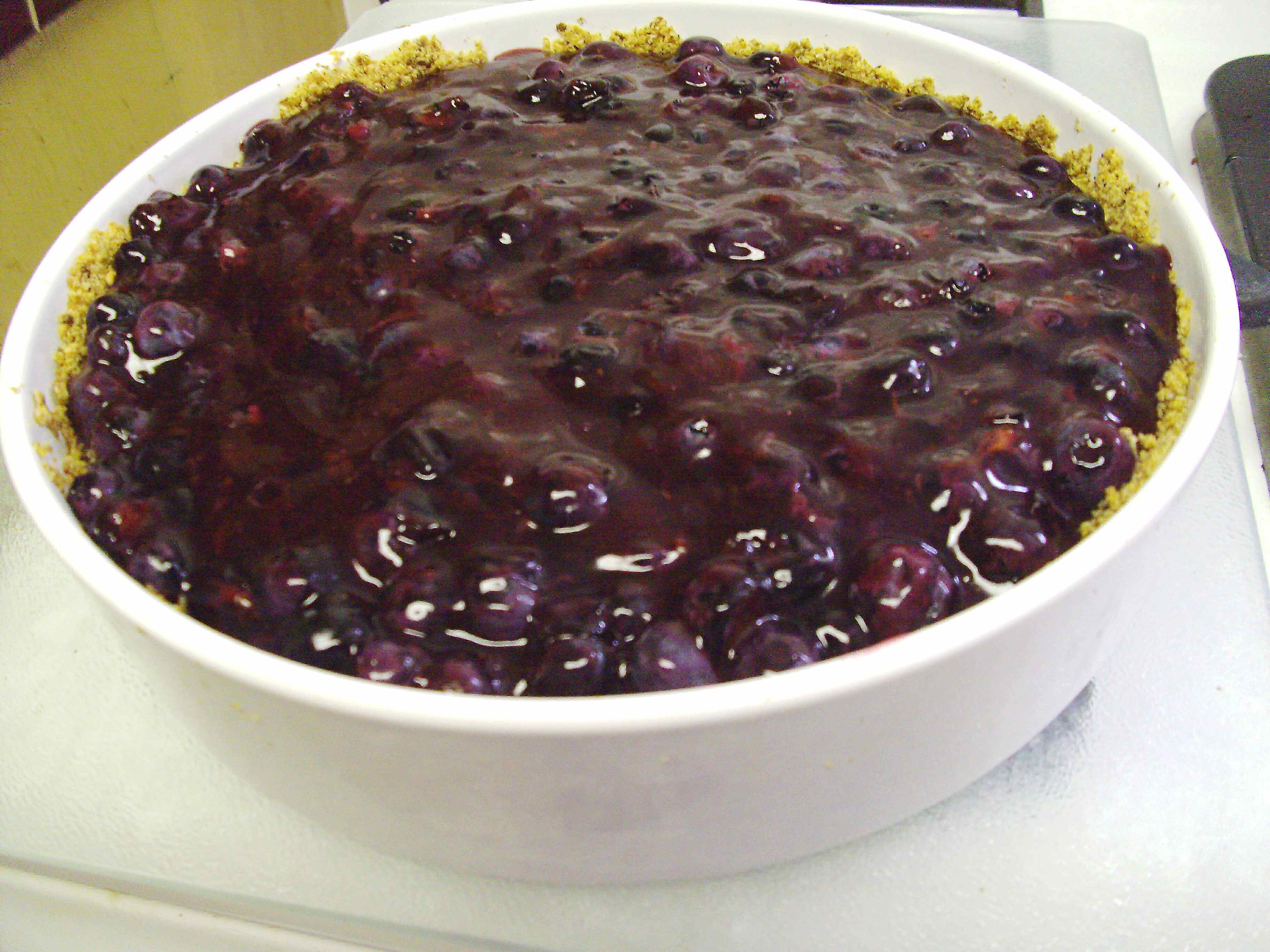
    raw blueberry pie with microwaveable filling and graham cracker crust

    This mostly-raw blueberry pie is a snap to make and very versatile--the filling microwaves in a few minutes, and you don't even have to bake the zippy gingered graham cracker crust--perfect for a hot Fourth of July and all summer long.

  • Recent Posts

  • Contents

  • Archives

  • Now Reading

  • See also my Book Reviews

  • Copyright 2008-2024Slow Food Fast. All writing and images on this blog unless otherwise attributed or set in quotes are the sole property of Slow Food Fast. Please contact DebbieN via the comments form for permissions before reprinting or reproducing any of the material on this blog.

  • ADS AND AFFILIATE LINKS

  • I may post affiliate links to books and movies that I personally review and recommend. Currently I favor Alibris and Vroman's, our terrific and venerable (now past the century mark!) independent bookstore in Pasadena. Or go to your local library--and make sure to support them with actual donations, not just overdue fines (ahem!), because your state probably has cut their budget and hours. Again.

  • In keeping with the disclaimer below, I DO NOT endorse, profit from, or recommend any medications, health treatments, commercial diet plans, supplements or any other such products.

  • DISCLAIMER

  • SlowFoodFast sometimes addresses general public health topics related to nutrition, heart disease, blood pressure, and diabetes. Because this is a blog with a personal point of view, my health and food politics entries often include my opinions on the trends I see, and I try to be as blatant as possible about that. None of these articles should be construed as specific medical advice for an individual case. I do try to keep to findings from well-vetted research sources and large, well-controlled studies, and I try not to sensationalize the science (though if they actually come up with a real cure for Type I diabetes in the next couple of years, I'm gonna be dancing in the streets with a hat that would put Carmen Miranda to shame. Consider yourself warned).

Breaking the Rules: Fish with Red Wine

tilapia fillets Veracruz-style, with smoky salsa, onions, garlic, alfonso olives, red wine and fresh za'atar or "wild thyme"

One way to cook fish well using red wine

Wine is something I drink mostly for taste, not volume–I can’t really hack a lot of alcohol at once, blame my ancestors–but I do like wine tastings, even though I have to limit myself to about three small sips per glass if I don’t want to wobble out the winery door. Focusing on the flavors in a wine, and comparing several side by side, sharpens your palate and makes you think very specifically about what you’re experiencing. It’s rewarding even for someone with my drinking limits.

I also like to cook with wine, maybe more often than I like to drink much of it. Decent wine has such a complex combination of flavors that when you figure out how to do it well, cooking with wine can make even rapidly cooked dishes come off like serious Slow Food.

We hear a lot about long-cooking stews and coq au vin and so on, but many simpler and less time-consuming dishes benefit from smaller amounts of wine. Adding a couple of spoonfuls of dry white wine to mustard vinaigrette tempers the sourness, the garlic and the mustard sharpness a little and gives the sauce a quiet depth. And if my experiment with giant favas marinated in rosé and rosemary was any indication, we should be thinking about wine a lot more often and a lot more creatively as a cooking ingredient.

So I’ve been on the lookout lately for clear and simple techniques for cooking with wine without wasting it, and for doing it in less than a three-hour stew, because to me that’s slow-food-slow in large crowd-feeding quantities, to be attempted a maximum of once a year. I want better, more sophisticated-tasting food fast, using at most half a cup to a cup of wine, not a whole bottle, and preferably without huge cleanup.

But these days, when so much of the cookbook aisle in your local independent bookstore is taken over by Food Network Channel collateral, cooking with wine is almost a lost art. Most of the popular TV chefs aren’t even doing it anymore. Everyone’s gone sorta-Asian (but without Martin Yan’s shaoxing wine-wielding expertise or sense of humor) or sorta-Middle Eastern or bacon-filled-Tex/Mex or wishful-thinking-Indian-or-Moroccan wannabe (if I hear the words “ras el hanout” mispronounced one more time by any TV chef, anywhere…)

Most of those cuisines don’t include wine as a regular ingredient because of religious restrictions against alcohol, which I fully respect, or, in the Tex/Mex case, because wine doesn’t go with football (the true religion of Texas, although if you see the documentary Somm, you might be surprised at how many American master sommeliers and exam candidates are former football players.)

The new vegan and vegetarian cookbooks don’t consider wine at all, as far as I can tell, even though there are plenty of  vegan-approved wines and organic wines touted throughout Whole Foods (and even a few at Trader Joe’s). And a number of seitan and bean or lentil dishes (and certainly Roman-style lentil soup) would probably do all the better for a tinge of red, white, or rosé, either in the sauce or as a marinade ingredient.

Even the French- and Italian-trained chefs don’t use wine on TV very much, and if they do they don’t really explain it–why they chose that particular type of wine, how much to use and why, how to get the best flavor out of it in the dish, what else you could make using the same technique. Or else they’re kind of wasteful about it, using a whole bottle of wine for a single dish. Most people cooking for themselves would balk at that. Should balk at that.

It bothers me that I don’t actually see a lot of solid advice about cooking with wine, or at least not specific techniques that make sense in a home kitchen with a standard family budget.

Where am I going to get this advice? Not from the churn-a-minute Food Network chefs, clearly. Not from Harold McGee, either. To my great surprise, he devotes a total of about three paragraphs to “cooking with alcohol” in his food science books. The most interesting thing he says, other than to make sure and boil out the alcohol (duh) is that tannins will concentrate unpleasantly if you boil down a tannic red wine, but adding a protein to pick them up will tame them.

But since most of my uses for wine so far are to do with fish, I guess I’m already doing that…

As you might expect from some of my odd microwave-centric ideas, I tend to cook fish with wine in ways that probably seem unorthodox to anyone professional. For one thing, I cook several kinds of fish with red wine (sound of Francophile traditionalists screaming, then fainting in shock). Continue reading

Movie Review: Family, fermented

The New York Times has a review today of a new French film in current release, You Will Be My Son, about an egotistical master vintner in Burgundy and the son whose winemaking instincts he scorns.

I’m thrilled this is going to be in theaters in the U.S., because I saw it last June on the plane home from Montreal, in French, and it was so well acted I thought the airline must have made a mistake–you know, putting in a good movie by accident instead of Alvin and the Chipmunks, various cheap CGI-driven “futuristic thrillers”, all the stuff that went straight to DVD and that you don’t really want to pay Netflix or Blockbuster an additional 5 bucks to see.

Much along those conventional lines, and starkly in contrast to You Will Be My Son, is a wine movie I highly recommend–skipping, that is, and which I also saw on a plane back from London several years ago. Believe me when I say that if Bottle Shock was the “hidden gem” of the selection as the in-flight magazine claimed, the rest of the movies available must have been just unwatchable.

Bottle Shock was supposed to be based on Judgment of Paris, George Taber’s nonfictional account of an upset between Californian and French premium wines in a 1976 blind tasting, but came out looking more like “Daisy Duke Does Napa”. With Alan Rickman thrown in (age 57ish then, and eating KFC onscreen, incompetently) in the role of the 29-year-old wine buff who set up the competition. And the late Dennis Farina, in a pink ascot, substituting for the wine buff’s 30-year-old female business partner. And Sam Rockwell’s ’70s longhair wig was like a bad toupee gone wild.

OK, do go find a clip or so of Bottle Shock (or is it Bottle Schlock?)  for those times when you’re punchy and want something that will give you that entertaining “clawing my eyes out” sense of superiority over an unbelievably putrid movie. With big-name movie stars ™.

No, really, don’t do it. Don’t do it. See You Will Be My Son instead. Part family drama, a little bit thrillerish, twisted and fascinating without any of the American movie must-have cliches, it will keep you on the hook long after you’ve left the theater. And the actors are subtle, intelligent, individual and believable. The whole thing is gripping and so different from the current insipid-explosive American style you’ll want to go raid the library for better-made oldies like All the President’s Men and The Manchurian Candidate.

Only one sour note: Skip the New York Times review itself. In his attempt at selling the appeal, which he didn’t really need to do, the reviewer stuck in a lot of the plot details, to the point where I feel the need for a spoiler alert. You Will Be My Son doesn’t need all that–it’s solidly made and it works well from the beginning. Go see it.

Sour grapes, aging grapes

Well, we never said they were Paul Masson, but really:

According to the LA Times last week,  a large Australian winemaker is ditching $35 million worth of their Napa-produced Beringer wines that have passed their “sell-by” date but haven’t been sold and distributed yet. Apparently they’re the exception on the US market, but it’s still pretty disconcerting to think of all that table wine going to smash.

Beringer is drinkable enough but supposedly doesn’t age like better-made wines, according to the parent company. I don’t see why not, unless it isn’t really wine–is that what they’re claiming? Can’t be. So in reality, it probably has enough tannins to age at least a little if you leave it alone in a decently cool dark corner unopened for 3 or 4 years. At least the cabernets and merlots, I would think. Might show a little improvement, if given a chance.

But the company is probably looking at the bottom line–they ain’t movin’, so why should we pay storage for another 3 years, because the supermarket chains won’t buy it that they’ve become better wines deserving of a higher price? And at the million-bottle level, I can see that argument. I can. Storage is expensive. And they can claim a business loss.

For home consumers, though, I’d say it’s worth taking a chance. One of the most interesting wine-tasting experiences I’ve ever had was the opening of 20-year-old bottles of California wines a friend had inherited from her late father. He’d been one of those early nuts–an enthusiast in Northern California in the 1960s and 1970s, when local winemaking was still in its infancy and not all that well thought of. Whenever he tasted something better than screwtop, he bought a case or so, opened up one or two bottles and put the others up to age in a part of the basement that had been dug into the side of a hill. The wines were okay to start with, maybe a bit better than that, and the makers became better known and better at their craft over time. But what started out as vin ordinaire did, after 5, 10, 15 years, transmogrify into something much more graceful, sophisticated, and  interesting in a number of cases.

Those wines have no match in the supermarket selection of 2- and 3-year-old bottles. So as an ordinary down-at-the-heels consumer without a fat trust fund, you probably can’t get anything like them without aging your own. Just because the wineries insist their wines are sold ready-to-drink-now doesn’t mean they have no further potential or that aging is a thing of the past. It just means the bigger companies don’t see much profit in it. But of course the small wineries up and down California always keep a few “library wines” for their customers to try–that’s how they end up selling a $15 or $20 bottle’s older cousin for $50, $150 or even more.

What for those of us living in apartments or lacking cooled hillside cave basements of worth? I’ve always been more ready than the average cook to play with my food and eat my mistakes as long as they don’t risk rampant botulism or salmonella. So this might seem tacky or harebrained: I’m not advocating those Continue reading