
• Enter your email address to subscribe to this blog and receive notifications of new posts by email.

    Join 241 other subscribers
  • Noshing on

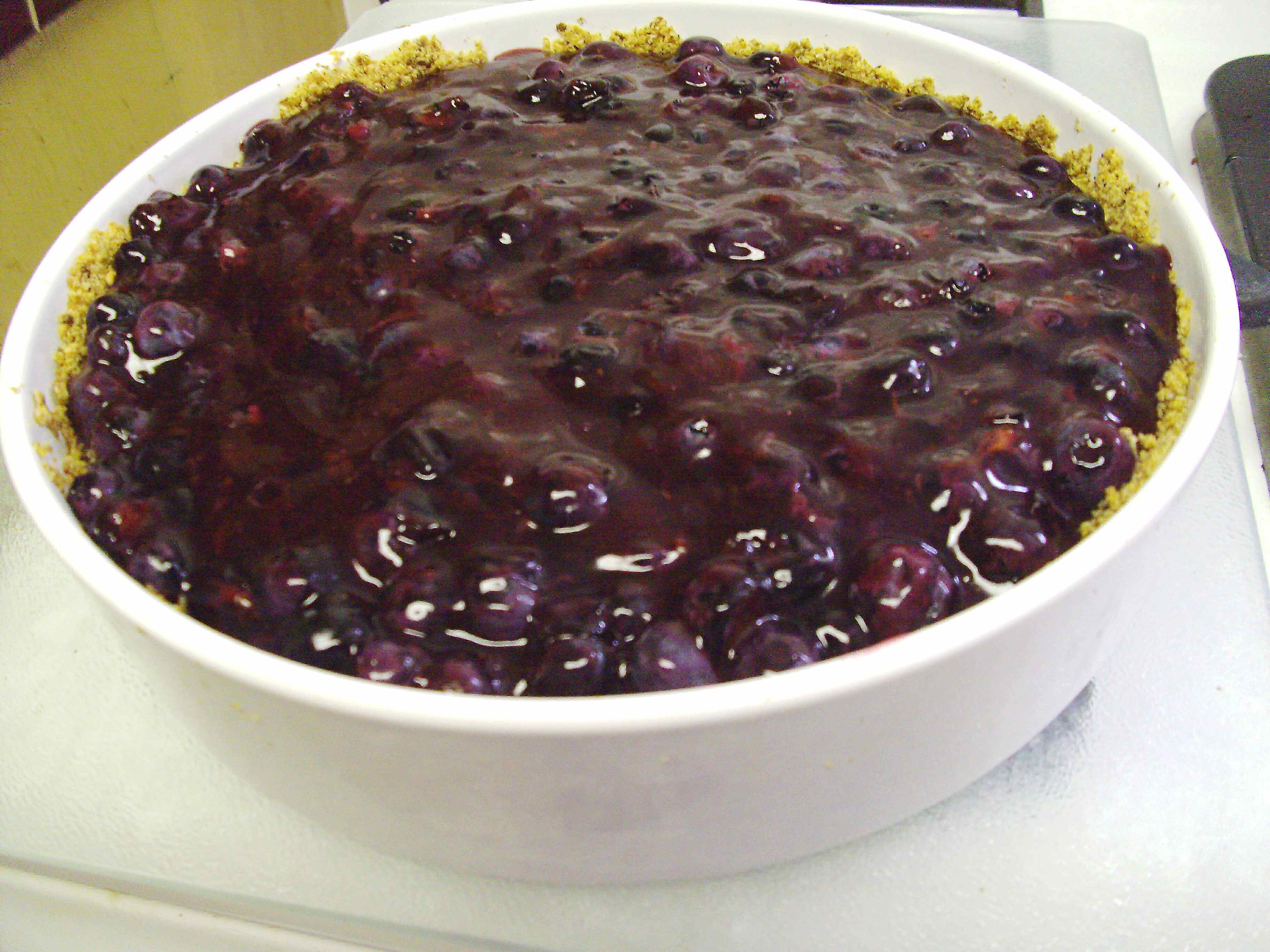
    raw blueberry pie with microwaveable filling and graham cracker crust

    This mostly-raw blueberry pie is a snap to make and very versatile--the filling microwaves in a few minutes, and you don't even have to bake the zippy gingered graham cracker crust--perfect for a hot Fourth of July and all summer long.

  • Recent Posts

  • Contents

  • Archives

  • Now Reading

  • See also my Book Reviews

  • Copyright 2008-2024Slow Food Fast. All writing and images on this blog unless otherwise attributed or set in quotes are the sole property of Slow Food Fast. Please contact DebbieN via the comments form for permissions before reprinting or reproducing any of the material on this blog.

  • ADS AND AFFILIATE LINKS

  • I may post affiliate links to books and movies that I personally review and recommend. Currently I favor Alibris and Vroman's, our terrific and venerable (now past the century mark!) independent bookstore in Pasadena. Or go to your local library--and make sure to support them with actual donations, not just overdue fines (ahem!), because your state probably has cut their budget and hours. Again.

  • In keeping with the disclaimer below, I DO NOT endorse, profit from, or recommend any medications, health treatments, commercial diet plans, supplements or any other such products.

  • DISCLAIMER

  • SlowFoodFast sometimes addresses general public health topics related to nutrition, heart disease, blood pressure, and diabetes. Because this is a blog with a personal point of view, my health and food politics entries often include my opinions on the trends I see, and I try to be as blatant as possible about that. None of these articles should be construed as specific medical advice for an individual case. I do try to keep to findings from well-vetted research sources and large, well-controlled studies, and I try not to sensationalize the science (though if they actually come up with a real cure for Type I diabetes in the next couple of years, I'm gonna be dancing in the streets with a hat that would put Carmen Miranda to shame. Consider yourself warned).

Pack your own lunch

It’s almost time to head back to school, and my daughter’s finally old enough to pack her own lunch. Not that she wasn’t actually old enough last year. But now she wants to.

When I was nine, I’d been making my own school lunches for at least a year, if only to save my sandwiches from my mother’s clutches and keep her from adding butter to the jam–something that did, and still does, make me absolutely nauseous. Emergency grossout prevention is the mother of lunch-making independence.

As many of my friends with same-age kids do, I worry that I haven’t been pushing my daughter hard enough toward independence by having her fix her own lunch. Is it too late to impart the mysteries of the toaster oven? But all is not lost–the other morning she figured out how to cut up her own apples (she has braces and our orthodontist “charges extra for stupidity-related bracket repairs”). She doesn’t appear to have lost any fingers. So we’re good to go!

Which is fortunate because lately I’ve been seeing a slew of new books on how to pack your kid’s lunch–they range from “here are all the vegan-friendly brand-names that look just like everyone else’s school lunch, only cooler” to Alice Waters insisting that the first step is growing your own school garden (which I’m actually in favor of, but not if it means waiting 6-8 weeks for your lunch to germinate).

Few of these fabulously sophisticated new books even consider the things I took to school every day as a kid–peanut butter and jelly, apple, carrots and celery. Or peanut butter and jelly, orange, carrots and celery. My mother was dull. My sister and I had no cool foods like Ho-Hos or Cheetos to distract us, and we usually ate at least some of the vegetables and the apple. Actually, so did most of the other kids in our school. It was that or suffer the cafeteria kale. And almost no one was fat. I’d like to point that out.

Hip mamas today (mostly those still in their 30s) look horrified at my daughter’s lunches because out there in hipland PBJ on whole wheat is so…so ’70s. It doesn’t contain any of the seventy-two essential nutritional supplement buzzwords (like selenium and phytoestrogens and antioxidant) they’re convinced all healthy food has to have (well, it’s true you have to have those things on the label to compete in the ads). And it has fat. And sugar!

But you know what? A decent peanut butter and jelly sandwich on whole wheat is a lot better deal nutritionally than most of the prepackaged, often self-righteously labeled, crap the hip kids bring to school these days. Much of it is along the lines of Kraft Foods’ “Lunchables”–a processed meat and cheese cracker kind of thing packed with some ersatz juice and faky side items like jello and  candies (not even, as I check belatedly, a tiny tin of applesauce–and check out the Lunchables nutrition and ingredient stats!). But you know how popular these things are–because they’re a kit. Buy five boxes, throw one  in your kid’s backpack each day. They stack neatly in the pantry.

Very few of these children ever bring a substantial serving of fresh vegetables or actual fruit–not even apples. Those require washing, peeling–maybe even cutting up. And sometimes the apples turn a little brown on the cut sides. Organic fair-trade labeling aside, any remotely fruit-like substances in the hip-kids’ lunch bags arrive in a rectangular cardboard box with a plastic overwrap, a plastic straw attached, and a sanitized-for-your-protection seal. No wonder they stare.

Anatomy of a PBJ:

Straight-up peanuts-only butter (no salt, no sugars, no mono- and diglycerides, no emulsifiers or BHT or “natural flavoring” or any of the rest of it) has about 16 grams of fat per 2 T (1 oz) serving. True. Absolutely true. But it’s not the same as the heart-stopping blubber you find on a piece of meat, so stop shrieking. Most of the oil in natural peanut butter is polyunsaturated (the “good fat” kind of fat). And it separates (because of the lack of fakery and emulsifiers) so you can pour off a good bit of it if you want to when you first open the jar.

Furthermore, the same peanuts-only peanut butter contains 8 g protein, 3 g fiber, almost no sodium, and about 210 mg potassium. And a little iron. It’s a pretty good deal for a kid’s lunch item at about 200 calories.

Two slices of whole wheat bread without too much sodium or garbage ingredients gives you another 200 calories–we’re up to 400, but only 3 g. saturated fat, another 3-7 g fiber, another 4-6 g protein, and with a little care preferably less than 400 mg sodium (all from the bread). Add a spoonful of all-fruit jam with 8 g sugar, at about 35 calories, and you have something that will get your kid through school without tears or big sugar highs and lows.

It doesn’t have big vitamin- and calcium-fortified labeling. It doesn’t have a label. It’s not supposed to do it all on its own. Your kid will eat about half, maybe the whole thing if he or she is growing fast or running around a lot that week. But he or she will get the vitamins and calcium from the other things in the lunchbox–some crunchy raw vegetables and an apple or orange and a thermos or carton of plain unsweetened milk. That’s it and that’s enough.

Do your kid a huge favor and leave out all the chips, chocolate, go-gurt (real milk-and-cultures yogurt is ok, not the fake tapioca- and gelatin-stretched stuff), cookies, jello, sorta-applesauce, and fluorescent boxes of juice. School is hard enough without sugar crashes or cavities, and they don’t need any of it to have a good day.

Oh yeah. And for crying out loud, please skip the sushi. Your kid does NOT need to be that hip in the school cafeteria. Or that sick, if the sushi doesn’t stay cold enough.

(Why yes, I live in Southern California. What gave it away?)

“But it’s organic! But it’s vegetarian!”

Vegetarian and organic foods are gaining popularity in supermarkets around the country–it’s been happening for at least a decade. Vegetarian- and organic-seeking customers assume they’re getting something closer to fresh if it’s labeled vegetarian or organic, and most of them also assume that vegetarian automatically means healthy. So, apparently, do nutrition researchers when they’re not really thinking hard enough.

The American Dietetic Association recently announced–again, updating from 1997–that vegetarian and vegan diets can be healthful at all stages of life from infancy onward and posted suggestions for getting started. Keyword here is “can”.

The idea of easing into a less-meat diet in stages by cooking familiar foods and familiar ingredients as far as possible is understandable. The Vegetarian Nutrition practice group of the ADA is trying to reach people they think are likely to panic at the suggestion of not eating meat. Unfortunately, the suggestions that top the list are mostly for processed meat substitutes, jarred pasta sauces, canned beans, boxed rice mixes and the like, rather than a dietary framework for eating fresh whole-ingredient vegetarian foods.

In the health section of the LA Times online, where I first read about the ADA’s statement last week,  many reader comments objected to this approach primarily because the major brands of veggie hot dogs and hamburgers tend to have long, improbable ingredient lists and very high salt. After a casual tour of the sauces-soups-and-rice-mixes section at my local Whole Foods, it’s an objection I second even more strongly.

For several years now I’ve had reservations about the processed food industry’s tendency to throw salt at anything and everything. Vegetarian and organic food is supposed to be better. Fresher, better-tasting, realer, more nutritious, healthier, more responsible for the planet, the animal world, and the customer. In a word, BETTER.

Nice intentions aside, most of the vegetarian and organic products companies these days seem to be trying as hard as they can to keep up with or even surpass the meat-eating Joneses–the big-brand pantry staples from Stouffer’s, Swanson’s, Kraft Foods, Campbell’s, and so on.  They’re still claiming the health and planet virtues of vegetarian and organic, but they’re actually processing the hell out of their foods, adding all kinds of laundry-list mystery ingredients, and salting them out of all reason. And health-and-planet-conscious consumers are flocking to them without bothering to look hard at the nutrition labels. How have we come to such a pass? Continue reading

Sweet Potato Ravioli

A couple of posts ago I mentioned wanting to try making pumpkin tortelloni at home. For some reason, reasonably large butternut squash seem to be evading my usual grocers this season, and they’re fairly expensive. Similarly, no fresh pasta sheets under $5 a packet…and I didn’t know how to make my own very well or want to spend that kind of time. But yams are in, and some of them are nearly the size of footballs. And I found a packet of round gyoza (alternate spelling for jao tze?) wrappers next to the squares for wontons and eggrolls in the supermarket. With my usual impatience, I decided to go for it.

The result was pretty good–a bit simpler than Colosseo’s tortellini in saffron cream, and certainly a little less rich, but definitely good, and not too much work once I figured out what I wanted. From start to finish, including all the dithering, it took me about an hour to prepare and assemble everything. And I cooked it successfully in the microwave, always a plus in my book.

So here goes:

Sweet Potato Ravioli (or yam; everyone gets those mixed up, even the grocers, and it really doesn’t matter that much)—4 big servings or 6 small ones

Packet of Gyoza/Jao tse or won ton wrappers, or your own pasta dough cut in 2″ diameter circles or squares, as you prefer.

Filling:

  • 1 huge yam or two normal baked-potato-sized ones
  • 1/4 medium red or yellow onion, chopped reasonably fine
  • small clove of garlic, minced or grated
  • few sprigs of thyme or sage
  • grating of nutmeg and lemon peel (~ 1/8 to 1/4 t. each, or a bit more)
  • 2 T or so goat cheese, ricotta, or feta, optional

1. Scrub the yam(s). Peel and if not too hard to cut, cube the flesh. Place in a covered pyrex bowl or microwaveable container with 1/4″ water in the bottom. Microwave on high about 5 min. The yam(s) should be fork-tender. If they’re still tough, turn them, cover again, and give them another minute or so. Then drain off the water and mash them a bit.

2. Fry the chopped onion and herbs in a little olive oil to start browning them, add the garlic and the yam, and toss to brown a little more. Take off the heat, stir in the cheese if using, and grate nutmeg and a bit of lemon peel into the mixture.

Cheese Sauce:

  • 1 T (heaping) flour
  • 1 T olive oil
  • 1-2 c milk (I use skim, use what you have)
  • 1 clove garlic mashed, minced or grated
  • 1-2 T shredded basil
  • 2 oz lowfat mozzarella, in small pieces
  • grated nutmeg and lemon peel to taste

1. Make a roux with the flour and olive oil in a nonstick frying pan–stir them together while heating for a minute or so until the mixture bubbles slightly.

2. Turn off the heat and add the milk a very little at a time while mixing with a spatula to make a smooth paste that eventually thins out without lumps.

3. Reheat the pan, stirring in the mozzarella, basil, nutmeg and lemon rind. The mixture should thicken as it nears a boil and the cheese should melt and incorporate. Turn off the heat.

Assembly and cooking:

Have a pyrex pie plate or casserole with a microwaveable lid ready to hold the ravioli. Put water in a soupbowl and separate the wrappers out on a plate.

1. To stuff the wrappers, dip a wrapper in the bowl to wet it on one side, then place a heaping teaspoon of filling in the middle of the wet side and fold the wrapper into a half-moon, pinching the edges together to seal them and squeezing out any air as you go around. Set each filled ravioli with the curved, pinched edge standing up in the pie plate. Fill as many wrappers as you can–it might be about 20 ravioli or so–and arrange them as best possible in a single layer in the pie plate. Store any remaining wrappers in a plastic sandwich bag in the freezer.
2. To cook, carefully pour a scant 1/4″ of water into the bottom of the pie plate between the ravioli. Cover the pie plate with a microwaveable lid and microwave on high for 2 min. to steam the ravioli somewhat and prevent raw dough on the bottom–never a nice surprise. If your lid is thick pyrex, you might need a little extra time, but check first–the dough should be turning translucent and cooked-looking. If it needs more time, take a soupspoon and run it with a little water over the tops of the ravioli to prevent scorching before covering and microwaving another 30 seconds or so.
3. Then uncover and spread the thickened cheese sauce over the entire plateful of ravioli, filling in the cracks where possible. Cover again and microwave 5 min. on high.

Impatience is its own reward

I learned to cook at the ripe old age of eleven. My mother had gone back to school, I had a younger sister and brother, and I had a problem. Mom said to make spaghetti–so far, so good–but when I got to the kitchen, I discovered there was no tomato sauce in the house. Luckily, there was a little can of tomato paste, and a cabinet full of dried spices that included the essential garlic powder and oregano, plus a bunch of herbs (they came as a set) that my mother owned but never actually touched. And, as I’ve mentioned, there were two guinea pigs available. Good enough.

I learned to cook again when I hit college and started helping a friend with Friday night dinners at the Hillel House. That’s also where I learned how to keep kosher.

I learned a third time when I moved in upstairs as a resident after my sophomore year–I was working a strenuous lab job on a tight budget–no more than $25 a week for anything–and I walked everywhere. My housemates introduced me to two basic spaghetti sauces–one red, one white–and the rest of the time I ate omelettes because eggs were a dollar a carton. I shudder now to think I got through a carton a week, and didn’t ditch any of the yolks. At the time I reasoned that I wasn’t eating meat–couldn’t get kosher meat easily, and it was beyond my budget. I did lose 20 pounds without realizing it. And I started baking my own bread–challah for Friday nights; pita the rest of the week. No real recipes; I went by feel.

The next time I learned to cook was after college, on a year’s study in Israel. In the kitchens of Kibbutz Ma’agan Michael, everything had to be done in a rush because we were feeding 1000 people a day. But they knew their way around an eggplant or seventy (we used the bread machines to slice them all). Up in Ma’alot, I worked in a clinic with everyone from the surrounding towns–Jewish, Muslim, Christian, and Druse–in one of the few truly friendly workplaces in the country, and I spent afternoons tutoring and being fed in people’s homes or else learning to haggle for vegetables in the Thursday open air market. There I learned how to brew tea with mint (in summer) or sheba (petit absinthe) in winter, how to cook with real garlic, how to use a “wonderpot” on top of a gas ring, and how to eat z’khug (chile-garlic-cilantro paste) with just about everything.

When I returned to the U.S., I had to learn to cook all over again. I started keeping a “blank book” (remember those?) for recipes, and I learned, over the course of twenty years, how to cook real food, better food, from scratch, but faster than the cookbooks called for. When my grandmother had a major stroke, I was still in my mid-20s and realized I probably couldn’t get away with an all-eggs-and-cheese diet. Eventually I went to work up at NIH, and discovered that cutting back on saturated fat, cholesterol, salt, and calories really does help cut the national risk of heart attacks and strokes.

After talking with a nutrition expert there, I learned that our tastebuds can adjust to almost any level of sodium and consider it “normal” within just two weeks. Dangerous if you develop a tolerance for high salt and consider it normal even at really exaggerated levels–as many people do. The good news is that we can retrain our palates downward just as quickly, so I tried a completely salt-free, unprocessed food diet for two weeks–with surprising rewards. Without salt to swamp the taste receptors, the natural flavors of vegetables and fruits seem particularly brilliant and clean.

And then I had a kid. And I had to learn to cook all over again–this time, using a microwave oven, because I didn’t want to leave my kid unsupervised while I stood trapped at the stove. I wanted something that would shut itself off when done. But by now I had gotten used to real ingredients and fresh foods, and I had to come up with microwave methods for them. So I did. This blog is the result.