
• Enter your email address to subscribe to this blog and receive notifications of new posts by email.

    Join 241 other subscribers
  • Noshing on

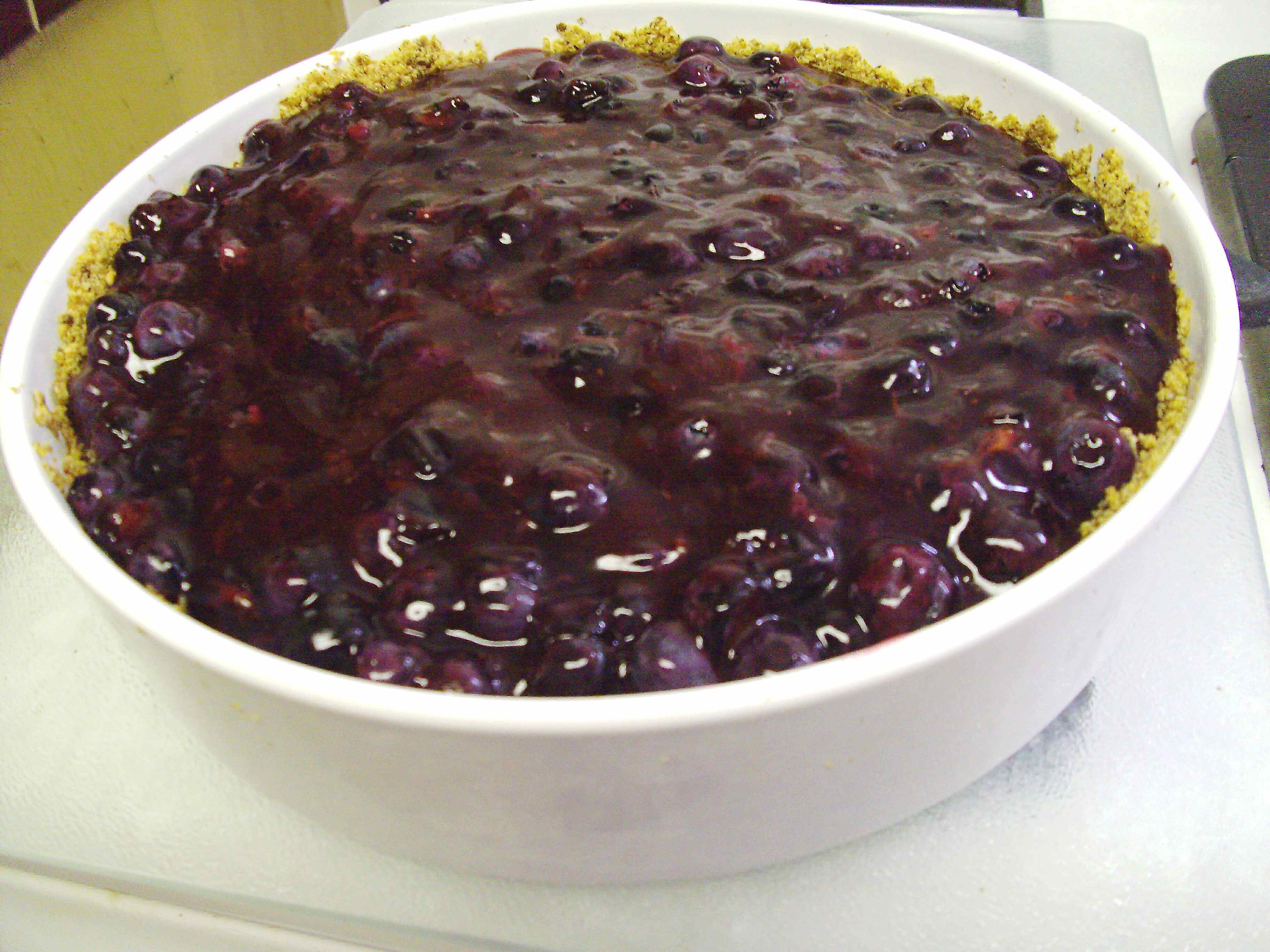
    raw blueberry pie with microwaveable filling and graham cracker crust

    This mostly-raw blueberry pie is a snap to make and very versatile--the filling microwaves in a few minutes, and you don't even have to bake the zippy gingered graham cracker crust--perfect for a hot Fourth of July and all summer long.

  • Recent Posts

  • Contents

  • Archives

  • Now Reading

  • See also my Book Reviews

  • Copyright 2008-2024Slow Food Fast. All writing and images on this blog unless otherwise attributed or set in quotes are the sole property of Slow Food Fast. Please contact DebbieN via the comments form for permissions before reprinting or reproducing any of the material on this blog.

  • ADS AND AFFILIATE LINKS

  • I may post affiliate links to books and movies that I personally review and recommend. Currently I favor Alibris and Vroman's, our terrific and venerable (now past the century mark!) independent bookstore in Pasadena. Or go to your local library--and make sure to support them with actual donations, not just overdue fines (ahem!), because your state probably has cut their budget and hours. Again.

  • In keeping with the disclaimer below, I DO NOT endorse, profit from, or recommend any medications, health treatments, commercial diet plans, supplements or any other such products.

  • DISCLAIMER

  • SlowFoodFast sometimes addresses general public health topics related to nutrition, heart disease, blood pressure, and diabetes. Because this is a blog with a personal point of view, my health and food politics entries often include my opinions on the trends I see, and I try to be as blatant as possible about that. None of these articles should be construed as specific medical advice for an individual case. I do try to keep to findings from well-vetted research sources and large, well-controlled studies, and I try not to sensationalize the science (though if they actually come up with a real cure for Type I diabetes in the next couple of years, I'm gonna be dancing in the streets with a hat that would put Carmen Miranda to shame. Consider yourself warned).

Microwave Tricks: Rapid Red Cabbage

microwave sweet and sour braised red cabbage

When I was almost twelve, the year of All the President’s Men (go rent or borrow it from the library if you’ve never seen it), a classmate of mine came back from the weekend raving about a new restaurant his parents had taken him to.

Now, almost no one in my 7th grade math class, particularly not boys, either knew about or talked much about food above the pizza and burger level.

My friend’s family had spent the previous year in Italy–you could tell whenever he grumbled about real soccer with strategy vs. the weak substitute they were teaching us in PE that he was sorry they’d come back. Clearly it wasn’t the only thing he missed–this was the first “real” restaurant he’d been to in the US, and it was way out in the countryside.

The Bavarian Chef (which after 40 years is still open in Madison, VA, and now in Fredericksburg as well, I’m happy to see), had a menu like no other in the area: fondue, a magic word I’d never heard before and which my friend had trouble describing. One fondue with Emmenthal-type cheese for cubes of toasted bread, the other with a red sauce (tomato? redcurrant?) for spicy meatballs. Veal or maybe chicken Cordon Bleu (their current menu still has veal). The side dishes were distinctive as well, particularly the sweet and sour red cabbage…it was gourmet. European gourmet, the real kind, and possibly the first upscale restaurant in our part of Virginia.

In any case, my friend was enthusiastic enough about this place that (and I don’t remember this bit at all) I came home and said something to my parents, who were friends with his parents. The next thing you know, my folks schlepped me and my younger brother and sister out of town–half an hour’s drive and  into the next county–to try it out for my birthday. And my friend was right about all of it.

The cheese fondue was a completely new experience and a lot of fun. So was a glowing magenta side dish of sweet-and-sour red cabbage–it would have been fun for the color alone. Although that has not held true for me and beets, so maybe I shouldn’t say so. But luckily it, unlike beets, was  delicious. And so different from anything else I’d ever eaten that it impressed me even more than the chicken (or veal) with the ham and cheese in the middle, and I can’t remember anything at all about dessert.

Sweet and sour red cabbage, when you think about it, is completely contrary to American standard tastes, even those of 40 years ago when people still ate vegetables and cooked most dinners at home. If you had to describe it to someone at school–what would you even say? The ingredients–and the flavors–are pretty simple individually but surprising together: red cabbage, vinegar, sugar, cloves, salt, maybe black pepper. Maybe a bit of apple or onion in some versions. How could that go together? But it does, and I’ve loved it ever since.

And yet I never ever make it at home, because it takes up to 2 hours of simmering on the stovetop, depending on the recipe you have. The one time I made it, back in my 20s, when I was trying to recreate the experience, the whole apartment smelled really, really sulfurous. It reeked. Even though the cabbage did come out ok.

Too bad I didn’t even own a microwave until my mid-30s. But I’ve been rethinking it since last week, when I saw a picture of it in a Mario Batali cookbook from about 10 years ago. The combination of a German-style dish in an Italian cookbook reminded me of the whole prealgebra food debate and my friend’s unprecedented idea that good food was worth traveling for.

But you don’t have to travel far for this dish, and you certainly don’t have to spend 2-3 hours on it. There’s got to be a way, I decided (as usual). How hard could it be to microwave it?

Well,  it worked almost perfectly, at least as a test case: Continue reading

Getting the Salt Out: NSRI and Voluntary Compliance, Again

In the wake of its city-wide diabetes reduction and restaurant nutrition labeling initiatives, the New York City Department of Health is leading yet another dietary health campaign, this time one that involves a national coalition of cities, states, and medical organizations. My hat’s off to them, even though I think the demands they intend to make of the food industry are much too light and much too toothless.

The National Salt Reduction Initiative, announced on Monday, will  encourage “voluntary compliance” from the processed food and restaurant industries to lower their sodium content by about 20% over the next 5 years. That’s pretty modest considering that both industries have doubled the standard sodium content of many common foods in the past 20-30 years, and that the national obesity epidemic seems to have coincided pretty nearly with that trend.

The UK’s national salt reduction campaign, which started in 2003 and serves as a model for NSRI, has government backing and its goal is 40% reduction of sodium in processed foods within 5 years, not 20%. They seem to be getting there, too.

NSRI’s coalition includes the Los Angeles Department of Health and a variety of medical organizations like the American Heart Association and the American College of Cardiology. What it doesn’t include this year, to my surprise–and, frankly, dismay–is involvement, funding or guidance from the National Heart, Lung and Blood Institute at NIH.

Ten years ago the NHLBI would have participated one way or another in encouraging this sort of initiative, but that was before the Bush years. NHLBI has been reorganized several times in the last decade. Two of its key diet-related outreach and education programs–the National Cholesterol Education Program and the National High Blood Pressure Education Program, which would have been the leading outreach proponent for NSRI–have receded from view, with perfunctory descriptions on the agency web site, no functioning links to current activities if there are any or to updated program pages, and no clear leadership or place in the agency’s organizational chart. But the need for them certainly hasn’t ended.

Voluntary compliance programs don’t have a great track record in the processed food industry. Look at the recent Smart Choices nutrition labeling program fiasco (see under, Froot Loops) from October.

Starting a national  program like this with voluntary compliance as a key component means the designers don’t think there’s much way to enforce the changes other than persuasion. It also means the government doesn’t have the tools, the money, or–and here is the crux of it–the will to enforce even modest limits on sodium content. Both the AHA and the AMA have been working on the FDA for years to get salt off the “generally harmless Continue reading

Naked Lunch: Nutrition labeling law in effect for California Chain Restaurants

California’s not the first state or municipality to require restaurants to declare their nutritional stats to customers, but as of today, the state will require chains with more than 20 in-state locations to post calories, carbs, sodium and fat information for each menu offering. The new law also bans sales of soda and junk foods to students at public schools–a big step toward reducing empty calories and sodium consumption among children and teens.

Patt Morrison of Pasadena-based public radio station KPCC interviewed the California Restaurant Association’s senior vice president for government affairs and the executive director of the California Center for Public Health Advocacy.

Surprisingly enough, the CRA’s representative said the association actually backs the legislation in its current form. When asked whether similar New York City legislation had had any effect so far, the CCPHA director said it had–chain restaurants had started reformulating popular high-calorie foods back downward. He also gave demographics: 89 percent of Democrats and 78 percent of Republicans polled said they were in favor of the new law. Most of the callers to the show also said they wanted or needed to know what was at the end of their forks.  A fascinating interview all the way around.