• Enter your email address to subscribe to this blog and receive notifications of new posts by email.

    Join 241 other subscribers
  • Noshing on

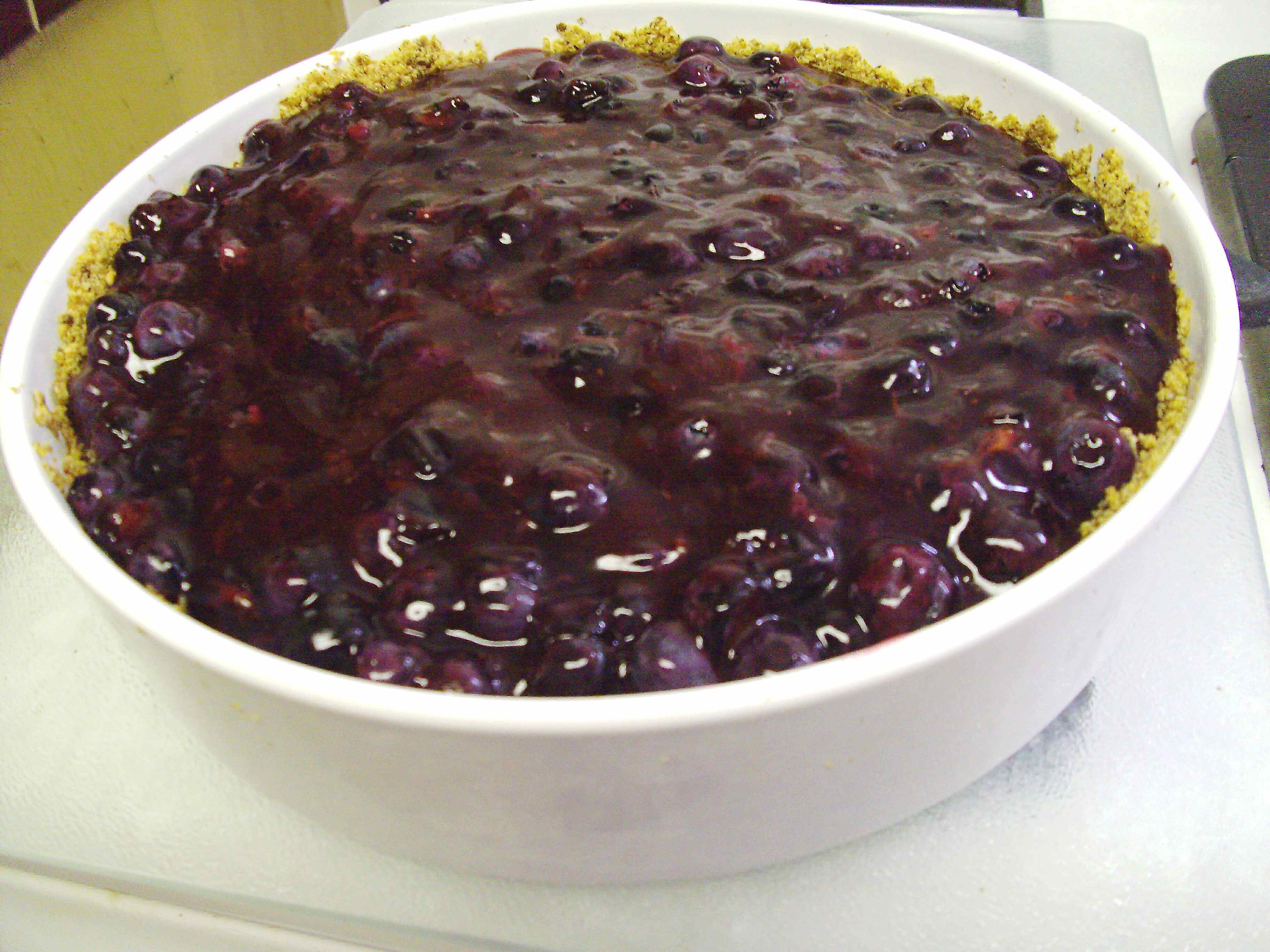
    raw blueberry pie with microwaveable filling and graham cracker crust

    This mostly-raw blueberry pie is a snap to make and very versatile--the filling microwaves in a few minutes, and you don't even have to bake the zippy gingered graham cracker crust--perfect for a hot Fourth of July and all summer long.

  • Recent Posts

  • Contents

  • Archives

  • Now Reading

  • See also my Book Reviews

  • Copyright 2008-2024Slow Food Fast. All writing and images on this blog unless otherwise attributed or set in quotes are the sole property of Slow Food Fast. Please contact DebbieN via the comments form for permissions before reprinting or reproducing any of the material on this blog.

  • ADS AND AFFILIATE LINKS

  • I may post affiliate links to books and movies that I personally review and recommend. Currently I favor Alibris and Vroman's, our terrific and venerable (now past the century mark!) independent bookstore in Pasadena. Or go to your local library--and make sure to support them with actual donations, not just overdue fines (ahem!), because your state probably has cut their budget and hours. Again.

  • In keeping with the disclaimer below, I DO NOT endorse, profit from, or recommend any medications, health treatments, commercial diet plans, supplements or any other such products.

  • DISCLAIMER

  • SlowFoodFast sometimes addresses general public health topics related to nutrition, heart disease, blood pressure, and diabetes. Because this is a blog with a personal point of view, my health and food politics entries often include my opinions on the trends I see, and I try to be as blatant as possible about that. None of these articles should be construed as specific medical advice for an individual case. I do try to keep to findings from well-vetted research sources and large, well-controlled studies, and I try not to sensationalize the science (though if they actually come up with a real cure for Type I diabetes in the next couple of years, I'm gonna be dancing in the streets with a hat that would put Carmen Miranda to shame. Consider yourself warned).

Big Food mobilizes against child marketing guidelines

This Washington Post article isn’t the absolute clearest–looks like it was written as a last-minute rush piece, actually, but it’s worth getting to the end.

The basic idea is that in 2009 Congress demanded the CDC, FDA, USDA and FTC come up with a coherent set of voluntary nutrition guidelines for what the food industry can market directly to kids.

I’m not a big fan of voluntary nutrition or safety compliance guidelines for the food industry–mostly because industry players generally feel free to ignore or toy with them and then claim some kind of advertising advantage they haven’t earned. Voluntary guidelines also come with all kinds of soft landings and easy outs, and the proposed guidelines here are no great exception.

But in any case, now the four agencies have done it, and the food and restaurant industry is doing the predictable–throwing big lobbying bucks into a disinformation campaign-slash-tantrum.

How big? The campaign manager won’t say, but the preliminary guidelines report that US food industry marketing to kids 2-17 years old is currently something over $1 billion in three key categories (breakfast foods, restaurant chain food, and snacks).

So it probably won’t surprise you that companies like General Mills, Kellogg, and Pepsico have teamed up with ad-carrying media partners like Viacom (read: Nickelodeon) and Time Warner to try and quash the voluntary industry guidelines. Figure on the campaign to be spending in the mid-millions or more. They’d rather “salt and burn” instead of “cut the salt and learn.” And what a waste.

What will probably surprise you is just who this coalition–calling itself the “Sensible Food Policy Coalition”–?!!–hired to handle the campaign: Anita Dunn, a former Obama communications director whose husband, Robert Bauer, is  still White House counsel. Not a really lovely mashup, there.

Why she’s taking on the food industry campaign so they can keep protecting their ability to market garbage to the young and vulnerable is one question. Why the FDA and FTC, which have the power to decide what nutritional and medical claims, among other criteria, are valid and can be used in advertisements to adults, let alone kids and teens, are bothering with a voluntary measure instead of doing a proposed regulation to limit such marketing to youth is another.

In both cases, the answer is almost certainly money. The food and media industries have it, the federal agencies don’t.

[As it turns out, the FDA and FTC don’t have power to restrict Big Fo0d’s marketing to the under-17 crowd after all. They lost that specific ability in 1981–start of the Reagan administration… Reagan’s “ketchup is a vegetable” declaration was the beginning for drastically lowered nutritional standards and branded fast food concession contracts for public school lunches.]

So the right question under these circumstances is, where do you want to put YOUR money? How about this, if the federal agencies can’t get a decent result and the lobbies are buying off everyone else:

Boycott the Boxes. Hit ’em where it hurts.

Box 1–TV: If you have kids, limit their access to TV, and teach them to turn off the sound during the ads. Do it yourself. Treat the ads like the silly nuisance they are from the minute your kids are old enough to watch. Tell your kids the truth: most of the products advertised on kids’ shows are too shoddy–and overpriced–to market to grownups. The companies make them bright and loud and cheesy because they think kids can be fooled easier (your kids should be beautifully insulted at that if they’re about six or seven years old).  Go with PBS and videos you approve rather than commercial TV as much as you can.

Box 2–Packaged stuff parading as food: Skip almost everything that comes in a cardboard box or a plastic overwrap, or in a can. You can do this. You’ll save an awful lot of money by buying store brands only and cutting out the most pernicious items–sugared and high-salt packaged breakfast cereals, bags of starchy snack extras, and sodas, at least on an everyday basis. Save sodas and chips for parties, not for school lunch or part of dinner.

You’d do even better to go with fresh vegetables and whole fruits for most snacks and make a good habit for relatively cheap. They taste pretty good, don’t take long to fix, last at least a week in the fridge, and your kids won’t get sick overeating them.

There’s a reason the Pringle’s slogan is the very smug  “Betcha can’t eat just one.” No one says that about carrots or broccoli, or even about apples. Ever eaten too many of those in one sitting? Didn’t think so. Vegetables and whole fruits keep you satisfied longer, don’t hyperstimulate your appetite for snacks, and they don’t put on pounds that take a long time to work back off. They don’t promote cavities, either. Even nonsweet junk foods do–all that processed starchy stuff sticks to your molars like glue.

Smart Choices Labeling Program Falls Apart

The FDA’s recent and surprisingly bold scrutiny of the Smart Choices food labeling program, coupled with wide public indignation over the program’s obviously inappropriate awards of healthy food status to processed foods without much actual merit, has left the industry-led nutrition rating effort in shreds.  In a recent followup to his initial article in the New York Times, William Neumann reports that the Smart Choices program has been suspended only about two months after going live, and participants like PepsiCo have pulled out altogether.  Kellogg’s, on the other hand, is “phasing out” its green checkmarked cereal boxes and announced that global marketing officer Celeste Clark  is staying on in good standing after what has amounted to a PR fiasco over Froot Loops. Makes you think they were the ones with the highest investment in the program to begin with, or that perhaps they were the company least likely to admit how transparently flimsy the program’s nutrition criteria had become to the rest of the country.

It’s the first time in quite a while that the FDA has taken on a big household-name food industry target in public without a lot of hemming and hawing and backpedaling and dealmaking. It gives me hope that at least some of the federal government is shifting gears to start serving the public again.

The great surprise for me is how little real effort it took to shut down the food industry’s program. Three or four years ago it might well have prevailed, and the processed food industry might have been able to keep inserting its priorities into the debates over nutrition without any effective logical check. But at a time when the nation’s gotten sick of being lied to so brazenly for so long about so many things–many of them more serious–corporate food tampering and misrepresentation of food quality are becoming hair-trigger topics. Not least because food is the easiest  for ordinary people to judge and to protest safely in the streets.

We can’t organize effectively enough to protect ourselves against the invasive, petty and obscene wastefulness of the Patriot Act as it has actually been applied. We can’t organize effectively enough to demand and get a proper, timely accounting of Guantanamo and the government’s use of torture there and abroad.

But we can talk food and nutrition and sustainability and corporate manipulation until the cows come home.

How else to explain the cult status of Michael Pollan? The rise of Fast Food Nation and Food, Inc.? The fights over school cafeteria vending machines and chain restaurant nutritional stats? The Smart Choices checkmark for Froot Loops, which people buy specifically for the artificial colors and know perfectly well is not really food, touched the match to a very big pile of sawdust.

And now the FDA is also on its way to strengthened oversight powers from Congress, including mandatory food recalls, not just recommendations for recall, to go after contamination of the food supply, and with any luck some extra funding to cover the actual field investigations needed.

It’s long overdue, but somehow it seems to me the FDA is being tasked with something the USDA should have been doing all these years and hasn’t. The USDA has more tools and resources at its disposal for doing food safety checks at the agricultural and manufacturing levels but because part of its mission is to boost agriculture, it has often dismissed these checks as unnecessary and even obstructed them, as in the case of routine meat testing for BSE and other infections.

The FDA is still supposed to protect the nation against food and nutritional claims fraud, though some of its targets appear to be of diminishing significance in comparison with preventing widespread salmonella and E. coli in the food supply. Smart Choices is obviously a big and publicly important target, but on the other hand, it seems to have been exposed and skewered satisfactorily already by public reporting of the Froot Loops fiasco. The FDA can ride the crest and put the final, perhaps critical, touch on it, but the agency’s gotten a huge boost this time around from public opinion.

Maybe that’s saved the FDA and the public some time and taxpayer dollars that won’t have to be spent going to court over it. Maybe it’s given them the nerve to work on the public’s behalf more daringly, knowing that the public actually does give a damn about its own well-being? Maybe things are really going to be different enough that they’ll go after the big offenders even when the public isn’t way ahead of them? We can only hope.

But frankly, I still want to see the USDA fulfill its responsibilities to protect the public and the food supply, and not abandon or subvert them in service to big agriculture and processed food firms. The FDA shouldn’t have to pick up after them.