
• Enter your email address to subscribe to this blog and receive notifications of new posts by email.

    Join 241 other subscribers
  • Noshing on

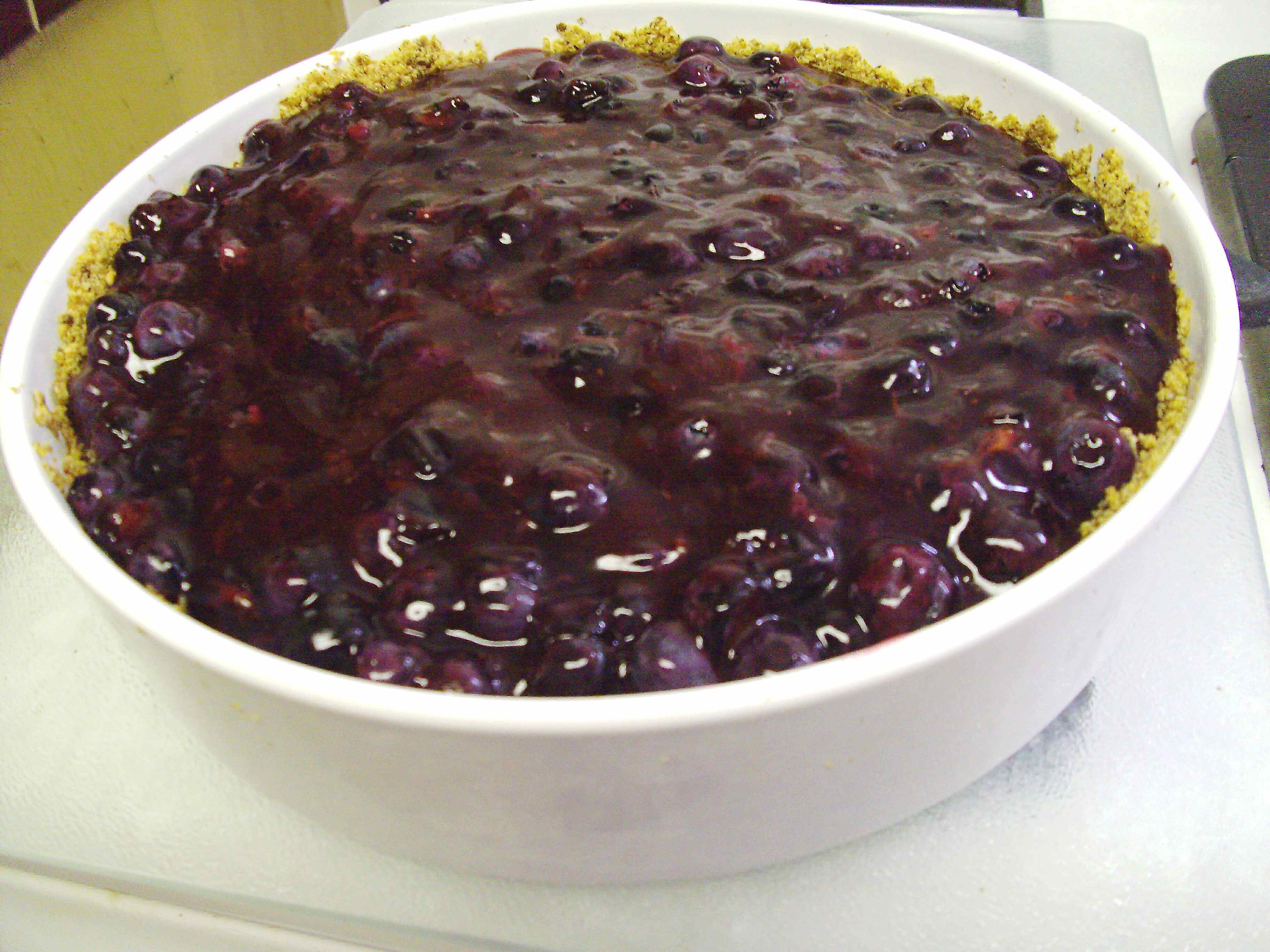
    raw blueberry pie with microwaveable filling and graham cracker crust

    This mostly-raw blueberry pie is a snap to make and very versatile--the filling microwaves in a few minutes, and you don't even have to bake the zippy gingered graham cracker crust--perfect for a hot Fourth of July and all summer long.

  • Recent Posts

  • Contents

  • Archives

  • Now Reading

  • See also my Book Reviews

  • Copyright 2008-2024Slow Food Fast. All writing and images on this blog unless otherwise attributed or set in quotes are the sole property of Slow Food Fast. Please contact DebbieN via the comments form for permissions before reprinting or reproducing any of the material on this blog.

  • ADS AND AFFILIATE LINKS

  • I may post affiliate links to books and movies that I personally review and recommend. Currently I favor Alibris and Vroman's, our terrific and venerable (now past the century mark!) independent bookstore in Pasadena. Or go to your local library--and make sure to support them with actual donations, not just overdue fines (ahem!), because your state probably has cut their budget and hours. Again.

  • In keeping with the disclaimer below, I DO NOT endorse, profit from, or recommend any medications, health treatments, commercial diet plans, supplements or any other such products.

  • DISCLAIMER

  • SlowFoodFast sometimes addresses general public health topics related to nutrition, heart disease, blood pressure, and diabetes. Because this is a blog with a personal point of view, my health and food politics entries often include my opinions on the trends I see, and I try to be as blatant as possible about that. None of these articles should be construed as specific medical advice for an individual case. I do try to keep to findings from well-vetted research sources and large, well-controlled studies, and I try not to sensationalize the science (though if they actually come up with a real cure for Type I diabetes in the next couple of years, I'm gonna be dancing in the streets with a hat that would put Carmen Miranda to shame. Consider yourself warned).

Matzah Brei–blintzes?

Matzah Brei Blintzes

Thursday morning I broke down and decided to cook  breakfast for my daughter instead of leaving it at matzah, jam, yogurt and fruit. I’m not a big fan of matzah brei, a poor substitute for french toast in which the eggs never really seem to absorb very well and you’re left swallowing the hard corners of the matzah. Neither crisp nor soft, it always seems like a wrong turn to me.

On the other hand, I didn’t have any matzah meal in the house for pancakes (how much extra matzah product do you really need when you’re trying to eat less of it?) So I broke down and took a couple of sheets of the whole wheat matzah from the latest box and prepared to do battle.

I think I’ve mentioned once or twice that I hate waiting for water to boil. But a pyrex pie plate with half an inch of water in the bottom takes only 2 minutes to heat up fairly well in the microwave. And it has room for the matzah, which I broke up into halves. But whole wheat matzah doesn’t soak up all that well, even after several minutes in hot water. It’s the tougher bread of affliction. What now?

I fished out a dinner plate and covered the pie plate with it, stuck it all back in the microwave, and hit stun for another minute. To my surprise, it worked–really worked. The matzah didn’t fluff up or anything–but it was soft and pliable and even a bit elastic, something like just-cooked lasagne noodles. No hard corners. I drained off the hot water and poured on the egg-milk soak, which didn’t really soak in much even though the matzah was now soft. Sigh.

My daughter came around a corner, looked at me fishing one of these matzah halves out of the pie plate, and said, “I wish we could have blintzes” and I thought–well, these actually bend–could we? Why not?

Matzah brei blintz ready for frying

Matzah brei blintz, ready for frying

Continue reading

Not Gefilte

For most American Jews, gefilte fish is one of the standard, unchanging preludes to the actual dinner part of the Passover seder. And normally I have no problem with that, especially with hrein, or horseradish. By the time the recitation of the Haggadah and the explanation of the items on the seder plate are done, everyone is joking about (or egging on their kids to pipe up and ask) the Fifth Question: When do we EAT??? And gefilte fish is the first answer.

It’s worthwhile to be hungry enough for once to feel, rather than just nodding as someone tells you self-righteously, that such a modest dish, made with fresh fish in the days when most of our grandparents and great-grandparents were too poor to eat it often, can be something to look forward to.

Gefilte fish is basically an oversized quenelle of ground whitefish and pike, filled out with eggs, onion, and matzah meal to stretch it. Simmered in fish stock for a couple of hours with or without added sugar, cooled to let the broth gel, served room temperature or cold, with horseradish as contrast.

But since most of us don’t make our own gefilte fish at home anymore, it’s usually bland, salted (and sometimes sweetened) ovals of stuff pulled from a pricey store-bought jar–no longer what you’d consider fresh, and no longer economical. And it’s usually about twice as big as any normal/sane appetizer for a meal that’s going to include brisket, chopped liver, meatballs, eggs, chicken and/or turkey, and other big proteins.

Can it be made well fresh? Yes, actually, and a number of Jewish cookbooks–Joan Nathan’s among the leaders–tell you how. But do I want to cook it myself, or eat it any other time than at someone else’s seder? No. Flat out, no. Not only is it a two-hour-plus process, it’s a big chore. All for a mediocre, bland kind of fish dumpling.

The other problem this year is that my daughter is now diabetic, and for the first time I’m going to have to help her count carbs so we can give her the right amount of insulin for a seder meal that will probably last over two hours. It’s tricky enough to do that accurately for a restaurant meal–desserts, which come last and for which the menu isn’t usually even presented until you’ve already eaten the meal, are by far the hardest foods to estimate by sight.

But traditional Ashkenazi-style seder dishes like gefilte fish and matzah ball soup are stuffed full of surprise carbs too, and you can’t be sure how much they contain unless you’re the cook. And that’s not counting the mandated matzah and haroset. All you can say is, all that matzah meal really starts to add up. Will my daughter overrun her carb count before she ever gets to the meal itself, with a chance to risk it on (more matzah-filled) desserts?

If I cook some kind of fish during Pesach week, I want it to be fresh and without much in the way of carbs. Most of all, I want it to taste good. Actively good. Continue reading