• Enter your email address to subscribe to this blog and receive notifications of new posts by email.

    Join 241 other subscribers
  • Noshing on

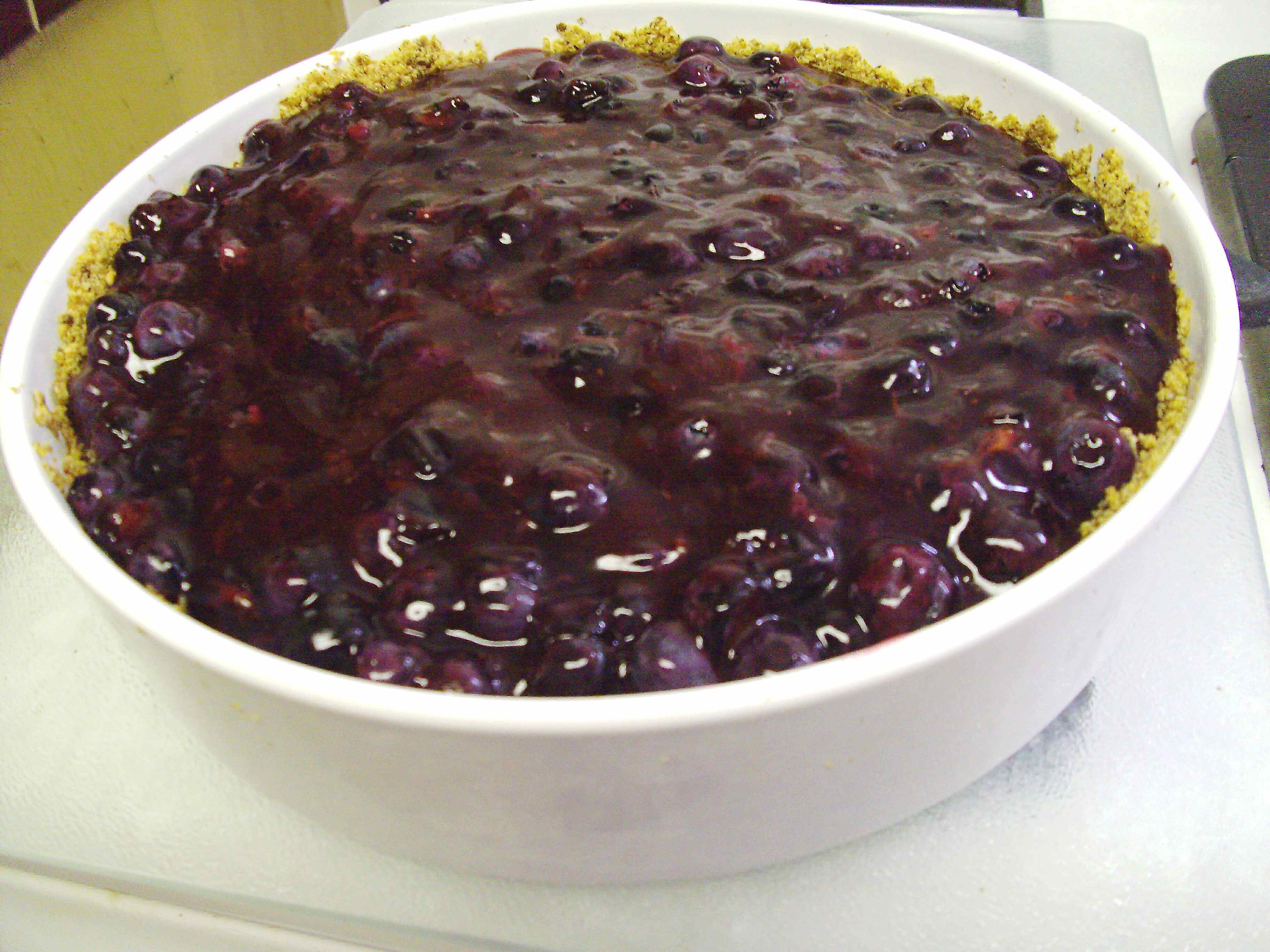
    raw blueberry pie with microwaveable filling and graham cracker crust

    This mostly-raw blueberry pie is a snap to make and very versatile--the filling microwaves in a few minutes, and you don't even have to bake the zippy gingered graham cracker crust--perfect for a hot Fourth of July and all summer long.

  • Recent Posts

  • Contents

  • Archives

  • Now Reading

  • See also my Book Reviews

  • Copyright 2008-2024Slow Food Fast. All writing and images on this blog unless otherwise attributed or set in quotes are the sole property of Slow Food Fast. Please contact DebbieN via the comments form for permissions before reprinting or reproducing any of the material on this blog.

  • ADS AND AFFILIATE LINKS

  • I may post affiliate links to books and movies that I personally review and recommend. Currently I favor Alibris and Vroman's, our terrific and venerable (now past the century mark!) independent bookstore in Pasadena. Or go to your local library--and make sure to support them with actual donations, not just overdue fines (ahem!), because your state probably has cut their budget and hours. Again.

  • In keeping with the disclaimer below, I DO NOT endorse, profit from, or recommend any medications, health treatments, commercial diet plans, supplements or any other such products.

  • DISCLAIMER

  • SlowFoodFast sometimes addresses general public health topics related to nutrition, heart disease, blood pressure, and diabetes. Because this is a blog with a personal point of view, my health and food politics entries often include my opinions on the trends I see, and I try to be as blatant as possible about that. None of these articles should be construed as specific medical advice for an individual case. I do try to keep to findings from well-vetted research sources and large, well-controlled studies, and I try not to sensationalize the science (though if they actually come up with a real cure for Type I diabetes in the next couple of years, I'm gonna be dancing in the streets with a hat that would put Carmen Miranda to shame. Consider yourself warned).

Emergency eclairs

Note: this is not my photo–I have not been to the balcony of Notre Dame lately. I merely share their dismay. [Source: Brittanica Online, with gentle modifications for parody purposes]

You may be wondering what to do if you drop half your éclair over the balcony of the Eiffel Tower, or worse yet, Notre Dame, while pondering your options for the afternoon’s conquest…YSL first, or peut-être Dior?…ooh-la-la-oops!

AAAAAGGGGHHHH!

Screaming will not get your éclair back, though it is a good start. You need to get down to ground level and purchase another tout de suite!

No, this is not really me channeling Miss Piggy at her “Who, Moi?” finest. I don’t have the lavender satin opera-length gloves for it, for one thing. I’ve just been watching too many of the various Muppet movies with my daughter lately.

Plus, and let’s be honest about it, the one time I ever tried on a long blonde wig (for a college skit), I took one look in the mirror and fell down on the costume department floor laughing until my ribs hurt. It was 20 minutes until I could breathe again. Picture Danny deVito (his eyebrows, anyway) peering out from under that wig, hoping to stand in for La Porcette,  and you understand why Frank Oz can never, ever go on vacation.

I have not been to Paris in seven years, and when we were there (for an engineering conference, with our then-kindergartner) we did not actually eat any éclairs. We also did not shop at Pierre Hermé, nor at Hermès, nor anyplace that wasn’t either a museum, an RER or métro stop,  a café or a tchotchke booth along the Seine. Other than for food, if it cost more than 15 bucks (or 11 euros, as for example, the tiny 3-inch-long stuffed unicorn at the Musée du Moyen Age, which we paid for hastily during a shall-we-say-jetlag-inspired meltdown), it was out of the question. I actually spent two full hours–ON VACATION IN PARIS–sitting forlornly in a coin-op laundromat down the alley from our hotel, hoping I had enough change to get all the horrible perfumed detergent back out of our clothes, while my husband and daughter went to the park. Not exactly the Paris experience I’d imagined way back in my high school French class.

So what am I doing imagining that I could climb up OR down the Eiffel Tower in chic heels (instead of the more believable sneakers and backpack with the entire belongings of my family plus bandaids and extra sandwiches…), waving an éclair around with incredible nonchalance and somehow not lose it (which I’ve never actually done; I’m a fervent believer in pastry) or break an ankle (which I have actually done, wearing flats), or both, with loads of people looking on?

Who knows–daydreams like these are the kind of thing mentioning Paris does to one when one blogs about food or fashion. Practically obligatory. It’s fun to imagine a life where such trivial matters can leaven, not to say inflate, my expectations. And, of course, where I’m not the one who has to schlep all the emergency supplies up however many flights of stairs. And back down.

Let’s face it, I’m a natural pessimist and (therefore) fan of both the Muppets and Matt Groening. Tell me true, now, doesn’t the gargoyle on the right look like the original inspiration for that sad shrimpy one-horned character in Life is Hell? He’s even wearing my backpack.

Real life is hard, gritty for more serious reasons than high-heeled éclair mishaps, and it’s filled with nagging of the now-ex-7th-grader. Ahem! These are things we just have to get through because there’s no great alternative (…yet. I’m working on it, believe me.)

Eclairs, on the other hand, are not actually difficult to make. And eating them makes one feel a lot less like life is hell, particularly if one skips the high heels and eats them barefoot.

And on the other other hand, baking anything in Los Angeles, even in winter, may well make one feel that one is actually living in hell, at least while the oven’s on. And right now it’s June.

How to cope? Toaster oven? Microwave?! The eagle squawking in shock above left may not approve of my methods, but he’d find it hard to argue with the results. Especially if you’re in the mood for just a couple of éclairs Right Now, and you have ice cream on hand so you can skip the custard chilling and filling bit and go right to profiterole heaven.

The pastry for éclairs, called pâte à choux, or choux paste (shoe paste! I knew there was a connection to the sudden appearance of high heels in my daydream), takes only a couple of ingredients: flour, water, butter, sugar, eggs. Maybe a pinch of salt too, okay.

Everyone and their uncle (or aunt) who’s ever written a Frenchy kind of cookbook has a recipe for éclairs, but who do you know anymore who’s ever actually made them? Right.

But actually, they’re pretty easy to make. At least as easy as brownies from a mix, and they seem fancier. You boil the butter, sugar and salt with the water, dump in the flour and stir until it looks like stiff mashed potatoes, then take it off the heat and beat in the eggs one at a time and voilà, there you have the dough–shiny yellow stuff to pipe out or dollop out onto a greased and floured baking pan and bake at high temperature for about 30 minutes until they’re really puffed and brown and don’t collapse anymore when you let them cool.

David Lebovitz has the classic recipe on his web site — a cup each of flour and water, 6 T butter, 2 t sugar, 1/2 t salt, and 4 large eggs. Pierre Hermé of exotically-flavored-macaron fame has a richer one with more butter and 6 eggs for the same amount of flour. And I’m sure they’re wonderful. But I can’t help messing around.

First off, I want fewer than 24 éclairs–what do you do with the rest of the dough? (turns out you can pipe it and freeze it, then bake straight from frozen sometime later, or else freeze the baked shells. OK. But still.) So I cut David’s basic proportions in half. Limit the damage to the avoirdupois, I always say. Fewer situps required.

Second, the butter. I know éclairs are the ultimate Unalterable Classic French Recipe but…here starteth the messing around. Like I say, I can’t help it. Continue reading

Not Your Parents’ Mom & Pop

Mom & pop stores–the little independent family-run corner grocery, hardware store, café, bakery, or barber shop–are, like local farmers’ markets, neighborhood gems just waiting to be rediscovered by a new generation. Some are the old-fashioned kind, limping along in the recession but fostering a friendly atmosphere and clientèle. Others mix old-fashioned personal service with cutting-edge specialties. Within five minutes of my house are five worth spending time in.

The bike shop at the other end of my block sells and fixes everything from used kids’ bikes with training wheels (which they’ll adjust for you) to the fancy $4000-plus professional racing bikes (ditto). Around the corner, beyond the Starbuck’s, is a young-chic type all-day café with arty rectangular plates, pretty good coffee–and outlets for every patron’s laptop. Down the street is a British pub owned by the chef and his wife, with the world’s crispest, most astonishing fish & chips and dozens of artisan beers on tap. No outlets here, but you can play darts on the bar side of the pub. The coffee shop across from my daughter’s school hosts tutoring sessions and keeps a frequent customer card file for regulars as well as a shelf of books  you can buy or just borrow while catching a break. And the fifth, my personal favorite, is an Armenian corner grocery with great deals, lots of unusual ingredients and spices, actual ripe tomatoes and one or another family member always willing to discuss the best way to cook something–or debate the merits of the latest Rose Parade.

These businesses are always under siege from the chain restaurants and big box price cutters, which pop up and then close suddenly whenever something better comes along for the long-distance investors, undercut the locals while they’re here, and leave a trail of mistreated minimum-wage employees and other forms of exploitation in their wake.  And yet often the mom & pop stores offer a better deal, unique merchandise, and certainly better service.

Most important is the way local shops change the way we interact when we come in to buy something. The owners treat everyone like a neighbor or a member of their congregation (in the case of the corner grocery, they usually are). The staff are usually the sons and daughters and grandchildren of the owners. Even shy customers come in ready to say hello, ask questions, compliment the new light fixtures, complain about the state budget cuts or the new parking meters near the center of town and generally catch up on the latest. They don’t ignore or avoid the staff the way everyone does at the big box stores, and they don’t feel ignored or pestered either. Kibbitzing and schmoozing are almost lost arts everywhere else, but the better mom & pop businesses have a way of restoring that sense of belonging to neighborhood shoppers.

So it’s with pleasure that I recommend two fairly recent books on the mom & pop phenomenon, with a side dish of a newly released French film.

Dough (2006), by Mort Zachter, is a well-told cautionary tale about working for family, especially if that family’s roots are in the Great Depression. Zachter, a former tax lawyer, learned the hard way that his uncles’ family bread business wasn’t exactly what he’d assumed as a kid. One day a phone call from his uncles’ stockbroker revealed that while his uncles almost never closed the shop, lived together like paupers in a dingy run-down tenement apartment, and certainly never paid Zachter’s mother anything for helping out, they had been sitting on a multimillion dollar account balance for decades. How they came by such wealth and why they never used it to better their lives or anyone else’s in the family is the riddle Zachter works to solve. Although there’s a bitter line of frustration Continue reading

Uneasy fusion: cooking, then and now

I don’t know if I’m looking forward to this Friday’s release of the movie Julie & Julia or not. I’ve read both of the books it’s based on and liked them both, and I’ve been an avid fan of Julia Child as a person if not as a chef since I was four years old (this was 1968 or so) and the only one in my family to watch her show to see her cook rather than to laugh at her voice. Even then I recognized how sure-handed and direct she was. When she cooked, cooking was a skill, an honorable and challenging form of work. There was nothing domestic or dopey about it.

Julie Powell, in her recent blog-based book on taking Mastering the Art of French Cooking as a personal mission, rediscovered how serious Child was. As she found out the hard way, learning to cook as thoroughly as Child did is like learning to be a Zen master or a swordsmith. And yet it’s not beyond you to do, as long as you’re willing to do the hard work.

I also, oddly enough, read one of Nora Ephron’s early books, Crazy Salad–-this was back in the early 1970s, the days of the ERA and Billie Jean King–-from the far corner of my parents’ bookshelves, and unbeknownst to them. The essays in it, which skewered everything misogynistic in society from porn to politics (and memorably specified the difference between liberal and libertine) were particularly inspiring to a word-hungry 10-year-old looking toward feminism from the sidelines of childhood. The attitude, if not the material, seems to fit both of Ephron’s ambitious subjects in Julie & Julia, the movie.

I’m just not sure it all belongs in a movie, particularly not one that boils two gritty memoirs down into something of a chick flick, as this is being advertised. Or one with a movie star like Meryl Streep, whose undoubted talent is, as with most female movie stars, still forced to subordinate to her looks. Wig or no wig, when it’s her on the screen, you never completely forget you’re watching Meryl Streep. It’s not her fault, but I don’t know if I want to see her standing in for someone as vivid as the real Julia Child.

Amy Adams is almost certainly going to be cuter, younger and a lot simpler than the real Powell, who is currently working on a book about a 6-month stint she did learning the butcher’s trade in the wake of her first book’s success. Julie Powell is young but older-–we hope also somewhat wiser–-than when she started her blog. She can represent herself–-very interestingly, in a longish interview on Borders Media and elsewhere–-in contrast to the movie adaptation of her, which she seems not to mind.

Both Child’s book and Powell’s are now being reissued with covers showing scenes from the movie with pictures of Streep and Amy Adams as Child and Powell, rather than Child and Powell themselves. It’s what all the major publishers do when they ink a movie deal. I don’t know why it bothers me so much, but it seems fundamentally creepy for autobiographical works to supplant the author–the actual author–with an actor.

Beyond the chick-flick reservations, I wonder how the two memoirs are likely to mesh onscreen. My Life in France is ultimately a more important book than Julie & Julia. It’s centered less on food–-and “food porn”–-than on history, and less centered on self than on the outside world. And Child was eminent even before her cooking career in ways that Powell probably won’t get to be, if she’s lucky.

Julia Child, who belonged to my grandparents’ generation, describes day-to-day life in Paris right after World War II in a way American generations since have not  experienced. It’s an unsentimental and un-chickish view of how things really were on the ground before Europe had a chance to rebuild. Child calls up a memory of ordinary people–not fashionable, not attractive, just neighborhood people–who simply got used to passing piles of rubble that only a year or so before had been familiar buildings, and she observes the grinding postwar poverty in the city that she, like us, probably grew up romanticizing in her mind. It’s a fascinating context in which to discover a love of good food and the tenacity to learn everything about it.

Child’s sometimes raw sense of humor and her frankness about the conditions of postwar Europe are backed by years of experience working in the intelligence service during the war. It’s something she doesn’t really discuss in the book, but which was detailed at some length in an earlier authorized biography, Appetite for Life, by Noel Riley Fitch. She and Paul met while working for the OSS in Ceylon, where she developed a complex, database-like filing system for cross-referencing intelligence reports. The couple were transferred, flown over the hump (the Himalayas), to Kunming, China, where they became part of a field intelligence team that advised against the U.S. hastening to take sides between Mao Tse Tung and Chiang Kai Shek, both of whom were essentially regional warlords. That advice was disregarded by the hawks advising Truman, and many OSS members, Paul among them, were later persecuted and blacklisted under McCarthyism as the new rival CIA sought to supplant and discredit them.

Child, whose more public masterwork remains on a lot of kitchen shelves but largely untested because it does call for actual work, was not a glamorous person like Streep has to be. She was a roll-up-your-sleeves-and-speak-your-mind kind of person, and looks were not the point. Read My Life in France and you’ll find a sharp and demanding intelligence, curiosity about everyone around her, frustration at ineptitude–her own or others’–a lively sense of humor, a bone-deep but realistic regard for her husband, and something else that just transcends the physical impression she made on television audiences in America.

I hope Streep can do it–has done it. I really hope I forget it’s her when I see the movie. I really hope Ephron has done it as well, and that the movie trailers that smell of chick flick cha-ching aren’t the best scenes. I want the movie to live up to both of the books, and I’m afraid of seeing too little of either.