
• Enter your email address to subscribe to this blog and receive notifications of new posts by email.

    Join 241 other subscribers
  • Noshing on

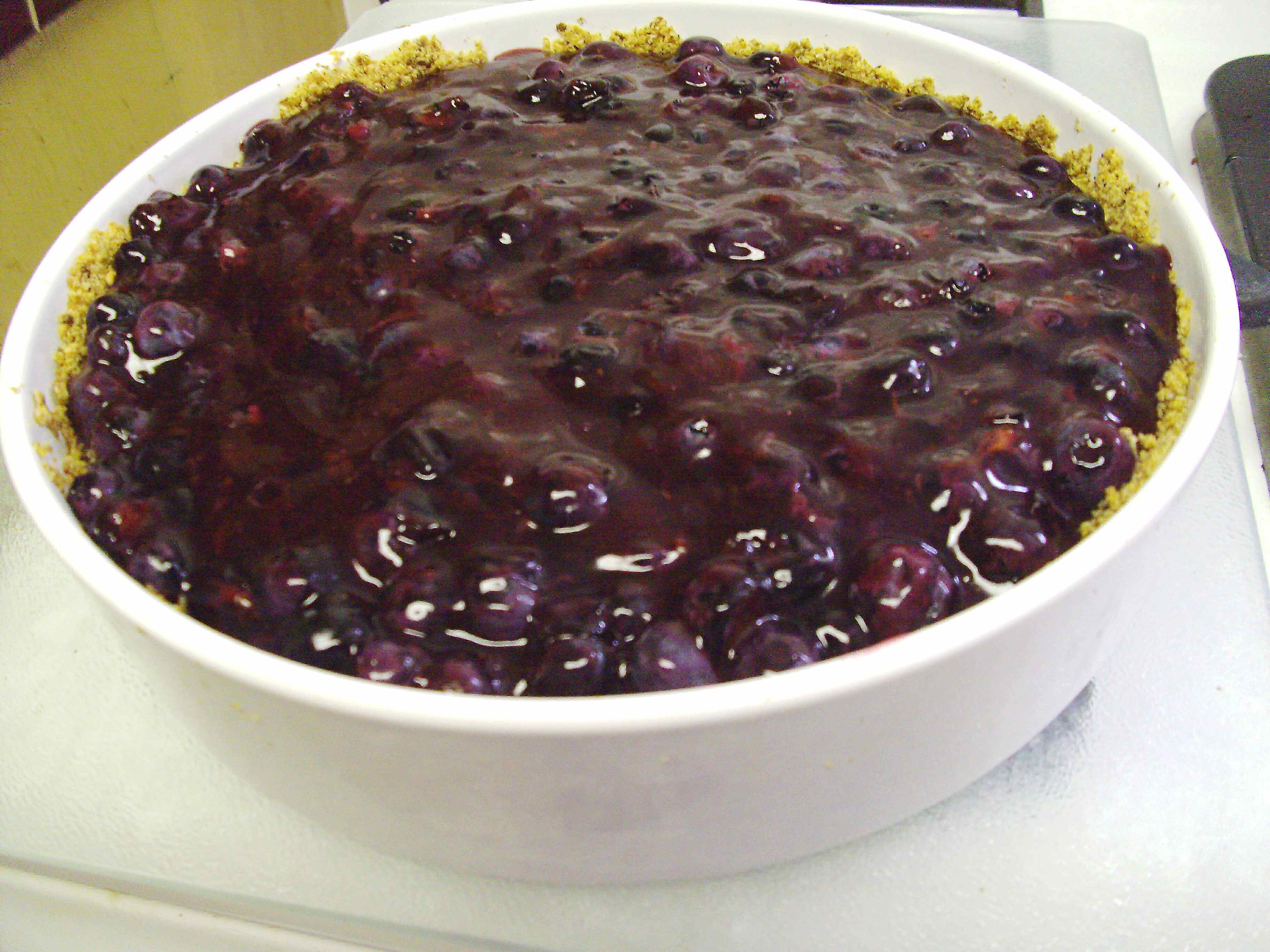
    raw blueberry pie with microwaveable filling and graham cracker crust

    This mostly-raw blueberry pie is a snap to make and very versatile--the filling microwaves in a few minutes, and you don't even have to bake the zippy gingered graham cracker crust--perfect for a hot Fourth of July and all summer long.

  • Recent Posts

  • Contents

  • Archives

  • Now Reading

  • See also my Book Reviews

  • Copyright 2008-2024Slow Food Fast. All writing and images on this blog unless otherwise attributed or set in quotes are the sole property of Slow Food Fast. Please contact DebbieN via the comments form for permissions before reprinting or reproducing any of the material on this blog.

  • ADS AND AFFILIATE LINKS

  • I may post affiliate links to books and movies that I personally review and recommend. Currently I favor Alibris and Vroman's, our terrific and venerable (now past the century mark!) independent bookstore in Pasadena. Or go to your local library--and make sure to support them with actual donations, not just overdue fines (ahem!), because your state probably has cut their budget and hours. Again.

  • In keeping with the disclaimer below, I DO NOT endorse, profit from, or recommend any medications, health treatments, commercial diet plans, supplements or any other such products.

  • DISCLAIMER

  • SlowFoodFast sometimes addresses general public health topics related to nutrition, heart disease, blood pressure, and diabetes. Because this is a blog with a personal point of view, my health and food politics entries often include my opinions on the trends I see, and I try to be as blatant as possible about that. None of these articles should be construed as specific medical advice for an individual case. I do try to keep to findings from well-vetted research sources and large, well-controlled studies, and I try not to sensationalize the science (though if they actually come up with a real cure for Type I diabetes in the next couple of years, I'm gonna be dancing in the streets with a hat that would put Carmen Miranda to shame. Consider yourself warned).

Superfoods and Magic Beans

“Top 10 (or 7, or 5, or whatever) Superfoods” lists seem to be popping up on the covers of all the in magazines this month. If I didn’t get a headache every time I tried it, I’d be rolling my eyes.

The classic bloated diet article with the even more classic bloated promise of magic beanhood is nothing new, I realize. But “superfoods”…

The premise of calling something a superfood is that if you eat this one special food, or at least shop your way down the list of 5, or 10, or whatever’s in the article, you’ll be so much healthier than someone who eats a regular food. Right?

Usually the items on these lists of so-called superfoods turn out to be expensive exotics like dried acai berries and pomegranate juice. Both of which just happen to have heavyhitter funding and marketing efforts behind branded packaged versions of them, and the companies that have started branding and marketing them have both recently come under FDA scrutiny for overinflated and unsubstantiated health claims.

Of course you don’t have to go branded to run into wide-eyed, breathless claims about supposed superfoods. More mundane choices like the sunflower seeds, green peas and garlic touted in this LA Times food section article are also now being highlighted as the new great green hope for America.

But not for the reasons that make the most sense–that these foods are relatively unprocessed vegetables, fruits, whole grains, nuts and seeds (occasionally someone remembers to add something from the beans and pulses category too). All of this vegetation has almost disappeared from the current mostly-processed, mostly restaurant diet of the American public. The general categories now touted as superfoods contain protein, fiber, vitamins and minerals. They’re wholesome and varied if you buy them fresh (or dried) and cook them yourself. Some of them are green (and they’re supposed to be!)

That’s in stark contrast to the now-standard and really dreary burger, ketchup, fries and soda that are all made out of the same three or four overused industrial ingredients (wheat, soy, corn and salt, with a little beef scrap or so thrown in for the burger, some leftover tomato paste for the ketchup, and much less potato than you’d think in the fries). I understand how something that’s actually recognizably plant-based would seem exotic and ultrahealthy in comparison. I do. Because frankly, you could take your soy-based green crayons and color a piece of all-natural bamboo-fiber cardboard and eat that and it would be healthier than the fast food special.

But does that mean vegetables, fruits, whole grains and nuts and seeds are suddenly superfoods?

What are superfoods supposed to be, exactly? Look at the captions for what’s so great about each featured food Continue reading

Can Better Nutrition Curb Violence?

In the news section of the journal Science this week comes word of a new UK diet study that may have significance for the general population. Researchers have set up a large double-blind study at a prison in Scotland to test the possible effect of nutritional supplementation — vitamins, minerals, and essential fatty acids — on lowering the frequency of violence. Listen to Science news correspondent John Bohannon’s podcast.

It’s not the first study of its kind–about 30 years of studies in both prisons and schools suggest that diet can affect antisocial behavior–but it’s the biggest and best-designed one to date. Because the study is double-blind, neither the researchers nor the prisoners participating know which ones are getting vitamin supplements and which are getting placebos.  The researchers are also conducting cognitive and behavioral tests and taking blood samples in the subjects both before and after the study so they can try to trace which of 12 essential vitamins, minerals, and essential fatty acids make some kind of a difference to behavior.

The researchers say that, at least anecdotally, incidents at the prison seem to have dropped from two per day to one per day in the few months since the study began, but it’s too soon to tell why or whether the new nutritional supplementation or the study as a whole has anything to do with it. Solid results from the study itself won’t be in until 2012.

If the study does show a real connection between malnutrition and violence in prisons, it may also have implications for school cafeteria food offerings and the fate of American civility under a massively processed diet (or am I reading in based on last week’s live and unscripted entertainments, all three or so, on national television?). It could also bolster current efforts to attract grocery stores to poor urban neighborhoods where fresh foods are scarce–such as the municipal zoning and tax incentives approved yesterday in New York City.

And that brings me to my reservation about this study–the researchers are studying improved nutrition, but they’re attempting to improve the prisoners’ nutrition with supplements–vitamin pills–and not with a better integrated diet.

The prison study is kind of bare-bones in that the outcome they’re looking to measure  is a drop in violent behavior. Certainly using vitamin supplements and placebo pills is a neat, controllable way to study nutritional supplementation–neater and more precise than testing whole-foods kinds of diets. I’m not saying it’s the wrong way to design this particular study, and if it’s a real improvement in nutrition over the usual prison diet, then it may actually work well enough. But it’s something that’s just begging for exploitation if it does work, because magic bullet-style remedies are so popular in the world of Big Food, government, and even the general public.

In poor neighborhoods, prisons, and other places where malnutrition is common, vitamin and other nutritional supplements may be the fastest, most efficient and inexpensive way to remedy the severe shortages of fresh unprocessed food. That’s what those pills were designed to do, back in the days when there wasn’t much junk food or fast food, and malnutrition walked with starvation, not obesity. And I would never begrudge anyone who needs them. But they shouldn’t become the end of the road.

I reject the idea that you can feed people any kind of processed slop, and as long as you dose it or them with vitamin pills, everything will be great. I know, I know, that’s partly because I like to cook actual food and think processed stuff tastes a lot more like the cardboard and styrofoam packaging it came in than the packaging itself.

I also know I’m out of step. The fact is that people have been eating this way for a generation or more. Vitamin pills have been around in both adult and children’s versions, heavily advertised on TV, since I was a kid. And they’re really cheap–cheaper than fresh food. And even so they’re very high-profit margin items.

In the larger context I would hope that for most people, the big take-home message from the study (if it proves a connection) doesn’t become, “Just add more processed vitamins to processed food–that’s eating twice as healthy!”

Outside of prison walls, I want to see vulnerable neighborhoods get grocery stores that sell fresh produce at affordable prices. Ironically, up to now, the only major grocery chain willing to take on America’s inner city neighborhoods (before the offer of zoning and tax incentives as far as I know) has been the UK’s Tesco, not an American chain.

Tesco has been trying to get its small-scale Fresh&Easy markets up to speed now for two years. In April, news tickers reported shortfalls for the Fresh&Easy stores, some of which were built, stocked, and then left shuttered–they’d expanded too quickly and US pundits at the time thought they hadn’t really tested their markets well enough ahead of opening.

But in fact since that time, most of the open ones have stayed open, and few have actually failed–maybe 15 percent. The new incentives should help attract American supermarkets, but so should the relative success of Tesco’s model in what everyone expects to be a high-fail zone. If they can hang on they might change the game and make inner city life more civilized and more livable. Who knows? Now Whole Foods is mulling it over.