
• Enter your email address to subscribe to this blog and receive notifications of new posts by email.

    Join 241 other subscribers
  • Noshing on

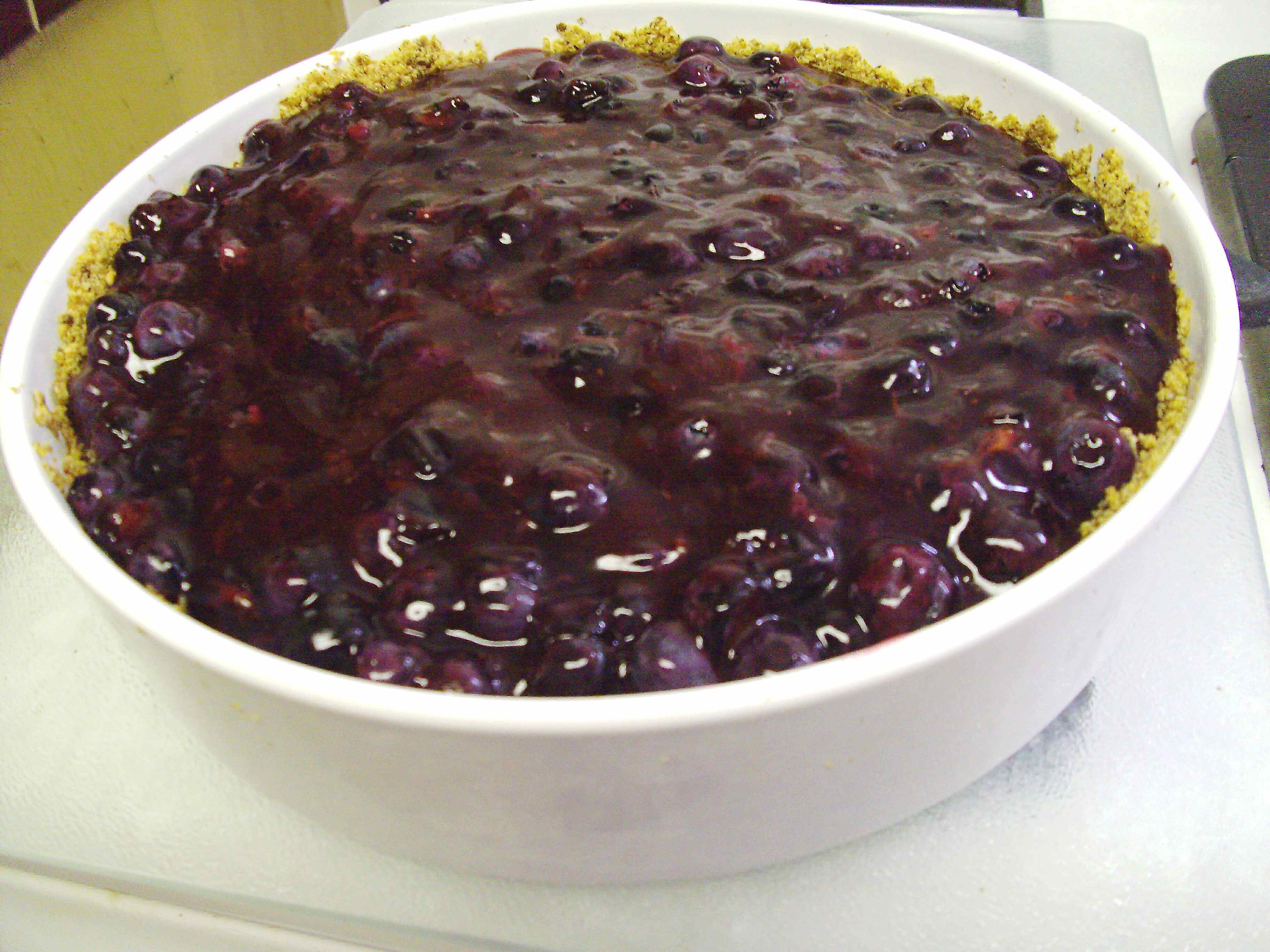
    raw blueberry pie with microwaveable filling and graham cracker crust

    This mostly-raw blueberry pie is a snap to make and very versatile--the filling microwaves in a few minutes, and you don't even have to bake the zippy gingered graham cracker crust--perfect for a hot Fourth of July and all summer long.

  • Recent Posts

  • Contents

  • Archives

  • Now Reading

  • See also my Book Reviews

  • Copyright 2008-2024Slow Food Fast. All writing and images on this blog unless otherwise attributed or set in quotes are the sole property of Slow Food Fast. Please contact DebbieN via the comments form for permissions before reprinting or reproducing any of the material on this blog.

  • ADS AND AFFILIATE LINKS

  • I may post affiliate links to books and movies that I personally review and recommend. Currently I favor Alibris and Vroman's, our terrific and venerable (now past the century mark!) independent bookstore in Pasadena. Or go to your local library--and make sure to support them with actual donations, not just overdue fines (ahem!), because your state probably has cut their budget and hours. Again.

  • In keeping with the disclaimer below, I DO NOT endorse, profit from, or recommend any medications, health treatments, commercial diet plans, supplements or any other such products.

  • DISCLAIMER

  • SlowFoodFast sometimes addresses general public health topics related to nutrition, heart disease, blood pressure, and diabetes. Because this is a blog with a personal point of view, my health and food politics entries often include my opinions on the trends I see, and I try to be as blatant as possible about that. None of these articles should be construed as specific medical advice for an individual case. I do try to keep to findings from well-vetted research sources and large, well-controlled studies, and I try not to sensationalize the science (though if they actually come up with a real cure for Type I diabetes in the next couple of years, I'm gonna be dancing in the streets with a hat that would put Carmen Miranda to shame. Consider yourself warned).

The Afikomen Conundrum, plus a quiche for our times

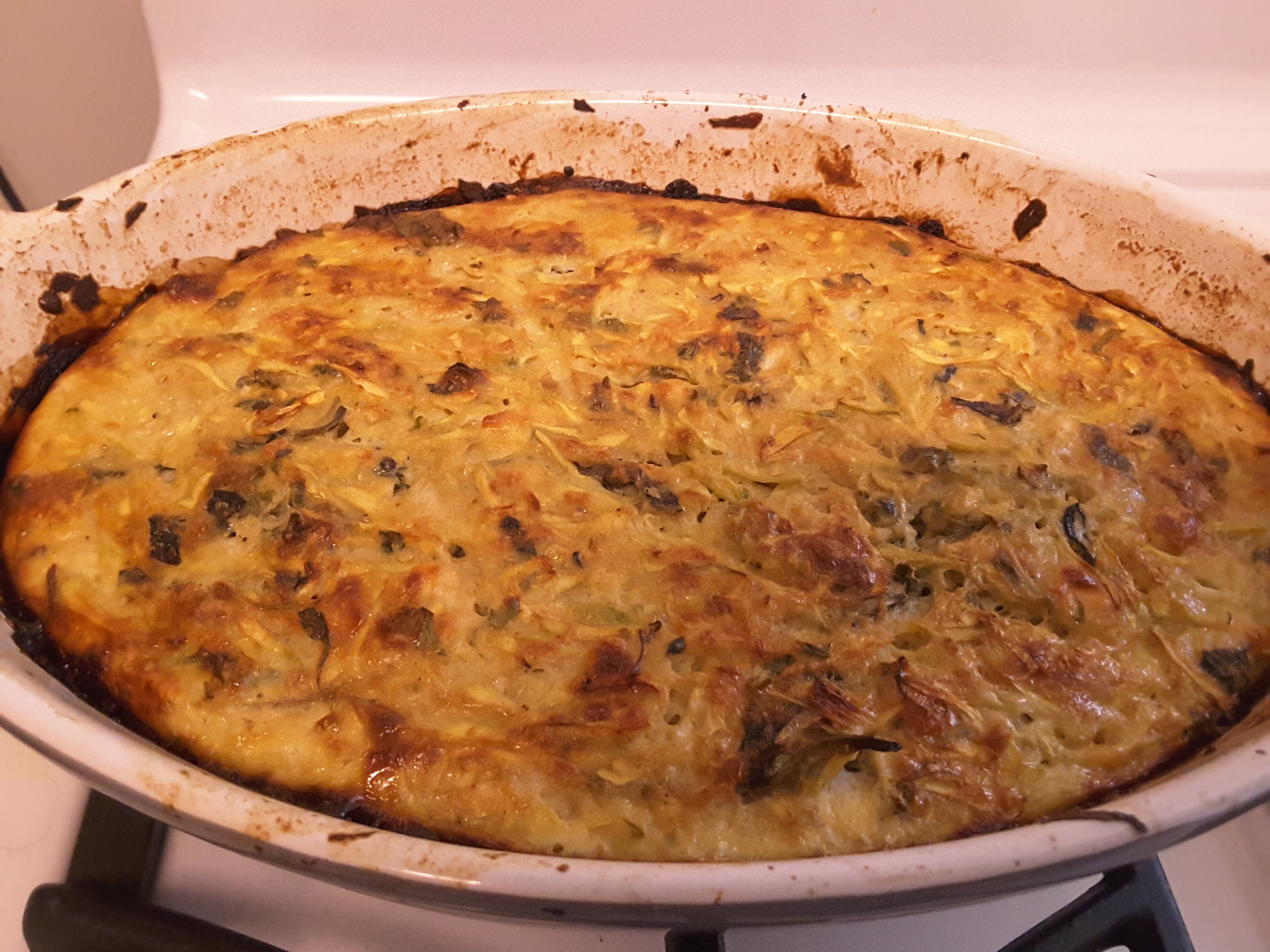
zucchini crustless quiche

On the lighter side of Passover, now that it’s the last day for anyone outside Israel, I did catch Terry Gross’s wonderful Fresh Air interview with Adam Sandler and the Safdie brothers on NPR back in December and was delighted to hear that the brothers included the first-ever mention of the afikomen in an English-language film. It’s about time! I mean, bagel and chopped liver references can only take you so far with Jewish culture. Afikomen is the real insider stuff.

Then, of course, Terry realized that all four of them, herself included, were talking inside matzah-ball or at least Aramaic amongst themselves on-air, and the uninitiated radio listenership who had never even been to a Passover seder might need some enlightenment on the subject of afikomen. Yes, it was exactly like having to explain a joke, and no, the great mass of society probably still didn’t get why a broken matzah is more important than a whole one, or why you’d bribe the kids to give the other half back once you’ve hidden it somewhere cleverly during the meal.

But Sandler and the Safdies ran with it and tried not to make it any more like explaining a joke than they had to. At least Terry didn’t pick the Hillel sandwich to riff on. (Partly because no matter what the Haggadah says about it, there really is no good logical or culinary explanation for eating a combination of apples, nuts and horseradish all together on matzah. It just is, you know? Tradition!)

Anyway, the interview was actually enlightening and smart, and the link is still up online, so go listen to it and donate to your local NPR station while you are wondering, as I am, where we go from here.

I look back to where we were only a month ago and realize that I am thankful my daughter is with us, that my mother and sister and their families and my in-laws are all well if a bit frustrated at home, especially the younger generations with young kids. Back then I  was starting to wonder if there was actually going to be matzah in the stores by the time we needed it or whether I would have to enlist my daughter for some not-quite-kosher-but-best-we-can-do homemade matzah from the leftover bag of flour that I couldn’t bring myself to throw away this year–it seems like more than a sin to throw away anything you could use later, anything you might need, or that someone else could use now.

I mentioned this to a friend back east when Governor Hogan of Maryland decided to declare a statewide a lockdown a week or so after California’s, and we were comparing notes about having college-age kids stuck at home for the duration. It was about a week before Passover started, and a few days later not only was there finally some matzah available at the store, just in the nick of time, but a big mystery box arrived at our door later the same day. When we opened it, we discovered she’d sent us two boxes of Streit’s matzah, just in case. She’s really something else!

As mentioned above, today is the last day of Pesach (Passover in English) if you live outside Israel. My husband is hoping for pizza tonight but since  the stores are closing before sundown, I somehow doubt it’s going to happen tonight. Plus we have two whole boxes of matzah left and a bunch of rice, which I cooked starting with the second night. Turns out many, many American Jews other than us have also decided this year to expand their Passover cooking options to Sefardic traditions that include rice.

I even have most of a packet of quinoa, which is so recent in the Jewish world that rabbis everywhere have declared it kosher for Passover. Somehow that declaration annoys me. Quinoa’s an expensive grain compared to rice and the major importers and cultivators probably paid someone off under the table to get this vegan-trendy chic grain declared ritually different from all other grains, cereals and seeds including rice. Call it Dizengoffia or Beverly Hills Syndrome, and yes, I’m really that much of a cynic, but put it this way–nobody’s bribing anyone about rice as far as I know. Rice is common, inexpensive and traditional, and it’s already approved for Sefardim and most Mizrahi Jews as well.

Small wonder a lot of us have decided to go Sefardi this year, and possibly every year from now on.

Anyway, since this is me, I made some of the quinoa last night in the microwave just to see how it would go–answer, not bad, and pleased my daughter, who along with her college housemates is more conversant with quinoa than I am. I think it’s twice or three times as expensive as rice; they’re still young and excited and into brandname olive oil, gourmet coffee, designer vinegars and  and vegan-chic ingredients because they’re all so new to cooking on their own and still a bit gullible.

It takes time, practice and ruining a few expensive buys on your own dime to realize that fancy-label ingredients won’t make you a great cook automatically. You can go online all you want–even here, if you have the patience to read through all my grumbling and occasional bouts of wild enthusiasm. The fact is there’s no substitute for trying it yourself and being willing to eat your mistakes as far as they’re edible and figure out from them how to fix them up now and do better next time.

But in any case, the quinoa, microwaved or not, is still quinoa, with an earthy, bitter edge similar to buckwheat (kasha).  So definitely squeeze on some lemon or mix in some vinaigrette; instant improvement. My kid agrees–there’s vegan chic and then there’s too chic. And if you’re going to buy it and try it anyhow, you need to be willing to work with it and make it good or else. At least not waste it.

More to the point of frugality, I have been trying mostly to practice what I preach and buy and use cheap vegetables plentifully this week instead of reaching for yet more matzah and cheese at every turn, or using up more eggs at once than is wise in a time when you’re limited to two cartons a customer when you can even get them, and where a lot of supermarkets are now stocking medium-sized eggs when they can’t get enough large ones.

My standard Israeli-style spinach and feta flan for Passover (or any other time) calls for 6 large eggs for a pound of squeezed-out spinach, but you can reduce the eggs to 3-4 and increase the milk to 1.5 c and/or add a bit of bread or flour (if you’re not cooking for Passover), rice, matzah meal, grated or mashed cooked potato etc. –the starch absorbs some of the excess liquid and acts as a binder. And you can use a different vegetable as the main ingredient.

Zucchini are some of the common inexpensive fresh vegetables being neglected most often at the Ralph’s (Kroger affiliate here in the west). I bought a bargain bag for a dollar on my last shop (still doing that where possible) and washed them carefully à la COVID-19 precautions (spritz with dilute dish soap along with all the other groceries, rinse well, airdry, hope for the best). Today I decided it was time to use them for the last Pesach lunch and that they were better to use up now for a crustless quiche than the bags of frozen spinach which cost twice to four times as much and can stay in the freezer. Continue reading

Movie and a Pickle: “Deli Man”

About a week ago, my husband and I decided we were finally grown up enough to take ourselves out to a movie (and leave our slightly attitudinal teenager home to watch some sort of awful teen tv series without us). We’d heard from friends about a documentary called Deli Man that was showing at reasonable hours downtown, and it sounded not bad. We found parking at the bookstore next to the theater, ignored most of the threatening new signs about being towed if we didn’t shop the bookstore and get back out within 90 minutes (it was a Sunday evening, and the bookstore was closing early), and walked into a sparsely attended theater.

Which (the sparseness, I mean) was a shame for the theater and everybody who wasn’t there more than it was for us, because Deli Man is terrific.

You’ll laugh, you’ll cry, you’ll wonder what a Cordon Bleu-trained chef is doing in Houston kibbitzing with his customers in a strip mall deli while sweating the details behind the counter and agonizing over the memory of his grandfather’s idyllic but lost gravy recipe as he serves up gargantuan matzah balls, stuffed chops, and sandwiches you need to be a python to get your jaws around. Cue Jerry Stiller, Fyvush Finkel, Larry King and other New Yawk old-timers, the local Jewish community fans in Houston, and some of the best–and hopefully not last–deli men in the business.

See the trailer on YouTube.com


In between the semi-humorous profile of David “Ziggy” Gruber, third-generation deli man and one of the last under 50, plus (of course) all the kibbitzing from family and friends who wonder when and if he’s ever going to be marriage material, you get interviews with the old hands who themselves are sons and grandsons of the original great deli owners.

Sarge’s, 2nd Avenue Deli, Stage Deli, Carnegie Deli, Ben’s Best–most of the guys who are still in business and some who aren’t. They’re famous, they’re well-established, they dress nice…they’re still working backbreaking hours themselves and pushing their kids to get out and go to law school or into engineering because it’s such a hands-on business and training juniors with the right attitude is so difficult. And attitude is what counts.

David Sax (Save the Deli), Jane Ziegelman (97 Orchard) and Michael Wex (Born to Kvetch and Just Say Nu) trace the roots of the deli through the waves of Jewish immigration on the Lower East Side, the move to Jewish-style as opposed to kosher, and the decline in our times of a great old-neighborhood tradition as the old urban neighborhoods changed hands and Jews struck out for the suburbs.

You get a chillingly clear picture of why the number of Jewish delis has shrunk from thousands in New York alone after WWII to only about 150 nationwide today. At the same time you see why the deli guys hang in there–and so do their customers.

Jewish delis, kosher or not, are not the usual kind of American casual restaurant. They’re extremely personal and familial, as Jews still tend to be with each other. The old-style Jewish waiters would argue a lot; sometimes they’d tell you rather than ask what you were going to eat, and it became a classic shtick. But as Gruber pointed out on Alan Colmes’ Fox News Radio interview (and no, I can’t believe I’m providing a link to anything Fox either, but it was a good interview), the days of the cranky waiter are more or less gone.

And on the other hand, delis still deliver more for the money than the nouveau-hip places with $50 plates and $18 drinkies. The regular customers expect more–not necessarily more food (though that’s an impression you might get from the outsized portions), but for the deli owners and waiters to know them, talk with them, argue even–and remember exactly how they like their food.

We come from a culture that thrives on argument as a form of intimacy. If you’re not arguing (lightly, not nastily) with your wife, husband, kids, friends, shul members, and pretty much everyone else you care about…how can they be sure you’re really paying attention? It’s become a lost art, though–even Jews of my generation cringe when we hear our parents bellowing cheerfully up and down the stairs at each other. I had to train my genteelly brought up husband that there’s a huge difference between yelling out to him from the far end of the house and yelling at him, and I expected him to just yell back the answer and not get mad or insulted. He’s almost got it by now…

That kind of personal is what makes the give and take between kvetchy customers and ebullient owners work so well and it adds ta’am, flavor, to the whole experience of going to a deli. They know you, and they pay attention whether you’re a CEO or an average Joe.  You can’t get that in a chain restaurant; you don’t get it at a three-star haute palace.

Delis have also, at their best, been the kinds of places where seemingly hard-nosed owners were known to sustain their neighborhoods in hard times, sometimes secretly comping a free meal if a customer was out of work.

Deli Man is deliberately and intelligently personal even as it traces the history, the economics, the fans among the Broadway stars, and the paradoxical Americanness of the Jewish deli. There are plenty of old black-and-white vintage photos, a bittersweet tour of the Lower East Side and its remnants, and klezmer music from one of the modern greats. Far from becoming a Ken Burns wannabe, though, it’s funny, wry, well-paced, modern–and most of all, it gets to the heart of what makes a deli matter. From start to finish, this is a documentary that cuts the mustard. In fact, my only serious kvetch is this: too much pastrami, not enough corned beef.

Or pickles. So in honor of this movie I’m trying out a long-planned jar of pickled green tomatoes, something I remember with fondness and bemusement from my childhood. Whenever my grandparents would come down to Virginia to visit us, they’d schlep bags stuffed with good tough breads, real bagels, packets of corned beef and pastrami. Along with precariously packed containers–were they plastic tubs, or were they, as I remember, merely stapled glassine Continue reading

Movie Review: Family, fermented

The New York Times has a review today of a new French film in current release, You Will Be My Son, about an egotistical master vintner in Burgundy and the son whose winemaking instincts he scorns.

I’m thrilled this is going to be in theaters in the U.S., because I saw it last June on the plane home from Montreal, in French, and it was so well acted I thought the airline must have made a mistake–you know, putting in a good movie by accident instead of Alvin and the Chipmunks, various cheap CGI-driven “futuristic thrillers”, all the stuff that went straight to DVD and that you don’t really want to pay Netflix or Blockbuster an additional 5 bucks to see.

Much along those conventional lines, and starkly in contrast to You Will Be My Son, is a wine movie I highly recommend–skipping, that is, and which I also saw on a plane back from London several years ago. Believe me when I say that if Bottle Shock was the “hidden gem” of the selection as the in-flight magazine claimed, the rest of the movies available must have been just unwatchable.

Bottle Shock was supposed to be based on Judgment of Paris, George Taber’s nonfictional account of an upset between Californian and French premium wines in a 1976 blind tasting, but came out looking more like “Daisy Duke Does Napa”. With Alan Rickman thrown in (age 57ish then, and eating KFC onscreen, incompetently) in the role of the 29-year-old wine buff who set up the competition. And the late Dennis Farina, in a pink ascot, substituting for the wine buff’s 30-year-old female business partner. And Sam Rockwell’s ’70s longhair wig was like a bad toupee gone wild.

OK, do go find a clip or so of Bottle Shock (or is it Bottle Schlock?)  for those times when you’re punchy and want something that will give you that entertaining “clawing my eyes out” sense of superiority over an unbelievably putrid movie. With big-name movie stars ™.

No, really, don’t do it. Don’t do it. See You Will Be My Son instead. Part family drama, a little bit thrillerish, twisted and fascinating without any of the American movie must-have cliches, it will keep you on the hook long after you’ve left the theater. And the actors are subtle, intelligent, individual and believable. The whole thing is gripping and so different from the current insipid-explosive American style you’ll want to go raid the library for better-made oldies like All the President’s Men and The Manchurian Candidate.

Only one sour note: Skip the New York Times review itself. In his attempt at selling the appeal, which he didn’t really need to do, the reviewer stuck in a lot of the plot details, to the point where I feel the need for a spoiler alert. You Will Be My Son doesn’t need all that–it’s solidly made and it works well from the beginning. Go see it.

“The Trip”: supposedly about the food?

Steve Coogan and Rob Brydon have paired up again in a new movie called The Trip  and I actually got to see it in an actual movie theater Thursday! First time I’ve been in a theater since Ratatouille came out. (Hadn’t realized that was going to be a foodie movie; at the time I just wondered why they didn’t make good movies like that for grownups anymore.)

I was going to see The Trip anyway because I’d seen Tristram Shandy several years ago on disk and got bitten by Coogan and Brydon’s backstage banter. I was looking forward to seeing how the pair,  who had played exaggerated versions of themselves in the first movie, were planning to stretch their dueling Robert deNiro and Al Pacino impressions from the end credits of Tristram Shandy–by far the best shtick in the whole thing–to a two-hour buddy road trip format.

And The Trip was also supposed to be about food–specifically, the current state of northern England’s upscale eateries (now apparently as haute as anywhere on the continent) and the shockingly savage and comical food reviewing traditions of British news media.

So I dragged my husband with me to the matinee and promptly started disregarding the “please, no talking during the film” signs. What fun is it to sit there not giggling horribly as Coogan and Brydon get on the road north to Yorkshire, or saying nothing to my mate as they try to correct each other’s Michael Caine impressions and improve on them in increasingly loud voices while being served all manner of square food on long rectangular plates lapped with flavored foams à la Adrià? With the inevitable scallops for starters, and a number of historical interludes–a sleep in one of Coleridge’s beds, visiting the church ruins in a town where Ian McKellan did not actually grow up, but it’s got the same name, so it counts?

The truth is, of course, that The Trip is much less about food (despite several spliced-in foodie snippets of what’s going on in the kitchens and pans where tasting menus are being prepared) than about love, loss, what’s left to look forward to in one’s encroaching middle-40s, and how to impress girls with your Michael Caine (or Al Pacino) impressions at a 3-star restaurant in the Yorkshire dales or the Lake District.

Of course, the sixth or seventh rendition of Michael Caine (interspersed with Pacino and friends) starts to wear even on our intrepid actors-almost-playing-themselves as they grapple with the hearts they refuse to admit are pinned to their sleeves. It turns out there’s a solid reason for this: Continue reading