
• Enter your email address to subscribe to this blog and receive notifications of new posts by email.

    Join 241 other subscribers
  • Noshing on

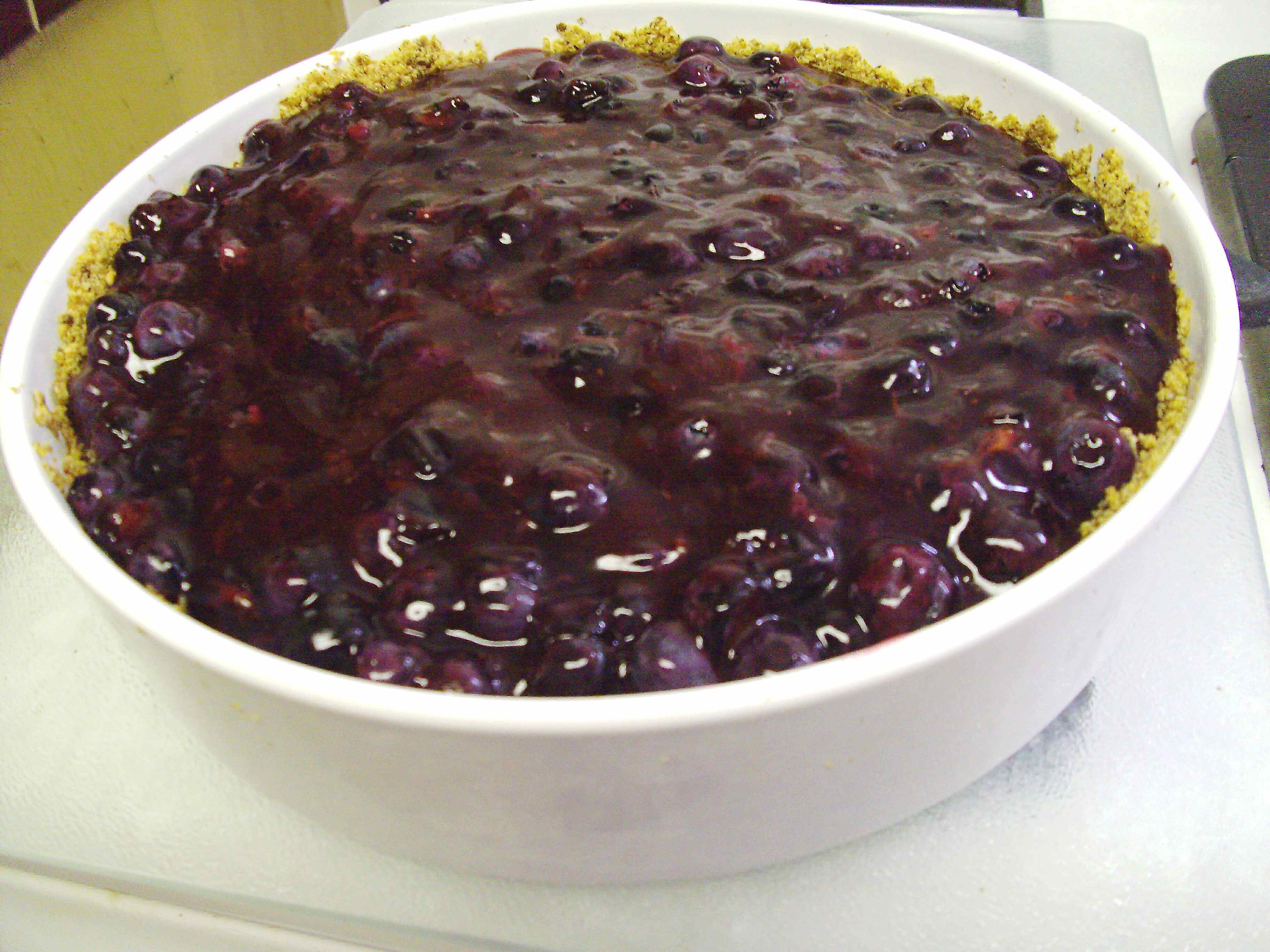
    raw blueberry pie with microwaveable filling and graham cracker crust

    This mostly-raw blueberry pie is a snap to make and very versatile--the filling microwaves in a few minutes, and you don't even have to bake the zippy gingered graham cracker crust--perfect for a hot Fourth of July and all summer long.

  • Recent Posts

  • Contents

  • Archives

  • Now Reading

  • See also my Book Reviews

  • Copyright 2008-2024Slow Food Fast. All writing and images on this blog unless otherwise attributed or set in quotes are the sole property of Slow Food Fast. Please contact DebbieN via the comments form for permissions before reprinting or reproducing any of the material on this blog.

  • ADS AND AFFILIATE LINKS

  • I may post affiliate links to books and movies that I personally review and recommend. Currently I favor Alibris and Vroman's, our terrific and venerable (now past the century mark!) independent bookstore in Pasadena. Or go to your local library--and make sure to support them with actual donations, not just overdue fines (ahem!), because your state probably has cut their budget and hours. Again.

  • In keeping with the disclaimer below, I DO NOT endorse, profit from, or recommend any medications, health treatments, commercial diet plans, supplements or any other such products.

  • DISCLAIMER

  • SlowFoodFast sometimes addresses general public health topics related to nutrition, heart disease, blood pressure, and diabetes. Because this is a blog with a personal point of view, my health and food politics entries often include my opinions on the trends I see, and I try to be as blatant as possible about that. None of these articles should be construed as specific medical advice for an individual case. I do try to keep to findings from well-vetted research sources and large, well-controlled studies, and I try not to sensationalize the science (though if they actually come up with a real cure for Type I diabetes in the next couple of years, I'm gonna be dancing in the streets with a hat that would put Carmen Miranda to shame. Consider yourself warned).

Coconut, minus the hype

dried coconut shreds

Palm and coconut oils have made a huge comeback in the last few years. Both are very high in saturated fats, which promote high blood cholesterol and heart disease, but the vegan community has embraced them as “natural” and they’re turning up in all kinds of baked goods and sweets these days at Whole Foods. Which also sells big mayo jars full of coconut butter. Looks like Crisco, scoops like Crisco, costs 10 times as much.

A lot of the newer vegan recipes and packaged foods are direct mimics of things that used to include lard, beef tallow and suet at the lower end of the classiness scale, or butter at the high end. My local Whole Foods’ pastry case features a lot of croissant and baklava variations these days, all now made with palm oil, as are many of the muffins. Starbucks’ “old-fashioned kettle” doughnuts feature palm oil in two places, both the dough and the icing.

Why are these fats getting so popular? Why all the wishful thinking that a plant source automatically makes them healthy to eat in quantity? Why are all the nutrition advice columnists in the major newspapers and health magazines suddenly “holistic coaches” who graduated college with psych majors and the like rather than board-licensed nutritionists and registered dieticians?

The truth of the matter is that your body doesn’t care so much whether a saturated fat came from lard, a coconut, or a chemical vat–regardless of the source, the fat molecules are shaped the same and your digestive and metabolic enzymes process them all the same way.

Palm and coconut oil? The hip vegan crowd, who consider themselves really indie, would be surprised to learn how thoroughly they’ve been manipulated by a very big industry. In the past 10 years, these oils have suddenly ramped up production wherever palm trees can be grown, mostly in Malaysia and Indonesia, where producers started by stripping the jungles to plant a single crop (though some of the main palm oil traders, like Lever–yes, the soap manufacturer–have made statements that they’re working to reverse some of the damage and buy only from those who “plant sustainably”). The other main centers of palm and coconut oil growers are Africa, India and Latin America.

Palm and coconut oils have taken off not because they’re vegan (outside of India, there just aren’t enough to support the industry boom) but because they’re such a cheap source of fat. Well, cheap everywhere but the Whole Foods shelves. They are indeed useful to the processed baked-goods industry for lending that heavy grease “satisfaction” factor to things that used to be made with butter, suet or lard. And they’re much less heavily regulated in the US by the agricultural inspectors because they don’t trigger all those livestock rules.

But should you be eating them? Buying jars of coco butter for your home cooking? Something tells me you’d be better off eating less of anything that requires cooking in heavy fats as opposed to regular polyunsaturated vegetable oil. And cutting down on all fats unless you’ve actually been diagnosed by an MD, not a holistic coach, as underweight.

Because even the unsaturated fats have a lot of calories. Rip Esselstyn’s “Fire Engine 2 Diet” specifically cut out all oils because the people he was training to eat better really needed to lose weight, and the bottom line is that the 120 calories in a tablespoon of ordinary unsaturated vegetable oil are still extras. There’s no real way around that. Not even if you’re vegan.

And wasn’t the point of nonstick pans supposed to be so you could cut down on cooking fats? (ok, it was really so the pans would be easier to wash, but why not take advantage while you’re at it?)

I’m not saying you shouldn’t ever use coconut itself in cooking–I’ve been a Mounds fan from way back, and please just don’t ask about those poufy huge coconut-sprinked, bright pink marshmallow things we used to clamor for as kids (“Snowballs”? I think it was a half-dome of marshmallow that sat on a cookie…almost as bad as Moon Pies.) These days I try to eat it sparingly, because it’s still fatty, and because most of my coconut exposure now takes place in the form of macaroons at Passover, when I’m already feeling like if I see another can or box of something packaged I’ll pass out.

But seriously–and more sophisticatedly–coconut itself is a worthwhile cooking ingredient in some savory dishes, and it has a subtle, penetrating flavor that means you don’t have to use a ton. You can also find good steam-defatted versions of shredded coconut that have about half the fat of regular, and look for partially decreamed canned coconut milk as well (I think Trader Joe’s sells it, maybe Whole Foods as well). Unfortunately, half the fat for coconut is still pretty fatty, but it’s an improvement.

Even a spoonful of unsweetened shreds can give a curry or aviyal (i.e., coconut-based “dry curry” class of dishes) a satisfying suggestion of richness without adding loads of fat. Maybe a gram or two per serving, and it can help even out jagged edges in the spicing.

To get the most flavor out of a small amount of coconut, I do one of two things. In the aviyal of cowpeas below, I toast a spoonful of dried shreds Continue reading

A Dream of…Marmalade?

For years I assumed that only the truly gifted home ec queens, most of them from the deep South, were qualified to make jam. I love to cook and I love to play with my–or anybody’s–food, but I knew instinctively that the combination of 1) me and 2) hot vats of boiling fruit and sugar was a recipe for disaster. Or hospitalization. Or outrageous cleaning bills. Or all three. So I stayed far, far away from pressure cookers, Ball ™ jelly jars, and anything involving bushels of fruit and all-day productions.

And yet…once in a while I’d walk by the produce section, see something unusual, and fantasize about making a new kind of jam they didn’t have in the store. The kind with just fruit and maybe sugar, but no corn syrup to cloud up the flavor. Something that didn’t cost $6 for a 10 oz. jar. Something that didn’t taste like all the freshness had been boiled out of it.

There’s nothing more disappointing to me than the difference between ripe strawberries and strawberry jam. It should be so good, and it just tastes so tinny, with all the life and brilliance cooked out of it. Oranges are, if possible, even worse cooked. And yet I do love marmalade, which seems even more mysterious than jam.

This week, I stopped by my neighborhood corner grocery and found a small cardboard box perched atop the large open bins of walnuts and almonds. In the box were a couple of pounds of kumquats for $2/lb. A decent price–but was I really going to do something with kumquats?

Since discovering the microwave, I’ve taken on an unwise and very brash attitude about tackling new challenges that basically boils down to “Just nuke it!” I realized if I microwaved the marmalade it would either succeed or fail, but at least it would do it quickly. Continue reading

Sweet Potato Ravioli

A couple of posts ago I mentioned wanting to try making pumpkin tortelloni at home. For some reason, reasonably large butternut squash seem to be evading my usual grocers this season, and they’re fairly expensive. Similarly, no fresh pasta sheets under $5 a packet…and I didn’t know how to make my own very well or want to spend that kind of time. But yams are in, and some of them are nearly the size of footballs. And I found a packet of round gyoza (alternate spelling for jao tze?) wrappers next to the squares for wontons and eggrolls in the supermarket. With my usual impatience, I decided to go for it.

The result was pretty good–a bit simpler than Colosseo’s tortellini in saffron cream, and certainly a little less rich, but definitely good, and not too much work once I figured out what I wanted. From start to finish, including all the dithering, it took me about an hour to prepare and assemble everything. And I cooked it successfully in the microwave, always a plus in my book.

So here goes:

Sweet Potato Ravioli (or yam; everyone gets those mixed up, even the grocers, and it really doesn’t matter that much)—4 big servings or 6 small ones

Packet of Gyoza/Jao tse or won ton wrappers, or your own pasta dough cut in 2″ diameter circles or squares, as you prefer.

Filling:

  • 1 huge yam or two normal baked-potato-sized ones
  • 1/4 medium red or yellow onion, chopped reasonably fine
  • small clove of garlic, minced or grated
  • few sprigs of thyme or sage
  • grating of nutmeg and lemon peel (~ 1/8 to 1/4 t. each, or a bit more)
  • 2 T or so goat cheese, ricotta, or feta, optional

1. Scrub the yam(s). Peel and if not too hard to cut, cube the flesh. Place in a covered pyrex bowl or microwaveable container with 1/4″ water in the bottom. Microwave on high about 5 min. The yam(s) should be fork-tender. If they’re still tough, turn them, cover again, and give them another minute or so. Then drain off the water and mash them a bit.

2. Fry the chopped onion and herbs in a little olive oil to start browning them, add the garlic and the yam, and toss to brown a little more. Take off the heat, stir in the cheese if using, and grate nutmeg and a bit of lemon peel into the mixture.

Cheese Sauce:

  • 1 T (heaping) flour
  • 1 T olive oil
  • 1-2 c milk (I use skim, use what you have)
  • 1 clove garlic mashed, minced or grated
  • 1-2 T shredded basil
  • 2 oz lowfat mozzarella, in small pieces
  • grated nutmeg and lemon peel to taste

1. Make a roux with the flour and olive oil in a nonstick frying pan–stir them together while heating for a minute or so until the mixture bubbles slightly.

2. Turn off the heat and add the milk a very little at a time while mixing with a spatula to make a smooth paste that eventually thins out without lumps.

3. Reheat the pan, stirring in the mozzarella, basil, nutmeg and lemon rind. The mixture should thicken as it nears a boil and the cheese should melt and incorporate. Turn off the heat.

Assembly and cooking:

Have a pyrex pie plate or casserole with a microwaveable lid ready to hold the ravioli. Put water in a soupbowl and separate the wrappers out on a plate.

1. To stuff the wrappers, dip a wrapper in the bowl to wet it on one side, then place a heaping teaspoon of filling in the middle of the wet side and fold the wrapper into a half-moon, pinching the edges together to seal them and squeezing out any air as you go around. Set each filled ravioli with the curved, pinched edge standing up in the pie plate. Fill as many wrappers as you can–it might be about 20 ravioli or so–and arrange them as best possible in a single layer in the pie plate. Store any remaining wrappers in a plastic sandwich bag in the freezer.
2. To cook, carefully pour a scant 1/4″ of water into the bottom of the pie plate between the ravioli. Cover the pie plate with a microwaveable lid and microwave on high for 2 min. to steam the ravioli somewhat and prevent raw dough on the bottom–never a nice surprise. If your lid is thick pyrex, you might need a little extra time, but check first–the dough should be turning translucent and cooked-looking. If it needs more time, take a soupspoon and run it with a little water over the tops of the ravioli to prevent scorching before covering and microwaving another 30 seconds or so.
3. Then uncover and spread the thickened cheese sauce over the entire plateful of ravioli, filling in the cracks where possible. Cover again and microwave 5 min. on high.

Impatience is its own reward

I learned to cook at the ripe old age of eleven. My mother had gone back to school, I had a younger sister and brother, and I had a problem. Mom said to make spaghetti–so far, so good–but when I got to the kitchen, I discovered there was no tomato sauce in the house. Luckily, there was a little can of tomato paste, and a cabinet full of dried spices that included the essential garlic powder and oregano, plus a bunch of herbs (they came as a set) that my mother owned but never actually touched. And, as I’ve mentioned, there were two guinea pigs available. Good enough.

I learned to cook again when I hit college and started helping a friend with Friday night dinners at the Hillel House. That’s also where I learned how to keep kosher.

I learned a third time when I moved in upstairs as a resident after my sophomore year–I was working a strenuous lab job on a tight budget–no more than $25 a week for anything–and I walked everywhere. My housemates introduced me to two basic spaghetti sauces–one red, one white–and the rest of the time I ate omelettes because eggs were a dollar a carton. I shudder now to think I got through a carton a week, and didn’t ditch any of the yolks. At the time I reasoned that I wasn’t eating meat–couldn’t get kosher meat easily, and it was beyond my budget. I did lose 20 pounds without realizing it. And I started baking my own bread–challah for Friday nights; pita the rest of the week. No real recipes; I went by feel.

The next time I learned to cook was after college, on a year’s study in Israel. In the kitchens of Kibbutz Ma’agan Michael, everything had to be done in a rush because we were feeding 1000 people a day. But they knew their way around an eggplant or seventy (we used the bread machines to slice them all). Up in Ma’alot, I worked in a clinic with everyone from the surrounding towns–Jewish, Muslim, Christian, and Druse–in one of the few truly friendly workplaces in the country, and I spent afternoons tutoring and being fed in people’s homes or else learning to haggle for vegetables in the Thursday open air market. There I learned how to brew tea with mint (in summer) or sheba (petit absinthe) in winter, how to cook with real garlic, how to use a “wonderpot” on top of a gas ring, and how to eat z’khug (chile-garlic-cilantro paste) with just about everything.

When I returned to the U.S., I had to learn to cook all over again. I started keeping a “blank book” (remember those?) for recipes, and I learned, over the course of twenty years, how to cook real food, better food, from scratch, but faster than the cookbooks called for. When my grandmother had a major stroke, I was still in my mid-20s and realized I probably couldn’t get away with an all-eggs-and-cheese diet. Eventually I went to work up at NIH, and discovered that cutting back on saturated fat, cholesterol, salt, and calories really does help cut the national risk of heart attacks and strokes.

After talking with a nutrition expert there, I learned that our tastebuds can adjust to almost any level of sodium and consider it “normal” within just two weeks. Dangerous if you develop a tolerance for high salt and consider it normal even at really exaggerated levels–as many people do. The good news is that we can retrain our palates downward just as quickly, so I tried a completely salt-free, unprocessed food diet for two weeks–with surprising rewards. Without salt to swamp the taste receptors, the natural flavors of vegetables and fruits seem particularly brilliant and clean.

And then I had a kid. And I had to learn to cook all over again–this time, using a microwave oven, because I didn’t want to leave my kid unsupervised while I stood trapped at the stove. I wanted something that would shut itself off when done. But by now I had gotten used to real ingredients and fresh foods, and I had to come up with microwave methods for them. So I did. This blog is the result.