

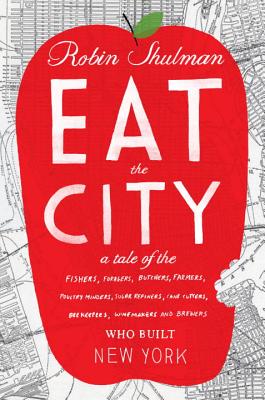
 I’ve just received an advance copy of Robin Shulman‘s forthcoming book, Eat the City: A Tale of the Fishers, Foragers, Butchers, Farmers, Poultry Minders, Sugar Refiners, Cane Cutters, Beekeepers, Winemakers and Brewers Who Built New York.
[Or at least that’s the title on the cover art–the copyright info page version of the book title squeezes in even more food trades–what, or rather who, the heck are “hungers”? People who “curate” aged hanger steaks?]
Shulman, a well-known reporter who has worked for the New York Times, the Washington Post, the Los Angeles Times, Slate and other venues, has covered hard-news beats from city politics and urban blight to Middle East diplomacy. In Eat the City, Shulman explores the neighborhoods of New York, where she lives, and from hundreds of interviews, she harvests seven key stories to tell in depth: Honey, Vegetables, Meat, Sugar, Beer, Fish and Wine.
Each chapter, rich and multilayered, cuts across decades of urban history, whether development or decay, recounts conflicts and unexpected cooperation between would-be urban farmers and the neighborhood factories or city agencies they deal with, and uncovers the not-so-obvious ways these individual entrepreneurs bring a sense of connection and vitality to the city.
So we meet a man who after returning not entirely whole from a stint in Iraq, got enthusiastic about beekeeping when it was still illegal. In 2010, he rallied New York’s clandestine beekeepers to convince the city to rescind its ban on rooftop hives, and started training hundreds of apprentices. The retired numbers runner who farms vacant lots in Harlem–something he started as a cover for his gambling operations in the ’60s and turned into one of the first urban community garden projects–is still going strong in his 70s, but he’s seen several of his neighborhoods fall silent over the decades as buildings crumbled and the city neglected the people. The Manhattan ad exec risks her health and her freedom sneaking into taped-off areas to fish striped bass from the East River–she’s not sure it’s safe to eat, but she’s as hooked as her catch, and often announces her triumphs on Facebook. And somewhere toward the end of the book is the true and presumably unvarnished story of Manischewitz, the first big brand of kosher wine in America (and actually, probably anywhere, since before the 20th century most people made their own kosher wine at home).
Eat the City is due out in July, and all I can say is get out there and reserve yourself a copy, or clamor at the cash register of your local bookstore to order you one. Because this is the best book I’ve read in quite a while on the history and present fortunes of small independent food growers in one of America’s largest urban landscapes.
Like Michael Pollan’s books, it has depth and thoughtful analysis of the meaning of food in modern life. Unlike Pollan, Shulman isn’t advocating a lifestyle choice, she’s giving you a window on individuals as they elbow their way into a crowded city to make room for themselves.
Food is the medium here, but the impulse is universal, and the result is a better understanding of both food entrepreneurs and the meaning of city life itself. If you want to know what’s really happening beyond the wide-eyed grow-your-own-tomatoes-in-Brooklyn blogs, just pick a chapter and start digging in.
Filed under: books, Dairy, fish, Food Politics, frugality, history, Odd food, Oddities, shopping, wine | Tagged: beekeepers, community gardens, Eat the City, entrepreneurship, food producers, Manischewitz, New York City, Robin Shulman, urban farmers | Comments Off on Eat the City, Read the Book
 Slow Food Fast