
• Enter your email address to subscribe to this blog and receive notifications of new posts by email.

    Join 241 other subscribers
  • Noshing on

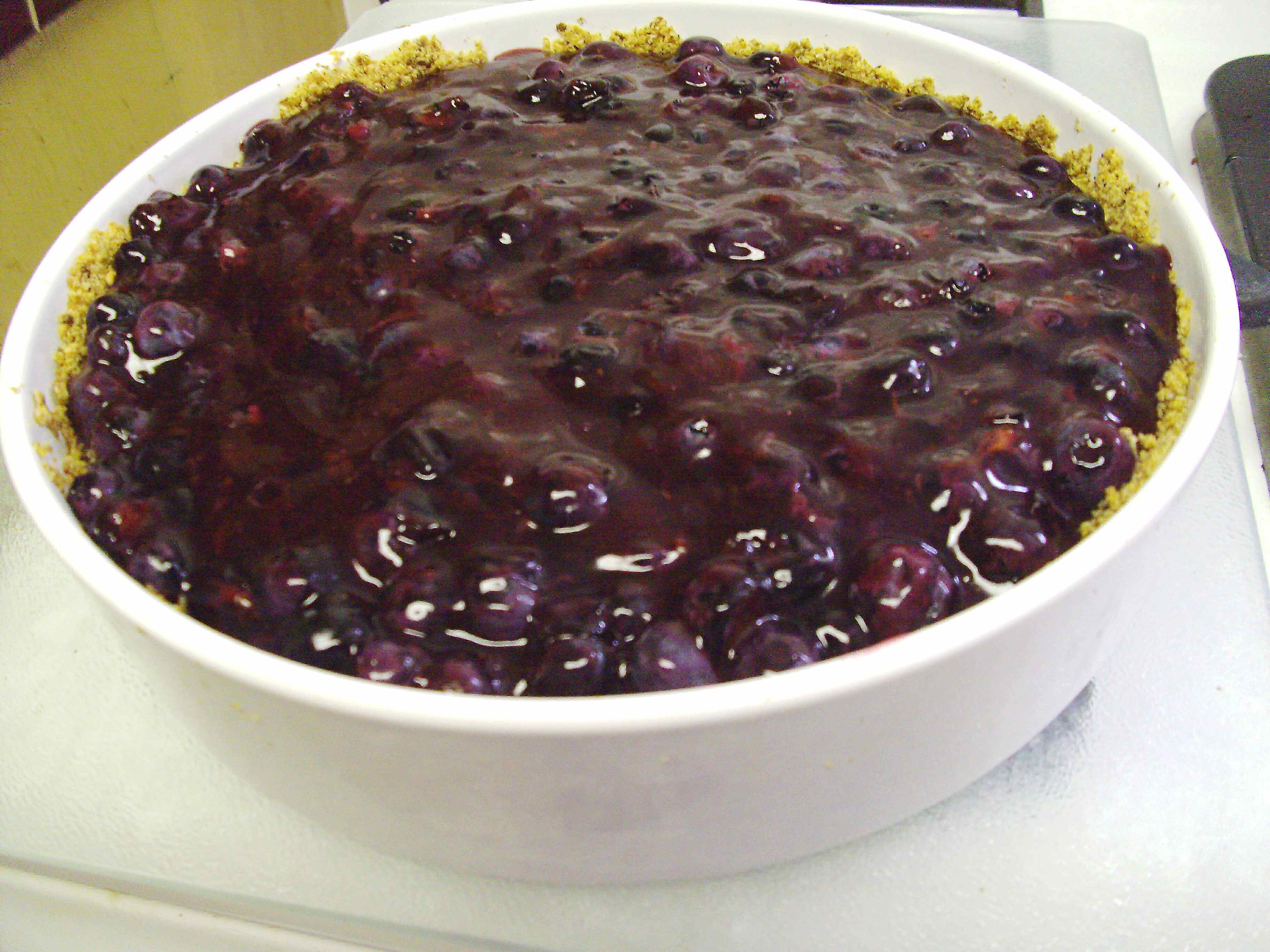
    raw blueberry pie with microwaveable filling and graham cracker crust

    This mostly-raw blueberry pie is a snap to make and very versatile--the filling microwaves in a few minutes, and you don't even have to bake the zippy gingered graham cracker crust--perfect for a hot Fourth of July and all summer long.

  • Recent Posts

  • Contents

  • Archives

  • Now Reading

  • See also my Book Reviews

  • Copyright 2008-2024Slow Food Fast. All writing and images on this blog unless otherwise attributed or set in quotes are the sole property of Slow Food Fast. Please contact DebbieN via the comments form for permissions before reprinting or reproducing any of the material on this blog.

  • ADS AND AFFILIATE LINKS

  • I may post affiliate links to books and movies that I personally review and recommend. Currently I favor Alibris and Vroman's, our terrific and venerable (now past the century mark!) independent bookstore in Pasadena. Or go to your local library--and make sure to support them with actual donations, not just overdue fines (ahem!), because your state probably has cut their budget and hours. Again.

  • In keeping with the disclaimer below, I DO NOT endorse, profit from, or recommend any medications, health treatments, commercial diet plans, supplements or any other such products.

  • DISCLAIMER

  • SlowFoodFast sometimes addresses general public health topics related to nutrition, heart disease, blood pressure, and diabetes. Because this is a blog with a personal point of view, my health and food politics entries often include my opinions on the trends I see, and I try to be as blatant as possible about that. None of these articles should be construed as specific medical advice for an individual case. I do try to keep to findings from well-vetted research sources and large, well-controlled studies, and I try not to sensationalize the science (though if they actually come up with a real cure for Type I diabetes in the next couple of years, I'm gonna be dancing in the streets with a hat that would put Carmen Miranda to shame. Consider yourself warned).

Age, salt and the new USDA dietary guidelines

Last Monday the USDA released its latest version of the Dietary Guidelines for Americans (nominally dated “2010”). I was driving home and NPR carried USDA Secretary Tom Vilsack’s speech, in which he listed a few of the new highlights: eat less, eat less food with solid fats, eat less processed food, eat more vegetables and fruits, eat less sodium.

How much less sodium? About 2300 mg or 6 grams (1 teaspoon) of table salt per day, he said, is the recommended maximum for healthy adults, in line with the long-standing National High Blood Pressure Education Program’s guidelines, which are shared by the American Heart Association and many other professional medical groups.

There’s a second lower-sodium recommendation for anyone overweight, African-American, with heart or kidney disease or high blood pressure or diabetes, and anyone middle-aged or older. This year, as the more specifically heart-health-oriented professional organizations already recommend, the USDA guidelines set the lower maximum at 1500 mg per day, or about 3 grams of table salt.

And you’d think that was great, and I do, that the USDA guidelines have finally caught up with what the medical associations have been demanding based on the overwhelming weight of studies on dietary sodium intake as it affects blood pressure, cardiovascular disease including stroke, and kidney disease.

But there are two catches hidden in the midst of all this, and I’m not even sure Vilsack was aware of it. Smaller one first: Middle-aged? How old is middle-aged?

“Fifty-one and older,” Vilsack said. Whew, I thought. Four more years before I have to start thinking of myself as middle-aged. By the time I get there, I’m hoping the standard will have gotten fudged upward by at least another decade or so.

Because, you know, if you’re not 50 yet, 51 sounds reasonable–and comfortably remote for a lot of younger adults. Which I am, thank you very much. Don’t look at me like that.

So here’s Catch-51: When I was working at the National Heart, Lung and Blood Institute back in the mid-’90s, the general working recommendation for lowering sodium to 1500 mg/day was all the other high-risk groups Vilsack mentioned…and healthy adults 40 and up. Not 51 and up.

The choice of a cutpoint at age 40 for otherwise healthy people was based on the risk data from the first three National Health and Nutrition Education Surveys, which began collecting data across the nation starting in the 1970s. The latest version collected data around 2006 and its findings were just released last spring by the Centers for Disease Control. All the NHANES studies correlate  in-depth interviews about diet, exercise and lifestyle patterns, and cardiovascular history along with clinical health measurements (height and weight, blood pressure, cholesterol, urinary sodium excretion, blood iron, etc.) from thousands of ordinary Americans. Even early on, there appeared to be an independent higher risk and a greater need to lower sodium at 40 and older, all other health risk factors being equal.

But of course 40 seems too young to be middle-aged. And the USDA, which issues the Dietary Guidelines for Americans, tends to downplay certain elements of the risk statements so that no one, or at least not the agency’s chief constituents, gets upset. The no one in this case might easily be the Continue reading

Salt reduction vs. hypertension meds–which would you choose?

One of the big complaints processed food companies, physicians in clinical practice, and the great gourmet media all have in common is that cutting back on salt would make food taste flat, and you as an individual wouldn’t necessarily get a big drop in your personal blood pressure from doing it. They argue that only “salt-sensitive” people have to worry about their intake, and anyway, a few points lower, they all say, isn’t really impressive enough to give up your 300-mg serving of sodium in a bowl of Kellogg’s raisin bran or 390 in a slice of La Brea sourdough. And don’t, for g-d’s sake, ask your favorite name brand celebrity chefs to stop salting early and often in each dish!

A big statistical modeling study in the New England Journal of Medicine this week knocks all this wishful thinking on the head, and does it very nicely. The study looked not at individual blood pressure drops but the health and cost benefit of dropping average salt intake by 3 grams a day over the entire U.S. population.

The researchers found that if everyone drops their salt intake back down, the benefits start to look like the ones from quitting smoking, cutting cholesterol and saturated fat, and losing weight to get to a normal BMI.

That’s because even when individual blood pressures drop by only a few points, they’re not going up (as they are today), and when a small average drop happens in a very large group, the big bell curve of disease shifts toward lower risk of consequences and later starts for developing heart disease and high blood pressure. After the first national cholesterol lowering guidelines were issued in the late 1960s, the nation’s heart disease and stroke risk dropped by about a third, and at least until obesity and blood pressure started to cause a back-reaction, the average age for a first heart attack went from 50 to 60 in men. That’s a huge kind of benefit.

The combined drop in heart disease and stroke deaths from cutting salt would be something like 200-400,000 people per year, a lot more than can be saved by simply putting everyone on blood pressure medications–the study made that comparison directly.

Altogether, a solid recommendation for dropping sodium levels in processed and restaurant foods, which make up about 80% of today’s sodium intake. And for not imitating processed food and chain restaurant thinking in your professional or home cooking, as Francis Lam seems to in his Salon.com commentary on the new NYC Department of Health initiative. And if there was any doubt that the Culinary Institute of America has been training Continue reading

Getting the Salt Out: NSRI and Voluntary Compliance, Again

In the wake of its city-wide diabetes reduction and restaurant nutrition labeling initiatives, the New York City Department of Health is leading yet another dietary health campaign, this time one that involves a national coalition of cities, states, and medical organizations. My hat’s off to them, even though I think the demands they intend to make of the food industry are much too light and much too toothless.

The National Salt Reduction Initiative, announced on Monday, will  encourage “voluntary compliance” from the processed food and restaurant industries to lower their sodium content by about 20% over the next 5 years. That’s pretty modest considering that both industries have doubled the standard sodium content of many common foods in the past 20-30 years, and that the national obesity epidemic seems to have coincided pretty nearly with that trend.

The UK’s national salt reduction campaign, which started in 2003 and serves as a model for NSRI, has government backing and its goal is 40% reduction of sodium in processed foods within 5 years, not 20%. They seem to be getting there, too.

NSRI’s coalition includes the Los Angeles Department of Health and a variety of medical organizations like the American Heart Association and the American College of Cardiology. What it doesn’t include this year, to my surprise–and, frankly, dismay–is involvement, funding or guidance from the National Heart, Lung and Blood Institute at NIH.

Ten years ago the NHLBI would have participated one way or another in encouraging this sort of initiative, but that was before the Bush years. NHLBI has been reorganized several times in the last decade. Two of its key diet-related outreach and education programs–the National Cholesterol Education Program and the National High Blood Pressure Education Program, which would have been the leading outreach proponent for NSRI–have receded from view, with perfunctory descriptions on the agency web site, no functioning links to current activities if there are any or to updated program pages, and no clear leadership or place in the agency’s organizational chart. But the need for them certainly hasn’t ended.

Voluntary compliance programs don’t have a great track record in the processed food industry. Look at the recent Smart Choices nutrition labeling program fiasco (see under, Froot Loops) from October.

Starting a national  program like this with voluntary compliance as a key component means the designers don’t think there’s much way to enforce the changes other than persuasion. It also means the government doesn’t have the tools, the money, or–and here is the crux of it–the will to enforce even modest limits on sodium content. Both the AHA and the AMA have been working on the FDA for years to get salt off the “generally harmless Continue reading

Unbranded Cabbage Salads

OK. Put my money where my mouth is–right. Red cabbage is a favorite vegetable for me because it’s cheap, substantial, cruciferous and crunchy, and it tastes good raw. Also, and this is key, you can do neat kitchen chemistry tricks with it, like use it for a pH indicator or to reveal secret invisible ink messages written in baking soda slurry. Amaze your friends! Baffle your enemies!

I like red cabbage as a salad vegetable–it’s bracingly radishy when mixed with sweeter lettuces, but sweet and crisp against romaine or arugula. I don’t shred it for a chopped salad–decent bite-sized pieces are more satisfying, crunch better, and stand up to all kinds of salad dressings. You can make it with the more usual tomatoes, but I like oranges because if there are leftovers, the next day, the juice from the red cabbage will have combined with the acidity from the oranges and turned them both a range of brilliant magentas–very cool.

Tie-Dyed Salad

Mix about equal quantities of:

  • Arugula or romaine
  • red cabbage, chopped in bite-sized pieces, ~1″ across
  • red or yellow (or green, your choice) bell pepper, in bite-sized pieces
  • orange (s), blood oranges or tangerines or etc. peeled, sliced crosswise, any seeds removed

Nice additions: Shred a few leaves of basil if you have it, chop or sliver a few Greek olives, toast some walnut pieces, crumble feta or goat cheese. Or gorgonzola.

Dress with any of these:

  • olive oil and red wine vinegar (few spoonfuls each), cracked black pepper–my usual weeknight preference
  • ordinary spicy brown mustard mixed half-and-half with plain yogurt
  • tehina (sesame) paste mixed 1:3 with plain yogurt
  • yogurt and/or buttermilk with minced garlic, chopped basil and dill, and a squeeze of lemon juice
  • yogurt and/or buttermilk with lemon juice and gorgonzola or bleu cheese crumbled in

Variation: In fall or winter, thin-sliced crisp pear or apple instead of oranges is very good, especially with goat cheese and the toasted walnuts, and with the mustard/yogurt dressing.

Slightly more dignified salad

Reasonably balanced mixture of:

  • red cabbage, chopped bite-sized
  • red or green leaf lettuce, washed and torn
  • good tomatoes sliced in wedges or chopped bite-sized
  • bell peppers chopped

Additions:

  • cucumber slices
  • chickpeas or kidney beans, or raw or lightly cooked green beans
  • scallion or a bit of diced or sliced red onion
  • any or all of: anchovies, optional, or capers, or olives, or marinated artichoke hearts, or flaked tuna, or hard boiled eggs cut in half

Misunderstanding Salt Research: Bon Appetit’s Shameful “Health Wise” Column

I started this blog last spring more or less just to test out blogging lightheartedly about food. However, I have just read Bon Appetit‘s appalling “Health Wise” column from the May issue, “The Saline Solution” by John Hastings.

I do actually love to cook and eat well, and that’s my main purpose for this blog, but seeing this kind of blithely irresponsible “health” advice on salt makes my blood boil (not appetizing). Worse, it starts dragging me back to my work roots and up on my soapbox (also not appetizing, though kind of fun), because I trained as a biochemist and worked for several years as a science journalist. I worked for the National Heart, Lung, and Blood Institute at NIH at the time some of the bigger studies Hastings refers to were first being published. It was my job to know about them and write about them in plain (and preferably short) English for Congress and the public. To do it I talked to national experts, interviewed the leaders of the National High Blood Pressure Education Program, and combed through a century’s worth of research on salt and high blood pressure.

But you don’t have to be a scientist to find this stuff out. Descriptions of the studies AND their updates AND the reasoning behind the basic public health guidelines calling for Americans to watch their salt AND how to do it without eating a restricted diet of cardboard and baby cereal are all easily available from the NHLBI web site or the American Heart Association.

Hastings, a former editor of Prevention and health column contributor to O, the Oprah Magazine, is someone you’d expect to be reasonably accurate in reporting health research findings. But here he gets the science on salt and high blood pressure just about as backwards and upside down as he possibly can.

Worse yet, he does it in a strangely breezy, cheerleading tone that’s really hard to believe.

Hastings’ argument goes something like this:

…here’s a little secret: salt isn’t a problem. If that sounds crazy, it’s because the public health message about salt causing high blood pressure has been very, very effective, and it’s backed by reams of scientific research…Upon this, nearly everyone agrees. The controversy arises when you ask experts about the connection between salt intake and high blood pressure…All of this is fantastic news for those of us who are already cooking with high-quality meats and farmers’-market produce…

Did you follow all that? Probably you felt like you did for the few seconds you were reading it, but look again and you start to pick out the self-contradictions–“If it sounds crazy” that salt isn’t a problem, “it’s because the public health message that salt causes high blood pressure… is backed by reams of scientific research.”

Well, yes it is. The way Hastings phrases it, you’re supposed to think that was a bad thing, that health research in general and carefully designed tests of the effects of diet on cardiovascular health in particular are part of some kind of unnamed conspiracy against the public’s right to eat every bit of salt it can get.  Personally, I’d rather that broad public health messages were backed by reams of scientific research rather than by some diet guru or brand-name chef’s nutritional fantasy that will help sell his next book or tv program, or–more realistically–by corporate marketing and pressure campaigns from big pharma and big agro. Of course, it’s less profitable if people simply eat less salt–and less processed food–and never develop hypertension in the first place than if they eat salt like it’s going out of style and call it gourmet, and then have to make up for their diet by taking hypertension pills…hmm. Food, Inc., anyone?

“Upon this nearly everyone agrees”, but somehow there’s still a great controversy over it? Really? No. Not really.

The vast majority of salt researchers look at the bulk of the study results and conclude–repeatedly, for decades now–that salt is, in fact, a direct and modifiable risk factor for hypertension (high blood pressure). Which is both a disease in its own right and a leading risk factor for heart disease, stroke, and chronic kidney disease. Combine that with the fact that the average current salt intake is about twice what the consensus guidelines recommend and that more than half the adult population in the U.S. is crossing the line into overweight and obesity–and…well, yes.

Salt IS actually a health problem for most people. Gee.

The Bon Appetit article is a jumble of self-contradictions and serious misinterpretations of the findings from two older salt research studies, one of which has since been revised,  plus a cherry-picking recent review that comes to a different conclusion about salt than most of the other reviews of the same data on diet and health. That one comes from the lab of Mickey Alderman, an otherwise eminent researcher who just happens to be a long-time, much-trumpeted advisor and consultant for the Salt Institute.

Hastings  doesn’t indicate that he interviewed the man or even recognized his name on the journal article, but he should have. Anytime somebody in the media wants to come up with the magical–and really, really popular–conclusion that lots of salt, any day, any time, anywhere, please add more, is perfectly harmless and even good for you, they go to Mickey Alderman because they can paint him as a lone hero against the Food Police (the typical name they give the National Institutes of Health and the American Heart Association in such cases). Because what Alderman will say–with precision, but with disregard for the bigger public health picture–is that high salt intake isn’t directly proven to cause death from cardiovascular disease.

And it isn’t. It can’t be proven directly in a well-controlled diet study large enough to reach statistical significance, because that would require thousands of participants to follow a carefully prepared diet throughout their entire lifetimes, with no deviations for dates, wedding receptions, pizza parties, etc., and it would take 50-75 years to collect the majority of the data. You’d literally have to wait until most of the participants died before you could make a public health recommendation about salt. And the cost of doing that study “right” would run into the billions. It would bankrupt the federal science budget. And maybe a few other budgets as well.

That’s why the NHLBI and the AHA have sponsored studies that look at signs of developing cardiovascular illness–heart attacks, stroke, phlebitis, high blood pressure, kidney disease–rather than death. When you look at these ailments, you find that dietary salt actually matters quite a bit–contrary to what Hastings thought he understood from the studies he mentions.

Continue reading

Taking on “Recipes for Health”

Martha Rose Shulman’s “Recipes for Health” column in the New York Times typically offers quick stir-fry vegetarian fare that anyone can do at home. Shulman is a good and popular cookbook author, and I give her credit for her intentions. But the column reveals some serious flaws in her understanding when it comes to the actual healthiness of the recipes.

First, the recipes never include standard nutritional breakdowns. I wouldn’t expect that for glamor food magazines, but any major newspaper or magazine claiming “healthy” recipes should declare the nutrition stats per serving so people can gauge calories, fats, carbs, fiber, and especially, because we’re not used to thinking consciously about it these days, salt.

And salt is where Shulman’s recipes go seriously wrong. Time after time, they contain surprisingly and unnecessarily high salt per serving. Where does it come from? Take this week’s recipe, “Stir-Fried Snow Peas with Soba”. It’s basically Japanese whole-wheat noodles (soba) with snow peas and tofu in a peanut sauce, and serves four. Seems simple enough, but the ingredients Shulman chooses are hiding an awful lot of extra salt:

* You expect the soy sauce to contain salt. OK. It’s only a tablespoon. But it isn’t the reduced-sodium version–and why isn’t it?–so figure  1200 mg.
* Half a cup of vegetable or other broth–also not specified low-sodium. Figure 250-500 mg sodium; maybe even more.
* Salt “to taste”–TV chefs tend to sprinkle in a pinch or more. Figure 1/8-1/4 teaspoon, 300-600 mg, if you imitate them.
* Peanut butter. Not specified unsalted. Figure 1 tablespoon is 100 mg.
* And then there’s the soba itself. Ordinary Italian-style whole wheat spaghetti or fettucine has almost no sodium in it, just flour and water, but authentic Japanese soba dough contains quite a bit, 250 mg or so per serving. Times four is about 1000 mg.

Grand total for 4 servings: 2300-2800 mg, or 600-700 mg sodium per serving.

If that’s your whole dinner, ok, but most of that sodium could easily be cut without sacrificing taste. Plus, two ounces of snow peas per person isn’t enough to call it vegetabalia and get away with it in my book. You’ll notice that the glossy photo in Shulman’s article shows a generous two snow pea pods, a few slices of radish, and none of the promised cubes of tofu–her version’s a side dish, not a proper meal. Let’s revise this one.

Continue reading

Impatience is its own reward

I learned to cook at the ripe old age of eleven. My mother had gone back to school, I had a younger sister and brother, and I had a problem. Mom said to make spaghetti–so far, so good–but when I got to the kitchen, I discovered there was no tomato sauce in the house. Luckily, there was a little can of tomato paste, and a cabinet full of dried spices that included the essential garlic powder and oregano, plus a bunch of herbs (they came as a set) that my mother owned but never actually touched. And, as I’ve mentioned, there were two guinea pigs available. Good enough.

I learned to cook again when I hit college and started helping a friend with Friday night dinners at the Hillel House. That’s also where I learned how to keep kosher.

I learned a third time when I moved in upstairs as a resident after my sophomore year–I was working a strenuous lab job on a tight budget–no more than $25 a week for anything–and I walked everywhere. My housemates introduced me to two basic spaghetti sauces–one red, one white–and the rest of the time I ate omelettes because eggs were a dollar a carton. I shudder now to think I got through a carton a week, and didn’t ditch any of the yolks. At the time I reasoned that I wasn’t eating meat–couldn’t get kosher meat easily, and it was beyond my budget. I did lose 20 pounds without realizing it. And I started baking my own bread–challah for Friday nights; pita the rest of the week. No real recipes; I went by feel.

The next time I learned to cook was after college, on a year’s study in Israel. In the kitchens of Kibbutz Ma’agan Michael, everything had to be done in a rush because we were feeding 1000 people a day. But they knew their way around an eggplant or seventy (we used the bread machines to slice them all). Up in Ma’alot, I worked in a clinic with everyone from the surrounding towns–Jewish, Muslim, Christian, and Druse–in one of the few truly friendly workplaces in the country, and I spent afternoons tutoring and being fed in people’s homes or else learning to haggle for vegetables in the Thursday open air market. There I learned how to brew tea with mint (in summer) or sheba (petit absinthe) in winter, how to cook with real garlic, how to use a “wonderpot” on top of a gas ring, and how to eat z’khug (chile-garlic-cilantro paste) with just about everything.

When I returned to the U.S., I had to learn to cook all over again. I started keeping a “blank book” (remember those?) for recipes, and I learned, over the course of twenty years, how to cook real food, better food, from scratch, but faster than the cookbooks called for. When my grandmother had a major stroke, I was still in my mid-20s and realized I probably couldn’t get away with an all-eggs-and-cheese diet. Eventually I went to work up at NIH, and discovered that cutting back on saturated fat, cholesterol, salt, and calories really does help cut the national risk of heart attacks and strokes.

After talking with a nutrition expert there, I learned that our tastebuds can adjust to almost any level of sodium and consider it “normal” within just two weeks. Dangerous if you develop a tolerance for high salt and consider it normal even at really exaggerated levels–as many people do. The good news is that we can retrain our palates downward just as quickly, so I tried a completely salt-free, unprocessed food diet for two weeks–with surprising rewards. Without salt to swamp the taste receptors, the natural flavors of vegetables and fruits seem particularly brilliant and clean.

And then I had a kid. And I had to learn to cook all over again–this time, using a microwave oven, because I didn’t want to leave my kid unsupervised while I stood trapped at the stove. I wanted something that would shut itself off when done. But by now I had gotten used to real ingredients and fresh foods, and I had to come up with microwave methods for them. So I did. This blog is the result.