
• Enter your email address to subscribe to this blog and receive notifications of new posts by email.

    Join 241 other subscribers
  • Noshing on

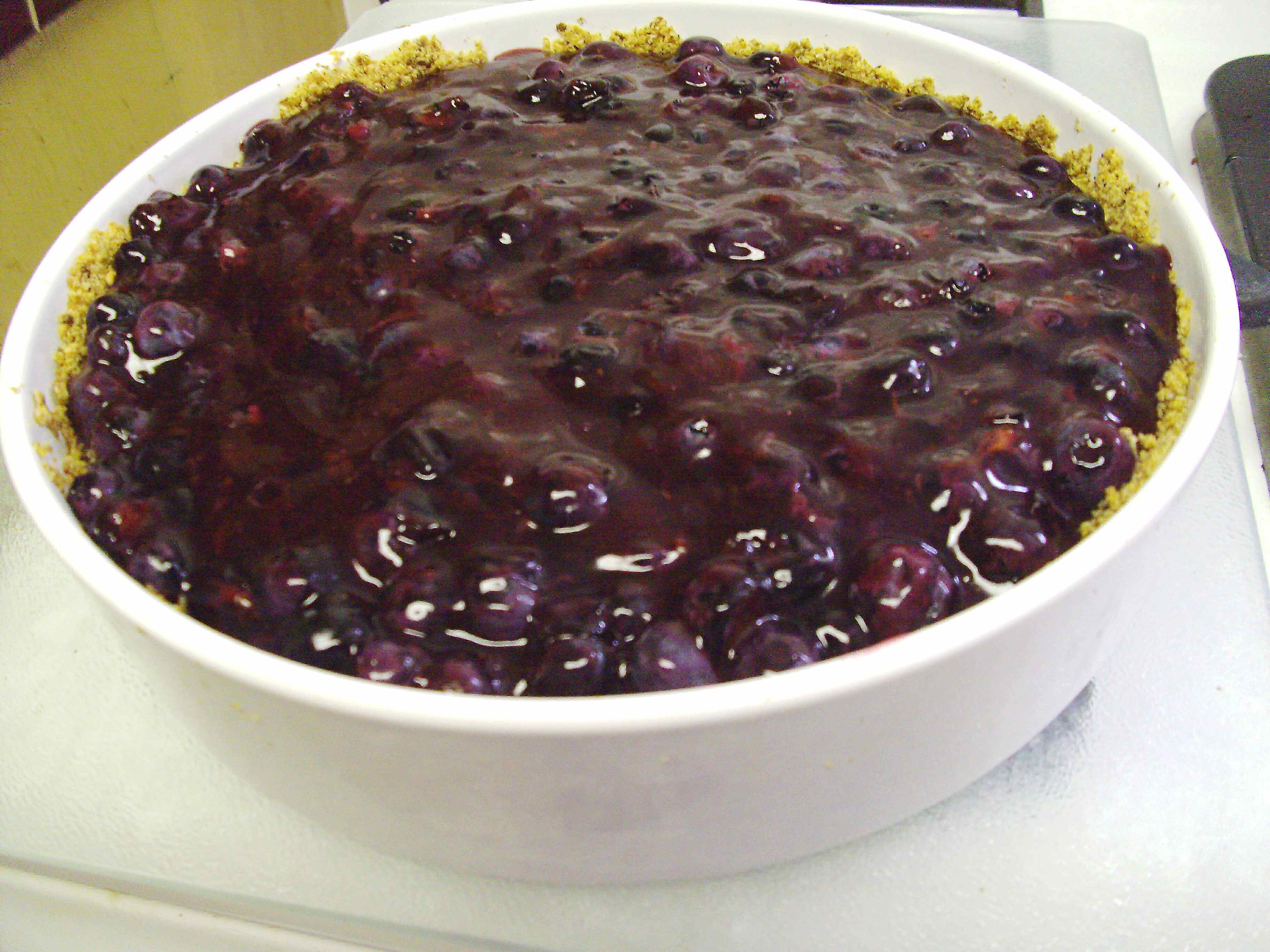
    raw blueberry pie with microwaveable filling and graham cracker crust

    This mostly-raw blueberry pie is a snap to make and very versatile--the filling microwaves in a few minutes, and you don't even have to bake the zippy gingered graham cracker crust--perfect for a hot Fourth of July and all summer long.

  • Recent Posts

  • Contents

  • Archives

  • Now Reading

  • See also my Book Reviews

  • Copyright 2008-2024Slow Food Fast. All writing and images on this blog unless otherwise attributed or set in quotes are the sole property of Slow Food Fast. Please contact DebbieN via the comments form for permissions before reprinting or reproducing any of the material on this blog.

  • ADS AND AFFILIATE LINKS

  • I may post affiliate links to books and movies that I personally review and recommend. Currently I favor Alibris and Vroman's, our terrific and venerable (now past the century mark!) independent bookstore in Pasadena. Or go to your local library--and make sure to support them with actual donations, not just overdue fines (ahem!), because your state probably has cut their budget and hours. Again.

  • In keeping with the disclaimer below, I DO NOT endorse, profit from, or recommend any medications, health treatments, commercial diet plans, supplements or any other such products.

  • DISCLAIMER

  • SlowFoodFast sometimes addresses general public health topics related to nutrition, heart disease, blood pressure, and diabetes. Because this is a blog with a personal point of view, my health and food politics entries often include my opinions on the trends I see, and I try to be as blatant as possible about that. None of these articles should be construed as specific medical advice for an individual case. I do try to keep to findings from well-vetted research sources and large, well-controlled studies, and I try not to sensationalize the science (though if they actually come up with a real cure for Type I diabetes in the next couple of years, I'm gonna be dancing in the streets with a hat that would put Carmen Miranda to shame. Consider yourself warned).

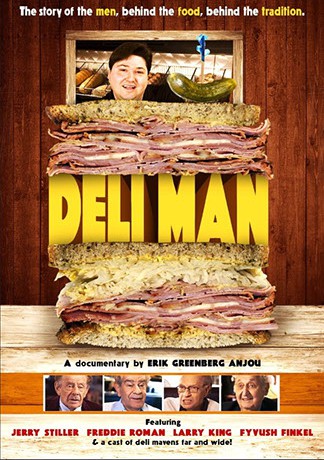
“Deli Man” is out on DVD

"Deli Man" DVD

Source: Cohen Media Group, delimanmovie.com

Well–that’s it, really. Need I say more? Actually, yes, there are a few new things to say other than to keep recommending that you see Deli Man by getting yourself a copy of it and screening it with all your favorite people who didn’t get to see it last spring.

In the half a year or so since it started showing up in theaters, David “Ziggy” Gruber (the deli owner whose story anchors the film) and director Erik Greenberg Anjou have done a lot of interviews together to promote it–they did one on Fox News Radio early on, and then more recently a long, in-depth interview on YouTube with Judith Gelman Myers, film critic for Hadassah Magazine.

Gruber in particular emerges in these interviews as an insightful observer on modern Jewish food and culture, its history and the history of the restaurant business as a whole. It’s an overtly intellectual and analytical side of him that wasn’t as apparent in the film.

Deli Man focused primarily on his daily life, the stresses and rewards of running a deli, his sense of humor and his gift for schmoozing with his customers. To provide a national context in the documentary, Anjou filmed and cut in interviews with the owners and customers of the historic big-name New York delis, and two or three of the younger generation of deli men from Toronto and San Francisco. Much of the historical perspective and big-picture analysis he assigned to David Sax, Michael Wex, and Jane Ziegler, three prominent authors on Jewish immigrant culture. But Anjou seems to recognize that if he hadn’t divided up the roles in service to the pace and emotional/informational balance of the film, Gruber could easily have taken a seat amongst the trained historians.

Like most of the other deli owners featured, Gruber is not an academic by inclination–too much personality and too little sitzfleisch. As he tells Myers, he knew from a very young age that he wanted to be a cook and from his high school grades he was not necessarily ever going to be college material. He’s underselling himself a little here (well–not in every respect; there are a few moments in the interview where he breaks out and guarantees the audience that if they try his blintzes they’ll be hooked for life, or words to that effect).

But when he gets serious, which is often, the interviews bring out his head for detail and his broad-based perspective on Jewish food culture and the restaurant industry as a whole. These are things he knows a great deal about, both intellectually and as an active participant, but didn’t always get a chance to voice in the film, and which weren’t brought out by the other commentators. You’re suddenly reminded that he did intensive training at one of the best culinary schools in Europe and worked in a Michelin-starred restaurant in France for several years before coming back to the US, and he’s been keeping a keen eye on market trends, business and people ever since.

So the interviews, which might otherwise have been standard pleasant-but-bland film recaps, become much more engaging and worth a listen even if you’ve already seen Deli Man. And doing them in tandem with Gruber is one of the smartest things Anjou could have done.

Baking with “Inside the Jewish Bakery”

A few weeks ago I reviewed Stanley Ginsberg and Norman Berg’s new book, “Inside the Jewish Bakery” for my local Jewish book festival committee by testing out the key recipe: bagels. Ginsberg and Berg give the inside scoop on what bakeries do and don’t do to make things work better than you usually can at home. Along the way–and the most interesting part for me–they give a huge helping of Jewish Bakery history. Not just nostalgia (“Weren’t those marble ryes worth wrestling over?”) but the fascinating cultural developments that gave rise to such things the Bagel Maker’s Union (local 338 [number corrected thanks to Stan Ginsberg]) in Brooklyn, and they’d break your legs if you tried to make nonunion bagels, at least through the 1960s.

Ginsberg’s the son of a baking family and Berg is a professional baker; between them they tell the story of Ashkenazi baking and the inside story of what it’s like to start work at 10 pm and head for home around 7 in the morning, all the while giving what turn out to be great technical baking notes.

And yet the recipes themselves are full of errors–and yes, this is the print edition we’re talking about, not an advance reader’s copy. The authors have a 6-page correction sheet (errata) up on the book’s web page, so if you’re going to get to it and try it out–and why not, if you’re ambitious about baking–check it out carefully against the recipe in the book, read everything over very carefully first, and then get to it in a way that won’t send you scurrying for specialty ingredients. NOTE: per Stan Ginsberg (see comments below) the 2nd edition’s recipes have been corrected so things should be easier.

If you can read between the lines and have some experience with bread under your belt, you’ll find the recipes do work (once corrected). My bagels came out very well, with that crunchy crust and dense, chewy bite all of us ex-New York types have missed for decades out here in California (actually, I’m posting this from Montreal, where the bagels are lighter and sweet? have to try, probably won’t love them).

I do have pictures to post (once I can get home and edit them down) of the bagels proofing slowly overnight in the fridge and one of the last remaining survivors–my daughter still had it in her bookbag when we came east this week. Ten days, obviously not still fresh, but not spoiled either. As tough as the dough it came from (which, again with the asides, is very tough compared with regular pizza or challah doughs, and you have to knead it by hand unless you have the dough hook of the century. If not, you’ll develop the right hook of the century.)

So here are my notes to the local Challah Club, which was interested in trying out some of the other recipes. Good luck and eat nice!

Notes for the Challah Club members up for a challenge:

1. Read all the instructions several times first and double-check the errata sheets. It’s 6 pages of corrections for the whole book and it’s up at the Inside the Jewish Bakery web site under a top menu link on the right (Errata). Hopefully we can get the second edition in soon.

The book web site also has lots of info, interviews, links to other related stuff.

Also check notes on special ingredients in the front for unfamiliar names–diastatic malt in the bagels and elsewhere is defined up front; it’s just malt. I think they get a little technical on flour grades–they’re tied in with an aggressively technical bakers web site/forum (NY Bakers, you don’t expect them to be laidback, do you? but most of it’s just futzing around with professional stuff). Chernushka seed is nigella seed–available here at the Armenian groceries. And then do whatever makes best common sense and doesn’t have a huge cash layout just for one loaf!

2. The recipes in this book are weighable on a food scale in grams, which is how I did the bagels (just this once, just to see if it needed me to be that nerdy). Some of the flours are technical grades beyond what you can easily get in the grocery store; you can mix flours to get the right consistency. For example, bread flour is 13% protein, but I added a teaspoon of vital wheat gluten to bring it up to the 14% protein specification for the bagels, and for something that really needed stretch, like rye, maybe, I would have added a little more. Don’t know that you really need to, but if you’re gonna be nerdy, a food scale and a calculator are handy tools.

3. If you go for the pastries, some have a mix of butter and shortening-plus-butter-flavoring. I’m not a shortening fan; I’m just not; I prefer butter or margarine. The laminated doughs add these things in stages, so read the errata pages and double-check the recipe instructions for how much fat to put into the pastry dough when. Gets confusing occasionally.

4. One thing that’s not in the corrections pages: watch the salt. You do not need as much as they throw in for the breads–not for flavor, not for texture. The bagels I made with only half the salt in the recipe because the original would have been 400-500 mg. of sodium per bagel, which is getting up into Campbell’s Tomato Soup territory (or half a South Beach Diet frozen microwaveable “lunch”). And they tasted fine without it and did most of the right things without me having to join the bagel-makers’ union.

French Food with Jewish Roots (and vice versa)

Joan Nathan's "Quiches, Kugels, and Couscous" (Alfred Knopf, 2010)About…a month ago, already? Two? Oy! I decided my next serious food post was going to be a review of Joan Nathan’s current bookQuiches, Kugels, and Couscous: My Search for Jewish Cooking in France (Alfred Knopf, 2010). And I’ve been looking through this book for much of that time, trying to figure out what to say first and what I’d want to cook from it that I haven’t tried before.

An initial read attracted me very much: Nathan, who worked as an aide to Teddy Kollek back in the 1970s, when he was still the gregarious and widely-admired–in fact the last widely admired and liked–mayor of Jerusalem, came back to the States as interested in people as in food, and has balanced the two focuses in most of her cookbooks ever since.

In this book, she starts out by visiting her French cousins and branches out to meet all sorts of people–deli owners, a gefilte fish maven, Holocaust survivors and one of the farm women who sheltered some of them during the war, the new wave of North African Jews from Morocco to Egypt who arrived in France after the mass expulsion from Arab countries in the 1950s;  the Provençal Jews who trace their ancestry back to pre-Inquisition Spain and Portugal, the Alsatian Jews whose dishes, despite coming from the heart of the original Ashkenazi community, are not as familiar as I would have expected.

Throughout the book she’s collected personal stories of all kinds, visiting home cooks, restaurant chefs, purveyors of spices and other specialty items that Jews initiated and led the European trade for–particularly chocolate and coffee. And she has dug up a few surprises as well.

Paul Bocuse, for example, is widely considered the grand old man of French haute cuisine, so much so that a major international competition is named for him. Nathan discovered that he keeps one stockroom Continue reading