
• Enter your email address to subscribe to this blog and receive notifications of new posts by email.

    Join 241 other subscribers
  • Noshing on

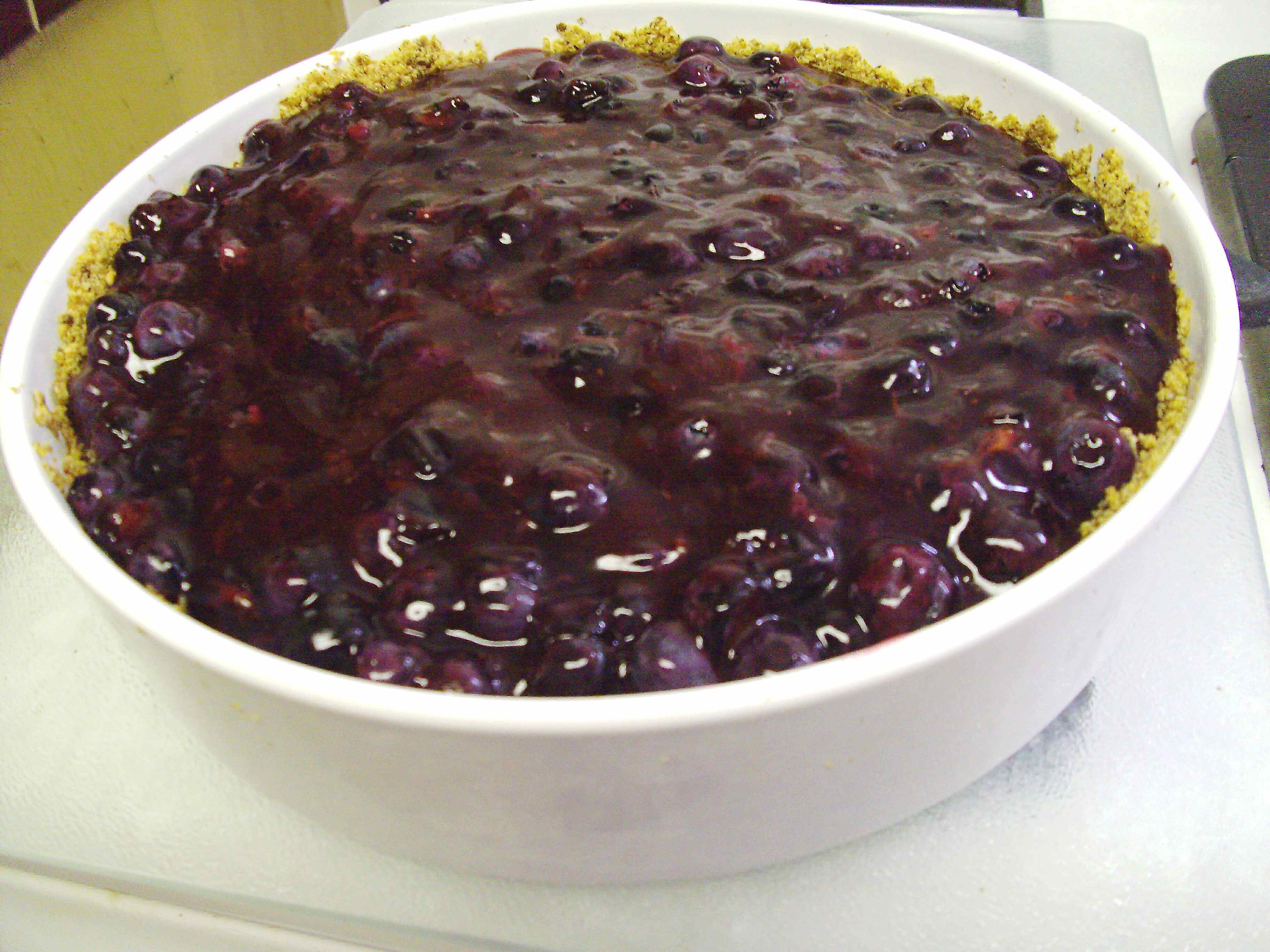
    raw blueberry pie with microwaveable filling and graham cracker crust

    This mostly-raw blueberry pie is a snap to make and very versatile--the filling microwaves in a few minutes, and you don't even have to bake the zippy gingered graham cracker crust--perfect for a hot Fourth of July and all summer long.

  • Recent Posts

  • Contents

  • Archives

  • Now Reading

  • See also my Book Reviews

  • Copyright 2008-2024Slow Food Fast. All writing and images on this blog unless otherwise attributed or set in quotes are the sole property of Slow Food Fast. Please contact DebbieN via the comments form for permissions before reprinting or reproducing any of the material on this blog.

  • ADS AND AFFILIATE LINKS

  • I may post affiliate links to books and movies that I personally review and recommend. Currently I favor Alibris and Vroman's, our terrific and venerable (now past the century mark!) independent bookstore in Pasadena. Or go to your local library--and make sure to support them with actual donations, not just overdue fines (ahem!), because your state probably has cut their budget and hours. Again.

  • In keeping with the disclaimer below, I DO NOT endorse, profit from, or recommend any medications, health treatments, commercial diet plans, supplements or any other such products.

  • DISCLAIMER

  • SlowFoodFast sometimes addresses general public health topics related to nutrition, heart disease, blood pressure, and diabetes. Because this is a blog with a personal point of view, my health and food politics entries often include my opinions on the trends I see, and I try to be as blatant as possible about that. None of these articles should be construed as specific medical advice for an individual case. I do try to keep to findings from well-vetted research sources and large, well-controlled studies, and I try not to sensationalize the science (though if they actually come up with a real cure for Type I diabetes in the next couple of years, I'm gonna be dancing in the streets with a hat that would put Carmen Miranda to shame. Consider yourself warned).

Age, salt and the new USDA dietary guidelines

Last Monday the USDA released its latest version of the Dietary Guidelines for Americans (nominally dated “2010”). I was driving home and NPR carried USDA Secretary Tom Vilsack’s speech, in which he listed a few of the new highlights: eat less, eat less food with solid fats, eat less processed food, eat more vegetables and fruits, eat less sodium.

How much less sodium? About 2300 mg or 6 grams (1 teaspoon) of table salt per day, he said, is the recommended maximum for healthy adults, in line with the long-standing National High Blood Pressure Education Program’s guidelines, which are shared by the American Heart Association and many other professional medical groups.

There’s a second lower-sodium recommendation for anyone overweight, African-American, with heart or kidney disease or high blood pressure or diabetes, and anyone middle-aged or older. This year, as the more specifically heart-health-oriented professional organizations already recommend, the USDA guidelines set the lower maximum at 1500 mg per day, or about 3 grams of table salt.

And you’d think that was great, and I do, that the USDA guidelines have finally caught up with what the medical associations have been demanding based on the overwhelming weight of studies on dietary sodium intake as it affects blood pressure, cardiovascular disease including stroke, and kidney disease.

But there are two catches hidden in the midst of all this, and I’m not even sure Vilsack was aware of it. Smaller one first: Middle-aged? How old is middle-aged?

“Fifty-one and older,” Vilsack said. Whew, I thought. Four more years before I have to start thinking of myself as middle-aged. By the time I get there, I’m hoping the standard will have gotten fudged upward by at least another decade or so.

Because, you know, if you’re not 50 yet, 51 sounds reasonable–and comfortably remote for a lot of younger adults. Which I am, thank you very much. Don’t look at me like that.

So here’s Catch-51: When I was working at the National Heart, Lung and Blood Institute back in the mid-’90s, the general working recommendation for lowering sodium to 1500 mg/day was all the other high-risk groups Vilsack mentioned…and healthy adults 40 and up. Not 51 and up.

The choice of a cutpoint at age 40 for otherwise healthy people was based on the risk data from the first three National Health and Nutrition Education Surveys, which began collecting data across the nation starting in the 1970s. The latest version collected data around 2006 and its findings were just released last spring by the Centers for Disease Control. All the NHANES studies correlate  in-depth interviews about diet, exercise and lifestyle patterns, and cardiovascular history along with clinical health measurements (height and weight, blood pressure, cholesterol, urinary sodium excretion, blood iron, etc.) from thousands of ordinary Americans. Even early on, there appeared to be an independent higher risk and a greater need to lower sodium at 40 and older, all other health risk factors being equal.

But of course 40 seems too young to be middle-aged. And the USDA, which issues the Dietary Guidelines for Americans, tends to downplay certain elements of the risk statements so that no one, or at least not the agency’s chief constituents, gets upset. The no one in this case might easily be the Continue reading

Sorry, Starbucks, no doughnut

On Sunday mornings, my daughter likes to drag her father out around the corner without me to the local Starbucks so he can buy himself coffee and get her some kind of small baked good that I’m not supposed to know about. Because I am, in fact, generally opposed to “doughnuts for breakfast” and both of them know it. It’s a ritual that had to be suspended for a while this spring, until we could figure out what kind of treat had how many grams of carbohydrate and how much of it she could eat and still eat something else more nutritious as the majority of breakfast.

Most of the pastries will never be what I consider top baking, but it’s not me who’s going to eat them. And my daughter wanted a doughnut, or part of a doughnut, if she could make it work out.

So–I went online to the Starbucks web site to try and hash out the vagaries of “petite” mini scones, mini doughnuts, coffee cake slices, and all the rest of it. Starbucks markets itself to the upscale, the midscale, and the would-be midscale of my town with all kinds of brochures about fair trade and global responsibility, and their web site is not much different. The do-right message is right up there with the latte of the week, and you’d expect the nutrition info to be present and helpful without the usual twisty chain-restaurant disguises and trickery.

Or would you? Starbucks got its tail caught several years ago when numerous commentators, among them its own employees, let the public know that some of the lattes and other mixed coffee drinks were topping out at over 700 calories per, with more fat than some burger chain offerings. Since then Starbucks has offered more health-conscious choices below the pastry case and taken a pro-active posture on nutrition and informing the customer and so on. But how do they really feel?

The nutrition info page falls under the “menus” navigation item at the top. OK. It’s readable, not a shrunken PDF file–good. You find a long scrolling list of each of the bakery items with calories, fat, carbs, and proteins. Doughnut, doughnut–old-fashioned glazed doughnut…440 calories, 21 grams of fat (10 saturated), 57 grams of carb…Ouch. Well, she could have half of one, I suppose, with a small bowl of oatmeal and some milk, and eat something better at lunch…but wait a minute. Where’s the sodium info?

All I could find about sodium was a little note about “healthy choices”, in which the Starbucks nutrition page asserts that such items have fewer than 10 grams of fat and fewer than 600 mg sodium. A stunner–that’s more than the classic 500-mg bowl of Campbell’s Tomato Soup that caused all the corporate protests against the NIH dietary salt guidelines in the 1980s. Who on earth would claim 600 mg sodium for a single snack or breakfast item was “healthy”–especially with the growing public and government concern over excessive salt in restaurant food?

And I still couldn’t find any specific sodium stats for doughnuts or mini scones or the other things my daughter was hoping for, much less an ingredients list. So I searched a variety of diet and nutrition web sites that catalog such things. The closest I could get to a current verified  standard nutrition label was from livestrong.com (accessed 5/3/10):

Starbucks Top Pot Old-Fashioned Glazed Doughnut

Serving Size: 1 Pastry (113g) Calories 480 Calories from Fat 210

  • Total Fat 23g 35%
  • Saturated Fat 9g 45%
  • Trans Fat 0g
  • Cholesterol 20mg 7%
  • Sodium 410mg 17%
  • Total Carbohydrate 64g 21%
  • Dietary Fiber 0.5g 2%
  • Sugars 39g
  • Protein 4g 8%
  • Vitamin A0%
  • Vitamin C 0%
  • Calcium 2%
  • Iron 10%

Est. Percent of Calories from: Fat 43.1% Carbs 53.3% Protein 3.3%

These stats are higher than what’s stated at the Starbucks page (see below). And the sodium in a single doughnut is pretty high. So’s the carb. So’s the fat. So’s the increase in size and calorie stats and so on from the glazed doughnuts they were offering in 2006, according to archived nutrition labels on a number of older diet web sites. Continue reading

You want fries with that?

You have no idea how much I’m looking forward to tomorrow at 8:35 a.m. That will be a good five minutes after the start of the parental summer relief program known best as Back to School. I’m counting down the minutes as we speak.

With the return to school, public debates over what children should eat and how parents should or shouldn’t step in have intensified. Obesity, the selling out of school cafeterias, new restrictions on sodas and junk food in said cafeterias, and the diet of choice at home are the topics of the day–all underlined with a sense of rising panic.

This year more than any other I can remember, reporters, bloggers, doctors, models, political figures, and just about everyone else has jumped on the bandwagon to report the ugly facts that were excused for years.

All the statistics are in–or pretty much so, and they boil down to this: We’re facing a tidal wave of blubber.

With it comes a tidal wave of early heart disease, diabetes, kidney disease, and more. How early? Physicians are seeing a rise in the diseases of middle age–something that, 20 years ago, had been successfully pushed back by an average of 10 years, from age 50 or so to age 60 and up for a first heart attack. We thought we were making progress. But for the past 10 to 15 years,  these diseases have started popping up in school children–Type II diabetes, kidney stones, high blood cholesterol and high blood pressure. No way should a 10-year-old be facing these threats.   No wonder parents and everyone else are panicked–the studies we have aren’t giving us a single, easy-to-deal-with  definitive  guide on how to stop the juggernaut. They mostly tell us that it keeps on rolling.

But the mystery of what to do really isn’t that mysterious. Take for example the responses to Frank Bruni’s recent article in the New York Times on feeding children. Some come from doctors on the front lines, others from nutritionists and fresh-food-in-schools activists, discussing different facets of the problem, but they come to a number of sensible recommendations you could probably have named yourself without much struggle.

The conclusions?

Sodas should be cut out altogether from children’s (and probably everyone’s) daily diet. Not just for calories (250ish for a 20-oz bottle–and why is it 20 0z these days? used to be 12 was the standard) but for sodium (about 100 mg per 12-oz can, whether full-cal or diet, 200+ for the 20-oz).

Fruit juices with a pretty picture on the box are nowhere near qualifying as actual fruit. Not even with added vitamin C.

And exercise time, including outdoor recess–something most schools have cut back in the past decades–makes a big difference that’s generally overlooked in the school lunch debates.

So far, no great surprises. But they do mention one more item, also no great surprise–fast food in the school cafeterias.  Nobody seems to have trouble zeroing in on french fries as the worst offender. Are they right or is this a replay of the cupcake wars? Is the french fry being unjustly accused, as the vendors claim?

Continue reading

“High Protein Bran Muffin”–A good idea gone bad?

This is what’s wrong with American thinking today:

  1. That muffins are healthy, or as in the example below, “healthful”
  2. That bran muffins are really healthy and therefore can be eaten big
  3. That such healthy muffins should be eaten as a source of protein.
  4. That muffins this perfect can and perhaps even should be eaten as a substitute for meals.

Exhibit A, from a recent “Culinary SOS” recipe request column of the LA Times Food Section.

Dear SOS: Have you ever tasted the muffins at —–‘s Bakery? They are huge, delicious, healthful and so satisfying. There is a particular favorite of mine, a high protein muffin that, when eaten, makes one glow inside and feel healthy all day…
–Shirley

Dear Shirley: These generously sized muffins pack a medley of flavors and textures in every bite. A batch’ll go quickly — they make for a fun, quick breakfast or perfect snack.

Well. Can’t wait. Let’s take a look at the ingredients list as given in SOS.

High protein muffin
Total time: 45 minutes plus cooling time  Makes 14 muffins

1 (12-ounce) can frozen apple or white grape fruit juice concentrate
2 1/4 cups wheat bran
1 cup (4 1/4 ounces) flour
3 1/4 teaspoons baking soda
3 1/2 teaspoons baking powder
1 1/2 teaspoons salt
2 1/4 cups buttermilk
1 cup plus 2 tablespoons canola oil
4 eggs, lightly beaten
1/2 cup sesame seeds
1/2 cup shelled pumpkin seeds
1/2 cup flaxseeds
1/2 cup coconut
1 1/2 cups granola
2 cups raisins

I’ll skip the instructions–they’re involved and painful. All I’ll say is, the  recipe involves boiling down Ingredient #1 (and wasn’t that a shock in a health muffin recipe) and still throwing some of it out.

Now the nutrition. I have to say I’m tempted to use the ingredient list as a small practical quiz to see if anyone can ballpark the calories, fat, carbs and sodium per serving from it. Anyone? Anyone? No? OK, then. Fasten your seatbelt. Or perhaps just your belt.

Each muffin: 515 calories; 11 grams protein; 54 grams carbohydrates; 9 grams fiber; 32 grams fat; 5 grams saturated fat; 62 mg. cholesterol; 742 mg. sodium.

Now wait a minute. 500+ calories? for a muffin? 700+ mg sodium? 32 g fat? For that much fat and salt you could eat a chunk of cheddar almost the size of a deck of cards. Straight.

Anyway, this is clearly one overloaded muffin, with tons of expensive extras. Heavy too–or why the 7 teaspoons of leavening for a single batch? And the irony is, after all that stuff, it still only delivers 11 g protein per muffin. You could get that with a large glass of skim milk.

But you know what’s really sad about this muffin recipe? It’s not alone. Even the classic Weight Watchers Cookbook recipe for bran muffins still weighs in at 300-plus calories per and 500-plus mg. sodium.

What gives? Should we simply not eat muffins? Can a bran muffin recipe ever be actually delicious AND low-fat, low-salt, moderate-carb, and perhaps, dare we dream it, less than 200 calories per, so you don’t feel stupid not having asked for something a little more actively delicious for the same calories–maybe a croissant or a slice of flourless chocolate cake instead? With, obviously, raspberry coulis?

How would you go about it? Maybe it would be better to go with something like the cake-style gingerbread recipe in the Silver Palate Cookbook–makes 12 servings with a lot less starch (1 2/3 c. flour), no nuts and seeds and extras, only one egg, only 1 1/4 t. baking soda, a bunch of gingerbread spices, 1/2 c. oil you can skip in favor of applesauce with no problems at all and a huge cut in calories, half a cup each of sugar and molasses or honey, some boiling water right before baking, and that’s pretty much it. You can even microwave it for about 5-7 minutes at half power instead of baking it conventionally.

Now granted, it’s not bran–but it could be at least whole wheat without ruining the aesthetic. It’s not 500 calories a square either–by my reckoning more like 120 in the applesauce version, and something like 150-200 mg sodium. And no one expects it to substitute in for a meal’s worth of fiber and protein, but with raisins and whole wheat flour, it would probably have 4-5 g fiber and you could always serve it with skim milk.

If you’ve convinced yourself that nothing but a “high-protein” muffin will do, and simply drinking some milk with it isn’t glamorous enough, throw in a packet of nonfat powdered dry milk. But really, unless it’s your only meal of the day, you don’t actually need the added protein. Muffins weren’t made to be steak.

Finally, why make huge muffins? Unless you want to end up looking like a Mack Truck, make decent medium-sized or cupcake-sized muffins, and if you’re still hungry afterward, eat an apple. And drink a glass of milk.

Misunderstanding Salt Research: Bon Appetit’s Shameful “Health Wise” Column

I started this blog last spring more or less just to test out blogging lightheartedly about food. However, I have just read Bon Appetit‘s appalling “Health Wise” column from the May issue, “The Saline Solution” by John Hastings.

I do actually love to cook and eat well, and that’s my main purpose for this blog, but seeing this kind of blithely irresponsible “health” advice on salt makes my blood boil (not appetizing). Worse, it starts dragging me back to my work roots and up on my soapbox (also not appetizing, though kind of fun), because I trained as a biochemist and worked for several years as a science journalist. I worked for the National Heart, Lung, and Blood Institute at NIH at the time some of the bigger studies Hastings refers to were first being published. It was my job to know about them and write about them in plain (and preferably short) English for Congress and the public. To do it I talked to national experts, interviewed the leaders of the National High Blood Pressure Education Program, and combed through a century’s worth of research on salt and high blood pressure.

But you don’t have to be a scientist to find this stuff out. Descriptions of the studies AND their updates AND the reasoning behind the basic public health guidelines calling for Americans to watch their salt AND how to do it without eating a restricted diet of cardboard and baby cereal are all easily available from the NHLBI web site or the American Heart Association.

Hastings, a former editor of Prevention and health column contributor to O, the Oprah Magazine, is someone you’d expect to be reasonably accurate in reporting health research findings. But here he gets the science on salt and high blood pressure just about as backwards and upside down as he possibly can.

Worse yet, he does it in a strangely breezy, cheerleading tone that’s really hard to believe.

Hastings’ argument goes something like this:

…here’s a little secret: salt isn’t a problem. If that sounds crazy, it’s because the public health message about salt causing high blood pressure has been very, very effective, and it’s backed by reams of scientific research…Upon this, nearly everyone agrees. The controversy arises when you ask experts about the connection between salt intake and high blood pressure…All of this is fantastic news for those of us who are already cooking with high-quality meats and farmers’-market produce…

Did you follow all that? Probably you felt like you did for the few seconds you were reading it, but look again and you start to pick out the self-contradictions–“If it sounds crazy” that salt isn’t a problem, “it’s because the public health message that salt causes high blood pressure… is backed by reams of scientific research.”

Well, yes it is. The way Hastings phrases it, you’re supposed to think that was a bad thing, that health research in general and carefully designed tests of the effects of diet on cardiovascular health in particular are part of some kind of unnamed conspiracy against the public’s right to eat every bit of salt it can get.  Personally, I’d rather that broad public health messages were backed by reams of scientific research rather than by some diet guru or brand-name chef’s nutritional fantasy that will help sell his next book or tv program, or–more realistically–by corporate marketing and pressure campaigns from big pharma and big agro. Of course, it’s less profitable if people simply eat less salt–and less processed food–and never develop hypertension in the first place than if they eat salt like it’s going out of style and call it gourmet, and then have to make up for their diet by taking hypertension pills…hmm. Food, Inc., anyone?

“Upon this nearly everyone agrees”, but somehow there’s still a great controversy over it? Really? No. Not really.

The vast majority of salt researchers look at the bulk of the study results and conclude–repeatedly, for decades now–that salt is, in fact, a direct and modifiable risk factor for hypertension (high blood pressure). Which is both a disease in its own right and a leading risk factor for heart disease, stroke, and chronic kidney disease. Combine that with the fact that the average current salt intake is about twice what the consensus guidelines recommend and that more than half the adult population in the U.S. is crossing the line into overweight and obesity–and…well, yes.

Salt IS actually a health problem for most people. Gee.

The Bon Appetit article is a jumble of self-contradictions and serious misinterpretations of the findings from two older salt research studies, one of which has since been revised,  plus a cherry-picking recent review that comes to a different conclusion about salt than most of the other reviews of the same data on diet and health. That one comes from the lab of Mickey Alderman, an otherwise eminent researcher who just happens to be a long-time, much-trumpeted advisor and consultant for the Salt Institute.

Hastings  doesn’t indicate that he interviewed the man or even recognized his name on the journal article, but he should have. Anytime somebody in the media wants to come up with the magical–and really, really popular–conclusion that lots of salt, any day, any time, anywhere, please add more, is perfectly harmless and even good for you, they go to Mickey Alderman because they can paint him as a lone hero against the Food Police (the typical name they give the National Institutes of Health and the American Heart Association in such cases). Because what Alderman will say–with precision, but with disregard for the bigger public health picture–is that high salt intake isn’t directly proven to cause death from cardiovascular disease.

And it isn’t. It can’t be proven directly in a well-controlled diet study large enough to reach statistical significance, because that would require thousands of participants to follow a carefully prepared diet throughout their entire lifetimes, with no deviations for dates, wedding receptions, pizza parties, etc., and it would take 50-75 years to collect the majority of the data. You’d literally have to wait until most of the participants died before you could make a public health recommendation about salt. And the cost of doing that study “right” would run into the billions. It would bankrupt the federal science budget. And maybe a few other budgets as well.

That’s why the NHLBI and the AHA have sponsored studies that look at signs of developing cardiovascular illness–heart attacks, stroke, phlebitis, high blood pressure, kidney disease–rather than death. When you look at these ailments, you find that dietary salt actually matters quite a bit–contrary to what Hastings thought he understood from the studies he mentions.

Continue reading

Taking on “Recipes for Health”

Martha Rose Shulman’s “Recipes for Health” column in the New York Times typically offers quick stir-fry vegetarian fare that anyone can do at home. Shulman is a good and popular cookbook author, and I give her credit for her intentions. But the column reveals some serious flaws in her understanding when it comes to the actual healthiness of the recipes.

First, the recipes never include standard nutritional breakdowns. I wouldn’t expect that for glamor food magazines, but any major newspaper or magazine claiming “healthy” recipes should declare the nutrition stats per serving so people can gauge calories, fats, carbs, fiber, and especially, because we’re not used to thinking consciously about it these days, salt.

And salt is where Shulman’s recipes go seriously wrong. Time after time, they contain surprisingly and unnecessarily high salt per serving. Where does it come from? Take this week’s recipe, “Stir-Fried Snow Peas with Soba”. It’s basically Japanese whole-wheat noodles (soba) with snow peas and tofu in a peanut sauce, and serves four. Seems simple enough, but the ingredients Shulman chooses are hiding an awful lot of extra salt:

* You expect the soy sauce to contain salt. OK. It’s only a tablespoon. But it isn’t the reduced-sodium version–and why isn’t it?–so figure  1200 mg.
* Half a cup of vegetable or other broth–also not specified low-sodium. Figure 250-500 mg sodium; maybe even more.
* Salt “to taste”–TV chefs tend to sprinkle in a pinch or more. Figure 1/8-1/4 teaspoon, 300-600 mg, if you imitate them.
* Peanut butter. Not specified unsalted. Figure 1 tablespoon is 100 mg.
* And then there’s the soba itself. Ordinary Italian-style whole wheat spaghetti or fettucine has almost no sodium in it, just flour and water, but authentic Japanese soba dough contains quite a bit, 250 mg or so per serving. Times four is about 1000 mg.

Grand total for 4 servings: 2300-2800 mg, or 600-700 mg sodium per serving.

If that’s your whole dinner, ok, but most of that sodium could easily be cut without sacrificing taste. Plus, two ounces of snow peas per person isn’t enough to call it vegetabalia and get away with it in my book. You’ll notice that the glossy photo in Shulman’s article shows a generous two snow pea pods, a few slices of radish, and none of the promised cubes of tofu–her version’s a side dish, not a proper meal. Let’s revise this one.

Continue reading