
• Enter your email address to subscribe to this blog and receive notifications of new posts by email.

    Join 241 other subscribers
  • Noshing on

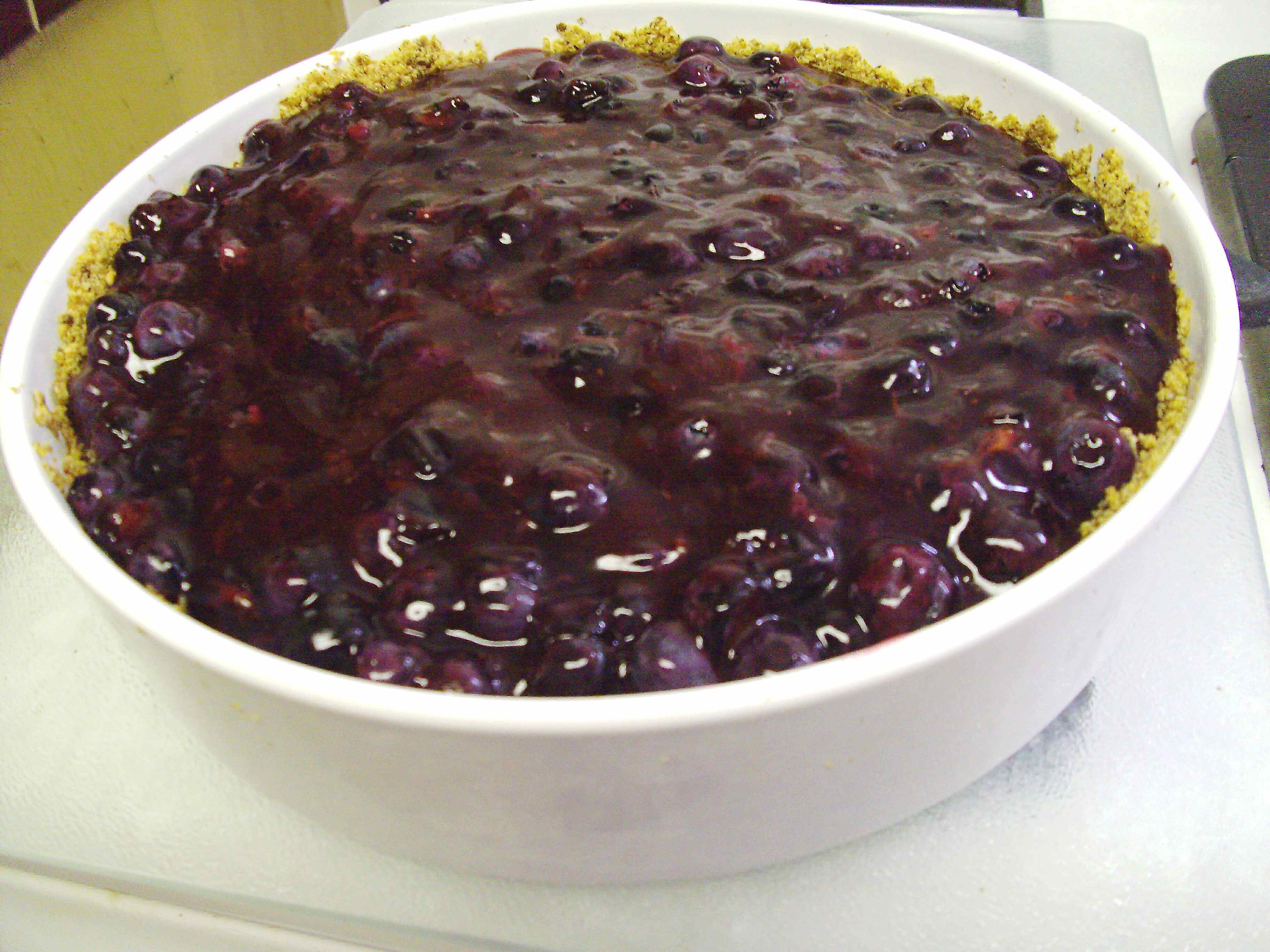
    raw blueberry pie with microwaveable filling and graham cracker crust

    This mostly-raw blueberry pie is a snap to make and very versatile--the filling microwaves in a few minutes, and you don't even have to bake the zippy gingered graham cracker crust--perfect for a hot Fourth of July and all summer long.

  • Recent Posts

  • Contents

  • Archives

  • Now Reading

  • See also my Book Reviews

  • Copyright 2008-2024Slow Food Fast. All writing and images on this blog unless otherwise attributed or set in quotes are the sole property of Slow Food Fast. Please contact DebbieN via the comments form for permissions before reprinting or reproducing any of the material on this blog.

  • ADS AND AFFILIATE LINKS

  • I may post affiliate links to books and movies that I personally review and recommend. Currently I favor Alibris and Vroman's, our terrific and venerable (now past the century mark!) independent bookstore in Pasadena. Or go to your local library--and make sure to support them with actual donations, not just overdue fines (ahem!), because your state probably has cut their budget and hours. Again.

  • In keeping with the disclaimer below, I DO NOT endorse, profit from, or recommend any medications, health treatments, commercial diet plans, supplements or any other such products.

  • DISCLAIMER

  • SlowFoodFast sometimes addresses general public health topics related to nutrition, heart disease, blood pressure, and diabetes. Because this is a blog with a personal point of view, my health and food politics entries often include my opinions on the trends I see, and I try to be as blatant as possible about that. None of these articles should be construed as specific medical advice for an individual case. I do try to keep to findings from well-vetted research sources and large, well-controlled studies, and I try not to sensationalize the science (though if they actually come up with a real cure for Type I diabetes in the next couple of years, I'm gonna be dancing in the streets with a hat that would put Carmen Miranda to shame. Consider yourself warned).

Souper

I’m a hardcore used book glutton–you can often find me squinting at the Friends of the Library Last Chance shelves for the 25 cent specials, wondering whether some of the offerings are really worth a quarter or not, and if not (as is often the case), how come the same book (Dan Brown’s DaVinci Code and Angels & Demons both come to mind here, as do any pseudo-psychology guru selections and Betty Crocker spiralbound works from the 1970s) in slightly better condition is going for two bucks upstairs in the Friends’ main room. But I rarely come away entirely disappointed, because the used book shelves tend to contain quirky and entertaining gems you can no longer find in the thinning selection of bestsellers at your local Borders if it’s still open.

Last spring, I picked up just such a gem at my synagogue’s library used book sale and have been suitably impressed with my bookhound instincts ever since.

The Soup Peddler's Slow & Difficult Soups by David AnselThe Soup Peddler’s Slow & Difficult Soups by David Ansel (Ten Speed Press, 2005) has sat on my desk for about six months, aging gracefully under a shifting pile of papers, notes, my camera, my blank book cooking diaries, and other detritus, and every once in a while I unbury it again, read a bit at random, thumb through it, and resolve that I really MUST review it here.

Ansel’s book is the story of how he became the Soup Peddler, a Baltimore-born Jew cooking, peddling and, I guess, pedaling homemade soups of all kinds to subscribing customers all over a small town in Texas.

It’s a little hard to describe. The Soup Peddler’s Slow & Difficult Soups is something in the vein of MFK Fisher’s A Long Time Ago in France or Frances Mayes’ Under the Tuscan Sun, but it’s even more in the vein of Garrison Keillor’s Lake Woebegon Days, John Berendt’s Midnight in the Garden of Good and Evil (only without the murder or most of the voodoo, I think–I haven’t finished Soups yet), Woody Allen’s Radio Days and almost any of the local asides in Kinky Friedman (another slightly more famous/infamous Texas Jew)–pick one of his earlier mysteries, I don’t know, but let’s say the one where he and his sister (both adults) are arguing and each tells the other they “mourn the fact” that the other one’s being an idiot. Only with soup recipes and the sometimes risqué, sometimes heartbreaking tales Ansel’s Soupies recount in their email orders.

Since I’ve only been thumbing through it, not reading straight from beginning to end, I can only give you a taster here:

I hopped on Old Yellow [his bike], coasted down Mary Street straight across the creek. … I found the Follicle Fondler on his front porch stropping his scissors.

“Sir,” he said.

“Yes sir,” I said. “I’m here to take you up on your offer to discuss the gumbo.”

He inflated his great lungs and, setting down his scissors, exhaled through his flaring nostrils. “Let’s go inside,” he said. He cleared off the kitchen table  and rummaged in the corner, pulling out a roll of maps. He laid them out on the table.

“I hope you’re prepared to go all the way,” he said.

He drew up his lower lip. I raised my eyebrows hopefully. “Good,” he said. “Where are you going to smoke the ducks?”

“The Smoked Salmon Man has promised his smoker.”

“Does he have access to an ample supply of mesquite?”

“Yes, he…”

“WRONG!!!” he boomed. I steadied myself against the kitchen counter. “Always use hickory.”

“Yes, hickory, got it.”

“So,” he said, narrowing his eyes and softening his voice, “will you be using okra?”

I inhaled and paused, my eyes darting back and forth across the kitchen for a clue. “Yes,” I said confidently, smiling.

“Good,” he said…”We need to talk about the roux. What are your plans for the roux?”

“Well, that’s kind of what I came here to talk about. I…”

“Son, this is not a time for tomfoolery.”

“I wasn’t…I just…”

“If you’re not serious about this, we can just roll up these maps right now and that will be that.”

“No sir. I’m serious. I’m totally serious.”

“Like, totally?”

“Totally.”

“Okay. You’re going to make a dark-brown roux. You’re going to stir it without stopping till it’s done. You’re going to take it to the edge of burning. You’re going to sweat. Don’t sweat into the roux. You’re going to get burnt. Don’t cry into the roux. You’re going to wear your arm in a splint the following week. A normal pot of roux lasts about three beers. Let’s see, you’re making (inaudible) gallons (inaudible) carry the five,” he mumbled, counting on his thick fingers. “Your roux should take about thirty beers.”

excerpted from The Soup Peddler’s Slow & Difficult Soups by David Ansel (Ten Speed Press, 2005)

Ansel’s business is still local, but he’s expanded enough to have a staff do some of the onion chopping and bicycle delivery for him. If you’re in his part of Texas, look up The Soup Peddler World Headquarters, which contains more anecdotes as well as ordering information if you want to become a Soupie yourself. If not, look for this book. I entirely wish it were available at Borders, front and center of the cookbook section, but it isn’t.

Meanwhile, I’m off to try Ansel’s version of Shorbat Rumman (yellow split pea soup with mint, spinach, parsley, cilantro, scallions, lime juice and pomegranate syrup), of which he writes:

Neither slow nor difficult…Dazzle even your most Republican friends with this soup, and when they ask, “What’s that taste?” just say casually, “Oh, that’s pomegranate syrup. We like to keep some around the house just in case we’re having Iraqi food for dinner, don’t you?”

Knives at Dawn: Bringing Heat to the Kitchen

"Knives at Dawn" by Andrew FriedmanSo much of TV-chefery these days has to do with blood sport that it’s inevitable someone would start covering cooking competitions by following underdog contestants as though they were Olympic figure skating hopefuls. And although it’s been done before, both on Top Chef and in many, many of the star chef bios of the past 5 years, Knives at Dawn by Andrew Friedman gives one of the most detailed personal and critical inside views yet of the strange pursuit of haute cuisine for haute cuisine’s sake. Part sports dramalogue, part Judgment of Paris, Knives at Dawn trails a handful of American chefs attempting to compete for one of the highest honors in European cooking.

The Bocuse d’Or is one of the most prestigious cook-offs in the world and garners contestants from all over Europe and a few of the US’s top restaurants. The costs of training run the price of a small house, and the US team has had no government or corporate sponsorship, unlike many of the European competitors.

Throughout three months of preparation which Thomas Keller and Daniel Boulud oversaw in 2008-9, a team (1 chef, Timothy Hollingsworth, and 1 commis or prep chef assistant, Adina Guest) from Keller’s French Laundry are coached to represent the US in Lyon. They have to cover the training and travel bills at their own expense, and continue working their day jobs for more of the time than their European opponents.

As Hollingsworth designs and revises his competition entries, suggested garnishes get more and more elaborate–sometimes without anything that’s likely to make them taste better. Onion tuiles. Things wrapped in Swiss chard leaves or carrot ribbons. Savoy cabbage as a “fun” garnish for beef cheeks (here I confess I pictured cafeteria kale as a “fun” accompaniment to the legendary dish, chair mystère–Mystery Meat). And lots of things made with mandoline-sliced potatoes crisped to perfection between silpats. In fact, the word perfection, followed by perfectionistic and culture of perfectionism, keep repeating throughout the section on Hollingsworth and Guest’s training period. It’s a bit unglamorous, to tell you the truth.

The exactitude of discussion over details like garnish, plating, and the like for one fish dish and one meat dish is the kind of technical overdose patter that puts people to sleep at any time other than the actual routine that will count for scoring. Something like the perennial Dick Button and whichever female commentator could be roped in to join him,  talking rinkside about the difference in a triple-lutz made by putting pressure on the inside versus the outside edges of the blade.

Comes the week of competition and things start to take on the frenetic tone of a typical Top Chef episode, but Friedman has a knack of lifting the description Continue reading

Gastropodiatry

Puzzling out the personal life of a famous food critic can be hazardous to your cherished impressions. I’ve just tripped over (I’m still not technically savvy enough to have “Stumbled Upon”) Regina Schrambling’s blog gastropoda.com, and it’s a little too revealing. Schrambling recently ended a five-year stint writing a food column for the LA Times, probably (though I’m not certain) in the aftermath of the newspaper gutting its departments and letting scores of award-winning journalists go.  If Schrambling’s column was adamantly butter-laden (and it was), it was also thought-provoking, ecumenical and wide-ranging. Civil in an intelligent way about all kinds of food.

She’s more famous than that, of course–a former editor of the more prestigious NY Times Dining section, and now a guest blogger for epicurious.com’s The Epi Log, with a focus on frugality. But the LA Times articles are where I knew her from.

So Gastropoda is a bit of a shock. It’s a blog with book reviews, short restaurant reviews, all the usual authory showcase kinds of links. But most of all, it’s a blog with quite a run of very short, very pungent entries that are almost too personal in their thinly cloaked vitriol. The editor of the Epi Log introduced Schrambling by calling Gastropoda witty and “famously acerbic”, but I think that’s putting it mildly, and perhaps even charitably. Targets include celebrity chefs who not only don’t write their own cookbooks but don’t ever even test the recipes that have been packaged into them by committee. News publishers who’ve sacked their veteran columnists in favor of wet-behind-the-ears food reviewers with no sense of journalistic ethics. Government officials who can be bought at an astonishingly low and low-class price.

It’s not that I don’t frequently agree with the basic points she’s making on Gastropoda. But in large part I’m embarrassed. The nicknames she provides her targets to avoid direct libel are childish in the extreme (e.g., “Chimpie” for George W. Bush, “The Drivelist” for a popular and successful NY Times food writer). Sometimes they’re too veiled and cryptic and make it hard to figure out who exactly she’s lambasting in these convoluted attacks. Not that I’m curious, of course.

But the tone–I wonder if she’s obsessing sincerely about the sorry state of food journalism today, or bitter toward those who still have solid writing gigs at the major newspapers (I know I am), or whether she just hasn’t noticed how far she’s gone in the direction of the classic rant blog. Throughout, you can discern the deep frustration of someone who does her own homework and legwork, and sees less and less of that career dedication in a field she regards as intellectually worth the effort as the times roll on.  Continue reading