• Enter your email address to subscribe to this blog and receive notifications of new posts by email.

    Join 241 other subscribers
  • Noshing on

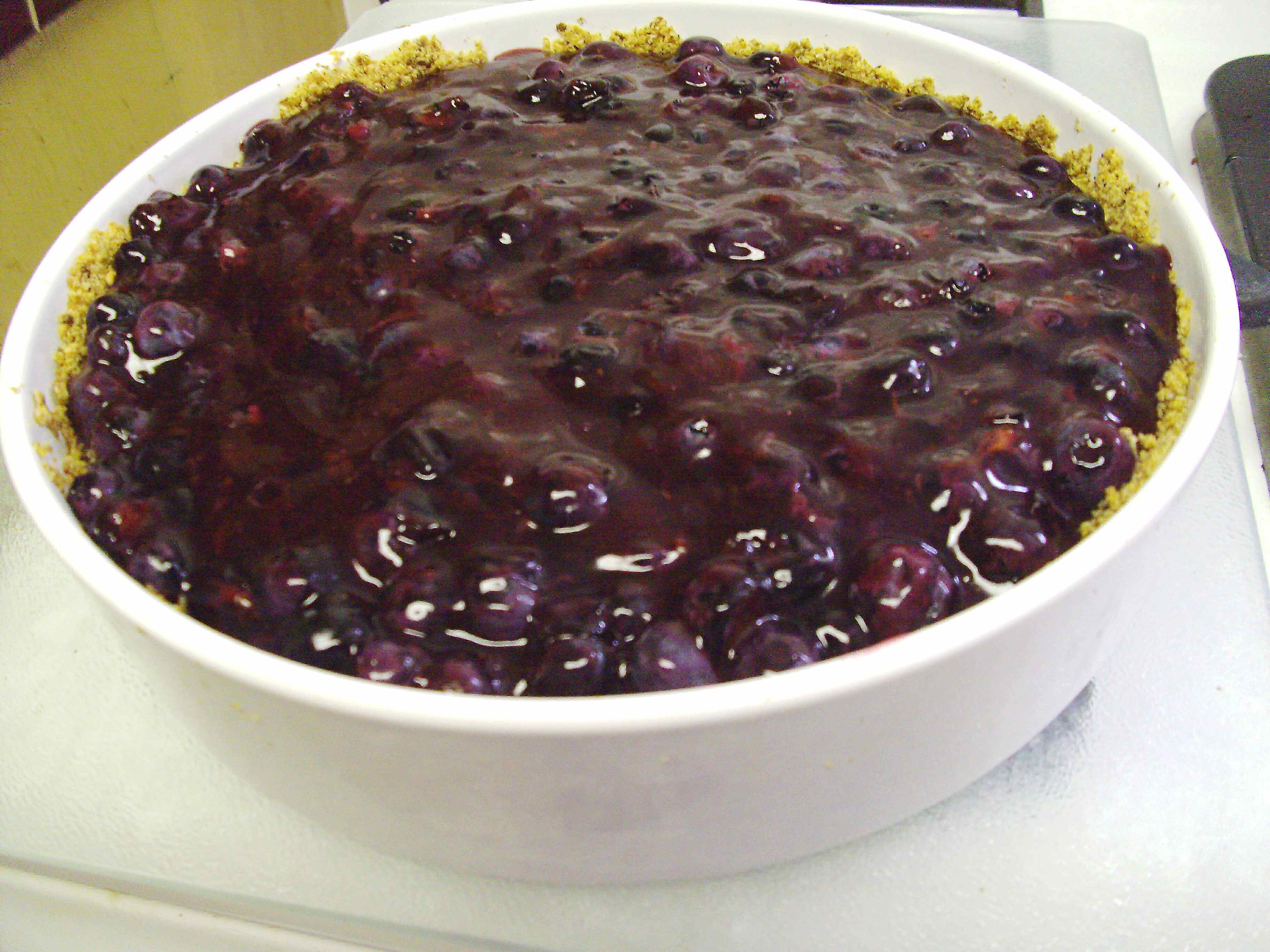
    raw blueberry pie with microwaveable filling and graham cracker crust

    This mostly-raw blueberry pie is a snap to make and very versatile--the filling microwaves in a few minutes, and you don't even have to bake the zippy gingered graham cracker crust--perfect for a hot Fourth of July and all summer long.

  • Recent Posts

  • Contents

  • Archives

  • Now Reading

  • See also my Book Reviews

  • Copyright 2008-2024Slow Food Fast. All writing and images on this blog unless otherwise attributed or set in quotes are the sole property of Slow Food Fast. Please contact DebbieN via the comments form for permissions before reprinting or reproducing any of the material on this blog.

  • ADS AND AFFILIATE LINKS

  • I may post affiliate links to books and movies that I personally review and recommend. Currently I favor Alibris and Vroman's, our terrific and venerable (now past the century mark!) independent bookstore in Pasadena. Or go to your local library--and make sure to support them with actual donations, not just overdue fines (ahem!), because your state probably has cut their budget and hours. Again.

  • In keeping with the disclaimer below, I DO NOT endorse, profit from, or recommend any medications, health treatments, commercial diet plans, supplements or any other such products.

  • DISCLAIMER

  • SlowFoodFast sometimes addresses general public health topics related to nutrition, heart disease, blood pressure, and diabetes. Because this is a blog with a personal point of view, my health and food politics entries often include my opinions on the trends I see, and I try to be as blatant as possible about that. None of these articles should be construed as specific medical advice for an individual case. I do try to keep to findings from well-vetted research sources and large, well-controlled studies, and I try not to sensationalize the science (though if they actually come up with a real cure for Type I diabetes in the next couple of years, I'm gonna be dancing in the streets with a hat that would put Carmen Miranda to shame. Consider yourself warned).

FDA: Not such Breathable Foods

Following on NY Senator Charles Schumer’s request last December, the FDA has sent a Warning Letter to Breathable Foods, Inc. for its marketing of the AeroShot caffeine inhaler, which commits a multitude of violations against law and common sense. It’s kind of a long letter, and I hope I’m not the only one here who enjoyed every word as the officer meticulously spells out the difference between inhalation and ingestion in great glottal and epiglottal detail. Just to clarify so they understand that breathing and swallowing aren’t interchangeable to most people.

As I noted earlier in this case, the inventor, David Edwards of Harvard, and the young student who became CEO for the company, Thomas Hadfield, have both seemingly been operating on the blithe assumption that if they didn’t think about safety for more than a few dismissive minutes, neither would anyone else. Unfortunately, given the breadth of the mostly unregulated “dietary supplements” market, they may be partly right. If they weren’t both so high-profile, they might not have been noticed so quickly.

As it is, I would be very surprised if by this time next year, the product, the CEO, or the professor himself weren’t gone with the wind.

They don’t learn, do they?


The Washington Post reports this fabulous new piece of House Republican budget thinking:

Food safety advocates decry FDA cuts 

Didn’t we have a half-billion-egg recall just last summer? And peanut butter contamination? And the spinach, and the tomatoes? And, from the Chinese pharmaceutical and foodstuffs contingent, melamine in quite a number of items, including pet food and infant formula, to fake a high protein level?

Didn’t everybody in the House get up on their hind legs and demand more FDA field inspections, more accountability, more food safety? And now the House majority are cutting the FDA proposed budget from a modest raise proposed by the White House to less than the FDA received for this year’s operations?


Green Eggs and Salm(onella)

I’m sure that’s not an original title. Bad puns abound. We’re in a situation where the FDA’s longstanding voluntary compliance approach to industrial food production safety has gone incredibly, visibly awry. Mostly because it sorely lacks the funds and the boots-on-the-ground manpower to enforce the regs in person. Also mostly because for a full 10 years, the few attempts made by the FDA to put some teeth into the safety regs for the egg industry were quashed from above. Those years, which ended this summer, were mostly Bush years. It’s probably not a coincidence.

380 million eggs recalled and counting in the past week. That’s a lot of eggs–it’s a lot of chickens too. Possibly some that you yourself bought, if you live anywhere west of the Mississippi River. From companies in Iowa that had a long record of not following standard egg-handling safety practices to prevent the spread of salmonella. They preferred to pay the occasional penalty or fine instead.

If you’re not thrilled with the way this was handled or the fact that it could have been prevented pretty easily, what can you do?

Check the FDA voluntary recall list for the commercial names and serial numbers. If your eggs are on the list, return them to the store. If not, cook your eggs fully anyway. Just because yours weren’t on this week’s list doesn’t mean they’re definitely clean.

Then call or email (or if you want to be especially annoying, fax a copy of the Dr. Seuss bookcover–you know which one) your local Congressional representative or senator to express your disgust demand more enforcement authority and more money for the FDA’s Food Safety Inspection Service.

But that’s not enough. In the past 10 years, the FDA has grown used to doing less. It’s just been a month since Congress passed legislation giving it new rights–but will the FDA use them without a strong push? Ask your congressional representatives to mandate an FDA report on how it’s strengthening its food safety oversight and enforcement under the new laws. A yearly report to Congress might be as much as the agency can handle at the moment, but a twice-yearly report would push them to apply their new oversight powers a little sooner and more vigorously.

Aug. 25–And demand hen vaccination against salmonella as a national requirement for operating any kind of poultry business.

Smart Choices Labeling Program Falls Apart

The FDA’s recent and surprisingly bold scrutiny of the Smart Choices food labeling program, coupled with wide public indignation over the program’s obviously inappropriate awards of healthy food status to processed foods without much actual merit, has left the industry-led nutrition rating effort in shreds.  In a recent followup to his initial article in the New York Times, William Neumann reports that the Smart Choices program has been suspended only about two months after going live, and participants like PepsiCo have pulled out altogether.  Kellogg’s, on the other hand, is “phasing out” its green checkmarked cereal boxes and announced that global marketing officer Celeste Clark  is staying on in good standing after what has amounted to a PR fiasco over Froot Loops. Makes you think they were the ones with the highest investment in the program to begin with, or that perhaps they were the company least likely to admit how transparently flimsy the program’s nutrition criteria had become to the rest of the country.

It’s the first time in quite a while that the FDA has taken on a big household-name food industry target in public without a lot of hemming and hawing and backpedaling and dealmaking. It gives me hope that at least some of the federal government is shifting gears to start serving the public again.

The great surprise for me is how little real effort it took to shut down the food industry’s program. Three or four years ago it might well have prevailed, and the processed food industry might have been able to keep inserting its priorities into the debates over nutrition without any effective logical check. But at a time when the nation’s gotten sick of being lied to so brazenly for so long about so many things–many of them more serious–corporate food tampering and misrepresentation of food quality are becoming hair-trigger topics. Not least because food is the easiest  for ordinary people to judge and to protest safely in the streets.

We can’t organize effectively enough to protect ourselves against the invasive, petty and obscene wastefulness of the Patriot Act as it has actually been applied. We can’t organize effectively enough to demand and get a proper, timely accounting of Guantanamo and the government’s use of torture there and abroad.

But we can talk food and nutrition and sustainability and corporate manipulation until the cows come home.

How else to explain the cult status of Michael Pollan? The rise of Fast Food Nation and Food, Inc.? The fights over school cafeteria vending machines and chain restaurant nutritional stats? The Smart Choices checkmark for Froot Loops, which people buy specifically for the artificial colors and know perfectly well is not really food, touched the match to a very big pile of sawdust.

And now the FDA is also on its way to strengthened oversight powers from Congress, including mandatory food recalls, not just recommendations for recall, to go after contamination of the food supply, and with any luck some extra funding to cover the actual field investigations needed.

It’s long overdue, but somehow it seems to me the FDA is being tasked with something the USDA should have been doing all these years and hasn’t. The USDA has more tools and resources at its disposal for doing food safety checks at the agricultural and manufacturing levels but because part of its mission is to boost agriculture, it has often dismissed these checks as unnecessary and even obstructed them, as in the case of routine meat testing for BSE and other infections.

The FDA is still supposed to protect the nation against food and nutritional claims fraud, though some of its targets appear to be of diminishing significance in comparison with preventing widespread salmonella and E. coli in the food supply. Smart Choices is obviously a big and publicly important target, but on the other hand, it seems to have been exposed and skewered satisfactorily already by public reporting of the Froot Loops fiasco. The FDA can ride the crest and put the final, perhaps critical, touch on it, but the agency’s gotten a huge boost this time around from public opinion.

Maybe that’s saved the FDA and the public some time and taxpayer dollars that won’t have to be spent going to court over it. Maybe it’s given them the nerve to work on the public’s behalf more daringly, knowing that the public actually does give a damn about its own well-being? Maybe things are really going to be different enough that they’ll go after the big offenders even when the public isn’t way ahead of them? We can only hope.

But frankly, I still want to see the USDA fulfill its responsibilities to protect the public and the food supply, and not abandon or subvert them in service to big agriculture and processed food firms. The FDA shouldn’t have to pick up after them.