• Enter your email address to subscribe to this blog and receive notifications of new posts by email.

    Join 241 other subscribers
  • Noshing on

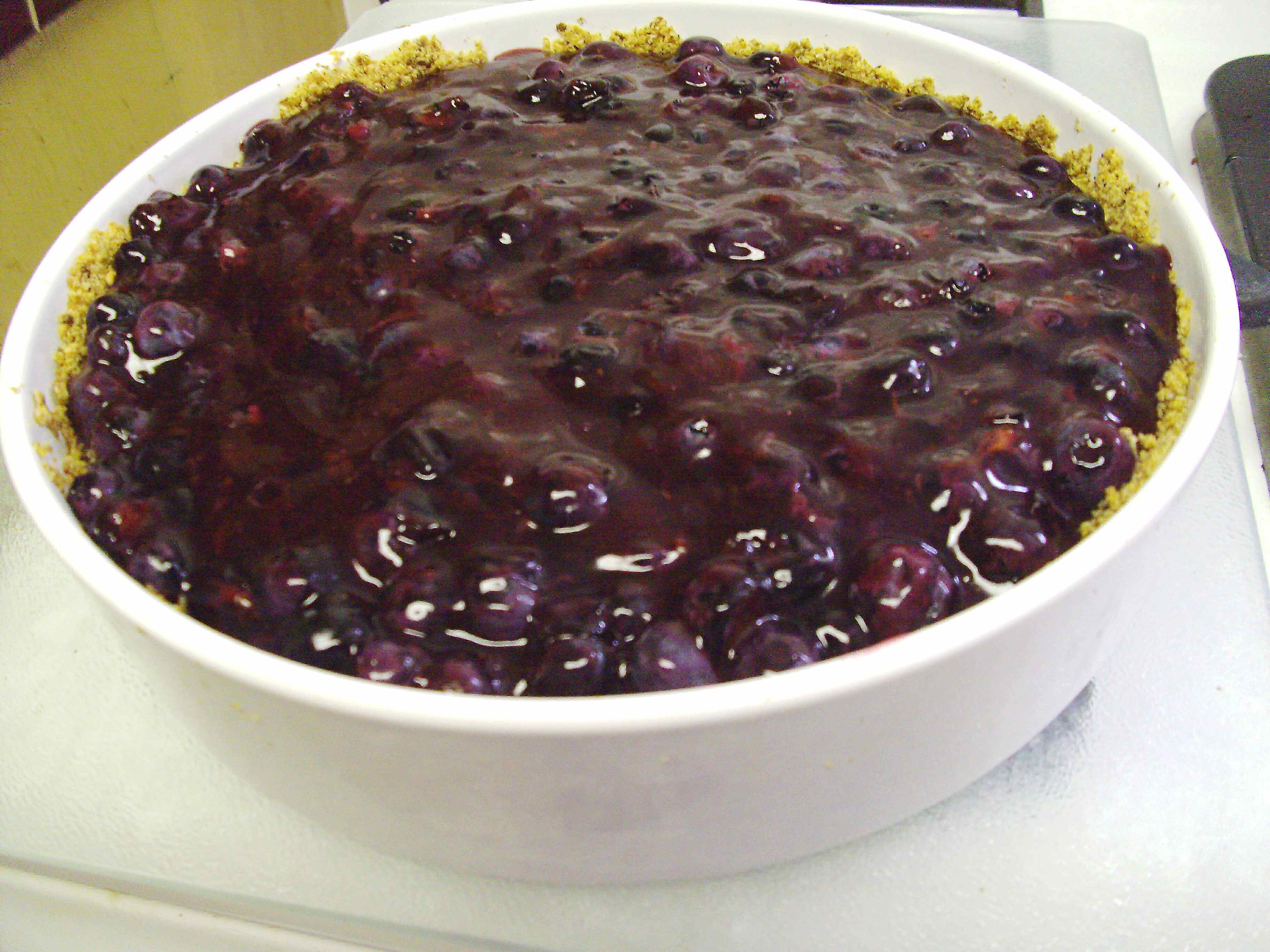
    raw blueberry pie with microwaveable filling and graham cracker crust

    This mostly-raw blueberry pie is a snap to make and very versatile--the filling microwaves in a few minutes, and you don't even have to bake the zippy gingered graham cracker crust--perfect for a hot Fourth of July and all summer long.

  • Recent Posts

  • Contents

  • Archives

  • Now Reading

  • See also my Book Reviews

  • Copyright 2008-2024Slow Food Fast. All writing and images on this blog unless otherwise attributed or set in quotes are the sole property of Slow Food Fast. Please contact DebbieN via the comments form for permissions before reprinting or reproducing any of the material on this blog.

  • ADS AND AFFILIATE LINKS

  • I may post affiliate links to books and movies that I personally review and recommend. Currently I favor Alibris and Vroman's, our terrific and venerable (now past the century mark!) independent bookstore in Pasadena. Or go to your local library--and make sure to support them with actual donations, not just overdue fines (ahem!), because your state probably has cut their budget and hours. Again.

  • In keeping with the disclaimer below, I DO NOT endorse, profit from, or recommend any medications, health treatments, commercial diet plans, supplements or any other such products.

  • DISCLAIMER

  • SlowFoodFast sometimes addresses general public health topics related to nutrition, heart disease, blood pressure, and diabetes. Because this is a blog with a personal point of view, my health and food politics entries often include my opinions on the trends I see, and I try to be as blatant as possible about that. None of these articles should be construed as specific medical advice for an individual case. I do try to keep to findings from well-vetted research sources and large, well-controlled studies, and I try not to sensationalize the science (though if they actually come up with a real cure for Type I diabetes in the next couple of years, I'm gonna be dancing in the streets with a hat that would put Carmen Miranda to shame. Consider yourself warned).

FDA Regulation–Too Slow on Salt?

The Washington Post carried a story today that the FDA is finally getting a move on and planning how to regulate salt in processed foods–after numerous and repeated failures of laissez-faire voluntary self-regulation attempts. It’s been a long time coming; the FDA has been petitioned repeatedly by the American Heart Association, the Center for Science in the Public Interest, and many other organizations, both private and governmental, and has always maintained up to this administration that salt was a “generally recognized as safe” ingredient.

So I’m glad that the FDA is finally making some effort to regulate sodium in food and drop the “generally recognized as safe” status. I’m unfortunately not amazed at all that they’re trying to drag it out to a 10-year process. People’s taste for salt can be downshifted significantly in two or three weeks on average, so there’s really no excuse for such a gradual decrease except for the manufacturer’s cost of reformulation. They seem to be pacifying the processed food manufacturers–all the classic  prechewed food industry claims about reduced customer satisfaction appear to be overtaking discussion and usurping the issue of health risk.

But what really gets me is the last quote in the article:

“Historically, consumers have found low-sodium products haven’t been of the quality that’s expected,” said Todd Abraham, senior vice president of research and nutrition for Kraft Foods. “We’re all trying to maintain the delicious quality of the product but one that consumers recognize as healthier.”

Tell the truth: Those foods aren’t really all that delicious now. It’s like admitting that heavy salt is the predominant flavoring (the other being cardboard).

Smart Choices Labeling Program Falls Apart

The FDA’s recent and surprisingly bold scrutiny of the Smart Choices food labeling program, coupled with wide public indignation over the program’s obviously inappropriate awards of healthy food status to processed foods without much actual merit, has left the industry-led nutrition rating effort in shreds.  In a recent followup to his initial article in the New York Times, William Neumann reports that the Smart Choices program has been suspended only about two months after going live, and participants like PepsiCo have pulled out altogether.  Kellogg’s, on the other hand, is “phasing out” its green checkmarked cereal boxes and announced that global marketing officer Celeste Clark  is staying on in good standing after what has amounted to a PR fiasco over Froot Loops. Makes you think they were the ones with the highest investment in the program to begin with, or that perhaps they were the company least likely to admit how transparently flimsy the program’s nutrition criteria had become to the rest of the country.

It’s the first time in quite a while that the FDA has taken on a big household-name food industry target in public without a lot of hemming and hawing and backpedaling and dealmaking. It gives me hope that at least some of the federal government is shifting gears to start serving the public again.

The great surprise for me is how little real effort it took to shut down the food industry’s program. Three or four years ago it might well have prevailed, and the processed food industry might have been able to keep inserting its priorities into the debates over nutrition without any effective logical check. But at a time when the nation’s gotten sick of being lied to so brazenly for so long about so many things–many of them more serious–corporate food tampering and misrepresentation of food quality are becoming hair-trigger topics. Not least because food is the easiest  for ordinary people to judge and to protest safely in the streets.

We can’t organize effectively enough to protect ourselves against the invasive, petty and obscene wastefulness of the Patriot Act as it has actually been applied. We can’t organize effectively enough to demand and get a proper, timely accounting of Guantanamo and the government’s use of torture there and abroad.

But we can talk food and nutrition and sustainability and corporate manipulation until the cows come home.

How else to explain the cult status of Michael Pollan? The rise of Fast Food Nation and Food, Inc.? The fights over school cafeteria vending machines and chain restaurant nutritional stats? The Smart Choices checkmark for Froot Loops, which people buy specifically for the artificial colors and know perfectly well is not really food, touched the match to a very big pile of sawdust.

And now the FDA is also on its way to strengthened oversight powers from Congress, including mandatory food recalls, not just recommendations for recall, to go after contamination of the food supply, and with any luck some extra funding to cover the actual field investigations needed.

It’s long overdue, but somehow it seems to me the FDA is being tasked with something the USDA should have been doing all these years and hasn’t. The USDA has more tools and resources at its disposal for doing food safety checks at the agricultural and manufacturing levels but because part of its mission is to boost agriculture, it has often dismissed these checks as unnecessary and even obstructed them, as in the case of routine meat testing for BSE and other infections.

The FDA is still supposed to protect the nation against food and nutritional claims fraud, though some of its targets appear to be of diminishing significance in comparison with preventing widespread salmonella and E. coli in the food supply. Smart Choices is obviously a big and publicly important target, but on the other hand, it seems to have been exposed and skewered satisfactorily already by public reporting of the Froot Loops fiasco. The FDA can ride the crest and put the final, perhaps critical, touch on it, but the agency’s gotten a huge boost this time around from public opinion.

Maybe that’s saved the FDA and the public some time and taxpayer dollars that won’t have to be spent going to court over it. Maybe it’s given them the nerve to work on the public’s behalf more daringly, knowing that the public actually does give a damn about its own well-being? Maybe things are really going to be different enough that they’ll go after the big offenders even when the public isn’t way ahead of them? We can only hope.

But frankly, I still want to see the USDA fulfill its responsibilities to protect the public and the food supply, and not abandon or subvert them in service to big agriculture and processed food firms. The FDA shouldn’t have to pick up after them.

Smart Choices Checkmarks–Corrupt Before They Ever Hit the Cereal Box?

William Neumann of the New York Times takes a hard look at “Smart Choices”, the new food industry-sponsored common nutrition labeling program, which makes its debut in supermarket packaged food aisles. The coveted green checkmark comes with a hefty license fee–toward the $100,000 mark per item–for food companies that want to qualify, but apparently qualifying is a little easier than you might expect. The new program, headed by a nutritionist with impressive enough credentials,  has awarded healthy choice status to heavily sugared cereals like Froot Loops because, as she explains, they’re a better breakfast choice than, say, doughnuts. For sure.

How could any reputable nutritionist blurt something like that out to a New York Times reporter? Does she really use doughnuts as a benchmark for comparison when the question is “what should I feed my kid for breakfast?”

More to the point, how could items like Froot Loops end up qualifying as a smart choice? Apparently, the FDA is wondering the same thing.

Take a look at the Smart Choices program nutrition criteria. Under the program, a given processed food product qualifies as a “smart choice” if:

1. Its nutrition stats fall within consensus-defined limits for carbs, added sugars, fats, cholesterol, and sodium. But the criteria are not particularly consistent about whether these nutrition stats count for a single serving or a meal, or perhaps multiple servings throughout the day, and the upper limits shift between categories of foods. And some of the criteria have been muted, dropped, or subordinated according to the preferences of food industry members over the protests of the nutrition scientists.

2. It contains at least one positive nutrient from an industry-accepted list of vitamins, minerals, fiber, and protein. The positive nutrient can be an additive, and it can be added to an otherwise nutritionally useless food product.

3. Alternatively to the positive nutrient criterion, the product can contain or represent some aspect of the category “food groups to encourage”: fruits, vegetables, whole grains and low fat or non-fat milk. How much of any of these ingredients must be present, what their original source is, and whether the final food product retains any reasonable or comparable amount of the nutrition found in an unprocessed fruit, vegetable, grain, or dairy item which it claims to include are all a bit vague. Processed cheese is technically considered dairy, for example, even though it may contain mostly vegetable oils, starches, and emulsifiers, not milk.

Not all food categories seem to require both nutrient-of-concern limits and positive characteristics.

Finally, the instructions to companies wishing to qualify a given food product state: “Qualifying your products for the Smart Choices Program is quick and simple. Product review is typically completed in 24 – 48 hours.”

Pretty much says it all. And doesn’t really support the “science-based, consistent, reliable” claims the program presents to consumers and the media.

For further mirth and bemusement, check out Marion Nestle’s account of her discussions with Neumann and with the Kellogg’s VP for global nutrition on her blog.